Recommendable!
Showing posts with label religious tolerance. Show all posts
Showing posts with label religious tolerance. Show all posts
Friday, July 17, 2026

Tuesday, May 05, 2026
China: When Buddhist monks are presented with the flag of the communist party of China
Very disturbing!
As seen on a board posted inside one of the oldest, largest and still in operation Buddhist temples in China, i.e. Daxiangguo Temple in Kaifeng, Henan province.

Wednesday, April 29, 2026
Religious Freedom long Before John Locke's famous treatise: Lucius Caecilius Firmianus Lactantius
Recommendable!
"... More than a millennium before Locke, Lucius Caecilius Firmianus Lactantius (ca. 250 – ca. 325 AD) had already articulated a clearer and more coherent rejection of religious coercion. Writing in the early fourth century, during the final phase of Roman persecution and on the cusp of Christianity’s legalization, Lactantius was a rhetorician steeped in classical philosophy. With the support of Emperor Diocletian, he became a professor of rhetoric in Nicomedia, which also facilitated his entrance into the orbit of the imperial elite. We do not know precisely when Lactantius became a Christian, but his conversion almost certainly preceded Diocletian’s persecution of the Church. His career suffered as a result. Saint Jerome, who later praised his literary abilities, attests that Lactantius lived in poverty for years. However, his fortunes reversed when he came to the attention of Constantine, who appointed Lactantius as tutor to his son Crispus. He likely enjoyed imperial favor until the end of his life.
Lactantius draws a sharp contrast between two fundamentally different modes of engagement. Violence belongs to the realm of brute compulsion, whereas religion belongs to the realm of reasoned assent.
Lactantius’s major work, Divine Institutes, is a bold defense of Christian truth addressed to the Roman elite. He likely began writing it after losing his teaching post in Nicomedia. Although it does not reveal deep knowledge of Holy Scripture or particularly original theology, Divine Institutes was regarded by later Christian writers as a masterwork of Latin style. More importantly, it reveals a broad familiarity with Christian apologetics up to the point of Lactantius in history. What matters for us specifically is his argument for religious freedom.
Lactantius is widely regarded as having developed the first principled argument for liberty in matters of conscience. Given his later associations with Constantine, it is likely these ideas influenced the climate of opinion leading up to the Edict of Milan (313), which established toleration for Christianity. Ultimately, Lactantius’s condemnation of coercion in Divine Institutes is both more striking and philosophically serious than Locke’s.
Lactantius argues that coercion is inherently opposed to the nature of religion and to the dignity of the human person. “Religion cannot be imposed by force; the matter must be carried on by words rather than by blows.” But he goes even further. Coercion is not merely ineffective; it is irrational and degrading. “For religion is to be defended, not by putting to death, but by dying; not by cruelty, but by patient endurance; not by guilt, but by good faith.” ..."
Lactantius


Fourth-century mural possibly depicting Lactantius (or possibly Apuleius)
Beginning of Lactantius' Divinae institutiones in a Renaissance manuscript written in Florence ca. 1420–1430 by Guglielmino Tanaglia
Wednesday, April 02, 2025
Israel's magnificent new Museum of Tolerance is opening its doors to the public
Israelis worldwide are tested every day by antisemitism and enmity!
"The newly opened Museum of Tolerance in Jerusalem resembles a bridge or a dove with outstretched wings, representing its founders’ vision of promoting unity, dignity and respect among Jews and people of all faiths.
Conceived as the Israeli counterpart of the Museum of Tolerance in Los Angeles developed by the LA-based Simon Wiesenthal Center, the 150,000-square-foot glass-and-stone museum ironically sparked controversies from the time ground was broken in April 2004.
The project hit snags including the discovery of a 1,000-year-old Muslim cemetery under the building site, which had been a parking lot. Ensuing protests, plan changes, a Supreme Court case and the reinterring of remains led to lengthy delays and a final price tag more than double the original estimate.
Renowned architect Frank Gehry, whose (also controversial) design was approved in 2002, pulled out of the project eight years later. The current building was designed by Israeli architects Bracha and Michael Chyutin, who also later left the project. ..."
Looks more like an opera house or grand piano to me! Just kidding!

Museum staircase

Tuesday, September 24, 2024
Albania to Create Vatican City-style Microstate for Islamic Sufi Sect with Palki Sharma
Recommendable! Amazing stuff! This is about the dervishes! This Islamic minority will allow alcohol and let women wear what they want!
There are some serious doubts this project will come to fruition.


Saturday, February 03, 2024
Inside UAE's First Hindu Temple in Abu Dhabi with Palki Sharma
Very impressive! The new temple will be inaugurated 2/14/2024. It is a symbol for the coexistence in harmony of two very different religions. Very auspicious!
Saturday, June 17, 2023
India's Bnei Menashe community in crisis as ethnic violence burns synagogues and displaces hundreds
India is widely known for its incredible religious tolerance. However, there are times when it is tested or worse even failing.
The amazing Jewish diaspora!
This happened in the northeast state of Manipur.
The violence does not appear to be directed at Jews, but this Jewish community appears to be associated with another minority involved in the violence.
"... Everything changed on May 3, when rioting broke out between the ethnic majority Meiteis and the tribal minority Kukis, a violent conflagration that had been building up for years. ...
According to Shavei Israel, an NGO that helps “lost tribe” Jewish communities immigrate to Israel, over 1,000 members of the community, or 20% of their total, have been displaced. One community member was killed, and another was shot in the chest and is hospitalized. Two synagogues and mikvahs, or ritual baths, were burned down. ...
“This is one of the gravest crises the Bnei Menashe in India have ever experienced,” said Michael Freund, who has been chairman of Shavei Israel since he founded the organization in 2002. ...
Citing the government’s failure to protect them, Kukis have called for separation from the state of Manipur. As the conflict stretches into its second month, Indian Prime Minister Narendra Modi has yet to comment on the crisis in his country’s northeast. ..."
According to Shavei Israel, an NGO that helps “lost tribe” Jewish communities immigrate to Israel, over 1,000 members of the community, or 20% of their total, have been displaced. One community member was killed, and another was shot in the chest and is hospitalized. Two synagogues and mikvahs, or ritual baths, were burned down. ...
“This is one of the gravest crises the Bnei Menashe in India have ever experienced,” said Michael Freund, who has been chairman of Shavei Israel since he founded the organization in 2002. ...
Citing the government’s failure to protect them, Kukis have called for separation from the state of Manipur. As the conflict stretches into its second month, Indian Prime Minister Narendra Modi has yet to comment on the crisis in his country’s northeast. ..."

Saturday, February 25, 2023
India, the land of several major religions
It has tremendously fascinated me for many years how many major religions were established in India and they have coexisted side by side for a long time to the present.
Caveat: I am no expert on Indian religions and make no claims but to be a lay person and an occasional student.
Add to this, the delicious blend of spices and the variety of food!
Just a few, selective brief notes on these religions (My apologies for much is omitted or neglected):
Buddhism
Among other things teaches the value of all life on earth, because of the cycle of rebirth and the respect for all sentient beings. When you kill an insect, perhaps it was your grandparent (my liberal personal interpretation).
Its tenets ask to search for a path to end suffering. Human desire and cravings are much to blame for suffering. Is a modest life a better life? Nirvana?
Moreover Buddhism will always be associated with the great emperor Ashoka (ca. 300 CE)!
Edicts of Ashoka

Hinduism
I guess, no one since the 20th century is more associated with Hinduism than Mahatma Gandhi! He grew up as a Hindu, trained as a lawyer in London, worked in South Africa as a lawyer, used non violence to shake off British colonial power in South Africa and India, established religious pluralism, and who ended untouchability. Then he was assassinated by a Hindu nationalist at an interfaith prayer meeting! What a tragedy and what a lesson for future generations! Fanaticism in whatever shape or form is evil! His non violence movement has inspired many followers and a few leaders!
A non violent skinny man in skimpy beggar's clothes with a British lawyer's degree and a spinning wheel defeated the British Empire (weakened by World War II). An eternal lesson!

Sikhism
I certainly have fond memories of the great movie The English Patient! That little dagger (called a Kirpan) or how he grew his hair under the turban (called Kesh)? 😊
"God is presented as masculine and God's power as feminine ... and without form. [Something to think about in our so gender confused times]" (Wikipedia)
Jainism
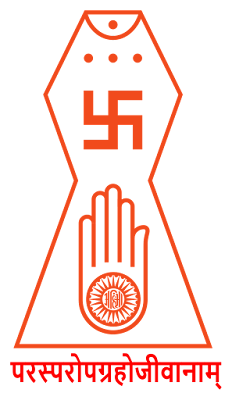
It is famous for ahimsa (non violence), non absolutism, and asceticism.
I guess this religion stands out because of its symbol.
Friday, December 24, 2021
Why not celebrate Christmas in Saudi Arabia
The Wall Street Journal found a curious Christmas story this year! 😄
For Saudi Arabia to become a modern modern country will take more years, but progress is being made. Younger Saudis probably would move faster.
"The oil-rich kingdom has long banned the public practice of religions other than Islam, but with social restrictions gradually easing, Christmas trees, panettone fruitcakes and Starbucks Holiday Blend coffees can increasingly be found in Saudi Arabia.
Christmas is the latest non-Muslim holiday to gain some ground in the kingdom, after Halloween, Valentine’s Day and New Year’s Eve. Mohammad Abdullah, a salesman at a florist shop in the Red Sea port city of Jeddah, said the religious police used to harass him for selling anything remotely linked to Christmas, but they haven’t done so in the past two years. “We haven’t had any issues so far,” he said. “But we have orders from top management that if any government official comes in and asks us to remove any item, to do so right away.” .."
Friday, August 20, 2021
'It is truly a MIRACLE': Glenn Beck's audience raises astonishing $20 MILLION for Afghanistan in two days
American generosity at its best! While the demented and senile 46th President still does not grasp the sudden debacle of Afghanistan, American citizens are already trying to help the threatened Christian minority in that country!
Monday, August 09, 2021
Among India’s religious believers
Recommendable! Fascinating! Tolerance through segregation!
"... India isn’t a melting pot like the United States. Rather, it’s a thali—a collection of different dishes in separate bowls that don’t necessarily flow into one another, but nonetheless combine satisfyingly on your palate. ...
For starters, India is deeply religious: 97% of Indians say they believe in God and about 80% are certain that God exists. ‘Not only do most of the world’s Hindus, Jains and Sikhs live in India, but it also is home to one of the world’s largest Muslim populations and to millions of Christians and Buddhists,’ the Pew study observes. ...
Disappointingly, Indians also prefer making friends within their own religious community. ..."
For starters, India is deeply religious: 97% of Indians say they believe in God and about 80% are certain that God exists. ‘Not only do most of the world’s Hindus, Jains and Sikhs live in India, but it also is home to one of the world’s largest Muslim populations and to millions of Christians and Buddhists,’ the Pew study observes. ...
An overwhelming majority (84%) of respondents say that respect for other religions is a fundamental aspect of their identity. ‘Indians see religious tolerance as a central part of who they are as a nation,’ ... ‘Across the major religious groups, most people say it is very important to respect all religions to be “truly Indian.”’ Tolerance is also a religious value: ‘Indians are united in the view that respecting other religions is a very important part of what it means to be a member of their own religious community.’
But for all this mutual respect, segregationist impulses remain strong. For example, 36% of Hindus do not want Muslims as neighbors (though that does mean 64% are willing to accept them). Likewise, opposition to interfaith and intercaste marriages is widespread. About 80% of Indian Muslims disapprove of, and wish to prevent, interfaith marriages. Roughly two-thirds of Hindus feel the same way.
Religion in India: Tolerance and Segregation Indians say it is important to respect all religions, but major religious groups see little in common and want to live separately
Subscribe to:
Posts (Atom)