Showing posts with label music. Show all posts

Wednesday, April 29, 2026

German Bertelsmann Music Group (BMG) to Buy Concord in Deal That Creates a New Major $14 billion Music Giant

This is big news!

Many years ago I was an intern at the headquarters of Bertelsmann in Gütersloh (thanks to my late father Horst Bingel)!

"German media giant Bertelsmann SE agreed to buy Nashville-based independent music group Concord and merge it with its BMG Rights Management business in a deal that will create one of the largest music companies in the world."

BMG to Buy Concord in Deal That Creates a New Major Music Giant - Bloomberg (behind paywall)


Monday, April 27, 2026

Michael Jackson biopic movie smashes box office record worldwide

Amazing stuff! The singer/dancer died 17 years ago.

Supposedly, the movie covers only the years from the 1960s to 1988. Jackson died of an drug overdose in 2008.

"The singer's nephew Jaafar Jackson portrays him in Michael, which has taken $217m (£160m) globally since it opened on Wednesday.

Queen musical Bohemian Rhapsody, which launched with $124m (£91m) in 2018 and starred Rami Malek as Freddie Mercury, previously held the box office record for a musical biopic.

But Michael also surpassed the $180m (£133m) taken by 2024's Oppenheimer, giving the King of Pop the biggest worldwide opening weekend for a biopic of any kind. ..."

Michael Jackson biopic smashes box office record "The new musical film about Michael Jackson has stormed the worldwide box office, scoring the highest opening weekend ever for a biopic."

Credits: Der Tag beginnt mit NIUS


The title of LP album cover of Michael Jackson says it all! Off the wall (released in 1979)!


Friday, January 30, 2026

Helping hospital staff address burnout and compassion fatigue through music

What about music for hospital patients?

"... seeks to identify the unique role music could have in relieving health care staff burnout and compassion fatigue.

Substantial evidence exists for the health benefits of music, from supporting pain management to reducing symptoms of depression. But its integration into health care practice remains limited to patient care. Harmonizing for Health is believed to be the first intervention of its kind to help health care staff through music. ..."

Yale researchers helping NYC Health + Hospitals address staff burnout through music | Yale School of Public Health

Friday, November 28, 2025

About the evolution of musicality, rhythm, and dancing

Amazing stuff!

"More than a hundred years ago, Charles Darwin’s ideas about the evolution of music were pitted against those of the sociologist Herbert Spencer . 
Darwin believed that the ability to make music evolved as a trait with adaptive value across different animal groups before the advent of contemporary humans, whereas Spencer believed that only humans can make true music.
Adaptive explanations for the evolution of human music still abound. In the absence of compelling fossil or archaeological evidence of music making, however, 21st century researchers rely as much on conjecture as they did in Darwin and Spencer’s time. ...

Do the findings of Rajendran et al. falsify the vocal-learning hypothesis by showing that a nonvocal learner can synchronize its motor responses to a musical beat and do this at different tempos? Rejecting the vocal-learning hypothesis would mean accepting that there is no mediation (neurobiological or otherwise) between vocal learning and beat processing.
However, rhythmically inclined monkeys and parrots are performing in a captive context and would not have the opportunity to learn such behaviors in their respective habitats. Rajendran et al. are careful to note that the abilities that were observed are not natural behaviors: They were conditioned through extrinsic rewards, not the seemingly intrinsic ones that humans experience when they follow rhythmic beats. A behavior that has been conditioned may not be equivalent to a behavior that emerges spontaneously. ..."

From the editor's summary and abstract:
"Editor’s summary
Musicality and especially moving to a beat—i.e., dancing—is a fundamental human trait. 
Very few other species have been found to do this, and all of these species are vocal learners, leading to the conclusion that such a tendency is reserved for species with this ability.
Notably, most nonhuman [???] primates are not vocal learners, leading to an evolutionary conundrum with regard to when our own ancestors may have begun to dance. Rajendran et al. now show that macaques are capable of synchronizing taps to a real musical beat and choose to do so spontaneously ...

Abstract
Synchronizing movements to music is a hallmark of human culture, but its evolutionary and neurobiological origins remain unknown.
This ability requires
(i) extracting a steady rhythmic pulse, or beat, out of continuous sounds;
(ii) projecting this pattern forward in time; and
(iii) timing motor commands to anticipate future beats.
Here, we demonstrate that macaques can synchronize to a subjective beat in real music and even spontaneously do so over alternative strategies.
This contradicts the influential “vocal-learning hypothesis” that musical beat synchronization is privileged to species with complex learned vocalizations.
We propose an alternative view of musical beat perception and synchronization as a continuum onto which different species can be mapped based on their capacity to coordinate the general abilities listed above through association with reward."

In Science Journals | Science

Groove to the music "What can tapping macaques reveal about the evolution of musicality?"

Monkeys have rhythm (open access)


Fig. 1. Macaques synchronize their taps to music.


Thursday, September 25, 2025

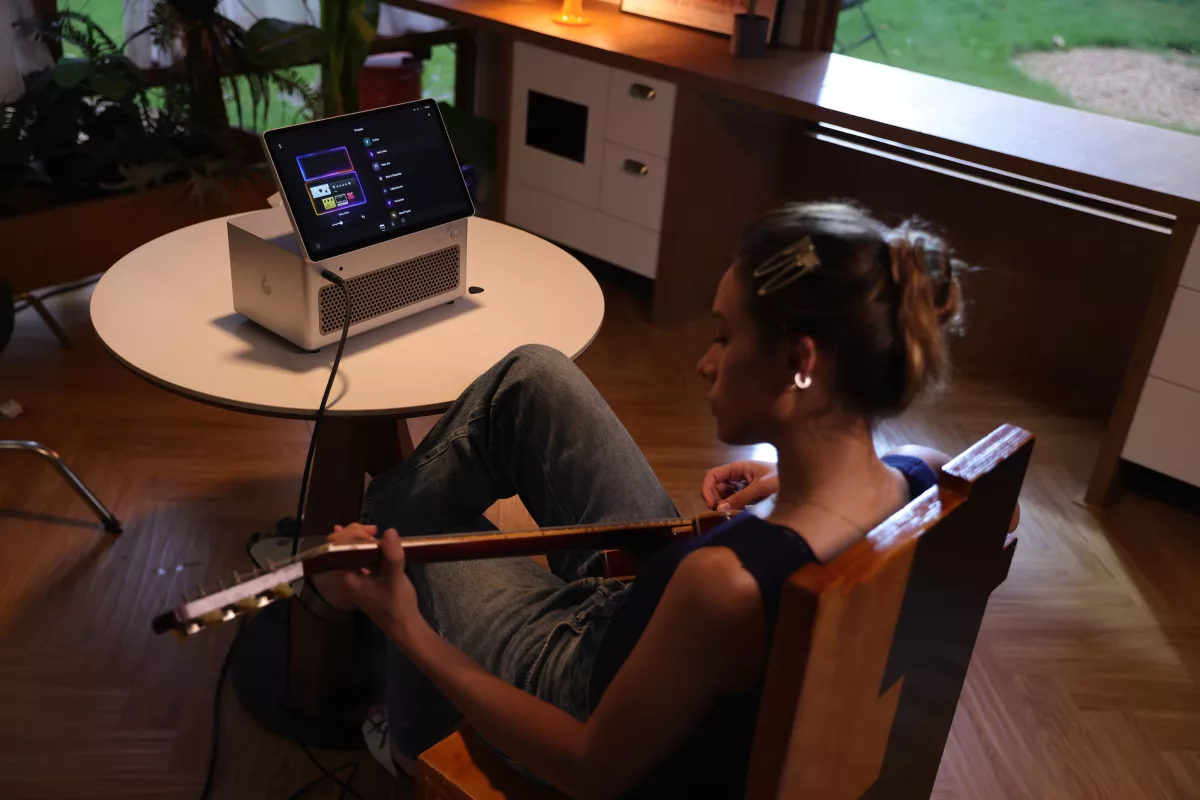
Lava Studio smart amp redefines music creation

Are there any dumb devices left anymore (other than old devices) at the end of the first quarter of the 21st century? Just kidding!

Caveat: I did not read the article.

Lava Studio smart amp redefines music creation


The Lava Studio brings a guitar amp, Bluetooth speaker, multi-FX unit, mini recording studio, jamming partners and learning platform all together in one place


Sunday, July 27, 2025

Friday, June 06, 2025

‘The Taiwanese Eternal Queen of Asian Pop’ Teresa Teng sings one last encore from beyond the grave

Recommendable! I have to admit my ignorance, I don't think I have ever learnt of this popular singer.

Her career is truly amazing. I glanced at ther Wikipedia entry.

What a pity that this singer died so early at age 42. The circumstances of her early death are not resolved.

"[Her] Voice
Teng was a Soprano, according to The New York Times.[50] She possessed more than 3-octave vocal range: C3 (LowC) ~ E6 (HiE)[51] and was known for her "soothing and crystalline" singing voice,[52][53] with her vocal trademark classified as a "quasi-whisper", which David B. Gordon characterizes as a "private emotion" in her listeners—as though she were singing for each of them individually.[14] Examining her vocal abilities, NetEase Entertainment praised Teng's soft voice style in the high range, describing her ability to "sing the high notes from C5 to G5 with the strength and timbre of her natural voice." ..."

"Several years ago, an employee at Universal Music came across a cassette tape in a Tokyo warehouse while sorting through archival materials. On it was a recording by the late Taiwanese pop star Teresa Teng that had never been released; the pop ballad, likely recorded in the mid-1980s while Teng was living and performing in Japan, was a collaboration between composer Takashi Miki and lyricist Toyohisa Araki.

Now, to the delight of her millions of fans, the track titled “Love Songs Are Best in the Foggy Night” will appear on an album set to be released on June 25, 2025. ..."

‘The Eternal Queen of Asian Pop’ sings one last encore from beyond the grave


Monday, June 02, 2025

Singing to (fussy) Babies Improves Their Moods. What about parents moods?

Sing more, feel better! When science confirms the obvious!

Strangely, this study finds "but not to caregiver mood"??? This seems to be highly odd and could be a sign of a flawed study approach.

"Around the world and across cultures, singing to babies seems to come instinctively to caregivers. Now, new findings support that singing is an easy, safe, and free way to help improve the mental well-being of infants. Because improved mood in infancy is associated with a greater quality of life for both parents and babies, this in turn has benefits for the health of the entire family, the researchers say. The study also helps explain why musical behaviors may have evolved in parents. ...

Not only did the parents sing more frequently, but they also chose to use music especially in one context in particular: calming their infants when they were fussy. ..."

From the abstract:
"Music appears universally in human infancy with self-evident effects: as many parents know intuitively, infants love to be sung to. The long-term effects of parental singing remain unclear, however.
In an offset-design exploratory 10-week randomized trial conducted in 2023 (110 families of young infants, Mage = 3.67 months, 53% female, 73% White), the study manipulated the frequency of infant-directed singing via a music enrichment intervention. Results, measured by smartphone-based ecological momentary assessment (EMA), show that infant-directed singing causes general post-intervention improvements to infant mood, but not to caregiver mood. The findings show the feasibility of longitudinal EMA (retention: 92%; EMA response rate: 74%) of infants and the potential of longer-term and higher-intensity music enrichment interventions to improve health in infancy."

Singing to Babies Improves Their Moods < Yale School of Medicine "A new study highlights how singing is a simple yet effective way to support infant well-being."


Will the little kid become the next Whitney Houston or Michael Jackson?


Friday, May 16, 2025

The shape of a musical triangle produces its unique sound

It is about time that this simple, but amazing musical instrument gets some scientific attention.

"... Tanigawa and collaborators measured the 2-dimensional sound fields around triangles using acousto-optic imaging.

As sound waves move through the air, they cause vibrations which change air density and therefore the speed at which light travels through the air. Acousto-optic imaging can capture the differences in laser light travelling through this air to study sound vibration patterns. ...

“By observing the sound field of a triangle for the first time, we captured phenomena not previously explored through microphone observations.”

They found that acoustic resonance occurs in the semi-open triangular air created by the musical triangle. ...

“When the wave reached the bend, the direction of travel changed according to the triangular shape, and the first sound wave interfered with the subsequent sound wave.

The identical sound waves, moving in opposite directions through the instrument, become superimposed on top of each other to produce higher amplitude standing waves.

“These results suggest that the standing waves were formed by the combinations of radiations from the 3 sides of the triangle,” ..."

From the abstract:
"Musical triangles, known for their triangular shape with one open end, have fascinated people with their twinkling sound. However, the acoustic factors behind the triangular shape remain unexplained.
We discovered that their triangular shape induces a phenomenon conducive to sustained sound. We measured two-dimensional sound fields around musical triangles using an acousto-optic imaging method. Through our analysis, we found that acoustic resonance occurs in the area of semi-open triangular air created by the musical triangle. Consequently, the resonance produces a louder and longer sound. We believe that the resonances are the acoustical reason for the triangular shape."

The shape of a musical triangle produces its unique sound


Fig. 1 Experimental setup. (a) Schematic diagram of PPSI used in our experiment, (b) Experimental setup for triangle sound measurement. Data from the microphone and camera were recorded synchronously.


Monday, May 12, 2025

Chimpanzees have rhythm, chimpanzee communities have their own beat

Amazing stuff! Let the music play! Play it one more time! 😊

"Deep in the African rainforest, chimps aren’t just making noise—they’re drumming to the beat of their own communities. Two new studies reveal that chimpanzees drum with distinct, consistent rhythms that differ between groups, hinting at the roots of human musicality.

In one study, a team analyzed 370 drumming bouts from wild chimps from two subspecies over 25 years. The researchers found that western chimpanzees (Pan troglodytes verus) tend to drum in even beats, “like the ticking of a clock,” ... However, eastern chimps (P.t. schweinfurthii ) use a more varied rhythm, alternating short and long pauses. These patterns, paired with pant-hoots and body swaying suggesting deep-rooted social or cultural influences.

Meanwhile, another study ... a rare twist: Some western chimps drum with stones. In Guinea-Bissau, researchers analyzed chimps throwing rocks at resonant tree trunks—often at trees where stones were already stockpiled—suggesting a socially learned, possibly cultural behavior.

The fact that chimps not only drum rhythmically but also vary how they do it raises questions about the evolutionary origins of music. It’s not just random noise—it’s a structured communication signal."

From the highlights and abstract (1):
"Highlights
• Chimpanzees show non-random timing and isochrony in drumming
• Chimpanzee drumming shows key elements of human musical rhythm
• Chimpanzee drumming shows regional (subspecies) variation across diverse ecologies
• Eastern and western chimpanzees have different drumming rhythms

Summary
Rhythmic percussion is present across human cultures and has been proposed as one of the earliest evolved forms of musical expression.
Key features of human rhythmic percussion include individual and regional variation, as well as structural features widespread across musical cultures, such as the use of non-random timing and isochrony (i.e., evenly spaced note onsets). Comparative studies of drumming in our ape relatives contribute to understanding the evolutionary origins of human rhythmic percussion. In this context, large, diverse datasets allow testing for species-level universals and regional variation. Chimpanzees and bonobos, like humans, drum on instrumental substrates. 
Wild chimpanzees drum on resonant tree buttresses, showing individual variation during traveling and resting contexts, and often integrate drumming into their long-distance pant-hoot vocalizations. But whether wild chimpanzee drumming shows structural musical features and regional variation in rhythm or in its integration within pant-hoots remains unknown.
We show that wild chimpanzees drum with non-random timing and isochrony, providing evidence that rhythmic drumming on instrumental substrates may have been present in our last common ancestor. Furthermore, we found subspecies-level regional rhythmic variation, showing that western chimpanzees drum isochronously, while eastern chimpanzees drum by alternating shorter and longer inter-hit intervals. Western chimpanzees also produce more drumming hits, drum at a faster tempo, and integrate drumming earlier in the pant-hoot vocalization, typically during the rhythmic build-up phase. Chimpanzee buttress drumming shows both species-level structural features of human musicality and stable subspecies regional differences across diverse ecologies."

From the abstract (2):
"Chimpanzees (Pan troglodytes) communicate in complex ways, including sounds produced by hand and foot drumming on trees, often combined with loud vocalizations. Recently, a puzzling stone throwing behaviour at trees was observed, resulting in stone piles at tree buttresses.
It is a rare case of tool used for communication in animals and suggested to function like buttress drumming in long-distance communication and male displays. We tested this hypothesis by determining the behavioural dynamics in comparison to hand and foot tree buttress drumming in Western chimpanzees in Boé, Guinea Bissau. Using camera traps, we show that in 78% of cases, stones were picked up at trees, not leading to further stone accumulation beyond the already existing stone piles.
Stone-assisted and hand and foot drumming occurred separately or were combined in similar behavioural contexts in apparent long-distance communication and highly aroused behavioural contexts. 
Yet, immediately before stone drumming, chimpanzees swayed less and pant-hooted more while afterwards pant-hooting less compared to the other contexts, suggesting a separate motivation and/or function for stone-assisted drumming. It suggests this unique stone-based activity has its own signal value, separate from hand/foot buttress drumming and, considering the spatial variation, might be culturally transmitted."

ScienceAdviser

Chimpanzee drumming may give clues to the roots of rhythm "Behavior is more complex than scientists realized, could reveal origins of musicality"


Figure 1 Examples of chimpanzee subspecies’ drumming


Tuesday, May 06, 2025

Image of the day

 Have you ever seen so many female drummers?


This is the photo that triggered it from the weekly The Nash Notes & News: Holly Channell-drums


Thursday, April 17, 2025

Friday, July 19, 2024

Indonesia resumes production of vinyl records after a 50-year hiatus

Sounds good to me! They say the analog sound of vinyl is warmer than digitally recorded music! If true, then it is time for digital recordings to improve!