Showing posts with label antibodies. Show all posts

Sunday, January 11, 2026

An ultrapotent human antibody neutralizes all maturation states of Zika virus

Good news! However, when you Google for the title of this paper several search results suggest there have been similar reports since about 2022 of a number of such ultrapotent human antibodies.

From the significance and abstract:
"Significance
Zika virus causes microcephaly in fetuses and no vaccines or therapeutics currently exist against it. Mature and immature flavivirus particles are infectious.
Here, we showed the cryoelectron microscopy (cryoEM) structures of an ultrapotent A9E human antibody, complexed with both mature (mZIKV) and immature (immZIKV) Zika virus, and the antibody neutralization mechanism. One important characteristic is that Fab A9E can distort both mZIKV and ImmZIKV particle structures.
Additionally, Fab A9E or IgG A9E LALA mutant can abolish or reduce the overall infection to myeloid cells when added to other infection enhancing antibody DV62.5:immZIKV complexes. Thus, antibody A9E represents a promising potential prophylactic and therapeutic candidate, as it is effective against all maturation states of Zika virus.

Abstract
Zika virus (ZIKV), a flavivirus, causes a range of clinical complications including microcephaly in human fetuses. Currently, there is no treatment or vaccine. Different maturation states (mature and immature forms) of flavivirus particles have been observed to be released from infected cells and are infectious. To understand how an ultrapotent human antibody (HMAb) A9E can neutralize these Zika particles, we determined the cryoEM structures of the A9E Fab fragment complexed with mature (mZIKV) and immature (immZIKV) ZIKV to 2.8Å and 7.5Å, respectively.
A9E binds to an epitope spanning Domain I (EDI), EDIII, and their linker in an E protein protomer in both immZIKV and mZIKV particles. A9E generally inhibited prior to or during virus attachment to cells, via virus aggregation, distortion of virus particles and inhibition of receptor binding.
ImmZIKV is particularly sensitive to structural distortion by Fab A9E. The primary mode of infection used by ImmZIKV is via antibody-dependent enhancement of infection (ADE)—the formation of virus complex with nonneutralizing or subneutralizing concentrations of antibodies, that leads to enhanced infection of Fcγ positive myeloid cells. IgG A9E, by itself displays poor ADE activity. When IgG LALA mutant or Fab A9E is added to other enhancing antibody (DV62.5):virus complexes, they can strongly reduce the overall ADE activity. This is likely due to their ability to distort virus particle structure, suggesting that HMAb A9E could be a potential prophylactic and therapeutic candidate against all maturation states of ZIKV."

An ultrapotent human antibody neutralizes all maturation states of Zika virus | PNAS


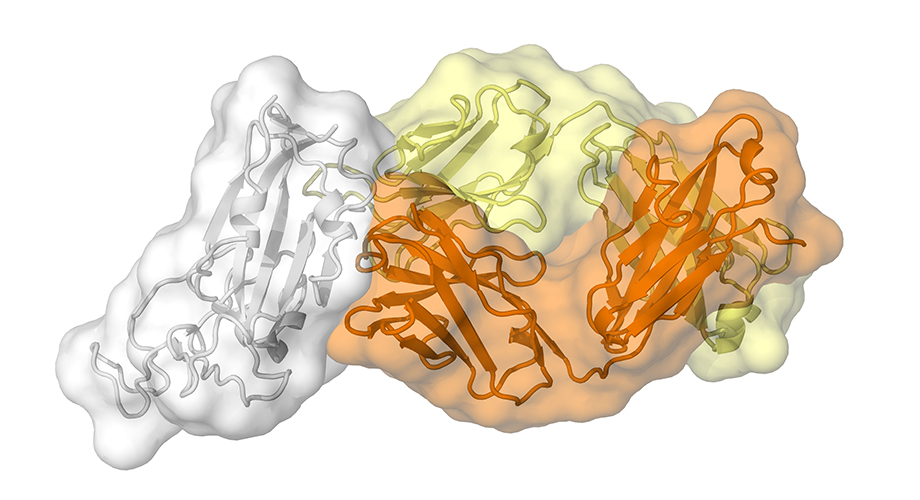
Fig. 2 CryoEM Maps of the mZIKV complexed with Fab A9E (molar ratio of 3Fab:3E).


Saturday, November 15, 2025

AI designed de novo antibodies have atom-level precision

Good news! Impressive! This could be a breakthrough!

"An AI system has designed entire antibodies from scratch that can hit disease targets with atomic-level accuracy.  Scientists in Nobel laureate David Baker’s lab used their RFdiffusion model to create antibodies that latch on to specific sites on viruses, bacterial toxins and cancer-linked proteins, with cryo-electron microscopy confirming the precise fits.
The advance cuts down the need for labour-intensive antibody screening. The early designs aren’t ready to be used in therapeutics, but is the first proof-of-concept that computers can build functional antibodies in silico, which has the potential to speed up drug discovery. The next step will be understanding how they work in the body."

From the abstract:
"Despite the central role of antibodies in modern medicine, no method currently exists to design novel, epitope-specific antibodies entirely in silico.
Instead, antibody discovery currently relies on immunization, random library screening or the isolation of antibodies directly from patients.
Here we demonstrate that combining computational protein design using a fine-tuned RFdiffusion network with yeast display screening enables the de novo generation of antibody variable heavy chains (VHHs), single-chain variable fragments (scFvs) and full antibodies that bind to user-specified epitopes with atomic-level precision.
We experimentally characterize VHH binders to four disease-relevant epitopes. Cryo-electron microscopy confirms the binding pose of designed VHHs targeting influenza haemagglutinin and Clostridium difficile toxin B (TcdB).
A high-resolution structure of the influenza-targeting VHH confirms atomic accuracy of the designed complementarity-determining regions (CDRs). Although initial computational designs exhibit modest affinity (tens to hundreds of nanomolar Kd), affinity maturation using OrthoRep enables production of single-digit nanomolar binders that maintain the intended epitope selectivity.
We further demonstrate the de novo design of scFvs to TcdB and a PHOX2B peptide–MHC complex by combining designed heavy-chain and light-chain CDRs.
Cryo-electron microscopy confirms the binding pose for two distinct TcdB scFvs, with high-resolution data for one design verifying the atomically accurate design of the conformations of all six CDR loops. Our approach establishes a framework for the computational design, screening and characterization of fully de novo antibodies with atomic-level precision in both structure and epitope targeting."

Nature Briefing: Translational Research


Fig. 1: Overview of RFdiffusion for antibody design.


Fig. 3: Cryo-EM structural characterization of de novo-designed VHH binding to influenza haemagglutinin and TcdB.


Friday, April 18, 2025

We’re on the verge of a new universal Spring allergy treatment using the monoclonal antibody Omalizumab

Good news! A recommendable survey article!

"... Omalizumab, sold as Xolair, is an asthma medication that was approved more than 20 years ago, but it has proven successful in treating seasonal allergies in recent preliminary trials. So successful, in fact, that now some doctors in the US are prescribing it for certain patients during hay fever season. It is an injection, rather than a pill or a spray, that’s given a couple of weeks before pollen and grass levels start to rise.

One obvious benefit is you get a single shot and enjoy your spring. But even better, omalizumab can forestall allergic reactions at the source. That means an injection could stop all allergic reactions — not only seasonal allergies but food allergies (such as peanuts) and insect allergies for a prolonged period of time. This class of treatment — monoclonal antibodies, special artificial proteins that carry instructions to the body’s immune system — have the potential to be a genuine all-in-one allergy wonder drug. ...

Large clinical trials are underway in China and Japan, which could lead to omalizumab’s approval in those countries for seasonal allergies. The next generation of monoclonal antibody allergy treatments is already in the works. ...

Monoclonal antibodies stop that process before it begins. They deliver artificial proteins that carry instructions to your immune system to block the receptors that create allergic reactions and prevent the overresponse that releases histamine in the first place. ..."

Credits: Global Health NOW: Pandemic Agreement Reached; A Brain Bank Hangs in the Balance; and Spore-Driven Threats

We’re on the verge of a universal allergy cure "The one allergy treatment to rule them all, explained."

Sunday, December 24, 2023

Immusoft Administers the First Engineered B Cell in a Human Clinical Trial to treat a rare genetic disorder

Good news!

  • "Immusoft announces historic first patient dosed with an engineered B cell investigational therapy ISP-001 in Phase 1 trial for patients with MPS I (Mucopolysaccharidosis type I)
  • Received FDA Orphan Drug Designation and Rare Pediatric Disease Designation for ISP-001 in MPS I
the first patient dosed with engineered B cell therapy ISP-001 in a Phase 1 trial in MPS I, ... MPS I is a rare, genetic disease that affects the body’s ability to produce the enzyme alpha-L-iduronidase (IDUA) ...
The patient was dosed without the need for a preconditioning regimen (required for gene modified stem cells) or immunosuppression (required for systemic virus-delivered gene therapy). ...
"

Immusoft Administers the First Engineered B Cell in a Human Clinical Trial | Business Wire


Monday, April 04, 2022

Antibodies Fight Cancer Too

Good news! Cancer is history soon! Very recommendable article!

"... A new study at the Weizmann Institute of Science, published in Cell, paves the way toward an immunotherapy that will exploit a different, previously unused immune system weapon: naturally produced antibodies. ...
In the past few years, naturally occurring antibodies have commonly been found in cancerous tumors, but their purpose was unknown ...
Next followed nearly six years of research, in the course of which ... scientists ... proved that natural antibodies in cancerous tissue mount a targeted attack on the tumor, binding to its molecules in a precise fit. The researchers then sequenced genomes of intratumor B cells and identified different gene segments encoding antibodies that bind to the tumor.
Perhaps most important, they managed to identify – out of the thousands of proteins in cancer cells – a molecule that is targeted by the newly identified antibodies: an enzyme called MMP14 (MT1-MMP), a membrane-bound protease. In the healthy body, this scissor-like enzyme plays important roles in remodeling tissues – for example, during regeneration or wound healing. In cancer it operates in the tumor’s microenvironment and gets out of control, cutting through the matrix around the cancer cells and thus helping them invade the surrounding tissue and spread to other organs, causing metastasis. The researchers found that the ovarian tumors in their study contained abnormally high levels of the MMP14 enzyme. ...
In attacking this enzyme, some of the antibodies had undergone an evolution of sorts: They had accumulated mutations that improved their fit to the tumor, and specifically, to this enzyme. “We didn’t expect to see such evolution around cancer,” ...
one potential reason may be the immune system’s exhaustion. Whereas fighting an infection may take a week, cancer develops over months, or even years, finding ways to avoid the patient’s immunity. “After trying to fight the cancer over such a long time, the immune system may be too exhausted to supply a full set of weapons needed for effectively killing the tumor – for example, the natural killer cells that are needed for this purpose in addition to the antibodies,” ...
Indeed, the researchers found that very few natural killer cells were present in the tissue samples obtained from patients with ovarian tumors. But when they added such cells and antitumor antibodies together to tissue cultures, the killer cells excelled at destroying the tumors. ..."


The abstract sounds rather complicated.
From the abstract:
"The tumor microenvironment hosts antibody-secreting cells (ASCs) associated with a favorable prognosis in several types of cancer. Patient-derived antibodies have diagnostic and therapeutic potential; yet, it remains unclear how antibodies gain autoreactivity and target tumors. Here, we found that somatic hypermutations (SHMs) promote antibody antitumor reactivity against surface autoantigens in high-grade serous ovarian carcinoma (HGSOC). Patient-derived tumor cells were frequently coated with IgGs. Intratumoral ASCs in HGSOC were both mutated and clonally expanded and produced tumor-reactive antibodies that targeted MMP14, which is abundantly expressed on the tumor cell surface. The reversion of monoclonal antibodies to their germline configuration revealed two types of classes: one dependent on SHMs for tumor binding and a second with germline-encoded autoreactivity. Thus, tumor-reactive autoantibodies are either naturally occurring or evolve through an antigen-driven selection process. These findings highlight the origin and potential applicability of autoantibodies directed at surface antigens for tumor targeting in cancer patients."

Antibodies Fight Cancer Too - Life Sciences | Weizmann Wonder Wander - News, Features and Discoveries Natural antibodies found in tumors could point the way toward improved immunotherapy


Natural anticancer antibodies (green) bound to a single ovarian tumor cell; the cell’s nucleus is in blue. Viewed with confocal microscopy


Wednesday, March 03, 2021

New biological antibiotics can beat tuberculosis

Good news! It is long overdue that humanity defeats the age old nemesis tuberculosis!

"... Researchers at Tel Aviv University have demonstrated in laboratory mice that monoclonal antibodies can be substituted for antibiotics to hinder the growth of tuberculosis germs.
It’s estimated that around a quarter of the world’s population is infected by tuberculosis. ..."

"... In the present study, we explore B cell responses during ATB [active TB], while focusing on the immune-dominant antigen PstS1. We isolate and analyze a total of 85 monoclonal antibodies (mAbs) from one patient with elevated anti-PstS1 responses and find two antibodies, p4-36 and p4-163, from distinct clones that demonstrate inhibitory activity against both BCG and Mtb. Structural analysis reveals that the two antibodies are directed against two different epitopes on PstS1 and do not compete with one another. When administered prior to infection of Balb/c mice with Mtb, both antibodies cause a 50% reduction in lung bacterial burden. Our data show that both p4-36 and p4-163 exhibit antibacterial activity and provide the first proof of concept that protective antibody responses can be generated during the course of active tuberculosis disease ..."

New biological antibiotics can beat tuberculosis - ISRAEL21c This marks the first time that researchers have managed to develop a ‘biological antibiotic’ from human antibodies.

Here is the referenced paper:

Sunday, December 13, 2020

How kids’ immune systems can evade COVID-19

Amazing stuff! Why are we not able to produce those antibodies outside the human body on an industrial scale?

"... Even when [children] are infected with SARS-CoV-2, children are most likely to experience mild or asymptomatic illness ...
Another clue that children’s response to the virus differs from that of adults is that some children develop COVID-19 symptoms and antibodies specific to SARS-CoV-2 but never test positive for the virus on a standard RT-PCR test. ...
Farber says the types of antibody children develop offer clues about what is going on. In a study of 32 adults and 47 children aged 18 or younger, she and colleagues found that children mostly produced antibodies aimed at the SARS-CoV-2 spike protein, which the virus uses to enter cells. Adults generated similar antibodies, but also developed antibodies against the nucleocapsid protein, which is essential for viral replication. Farber says the nucleocapsid protein is typically released in significant quantities only when a virus is widespread in the body.
The kids lacked nucleocapsid-specific antibodies, which suggests that they aren’t experiencing widespread infection, says Farber. Children’s immune responses seem to be able to eliminate the virus before it replicates in large numbers, she says. ..."

How kids’ immune systems can evade COVID Childrens’ untrained immune response seems to be key to eliminating SARS-CoV-2. Young children account for only a small percentage of COVID-19 infections1 — a trend that has puzzled scientists.

Tuesday, September 08, 2020

Coronavirus Antibodies persist for at least four months

Whoever made these claims that the human immune system was not capable of developing long term antibodies against SARS-Cov-2 was either deceiving the public or relied on shoddy, corner cutting research or something similar!

Also note that the Icelandic researchers estimate the death rate for Covid-19 at only 0.3%! That compares to 0.1% for influenza (e.g. WHO)!
Anybody who is not familiar with Iceland: Iceland is one of the top countries in the world when it comes to e.g. genetic research like inheritance etc.

"A sweeping survey in Iceland shows that antibodies against the new coronavirus endure in the body for four months after infection. This counters earlier evidence suggesting that these important immune molecules disappear quickly. The antibody levels of more than 1,200 people who had recovered from COVID-19 rose during the two months after diagnosis, plateaued and then remained at the same level for the duration of the study."
Evidence???

"Our results indicate that antiviral antibodies against SARS-CoV-2 did not decline within 4 months after diagnosis. We estimate that the risk of death from infection was 0.3% and that 44% of persons infected with SARS-CoV-2 in Iceland were not diagnosed by qPCR."

Nature Briefing (9/7/2020)

Link to the underlying research paper (open access):
Humoral Immune Response to SARS-CoV-2 in Iceland

Saturday, April 04, 2020

Clues to COVID-19 coronavirus’s vulnerability emerge from an antibody against SARS | Scripps Research

Good news!

"An antibody recovered from a survivor of the SARS epidemic in the early 2000s has revealed a potential vulnerability of the new coronavirus at the root of COVID-19 ... The structural mapping revealed a nearly identical site on both coronaviruses to which the antibody [anti-SARS-CoV antibody called CR3022] binds, suggesting a functionally important and vulnerable site for this family of coronaviruses. ... That high degree of similarity implies that the site has an important function that would be lost if it mutated significantly. Yet, the site’s function remains mysterious. ... The Wilson lab is known for its pioneering structural studies of antibodies bound to viruses including HIV and influenza. These studies have been used to inform designs of vaccines and antibody drugs, as well as other therapeutics. ... "
Clues to COVID-19 coronavirus’s vulnerability emerge from an antibody against SARS | Scripps Research