Showing posts with label sense of touch. Show all posts

Thursday, March 26, 2026

A new clue to how the skin detects physical touch

Amazing stuff!

"... While scientists have long known that a protein called PIEZO2 acts as a key sensor for touch, it remained unclear why PIEZO2 is specialized for the localized mechanical forces experienced by sensory neurons, whereas its close relative PIEZO1 responds to broader mechanical stresses such as those generated when cells stretch, as occurs in blood vessels. 

Now, a new study  ... clarify how PIEZO2 detects specific types of force and explain why evolution may have selected it as the body’s primary sensor for light touch. This work may guide future exploration into sensory disorders linked to PIEZO2 mutations. ...

Although PIEZO1 and PIEZO2 appear nearly identical in molecular models, they behave very differently in living cells. PIEZO2 is especially important in the somatosensory nervous system, the network of nerve cells that detects touch. These cells are highly sensitive to small indentations, like a light tap on the skin. By contrast, PIEZO1 responds more readily to general membrane stretch, such as when a cell is pulled or swollen, rather than poked at a specific point.

To investigate the difference, the research team used minimal fluorescence photon flux (MINFLUX) super-resolution microscopy ... Whereas other imaging techniques, including cryogenic electron microscopy (cryo-EM), have captured detailed but static images of frozen PIEZO proteins that serve as references for overall shape, MINFLUX allows scientists to track the positions and movements of proteins in cells with nanometer-scale precision. ..."

From the abstract:
"PIEZOs are mechanically gated ion channels that transduce force into electrochemical signals.
PIEZO1 responds to diverse stimuli including membrane stretch2 and shear stress, whereas 
PIEZO2 is generally tuned to detect cellular indentation. The functional specialization of PIEZO2 is proposed to underlie its distinct physiological roles, including mediating the sense of touch. How PIEZO2 achieves this selectivity despite its close structural similarity to PIEZO1 is unclear.
Here we combine single-molecule MINFLUX fluorescence nanoscopy with electrophysiology to link the conformational states of PIEZO2 to channel gating in intact cells. We find that PIEZO2 is intrinsically more rigid than PIEZO1, and that disparate mechanical stimuli paradoxically evoke opposite conformational and gating responses in each channel.
These unique gating properties arise in part from a connection to the actin cytoskeleton, and we identify filamin-B (FLNB) as a molecular tether that is required for this interaction. This complex alters how force is transmitted to PIEZO2 and confers heightened sensitivity to and selectivity for cellular indentation. PIEZO2 and FLNB are co-expressed in somatosensory neurons and colocalize within tens of nanometres at the end organs of cutaneous mechanosensory afferents. These findings help to explain why PIEZO2 is a specialized mechanosensor and provide a molecular blueprint for understanding how cells decode diverse mechanical stimuli across tissues and organ systems."

A new clue to how the body detects physical force | Scripps Research


Fig. 1: The divergent structural mechanics of PIEZO1 and PIEZO2 in a cell membrane.


Wednesday, July 13, 2022

Scientists identify sensor underlying mechanical itch

Good news! This could be a breakthrough!

"Scientists at Scripps Research have identified a protein in sensory nerves that works as a key detector of itch—specifically the “mechanical” itch stimulus of crawling insects, wool fibers, or other irritating objects that touch the skin.

The discovery, published June 22, 2022, in Nature, is the first identification of a sensor for mechanical itch rather than chemically-triggered itch. It could lead to better treatments for itch conditions such as eczema and psoriasis. ...
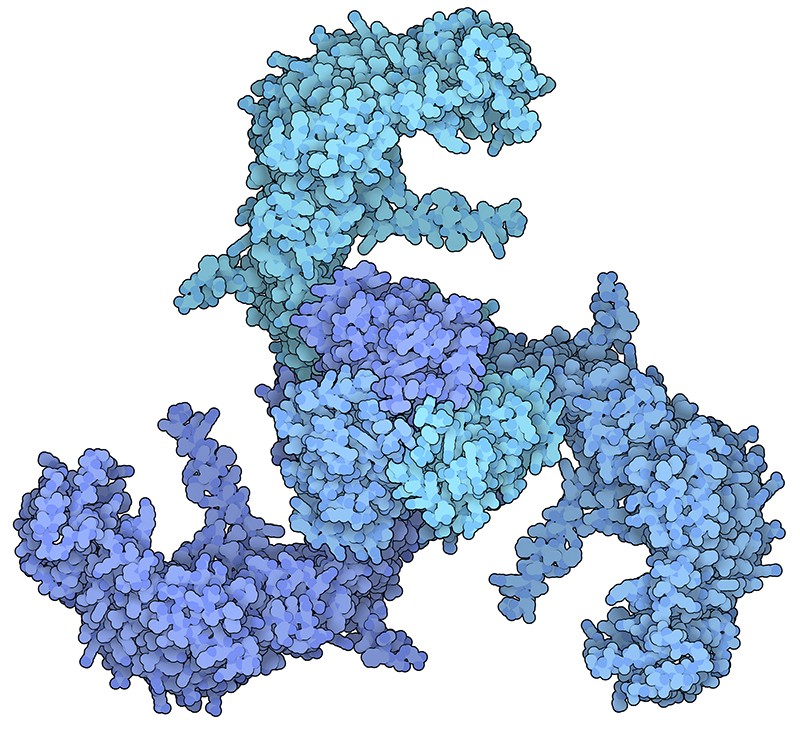
PIEZO1’s role in mechanical itch was unexpected. Patapoutian won a share of last year’s Nobel Prize for Medicine or Physiology for his lab’s pioneering research on PIEZO1 and its sister-protein PIEZO2. These unique, propeller-shaped “mechanosensor” ion channels are embedded in the outer membranes of many cell types. They become activated when mechanically distorted, opening their ion channels and triggering various downstream events. Since 2010, Patapoutian and colleagues have shown that PIEZO2 is a key mechanosensor for light touch, the feeling of the positioning of the body and limbs, and the urge to urinate—all via nerves in various tissues and organs. By contrast, the researchers have found that PIEZO1 has a variety of non-sensory roles throughout the body, for example in blood vessels and red blood cells. ...
By contrast, mice lacking PIEZO1 in their sensory neurons scratched themselves far less when stimulated on the skin with filaments that normally would trigger strong itch sensations. The researchers also showed that a PIEZO1-blocking compound alleviates scratching behaviors in mice with the equivalent of eczema. ..."

From the abstract:
"Itch triggers scratching, a behavioural defence mechanism that aids in the removal of harmful irritants and parasites. ... Mechanical itch can be triggered by light sensations such as wool fibres or a crawling insect. In contrast to chemical itch pathways, which have been extensively studied, the mechanisms that underlie the transduction of mechanical itch are largely unknown. Here we show that the mechanically activated ion channel PIEZO1 is selectively expressed by itch-specific sensory neurons and is required for their mechanically activated currents. Loss of PIEZO1 function in peripheral neurons greatly reduces mechanically evoked scratching behaviours and both acute and chronic itch-evoked sensitization. Finally, mice expressing a gain-of-function Piezo1 allele exhibit enhanced mechanical itch behaviours. Our studies reveal the polymodal nature of itch sensory neurons and identify a role for PIEZO1 in the sensation of itch."

Scripps Research scientists identify sensor underlying mechanical itch | Scripps Research Finding could lead to better drug treatments for chronic itch conditions, like eczema [or psoriasis]


Fig. 1: PIEZO1 is expressed in mouse and human putative itch receptors.


Tuesday, January 14, 2020

The quest to decipher how the body’s cells sense touch

Very recommendable!

"[the] team sequenced the girl’s genes, and those of another girl with similar symptoms, and found mutations in a gene called PIEZO2.  ... just a few years earlier, researchers looking for the mechanisms that cells use to sense touch had found that the gene encoded a pressure-sensitive protein2.

The discovery of Piezo2 and a related protein, Piezo1, was a high point in a decades-long search for the mechanisms that control the sense of touch. The Piezos are ion channels — gates in the cell membrane that allow ions to pass through — that are sensitive to tension. ... Scripps Research in La Jolla, California, ... identified the Piezos. “What we’re realizing now is that mechanical sensation, this physical force, is also a signalling mechanism, and very little is known about it.”

Touch underlies the functioning of almost every tissue and cell type ... In the body, cells sense blood flowing past, air inflating the lungs and the fullness of the stomach or bladder. Hearing is based on cells in the inner ear detecting the force of sound waves."

The quest to decipher how the body’s cells sense touch: From a painful pinch to a soft caress, scientists are zooming in on the pressure-sensitive proteins that allow cells to detect tension and pressure.