Showing posts with label we are not alone. Show all posts

Saturday, May 16, 2026

Astronomer, analyzing old satellite date with the help of AI may have just discovered over 10,000 more explanet candidates than previously known

Good news! We are not alone!

"Astronomers using AI found more than 10,000 possible new planets beyond our solar system in old NASA satellite data, a haul that could double the known exoplanet count if confirmed."

From the abstract:
"The T16 project has produced a uniformly detrended and systematics-corrected set of 83,717,159 TESS Cycle 1 full-frame image (FFI) light curves for stars observed by TESS in its primary mission down to T = 16 mag, enabling sensitive transit searches beyond the official TESS pipelines.
While most existing TESS planet searches focus on relatively bright targets, planet occurrence rates suggest that a substantial number of planets should exist around fainter stars. We therefore use the T16 light curves to conduct a semiautomated search for transiting exoplanets across the full Cycle 1 FFI sample, resulting in 11,554 planet candidates orbiting stars down to the 16th magnitude in the TESS band, with orbital periods between 0.5 and 27 days.
Of these, 10,091 are new planet candidates, and 411 are single-transit events, for which we do not attempt to determine orbital parameters. The remaining 1052 candidates are previously known TESS candidates.
We validate our pipeline through Magellan/Planet Finder Spectrograph radial-velocity follow-up measurements on one of our candidate hosts, TIC 183374187, a metal-poor thick-disk star, confirming the signal as a newly identified hot Jupiter, which we call TIC 183374187 b.
This detection demonstrates our pipeline’s ability to identify real, previously undiscovered, transiting planets.
Overall, this work shows that large-scale, machine learning–assisted transit searches of TESS FFIs can significantly expand the census of transiting planet candidates, in particular around faint stars, providing a rich target set for future validation and follow-up efforts. Our findings more than double the number of known TESS exoplanet candidates."

Thursday, May 14, 2026 - Join The Flyover


Figure 3. Left: example of automated off-center source detection. This example shows an off-center residual, indicating a blend as the source of the measured variability. The checkered pattern at the source position is consistent with Poisson noise or imperfect image subtraction due to the brightness of the source. Right: localized, on-center residual, indicating that the variability is due to the target.


Friday, December 19, 2025

Strongest hints yet of biological activity outside the solar system

Amazing stuff! We are not alone!

hycean planet (from Hydrogen + Ocean)

"A team led by Cambridge astronomers detected the most promising signs yet of a possible biosignature outside the solar system, although they remain cautious. The team found signs of specific chemicals – on Earth, chemicals only produced by life – in the atmosphere of the exoplanet K2-18b, which orbits its star in the habitable zone."

"Using data from the James Webb Space Telescope (JWST), the astronomers, led by the University of Cambridge, have detected the chemical fingerprints of dimethyl sulfide (DMS) and/or dimethyl disulfide (DMDS), in the atmosphere of the exoplanet K2-18b, which orbits its star in the habitable zone. ..."

From the abstract:
"The sub-Neptune frontier has opened a new window into the rich diversity of planetary environments beyond the solar system. The possibility of hycean worlds, with planet-wide oceans and H2-rich atmospheres, significantly expands and accelerates the search for habitable environments elsewhere.
Recent JWST transmission spectroscopy of the candidate hycean world K2-18 b in the near-infrared led to the first detections of the carbon-bearing molecules CH4 and CO2 in its atmosphere, with a composition consistent with predictions for hycean conditions.
The observations also provided a tentative hint of dimethyl sulfide (DMS), a possible biosignature gas, but the inference was of low statistical significance.
We report a mid-infrared transmission spectrum of K2-18 b obtained using the JWST MIRI LRS instrument in the ∼6–12 μm range. The spectrum shows distinct features and is inconsistent with a featureless spectrum at 3.4σ significance compared to our canonical model. We find that the spectrum cannot be explained by most molecules predicted for K2-18 b, with the exception of DMS and dimethyl disulfide (DMDS), also a potential biosignature gas.
We report new independent evidence for DMS and/or DMDS in the atmosphere at 3σ significance, with high abundance (≳10 ppmv) of at least one of the two molecules.
More observations are needed to increase the robustness of the findings and resolve the degeneracy between DMS and DMDS. The results also highlight the need for additional experimental and theoretical work to determine accurate cross sections of important biosignature gases and identify potential abiotic sources. We discuss the implications of the present findings for the possibility of biological activity on K2-18 b."

Your Cambridge research highlights

Strongest hints yet of biological activity outside the solar system "Astronomers have detected the most promising signs yet of a possible biosignature outside the solar system, although they remain cautious."


Transmission spectrum of the habitable zone exoplanet K2-18 b using the JWST MIRI spectrograph.


Sunday, October 05, 2025

Scientists discovered new organic compounds in geysers on Saturn’s moon Enceladus

Amazing stuff! We are not alone!

"Scientists using NASA’s Cassini spacecraft data discovered new organic compounds in geysers on Saturn’s moon Enceladus, strengthening evidence a hidden ocean world could harbor conditions suitable for life."

From the abstract:
"Saturn’s moon Enceladus ejects a plume of ice grains and gases originating from a subsurface ocean via fractures near its south pole. The chemical characterization of organic material in such ice grains was previously conducted via the analysis of mass spectra obtained in Saturn’s E ring by Cassini’s Cosmic Dust Analyzer at impact speeds below 12 km s−1.
Here we present a comprehensive chemical analysis of organic-bearing ice grains sampled directly from the plume during a Cassini fly-by of Enceladus (E5) at an encounter speed of nearly 18 km s−1.
We again detect aryl and oxygen moieties in these fresh ice grains, as previously identified in older E-ring grains.
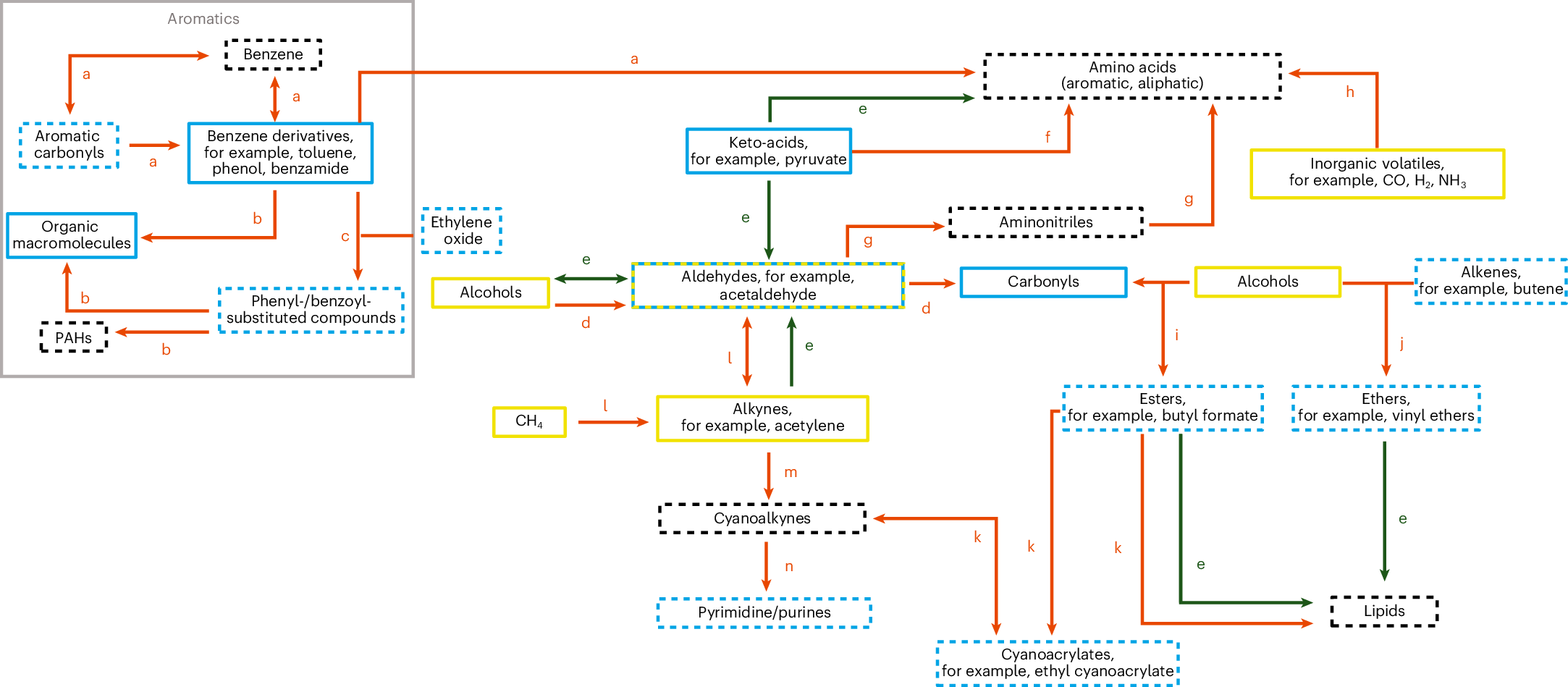
Furthermore, the unprecedented high encounter speed revealed previously unobserved molecular fragments in Cosmic Dust Analyzer spectra, allowing the identification of aliphatic, (hetero)cyclic ester/alkenes, ethers/ethyl and, tentatively, N- and O-bearing compounds. These freshly ejected species are derived from the Enceladus subsurface, hinting at a hydrothermal origin and involvement in geochemical pathways towards the synthesis and evolution of organics."

Thursday, October 2, 2025 - Join The Flyover


Fig. 6: Potential chemical pathways between organic compounds on Enceladus.


Wednesday, July 09, 2025

Desert lichen's remarkable UV resistance could inspire new sunscreens and suggests life is possible on high-radiation exoplanets

Amazing stuff! Extraterrestrial life?

"High-intensity ultraviolet radiation has been found to pose little trouble for a soil-dwelling lichen in the Mojave Desert. After three months of exposure to powerful UVC, the lichen still retained its photosynthetic function and cellular viability thanks to chemical shielding by its secondary metabolites. Compounds derived from these lichens could find UV-blocking applications in cosmetics, materials and agriculture and, according to researchers, provide evidence that exoplanets bombarded by intense UV light are not necessarily hostile to photosynthetic organisms. ...

To investigate, his team continually irradiated Clavascidium lacinulatum, a black desert lichen, for 90 days with 254nm UVC light at 55W/m². Despite receiving a cumulative dose of over 400,000kJ/m², the lichen showed only modest declines in photosynthetic quantum yield and retained approximately 65% viable algal photobiont cells. In comparison, when Deinococcus radiodurans, the most radiation-resistant bacteria ever found, was exposed to the same conditions, it died in under a minute. ...

The chemical basis of the lichen’s resistance lies in its UV-opaque cortex, a structural layer enriched with phenolic lichen acids. These complex aromatic metabolites serve as natural photostabilisers. The researchers identified one such compound with a tentative molecular formula of C₁₀H₁₄N₂O₅. ..."

"... the new research demonstrated that lichen found in the Mojave Desert survived for 3 months under levels of solar radiation previously considered lethal. The common lichen, Clavascidium lacinulatum, was injured, but able to recover and replicate. The results show that photosynthetic life may be possible on planets exposed to intense solar radiation. ..."

From the abstract:
"Many of the recently discovered Earth-like exoplanets are hosted by M and F stars, stars that emit intense UVC, especially during a flare. We studied whether such planets are nevertheless habitable by irradiating a desert lichen, Clavascidium lacinulatum, with 254-nm 55 W/m2 UVC nonstop for 3 months in the laboratory.
Only 50% of its algal photobiont cells were inactivated. To put this in perspective, we used the same setup to challenge the photobiont cells but grown in pure culture, and Deinococcus radiodurans, the most radiation-resistant bacterium on Earth. Entire monolayers of hundreds of cells were inactivated in just 60 s.
Further studies indicated that the cortex of the lichen was rendered UVC-opaque by deposits of phenolic secondary metabolites in its interstices. The lichen was injured only because, while most photochemical reactive oxygen species were quenched, photochemical ozone was not. We conclude that UVC-intense exoplanets are not necessarily uninhabitable to photosynthetic organisms."

Desert lichen's remarkable UV resistance could inspire new sunscreens and suggests life is possible on high-radiation exoplanets | Chemistry World

Desert Lichen Offers New Evidence for the Possibility of Life on Other Planets (original news release) "Lichen from the Mojave Desert can survive, and replicate, under levels of extreme solar radiation found on Earth-like planets in other solar systems."

UVC-Intense Exoplanets May Not Be Uninhabitable: Evidence from a Desert Lichen (open access)


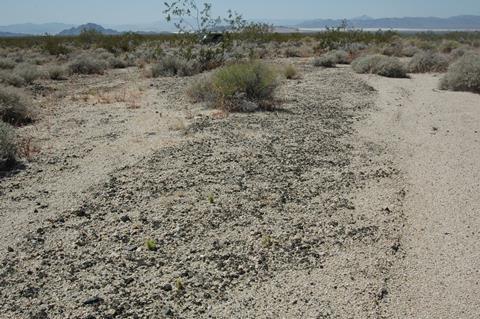
The Mojave Desert in the south-western US, where the soil-dwelling lichen was found
Mojave desert

Thursday, June 19, 2025

Largest aromatic molecule found in deep space is double the size of previous record holder

Good news! We are not alone!

What if the whole universe/cosmos is a just a very advanced virtual world like an aquarium created superintelligent beings? Would this not explain Where is the Galileo Galilei of our time to prove this theory? Just kidding!

"Scientists have identified cyanocoronene for the first time in interstellar space. The molecule, composed of seven interconnected benzene rings and a cyano group was found in the cold, dark Taurus molecular cloud, a region known for its rich chemistry – a cradle for new stars. This new discovery suggests that even more complex molecules may be common in the cosmos. ..."

From the abstract:
"We present the synthesis and laboratory rotational spectroscopy of the seven-ring polycyclic aromatic hydrocarbon (PAH) cyanocoronene (C24H11CN) using a laser-ablation-assisted cavity-enhanced Fourier transform microwave spectrometer. A total of 71 transitions were measured and assigned between 6.8 and 10.6 GHz. Using these assignments, we searched for emission from cyanocoronene in the Green Bank Telescope (GBT) Observations of TMC-1: Hunting Aromatic Molecules project observations of the cold dark molecular cloud TMC-1 using the 100 m GBT. We detect a number of individually resolved transitions in ultrasensitive X-band observations and perform a Markov Chain Monte Carlo analysis to derive best-fit parameters, including a total column density of 
 at a temperature of ... K.
A spectral stacking and matched filtering analysis provides a robust 17.3σ significance to the overall detection. The derived column density is comparable to that of cyano-substituted naphthalene, acenaphthylene, and pyrene, defying the trend of decreasing abundance with increasing molecular size and complexity found for carbon chains. We discuss the implications of the detection for our understanding of interstellar PAH chemistry and highlight major open questions and next steps."

Largest aromatic molecule found in deep space is double the size of previous record holder | Research | Chemistry World

Discovery of the Seven-ring Polycyclic Aromatic Hydrocarbon Cyanocoronene (C24H11CN) in GOTHAM Observations of TMC-1 (open access)


Cyanocoronene was found in a molecular cloud 430 light years from Earth


Friday, April 18, 2025

Life on K2-18b? We’re probably not much closer to that finding than we were the day before. Really!

Don't believe this spoiler attempt! We are not alone!

This is the first time that such chemical signatures were found on an exoplanet! Further, investigations will be forthcoming, I am sure.

"The discovery of living organisms, no matter how primitive, on another world would be the most monumental scientific discovery of anyone’s lifetime. But, despite the headlines that swept the globe yesterday, we’re probably not much closer to that finding than we were the day before. ...

using NASA’s JWST telescope to detect the signatures of the gases dimethyl sulfide (DMS) and dimethyl disulfide (DMDS) in starlight that had passed through the atmosphere of K2-18b, a massive planet 120 light-years from Earth. Here on Earth, those gases are produced by marine phytoplankton and give sea air its distinctive scent. “ ..."

ScienceAdviser

Alien planet’s atmosphere bears chemical hints of life, astronomers claim "A study suggests a distant world has gases linked on Earth to algae, but others urge caution before invoking alien slime"

Thursday, February 20, 2025

Does planetary evolution favor human-like life? Study ups odds we're not alone

Good news! We are not alone! Evolution as a repeatable process of milestones.

"Humanity may not be extraordinary but rather the natural evolutionary outcome for our planet and likely others, according to a new model for how intelligent life developed on Earth. ... 

A team of researchers at Penn State, who led the work, said the new interpretation of humanity's origin increases the probability of intelligent life elsewhere in the universe. ...

In the new study, a team of researchers that included astrophysicists and geobiologists argued that Earth's environment was initially inhospitable to many forms of life, and that key evolutionary steps only became possible when the global environment reached a "permissive" state. ..."

From the abstract:
"According to the “hard-steps” model, the origin of humanity required “successful passage through a number of intermediate steps” (so-called “hard steps”) that were intrinsically improbable in the time available for biological evolution on Earth. This model similarly predicts that technological life analogous to human life on Earth is “exceedingly rare” in the Universe. 
Here, we critically reevaluate core assumptions of the hard-steps model through the lens of historical geobiology. Specifically, we propose an alternative model where there are no hard steps, and evolutionary singularities required for human origins can be explained via mechanisms outside of intrinsic improbability.
Furthermore, if Earth’s surface environment was initially inhospitable not only to human life, but also to certain key intermediate steps required for human existence, then the timing of human origins was controlled by the sequential opening of new global environmental windows of habitability over Earth history."

Does planetary evolution favor human-like life? Study ups odds we're not alone

Does planetary evolution favor human-like life? Study ups odds we’re not alone (original news release) "New theory proposes that humans — and analogous life beyond Earth — may represent the probable outcome of biological and planetary evolution"


Fig. 1. The temporal distribution of our candidate hard steps.


Saturday, November 16, 2024

A formula for life? New model calculates chances of intelligent beings in our universe and beyond

Maybe more life can be found in another universe? Or what has dark matter/energy to do with life?

Even though the abstract does not mention intelligent life, the article references it at least twice.

"In the 1960s, American astronomer Dr Frank Drake came up with an equation to calculate the number of detectable extraterrestrial civilisations in our Milky Way galaxy.

More than 60 years on, researchers at Durham, the University of Edinburgh and the Université de Genève, have produced a new model based on the conditions created by the acceleration of the Universe’s expansion and the amount of stars formed instead. ...

This new research has calculated the fraction of ordinary matter converted into stars over the entire history of the Universe, for different dark energy densities.

The model predicts this fraction would be approximately 27 per cent in a universe that is most efficient at forming stars, compared to 23 per cent in our Universe.

The new model could allow scientists to understand the effects of differing densities of dark energy on the formation of structures in the Universe and the conditions for life to develop in the cosmos. ...

However, for life to develop, there would need to be regions where matter can clump together to form stars and planets, and it would need to remain stable for billions of years to allow life to evolve.

Since stars are a precondition for the emergence of life as we know it, this new calculation could be used to estimate the probability of generating intelligent life in our Universe, and in a multiverse scenario of hypothetical different universes. ..."

"... However, this argument neglects the question of how long intelligent life may to take to emerge following the formation of a star. This is an issue on which cosmologists are unlikely to have a reliable opinion. ..."

From the abstract:
"We present an extended analytical model for cosmic star formation, with the aim of investigating the impact of cosmological parameters on the star formation history within the CDM paradigm. Constructing an ensemble of flat CDM models where the cosmological constant varies between and  times the observed value, ⁠, we find that the fraction of cosmic baryons that are converted into stars over the entire history of the universe peaks at  27 per cent for ⁠. We explain, from first principles, that the decline of this asymptotic star formation efficiency for lower and higher values of  is driven, respectively, by the astrophysics of star formation, and by the suppression of cosmic structure formation. However, the asymptotic efficiency declines slowly as  increases, falling below 5 per cent only for ⁠. Making the minimal assumption that the probability of generating observers is proportional to this efficiency, and following Weinberg in adopting a flat prior on ⁠, the median posterior value of  is ⁠. Furthermore, the probability of observing  is only 0.5 per cent. Although this work has not considered recollapsing models with⁠, the indication is thus that  appears to be unreasonably small compared to the predictions of the simplest multiverse ensemble. This poses a challenge for anthropic reasoning as a viable explanation for cosmic coincidences and the apparent fine-tuning of the Universe: either the approach is invalid or more parameters than  alone must vary within the ensemble."

A formula for life? New model calculates chances of intelligent beings in our universe and beyond "The chances of intelligent life emerging in our universe—and in any hypothetical ones beyond it—can be estimated by a new theoretical model which has echoes of the famous Drake Equation."

Formula for alien life: Drake Equation gets a dark energy update

New model could calculate probability of intelligent life in our Universe and beyond (original news release) "A team of astrophysicists, led by our Institute for Computational Cosmology, have developed a new model that could estimate how likely it is for intelligent life to emerge in our Universe and beyond."


How the same region of the Universe would look in terms of the amount of stars for different values of the dark energy density.


Saturday, October 05, 2024

Often overlooked, F-type stars could have planets in the habitable zone and harbour life

Amazing stuff! We are not alone! One day we will chat with other civilizations!

"... Our Sun, for example, is a G-type star known as a yellow dwarf. G-type stars have surface temperatures between 5,300 and 6,000 kelvin (K).

F-type stars fall right in the middle of the spectrum. They are larger and hotter than our Sun. They are yellowish white in colour and have surface temperatures of 6,000–7,600K. ..."

"... “F-type star systems are important and intriguing cases when dealing with habitability due to the larger HZs [habitable zone],” ..."

From the abstract:
"F-type star–planet systems represent an intriguing case for habitability studies. Although F-type stars spend considerably less time on the main sequence (MS) than G-, K-, and M-type stars, they still offer a unique set of features, allowing for the principal possibility of exolife. Examples of these features include the increased widths of stellar habitable zones as well as the presence of enhanced UV flux, which in moderation may have added to the origin of life in the Universe. In this study, we pursue a detailed statistical analysis of the currently known planet-hosting F-type stars by making use of the NASA Exoplanet Archive. After disregarding systems with little or no information on the planet(s), we identify 206 systems of interest. We also evaluate whether the stars are on the MS based on various criteria. In one approach, we use the stellar evolution code MESA. Depending on the adopted criterion, about 60–80 stars have been identified as MS stars. In 18 systems, the planet spends at least part of its orbit within the stellar habitable zone. In one case, i.e., HD 111998, known as 38 Vir, the planet is situated in the habitable zone at all times. Our work may serve as a basis for future studies, including studies on the existence of Earth-mass planets in F-type systems, as well as investigations of possibly habitable exomoons hosted by exo-Jupiters, as the lowest-mass habitable zone planet currently identified has a mass estimate of 143 Earth masses."

Often overlooked, F-type stars could have planets in the habitable zone and harbour life "An often-overlooked type of star could have planets in the habitable zone and harbour life, according to new research."


Saturday, June 08, 2024

Eureka moment as two teams of astronomers find new nearest potentially habitable Earth-size planet near our solar system

Good news! We are not alone!

"... analysed observation data from NASA’s TESS (Transiting Exoplanet Survey Satellite) and says it reveals “…the nearest transiting, temperate, Earth-sized planet found to date.”

The exoplanet is named Gliese 12 b. It orbits the small but bright and low magnetic activity star Gliese 12.

Their finding is documented in a paper ..., and a Japanese team has simultaneously released research ... into the same planet saying: “The discovery of a planet similar to Venus around a star in the neighborhood of the Solar System raises hopes that astronomers may someday unlock the secret to why life appeared on Earth.” ..."

From abstract1:
"We report on the discovery of Gliese 12 b, the nearest transiting temperate, Earth-sized planet found to date. Gliese 12 is a bright (V = 12.6 mag, K = 7.8 mag) metal-poor M4V star only 12.162 ± 0.005 pc away from the Solar system with one of the lowest stellar activity levels known for M-dwarfs. A planet candidate was detected by TESS based on only 3 transits in sectors 42, 43, and 57, with an ambiguity in the orbital period due to observational gaps. We performed follow-up transit observations with CHEOPS and ground-based photometry with MINERVA-Australis, SPECULOOS, and Purple Mountain Observatory, as well as further TESS observations in sector 70. We statistically validate Gliese 12 b as a planet with an orbital period of 12.76144 ± 0.00006 d and a radius of 1.0 ± 0.1 R⊕, resulting in an equilibrium temperature of ∼315 K. Gliese 12 b has excellent future prospects for precise mass measurement, which may inform how planetary internal structure is affected by the stellar compositional environment. Gliese 12 b also represents one of the best targets to study whether Earth-like planets orbiting cool stars can retain their atmospheres, a crucial step to advance our understanding of habitability on Earth and across the galaxy."

From abstract2:
"Recent discoveries of Earth-sized planets transiting nearby M dwarfs have made it possible to characterize the atmospheres of terrestrial planets via follow-up spectroscopic observations. However, the number of such planets receiving low insolation is still small, limiting our ability to understand the diversity of the atmospheric composition and climates of temperate terrestrial planets. We report the discovery of an Earth-sized planet transiting the nearby (12 pc) inactive M3.0 dwarf Gliese 12 (TOI-6251) with an orbital period (Porb) of 12.76 days. The planet, Gliese 12 b, was initially identified as a candidate with an ambiguous Porb from TESS data. We confirmed the transit signal and Porb using ground-based photometry with MuSCAT2 and MuSCAT3, and validated the planetary nature of the signal using high-resolution images from Gemini/NIRI and Keck/NIRC2 as well as radial velocity (RV) measurements from the InfraRed Doppler instrument on the Subaru 8.2 m telescope and from CARMENES on the CAHA 3.5 m telescope. X-ray observations with XMM-Newton showed the host star is inactive, with an X-ray-to-bolometric luminosity ratio of [picture]. Joint analysis of the light curves and RV measurements revealed that Gliese 12 b has a radius of 0.96 ± 0.05 R⊕, a 3σ mass upper limit of 3.9 M⊕, and an equilibrium temperature of 315 ± 6 K assuming zero albedo. The transmission spectroscopy metric (TSM) value of Gliese 12 b is close to the TSM values of the TRAPPIST-1 planets, adding Gliese 12 b to the small list of potentially terrestrial, temperate planets amenable to atmospheric characterization with JWST."

Eureka moment as astronomers find new "potentially habitable" Earth-size planet


Figure 4 (from first research article) Historical images of the field surrounding Gliese 12. Left: 2MASS J band image from 1998 (Skrutskie et al. 2006) Right: DSS image from 1949 (Lasker et al. 1990). The blue circle indicate the location of Gliese 12 when it was observed by TESS. The blue cross indicates the location of Gliese 12 when it was observed by 2MASS. Blue dots indicate all the other stars in the field-of-view within Δ T Mag 7.5 of Gliese 12. A background eclipsing binary that can mimic the 1.1 ppt transit signal needs to be within Δ T Mag 7.5 of Gliese 12. These images can be used to rule out the existence of such stars when TESS is observing Gliese 12.


Wednesday, April 17, 2024

Saturn’s ocean moon Enceladus is able to support life − my research team is working out how to detect extraterrestrial cells there

Good news! We are not alone! Perhaps, other forms of life are closer than we thought!

"Saturn has 146 confirmed moons – more than any other planet in the solar system – but one called Enceladus stands out. It appears to have the ingredients for life.

From 2004 to 2017, Cassini – a joint mission between NASA, the European Space Agency and the Italian Space Agency – investigated Saturn, its rings and moons. Cassini delivered spectacular findings. Enceladus, only 313 miles (504 kilometers) in diameter, harbors a liquid water ocean beneath its icy crust that spans the entire moon.

Geysers at the moon’s south pole shoot gas and ice grains formed from the ocean water into space. ..."

Saturn’s ocean moon Enceladus is able to support life − my research team is working out how to detect extraterrestrial cells there

The interior of Saturn’s moon Enceladus. Surface: NASA/JPL-Caltech/Space Science Institute; interior: LPG-CNRS/U. Nantes/U. Angers. Graphic composition: ESA


Saturday, December 09, 2023

Key chemical found at the edge of the Milky Way galaxy suggests alien life is common thanks to e.g. Galactic Fountains

Amazing stuff! We are not alone!

"Phosphorus – a key ingredient for life as we know it – was thought to be relatively rare in space. But now, astronomers have detected a surprising amount of the stuff on the fringes of the galaxy, suggesting life may be more common in the cosmos. ...
Life on Earth requires six critical elements: nitrogen, carbon, hydrogen, oxygen, phosphorus and sulfur (NCHOPS). Most of those are relatively easy to come by, as they’re blown into space as common low-mass stars reach the end of their lives. Phosphorus, meanwhile, is much rarer, and as such is generally considered the limiting factor for life in the universe. ...
The team used the radio telescopes at the Arizona Radio Observatory and IRAM in Spain to observe a molecular cloud named WB89-621. And sure enough, they detected the telltale signs of phosphorus monoxide and phosphorus nitride.

This cloud is located about 74,000 light-years away from the center of the Milky Way, which is almost twice as far out as phosphorus had previously been found. ...
Other teams have found evidence of phosphorus-rich stars, which could be contributing too. ..."

"... Their observations detected the telltale signatures of phosphorus – specifically phosphorus monoxide and phosphorus nitride – in a molecular cloud named WB89-621. Located nearly 74,000 light-years from the center of the Milky Way, the discovery extends the presence of phosphorus almost twice as far out as where it was known to exist. ..."

From the abstract:
"Despite its importance in planet formation and biology, phosphorus has been identified only in the inner 12 kpc of the Galaxy. The study of this element has been hindered in part by unfavourable atomic transitions. Phosphorus is thought to be created by neutron capture on 29Si and 30Si in massive stars, and released into the interstellar medium by Type II supernova explosions. However, models of galactic chemical evolution must arbitrarily increase the supernovae production to match observed abundances. Here we present the detection of gas-phase phosphorus in the Outer Galaxy through millimetre spectra of PO and PN. Rotational lines of these molecules were observed in the dense cloud WB89-621, located 22.6 kpc from the Galactic Centre. The abundances of PO and PN in WB89-621 are comparable to values near the Solar System. Supernovae are not present in the Outer Galaxy, suggesting another source of phosphorus, such as ‘Galactic Fountains’, where supernova material is redistributed through the halo and circumgalactic medium. However, fountain-enriched clouds are not found at such large distances. Any extragalactic source, such as the Magellanic Clouds, is unlikely to be metal rich. Phosphorus instead may be produced by neutron-capture processes in lower mass asymptotic giant branch stars which are present in the Outer Galaxy. Asymptotic giant branch stars also produce carbon, flattening the extrapolated metallicity gradient and accounting for the high abundances of C-containing molecules in WB89-621."

Key chemical found at the edge of galaxy suggests alien life is common

The case of the missing phosphorus: Astronomers find life ingredient at galaxy's edges The discovery of phosphorus in a molecular cloud at the edge of the Milky Way galaxy challenges current views of how the element originates and extends the galactic habitable zone.


Fig. 3: Abundances of PN and PO, as well as atomic phosphorus, as a function of distance from the Galactic Centre.


Thursday, December 07, 2023

What if Humans Are NOT Earth's First Civilization? | Silurian Hypothesis

Recommendable! The idea that a high civilization may have lived on earth billions of years ago is intriguing. I don't remember I ever heard this hypothesis before.
The many references to the Global Warming hoax and Climate Change religion were irritating!

Thursday, September 21, 2023

Why have aliens not contacted us yet?

Offering a short answer: Either we are too primitive to notice or aliens think we are too primitive to bother!

Friday, September 15, 2023

For the first time Methane and carbon dioxide found in atmosphere of habitable-zone exoplanet

We are not alone!

Uh, there is CO2 on this exoplanet! Should we be concerned about climate change? Maybe we have to rescue our brothers and sisters on this exoplanet? (Caution: Satire)

"The results are consistent with an ocean-covered surface underneath a hydrogen-rich atmosphere. The discovery provides a glimpse into a planet unlike anything else in our Solar System, and raises interesting prospects about potentially habitable worlds elsewhere in the Universe.
K2-18 b — which is 8.6 times as massive as Earth — orbits the cool dwarf star K2-18 in the habitable zone and lies 110 light years from Earth in the constellation of Leo. A first insight into the atmosphere of  K2-18 b came from observations with the Hubble Space Telescope but the atmospheric composition has been a subject of debate. The same researchers studied K2-18 b in 2020 and 2021, and identified it as belonging to a new class of habitable exoplanets called ‘Hycean’ worlds which could accelerate the search for life elsewhere. This prompted them to take a more detailed look with JWST, Hubble’s successor. ..."

From the abstract:
"The search for habitable environments and biomarkers in exoplanetary atmospheres is the holy grail of exoplanet science. The detection of atmospheric signatures of habitable Earth-like exoplanets is challenging due to their small planet-star size contrast and thin atmospheres with high mean molecular weight. Recently, a new class of habitable exoplanets, called Hycean worlds, has been proposed, defined as temperate ocean-covered worlds with H2-rich atmospheres. Their large sizes and extended atmospheres, compared to rocky planets of the same mass, make Hycean worlds significantly more accessible to atmospheric spectroscopy with the JWST. Here we report a transmission spectrum of the candidate Hycean world, K2-18 b, observed with the JWST NIRISS and NIRSpec instruments in the 0.9-5.2 μm range. The spectrum reveals strong detections of methane (CH4) and carbon dioxide (CO2) at 5σ and 3σ confidence, respectively, with high volume mixing ratios of ~1% each in a H2-rich atmosphere. The abundant CH4 and CO2 along with the non-detection of ammonia (NH3) are consistent with chemical predictions for an ocean under a temperate H2-rich atmosphere on K2-18 b. The spectrum also suggests potential signs of dimethyl sulfide (DMS), which has been predicted to be an observable biomarker in Hycean worlds, motivating considerations of possible biological activity on the planet. The detection of CH4 resolves the long-standing missing methane problem for temperate exoplanets and the degeneracy in the atmospheric composition of K2-18 b from previous observations. We discuss possible implications of the findings, open questions, and future observations to explore this new regime in the search for life elsewhere."

Methane and carbon dioxide found in atmosphere of habitable-zone exoplanet An international team of astronomers led by the University of Cambridge has used data from the NASA/ESA/CSA James Webb Space Telescope to discover methane and carbon dioxide in the atmosphere of K2-18 b, an exoplanet in the ‘Goldilocks zone’. This is the first time that carbon-based molecules have been discovered in the atmosphere of an exoplanet in the habitable zone.


Tuesday, April 18, 2023

Earth-like exoplanets may be much more common within our Milky Way galaxy than previously thought

We are not alone! Why would God only create one planet earth?

"Key takeaways
  • ... scientists ... challenge the theory that Earth’s water came from asteroids and comets colliding with our planet.
  • The scientists identified a process through which “homemadewater can be easily produced on planets throughout our galaxy.
  • The study reveals that planets like Earth might not just be common — but inevitable. ..."
From the abstract:
"Earth’s water, intrinsic oxidation state and metal core density are fundamental chemical features of our planet. Studies of exoplanets provide a useful context for elucidating the source of these chemical traits. Planet formation and evolution models demonstrate that rocky exoplanets commonly formed with hydrogen-rich envelopes that were lost over time. These findings suggest that Earth may also have formed from bodies with hydrogen-rich primary atmospheres. Here we use a self-consistent thermodynamic model to show that Earth’s water, core density and overall oxidation state can all be sourced to equilibrium between hydrogen-rich primary atmospheres and underlying magma oceans in its progenitor planetary embryos. Water is produced from dry starting materials resembling enstatite chondrites as oxygen from magma oceans reacts with hydrogen. Hydrogen derived from the atmosphere enters the magma ocean and eventually the metal core at equilibrium, causing metal density deficits matching that of Earth. Oxidation of the silicate rocks from solar-like to Earth-like oxygen fugacities also ensues as silicon, along with hydrogen and oxygen, alloys with iron in the cores. Reaction with hydrogen atmospheres and metal–silicate equilibrium thus provides a simple explanation for fundamental features of Earth’s geochemistry that is consistent with rocky planet formation across the Galaxy."

Earth-like exoplanets may be much more common than previously thought A new study led by UCLA scientists on how water forms on young exoplanets with hydrogen atmospheres and molten oceans of magma suggests that Earth-like planets may not be as uncommon as once thought and that the presence of water on such planets may be almost inevitable.

Earth-like planets may be an inevitability A UCLA-led study provides insights into how water might be formed by planets across the galaxy

Friday, January 13, 2023

Webb telescope finds not so distant exoplanet almost exactly the size of Earth only 41 light years away

Good news! I don't think the size matters that much!

Only 41 light years that is almost in our neighborhood!

Webb telescope finds distant exoplanet almost exactly the size of Earth | Hub Using NASA's James Webb Space Telescope, a team led by researchers at the Johns Hopkins Applied Physics Laboratory confirmed the discovery of an exoplanet orbiting a red dwarf star roughly 41 light-years away

A light curve from NASA’s James Webb Space Telescope’s Near-Infrared Spectrograph (NIRSpec) shows the change in brightness from the LHS 475 star system over time as the planet transited the star on Aug. 31, 2022. LHS 475b is a rocky, Earth-sized exoplanet that orbits a red dwarf star roughly 41 light-years away. The planet is extremely close to its star, completing one orbit in two Earth-days. The planet’s confirmation was made possible by Webb’s data.