Showing posts with label microorganisms. Show all posts

Saturday, March 09, 2024

Research Team Creates a major aromatic component of the Scent of Jasmine from Microorganisms​

Amazing stuff! Intoxicating! I toast to that with my next cup of Jasmine tea! 😊

"... research team ... revealed the development of the first microbial process to effectively produce benzyl acetate, an industrially useful compound, from renewable carbon sources such as glucose.  ..."

From the abstract:
"Benzyl acetate is a valuable aromatic ester compound with diverse applications in the flavor and fragrance industries. However, its current synthesis primarily relies on inefficient plant extraction methods or chemical/enzymatic processes that depend on non-renewable substrates. Here we report a sustainable approach to benzyl acetate production from D-glucose using metabolically engineered Escherichia coli strains. We explored both benzoic acid-dependent and -independent synthetic pathways by either dividing the pathway between upstream and downstream strain pairs or by introducing the complete pathway into single, integrated strains. In an optimized two-phase extractive fermentation process, a delayed co-culture of an upstream strain that converts D-glucose to benzoic acid and a downstream strain that transforms benzoic acid into benzyl acetate yielded 2,238.3 ± 171.9 mg l−1 of benzyl acetate from D-glucose in 108 h (or 2,204.0 ± 192.2 mg l−1 in 96 h). The economic competitiveness of the microbial process for sustainable benzyl acetate production was also assessed by techno-economic analysis."

KAIST Research Team Creates the Scent of Jasmine from Microorganisms​ The fragrance of jasmine and ylang-ylang, used widely in the manufacturing of cosmetics, foods, and beverages, can be produced by direct extraction from their respective flowers. In reality, this makes it difficult for production to meet demand, so companies use benzyl acetate, a major aromatic component of the two fragrances that is chemically synthesized from raw materials derived from petroleum.

A microbial process for the production of benzyl acetate (open access)


Figure 1. Production of benzyl acetate through co-culture of upstream and downstream strains harboring the benzoic acid-dependent pathway.


Friday, May 19, 2023

Newly discovered cold-adapted microbes digest plastic at low temperatures

Plastic waste management is a non issue! If anyone suffers from plastophobia, please seek immediate medical help!

"Swiss scientists have discovered new cold-adapted microorganisms that can degrade different types of plastic at temperatures lower than currently required. ...
Already, several [other] microorganisms that "eat" plastic have been discovered. These bacteria and fungi produce enzymes that break down the plastic, but when these enzymes are expanded to an industrial scale, they usually only work at temperatures above 86 °F (30 °C). ...
Each of the strains was assayed to assess its ability to digest non-biodegradable polyethylene (PE) and biodegradable polyester-polyurethane (PUR), as well as two commercially available biodegradable mixtures of polybutylene adipate terephthalate (PBAT) and polylactic acid (PLA).
The scientists found that at 59 °F, more than half (56%) of strains – 11 fungi and eight bacteria – digested PUR, and 14 fungi and three bacteria digested PBAT and PLA. None of the strains could digest PE, even after 126 days spent on the plastic. ..."

From the abstract:
"Increasing plastic production and the release of some plastic in to the environment highlight the need for circular plastic economy. Microorganisms have a great potential to enable a more sustainable plastic economy by biodegradation and enzymatic recycling of polymers. Temperature is a crucial parameter affecting biodegradation rates, but so far microbial plastic degradation has mostly been studied at temperatures above 20°C. Here, we isolated 34 cold-adapted microbial strains from the plastisphere using plastics buried in alpine and Arctic soils during laboratory incubations as well as plastics collected directly from Arctic terrestrial environments. We tested their ability to degrade, at 15°C, conventional polyethylene (PE) and the biodegradable plastics polyester-polyurethane (PUR; Impranil®); ecovio® and BI-OPL, two commercial plastic films made of polybutylene adipate-co-terephthalate (PBAT) and polylactic acid (PLA); pure PBAT; and pure PLA. Agar clearing tests indicated that 19 strains had the ability to degrade the dispersed PUR. Weight-loss analysis showed degradation of the polyester plastic films ecovio® and BI-OPL by 12 and 5 strains, respectively, whereas no strain was able to break down PE. NMR analysis revealed significant mass reduction of the PBAT and PLA components in the biodegradable plastic films by 8 and 7 strains, respectively. Co-hydrolysis experiments with a polymer-embedded fluorogenic probe revealed the potential of many strains to depolymerize PBAT. Neodevriesia and Lachnellula strains were able to degrade all the tested biodegradable plastic materials, making these strains especially promising for future applications. Further, the composition of the culturing medium strongly affected the microbial plastic degradation, with different strains having different optimal conditions. In our study we discovered many novel microbial taxa with the ability to break down biodegradable plastic films, dispersed PUR, and PBAT, providing a strong foundation to underline the role of biodegradable polymers in a circular plastic economy."

Newly discovered cold-adapted microbes digest plastic at low temperatures

Plastic gobblers found in alpine and arctic soils Scientists at the Swiss Federal Institute for Forest, Snow and Landscape Research WSL have discovered microbes that degrade plastic at cool temperatures. This opens up new perspectives for recycling certain types of plastic. Most known microbes require at least 30°C for their decomposition work.


Under the microscope the decomposition work by the microbes is visible on this biodegradable plastic foil.


Saturday, June 25, 2022

Largest bacterium ever found is surprisingly complex and visible to the human eye

Amazing stuff! What! Possibly a new species in the tree of life was found?

"... These filament-like organisms, up to a centimetre in length, are the biggest single-cell bacteria yet to be found. ... There are other whoppers in the Thiomargarita bacteria family, but the next-largest is only around 750 micrometres in length. ...
Thiomargarita magnifica is remarkable for more than its size. In other bacteria, genetic material floats freely inside the cell, usually in the form of just one circular chromosome. In T. magnifica, the team saw that the genetic information was stored in hundreds of thousands of pepins [kind of organelle]. Each of these contains DNA and ribosomes, molecular machines that translate instructions from DNA to make proteins. The pepins collectively host up to 700,000 copies of the genome. ..."

From the abstract:
"Cells of most bacterial species are around 2 micrometers in length, with some of the largest specimens reaching 750 micrometers. Using fluorescence, x-ray, and electron microscopy in conjunction with genome sequencing, we characterized Candidatus (Ca.) Thiomargarita magnifica, a bacterium that has an average cell length greater than 9000 micrometers and is visible to the naked eye. These cells grow orders of magnitude over theoretical limits for bacterial cell size, display unprecedented polyploidy of more than half a million copies of a very large genome, and undergo a dimorphic life cycle with asymmetric segregation of chromosomes into daughter cells. These features, along with compartmentalization of genomic material and ribosomes in translationally active organelles bound by bioenergetic membranes, indicate gain of complexity in the Thiomargarita lineage and challenge traditional concepts of bacterial cells."

Largest bacterium ever found is surprisingly complex ‘Microorganism’ is a misnomer when it comes to centimetre-long Thiomargarita magnifica.


Pictured next to a one cent coin


Monday, March 16, 2020

These microbial communities have learned to live at Earth’s most extreme reaches

Global Warming is a hoax! We humans do not even know how much live their is on our planet! 
These extreme microorganisms are amazing stuff!

"These types of microorganism were once considered ‘extreme’ forms of life, but research over the past couple of decades has shown that as much as 70% of all microbes on Earth live in similarly harsh environments. Other studies have shown that life is abundant in places long deemed inhospitable, such as deep sediments under the oceans, the cold deserts of Antarctica and even the stratosphere. ... And others, like those found buried deep in the sludgy ocean floor, live so incredibly slowly that they might survive to be hundreds or thousands of years old, eating and reproducing infrequently ... Early hints that life existed deep within Earth’s crust first surfaced in the 1920s, when oil prospectors noticed that groundwater around their oil fields was laced with hydrogen sulfide and bicarbonate, which are both made by bacteria. In the 1980s, microbiologists began counting the microbes in cores brought back from the Deep Sea Drilling Project — a large-scale effort to explore the sea floor — and were astounded by the numbers. ... It wasn’t until the early 2000s, with the launch of an expedition devoted solely to exploring life in the deep biosphere, that scientists started to understand the biology of these deep-sea-dwelling microbes. ... Most of these edge dwellers can’t be studied in a lab: they simply don’t grow in culture. ..."

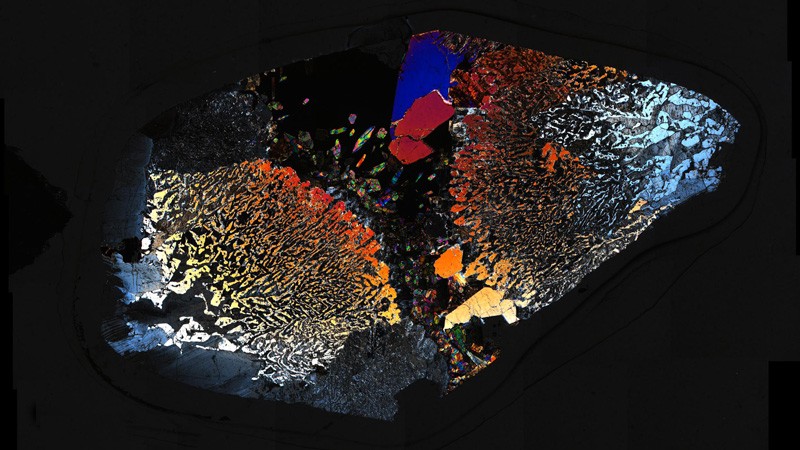
These microbial communities have learned to live at Earth’s most extreme reaches: Researchers are uncovering the survival strategies of microorganisms found in rocks buried deep beneath the ocean floor.

A transmission light micrograph of a rock thin section: a pattern of colours on a dark background.

Friday, August 03, 2012

Senility Caused By Placebo And Nocebo Effects

A Bit Of Background

I have been familiar with the Placebo effect for decades, but only recently I learnt about the Nocebo effect (in German language) from an article published online on 7/12/2012 by my favorite home town newspaper Frankfurter Allgemeine Zeitung. The following blog is not really related to the above mentioned article about the Nocebo effect.

Faith Moves Mountains

We read in Matthew 17:20 of the New Testament that faith as small as a mustard seed can make a mountain move from here to there and that nothing will be impossible. Did the Bible anticipate Placebo and Nocebo effects?

Besides faith, there is also individual will power: A will to succeed in life; a will to be healthy etc.

A Conjecture About Senility And Its Causes

I am not trying here to explain exhaustively all causes of senility. But I believe that some people as they grow older are conditioned or resigned to experience the usual frailties etc. that come with age, because this is supposed to happen with old age and we are biologically programmed to deteriorate with age.

We all know from experience that seniors have their moments. It’s considered normal by everyone.

It’s like a Placebo effect: I am old now, thus I am expected to have memory lapses, unsteady gait, etc.

It’s like a Nocebo effect, because I am old I should now be more absent minded, more napping, more prone to fall etc. With age also comes anxiety about age related frailties.


How do the trillions or so of microorganisms in our gut react when we have Placebo or Nocebo effects later in life.