Showing posts with label energy storage. Show all posts

Wednesday, February 04, 2026

Lithium-free battery breaks voltage barrier for ultra-cheap energy storage

Good news! Is this perhaps a breakthrough!

"... Unlike conventional lithium-ion batteries, sodium–sulfur batteries store energy using metallic sodium as the anode and elemental sulfur (S₈) as the cathode – two elements that are both abundant and inexpensive. ..."

From the abstract:
"Room-temperature sodium–sulfur (Na–S) batteries offer a sustainable energy storage solution to conventional lithium (Li)-based systems, owing to the high element abundances and theoretical electrochemical performance. However, their practical applications have been severely hindered by the low discharge voltages and the need for largely excessive Na metal anode.
Here we report a 3.6 V class Na–S battery featuring a high-valence sulfur/sulfur tetrachloride (S/SCl4) cathode chemistry and anode-free configuration. We show that sodium dicyanamide (NaDCA) can simultaneously unlock reversible S/SCl4 conversion and Na plating/stripping in a non-flammable chloroaluminate electrolyte.
This design enables the maximum energy and power densities of 1,198 Wh kg−1 and 23,773 W kg−1, respectively, calculated on the basis of the total electrode mass including both the cathode and the anode. Also, we demonstrate facilitated S/SCl4 conversion by incorporating a bismuth-coordinated covalent organic framework (Bi-COF) catalyst (8 wt% loading) into the S cathode, which realizes an impressive discharge capacity of 1,206 mAh g(sulfur+catalyst)−1, contributing to a maximum energy density of 2,021 Wh kg−1 calculated on the basis of the total electrode mass.
With an estimated cost of US$5.03 per kWh and excellent scalability, our anode-free Na–S battery shows promise in grid energy storage and wearable electronics."

Lithium-free battery breaks voltage barrier for ultra-cheap energy storage | Research | Chemistry World


Thursday, October 16, 2025

Prototype flow battery runs on sugar and vitamins

Amazing stuff! Desperate for better batteries in the age of EVs and robotics! 😊

"Chemists have designed a new kind of flow battery that takes inspiration from biological systems to produce energy from glucose (sugar) with the help of a riboflavin (vitamin B2) catalyst. ...

The team constructed the electrodes from carbon. The anolyte flowing around the anode contained glucose and an active form of riboflavin, which replaced expensive noble metals that would traditionally be used as the catalyst. ..."

From the abstract:
"Glucose as a biofuel offers unique advantages, including low-temperature electricity generation, easy accessibility, low storage cost, and adaptability for on-demand power generation.
Riboflavin, commonly known as Vitamin B2, is a critical component in biological systems, participating in many metabolic reactions as an enzyme cofactor.
Drawing inspiration from these metabolic processes, we demonstrate a flow cell for the electrochemical glucose oxidation reaction (GOR), using riboflavin as an environmentally friendly mediator to replace traditional noble metal catalysts. When pairing with an O2 electrode under alkaline conditions, the glucose flow cell achieves a peak power density of 13 mW/cm2, 20 times greater than the previously reported value under similar conditions.
The demonstrated vitamin-mediated biofuel flow cell introduces a new catalytic design approach for a glucose-based biofuel cell, delivering high peak power density at room temperature and ambient pressure.
This approach ensures low cost and environmental sustainability, eliminating the need for noble metal catalysts."

Prototype flow battery runs on sugar and vitamins


Graphical abstract


Figure 1.
(A) Schematic drawing of vitamin-mediated glucose oxidation at the negative electrode surface and comparison of other types of glucose oxidation.
(B) Constant current discharge behavior of 10 mL of riboflavin (0.2 M) and glucose (0.8 M) mixture in 2 M NaOH. The cathode side electrolyte is prepared with 40 mL of 0.4 M ferricyanide in 2 M NaOH. The cutoff voltage is 0.75 V, the discharging current density is 20 mA/cm2, and the flow rate is 40 mL/min.
(C) Enlargement of noncatalytic glucose oxidation on carbon electrode.
(D) Flow cell polarization curve with different resting periods. Negative side: 0.1 M RFP, 0.8 M glucose in 1 M KOH electrolyte (10 mL). Positive side: 0.2 M Ferricyanide in 2 M KOH electrolyte (40 mL).
(E) Enlargement of the system of the OCV with different resting periods. The system configurations of
(F) ferricyanide catholyte coupled RFP/glucose flow cell,
(G) oxygen/manganese(II)-EDTA/ferricyanide hybridized catholyte coupled system, and (H) direct oxygen stream coupled system with ORR catalyst.


Friday, October 03, 2025

MIT's electron-conducting carbon concrete battery just got 10 times more powerful

Amazing stuff! However, is it realistic and makes sense or is it just an ivory tower project!

Concrete, first applied some 6500 BCE, has come a long way since! 😊

Unfortunately, the significance section of this paper is loaded with ideological terminology like "clean energy" and "decarbonizing"! Regrettable!

"Scientists have been working for the last few years on enhancing concrete – arguably the most common construction material on the planet – to store energy. That includes researchers at Massachusetts Institute of Technology (MIT), who found a way to combine cement, water, and carbon black to create a 'supercapacitor' for this purpose back in 2023. ..."

"Concrete already builds our world, and now it’s one step closer to powering it, too. Made by combining cement, water, ultra-fine carbon black (with nanoscale particles), and electrolytes, electron-conducting carbon concrete (ec3, pronounced “e-c-cubed”) creates a conductive “nanonetwork” inside concrete that could enable everyday structures like walls, sidewalks, and bridges to store and release electrical energy. In other words, the concrete around us could one day double as giant “batteries.” ..."

From the significance and abstract:
"Significance
As the world transitions from fossil fuels to a renewable energy-based economy, scalable, safe, and sustainable energy storage becomes essential to balance intermittent supply and demand. To address these needs, electron-conducting carbon concrete (ecˆ3) has emerged as a promising multifunctional material that unites structural performance with electrochemical energy storage, but its application has remained limited by low voltage and scalability challenges. Through nanoscale 3D imaging, electrolyte optimization, and multicell stacking, we demonstrate the production of high-voltage, energy-storing concrete components capable of powering devices and supporting mechanical loads. Our approach bridges architecture and energy systems, advancing ecˆ3 as a transformative material system for decarbonizing construction and enabling resilient infrastructure in the era of clean energy.

Abstract
Electron-conducting carbon concrete (ecˆ3) is a multifunctional cement-based composite material that combines mechanical robustness with electrochemical energy storage. To further expand our understanding of structure–function relationships in this complex multiphase material system and provide a roadmap for transitioning this technology from a simple proof-of-concept to a viable large-scale energy storage alternative, we report insights into the nanoscale connectivity of the electrode’s conductive carbon network, explore different electrolyte compositions and material integration strategies, and highlight opportunities for device scaling.
Through the use of FIB-SEM tomography, the electrode’s percolating fractal-like nano-carbon black network has been visualized at the nanoscale, providing insights into the theoretical energy storage capacity of this material. To reduce the required times for the production of functional electrodes, we also present a cast-in electrolyte approach, where centimeter-thick electrodes could be produced without the need for postcuring steps. In these prototypes, device performance scales linearly with electrode thickness and cell count, and a simple analytical model was developed to explain these scaling phenomena.
Furthermore, the exploration of alternative ionic and organic electrolytes further contribute to improved electrochemical behavior, with the fabricated designs ultimately achieving a 10-fold increase in supercapacitor energy density compared to previous designs.
Finally, we were able to fabricate a 12 V, 50 F supercapacitor module and a 9 V arch prototype that integrate energy storage into load-bearing architectural elements.
These functional prototypes highlight the potential for real-time structural health monitoring, while demonstrating the potential of our ecˆ3 technology for the production of a scalable, high-voltage concrete energy-storing infrastructure."

Concrete supercapacitors could power homes efficiently

Concrete “battery” developed at MIT now packs 10 times the power "Improved carbon-cement supercapacitors could turn the concrete around us into massive energy storage systems."


An ec3 supercapacitor prototype, made by stacking ec3 electrodes sandwiched by porous separators soaked in electrolyte, seen powering a computer fan and a game console


Saturday, September 20, 2025

Supercapacitor outperforms batteries in power delivery

Good news!

"Engineers in Australia have created a new carbon-based material which allows supercapacitors to store as much energy as traditional lead-acid batteries and deliver charge much faster.

The new graphene materials are now being made in commercial quantities ..."

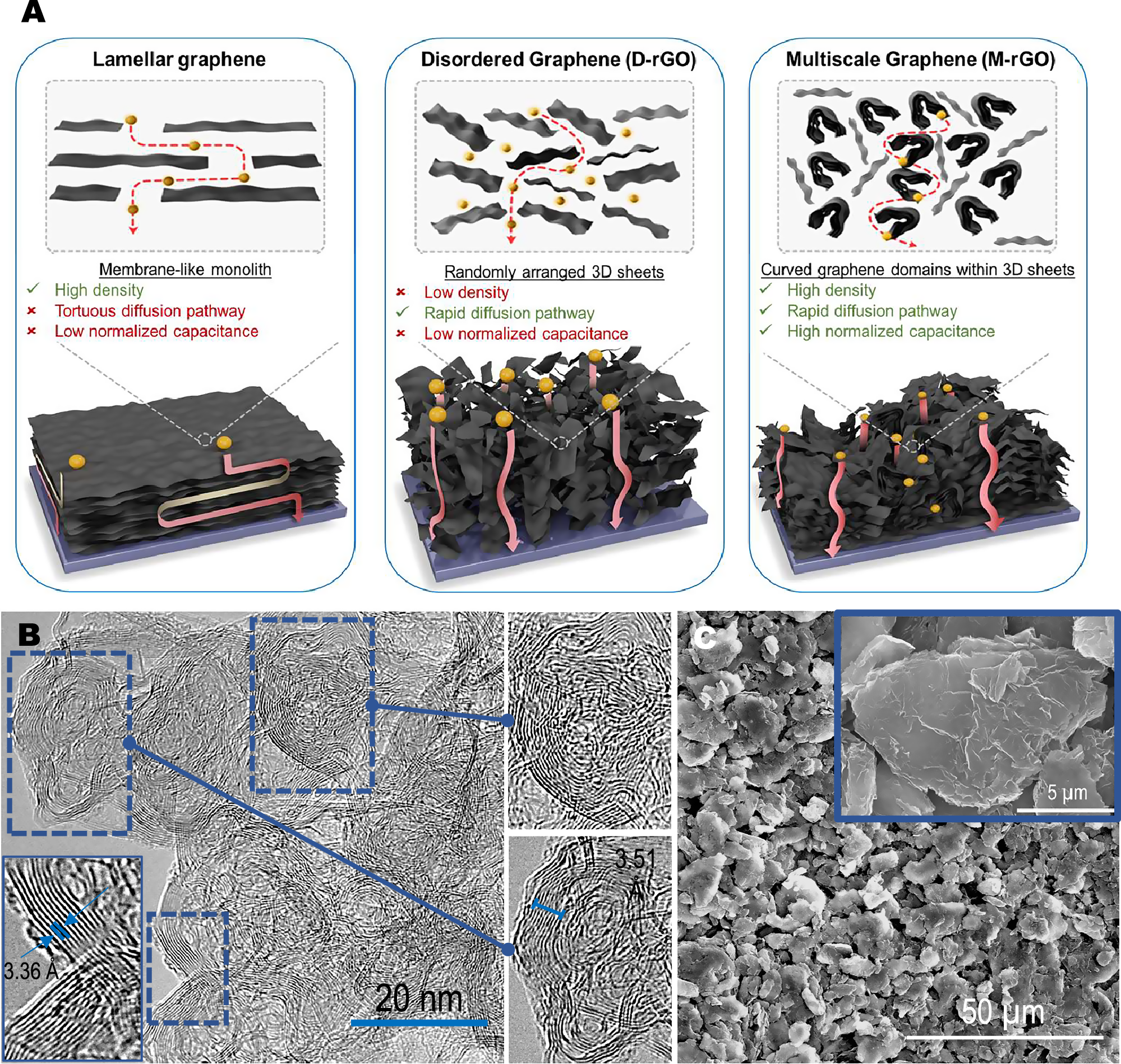
"... The secret lies in a new material architecture developed by the team, called multiscale reduced graphene oxide (M-rGO), which is synthesised from natural graphite – an abundant Australian resource.

Using a rapid thermal annealing process, the researchers created a highly curved graphene structure with precise pathways for ions to move quickly and efficiently. The result is a material that offers both high energy density and high power density – a combination rarely achieved in a single device. ..."

From the abstract:
"Supercapacitors deliver high power but are limited in compact applications by low volumetric energy and power densities.
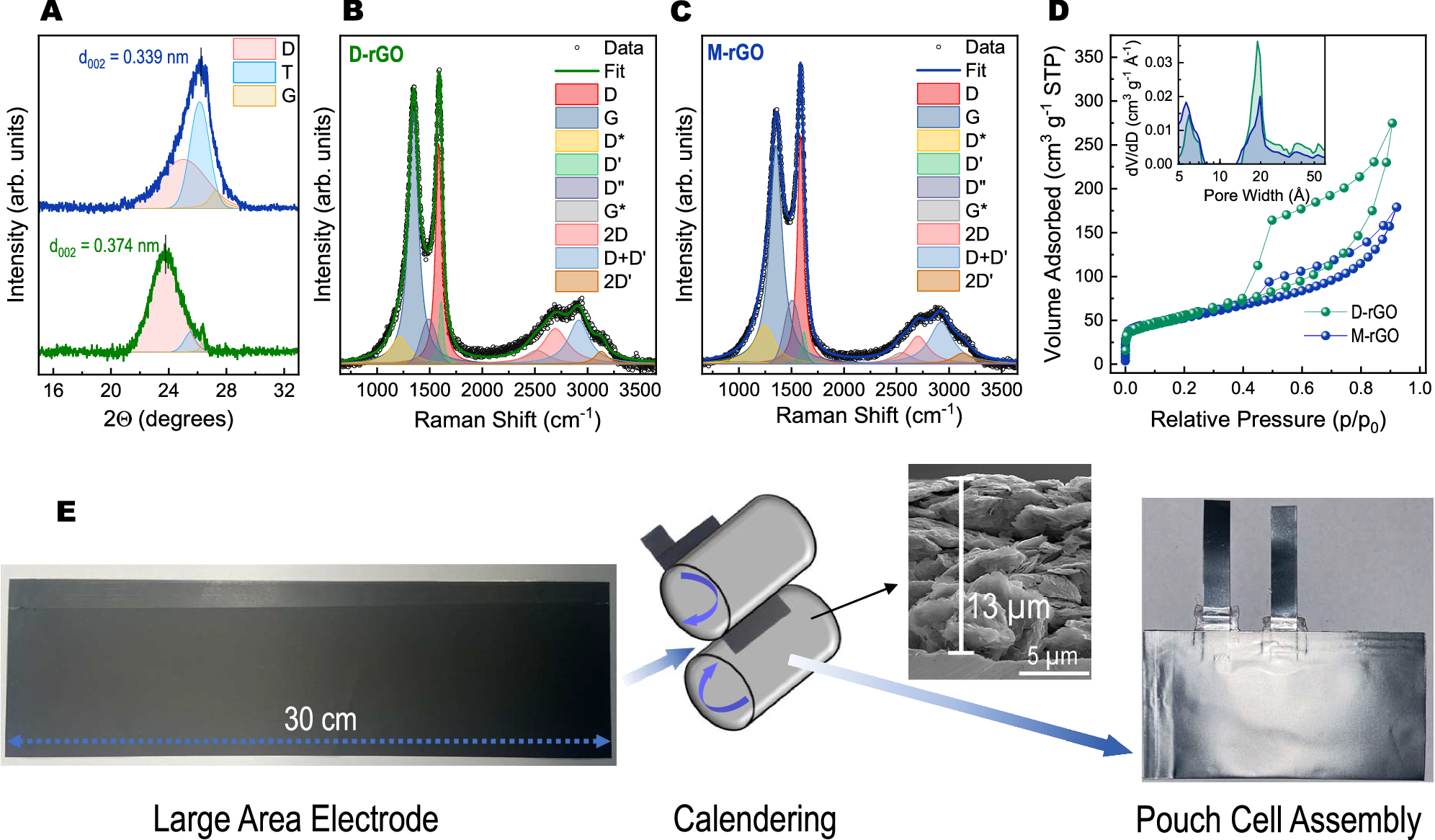
Two-dimensional materials like graphene, despite their high packing density, are hindered by poor ion transport kinetics. A rapid thermal annealing step generates unusually curved turbostratic graphene crystallites, integrated and interwoven within disordered domains in micron-size particles to yield multiscale graphene. Ion insertion into the interlayers enables precise pore-ion matching and partial charge transfer, enabling a high Brunauer-Emmett-Teller surface area-normalized capacitance of 85 µF/cm2.
Here, we show that multiscale graphene exhibits rapid ion transport dynamics within the curved crystallites and disordered domains. When the thin electrodes are assembled into symmetric pouch cell devices, they deliver a stack-level volumetric energy density of 99.5 Wh/L in ionic liquid electrolytes and 49.2 Wh/L in organic electrolyte with a high power density of 69.2 kW/L at 9.6 Wh/L."

Supercapacitor outperforms batteries in power delivery

Lightning-fast power: breakthrough powers supercapacitors that rival batteries (original news release) "Engineers have made a major leap forward in the global race to build energy storage devices that are both fast and powerful – paving the way for next-generation applications in electrified transport, grid stabilisation and consumer electronics."


Fig. 1: Schematic highlighting the differences between lamellar, disordered and multiscale graphene with morphological characterization of M-rGO.


Fig. 2: Physicochemical differences between D-rGO and M-rGO and the fabrication process for the pouch cell prototypes used throughout this study.


Tuesday, July 29, 2025

What happens inside a battery at atomic scale

Amazing stuff! How much do we know about battery technology?

"A team ... has completed the first investigation into a widely acknowledged but often overlooked aspect of electrochemical cells: the nonuniformity of the liquid at the solid-liquid interfaces in the cells. ... microscopic imaging revealed that these interfacial structures, called electrical double layers (EDLs), tend to organize into specific configurations in response to chemical deposition on the surface of the solid. ...

Based on the data, the researchers proposed three primary responses in the EDLs: "bending," in which the layers appear to curve around the cluster; "breaking," in which parts of the layers detach to form new intermediate layers; and "reconnecting," in which the EDL layer above the cluster connects to a nearby layer with an offset in the layer number.

"These three patterns are quite universal," ..."

From the significance and abstract:
"Significance
Nucleation and growth at electrode–electrolyte interfaces is crucial for electrochemical energy conversion and storage. Here, we find that, at the very initial stage of surface nucleation, the local electrical double layers (EDLs) abruptly restructure. The initially flat, oscillatory liquid layers are strongly disrupted and continuously evolve as the size of the cluster increases. We identify three universal patterns of such EDL reconfigurations, quantify the spatial density profiles, and clarify the impact of the previously hidden, heterogeneous EDLs on the nucleation and growth kinetics.

Abstract
In electrochemical systems, the structure of electrical double layers (EDLs) near electrode surfaces is crucial for energy conversion and storage functions. While the electrodes in real-world systems are usually heterogeneous, to date the investigation of EDLs is mainly limited to planar, homogeneous substrates.
To bridge this gap, here we image the EDL structure of an ionic liquid/graphite battery anode system in the initial stage of interfacial nucleation and growth using our recently developed electrochemical 3D atomic force microscopy.
Upon surface nucleation of lithium-containing compounds, the local EDL layers exhibit pronounced restructuring, featuring bending, breaking, and/or reconnecting patterns that switch when the size of the local interphase cluster changes. These EDL reconfiguration patterns are likely universal during nucleation and growth, calling into attention the hitherto hidden contribution of EDL heterogeneity on electrochemical processes."

Atomic-scale secrets: What really happens inside your battery | ScienceDaily

Friday, June 13, 2025

Most energetic molecule ever made is stable – in liquid nitrogen

Amazing stuff! Justus von Liebig is smiling!

"The first neutral nitrogen molecule – other than dinitrogen – has been isolated and characterised by researchers in Germany. The molecule, the most energetic ever synthesised, is effectively stable at liquid nitrogen temperatures, which could make it attractive as an energy storage material. ...

While the dinitrogen molecule is low in energy, other nitrogen-containing molecules such as trinitrotoluene (TNT) and 1,3,5,7-tetranitro-1,3,5,7-tetrazocane, octogen (HMX) are the world’s most powerful non-nuclear explosives. ...

In the new work, organic chemists Weiyu Qian, Artur Mardyukov and Peter Schreiner at Justus Liebig University Giessen calculated that a hexanitrogen molecule could be relatively long lived because it contained no discernible dinitrogen units.
They synthesised the molecule by flowing chlorine gas through solid silver azide under reduced pressure. Silver azide is an excellent reagent for the synthesis of both halogen azides and polyazides. The chlorine therefore reacted with the silver azide to produce chloroazide, which reacted further with more silver azide to produce silver chloride and hexanitrogen. The weakest point of the structure – the ‘Achilles heel’ – is the bond between the two azide units. ‘It’s more like two times N3 than three times N2,’  ... This increases the molecule’s lifetime at room temperature to around 36 milliseconds – long enough for it to be trapped and cooled to liquid nitrogen temperatures, where the researchers calculate its half life to be over 100 years. ...

When hexanitrogen does break down, it releases double the energy per unit mass of HMX – currently the most powerful chemical explosive known. ..."

From the abstract:
"Compounds consisting only of the element nitrogen (polynitrogens or nitrogen allotropes) are considered promising clean energy-storage materials owing to their immense energy content that is much higher than hydrogen, ammonia or hydrazine, which are in common use, and because they release only harmless nitrogen on decomposition. However, their extreme instability poses a substantial synthetic challenge and no neutral molecular nitrogen allotrope beyond N2 has been isolated.
Here we present the room-temperature preparation of molecular N6 (hexanitrogen) through the gas-phase reaction of chlorine or bromine with silver azide, followed by trapping in argon matrices at 10 K.
We also prepared neat N6 as a film at liquid nitrogen temperature (77 K), further indicating its stability. Infrared and ultraviolet–visible (UV-Vis) spectroscopy, 15N-isotope labelling and ab initio computations firmly support our findings. The preparation of a metastable molecular nitrogen allotrope beyond N2 contributes to our fundamental scientific knowledge and possibly opens new opportunities for future energy-storage concepts."

Most energetic molecule ever made is stable – in liquid nitrogen | Research | Chemistry World

Chemiker der JLU stellen erstmals Hexastickstoff her (original news release) "Künftige Anwendung als umweltfreundlicher Energiespeicher denkbar – „Nature“-Veröffentlichung des Teams um den Chemiker Prof. Dr. Peter R. Schreiner"

Preparation of a neutral nitrogen allotrope hexanitrogen C2h-N6 (open access)


Fig. 1: All known neutral molecular nitrogen allotropes and preparation of N6. [a timeline]


Contour line map of the electron density of hexanitrogen (top) with an electron localisation map (bottom) showing the molecule’s weak point


Sunday, May 11, 2025

What are the leading technologies for Long-duration batteries

Long-term storage of electricity is still a huge challenge.

"... Promising LDES battery technologies

Vanadium flow

Vanadium flow batteries, developed ... in the 1980s, are now becoming popular around the world, with increased power and energy capacity

The world’s largest vanadium flow battery, a 175 MW/700 MWh system in Dalian, China, was developed by Rongke Power and completed in December 2024. Meanwhile, in the UK, a 5 MW array has been built which connects into the national grid system.

A vanadium flow battery stores energy in liquid electrolytes containing vanadium ions at four different oxidation states. The positive and negative electrolytes which are stored in separate tanks are circulated through battery stacks where the power conversion takes place. When charging or discharging, electrons transfer between the electrolytes through an external circuit, enabling energy storage and release without significant degradation.

Vanadium flow batteries can scale up easily, allowing a large the energy capacity for power supply for extended periods.

However, they have lower energy density than some other LDES options.

Lithium-ion

In contrast, lithium-ion batteries offer high energy density and fast response times, making them already popular for vehicles, consumer electronics and medical devices.

However, they degrade more quickly over time and may only last 500-3000 charging cycles before suffering noticeable capacity loss – compared to a reported 200,000 cycles for a vanadium flow battery.

There are also additional safety concerns with lithium-ion batteries related to thermal runaway leading to fires, while they are reliant on a scarce raw material and recycling is costly and complex.

Even so, the Hornsdale Power Reserve in South Australia and the Victorian Big Battery in Geelong both utilise lithium-ion Tesla Megapacks. The latter can store enough energy to power over one million Victorian homes for up to half an hour.

Iron flow

Iron flow batteries, which store energy in a liquid electrolyte typically made of iron, salt, and water, are an affordable and environmentally friendly option for long-duration energy storage.

These promise around 10,000 cycles with minimal degradation over time.

However, they have lower energy density than lithium-ion or vanadium flow and require more space for the same energy storage capacity.

Organic flow

Another potential option are organic flow batteries, which are still very much in the research phase, with carbon-based molecules being tested for use instead of metals such as vanadium or lithium.

While they may provide a cheaper, non-toxic energy storage solution, there are still big question marks about their energy density at scale and durability.  

Limitations and challenges of LDES batteries

Despite their benefits, LDES battery development faces some significant challenges.

One major challenge is the high initial costs, with many of the technologies requiring substantial upfront investment in infrastructure, making large-scale deployment difficult.

LDES technologies, like other storage systems, experience energy loss during the storage and retrieval process, due to factors like self-discharge, internal resistance, and inefficiencies in the charging and discharging cycles.

Material and supply chain constraints also present significant issues for some LDES batteries. Certain technologies depend on rare or expensive materials, which can lead to supply chain vulnerabilities, as well as environmental concerns.

While many LDES technologies show great promise, some are still in the experimental phase and require further research and development before they can be widely adopted. ..."

Long-duration batteries can power a cleaner, reliable future

Friday, April 18, 2025

Lithium-ion batteries offer longer lifespan, fast charging with nanoscale engineering

Good news!

"South Korean researchers ... have dramatically improved lithium-ion battery technology using nanoscale engineering. According to reports, their innovations have successfully enhanced the technology’s energy storage and cycling stability, addressing the growing demand for efficient energy solutions. ...

Their findings ... focus on a new hybrid composite material engineered at the nanoscale to optimize conductivity and stability.

The innovation’s heart is a hierarchical heterostructure composed of reduced graphene oxide (rGO) and nickel-iron layered double hydroxides (NiFe-LDH). Each component brings distinct advantages. Reduced graphene oxide is a high-speed highway for electrons, while the nickel-iron elements store charge through a fast pseudocapacitive mechanism. ..."

"... Researchers ... have achieved a significant breakthrough in lithium-ion battery technology by developing a novel hybrid anode material. This innovative study introduces a hierarchical heterostructure composite that optimizes material interfaces at the nanoscale, resulting in remarkable enhancements in energy storage capacity and long-term cycling stability. This engineered structure integrates graphene oxide's superior conductivity with the energy storage capabilities of nickel-iron compounds for future electronics and energy solutions. ..."

From the highlights and abstract:
"Highlights
• The rGO/a-NiO/NiFe2O4-HS anode is developed with a hollow nanostructure derived from the GO/NiFe-LDH composite.
• The phase change of NiFe-LDH leads to the formation of a-NiO/NiFe2O4 nanoparticles embedded in a graphene matrix.
• This hollow nanostructure prevents volume expansion and nanoparticle aggregation, ensuring long-term cycling stability.

Abstract
Integrating transition metal oxides with carbon-based materials through chemical heterointerface engineering presents a promising approach for achieving enhanced ionic/electrical conductivity, additional interfacial storage space, and structural stability, facilitating superior cyclic performance in energy storage systems. In this study, we synthesized a hierarchical heterostructure composite by combining graphene oxide with nickel–iron layered double hydroxides and promoted the formation of additional grain boundaries through phase change. Thus, we enhanced the pseudocapacitive contributions and the ion/charge transfer kinetics through nano-interfaces. These hybrid structures were formed through the layer-by-layer self-assembly of two-dimensional nanosheets. This design facilitates the construction of low-dimensional nanoarchitecture suitable for long-term cycling without ionic intermediates. Furthermore, to prevent agglomeration during the annealing process, we induced a phase change in NiCo-LDH under an inert atmosphere to fabricate reduced graphene oxide (rGO) embedded with amorphous nickel oxide (a-NiO) and NiFe2O4 nanoparticles, designated as rGO/a-NiO/NiFe2O4-HS. When utilized as an anode material for lithium-ion batteries, this material maintained an outstanding specific capacity of 1687.6 mA h g−1 at a current density of 100 mA g−1 after 580 cycles. This nanostructuring and phase change strategy of the two-dimensional heterostructures can effectively promote the development of high-performance electrode materials based on the pseudocapacitive mechanism."

Lithium-ion batteries offer more energy with nanoscale engineering "The improved lithium-ion technology, developed by scientists from South Korea, incorporates a hierarchical heterostructure composed of reduced graphene oxide (rGO) and nickel-iron layered double hydroxides (NiFe-LDH)."

Dongguk University Researchers Advance Lithium-Ion Battery Technology with Hybrid Anode Material (original news release) "Innovative nanoscale engineering enhances energy storage and cycling stability, addressing the growing demand for efficient energy solutions"


Graphical abstract


Thursday, April 10, 2025

What about hydrogen power as a future source of energy?

Many charlatans/demagogues want to indoctrinate the public on the narrative of so called "clean energy" and "water vapor".

Potentially, huge quantities of hydrogen gas could be produced by splitting water (from the oceans) using electricity from solar panels.

However, there are some serious considerations and technical/engineering challenges:

  1. How to store large amounts of hydrogen? The volumetric energy density is low, which means e.g. more storage is needed.
    How much energy will be needed to compress hydrogen or to maintain the storage?
  2. Are there better ways to produce hydrogen than splitting water with electricity?
  3. At large, global scale, how will we deal with all the water vapor and the oxygen generated by splitting water?
  4. Hydrogen is a very hazardous gas. Remember the Hindenburg Disaster of 1937!
  5. How do we mass transport hydrogen gas e.g. from producer to user?
I am very confident, we can find solutions to these issues thanks to human ingenuity

However, e.g. currently way too much money is wasted on environmentally harmful and intermittent wind power and solar power instead of focusing it on e.g. nuclear fusion, superconductivity, and hydrogen power.


Friday, February 28, 2025

Is this rechargeable paper battery the key to truly sustainable power storage?

Sounds almost too good to be true!

"... using a chemistry of renewables to store over 220 Wh/kg. Singaporean startup Flint ...

Flint says the rechargeable batteries will have a life cycle comparable to traditional battery technologies, unlike other single-use paper battery designs. ...

The company's proprietary battery chemistry relies on cellulose, the structural plant material used to make paper, as the medium for ion transfer between the anode and cathode. Flint then replaces problematic non-renewables like cobalt and lithium with less environmentally impactful, easily recycled metals like zinc and manganese. ...

As to cost, the company believes it can eventually build its batteries for roughly US$50/kWh, less than half the average 2024 cost of lithium-ion. ...."

Is this paper battery the key to truly sustainable power storage?

Monday, February 24, 2025

Chinese BYD to build the 'world's largest' battery storage projects in Saudi Arabia

Wow! Impressive!

"... The company will put together facilities at five sites totaling a massive 12.5 GWh of energy storage. ...

The contract between BYD and the Saudi Electricity Company is part of Saudi Arabia's Vision 2030 initiative, which will hopefully see the country generate 50% of its electricity from renewable sources over the next five years. ...

BYD says each site will get its MC Cube-T Energy Storage System (ESS), which features the company's efficient and compact Blade batteries (which are also seen its electric cars). This system is also said to tightly integrate all its componentry – like its cooling systems, electronics, and protective casings – for a small footprint.

The five sites combined will be able to store nearly four times more energy than what's believed to be the current largest battery energy storage facility worldwide: the 3.287-GWh Edwards & Sanborn project in Kern County, California. ..."

"... The systems adopt BYD Energy Storage's globally pioneering CTS (Cell-to-System) super-integrated technology, with a Vcts (proportion of cell volume to system volume) index exceeding 33%. The 12.5GWh energy storage systems will be fully integrated into Saudi Arabia's power transmission network system, playing a crucial role in addressing the challenges accumulated by the increasing number of renewable energy power generation systems, ensuring stable power supply, and meeting peak energy demand. Meanwhile, it will promote the development of Saudi Arabia's energy infrastructure in a flexible, efficient, and economic way, assisting in energy transformation and adding momentum to national energy security. ..."

BYD to build the 'world's largest' battery storage projects

Saturday, February 15, 2025

What a major battery fire at power plant in California means for the future of energy storage

We know that electric vehicles occasionally suffer from spontaneous combustion!

The Los Angeles wildfires were not the only significant fires burning in California!

Supposedly, this fire affected only old batteries? If you can believe it.

"A few weeks ago, a fire broke out at the Moss Landing Power Plant in California, the world’s largest collection of batteries on the grid. Although the flames were extinguished in a few days, the metaphorical smoke is still clearing. ...

The Moss Landing fire was spotted in the afternoon on January 16, according to local news reports. It started small but quickly spread to a huge chunk of batteries at the plant. Over 1,000 residents were evacuated, nearby roads were closed, and a wider emergency alert warned those nearby to stay indoors. ...

The fire hit the oldest group of batteries installed at Moss Landing, a 300-megawatt array that came online in 2020. Additional installations bring the total capacity at the site to about 750 megawatts, meaning it can deliver as much energy to the grid as a standard coal-fired power plant for a few hours at a time.

According to a statement that site owner Vistra Energy gave to the New York Times, most of the batteries inside the affected building (the one that houses the 300MW array) burned. However, the company doesn’t have an exact tally, because crews are still prohibited from going inside to do a visual inspection. ...

This isn’t the first time that batteries at Moss Landing have caught fire—there have been several incidents at the plant since it opened. However, this event was “much more significant” than previous fires ...

There’s still a lot we don’t know about this fire, particularly when it comes to how it started.  Learning from the results of the ongoing investigations will be important, because we can only expect to see more batteries coming online in the years ahead. 

In 2023, there were roughly 54 gigawatts’ worth of utility-scale batteries on the grid globally. If countries follow through on stated plans for renewables, that number could increase tenfold by the end of the decade. ..."

What a major battery fire means for the future of energy storage | MIT Technology Review "The latest fire at Moss Landing Power plant is raising concerns about battery safety."


Moss Landing fire: One of the world's largest battery factories ablaze | The Independent


Saturday, January 25, 2025

Plastic supercapacitors could solve energy storage problems

Good news!

Alert: New, more PFAS are coming and plastophobia is on the rise! Caution: Satire!

"Key takeaways
  • A type of plastic called PEDOT that can conduct electricity is currently used to protect the internal components of electronic devices from static electricity and in organic solar cells and electrochromic devices, but it also has the ability to store electric charge somewhat like a battery.
  • UCLA chemists have created a new type of textured, fur-like PEDOT film with more surface area to store charge and built a supercapacitor with it that stored nearly ten times more charge than conventional PEDOT and lasted nearly 100,000 charging cycles.
  • The advance could lead to supercapacitors that can meet some energy storage demands as the world transitions to renewable, sustainable energy production.
...
But in the 1970s, scientists accidentally discovered that some plastics can also conduct electricity. This finding revolutionized the field and opened the door to applications in electronics and energy storage. ...

UCLA chemists are addressing these challenges with an innovative method to control the morphology of PEDOT to grow nanofibers precisely. These nanofibers exhibit exceptional conductivity and expanded surface area, both of which are crucial for enhancing the energy storage capabilities of PEDOT. ..."

From the abstract:
"The development of commercially viable composite conducting polymer electrodes for energy storage is limited by the requirement of multiple and complex fabrication steps, low energy density, and poor cycling stability.
In this work, a straightforward, economical, single-step method is developed for creating densely packed nanostructured PEDOT/graphene composite material demonstrating its application as an electrode for supercapacitors. The electrode achieved the highest mass loading reported so far in the literature for composite vapor phase polymerized PEDOT/rGO using aqueous FeCl3 (25.2 mg cm−2), and displayed an ultrahigh areal capacitance of 4628.3 mF cm−2 at 0.5 mA cm−2. The symmetric two-electrode setup displayed an energy density of 169.3 µWh cm−2 and a 70% capacitance retention after 70 000 cycles, showcasing its exceptional performance and durability."
  
Plastic supercapacitors could solve energy storage problems | UCLA "New process grows PEDOT nanofibers with superior electrical conductivity and more surface area to store charge"

Direct Fabrication of 3D Electrodes Based on Graphene and Conducting Polymers for Supercapacitor Applications (no public access)


An example of how EDOT monomer vapors react with a droplet of graphene oxide and ferric chloride to form PEDOT nanofibers.


Sunday, December 15, 2024

Scientists produce world's first carbon-14 diamond battery with potential lifespan of thousands of years providing continuous microwatt levels of power

Good news! Quite an amazing approach!

Marilyn Monroe might sing again diamonds are a girl's best friend! Just kidding!

"This new type of battery has the potential to power devices for thousands of years, making it an incredibly long-lasting energy source. ...

The carbon-14 diamond battery works by using the radioactive decay of carbon-14, which has a half-life of 5,700 years, to generate low levels of power. It functions similarly to solar panels, which convert light into electricity, but instead of using light particles (photons), they capture fast-moving electrons from within the diamond structure. ..."

"... “Diamond batteries offer a safe, sustainable way to provide continuous microwatt levels of power. They are an emerging technology that use a manufactured diamond to safely encase small amounts of carbon-14,” ..."

Scientists produce world's first carbon-14 diamond battery with potential lifespan of thousands of years

Scientists and engineers produce world's first carbon-14 diamond battery with potential lifespan of thousands of years (original news release) "Scientists and engineers from the University of Bristol and the UK Atomic Energy Authority (UKAEA) and have successfully created the world’s first carbon-14 diamond battery."

Diamonds are forever? World-first carbon-14 diamond battery made (original news release) "The world's first carbon-14 diamond has been produced with the potential to provide power for thousands of years."


Weak radio luminescence captured by a low light intensity camera from a synthetic diamond carbon film made from beta-emitting carbon-14 atoms


Members of the Diamond Battery team with Plasma Deposition Rig at UKAEA


Friday, November 29, 2024

Fast-charging lithium-sulfur battery for eVTOLs nears production

Good news! Potentially, a breakthrough!

"Researchers at Australia's Monash University are close to solving one of the biggest challenges with eVTOL aircraft. The team's new lithium-sulfur battery tech is designed to deliver roughly twice the energy density of lithium-ion (Li-ion) batteries, as well as speedy charging and discharging – enabling the sort of power delivery needed in the skies. ..."

"Monash University engineers have developed an ultra-fast charging lithium-sulfur (Li-S) battery, capable of powering long-haul EVs and commercial drones. ...

“Inspired by the chemistry of betadine, a common household antiseptic, we found a way to accelerate the charge and discharge rates, making them a viable battery option for real-world heavy-duty use,” ...

In an electric car, the Li-S batteries could power an extra 1000 kilometres on a single charge while cutting recharge time to a few hours. ...

“Our catalyst has significantly enhanced the C-rate performance of Li-S batteries, demonstrated in early proof-of-concept prototype cells. With commercial scaling and larger cell production, this technology could deliver energy densities up to 400 Wh/kg.”

“This makes it well-suited for applications requiring dynamic performance, such as aviation, where batteries must handle high C-rates during take-off and efficiently switch to low C-rates during cruising.”

Li-S batteries are also a greener alternative to the materials used in traditional Li-ion batteries, which rely on limited and often environmentally harmful resources like cobalt.” ..."

From the abstract:
"Lithium–sulfur (Li–S) batteries are considered as a viable technology offering energy-dense electrochemical energy storage systems. However, the inherently slow reaction kinetics manifested in the slow charge and discharge characteristics constrain their real-world applications. Here, it is reported that polyiodide species held within a complex polar network of polyvinylpyrrolidone (PVP) accelerate the rate-limiting solid-liquid phase transitions both in the reduction and oxidation steps during battery cycling. Density functional theory calculations support a mechanism in which a combination of enhanced binding of polysulfides and additional energy states in the PVP-iodine-polysulfide complexes accelerates the reaction pathways mediated by inter-valance polyiodide reactions within the working voltage of Li–S batteries. These studies show that PVP-iodine (PVP-I) complexes enhance the rate capability of cells with practical sulfur loadings delivering a high areal capacity of ≈7 mAh cm−2 at the practical 0.5C rate. This advantage is demonstrated in one of the highest-rate pouches reported in Li–S literature, attaining energy densities of 215 and 156 Wh kg at 0.1C and 0.3C, respectively. The results demonstrate a subtle but powerful shift in the design of molecular binder systems, which have functional roles above and beyond the role of simply holding the active materials together."

Fast-charging lithium-sulfur battery for eVTOLs nears production


Unlike Li-ion batteries, Li-S batteries use inexpensive Sulfur as a cathode material. Yes, it's cheaper - but this tech also brings drawbacks like fewer charge cycles and slow charging


Sunday, September 01, 2024

Quest for cheaper flow batteries goes on with naphthalene derivatives

Good news! We sure can use some better batteries!

"Flow batteries promise longer-lasting and safer grid energy storage than their lithium-ion counterparts. But, while they don’t need lithium, commercial examples still currently need metals to work, with the highest-performing being vanadium.

Now Chinese researchers have developed a class of carbon-based materials that can work in a flow battery. ...
The research revolves around organic redox-active molecules (ORAMs) ...
The researchers approached the problem with a series of compounds based on naphthalene ...

They were able to make these naphthalene-based substances with a simple process, using electrochemistry.

These compounds dissolved easily, which is important because flow batteries use liquid to store and transfer energy.

And they were stable in air, lasting for at least 40 days without any signs of decay. ...
The process was easy to scale: the researchers made 10kg of material in the lab. ..."

From the abstract:
"The growing global capacity for renewable energy generation necessitates the deployment of energy storage technologies with a combination of low cost, good performance and scalability. With these advantages, aqueous organic flow batteries have the potential to be the system of choice because they could store energy from organic redox-active molecules. Here we report naphthalene derivatives as organic redox-active molecules that exhibit high solubility (~1.5 M) and a stable redox-active framework with no obvious capacity decay over 40 days (50 Ah l−1) in an air atmosphere in flow batteries. We report a battery that runs smoothly even under continuous airflow without obvious capacity decay for ~22 days (more than 600 cycles). A series of spectral analyses and theoretical calculations reveal that the dimethylamine scaffolds improve the water solubility and protect the active centre, ensuring the stability of the molecules during the charge and discharge process. Owing to the success in kilogramme-scale molecular synthesis, pilot-scale stack expansion with notable cycling stability over 270 cycles (~27 days) is attained. The cost benefit evidenced by technoeconomic analysis together with the stability even under open-air conditions indicates the practical value of the present molecular system in grid-scale energy storage."

Quest for cheaper flow batteries goes on with carbon


Chemical and electrochemical reaction of the naphthalene derivatives


Sunday, August 25, 2024

Twisted commercially available carbon nanotubes store more energy than lithium-ion batteries

Old news, but good news! Could this be a breakthrough in battery technology?

"By making single-walled carbon nanotubes (SWCNTs) into ropes and twisting them like the string on an overworked yo-yo, ... showed that they can store twice as much energy per unit mass as the best commercial lithium-ion batteries. The nanotube ropes are also stable at a wide range of temperatures, and the team say they could be safer than batteries for powering devices such as medical sensors. ..."

From the abstract:
"A sustainable society requires high-energy storage devices characterized by lightness, compactness, a long life and superior safety, surpassing current battery and supercapacitor technologies. Single-walled carbon nanotubes (SWCNTs), which typically exhibit great toughness, have emerged as promising candidates for innovative energy storage solutions. Here we produced SWCNT ropes wrapped in thermoplastic polyurethane elastomers, and demonstrated experimentally that a twisted rope composed of these SWCNTs possesses the remarkable ability to reversibly store nanomechanical energy. Notably, the gravimetric energy density of these twisted ropes reaches up to 2.1 MJ kg−1, exceeding the energy storage capacity of mechanical steel springs by over four orders of magnitude and surpassing advanced lithium-ion batteries by a factor of three. In contrast to chemical and electrochemical energy carriers, the nanomechanical energy stored in a twisted SWCNT rope is safe even in hostile environments. This energy does not deplete over time and is accessible at temperatures ranging from −60 to +100 °C."

Twisted carbon nanotubes store more energy than lithium-ion batteries – Physics World


Fig. 1: Performance of a twisted SWCNT rope and other viable energy carriers.


Scanning electron microscope images show some carbon nanotube "ropes" subjected to different twist strains.


One of the scientists involved Preety Ahuja. (Translation: preety = pretty?, Google search result: "The name Preeti is derived from the Sanskrit word "प्रीति" (prīti), meaning "pleasure", "joy", "kindness", "favor", "grace", "love", from प्री (prī).")


Friday, July 19, 2024

Lithium batteries could last for 1 million km with discovery

Good news!

"Korean researchers have found a way to grow crystals that they say could end up in lithium-ion batteries capable of powering an electric vehicle for 1 million kilometres. ..."

"A research team  ... has recently demonstrated a single-crystal synthesis technology that significantly extends the lifespan of cathode materials for electric vehicles. ...
Traditional nickel-based materials have a polycrystalline morphology composed of many tiny crystals which can undergo structural degradation during charging and discharging, significantly reducing their lifespan. ...
The researchers discovered that conventional polycrystalline materials synthesized below a certain critical temperature are prone to degradation with prolonged use in secondary batteries. However, when synthesized above this critical temperature, high-quality single crystals can be easily produced, leading to materials with superior longevity. This is due to a process called “densification“ which occurs above a certain critical temperature. During this process, the internal grain size of the material increases and the empty spaces within the material are densely filled. Densified single crystals are extremely hard and resistant to degradation over extended periods, significantly enhancing their durability. ..."

From the abstract:
"High-Ni layered oxide cathodes are promising candidates for lithium-ion batteries due to their high energy density. However, their cycle stability is compromised by the poor mechanical durability of the particle microstructure. In this study, we investigate the impact of the calcination temperature on microstructural changes, including primary particle growth and pore evolution, using LiNi0.88Mn0.08Co0.04O2 (N884), with an emphasis on the critical calcination temperature for polycrystalline and single-crystal designs in high-Ni cathodes. As the calcination temperature increases, the primary particles undergo a rectangular growth pattern while the pore population decreases. Beyond a certain critical temperature (in this case, 850 °C), a sudden increase in primary particle size and a simultaneous rapid reduction in the pore population are observed. This sudden microstructure evolution leads to poor cycle retention in N884. In contrast, single-crystal particles, free of grain boundaries, synthesized at this critical temperature exhibit superior cycle retention, underscoring the significance of microstructural design over crystalline quality for achieving long-term cyclability. Our study sheds light on the interplay between calcination temperature and microstructural evolution, proposing the critical temperature as a key criterion for single-crystal synthesis."

Lithium batteries could last for 1 million km with discovery

Monday, June 24, 2024

Innovations for a new era of energy storage | Transforming Business. Really!

Like sand batteries in Finland! What joke! Maybe it works in the backyards of Finland.
No wonder it was the German government owned TV channel that reports about it just like tree huggers would do!

Saturday, June 15, 2024

Thermoelectric Effect Seen at the interface of two metal Liquids for the First Time

Amazing stuff! Could this be a breakthrough!

"Based on physics first observed over 200 years ago, thermoelectric devices can convert thermal energy into electrical energy and vice versa. ... Liquid thermoelectrics could be used to create new devices for scavenging energy from waste heat, and insights from the research could help improve the design of liquid-metal batteries.  ...
liquid thermoelectricity could be harnessed in new, highly efficient devices that convert waste heat into electricity. ...
team hypothesizes that these effects might be contributing to Jupiter’s magnetic field. The planet’s core is surrounded by a large region of metallic hydrogen, which is covered by an atmosphere of liquid molecular hydrogen. The planet’s equator is warmer than its poles, creating a temperature gradient along the metallic-liquid hydrogen interface. ..."

"The thermoelectric effect describes an energy transformation in which heat is converted into electricity and vice versa. This captivating interaction has long intrigued physicists, as it offers insight into the complex relationship between energy, temperature and matter. Thermoelectric materials generally involve an interface between two different solid semiconductors, and have a wide variety of applications: temperature sensors, refrigeration, environmentally-friendly power generation, etc.
 Researchers at the Laboratoire de Physique de l’Ecole Normale Supérieure de Paris (LPENS) have obtained the first proof of thermoelectricity between two liquids. The experiment involves superimposing two immiscible metals, mercury and gallium, liquid at room temperature, in a cylindrical container. When a large radial temperature difference is imposed between the two cylindrical walls containing the liquid metals, an electric current flows across the interface between the two liquids. ..."

From the significance and abstract:
"Significance
The Seebeck effect is the conversion of heat into electricity, usually achieved by thermoelectric devices using solid electrical conductors or semiconductors. Here is reported evidence of this effect at the interface between two metals that are liquid at room temperature, gallium and mercury. The liquid nature of the interface significantly alters the usual temperature distribution, leading to an abnormally high current density near the boundaries. In the bulk, the thermoelectric current interacts with a magnetic field to produce efficient thermoelectric pumping of fluids. This effect may be of prime importance in several industrial and astrophysical systems, such as the promising liquid-metal batteries and Jupiter’s magnetic field.
Abstract
We present experimental evidence of a thermoelectric effect at the interface between two liquid metals. Using superimposed layers of mercury and gallium in a cylindrical vessel operating at room temperature, we provide a direct measurement of the electric current generated by the presence of a thermal gradient along a liquid–liquid interface. At the interface between two liquids, temperature gradients induced by thermal convection lead to a complex geometry of electric currents, ultimately generating current densities near boundaries that are significantly higher than those observed in conventional solid-state thermoelectricity. When a magnetic field is applied to the experiment, an azimuthal shear flow, exhibiting opposite circulation in each layer, is generated. Depending on the value of the magnetic field, two different flow regimes are identified, in good agreement with a model based on the spatial distribution of thermoelectric currents, which has no equivalent in solid systems. Finally, we discuss various applications of this effect, such as the efficiency of liquid metal batteries."

Thermoelectric Effect Seen in Liquids for the First Time - IEEE Spectrum The insight could lead to breakthroughs in liquid-metal batteries

Liquid thermoelectricity (original press release)

Thermoelectricity at a gallium–mercury liquid metal interface (no public access)

Schematic 3D visualization of the thermoelectric interaction between two liquid metals. The gallium in the upper part is made transparent to better visualize the abnormally strong electric currents (in blue) and the associated magnetic field (in yellow).