Showing posts with label dementia. Show all posts

Sunday, March 29, 2026

US Senate Minority Leader Chuck Schumer (age 75) is losing it like the senile and demented 46th President

I have been saying this since at least November last year!
When old, elected politicians don't know when it is time to quit! When voters are ignorant about the age of politicians!

It is high time for the Dimocratic Party to look for better leadership!

Howie Carr: Chuck Schumer's losing it like Dementia Joe Biden


Thursday, March 12, 2026

High resolution mouse study shows a gut microbe can promote memory loss

Amazing stuff!

"... In a study published today in Nature, scientists show how a bacterium that is particularly common in older animals can drive memory loss. This microbe makes compounds that impair signaling along neurons connecting the gut with the brain, dampening activity in brain regions associated with learning and memory, the team found. ...

Research on the so-called gut-brain axis has exploded in recent decades. Multiple studies have identified differences in microbiome composition between healthy people and those with cognitive disorders such as Alzheimer’s disease. This kind of research can’t establish cause and effect, though, and the literature is rife with conflicting results. ..."

From the abstract:
"Ageing is accompanied by declining memory function, with extremely heterogeneous manifestation in the human population.
Brain-extrinsic factors influencing cognitive decline, such as gastrointestinal signals, have emerged as attractive targets for peripheral interventions, but the underlying mechanisms remain largely unclear.
Here, by charting a high-resolution map of microbiome ageing and its functional consequences throughout the lifespan of mice, we identify a mechanism by which inhibition of gut–brain signalling during ageing results in impaired neuronal activation in the hippocampus and loss of memory encoding. Specifically, accumulation of gut bacteria that produce medium-chain fatty acids, such as Parabacteroides goldsteinii, can drive peripheral myeloid cell inflammation through GPR84 signalling. As a result, the function of vagal afferent neurons is impaired, the interoceptive signal received by the brain is weakened and hippocampal function declines.
We leverage this pathway to define interventions that enhance memory in aged mice, such as phage targeting of Parabacteroides, GPR84 inhibition and restoration of vagal activity. These findings indicate a key role for interoceptive dysfunction in brain ageing and suggest that interoceptomimetics that stimulate gut–brain communication may counteract age-associated cognitive decline."

‘Tour de force’ mouse study shows a gut microbe can promote memory loss | Science | AAAS "Research suggests the microbiome may contribute to cognitive decline—but its relevance in humans is unclear"


Fig. 1: Microbiome impact on age-associated cognitive decline.


Wednesday, January 07, 2026

Hörgeräte schützen vor Demenz

Ich wette, da ist was dran, dass verschlechtertes Hören im Alter u. U. zu Demenz führen oder beitragen kann.

Manche ältere Menschen realisieren vielleicht nicht einmal wie weit ihre Hörfähigkeit über die Jahre nachgelassen hat.

Nicht gut hören macht auch einsam!

"Schamgefühle gehören neben Praktikabilitätsgründen zu den häufigsten Gründen, warum Menschen mit Schwerhörigkeit Hörhilfen ablehnen. Hörgeräte werden noch immer mit Schwäche und Altwerden assoziiert, und viele befürchten negative Reaktionen im sozialen Umfeld. Dazu kommt, dass viele Betroffene ihr eigenes Hördefizit lange unterschätzen, was eine Korrektur durch Hörgeräte und eine schnelle Eingewöhnung verzögert – mit dem Ergebnis, dass bis ins hohe Alter keine Hörhilfen getragen werden. Doch Schwerhörigkeit ist kein Komfort-Problem, sie birgt eine ­Gefahr: Denn wer nicht gut hört, hat ein nachweisbar erhöhtes Demenzrisiko. ..."

Hörgeräte schützen vor Demenz | FAZ (erfordert Abo) "Bis zu sieben Prozent aller Demenzerkrankungen könnten verhindert werden, wenn Menschen besser auf ihr Gehör achtgeben würden. Das könnte auch Einsamkeit verhindern."

Saturday, November 01, 2025

Dementia linked to problems with brain’s waste clearance system

Recommendable! More evidence how the cerebrospinal fluid is involved.

"A study ... found that impaired movement of cerebrospinal fluid (CSF) – the clear liquid that cushions and cleans the brain – predicted risk of dementia later in life among 40,000 adults recruited to UK Biobank. ...

In the healthy brain, the so-called glymphatic system serves to clear out toxins and waste materials, keeping the brain healthy. Only discovered as recently as 2012, this system functions by flushing CSF through the brain along tiny channels around blood vessels known as perivascular spaces. It collects waste then drains out of the brain, helping keep it clean and healthy. ...

Until recently, it has only been possible to study glymphatic function in mice, but recent advances in MRI scanning have made it possible to study it indirectly in humans. Even so, it was only possible to do this practically in relatively small numbers, but ... developed machine learning algorithms capable of assessing glymphatic functions from MRI scans at scale.

The team applied the algorithm to MRI scans taken from around 40,000 adults in UK Biobank. They found three biomarkers – biological signatures – associated with impaired glymphatic function assessed at baseline, predicted the risk of dementia occurring over the subsequent decade. 
One of these was DTI-ALPS, a measure of the diffusion of water molecules along the perivascular spaces.
Another was the size of the choroid plexus, where the CSF is produced.
The third measure reflected the flow velocity of CSF into the brain. ...

Further analysis showed that several cardiovascular risk factors impaired glymphatic function – and hence increased dementia risk, and that this was partly via causing cerebral small vessel disease, which is visible in the MRI scans. ..."

From the highlights and abstract:
"Highlights
  • We developed fully automated methods for quantifying diffusion tensor image analysis along the perivascular space (DTI-ALPS) and blood oxygen level–dependent cerebrospinal fluid (BOLD-CSF) coupling.
  • Three CSF dynamics markers—BOLD-CSF coupling, DTI-ALPS, and choroid plexus (CP) volume—were predictive of incident dementia, whereas PVS volume was not.
  • Magnetic resonance imaging proxies of CSF dynamics markers were associated with cardiovascular injury. CP volume and DTI-ALPS mediated the associations of both white matter hyperintensities and diabetes with dementia.
INTRODUCTION
Impaired cerebrospinal fluid (CSF) dynamics may contribute to dementia, but human evidence is limited. We examined associations between magnetic resonance imaging–based proxies of CSF dynamics and incident dementia, and whether CSF dysfunction mediates links between cardiovascular risk and dementia.

METHODS
Using the UK Biobank, we measured CSF dynamics:
perivascular space (PVS) volume, diffusion tensor image analysis along the
PVS (DTI-ALPS), blood oxygen level–dependent CSF (BOLD-CSF) coupling, and
choroid plexus (CP) volume.
We assessed cardiovascular risk factors and their associations with CSF dynamics and dementia based on general practitioner, mortality, and hospital records. Mediation analysis evaluated CSF dysfunction in cardiovascular risk–dementia relationships.

RESULTS
Lower DTI-ALPS, lower BOLD-CSF coupling, and higher CP volume predicted dementia, but PVS volume did not. DTI-ALPS and CP volume mediated the effect of white matter hyperintensities and diabetes duration on dementia.

DISCUSSION
Impaired CSF dynamics may lead to dementia and partially mediate cardiovascular risk–dementia associations."

Dementia linked to problems with brain’s waste clearance system | University of Cambridge "Problems with the brain’s waste clearance system could underlie many cases of dementia and help explain why poor sleep patterns and cardiovascular risk factors such as high blood pressure increase the risk of dementia."


Fig. 1 The illustration of non-invasive MRI proxies of CSF dynamics markers.


Fig. 2 The association of MRI proxies of CSF dynamics with demographics and risk factors.


Monday, April 07, 2025

Marriage linked to significant higher dementia risk in older adults compared to unmarried individual, 18-year long-term study finds

Seems to be counter intuitive!

Unfortunately, it appears it was not investigated whether the dementia in widowed participants developed before or after and how it progressed before and after.

"... researchers found that older adults who were divorced or never married had a lower risk of developing dementia over an 18-year period compared to their married peers. Findings suggest that being unmarried may not increase vulnerability to cognitive decline, contrary to long-held beliefs in public health and aging research. ...

More than 24,000 participants without dementia at baseline were enrolled from over 42 Alzheimer's Disease Research Centers across the United States through the National Alzheimer's Coordinating Center. Annual clinical evaluations were conducted by trained clinicians using standardized protocols to assess cognitive function and determine diagnoses of dementia or mild cognitive impairment. ...

Compared to married participants, divorced or never married showed a consistently lower risk of developing dementia over the study period. Dementia diagnoses occurred in 20.1% of the overall sample. Among married participants, 21.9% developed dementia during the study period. Incidence was identical among widowed participants at 21.9% but notably lower for divorced (12.8%) and never-married participants (12.4%). ..."

From the abstract:
"INTRODUCTION
Marital status is a potential risk/protective factor for adverse health outcomes. This study tested whether marital status was associated with dementia risk in older adults.

METHODS
Participants (N = 24,107; Mean age = 71.79) were from the National Alzheimer's Coordinating Center. Cox regressions tested the association between baseline marital status and clinically ascertained dementia over up to 18 years of follow-up.

RESULTS
Compared to married participants,
widowed (hazard ratio [HR] = 0.73, 95% confidence interval [95% CI] = 0.67–0.79),
divorced (HR = 0.66, 95% CI = 0.59–0.73), and
never-married participants (HR = 0.60, 95% CI = 0.52–0.71) were at lower dementia risk, including for Alzheimer's disease and Lewy body dementia.
The associations for divorced and never married remained significant accounting for demographic, behavioral, clinical, genetic, referral source, participation, and diagnostic factors. The associations were slightly stronger among professional referrals, males, and relatively younger participants.

DISCUSSION
Unmarried individuals may have a lower risk of dementia compared to married adults. The findings could indicate delayed diagnoses among unmarried individuals or challenge the assumption that marriage protects against dementia.

Highlights
  • Widowed, divorced, and never-married older adults had a lower dementia risk, compared to their married counterparts.
  • Unmarried older adults were also at a lower risk of Alzheimer's disease and Lewy body dementia, with a pattern of mixed findings for frontotemporal lobar degeneration, and no associations with risk of vascular dementia or mild cognitive impairment.
  • All unmarried groups were at a lower risk of progression from mild cognitive impairment to dementia.
  • There was some evidence of moderation by age, sex, and referral source. However, stratified analyses showed small differences between groups, and most interactions were not significant, suggesting that the role of marital status in dementia tends to be similar across individuals at different levels of dementia risk due to education, depression, and genetic vulnerability."

Marriage linked to higher dementia risk in older adults, 18-year study finds

Dementia Is More Common Among the Married Than the Unmarried (original news release; PDF file) "Unmarried people are at least 50% less likely to experience cognitive decline."

Sunday, April 06, 2025

Dementia is becoming less common in every generation over time in the United States and Europe

Good news! Probably due to better medical treatment options, medical diagnostics, earlier prevention and healthier lifestyles.

"The risk of developing dementia increases with age, so as the US population has grown older, dementia has become more common.

However, adjusting for age reveals an opposing trend. After analyzing long-term studies on tens of thousands of elderly Americans, a group of Duke University scientists found that, over the past 40 years, the age-specific prevalence of dementia has fallen by an astounding 67 percent.

The charts from their paper (below) show the share of the population with dementia on the vertical axis, with 5-year age groups extended chronologically on the horizontal axis.

On the left, each line represents a snapshot in time. You can see that dementia has become less common in every age group since 1984. ...

A similar trend has been documented in Europe."


Dementia by generation. "Lower Every Generation? Over the last 40 years, the percentage of people at a given age who have dementia has dropped by two-thirds, hinting that incidence has gone down over time."


"Dementia by Birth Year. People born in 1945 had much less dementia at a given age range than did those born in 1895."


Saturday, September 28, 2024

Researchers uncover shared molecular mechanisms across three types of dementia

Good news!

"Researchers have for the first time identified degeneration-associated “molecular markers” – observable changes in cells and their gene-regulating networks – that are shared by several forms of dementia that affect different regions of the brain. Critically, the UCLA-led research ... also identified markers specific to different forms of dementia. The combined findings represent a potential paradigm shift in the search for causes, treatments and cures. ...

They performed single-cell genomic analysis on more than 1 million cells to identify distinct and shared molecular markers in three related conditions: Alzheimer’s disease, frontotemporal dementia and progressive supranuclear palsy. In addition to validating changes previously observed in Alzheimer’s, they identify dozens of cell types whose changes are shared across multiple dementias and several cell types whose changes in disease were specific to a single disorder, many of which had not been previously identified. ...

The researchers:
  • Identified unique changes specific to Alzheimer’s disease and demonstrated that several findings in Alzheimer’s were also observed across the other disorders, identifying targets for therapeutic development.
  • Found that “cellular resilience programs” – molecular mechanisms that support cells in response to injury – activated or failed differently, when comparing the same cell types across disorders.
  • Were surprised to discover that each of the three disorders had changes in cells of the primary visual cortex – the area of the brain that processes visual information and which was thought to be unaffected by dementia. In progressive supranuclear palsy, this discovery revealed previously unknown changes in brain cells called astrocytes.
  • Identified specific changes in the expression of certain tau-related genes and others in progressive supranuclear palsy. These appear to correlate with the unique pattern of brain cell degeneration that is observed in progressive supranuclear palsy.
..."

From the highlights and abstract:
"Highlights
• Perform comparative genomic analysis of AD, bvFTD, and PSP at the single-cell level
• Pinpoint markers and candidate drivers of selective neuronal vulnerability in dementia
• Identify disorder-specific microglia, astrocyte, and oligodendrocyte glial-immune states
• Causal genetic risk impacts disorder-specific gene regulatory networks and cells
Summary
The development of successful therapeutics for dementias requires an understanding of their shared and distinct molecular features in the human brain. We performed single-nuclear RNA-seq and ATAC-seq in Alzheimer’s disease (AD), frontotemporal dementia (FTD), and progressive supranuclear palsy (PSP), analyzing 41 participants and ∼1 million cells (RNA + ATAC) from three brain regions varying in vulnerability and pathological burden. We identify 32 shared, disease-associated cell types and 14 that are disease specific. Disease-specific cell states represent glial-immune mechanisms and selective neuronal vulnerability impacting layer 5 intratelencephalic neurons in AD, layer 2/3 intratelencephalic neurons in FTD, and layer 5/6 near-projection neurons in PSP. We identify disease-associated gene regulatory networks and cells impacted by causal genetic risk, which differ by disorder. These data illustrate the heterogeneous spectrum of glial and neuronal compositional and gene expression alterations in different dementias and identify therapeutic targets by revealing shared and disease-specific cell states."

Researchers uncover shared molecular mechanisms across three types of dementia | UCLA "The discovery of genes that marked vulnerable neurons could open options for therapeutic approaches"


Graphical abstract


Wednesday, September 04, 2024

Around 45% of cases of dementia are potentially preventable, two more modifiable risk factors added to the previous 12

It is about individual responsibility.

That vision loss could lead to dementia seems to be kind of obvious.

"As life expectancies increase, the number of people living with dementia worldwide continues to rise. The 2024 report of the Lancet Commission on dementia prevention, intervention, and care adds compelling new evidence that untreated vision loss and high LDL cholesterol are risk factors for dementia. Overall, around 45% of cases of dementia are potentially preventable by addressing 14 modifiable risk factors at different stages during the life course. "

"Those existing risk factors are less education, head injury, physical inactivity, smoking, excessive alcohol consumption, hypertension, obesity, diabetes, hearing loss, depression, air pollution and infrequent social contact."

Global Health NOW: Polio Vaccination Reaching Young Gazans; Safety Violations at Plant Linked to Listeria Outbreak; and Your August Recap

Saturday, March 23, 2024

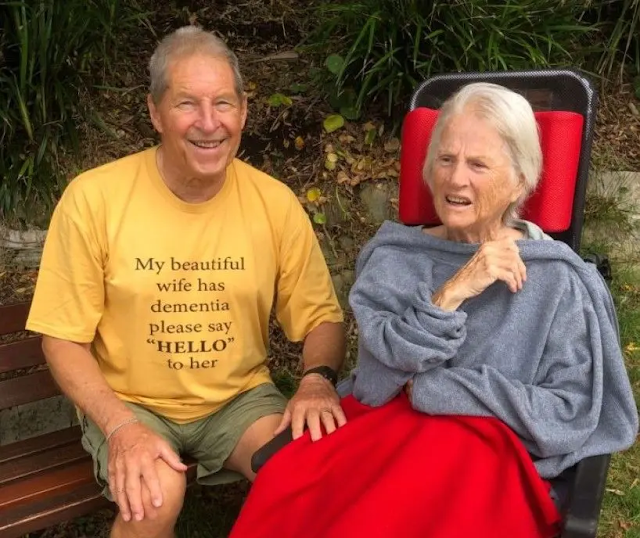
Image of the day

An Australian man in love and shows it by wearing this t-shirt on the streets walking with his wife! Jim and Maureen! (Source)


Sunday, November 26, 2023

One Stage of Sleep Seems to Be Critical For Reducing The Risk of Dementia

Good news!

Unfortunately, the article is silent on the benefits of naps in this respect!

"Slow-wave sleep is the third stage of a human 90-minute sleep cycle, lasting about 20–40 minutes. It's the most restful stage, where brain waves and heart rate slow and blood pressure drops. ...
Earlier this year, research discovered that individuals with Alzheimer's-related changes in their brain did better on memory tests when they got more slow-wave sleep.
"Slow-wave sleep, or deep sleep, supports the aging brain in many ways, and we know that sleep augments the clearance of metabolic waste from the brain, including facilitating the clearance of proteins that aggregate in Alzheimer's disease," ...
"However, to date we have been unsure of the role of slow-wave sleep in the development of dementia. Our findings suggest that slow-wave sleep loss may be a modifiable dementia risk factor." ...
By comparing participants' first and second sleep studies, researchers discovered a link between each percentage point decrease in slow-wave sleep per year and a 27 percent increased risk of developing dementia. ..."

From the abstract:
"Importance
Slow-wave sleep (SWS) supports the aging brain in many ways, including facilitating the glymphatic clearance of proteins that aggregate in Alzheimer disease. However, the role of SWS in the development of dementia remains equivocal.
Objective 
To determine whether SWS loss with aging is associated with the risk of incident dementia and examine whether Alzheimer disease genetic risk or hippocampal volumes suggestive of early neurodegeneration were associated with SWS loss.
Design, Setting, and Participants
This prospective cohort study included participants in the Framingham Heart Study who completed 2 overnight polysomnography (PSG) studies in the time periods 1995 to 1998 and 1998 to 2001. Additional criteria for individuals in this study sample were an age of 60 years or older and no dementia at the time of the second overnight PSG. Data analysis was performed from January 2020 to August 2023.
Exposure
Changes in SWS percentage measured across repeated overnight sleep studies over a mean of 5.2 years apart (range, 4.8-7.1 years).
Main Outcome
Risk of incident all-cause dementia adjudicated over 17 years of follow-up from the second PSG.
Results
From the 868 Framingham Heart Study participants who returned for a second PSG, this cohort included 346 participants with a mean age of 69 years (range, 60-87 years); 179 (52%) were female. Aging was associated with SWS loss across repeated overnight sleep studies (mean [SD] change, −0.6 [1.5%] per year; P < .001). Over the next 17 years of follow-up, there were 52 cases of incident dementia. In Cox regression models adjusted for age, sex, cohort, positivity for at least 1 APOE ε4 allele, smoking status, sleeping medication use, antidepressant use, and anxiolytic use, each percentage decrease in SWS per year was associated with a 27% increase in the risk of dementia (hazard ratio, 1.27; 95% CI, 1.06-1.54; P = .01). SWS loss with aging was accelerated in the presence of Alzheimer disease genetic risk (ie, APOE ε4 allele) but not hippocampal volumes measured proximal to the first PSG.
Conclusions and Relevance
This cohort study found that slow-wave sleep percentage declined with aging and Alzheimer disease genetic risk, with greater reductions associated with the risk of incident dementia. These findings suggest that SWS loss may be a modifiable dementia risk factor."

One Stage of Sleep Seems to Be Critical For Reducing The Risk of Dementia : ScienceAlert

Friday, September 22, 2023

At the 12-seat Cafe of Mistaken Orders in Tokyo

What a very nice idea!

Let it be! (Beatles song) "Whisper words of wisdom, let it be"

Apparently, there are also restaurants of mistaken orders in Japan (try Google search). The government of Japan wrote here an article about it in Winter of 2019 titled "Restaurant of Mistaken Orders Brings Smiles".

Hopefully, we will soon find better treatments for dementia!

"When you order a slice of chiffon cake at the Orange Day Sengawa in Tokyo, your server might bring a citrus jelly dessert instead.

But that’s par for the course at the restaurant, also known as the Cafe of Mistaken Orders.

The restaurant is one of Japan’s new “dementia cafes,” which hire older people with dementia to work as servers once a month. 

The goal: Provide servers with a safe, stimulating environment—with the hope that new interactions will help slow the disease’s progression. 

A need for creative care: About 30% of Japan’s population is older than 65, and ~7.5 million people will have dementia by 2025, the country’s Health Ministry estimates. 

A caregiver shortage means the country needs more ways to keep dementia patients active for as long as possible." (Source: Johns Hopkins Bloomberg School of Public Health: Global Health NOW)

"... This 12-seat cafe in Sengawa, a suburb in western Tokyo, hires elderly people with dementia to work as servers once a month. A former owner of the cafe has a parent with dementia, and the new owner agreed to let them rent out the space each month as a dementia cafe. The organizers now work with the local government to get connected to dementia patients in the area. ..."

"... It’s called the “Restaurant of Mistaken Orders” - a restaurant where orders and deliveries sometimes go astray. Yes, we’ve come to a place where the waiters and waitresses all have some degree of cognitive impairment. ..."

In aging Japan, dementia patients staff cafe of mistaken orders


Saturday, September 16, 2023

A long overlooked, Completely New Cause of Alzheimer's and vascular dementia Uncovered

Good news! What else have researchers missed? Pardon my facetiousness!

"... "We've missed a major form of cell death in Alzheimer's disease and vascular dementia," ... "We hadn't been giving much attention to microglia as vulnerable cells, and white matter injury in the brain has received relatively little attention." ...
The researchers discovered that the microglia cells themselves are also destroyed as they sweep away the damaged myelin, seemingly by overdosing on iron that is contained within the white matter in significant quantities. ...
The cascading effect of microglia death and white matter degeneration appears to play a part in the cognitive decline linked to Alzheimer's and vascular dementia, according to the new study  ..."

"... A new study,  ... reveals for the first time that a form of cell death known as ferroptosis — caused by a buildup of iron in cells — destroys microglia cells, a type of cell involved in the brain’s immune response,  in cases of Alzheimer’s and vascular dementia. ...
The researchers discovered that microglia degenerates in the white matter of the brain of patients with Alzheimer’s and vascular dementia. ...
When myelin is damaged, microglia swarm in to clear the debris. In the new study, researchers found that microglia themselves are destroyed by the act of clearing iron-rich myelin — a form of cell death known as ferroptosis. ..."

From the abstract:
"Objective
Because the role of white matter (WM) degenerating microglia (DM) in remyelination failure is unclear, we sought to define the core features of this novel population of aging human microglia.
Methods
We analyzed postmortem human brain tissue to define a population of DM in aging WM lesions. We used immunofluorescence staining and gene expression analysis to investigate molecular mechanisms related to the degeneration of DM.
Results
We found that DM, which accumulated myelin debris were selectively enriched in the iron-binding protein light chain ferritin, and accumulated PLIN2-labeled lipid droplets. DM displayed lipid peroxidation injury and enhanced expression for TOM20, a mitochondrial translocase, and a sensor of oxidative stress. DM also displayed enhanced expression of the DNA fragmentation marker phospho-histone H2A.X. We identified a unique set of ferroptosis-related genes involving iron-mediated lipid dysmetabolism and oxidative stress that were preferentially expressed in WM injury relative to gray matter neurodegeneration.
Interpretation
Ferroptosis appears to be a major mechanism of WM injury in Alzheimer's disease and vascular dementia. WM DM are a novel therapeutic target to potentially reduce the impact of WM injury and myelin loss on the progression of cognitive impairment."

A Completely New Cause of Alzheimer's Uncovered in Our Brain's White Matter : ScienceAlert

OHSU scientists discover new cause of Alzheimer’s, vascular dementia (primary source) Study highlights microglia degeneration in brain caused by iron toxicity


Figure 7 Summary of data supporting a role for ferroptosis in microglial degeneration in human WMI related to vascular dementia or AD. 


Wednesday, May 17, 2023

Study challenges the theory that Alzheimer’s disease is primarily driven by amyloid plaques

Good news!

"... The researchers found that the man had a mutation in a gene coding for a protein called reelin, which is associated with brain disorders including schizophrenia and autism. Little is known about reelin’s role in Alzheimer’s, so the researchers genetically engineered mice with the same mutation. In mice, the mutated form of reelin caused the tau protein to be chemically modified, limiting its ability to cluster around neurons. The study challenges the theory that Alzheimer’s disease is primarily driven by amyloid plaques ...
The fact that the man stayed mentally healthy for so long despite the many amyloid plaques in his brain suggests that Alzheimer’s is more complicated ...
there could be multiple subtypes of Alzheimer’s, only some of which are driven by amyloid ..."

From the abstract:
"We characterized the world’s second case with ascertained extreme resilience to autosomal dominant Alzheimer’s disease (ADAD). Side-by-side comparisons of this male case and the previously reported female case with ADAD homozygote for the APOE3 Christchurch (APOECh) variant allowed us to discern common features. The male remained cognitively intact until 67 years of age despite carrying a PSEN1-E280A mutation. Like the APOECh carrier, he had extremely elevated amyloid plaque burden and limited entorhinal Tau tangle burden. He did not carry the APOECh variant but was heterozygous for a rare variant in RELN (H3447R, termed COLBOS after the Colombia–Boston biomarker research study), a ligand that like apolipoprotein E binds to the VLDLr and APOEr2 receptors. RELN-COLBOS is a gain-of-function variant showing stronger ability to activate its canonical protein target Dab1 and reduce human Tau phosphorylation in a knockin mouse. A genetic variant in a case protected from ADAD suggests a role for RELN signaling in resilience to dementia."

How one man's rare Alzheimer’s mutation delayed the onset of disease Genetic resilience found in a person predisposed to early-onset dementia could potentially lead to new treatments.


Fig. 1: PET imaging of the RELN-COLBOS (H3447R) carrier


Friday, January 13, 2023

Johns Hopkins study links hearing loss with dementia in older adults

This study only confirms age old common wisdom that hearing or eyesight loss can promote dementia or other forms of cognitive degeneration.

However, remember Beethoven who was still able to compose incredible music pieces despite deafness. How one handles progressive deafness is very important too.

"... The findings, from a nationally representative sample of more than 2,400 older adults, are consistent with prior studies showing that hearing loss might be a contributing factor to dementia risk over time, and that treating hearing loss may lower dementia risk. ..."

Johns Hopkins study links hearing loss with dementia in older adults | Hub But the likelihood of dementia was lower among patients with hearing aids, researchers say

Saturday, May 07, 2022

LATE: A common cause of dementia you may have never heard of

Recommendable! Better LATE than  never! Don't be LATE!😄

"... Lewy body dementia, although Lewy body dementia (encompassing both dementia with Lewy bodies and Parkinson’s disease dementia) is the fourth most common cause. ...
It’s LATE, which stands for limbic-predominant age-related TDP-43 encephalopathy ...
In LATE, a protein called TDP-43 (which stands for transactive response DNA binding protein of 43 kDa) accumulates in brain cells. Once it accumulates, it injures and ultimately destroys the cells.
LATE generally damages many of the same areas affected by Alzheimer’s disease. These regions include
the amygdala, involved in emotional regulation
the hippocampus, involved in learning and memory
the temporal lobe, involved in words and their meanings
portions of the frontal lobes, involved with keeping information in mind and manipulating it. ..."

"... Because LATE was (and still is) often confused with Alzheimer’s disease, it is almost certain that when the main drugs that are FDA-approved to treat Alzheimer’s disease were evaluated, individuals with LATE were included in those studies. This means that there is every reason to believe that drugs like donepezil (brand name Aricept), rivastigmine (Exelon), memantine (Namenda), and galantamine will all be effective for individuals with dementia due to LATE. ..."
This is a very heroic assumption by this medical doctor author!

LATE: A common cause of dementia you’ve never heard of – Harvard Gazette LATE is now listed alongside the top three disorders that cause dementia in older individuals. It’s called LATE, but what exactly is it and why haven’t we heard of it before?

Friday, May 06, 2022

Hallmarks of dementia found well before diagnosis in one large family living in Colombia

Good news! Will we soon have regular checkups? 

However, this is a very specialized study focusing only on one large family living in one city located in Colombia. 

"A new study led by investigators at Massachusetts General Hospital shows that early accumulation of amyloid-β and tau protein begins to disrupt the brain’s connections important for memory years before signs of cognitive impairment were observed. ...
To learn more about this phenomenon, [researchers] used positron emission tomography (PET) for tau and amyloid-β, and functional magnetic resonance imaging (fMRI) to study how Alzheimer’s disease pathologies related to connectivity of brain regions and networks in individuals from a large family of more than 6,000 living members with Alzheimer’s disease prevalence from Antioquia, Colombia, South America.

Those who have the mutation known as Presenilin-1 E280A) are almost certain to develop Alzheimer’s disease dementia, usually showing signs of mild cognitive impairment (MCI) at age 44 and dementia by the age of 49. None of the individuals studied had any cognitive symptoms yet. ...
Previously, this research team showed that these individuals exhibit high levels of amyloid-β almost two decades before the onset of MCI, and tau pathology close to six years before onset. ...
The team used fMRI to examine regions of the brain at the voxel level, akin to pixels that represent 3D units encompassing millions of brain cells, to look at connectivity within and between different networks of the brain. They learned that mutation carriers displayed connection disruptions in the brain’s main memory network years before onset of cognitive impairment in the family. The researchers also developed a novel mathematical approach merging both fMRI and molecular imaging to see more clearly when brain regions begin to disconnect during the disease process. ..."

From the abstract:
"... We used high-resolution (voxel-level) graph-based network analyses to test whether in vivo amyloid-β and tau burden was associated with the segregation and integration of brain functional connections, and episodic memory, in cognitively unimpaired Presenilin-1 E280A carriers who are expected to develop early-onset AD dementia in ∼13 y on average. Compared to noncarriers, mutation carriers exhibited less functional segregation and integration in posterior default-mode network (DMN) regions, particularly the precuneus, and in the retrospenial cortex, which has been shown to link medial temporal regions and cortical regions of the DMN. Mutation carriers also showed greater functional segregation and integration in regions connected to the salience network, including the striatum and thalamus. Greater tau burden was associated with lower segregated and integrated functional connectivity of DMN regions, particularly the precuneus and medial prefrontal cortex. In turn, greater tau pathology was related to higher segregated and integrated functional connectivity in the retrospenial cortex and the anterior cingulate cortex, a hub of the salience network. These findings enlighten our understanding of how AD-related pathology distinctly alters the brain’s functional architecture in the preclinical stage, possibly contributing to pathology propagation and ultimately resulting in dementia."

Hallmarks of dementia found well before diagnosis – Harvard Gazette Accumulation of amyloid-β and tau proteins are related to brain network changes years before symptoms

Friday, November 12, 2021

Blocking tau may help ALS patients

Good news! Are we finally making progress on ALS?

"... Studies of Alzheimer’s disease also have linked changes in mitochondrial function to interactions between an abnormal form of tau, which accumulates in the brains of Alzheimer’s patients, and a mitochondrial protein called dynamin-related protein 1. ... examined whether these interactions might also promote mitochondrial dysfunction in ALS, and whether reducing tau could be a novel and promising therapeutic approach to fight the disease. Using brain tissue from dead ALS patients, the team found the abnormal form of tau in brain in places where tau is not normally found. When cells were grown in contact with deceased ALS patients’ brain tissue that contained abnormal tau, the cells’ mitochondria fragmented and oxidative stress increased. Importantly, reducing tau with a specific degrader reversed these effects, reducing mitochondrial fragmentation and lowering oxidative stress.
“We demonstrated for the first time that targeting tau with a new class of small molecules that selectively degrade it can reverse the ALS-induced changes in mitochondria’s shape and function ..."

From the abstract:
"... Lastly, reducing tau levels with QC-01-175, a selective tau degrader, prevented ALS SNs-induced mitochondrial fragmentation and oxidative stress in vitro. Collectively, our findings suggest that increases in pTau-S396 may lead to mitochondrial fragmentation and oxidative stress in ALS and decreasing tau may provide a novel strategy to mitigate mitochondrial dysfunction in ALS."

Blocking tau, an Alzheimer’s hallmark, may help ALS patients – Harvard Gazette

Wednesday, September 01, 2021

AI could detect dementia after single brain scan

Good news!

"The team ... has developed machine learning tools that can detect dementia in patients at a very early stage. Using brain scans from patients who went on to develop Alzheimer’s, their machine learning algorithm learnt to spot structural changes in the brain. When combined with the results from standard memory tests, the algorithm was able to provide a prognostic score – that is, the likelihood of the individual having Alzheimer’s disease.

Currently, it can take several scans and tests to diagnose the disease. For those patients presenting with mild cognitive impairment – signs of memory loss or problems with language or visual/spatial perception – the algorithm was over 80% accurate in predicting those individuals who went on to develop Alzheimer’s disease. It was also able to predict how fast their cognition will decline over time. ..."

AI could detect dementia after single brain scan | The Alan Turing Institute

Thursday, March 04, 2021

Study offers an explanation for why the APOE4 gene enhances Alzheimer’s risk

Good news!

"APOE4 is a strong genetic risk factor for many diseases, most notably, late-onset Alzheimer’s disease. Sienski et al. now show that cultured human glia with an APOE4 genotype accumulated unsaturated triglycerides leading to a lipid imbalance. Using genetic screens in yeast, the authors discovered that promoting phospholipid synthesis through choline supplementation of culture medium restored a normal lipid state in APOE4-expressing yeast cells. The authors then demonstrated that choline supplementation also restored lipid homeostasis in human APOE4 astrocytes. These findings suggest that modulating glial metabolism could help to reduce APOE4-associated disease risk."

"The E4 allele of the apolipoprotein E gene (APOE) has been established as a genetic risk factor for many diseases including cardiovascular diseases and Alzheimer’s disease (AD), yet its mechanism of action remains poorly understood. APOE is a lipid transport protein, and the dysregulation of lipids has recently emerged as a key feature of several neurodegenerative diseases including AD. ..."

"One of the most significant genetic risk factors for developing Alzheimer’s disease is a gene called APOE4, which is carried by almost half of all Alzheimer’s patients. A new study from MIT shows that this gene has widespread effects on brain cells’ ability to metabolize lipids and respond to stress. ...
The researchers hope that their findings will lead to clinical studies of choline in people who carry the APOE4 gene, who make up about 14 percent of the overall population. ...
The human gene for APOE, or apolipoprotein E, comes in three versions. While APOE4 is linked to higher risk for Alzheimer’s, APOE2 is considered protective, and APOE3, the most common variant, is neutral. ...
APOE4 astrocytes showed dramatic changes in how they process lipids compared to APOE3. In APOE4 astrocytes, there was a significant buildup of neutral lipids and cholesterol. These astrocytes also accumulated droplets containing a type of lipids called triglycerides, and these triglycerides had many more unsaturated fatty acid chains than normal. These changes all disrupt the normal lipid balance inside the cells. The authors also noted APOE4-dependent lipid disruptions in another important brain cell, microglia. ...
Choline is naturally found in foods such as eggs, meat, fish, and some beans and nuts. The minimum recommended intake of choline is 550 milligrams per day for men and 425 milligrams per day for women, but most people don’t consume that much, Tsai says. The new study offers preliminary evidence that people who carry the APOE4 gene may benefit from taking choline supplements, she says, although clinical trials are necessary to confirm that. ..."

Study offers an explanation for why the APOE4 gene enhances Alzheimer’s risk | MIT News | Massachusetts Institute of Technology The gene variant disrupts lipid metabolism, but in cell experiments the effects were reversed by choline supplements.

Here is the referenced paper:

Thursday, January 02, 2014

Hypertension And Cognitive Impairment

Trigger

I have just read this article in the leading German language Swiss newspaper.

A Silent Threat

Hypertension is one of those medical conditions that too many people do not take seriously enough until it is too late. Another one is macular degeneration.

New Results From The Maastricht Aging Study

Here are two links to sources:

From the abstract or the paper above (Emphasis added):
“Midlife hypertension is a risk factor for dementia, but little is known about the cognitive trajectories of individuals with incident hypertension. … This study shows that incident hypertension predicts cognitive decline in middle-aged individuals, and those with poorly controlled blood pressure are most at risk. In newly diagnosed individuals, decline evolves gradually, possibly opening a window for early intervention.”