Posted: 7/27/2014
Prologue
There is little doubt in my mind that the “The Gospel Of Wealth” (This source has some typos) published by Andrew Carnegie (AC) in 1889 was an influential paper. It may have even inspired contemporary wealthy people like Warren Buffett or Bill Gates.
I would argue that AC also contributed to or reinforced the many distortions proliferated so successfully by Marxists/communists.
More importantly, it is the strange views of a tycoon like Andrew Carnegie, as expressed in his Gospel, that made socialism in the U.S. possible and widely acceptable! He may have helped the socialist cause in the U.S. more than anyone else.
These notes are preliminary and selective!
First, Salient Quotes
Selected quotes from Andrew Carnegie’s paper (emphasis added):
“The problem of our age is the proper administration of wealth, so that the ties of brotherhood may still bind together the rich and poor in harmonious relationship. …
We start, then, with a condition of affairs under which the best interests of the race are promoted, but which inevitably gives wealth to the few.
And it is of this great question [the proper administration of wealth]] that I believe I offer the true solution. It will be understood that fortunes are here spoken of, not moderate sums saved by many years of effort, the returns on which are required for the comfortable maintenance and education of families. This is not wealth, but only competence which it should be the aim of all to acquire.”
“The Indians are to-day where civilized man then was. When visiting the Sioux, I was led to the wigwam of the chief. It was just like the others in external appearance, and even within the difference was trifling between it and those of the poorest of his braves. The contrast between the palace of the millionaire and the cottage of the laborer with us to-day measures the change which has come with civilization.”
“Formerly articles Were manufactured at the domestic hearth or in small shops which formed part of the household. The master and his apprentices worked side by side, the latter living with the master, and therefore subject to the same conditions. When these apprentices rose to be masters, there was little or no change in their mode of life, and they, in turn, educated in the same routine succeeding apprentices. There was, substantially social equality, and even political equality, for those engaged in industrial pursuits had then little or no political voice in the State.”
“The "good old times " were not good old times. Neither master nor servant was as well situated then as today. A relapse to old conditions would be disastrous to both--not the least so to him who serves--and would Sweep away civilization with it.”
“We assemble thousands of operatives in the factory, in the mine, and in the counting-house, of whom the employer can know little or nothing, and to whom the employer is little better than a myth. All intercourse between them is at an end. Rigid Castes are formed, and, as usual, mutual ignorance breeds mutual distrust. Each Caste is without sympathy for the other, and ready to credit anything disparaging in regard to it. Human society loses homogeneity.”
“The price which society pays for the law of competition, like the price it pays for cheap comforts and luxuries, is also great;but the advantage of this law are also greater still, for it is to this law that we owe our wonderful material development, which brings improved conditions in its train. But, whether the law be benign or not, we must say of it, as we say of the change in the conditions of men to which we have referred : It is here; we cannot evade it; no substitutes for it have been found; and while the law may be sometimes hard for the individual, it is best for the race, because it insures the survival of the fittest in every department. We accept and welcome therefore, as conditions to which we must accommodate ourselves, great inequality of environment, the concentration of business, industrial and commercial, in the hands of a few, and the law of competition between these, as being not only beneficial, but essential for the future progress of the race.”
“Individualism, Private Property, the Law of Accumulation of Wealth, and the Law of Competition ; for these are the highest results of human experience, the soil in which society so far has produced the best fruit. Unequally or unjustly, perhaps, as these laws sometimes operate, and imperfect as they appear to the Idealist, they are, nevertheless, like the highest type of man, the best and most valuable of all that humanity has yet accomplished.”
“There are but three modes in which surplus wealth can be disposed of. It call be left to the families of the decedents; or it can be bequeathed for public purposes; or, finally, it can be administered during their lives by its possessors. … Why should men leave great fortunes to their children? If this is done from affection, is it not misguided affection? Observation teaches that, generally speaking, it is not well for the children that they should be so burdened. Neither is it well for the state. Beyond providing for the wife and daughters moderate sources of income, and very moderate allowances indeed, if any, for the sons, men may well hesitate, for it is no longer questionable that great sons bequeathed oftener work more for the injury than for the good of the recipients. Wise men will soon conclude that, for the best interests of the members of their families and of the state, such bequests are an improper use of their means. …
As to the second mode, that of leaving wealth at death for public uses, it may be said that this is only a means for the disposal of wealth, provided a man is content to wait until he is dead before it becomes of much good in the world. Knowledge of the results of legacies bequeathed is not calculated to inspire the brightest hopes of much posthumous good being accomplished. The cases are not few in which the real object sought by the testator is not attained, nor are they few in which his real wishes are thwarted. In many cases the bequests are so used as to become only monuments of his folly. It is well to remember that it requires the exercise of not less ability than that which acquired the wealth to use it so as to be really beneficial to the community. Besides this, it may fairly be said that no man is to be extolled for doing what he cannot help doing, nor is he to be thanked by the community to which he only leaves wealth at death. Men who leave vast sums in this way may fairly be thought men who would not have left it at all, had they been able to take it with them. The memories of such cannot be held in grateful remembrance, for there is no grace in their gifts.”
“The growing disposition to tax more and more heavily large estates left at death is a cheering indication of the growth of a salutary change in public opinion. The State of Pennsylvania now takes--subject to some exceptions--one-tenth of the property left by its citizens. The budget presented in the British Parliament the other day proposes to increase the death-duties ; and,most significant of all, the new tax is to be a graduated one. Of all forms of taxation, this seems the wisest. Men who continue hoarding great sums all their lives, the proper use of which for - public ends would work good to the community, should be made to feel that the community, in the form of the state, cannot thus be deprived of its proper share. By taxing estates heavily at death the state marks its condemnation of the selfish millionaire's unworthy life.
It is desirable ;that nations should go much further in this direction. Indeed, it is difficult to set bounds to the share of a rich man's estate which should go at his death to the public through the agency of the state, and by all means such taxes should be graduated, beginning at nothing upon moderate sums to dependents, and increasing rapidly as the amounts swell, until of the millionaire's hoard, as of Shylock's, at least _____ The other half Comes to the privy coffer of the state.
This policy would work powerfully to induce the rich man to attend to the administration of wealth during his life, which is the end that society should always have in view, as being that by far most fruitful for the people. Nor need it be feared that this policy would sap the root of enterprise and render men less anxious to accumulate, for to the class whose ambition it is to leave great fortunes and be talked about after their death, it will at- tract even more attention, and, indeed, be a somewhat nobler ambition to have enormous sums paid over to the state from their fortunes.”
“There remains, then, only one mode of using great fortunes; but in this we have the true antidote for the temporary unequal distribution of wealth, the reconciliation of the rich and the poor--a reign of harmony--another ideal, differing, indeed, from that of the Communist in requiring only the further evolution of existing conditions, not the total overthrow of our civilization. … Under its sway we shall have an ideal state, in which the surplus wealth of the few will become, in the best sense the property of the many, because administered for the common good, and this wealth, passing through the hands of the few, can be made a much more potent force for the elevation of our race than if it had been distributed in small sums to the people themselves. Even the poorest can be made to see this, and to agree that great sums gathered by some of their fellow-citizens and spent for public purposes, from which the masses reap the principal benefit, are more valuable to them than if scattered among them through the course of many years in trifling amounts.”
“If we consider what results flow from the Cooper Institute [in New York city], for instance, to the best portion of the race in New York not possessed of means, and compare these with those which would have arisen for the good of the masses from an equal sum distributed by Mr. Cooper in his lifetime in the form of wages, which is the highest form of distribution, being for work done and not for charity, we can form some estimate of the possibilities for the improvement of the race which lie embedded in the present law of the accumulation of wealth. Much of this sum if distributed in small quantities among the people, would have been wasted in the indulgence of appetite, some of it in excess, and it may be doubted whether even the part put to the best use,that of adding to the comforts of the home, would have yielded results for the race, as a race, at all comparable to those which are flowing and are to flow from the Cooper Institute from generation to generation. Let the advocate of violent or radical change ponder well this thought.”
“but rich men should be thankful for one inestimable boon. They have it in their power during their lives to busy themselves in organizing benefactions from which the masses of their fellows will derive lasting advantage, and thus dignify their own lives. The highest life is probably to be reached, not by such imitation of the life of Christ as Count Tolstoi gives us, but, while animated by Christ's spirit, by recognizing the changed conditions of this age, and adopting modes of expressing this spirit suitable to the changed conditions under which we live ; still laboring for the good of our fellows,which was the essence of his life and teaching, but laboring in a different manner.”
“This, then, is held to be the duty of the man of Wealth: First, to set an example of modest, unostentatious living, shunning display or extravagance; to provide moderately for the legitimate wants of those dependent upon him; and after doing so to consider all surplus revenues which come to him simply as trust funds, which he is called upon to administer, and strictly bound as a matter of duty to administer in the manner which, in his judgment, is best calculated to produce the most beneficial results for the community--the man of wealth thus becoming the mere agent and trustee for his poorer brethren, bringing to their service his superior wisdom, experience and ability to administer, doing for them better than they would or could do for themselves.”
“The rich man is thus almost restricted to following the examples of Peter Cooper, Enoch Pratt of Baltimore, Mr. Pratt of Brooklyn, Senator Stanford, and others, who know that the best means of benefiting the community is to place within its reach the ladders upon which the aspiring can rise--parks, and means of recreation, by which men are helped in body and mind; works of art, certain to give pleasure and improve the public taste, and public institutions of various kinds, which will improve the general condition of the people ;--in this manner returning their surplus wealth to the mass of their fellows in the forms best calculated to do them lasting good. ”
“Thus is the problem of Rich and Poor to be solved. The laws of accumulation will be left free ; the laws of distribution free. Individualism will continue, but the millionaire will be but a trustee for the poor; intrusted for a season with a great part of the increased wealth of the community, but administering it for the community far better than it could or would have done for itself.”
Historical Determinism And Marxist Jargon
History never is and never was a one way street! The economic structures of civilization have changed dramatically and dynamically all the time. To assume that business will be concentrated, capital accumulate in the hands of a few etc. is Marxist thought and proven wrong.
Who is to determine what is beneficial to society? Andrew Carnegie or elected representatives?
Besides the super wealthy like Andrew Carnegie, capitalism has also produced many wealthy people, not just a few. Further, the “Law of Competition” makes sure that over time most super wealthy loose and new ones arrive.
Expropriation Of The Wealthy
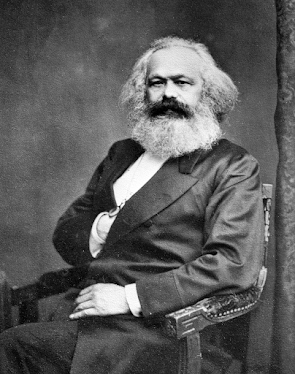
Just like Marxists or Bolsheviks, Andrew Carnegie has called for big government to threaten the wealthy with expropriation should they not administer (distribute) their wealth during their lifetime. Or how did Karl Marx express it in the above mentioned chapter “The knell of capitalist private property sounds. The expropriators are expropriated.”
As if government or our elected representatives know better what to do with money than the wealthy few.
No wonder that the estate tax is so difficult to repeal in the U.S. and that buffoons like Warren Buffett keep defending it.
Elitist Or Paternalist View Of Workers
Andrew Carnegie does not think that higher wages would be beneficial to the employees of his or other wealth people’s employees, because in his opinion they would have wasted the money for “excessive indulgences”.
It did not cross his mind that some workers would have saved money to become perhaps tycoons themselves one day or to educate themselves or their children.
Was Andrew Carnegie Too Clever?
Did he perhaps think the wealthy few could keep and manage their fortunes during their lifetime and protect it from socialist threats until their death? If this was his ulterior motive, he completely failed in hindsight.