Showing posts with label California Institute of Technology (CalTech). Show all posts

Wednesday, July 01, 2026

Seeing and Imagining Are Handled by the Same Brain Cells based on single neuron recording

Amazing stuff!

"In one of the first single-neuron studies of imagination in the human brain, researchers found a striking match between how the brain sees objects and how it imagines them. The findings make important inroads into two previously indecipherable aspects of neuroscience: memory and the origins of creativity.

The research focused on a region of the brain called the ventral temporal cortex, which is responsible for object recognition. Measuring neurons in that region, researchers ... found that many of the same neurons fire in response to a specific object, whether it is seen or imagined. In other words, the brain draws on overlapping groups of cells to perceive an apple and to conjure a mental picture of one. The finding suggests that the brain implements a ‘generative model’: a model that can take a high-level concept like ‘flower’ and synthesize a detailed picture of one, complete with colors, shading, shape and textures. ...

The results ... are an important first step toward understanding how creative processes — like making art and music — arise in the brain and how memories are retrieved. ..."

From the editor's summary and abstract:
"Editor’s summary
The ventral temporal cortex (VTC) is a brain area involved in identifying and categorizing visual stimuli. Wadia et al. performed single-neuron recording in the VTC of patients with epilepsy while the subjects were presented with real visual stimuli or were asked to imagine them. Deep network analysis showed that visually responsive neurons were tuned on specific axes. While imagining the objects, around 40% of the visually responsive VTC neurons were also robustly activated. Thus, mental imagery reactivates the same sensory codes used during visual stimuli, suggesting the existence of a generative model capable of synthesizing detailed sensory contents from an abstract, semantic representation.  ...

Structured Abstract
INTRODUCTION
Mental imagery refers to our brains’ capacity to generate percepts, emotions, and thoughts in the absence of external stimuli. ... Despite its importance in our lives, little is known about the single-neuron mechanisms of mental imagery. Neuroimaging results support a long-standing theory that imagery of a given sense is subserved by the reactivation of that specific sensory cortex. However, these studies lack the resolution to discern whether it is the same neurons or separate circuitry roughly located in the same regions that reactivates.

RATIONALE
We investigated the single-neuron mechanisms of visual imagery by recording single neurons in human patients implanted with electrodes to localize their focal epilepsy as they viewed and subsequently imagined objects. We focused our investigations on the ventral temporal cortex (VTC), a part of the temporal lobe dedicated to representing visual objects. We first determined the code for visual objects. We found that as in macaques, neurons in human VTC represent objects by using a distributed axis code. This code emphasizes the geometric picture that neurons project incoming stimuli—formatted as points in feature space—onto specific preferred axes and respond proportionally to the projection value. We then examined whether this code is reactivated during imagery.

RESULTS
We recorded 714 neurons in the human VTC across 16 patients as they viewed visual objects. A majority of neurons (456 of 714) were visually selective for one of the five object categories used (faces, plants, text, animals, and objects). To represent general objects with arbitrary features, we built a low-dimensional object space using the unit activations of deep networks trained to perform object classification. Nearly ~80% (367 of 456) of all visually responsive single neurons were significantly axis tuned. We used this axis code to reconstruct objects and generate maximally effective synthetic stimuli. Last, we recorded the responses of the same neurons in a subset of patients (6 of 16) as they imagined the same objects. Mean responses to perceived and imagined objects were comparable, with some neurons active only during perception, some only during imagery, and some during both. In particular, ~40% (43 of 107) of axis-tuned VTC neurons recorded during the imagery task reactivated, and the responses during imagery of individual neurons were proportional to the projection value of those objects onto the neurons’ viewing axes. We used this observation to reconstruct imagined objects while still easily distinguishing whether those objects were viewed or imagined.

CONCLUSION
We leveraged the opportunity to record from the same population of VTC neurons in humans as they viewed and imagined objects. Neurons use an axis code to represent visual objects, and neural activity during imagination reactivates this code. These findings provide single-neuron evidence for a generative model in the human brain."

Seeing and Imagining Are Handled by the Same Brain Cells "Researchers make advances in understanding how human brains are wired by pinning down how the same neurons are used for both imagining and seeing objects."

Imagine That: Brain Uses Neurons from Vision System When Forming Mental Imagery (another original news release) "Creative endeavors, like making art, writing music, or penning a poem, require the recall of memories to fuel imagination. Many other human behaviors, including problem solving, also rely on mental imagery to complete tasks, but little was known about how imagery works at the level of single neurons in the brain—until now."


A shared code for vision and imagination.


Friday, May 01, 2026

Scanning the Body with ultrasound tomography

Good news!

"... To scan an organ from all sides, UST requires the entire body part to be in contact with water. As a way of demonstrating the feasibility of their new, larger system, ... team drew inspiration from an early ultrasound system from the 1950s, in which patients were submerged in a tank of water. ..."

From the abstract:
"Ultrasonography is a vital component of modern clinical care, with handheld probes routinely used for diagnostic imaging and procedural guidance. However, handheld ultrasound imaging is limited by factors such as the partial cross-sectional field of view, operator dependency, contact-induced distortion and lack of transmission contrast.
Here we demonstrate a new system that enables whole cross-sectional ultrasound tomography of humans in both reflection and transmission modes. We generate two-dimensional images of the entire in vivo human cross-section in the abdomen and thighs with uniform in-plane resolution using a custom 512-element circular ultrasound receiver array and a rotating transmitter.
Sequential scans with our system show strong agreement with clinical magnetic resonance imaging counterparts.
To address unmet clinical needs, we explore two key applications.
First, we observe abdominal adipose distributions in our images, enabling adipose thickness assessment without ionising radiation or mechanical deformation. Second, we demonstrate an approach for video-rate biopsy needle localization with respect to internal tissue features.
These capabilities make whole cross-sectional ultrasound tomography a potential practical tool for clinical needs currently unmet by other modalities."

Scanning the Body with Sound - www.caltech.edu "Ultrasounds are a critical part of modern health care, helping to image soft tissue and organs, measure blood flow, and monitor fetal development. But the technique has constraints, including a limited field of view and the potential for operator error. To address current shortfalls and push the technology toward new applications, ... researchers have developed a system that can perform ultrasound tomography (UST) imaging on whole cross-sections of the body."


Whole Cross-Sectional Human Ultrasound Tomography (preprint, open access, first published 6/30/2023)

At left, an illustration of the ultrasound tomography (UST) system  ... While a patient is submerged in a water tank, a lab-made ring-like structure made up of 512 transducers is used to scan up and down the body and image different cross-sections.
At right, UST images of a human abdomen show how information is gathered from different types of measurements to produce images of organs and tissues inside the body.


Images of a healthy female's abdomen taken by the Wang lab's ultrasound tomography system (left) are compared to clinical MRI images of a corresponding region (right).


Simple New System Keeps optical Microscopes in Focus Automatically and robustly

Good news!

"Now a team of scientists ... has developed an inexpensive robust fix for this problem that involves little more than a couple of LED lights and some physics-based processing. They describe the new autofocus technique, which they call Digital Defocus Aberration Interference (DAbI) ...

The underlying concept is fairly simple. When two LEDs illuminate a sample from slightly different angles, the combined signal derived from two photographs (one taken at each source of illumination) reveals a hidden fringe, or pattern of stripes. Those stripes change in a predictable way depending on how far the sample is from the focal point, the sweet spot where an image comes into focus. Therefore, a computer reading the stripes can tell the microscope how to correct for any blurriness in the image. ...

The scientists have tested DAbI on six different types of microscopes—from basic compound light microscopes to more complex systems used for imaging living cells and tissues, or even thick 3D specimens—all with excellent results. When dealing with thin flat samples, DAbI kept images in focus across a range more than 400 times larger than the natural depth of focus of a basic microscope lens. ... "This makes it useful and powerful for automated, high-throughput microscopy."

the DAbI technique is unique in that it can be used to locate the plane in which the focal point exists, even in thick 3D samples. Indeed, for thicker 3D samples up to 150 micrometers deep ..."

From the abstract:
"Automation in optical microscopy is critical for enabling high-throughput imaging across a wide range of biomedical applications. Among the essential components of automated systems, robust autofocusing plays a pivotal role in maintaining image quality for both single-plane and volumetric imaging.
However, conventional autofocusing methods often struggle with implementation complexity, limited generalizability across sample types, incompatibility with thick specimens, and slow feedback.
We observed that the digitally summed Fourier spectrum of two images acquired from two-angle illumination exhibits interference-like fringe modulation when the sample is defocused.
These digital fringes correlate directly with defocus through a physics-based relation.
Based on this principle, we developed an automatic, efficient, and generalizable defocus detection method termed digital defocus aberration interference (DAbI).
Implemented with a simple two-LED setup, DAbI can quantify the defocus distance over a range of 443 times the depth-of-field for thin samples and 296 times for thick specimens.
It can additionally extend the natural depth-of-field of the imaging system by 20-fold when integrated with complex-field imaging.
We demonstrated the versatile applications of DAbI on brightfield, complex-field, refractive index, confocal, and widefield fluorescence imaging, establishing it as a promising solution for automated, high-throughput optical microscopy."

Simple New System Keeps Microscopes in Focus Automatically - www.caltech.edu "Anyone who has ever used a microscope knows that it takes time to bring a sample into sharp focus. Each time you move the slide, the image blurs, and you have to stop and carefully turn a knob to bring everything back into clear view. For scientists and clinicians, even if the motion is semi-automated, that time quickly adds up as they work with dozens or hundreds of samples."


A schematic image of DAbI integration with an optical microscope setup.


Thursday, March 19, 2026

Anima Anandkumar Appointed to UN Scientific Advisory Board

Congratulations Anima Anandkumar! She is a well known researcher in ML & AI!

Anima Anandkumar Appointed to UN Scientific Advisory Board - www.caltech.edu


Extracting More health Information from Exhaled Breath

Amazing stuff!

"... The first thing a smart mask does to collect data is cool exhaled breath using a hydrogel—a water-based substance that can retain water while maintaining its structure—and capture the resulting liquid, called exhaled breath condensate (EBC). Once EBC is collected, sensors analyze the samples for biomarkers of health, such as metabolites, pathogens, and inflammatory indicators, and transmit the data wirelessly to a personal phone, tablet, or computer. But in previous versions of the mask, the hydrogel dried up after a few hours, making continuous monitoring over time difficult. ..."

From the abstract:
"Exhaled breath condensate (EBC) offers a non-invasive window into respiratory and systemic metabolism, yet wearable EBC systems are constrained by unstable moisture harvesting, short sensor lifetimes in humidity and battery dependence.
Here we present EBClite, a battery-free smart mask for multiday EBC biomarker monitoring, using lactate as a model analyte. The platform integrates a regenerable antidrying porous hydrogel that achieves sustained and reactivatable breath condensation over several days, extending operational lifetime while reducing material cost.
EBClite further incorporates a long-term stable electrochemical lactate sensor and an ultrathin quasi-two-dimensional perovskite solar cell with a power-to-weight ratio of 10 W g−1 and a power conversion efficiency exceeding 30% under ambient indoor illumination, enabling autonomous operation across diverse lighting conditions. Human studies demonstrate strong correlations between EBC and blood lactate levels during exercise and carbohydrate intake, enabling real-time tracking of metabolic fluctuations. EBClite provides a sustainable, user-friendly platform for continuous respiratory and metabolic monitoring."

Extracting More Information from Exhaled Breath - www.caltech.edu "Exhaled breath can provide a treasure trove of health information, offering a noninvasive window to both respiratory microenvironments and systemic physiological states. But collecting such data is a challenge."


Illustration of the origin and transport pathway of metabolites (for example, lactate) from blood to the airway surface liquid, where they diffuse across the epithelium and are incorporated into exhaled vapor before condensing as non-volatile metabolites in exhaled breath condensate.


The EBClite smart mask can analyze the chemicals in one's breath in real time.


Thursday, September 25, 2025

Caltech Team Sets Record with 6,100-Qubit Array

Good news! This is an older paper!

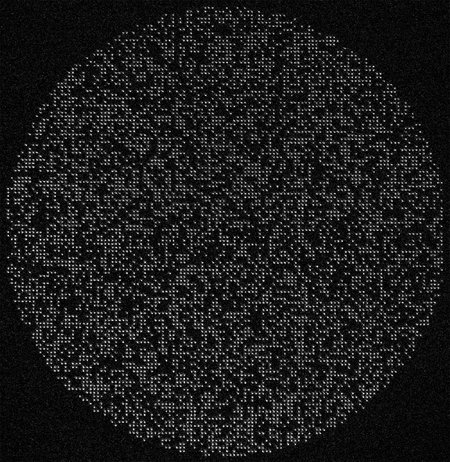
"... physicists have created the largest qubit array ever assembled: 6,100 neutral-atom qubits trapped in a grid by lasers. Previous arrays of this kind contained only hundreds of qubits.

This milestone comes amid a rapidly growing race to scale up quantum computers. There are several approaches in development, including those based on superconducting circuits, trapped ions, and neutral atoms, as used in the new study. ...

"We can now see a pathway to large error-corrected quantum computers. The building blocks are in place." ..."

From the abstract:
"Optical tweezer arrays have transformed atomic and molecular physics, now forming the backbone for a range of leading experiments in quantum computing simulation, and metrology.
Typical experiments trap tens to hundreds of atomic qubits, and recently systems with around one thousand atoms were realized without defining qubits or demonstrating coherent control.
However, scaling to thousands of atomic qubits with long coherence times, low-loss, and high-fidelity imaging is an outstanding challenge and critical for progress in quantum science, particularly towards quantum error correction.
Here, we experimentally realize an array of optical tweezers trapping over 6,100 neutral atoms in around 12,000 sites, simultaneously surpassing state-of-the-art performance for several metrics that underpin the success of the platform. Specifically, while scaling to such a large number of atoms, we demonstrate a coherence time of 12.6(1) seconds, a record for hyperfine qubits in an optical tweezer array.
We show room-temperature trapping lifetimes of  ~ 23 minutes, enabling record-high imaging survival of 99.98952(1)% with an imaging fidelity of over 99.99%. We present a plan for zone-based quantum computing and demonstrate necessary coherence-preserving qubit transport and pick-up/drop-off operations on large spatial scales, characterized through interleaved randomized benchmarking. Our results, along with recent developments, indicate that universal quantum computing and quantum error correction with thousands to tens of thousands of physical qubits could be a near-term prospect."

Caltech Team Sets Record with 6,100-Qubit Array - www.caltech.edu


A tweezer array with 6100 highly coherent atomic qubits (preprint first published 3/18/2024, but recently updated. Open access)


This image shows 6,100 cesium atoms trapped by highly focused laser beams called optical tweezers. The width of the circle is about one millimeter.


Thursday, September 18, 2025

Modeling Violent Terrorism as a Tug of War Between Fatah and Hamas

Food for thought! There are two different, competing terrorist groups, one primarily operating out of Gaza Strip and the other one primarily out of West Bank.

This is one way to describe what Israel is up against!

The popularity of Fatah versus Hamas chart (see below) is a reminder that perhaps too many people living in Gaza Strip or West Bank actually support/sympathize with this terrorism against Israel and the opponents of terrorism in either Gaza Strip or West Bank. Very regrettable!

Notice here the sometimes absurd/abstract language used by these political scientists to describe terrorism e.g. completely neglecting the victims and pretentiously devoid of emotion.

Unfortunately, the study ends in 2018. Thus, it does not include the most recent coward mass killing and hostage taking by Hamas on 10/7/2023.

"In a world of multiple upsetting events, from natural disasters to civil wars, terrorist attacks stand out as particularly alarming. They are surprising, brutal, and generally target the seemingly innocent. 

Terrorist groups rely on the shock value of these attacks to gain attention, financial backing, popular support, and new recruits from those who share their anger and thirst for change against what appear to be intransigent governments and their policies.

But when multiple terrorist groups compete for popularity, funding, and new recruits, how do their actions influence one another? ...

For political scientists, the canonical case study of competing terrorist groups is the push and pull between Fatah (the secular Palestinian National Liberation Movement [PLO]) and Hamas (the Islamic Resistance Movement) as they each seek ascendance in their campaigns against Israeli policies toward Palestinian people and their lands. The competition between Fatah and Hamas is a rivalry that has been extensively documented by global watchdogs and professional researchers in the years between 1994, when the Oslo Accords between Israel and the PLO took effect, and 2018. This is the dataset upon which Gibilisco and Crisman-Cox's research rests. ..."

From the abstract:
"We introduce a dynamic game of outbidding [???] where two groups use violence to compete in a tug-of-war fashion for evolving public support. We fit the model to the canonical outbidding rivalry between Hamas and Fatah using newly collected data on Palestinian public support for these groups. Competition has heterogeneous effects, and we demonstrate that intergroup competition can discourage violence.
Competition from Hamas leads Fatah to use more terrorism than it would in a world where Hamas abstains from terrorism, but competition from Fatah can lead Hamas to attack less than it otherwise would.
Likewise, making Hamas more capable or interested in competing increases overall violence, but making Fatah more capable or interested discourages violence on both sides.
These discouragement effects of competition on violence  [???] emerge through an asymmetric contest, in which we find that Fatah uses terrorism more effectively [???] to boost its support, although Hamas has lower attack costs. Expanding on these results, we demonstrate that outbidding theory is consistent with a positive, negative, or null relationship between measures of violence and incentives to compete."

Modeling Violent Terrorism as a Tug of War Between Competing Groups - www.caltech.edu


FIGURE 2. Popularity of Fatah relative to Hamas over time


Thursday, July 10, 2025

The Roots of Neural Networks: How Caltech Research Paved the Way to Modern AI

Recommendable!

However, the contributions in the 1980s were more impressive than over the last 20-30 years or so it seems. Did CalTech fall behind in this domain of research? It has the appearance if I am not mistaken.

The Roots of Neural Networks: How Caltech Research Paved the Way to Modern AI — Caltech Magazine


John Hopfield. Courtesy of Caltech Archives

Thursday, February 27, 2025

Amazon's new Ocelot chip brings us closer to building a practical quantum computer

Good news! On the heels of Microsoft's announcement (see my blog post). 

2025 really shapes up to be a of quantum computing takeoff as was frequently suggested.

"Today, Amazon Web Services (AWS) announced Ocelot, a new quantum computing chip that can reduce the costs of implementing quantum error correction by up to 90%, compared to current approaches. Developed by the team at the AWS Center for Quantum Computing at the California Institute of Technology, Ocelot represents a breakthrough in the pursuit to build fault-tolerant quantum computers capable of solving problems of commercial and scientific importance that are beyond the reach of today’s conventional computers. ...

Ocelot was designed from the ground up with error correction “built in.” ...

Ocelot: Fast facts
  • Ocelot is a prototype quantum computing chip, designed to test the effectiveness of AWS’s quantum error correction architecture.
  • It consists of two integrated silicon microchips. Each chip has an area of roughly 1cm2. They are bonded one on top of the other in an electrically-connected chip stack.
  • On the surface of each silicon microchip are thin layers of superconducting materials that form the quantum circuit elements.
  • The Ocelot chip is composed of 14 core components: five data qubits (the cat qubits), five ‘buffer circuits’ for stabilizing the data qubits, and four additional qubits for detecting errors on the data qubits.
  • The cat qubits store the quantum states used for computation. To do so, they rely on components called oscillators, which generate a repetitive electrical signal with steady timing.
  • Ocelot’s high-quality oscillators are made from a thin film of superconducting material called Tantalum. AWS material scientists have developed a specific way of processing Tantalum on the silicon chip to boost oscillator performance.
..."

"... Ocelot achieves the following major technical advances: 
  • The first realization of a scalable architecture for bosonic error correction, surpassing traditional qubit approaches to reducing error correction overhead;
  • The first implementation of a noise-biased gate — a key to unlocking the type of hardware-efficient error correction necessary for building scalable, commercially viable quantum computers;
  • State-of-the-art performance for superconducting qubits, with bit-flip times approaching one second in tandem with phase-flip times of 20 microseconds.
..."

"... a new quantum chip architecture for suppressing errors using a type of qubit known as a cat qubit. Cat qubits were first proposed in 2001, and, since then, researchers have developed and refined them. Now, the AWS team has put together the first scalable cat qubit chip that can be used to efficiently reduce quantum errors. ...

Due to the complexity of superposition found in qubits, they can have two types of errors:
bit flips, as in the classical digital systems, and
phase flips, in which the qubit states of 1 and 0 become out of phase (or out of sync) with each other.
Researchers have developed many strategies to handle both error types in quantum systems, but the methods require qubits to have a significant number of backup partners. In fact, current qubit technologies may require thousands of additional qubits to provide the desired level of protection from errors. ...

The team's new scheme relies on a type of qubit formed from superconducting circuits made of microwave oscillators, in which the 1 and 0 states representing the qubit are defined as two different large-scale amplitudes of oscillation. This makes the qubit states very stable and impervious to bit-flip errors. ...

In fact, the name "cat" qubits refers to the ability of these qubits to take on two very large, or macroscopic states, at the same time—just like the famous cat in Erwin Schrödinger's [cat] thought experiment, which can be both dead and alive simultaneously. ...

The Ocelot chip achieves this by combining five cat qubits, along with special buffer circuits to stabilize their oscillation, and four ancillary qubits to detect phase errors. ..."

From the abstract:
"To solve problems of practical importance, quantum computers probably need to incorporate quantum error correction, in which a logical qubit is redundantly encoded in many noisy physical qubits.
The large physical-qubit overhead associated with error correction motivates the search for more hardware-efficient approaches. Here, using a superconducting quantum circuit, we realize a logical qubit memory formed from the concatenation of encoded bosonic cat qubits with an outer repetition code of distance d = 5.
A stabilizing circuit passively protects cat qubits against bit flips. The repetition code, using ancilla transmons for syndrome measurement, corrects cat qubit phase flips.
We study the performance and scaling of the logical qubit memory, finding that the phase-flip correcting repetition code operates below the threshold. The logical bit-flip error is suppressed with increasing cat qubit mean photon number, enabled by our realization of a cat-transmon noise-biased CX gate.
The minimum measured logical error per cycle is on average 1.75(2)% for the distance-3 code sections, and 1.65(3)% for the distance-5 code. Despite the increased number of fault locations of the distance-5 code, the high degree of noise bias preserved during error correction enables comparable performance.
These results, where the intrinsic error suppression of the bosonic encodings enables us to use a hardware-efficient outer error-correcting code, indicate that concatenated bosonic codes can be a compelling model for reaching fault-tolerant quantum computation."

Amazon's new Ocelot chip brings us closer to building a practical quantum computer "New 'Ocelot' chip uses scalable architecture for reducing error correction by up to 90% and accelerating the development of real-world quantum computing applications."

Amazon announces Ocelot quantum chip (technical report) "Prototype is the first realization of a scalable, hardware-efficient quantum computing architecture based on bosonic quantum error correction."

New Ocelot Chip Makes Strides in Quantum Computing (CalTech's corresponding news release) "Scientists based at the AWS Center for Quantum Computing on Caltech's campus have made a leap forward in figuring out how to suppress errors in quantum computers, a pesky problem that continues to be the greatest hurdle to building the machines of the future."


The pair of silicon microchips that compose the Ocelot logical-qubit memory chip.


Fig. 1: Repetition code of bosonic qubits.


A dilution refrigerator at the AWS Center for Quantum Computing. Quantum computers require these cooling devices to maintain the quantum chips at ultra-cold temperatures.


Thursday, December 26, 2024

Surprisingly slow speed of human thought calculated by Caltech

Recommendable! Don't feel intimidated or inferior! 😊

"... From this, the team concludes that around 10 bits per second is a good average for the rate of human thought. ...

"Every moment, we are extracting just 10 bits from the trillion that our senses are taking in and using those 10 to perceive the world around us and make decisions,” ..."

"... There are over 85 billion neurons in the brain, with one third of these dedicated to high-level thinking and located in the cortex. Individual neurons are powerful information processors and can easily transmit more than 10 bits per second of information. But why don't they? ...

Another conundrum that the new study raises is: Why does the brain process one thought at a time rather than many in parallel the way our sensory systems do? ...

Research suggests that the earliest creatures with a nervous system used their brains primarily for navigation, to move toward food and away from predators. If our brains evolved from these simple systems to follow paths, it would make sense that we can only follow one "path" of thought at a time. ..."

From the abstract:
"This article is about the neural conundrum behind the slowness of human behavior. The information throughput of a human being is about 10 bits/s. In comparison, our sensory systems gather data at ∼1⁢09 bits/s. The stark contrast between these numbers remains unexplained and touches on fundamental aspects of brain function: what neural substrate sets this speed limit on the pace of our existence? Why does the brain need billions of neurons to process 10 bits/s? Why can we only think about one thing at a time? The brain seems to operate in two distinct modes: the “outer” brain handles fast high-dimensional sensory and motor signals, whereas the “inner” brain processes the reduced few bits needed to control behavior. Plausible explanations exist for the large neuron numbers in the outer brain, but not for the inner brain, and we propose new research directions to remedy this."

Surprisingly slow speed of human thought calculated by Caltech

Thinking Slowly: The Paradoxical Slowness of Human Behavior (original news release) "Caltech researchers have quantified the speed of human thought: a rate of 10 bits per second. However, our bodies' sensory systems gather data about our environments at a rate of a billion bits per second, which is 100 million times faster than our thought processes. This new study raises major new avenues of exploration for neuroscientists, in particular: Why can we only think one thing at a time while our sensory systems process thousands of inputs at once?"

Saturday, August 10, 2024

Seismic Detectors Measure Soil Moisture Using Traffic Noise

Amazing stuff!

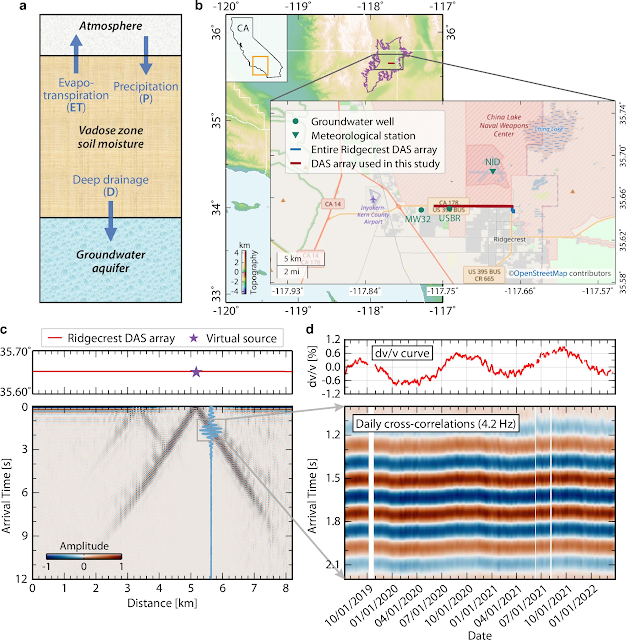
"The new method relies upon seismic technology that normally measures how the ground shakes during earthquakes. However, it can also detect the vibrations of human activity, like traffic. As these vibrations pass through the ground, they are slowed down by the presence of water—the more moisture, the slower the vibration moves. The new study measures the water content in the vadose zone through seismic rumblings from everyday traffic. ...
The new method is based on a technique ... called distributed acoustic sensing (DAS). With this technique, lasers are pointed into unused underground fiber-optic cables (like the kind that provides internet). As a seismic wave, or any kind of vibration, passes through the cable, the laser light bends and refracts. Measuring the wiggles in this laser light gives researchers information about the passing wave, making the 10-kilometer cable equivalent to a line of thousands of conventional seismic sensors. ..."

From the abstract:
"Vadose zone soil moisture is often considered a pivotal intermediary water reservoir between surface and groundwater in semi-arid regions. Understanding its dynamics in response to changes in meteorologic forcing patterns is essential to enhance the climate resiliency of our ecological and agricultural system. However, the inability to observe high-resolution vadose zone soil moisture dynamics over large spatiotemporal scales hinders quantitative characterization. Here, utilizing pre-existing fiber-optic cables as seismic sensors, we demonstrate a fiber-optic seismic sensing principle to robustly capture vadose zone soil moisture dynamics. Our observations in Ridgecrest, California reveal sub-seasonal precipitation replenishments and a prolonged drought in the vadose zone, consistent with a zero-dimensional hydrological model. Our results suggest a significant water loss of 0.25 m/year through evapotranspiration at our field side, validated by nearby eddy-covariance based measurements. Yet, detailed discrepancies between our observations and modeling highlight the necessity for complementary in-situ validations. Given the escalated regional drought risk under climate change, our findings underscore the promise of fiber-optic seismic sensing to facilitate water resource management in semi-arid regions."

Seismic Detectors Measure Soil Moisture Using Traffic Noise - www.caltech.edu "Caltech researchers have developed a new method to measure soil moisture in the shallow subterranean region between the surface and underground aquifers. This region, called the vadose zone, is crucial for plants and crops to obtain water through their roots. However, measuring how this underground moisture fluctuates over time and between geographical regions has traditionally relied on satellite imaging, which only gives low-resolution averages and cannot penetrate below the surface. Additionally, moisture within the vadose zone changes rapidly—a thunderstorm can saturate a region that dries out a few days later."


Fig. 1: Conceptual model for the vadose zone water dynamics and time-lapse seismology example on Ridgecrest DAS array.


Friday, August 09, 2024

Caltech Team Develops First Noninvasive Method to Continually Measure True Blood Pressure

Good news! But it is only a promise that needs further validation in practice!

"The new patented technique, called resonance sonomanometry, uses sound waves to gently stimulate resonance in an artery and then uses ultrasound imaging to measure the artery's resonance frequency, arriving at a true measurement of blood pressure. In a small clinical study, the device, which gives patients a gentle buzzing sensation on the skin, produced results akin to those obtained using the standard-of-care blood pressure cuff. ..."

From the abstract:
"Cardiovascular disease is the leading cause of death worldwide. Existing methods for continuous, noninvasive blood pressure (BP) monitoring suffer from poor accuracy, uncomfortable form factors, or a need for frequent calibration, limiting their adoption. We introduce a new framework for continuous BP measurement that is noninvasive and calibration-free called resonance sonomanometry. The method uses ultrasound imaging to measure both the arterial dimensions and artery wall resonances that are induced by acoustic stimulation, which offers a direct measure of BP by a fully determined physical model. The approach and model are validated in vitro using arterial mock-ups and then in multiple arteries in human subjects. This approach offers the promise of robust continuous BP measurements, providing significant benefits for early diagnosis and treatment of cardiovascular disease."

Caltech Team Develops First Noninvasive Method to Continually Measure True Blood Pressure - www.caltech.edu "Solving a decades-old problem, a multidisciplinary team of Caltech researchers has figured out a method to noninvasively and continually measure blood pressure anywhere on the body with next to no disruption to the patient. A device based on the new technique holds the promise to enable better vital-sign monitoring at home, in hospitals, and possibly even in remote locations where resources are limited."


Fig.  1 Acoustic stimulation paired with ultrasound imaging reveals resonance properties of an artery. a) Device placement to measure BP in the carotid artery
Two clumsy devices? This does not yet look very practical to me! More work needed?


For the First Time, Women Make Up 50% of Caltech's Incoming Undergraduate Class. Really!

Bad news! Sounds more like damned gender quotas to me!

Men watch out in the battle of the sexes! Women want the best jobs for themselves and let men continue to do the dirty work!

When ideology trumps meritocracy!

"This accomplishment is the result of sustained efforts to improve gender equity on campus and in science, technology, engineering, and mathematics (STEM). For the past several decades, the Institute has piloted strategic initiatives [also called hidden gender quota] to recruit and retain women to ensure equal access to education and to increase diversity among the undergraduate class. ..."

For the First Time, Women Make Up 50% of Caltech's Incoming Undergraduate Class - www.caltech.edu "In a historic milestone [???] for Caltech, the incoming undergraduate class will comprise 50% women. The class of 2028 is the first to reach gender parity since the Institute began admitting female undergraduates in 1970, and includes 113 women and 109 men, according to admissions data."

Friday, November 17, 2023

Imperfect Clocks Limit Quantum Computers

Just or mostly hype or a serious conundrum? Pushing fundamental limits! Another challenge for human ingenuity!

It reminds me of the Heisenberg Uncertainty Principle.

"The quantum computers that IBM, Google, Amazon, and others are developing face daunting challenges on the road to practical applications. Now it turns out that they may face a fundamental limit to large-scale performance—the imperfect nature of all clocks. ...
Prior work found that timing errors could disrupt individual quantum gates. In the new study, the scientists explored how imperfect timekeeping might impact quantum algorithms made up of a series of quantum gates. ...
A key factor in quantum-computing performance is coherence time, which is the amount of time it takes for the quantum effects that quantum computers depend on to vanish due to disruptions from the outside world ... Currently, quantum computers possess limited coherence time in which to execute quantum gates. ..."

From the abstract:
"In order to unitarily evolve a quantum system, an agent requires knowledge of time, a parameter that no physical clock can ever perfectly characterize. In this Letter, we study how limitations on acquiring knowledge of time impact controlled quantum operations in different paradigms. We show that the quality of timekeeping an agent has access to limits the circuit complexity they are able to achieve within circuit-based quantum computation. We do this by deriving an upper bound on the average gate fidelity achievable under imperfect timekeeping for a general class of random circuits. Another area where quantum control is relevant is quantum thermodynamics. In that context, we show that cooling a qubit can be achieved using a timer of arbitrary quality for control: timekeeping error only impacts the rate of cooling and not the achievable temperature. Our analysis combines techniques from the study of autonomous quantum clocks and the theory of quantum channels to understand the effect of imperfect timekeeping on controlled quantum dynamics."

Imperfect Clocks Limit Quantum Computers - IEEE Spectrum Timing issues could produce critical problems as quantum computers get bigger


Saturday, August 06, 2022

New Database Quantifies the (negative) Human Impact on the global Environment. Really!

What is the point of this effort? So what! 

Of course, 8 billion humans roaming this planet have some effect on the "biosphere" and some are negative. This is research in search of relevance and useful knowledge!

What is the motivation behind: Humans are villains and need to be put on display like the pillory in the medieval ages! What garbage! Environmentalists and other ideologues have subjected humanity to this Bible like penance for decades now! Repent your sins or else! This is called pseudo religion!

The hamburger as a measuring or reference unit! The Big Mac Index was introduced in 1986 by The Economist to compare prices and exchange rates across the globe, but to take it much further like attempted here by the California Institute of Technology is questionable! 

This is a bunch of pseudoscience! Just notice that they feature the mean sea level rise of approximately 3.4 millimeters per year! This is not better than a measurement error or great pretense of knowledge like the much quoted 1.5 degrees Celsius of warming that needs to be avoided by all means by tomorrow.

"... The Human Impacts Database is designed to be accessible to scientists, policymakers, and everyday citizens, and provides information ranging from global plastic production (4 x 10¹¹ kilograms per year), to the number of cattle on Earth (about 1.6 billion), to global annual mean sea level rise (approximately 3.4 millimeters per year).  ...
"For example, a friend texted me asking how to compare the impact of dairy cattle versus beef cattle," ... "

New Database Quantifies the Human Impact on the Environment | www.caltech.edu If you are in a major city anywhere in the world, it is probably quite easy to grab a cheap hamburger from a nearby fast-food restaurant. [What kind of nonsense is this??? I bet hamburgers in low income countries are not cheap and not affordable to many inhabitants] But what you may not realize is that the meat in that cheap burger can actually illustrate a grand narrative about how humans have shaped the planet. From the land used to raise cattle for beef consumption, to the water used to feed those cattle, to the fuel used to transport the beef all over the world, the human progress that enables us to easily buy a burger—and, for that matter, hop on a plane, charge our phones, and take part in the multitude of activities that make up our everyday experiences—has changed the biosphere.


Friday, April 22, 2022

CalTech: What Is the Future of Wind Energy? Obsolescence!

When the California Institute of Technology promotes propaganda and demagoguery! This is a laughable article by this institution! When a naive Luddite writes an article!

Wind mills (turbines) are anything but environmentally friendly from production to generation to decommissioning. Wind and solar power are not reliable etc.! The land consumption by wind power farms is enormous and it looks ugly! How much is the local and regional climate changed by large wind power farms?

First sentence: "Humans have used windmills to capture the force of the wind as mechanical energy for more than 1,300 years. ..."

Humans have abandoned this energy source with the Industrial Revolution for good reasons!

"Wind energy is a small but fast-growing fraction of electricity production. It accounts for 5 percent of global electricity production and 7 percent of the U.S. electricity supply.
Globally, wind energy capacity surpasses 651 gigawatts, which is more than is available from grid-connected solar energy and about half as much as hydropower can provide. "

In Western countries hydropower provides about 2-10% of total electricity generation!

"... Wind energy and solar energy complement each other, because wind is often strongest after the sun has heated the ground for a time. ...
Climate change will bring more incidents of unusual weather, including potential changes in wind patterns. Wind farms may help mitigate some of the harmful effects of climate change. ..."

Who believes this baloney! What a silly euphemism!

What Is the Future of Wind Energy? | Caltech Science Exchange "This article was reviewed by a member of Caltech's Faculty."

Sunday, July 05, 2020

Caltech Researchers Solve Structure of Crucial Cellular Component

Good news! Yes, I remember the endoplasmic reticulum from high school biology classes. Their depictions in textbooks looked fascinating!

"Membrane proteins are first manufactured inside the cell and transported to an organelle called the endoplasmic reticulum (ER). There, the proteins are inserted into the membrane, where they carry out myriad functions. For many membrane proteins, this insertion process relies on a complicated structure known as the ER membrane protein complex (EMC). The EMC is evolutionarily ancient, found broadly in eukaryotic cells from fungus to humans. And it is exploited by viruses (potentially including the novel coronavirus responsible for the COVID-19 pandemic) which use it to construct and transport some of their own viral proteins in an infected organism. ... 
Now, Caltech scientists have seen the EMC for the first time, with a technique called single-particle cryo-electron microscopy—through which samples are frozen, imaged at the atomic level, and then computationally reconstructed in fine detail. ...
The EMC was discovered about 10 years ago, but until recently, no techniques were available that could image its structure. ... to work in collaboration with Caltech's cryo-electron microscopy facility (one of the few such facilities in the world) ..."

"A defining step in the biogenesis of a membrane protein is the insertion of its hydrophobic transmembrane helices into the lipid bilayer. The nine-subunit ER membrane protein complex (EMC) is a conserved co- and post-translational insertase at the endoplasmic reticulum. We determined the structure of the human EMC in a lipid nanodisc to an overall resolution of 3.4 Å by cryo-electron microscopy, permitting building of a nearly complete atomic model."

Caltech Researchers Solve Structure of Crucial Cellular Component | www.caltech.edu Understanding the atomic details of the endoplasmic reticulum membrane protein complex

There you find a lot of supplementary material has been provided with the paper like several videos.

Thursday, February 06, 2020

A Brief History of Quantum Mechanics - with Sean Carroll

Recommendable!

Ultrasound Can Selectively Kill Cancer Cells

Good news! Low-intensity pulsed ultrasound (LIPUS) for selective treatment instead of high-intensity bursts of ultrasound can heat up tissue, killing cancer and normal cells in a target area.

"The research began five years ago when ... pondering whether the physical differences between cancer cells and healthy cells—things like size, cell-wall thickness, and size of the organelles within them—might affect how they vibrate when bombarded with sound waves and how the vibrations might trigger cancer cell death. ..."When I heard about it, I thought it was intriguing and that, if it worked, could be a revolutionary way of treating cancer,""

Ultrasound Can Selectively Kill Cancer Cells | www.caltech.edu: Proof-of-concept study specifically targets cancer cells with sound waves