Showing posts with label climate model. Show all posts

Wednesday, July 22, 2026

Shrinking squid brains due to climate change. Really!

Caution: Again junk science disseminated by the AAAS!

Reminder: Climate models are largely junk! We can not even forecast local weather accurately for more than 48 hours!

"... Squid are some of the ocean’s most intelligent inhabitants. Capable of clever problem solving, advanced communication, and learning from past experiences, these squishy swimmers’ brains contain a similar number of neurons as dogs. But now, thanks to climate change [???], those impressive brains may be doomed to downsizing.

At the Society of Experimental Biology conference held this month in Florence, Italy, scientists presented early data from a study of bigfin reef squid. They raised the animals for 90 days in one of two water tanks: one with a pH of 8.2, similar to modern oceans, and one with a pH of 7.8, which is the value oceans could reach by the year 2100 [???] under continued climate change. As carbon dioxide levels rise in the atmosphere, nearly one-third gets absorbed into the ocean, causing the water to become more acidic.

After analyzing the squids’ heads with magnetic resonance imaging, the researchers made a shocking discovery: The brain volume of squid raised in more acidic tanks was half as large as their counterparts.

Further analysis revealed that the squids’ brain volume had shrunk the most in regions responsible for visual processing. Since bigfin reef squid rely on their eyes to hunt, the findings help explain a previous observation that this species, when exposed to high carbon dioxide levels for 90 days, showed a 42% reduction in hunting behaviors. ..."

ScienceAdviser


Thursday, February 05, 2026

Scientists break ‘decades of gridlock’ in climate modeling

Finally, there is hope for better and more accurate weather forecasting!

Maybe soon, the latest climate models will confirm that the Global Warming/Climate Change was a hoax!

"In brief
  • Gravity waves are a source of uncertainty in climate models because they are too small and short-lived to appear in models designed to cover the whole planet.
  • A new Stanford-led study shows how machine learning algorithms that predict the effects of gravity waves can be incorporated into global climate models.
  • The approach shows a path toward better modeling of other small-scale systems, like clouds, and could improve understanding of future weather patterns.
...

Climate models don’t fully capture gravity waves because they are often based on a grid of 100-by-100-kilometer square columns. In each column, physics equations describe the movement of air and water. Many gravity waves are too small to register at this resolution, like a ripple in a puddle that a low-resolution photo doesn’t capture. Other gravity waves ripple out over distances long enough to cross 10 or more squares in the grid. But, due to computational constraints, climate models do not capture horizontal gravity wave movement.  ..."

From the abstract:
"Gravity waves (GWs) make crucial contributions to the middle atmospheric circulation. Yet, their climate model representation remains inaccurate, leading to key circulation biases.
This study introduces a set of three neural networks (NNs) that learn to predict GW fluxes (GWFs) from multiple years of high-resolution ERA5 reanalysis. The three NNs: a  ANN, a  ANN-CNN, and an Attention UNet embed different levels of horizontal nonlocality in their architecture and are capable of representing nonlocal GW effects that are missing from current operational GW parameterizations. The NNs are evaluated offline on both time-averaged statistics and time-evolving flux variability.
All NNs, especially the Attention UNet, accurately recreate the global GWF distribution in both the troposphere and the stratosphere. Moreover, the Attention UNet most skillfully predicts the transient evolution of GWFs over prominent orographic and nonorographic hotspots, with the 
 model being a close second. Since even ERA5 does not resolve a substantial portion of GWFs, this deficiency is compensated by subsequently applying transfer learning on the ERA5-trained ML models for GWFs from a 1.4 km global climate model. It is found that the re-trained models both (a) preserve their learning from ERA5, and (b) learn to appropriately scale the predicted fluxes to account for ERA5's limited resolution.
Our results highlight the importance of embedding nonlocal information for a more accurate GWF prediction and establish strategies to complement abundant reanalysis data with limited high-resolution data to develop machine learning-driven parameterizations for missing mesoscale processes in climate models."

Scientists break ‘decades of gridlock’ in climate modeling | Stanford Report "In global climate models, researchers have harnessed AI to accurately model atmospheric gravity waves, ripples of air that affect the polar vortex, winter weather, and climate patterns."


Fig. 1 (left) Temperature perturbations (in K) associated with gravity waves (GWs) over the Drake Passage and the Southern Ocean on 18 July 2015 06 UTC, as resolved in ERA5,
(middle) the momentum flux  (units mPa) associated with the excited GWs, and (right) the momentum flux predicted using an Attention UNet convolutional neural network trained on 3 years of ERA5 data.


Thursday, November 20, 2025

New climate modeling up to the year 2100 forecasts future extreme precipitation events. Really!

Most likely as flawed as all the previous climate model forecasts! That the AAAS disseminates such stuff without any qualification is disturbing!

We can not even forecast weather accurately beyond 48 hours! Climate is a way too complex natural phenomenon! There is still very little we know about climate change.

These researchers are also trying to fool the public by claiming that the forecast accuracy was increased by high spatial resolution.

Remember much of the global warming/climate change hoax heavily depends on climate model forecasts!

"A hyper-real climate future
For all their usefulness, the forecasts that come from traditional climate models have always had an Impressionist flair, caused by the coarse resolution needed to simulate Earth’s evolution many times over. But now an unprecedented series of high-resolution model runs has drawn the planet’s future to 2100 with the sharp edges of a hyper-realist—with some surprising results.

Calculated with some 900 days of supercomputing time, these model runs found our atmosphere will have far more severe rainfall extremes than traditionally projected, due in large part to its ability to recreate massive chains of thunderstorms. The model also holds many other insights that are still to be unpacked, including potential explanations for recent mysterious cooling in the eastern Pacific Ocean and suggestions that the Atlantic’s massive overturning current could be surprisingly resilient."

From the abstract:
"Extreme precipitation events are driven by complex multiscale atmospheric dynamic interactions, fuelled by available moisture. They are expected to intensify with climate change, posing increasing risks to human communities and ecosystems. However, current low-resolution climate models struggle to accurately represent key extreme precipitation-generating phenomena, limiting our ability to generate robust and reliable future projections. Here we present an ensemble of climate simulations with a 10-to-25-km resolution and an improved representation of mesoscale convective systems to assess future changes in daily extreme precipitation and its drivers.
Our high-resolution simulations more realistically capture the observed spatial distribution and intensity of daily extreme precipitation over the historical period than the 100-km resolution counterparts.
In a future scenario with high carbon dioxide emissions [???], daily extreme precipitation over land could increase by about 41% by 2100, mainly as a result of increased mesoscale moisture convergence.
The impact of this dynamical contribution to extreme precipitation is underestimated by a factor of three in the low-resolution model.
These results highlight the crucial role of high-resolution climate modelling in constraining future extremes and informing more effective climate risk assessments and adaptation strategies."

ScienceAdviser

High-resolution climate model forecasts a wet, turbulent future "With details as fine as short-term weather forecasts, model achieves newfound accuracy"


This photo accompanies this demagoguery! What a bad joke!


Wednesday, September 03, 2025

5 forecasts early climate models got right – the evidence is all around you. Really!

What about the two dozen other climate model forecasts that got it wrong! I am making this up, but I bet I am not off by too much!

We can not even forecast weather accurately for more than 24 hours!

Even global warming is partly due to measurement artifacts (e.g. urban heat island effect, world population growth).

The author of this propaganda is a "Research Physical Scientist, National Oceanic and Atmospheric Administration". Maybe President Trump needs to fire him too!

"... Looking back on Manabe’s work more than half a century later, it’s clear that even early climate models captured the broad strokes of global warming.

Manabe’s models simulated these patterns decades before they were observed: Arctic Amplification was simulated in 1975 but only observed with confidence in 2009, while stratospheric cooling was simulated in 1967 but definitively observed only recently.

Climate models have their limitations, of course. For instance, they cannot predict regional climate change as well as people would like. ..."

5 forecasts early climate models got right – the evidence is all around you


Syukuro Manabe was awarded the Nobel Prize in physics in 2021.


Wednesday, February 19, 2025

Klimamodelle scheitern an den einfachsten Aufgaben - Klimaschau 201

Sehr empfehlenswert! Klimamodelle sind schrott! Wir können ja nicht mal das lokale Wetter genau vorhersagen, aber Klimamodelle sind angeblich in der Lage das Klima bis zum Jahr 2100 vorherzusagen. Backcasting mit Klimamodellen ist ebenfalls ungenau. Das Phänomen Klima ist viel zu kompliziert und immer noch wenig wissenschaftlich verstanden.

Friday, September 20, 2024

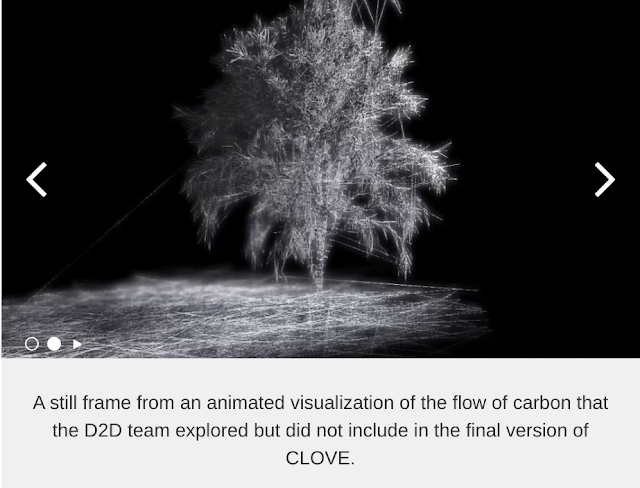
The Art of Seeing Science: Interactive Tools Visualize Climate Models. Really!

How is this supposed to work? Climate models are junk!

Climate is a highly complex natural phenomenon. We still know fairly little about it! Maybe with machine learning & AI we will soon have better climate models, but until then ...

We can not even predict weather accurately beyond 48 hour or even less! Then there is the poor backcasting performance of climate models etc.

These models were used to predict climate for the next 100 years or so. Laughable!

"... At the end of the program, the team presented prototypes for interactive tools—named CliMAScope and CLOVE—which enable researchers to gain new scientific insights from their data while also serving as a springboard for artistic inquiry. ..."

The Art of Seeing Science: Interactive Tools Visualize Climate Models - www.caltech.edu


Friday, February 16, 2024

Climate Models Exaggerate Effects of Global Warming

Climate models are largely junk especially when used to produce 100 year forecasts! The backcasting performance of these climate models is also dubious!

We still know very little about the complex natural phenomenon climate! Anybody who claims otherwise is a demagogue!

We can not even accurately forecast weather beyond 48 hours. Climate forecasts are even more complicated!

The Global Warming hoax and the Climate Change religion is among the greatest scams and scandals of the last 30 years!

"... Note that 33 out of 34 climate models produced warmer trends than those observed in the National Oceanic and Atmospheric Administration’s official reanalyzed thermometer data. The warming trend produced by the computer models (1945-2023) is 64% greater than the observed temperatures. ..."

Climate Models Exaggerate Effects of Global Warming


Monday, January 29, 2024

Global Warming: Observations vs. Climate Models

Recommendable!

Climate models are largely junk! We still know too little about the complex natural phenomenon climate, the sun and so on! It reminds of e.g. the infamous Club of Rome The Limits to Growth computer forecasts of the 1970s.

"Summary Warming of the global climate system over the past half-century has averaged 43 percent less than that produced by computerized climate models used to promote changes in energy policy. In the United States during summer, the observed warming is much weaker than that produced by all 36 climate models surveyed here. While the cause of this relatively benign warming could theoretically be entirely due to humanity’s production of carbon dioxide from fossil-fuel burning, this claim cannot be demonstrated through science. At least some of the measured warming could be natural. Contrary to media reports and environmental organizations’ press releases, global warming offers no justification for carbon-based regulation."

Global Warming: Observations vs. Climate Models | The Heritage Foundation


Monday, November 20, 2023

New research suggests plants might be able to absorb more CO2 from human activities than previously expected

Global Warming is a hoax. Climate Change is a religion! Climate models are junk!

"... The results were clear: the more complex models that incorporated more of our current plant physiological understanding consistently projected stronger increases of vegetation carbon uptake globally. The processes accounted for re-enforced each other, so that effects were even stronger when accounted for in combination, which is what would happen in a real-world scenario. ..."

From the abstract:
"Gross primary productivity (GPP) is the key determinant of land carbon uptake, but its representation in terrestrial biosphere models (TBMs) does not reflect our latest physiological understanding. We implemented three empirically well supported but often omitted mechanisms into the TBM CABLE-POP: photosynthetic temperature acclimation, explicit mesophyll conductance, and photosynthetic optimization through redistribution of leaf nitrogen. We used the RCP8.5 climate scenario to conduct factorial model simulations characterizing the individual and combined effects of the three mechanisms on projections of GPP. Simulated global GPP increased more strongly (up to 20% by 2070–2099) in more comprehensive representations of photosynthesis compared to the model lacking the three mechanisms. The experiments revealed non-additive interactions among the mechanisms as combined effects were stronger than the sum of the individual effects. The modeled responses are explained by changes in the photosynthetic sensitivity to temperature and CO2 caused by the added mechanisms. Our results suggest that current TBMs underestimate GPP responses to future CO2 and climate conditions."

New research suggests plants might be able to absorb more CO2 from human activities than previously expected

Plants might be able to absorb more CO2 from human activities than previously expected This research paints an uncharacteristically upbeat picture for the planet, but despite the headline finding, the environmental scientists behind the work say it does not mean the world’s governments can take their foot off the brake in their obligations to reduce carbon emissions as fast as possible. (laughable!)

Saturday, November 18, 2023

Can we trust projections of AMOC weakening based on climate models that cannot reproduce the past?

I have blogged here many times about that climate models are junk! It has been reported multiple times that the backcasting accuracy of these climate models is dubious and at variance with historical data.

Much of the Global Warming hoax and the Climate Change religion is based on climate model forecasts up to 100 years. We can not even forecast weather accurately beyond 48 hours or so.

From the abstract:
"The Atlantic Meridional Overturning Circulation (AMOC), a crucial element of the Earth's climate system, is projected to weaken over the course of the twenty-first century which could have far reaching consequences for the occurrence of extreme weather events, regional sea level rise, monsoon regions and the marine ecosystem. The latest IPCC report puts the likelihood of such a weakening as ‘very likely’. As our confidence in future climate projections depends largely on the ability to model the past climate, we take an in-depth look at the difference in the twentieth century evolution of the AMOC based on observational data (including direct observations and various proxy data) and model data from climate model ensembles. We show that both the magnitude of the trend in the AMOC over different time periods and often even the sign of the trend differs between observations and climate model ensemble mean, with the magnitude of the trend difference becoming even greater when looking at the CMIP6 ensemble compared to CMIP5. We discuss possible reasons for this observation-model discrepancy and question what it means to have higher confidence in future projections than historical reproductions."

Can we trust projections of AMOC weakening based on climate models that cannot reproduce the past? | Philosophical Transactions of the Royal Society A: Mathematical, Physical and Engineering Sciences (open access)

Friday, May 06, 2022

Climate simulations: recognize the ‘hot model’ problem

The heavy reliance on up to 100 year project/simulations from climate models that underpin the Global Warming Hoax/Climate Change Religion has been a strong indicator of pseudoscience if not junk science!

"Science" is clearly being abused for political purposes and ideology driven! Too many scientists are willingly taking part in this politicization!

The backcasting performance (e.g. reconstructing the Common Era) is dismal!

Remember: Regional weather forecasts are not reliable beyond 48 hours and often not even for 24 hours. Don't be fooled, the complexity of weather and climate is similar!

Is it not remarkable that it appears none of the climate models in use forecast any cooling in the decades ahead? Or were these projections deliberately omitted?

"... For example, instead of assessing changes in rainfall by the year 2100, researchers could report changes at global warming levels of 1.5, 2, 3 and 4 °C. This has several advantages. It mirrors the policy discourse surrounding the Paris agreement targets of 1.5 °C and ‘well below 2 °C’. It is also largely independent of the choice of future emissions scenario — despite some differences related to the rate of warming and aerosol forcing, the world largely looks the same at 2 °C, no matter how we get there. ...
Global warming levels force a simple question: when will the world reach a given level of warming? ..."

Climate simulations: recognize the ‘hot model’ problem The sixth and latest IPCC assessment weights climate models according to how well they reproduce other evidence. Now the rest of the community should do the same.


Wednesday, April 06, 2022

More on inconsistent and warming biased climate models

Much of the propaganda and demagoguery of climate change is based on the forecasts of large climate models. 

It has been reported now many times that these large models are e.g. incapable of correctly backcasting the past.

The often cited comparison with preindustrial temperatures (1850-1900) is a joke, because of the Little Ice Age and growing world population!

By the way, we can still not forecast weather fairly accurately for more than 48 hours or so (weather and climate are related and both similarly complex).

"... there are about 40 major climate models and their climate sensitivity levels vary by a factor of three, from 1.8 to 5.7 degrees C per doubling of carbon dioxide. Which right away tells you there is a lot of guesswork going on. ..."

From the abstract:
"The equilibrium climate sensitivity (ECS) of the CMIP6 global circulation models (GCMs) varies from 1.83°C to 5.67°C. Herein, 38 GCMs are grouped into three ECS classes (low, 1.80–3.00°C; medium, 3.01–4.50°C; high, 4.51–6.00°C) and compared against the ERA5-T2m records from 1980–1990 to 2011–2021. We found that all models with ECS > 3.0°C overestimate the observed global surface warming and that spatial t-statistics rejects the data-model agreement over 60% (using low-ECS GCMs) to 81% (using high-ECS GCMs) of the Earth's surface. Thus, the high and medium-ECS GCMs are unfit for prediction purposes. The low-ECS GCMs are not fully satisfactory yet, but they are also found unalarming because by 2050 they predict a moderate warming (ΔTpreindustrial→2050 ≲ 2°C)."

From the plain language summary:
"Plain Language Summary
The last-generation Coupled Model Intercomparison Projects (CMIP6) global circulation models (GCMs) are used by scientists and policymakers to interpret past and future climatic changes and to determine appropriate (adaptation or mitigation) policies to optimally address scenario-related climate-change hazards. However, these models are affected by large uncertainties. For example, their equilibrium climate sensitivity (ECS) varies from 1.83°C to 5.67°C, which makes their 21st-century predicted warming levels very uncertain. This issue is here addressed by testing the GCMs' global and local performance in predicting the 1980–2021 warming rates against the ERA5-T2m records and by grouping them into three equilibrium climate sensitivity (ECS) classes (low-ECS, 1.80–3.00°C; medium-ECS, 3.01–4.50°C; high-ECS, 4.51–6.00°C). We found that: (a) all models with ECS > 3.0°C overestimate the observed global surface warming; (b) Student t-tests show model failure over 60% (low-ECS) to 81% (high-ECS) of the Earth's surface. Thus, the high and medium-ECS GCMs do not appear to be consistent with the observations and should not be used for implementing policies based on their scenario forecasts. The low-ECS GCMs perform better, although not optimally; however, they are also found unalarming because for the next decades they predict moderate warming: ΔTpreindustrial→2050 ≲ 2°C."

"... The large ECS [equilibrium climate sensitivity] uncertainty is due to the poor physical understanding of various feedback mechanisms such as water vapor and cloudiness ..."


Advanced Testing of Low, Medium, and High ECS CMIP6 GCM Simulations Versus ERA5‐T2m - Scafetta - 2022 - Geophysical Research Letters - Wiley Online Library

Saturday, January 02, 2021

Klimamodelle des IPCC schießen über das Ziel hinaus

Wer an die 100 jährigen Prognosen von Klimamodellen glaubt, glaubt auch an den Weihnachtsmann! Wir können noch nicht mal das Wetter  für 48 Stunden genau prognostizieren (Die Komplexität von Wetter- und Klimamodellen ist vergleichbar und sie sind eng verwandt)!

Die Propaganda und Demagogie, die mit dem Global Warming hoax und der Climate Change religion einhergeht ist unglaublich. Debunked and destined for the dustbin of history!

"... Der Weltklimarat IPCC plant für das kommende Jahr die Veröffentlichung des 6. Klimazustandsberichts. Im Vorfeld erstellten Wissenschaftlergruppen 27 Klimasimulationen, auf deren Basis die zu erwartende Erwärmung bis zum Ende des Jahrhunderts prognostiziert wird. Bei einer Qualitäts-Überprüfung dieser Klimamodelle zeigte sich nun jedoch, dass die Ergebnisse viele dieser Simulationen offenbar nicht zuverlässig sind. Forscher der University of Michigan und des Nationalen Zentrums für Atmosphärenwissenschaft in Boulder entdeckten bei einer Kalibrierungsuntersuchung, dass etliche der Modelle unrealistisch hohe Erwärmungsbeträge errechnen. Sie reagieren also zu empfindlich auf CO2. ..."

4. Ausgabe der Klimaschau: Klimamodelle des IPCC schießen über das Ziel hinaus - Kalte Sonne

Saturday, August 01, 2020

Climate modeling at Princeton University

Princeton University is spreading the demagoguery of the Global Warming hoax!

This official pronouncement by Princeton University is laughable wishful thinking!

These computer models are far away from being reliable! There are way too many things we still do not understand about climate and weather! What about solar-induced climate change?

We cannot even predict weather accurately over 48 hours, but these scientists pretend they could predict climate up to hundred years from now! Ridiculous!

Just a reminder: The last Ice Age ended about 1608-1850, the Medieval Warm Period ran from about 950-1250.


"... The effort is aimed at addressing one of humanity’s biggest challenges: climate change. Computer modeling, the beating heart of modern climate science, is fundamental to our understanding of human-induced global warming and is a singularly important tool cited by the Intergovernmental Panel on Climate Change(link is external) (IPCC) in its climate change assessments. If international policymakers succeed in organizing to avert climate catastrophe, it will be largely due to the impact of these models — and the scientists who created them.  ... “Unless dramatic reductions of greenhouse gases are achieved, global warming is likely to exert far-reaching impacts upon human society and the ecosystem of our planet during the remainder of this century and for many centuries to come,” [Princeton University researchers] wrote."


Climate modeling at Princeton | Office of the Dean for Research

Monday, March 23, 2020

CMIP6: the next generation of climate models explained

Recommendable overview article! However, like weather forecast models cannot predict weather more than 48 hours in advance with any accuracy, climate models cannot predict climate over decades or let alone for 100 years! Weather models and climate models are very similar in their size, complexity, and science involved!

Our understanding of climate is still very incomplete! Thus, these modeling attempts are at best guesses and should be treated as such! We still know very little about the sun, cloud formation, ocean currents and biology and much more ...

Since too many climate scientist involved in the climate modeling are too biased, the output of these models reflect that!

Climate scientists try to dazzle us with pompous terms like equilibrium climate sensitivity! In reality, ECS is more baloney than anything else!
"... Researchers are currently looking into what is driving these high ECS values. In a number of models the increase in ECS appears to be due to their improved representation of clouds and aerosols; for example, how models treat supercooled clouds (below freezing but still liquid) in the Southern oceans can make a big difference in resulting sensitivity. ... However, despite making the models more realistic, it is not yet clear whether these improvements are translating into more accurate estimates of ECS."

CMIP6: the next generation of climate models explained | Carbon Brief: Climate models are one of the primary means for scientists to understand how the climate has changed in the past and may change in the future. These models simulate the physics, chemistry and biology of the atmosphere, land and oceans in great detail, and require some of the largest supercomputers in the world to generate their climate projections.