Showing posts with label dentistry. Show all posts

Wednesday, May 13, 2026

Neanderthal used stone drills to treat tooth cavities nearly 60,000 years ago, ancient molar suggests

Amazing stuff!

"Neanderthals had the know-how to identify a tooth infection and the motor skills to drill out the damage, according to a study published May 13, 2026, in the open-access journal PLOS One by Alisa Zubova of Peter the Great Museum of Anthropology and Ethnography, Russian Academy of Sciences ..."

From the abstract:
"Neanderthal medical knowledge has long attracted scholarly interest. Evidence suggests they cared for sick, injured, and elderly group members, with possible use of medicinal plants.
However, it remains uncertain whether such practices reflect deliberate medical strategies or instinctive self-medication akin to that observed in non-human primates.
Here, we analyze and interpret traces of deliberate artificial manipulation of Chagyrskaya 64, a Neanderthal lower left second molar found in Chagyrskaya Cave (Altai Krai, Russia).
The tooth exhibits a large human-generated concavity on the occlusal surface, created during the lifetime of the individual.
Traceological and microtomographic analyses of the observed modifications, combined with experimental verification, reveal that the concavity in Chagyrskaya 64 is indicative of the earliest documented instance of caries treatment involving the drilling/rotating with a lithic perforator, ca. 59 ka.
Evidence of two distinct types of manipulations requiring different tools, in addition to the drilling/rotating technique, necessitating complex finger movements, indicates that the Chagyrskaya Cave Neanderthals possessed the cognitive capacity to intuit the source of pain, comprehend the feasibility of its elimination, and deliberately select the most efficacious dental intervention.
These patterns bring Neanderthal behavior closer to modern humans and differentiate that behavior from the instinctive actions of other primates."

Neanderthal dentists used stone drills to treat cavities nearly 60,000 years ago, ancient molar suggests


Fig 2. Chagyrskaya 64 molar tooth and its macro-features.


Fig 4. Retouched points (1, 4) and perforators (2, 3, 5) from Layer 6c/2 in Chagyrskaya Cave.


Friday, April 24, 2026

China: Teeth ceaning at a dental clinic in Zhengzhou

What an experience!

You pay per natural tooth, crowns are not counted! I never encountered this before in my life.

Dental flossing not applied!

No mirror was provided at the end of service to review your cleaned teeth!

The ultrasonic scaler was applied extensively before and after polishing. Why?

There were two patient seats, two patients in the same small room with about six dental staff. 

Sunday, November 09, 2025

Breakthrough Gel Rebuilds Tooth Enamel and Strengthens Teeth

Good news! Several decades too late for me! 😊 Dentists may not like it!

"An innovative gel that forms a layer over teeth and then recruits calcium and phosphate ions from saliva to build new enamel has the potential to change dental treatment. To date, we don't have any way to regenerate the tough outer layer of enamel on our teeth as it erodes with age. ...

a protein-based gel that can not only strengthen existing enamel but actually rebuild it. When applied to teeth, much like common fluoride treatment in the dentist's chair, it forms a thin layer that seeps into the bone to patch up any holes or cracks. But then it also forms a type of scaffolding that attracts those other ions, which promotes further mineral "growth" through a process known as epitaxial mineralization. The new mineral deposits fuse with existing tissue to form what is essentially new enamel. ..."

From the abstract:
"Tooth enamel is characterised by an intricate hierarchical organization of apatite nanocrystals that bestows high stiffness, hardness, and fracture toughness. However, enamel does not possess the ability to regenerate, and achieving the artificial restoration of its microstructure and mechanical properties in clinical settings has proven challenging.
To tackle this issue, we engineer a tuneable and resilient supramolecular matrix based on elastin-like recombinamers (ELRs) that imitates the structure and function of the enamel-developing matrix.
When applied as a coating on the surface of teeth exhibiting different levels of erosion, the matrix is stable and can trigger epitaxial growth of apatite nanocrystals, recreating the microarchitecture of the different anatomical regions of enamel and restoring the mechanical properties.
The study demonstrates the translational potential of our mineralising technology for treating loss of enamel in clinical settings such as the treatment of enamel erosion and dental hypersensitivity."

Breakthrough Gel Rebuilds Tooth Enamel and Strengthens Teeth


Electron microscopy images of a tooth with demineralised enamel showing eroded apatite crystals (left) and a similar demineralised tooth after a 2-week treatment showing epitaxially regenerated enamel crystals (right).


Fig. 1: ELR fibril formation and mineralisation capacity.


Monday, August 11, 2025

The secret to nature’s toughest teeth

Amazing stuff! Unfortunately, these teeth are black colored.

When will humans finally get hardened teeth! No more cavities!

"... the teeth of chitons, marine mollusks that feed by scraping algae and other organisms off rocks. Scientists wanted to determine what makes their teeth nearly indestructible.

Researchers extracted proteins from the mineralized teeth of three chiton species and compared them with proteins from a giant chiton they’d previously studied. They identified a total of 22 proteins from the animals that were important for forming hard iron oxide on teeth, but narrowed in on one called radular teeth matrix protein 1 (RTMP1). The protein appears to be unique to chitons, leading the team to think it might be the secret to their tough chompers.

In ex vivo experiments with chiton teeth and engineered yeast, RTMP1 indeed promoted the formation of ferrihydrite, which can transform into a kind of iron oxide called magnetite that turns the animals’ teeth black and gives them their super strength. Meanwhile, in in vivo experiments to silence the RNA that codes for RTMP1, the animals’ teeth didn’t mineralize properly.

RTMP1 is the first known example of an animal protein that helps iron oxide form. Teasing out exactly how it does so might help in the design of new, hardened materials ... That might include “new designs of abrasion-resistant and self-sharpening materials,” ..."

From the abstract of the perspective:
"Animals from diverse evolutionary lineages possess body parts composed of mineralized structures such as teeth, bones, and shells. Their hardening, referred to as biomineralization, relies on precisely orchestrated macromolecular machineries that control the type, spatial placement, nucleation, and growth of inorganic crystalline phases in an organic matrix.
Identifying specific macromolecules involved in these processes helps to illuminate how nature’s complex inorganic structures are formed. In particular, chitons—a class of marine mollusks ... —have exceptionally hard and abrasion-resistant teeth made of iron-based minerals.
However, the underlying mechanism that governs the mineralization of iron phases in chiton teeth has been puzzling. ... that radular teeth matrix protein 1 (RTMP1) plays a central role in incorporating iron oxide mineral magnetite into chiton teeth. This points to molecular strategies that may be shared among magnetite-forming organisms that might be used in biomimetic materials chemistry."

From the editor's summary and abstract:
"Editor’s summary
The major lateral radula teeth of chitons are formed from magnetite and other biominerals in a way that makes them very hard and wear resistant. As the cusps wear out, they are replaced by newly formed teeth from behind. Nemoto et al. expanded on prior studies of these organisms by exploring the molecular mechanism of magnetite biomineralization ... The authors demonstrate that one protein, which they call radular teeth matrix protein 1 (RTMP1), controls iron oxide deposition and differs from other magnetite-precipitating proteins found in magnetotactic bacteria. ...

Abstract
Nature builds multiscale mineral structures with impressive mechanical properties through spatially and temporally orchestrated organic-mineral assembly. One example of regulated mineralization is found in hypermineralized and ultrahard magnetic teeth of chiton, which grind on rock to feed on algae. At early stages of tooth formation, iron oxide deposition is controlled using a chiton-specific radular teeth matrix protein 1 (RTMP1), which is transported into teeth through microvilli. RTMP1 spatially and temporally guides and enhances mineralization on chitinous fibers within the tooth, providing a hard, tough, and strong architecture that enables the organism to perform repetitive abrasive events to survive."

ScienceAdviser

Hardening nature’s toughest teeth (no public access) "A protein that underlies the mineralization of chiton teeth is revealed"


Fig. 1 A transcriptomic comparison of radular tissues revealed that RTMP1 and its homologs are chiton-specific proteins.


Fig. 4 The recombinant RTMP1 exhibited iron ion binding and iron oxide precipitation activity.


Tuesday, July 22, 2025

Getting vaccinated while dental flossing was superior to sublingual and comparable with intranasal vaccination

That is most certainly an idea whose time has come! Just kidding!

I was not able to find any photos of these mice being flossed. No photos, no proof!

The two academic institutions involved in this research, Emory University and Texas Tech University, did not bother to provide any news release on this exciting research. What a pity!

"... Exploiting the idea that the area of gum between your teeth is highly permeable, ... floss a mouse. ...

Once they had the flossing down, engineers added an inactive flu virus—a common vaccine component—to the floss, to build up the mouse’s immune response to the flu. After flossing some mice with the coated floss, they infected them with the real flu virus. All the mice that were flossed three times survived, while all the unvaccinated mice died."

From the abstract:
"The oral cavity is an accessible site for vaccination, but its sublingual and buccal sites have limited vaccine uptake.
Here we show that flat tape dental floss can deliver vaccines through the junctional epithelium of the gingival sulcus, exploiting its naturally leaky properties.
Floss-based vaccination delivered protein, inactivated virus, peptide-presenting immunogenic nanoparticles and messenger RNA. In mice, gold nanoparticles functionalized with a peptide derived from the ectodomain of the transmembrane matrix 2 protein of human influenza virus stimulated local lymph nodes, increased CD4+T cells in lymph nodes, lungs and spleen, and boosted antibody-secreting cells in the bone marrow.
Floss-based immunization induced strong and sustained immune activation across multiple organs, robust systemic and mucosal antibody responses, and durable protection against lethal influenza infection, independent of age, food and liquid consumption.
Floss-based vaccination was superior to sublingual and comparable with intranasal vaccination. In human participants, fluorescent dye delivered via floss picks effectively reached gingival sulcus, supporting clinical feasibility.
These findings establish floss-based vaccination as a simple, needle-free strategy that enhances vaccine delivery and immune activation compared with existing mucosal immunization methods."

ScienceAdviser

Engineers transform dental floss into needle-free vaccine "New method places inactivated viruses directly into mice’s gums"

Monday, June 09, 2025

An ode to my former dentist Waltraud Herzog

I consider myself very lucky to have met this exceptional dentist early in my life. My dental hygiene improved tremendously since then and I have maintained it ever since.

As a sweet tooth in my teenage years, I was very lazy with teeth cleaning. Not a good combination. Cavities galore! Dentist visits were frequent and not just for evaluation and cleaning. Drilling was very common in my youth.

The dentist was perhaps in her late 30s or early 40s. She was pretty and had a nice figure. The single, unmarried woman also happened to live only a short distance away from our home. In those days (around mid 1970s), a female dentist was rare.

My father was her patient before me. It was a neighbor and friend of my father, who recommended this new dentist in our neighborhood. My father then recommended her to me to see her about my bad teeth.

I definitely was afraid of tooth drilling having made the repeated, gruesome experience with belt-driven dental drills back in those days. However, my new dentist used the latest equipment and given her charm and gentle way of drilling, drilling became almost a pleasure and I lost my fears.

For a teenage boy like me it was irresistible that she usually kept one button or two buttons unbuttoned on her blouse. When she e.g. bent over to inspect my teeth, the views were very attractive.

Best of all, she kicked my bad habit of neglecting my dental hygiene. My father probably told her I was a hobby coin collector at the time. I collected circulating, regular coins from all over the world, old and current. Well, it happened that my dentist travelled a lot around the world in her spare time and she happened to save a lot of coins from her travels. One day she suggested to me if I keep a daily log that I brushed my teeth every day three times for three minutes each, I would get one coin per day. Some time later she handed me a bag full of exotic and exciting coins based on my progress. I do still follow this routine, but only two times a day. She saved me a lot of trouble with my teeth going forward.

My then divorced father may have had a romantic affair with her. The details I do not remember anymore. They did not get married.

Unfortunately, within a few years, she had to give up her job and dental practice, because of an occupational disease affecting her elbow or shoulder. So I lost my favorite dentist. She then became a dental insurance adjuster. Later she moved away.

P.S. Since her I have been to about 10 different dentists or more and two specialists that extract wisdom teeth, but none was a female.

Tuesday, December 24, 2024

Grim Old Days: James Wynbrandt’s Excruciating History of preindustrial Dentistry

Recommendable! What a horror story!

Tooth extraction was even a method of torture and was performed by kings for this purpose.

"... The first mass-produced bristle toothbrush did not appear until around 1780 in England during that country’s industrialization. Our preindustrial forebears had only a primitive understanding of what was causing their teeth to rot, fall out, and constantly ache. ...

A shockingly pervasive belief present in many cultures around the world was that toothaches were caused by small worms. Numerous surviving Babylonian inscriptions related to toothaches “invoke Ea, god of the abyss, and Anu, god of heaven, to smote the tooth worm.” Fighting the supposed worms infecting everyday people’s teeth was a constant battle. “By about 2250 B.C., physicians were smoking ‘worms’ out of cavities using henbane seed kneaded into beeswax. The mixture was heated on a piece of iron and the smoke directed to the cavity by a funnel.”

Centuries passed with little progress in dental techniques or understanding. A 13th-century manuscript in Old English titled Leechdoms, Wortcunning, and Starcraft (roughly, “Medicine, Natural Remedies, and Astrology”) suggests a similar technique ..."

Grim Old Days: James Wynbrandt’s Excruciating History of Dentistry "Preindustrial dentistry was rife with bizarre remedies and dangerous techniques."


Wednesday, July 31, 2024

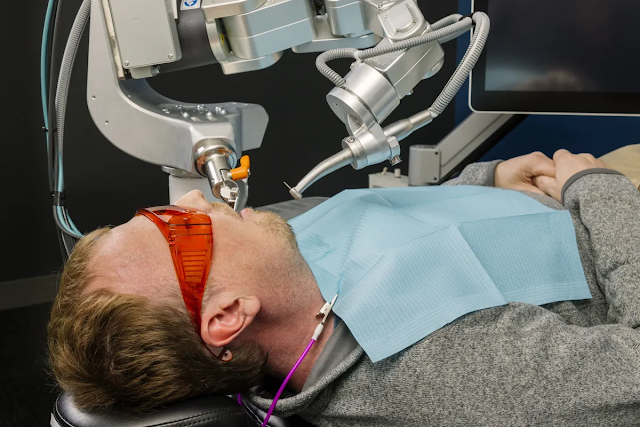
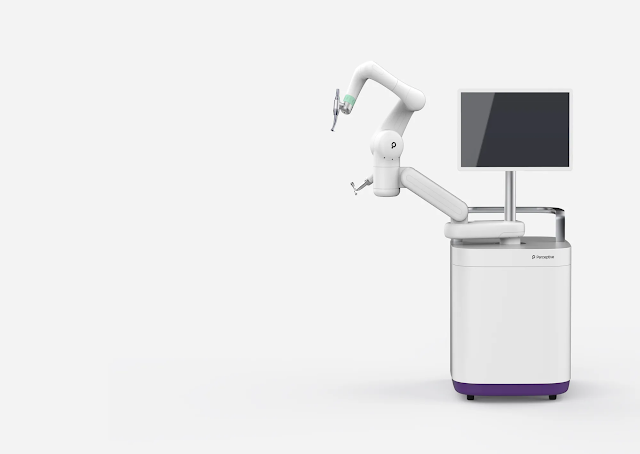
Robot Dentist: Startup's Bot Could Save Time in the Chair and is more accurate

Good news! Who wants to be the first to try? Fasten your seat belt! So the robot will hit your nerve faster? Just kidding! 😊

Robot Dentist: Startup's Bot Could Save Time in the Chair - IEEE Spectrum "Perceptive's autonomous robot offers more accurate, steadier, and faster dentistry"

Perceptive's robotic dentist performs a procedure on a human patient


Friday, July 26, 2024

Iron-reinforced teeth help Komodo dragons slice and dice their prey

Amazing stuff! Human teeth could use some iron too and better cavity prevention! Who needs a knife if you have iron teeth? Just kidding!

"... Komodo dragons take down everything from lizards to horses, slicing and dicing their meals like a celebrity chef. The key may be iron itself, a new study finds. An analysis of Komodo dragon teeth reveals a clear line of orange along their serrated edges, indicative of iron, researchers report this week in Nature Ecology and Evolution. ...

the iron adds a protective coating to the dragons’ teeth, allowing them to shake and shred their prey more effectively. His team also found orange teeth in American alligators and saltwater crocodiles, while other teams have noted coloration in beavers, shrews, and even some fish. ..."

From the abstract:
"Komodo dragons (Varanus komodoensis) are the largest extant predatory lizards and their ziphodont (serrated, curved and blade-shaped) teeth make them valuable analogues for studying tooth structure, function and comparing with extinct ziphodont taxa, such as theropod dinosaurs. Like other ziphodont reptiles, V. komodoensis teeth possess only a thin coating of enamel that is nevertheless able to cope with the demands of their puncture–pull feeding. Using advanced chemical and structural imaging, we reveal that V. komodoensis teeth possess a unique adaptation for maintaining their cutting edges: orange, iron-enriched coatings on their tooth serrations and tips. Comparisons with other extant varanids and crocodylians revealed that iron sequestration is probably widespread in reptile enamels but it is most striking in V. komodoensis and closely related ziphodont species, suggesting a crucial role in supporting serrated teeth. Unfortunately, fossilization confounds our ability to consistently detect similar iron coatings in fossil teeth, including those of ziphodont dinosaurs. However, unlike V. komodoensis, some theropods possessed specialized enamel along their tooth serrations, resembling the wavy enamel found in herbivorous hadrosaurid dinosaurs. These discoveries illustrate unexpected and disparate specializations for maintaining ziphodont teeth in predatory reptiles."

ScienceAdvisor

Saturday, June 08, 2024

World-first tooth-regrowing drug will be given to humans in September

Good news! I wish I could e.g. regrow one of my fairly recently extracted wisdom tooth, because the wound never healed properly and this causes constant issues.

What it will take until 2030 to become commercially available for humans!!!! Why not next century or after my bones have turned into dust? Caution: irony.

"The world's first human trial of a drug that can regenerate teeth will begin in a few months, less than a year on from news of its success in animals. This paves the way for the medicine to be commercially available as early as 2030. ...
The trial, which will take place at Kyoto University Hospital from September to August 2025, will treat 30 males aged 30-64 who are missing at least one molar. The intravenous treatment will be tested for its efficacy on human dentition, after it successfully grew new teeth in ferret and mouse models with no significant side effects. ...
The medicine itself deactivates the uterine sensitization-associated gene-1 (USAG-1) protein, which suppresses tooth growth. As we reported in 2023, blocking USAG-1's interaction with other proteins encourages bone morphogenetic protein (BMP) signaling, which triggers new bone to generate. ...
"The USAG-1 protein has a high amino acid homology of 97% between different animal species, including humans ..."

World-first tooth-regrowing drug will be given to humans in September


Saturday, February 03, 2024

Scientists Studied over 3,000 Viking Teeth And Discovered Surprisingly Advanced Dentistry

Amazing stuff!

"... Researchers ... looked at a total of 3,293 teeth from 171 of the Nordic marauders, including both kids and adults. ...
"There were several signs that the Vikings had modified their teeth, including evidence of using toothpicks, filing front teeth, and even dental treatment of teeth with infections,"  ...
The teeth date back to the 10–12th centuries CE and were collected from the well-known Varnhem archaeological dig in Sweden. The site is notable for soil conditions that favor the preservation of remains, including bones and teeth.
Of the adult teeth analyzed, 13 percent were shown to be affected by caries or cavities, often on the surface of the roots. Tooth loss was common too, with adults having lost an average of 6 percent of their teeth, excluding the wisdom teeth.
However, teeth collected from children aged under 12 showed no signs of tooth decay. ..."

"... One sign of more sophisticated procedures was molars with filed holes, from the crown of the tooth and into the pulp, probably in order to relieve pressure and alleviate severe toothache due to infection. ..."

From the abstract:
"In a late Swedish Viking Age population dating from around 10th-12th century AD, the prevalence, distribution and location of dental caries were studied. Tooth wear, other dental pathology and anatomical variations were identified and recorded clinically and radiographically. A total of 3293 teeth were analyzed from 171 individuals with complete and partial dentitions, of which 133 were permanent and 38 deciduous/mixed dentition. The dentitions were studied clinically, using a dental probe under a strong light source, and radiographs were taken for 18 of the individuals to verify and complement the clinical caries registration. Almost half the population, 83 of 171 individuals (49%), had at least one carious lesion. All individuals with deciduous or mixed dentitions were caries-free. The number of teeth affected by caries among adults was 424 (13%) and the surface most susceptible to caries was the root surface. The tooth most commonly affected by caries was the first mandibular molar. Other findings included apical infections, which were detected clinically in 4% of the teeth, and one case of filed front teeth. The findings gave a unique understanding of life and death in this early Christian Viking community and indicated that it was common to suffer from dental caries, tooth loss, infections of dental origin and tooth pain. These Vikings also manipulated their teeth through filing, tooth picking and other occupational behaviors."

Scientists Studied 3,000 Viking Teeth And Discovered Surprisingly Advanced Dentistry : ScienceAlert

Viking dentistry was surprisingly advanced Widespread caries and toothache – but also some dental work and filing of front teeth. Viking Age teeth from Varnhem bear witness to surprisingly advanced dentistry. This has been shown in a study carried out at the University of Gothenburg.


Saturday, November 11, 2023

Orthodontist offers free Glock 19 with Invisalign treatment: Grins & Glocks

Is the orthodontist so bad or so expensive that he makes such offers?

Taking marketing to the next level!

"An orthodontist's office in North Carolina is offering a free pistol or a membership at a local gun range when customers come in to get teeth-alignment procedures performed.

Gladwell Orthodontics in the Wake Forest region of North Carolina has partnered with the Youngsville Gun Club & Range to capitalize on the growing trend of gun giveaways to promote unrelated businesses.

Customers who are eligible for the promotion can get a free Glock 19, which has a value of over $500, or a membership at the aforementioned gun club. ..."

Orthodontist offers free Glock 19 with Invisalign treatment | Blaze Media

Wednesday, July 05, 2023

The first drug that regrows human teeth is about to enter clinical trials

Good news! I don't like dentures! Why can alligators and sharks regrow teeth? That is not fair! I demand dental equity! (Caution: satire) 😊

"After reporting successful animal trials, a team of researchers from Japan is now set to start human trials for a drug that can regrow teeth. If successful, the drug could open up new ways of treating a lack of teeth, particularly in people suffering from genetic disorders.
Animals such as sharks and alligators can continuously regrow teeth. But humans can't. ...
As it turns out, ... found that mice lacking a specific gene indeed had an increased number of teeth. The researcher and his colleagues zoomed in on a protein called USAG-1 that seems to stop more teeth from growing. Consequently, blocking that protein enables more teeth to grow. ..."

The first drug that regrows teeth is about to enter clinical trials It's a game changer for dentistry.

Tuesday, May 23, 2023

Friday, October 14, 2022

In Turkey, concerns grow over flaws in its booming dental tourism industry

The dental lobby wants to scare dental tourists! Nice try! 
Why are dental procedures in Western countries so expensive? Lack of competition is one reason!

Tuesday, September 20, 2022

Engineered dental coating exceeds hardness of natural tooth enamel

Why does it take so long to develop effective dental coating to prevent dental caries!
Does the lobby of dentists prevent it? (a conspiracy theory, just kidding)
Most of my teeth could have used a better coating when I was much younger! 😊

"... Carried out by scientists in Russia and Egypt, the newly developed dental coating uses hydroxyapatite as a starting point. This compound is the primary component in bone tissue and mineralized tissues in humans and animals. The researchers doped the hydroxyapatite with a complex of amino acids that naturally aid in the repair of bone and muscle structures, such as lysine and arginine, resulting in a mineralized layer with properties resembling the main component of natural enamel. The material was then applied to healthy teeth, so the team could observe its ability to bind to real dental tissue. ..."

"... The new method of dental restoration can be used to reduce the sensitivity of teeth in case of abrasion of enamel or to restore it after erosion or improper diet. ..."

From the abstract:
"The problem of engineering a biomimetic mineralized layer on the surface of native dental tissue (bio-template) was considered in our work.

The formation of the mineralized layer on a biotemplate is achieved with the use of nanocrystalline carbonate-substituted calcium hydroxyapatite (HAp), calcium alkali, and a complex of polyfunctional organic and polar amino acids.
By applying the set of structural and spectroscopic methods of analysis we have confirmed the formation of a mineralized biomimetic HAp layer on the surface of bio-template with properties resembling those of natural hard tissue. The thickness of the biomimetic mineralized layer varies from 300 to 500 nm, while the direction of some ncHAp nanocrystals coincides with that of the apatite crystals in the enamel.
We also demonstrated that the engineered mineralized HAp layer was characterized by homogeneous micromorphology and enhanced nanohardness in the region of the enamel rods exceeding those of native enamel.
The development of a strategy for biomimetic engineering and a technique for enamel surface pre-treatment to enable tissue mineralization has huge potential in dental applications."

Engineered dental coating exceeds hardness of natural tooth enamel 

Improved Mineralized Material Can Restore Tooth Enamel It is completely similar to the composition and microstructure of natural enamel


Wednesday, September 14, 2022

Dental implant for dogs holds promise for gum repair, regeneration for humans

Since when do dogs need dental implants? For canine periodontitis??? Do pet dogs now have lifestyle diseases other than obesity?

"Israeli startup BioChange has developed a tissue regeneration technology called ReGum that has been shown effective in helping to heal gum disease (periodontitis) in dogs.
ReGum is now commercially available for veterinary use and reportedly is the only product of its kind. A formulation for humans is expected within a few years. ..."

Dental implant holds promise for gum repair, regeneration - ISRAEL21c Following positive results of study on dogs with periodontitis, ReGum may be available for humans within a few years.


Sunday, June 05, 2022

Latest Oral-B's toothbrush fully equipped with AI

Do I still have to manually clean my teeth? Common!
I wait for a little robot that does the teeth cleaning for me.

This fancy tooth brush costs you about $300.

"... The iO Series 9 packs in seven different "smart modes" for different types of oral hygiene care: Daily Clean, Whitening, Gum Care, Sensitive, Super Sensitive, Intense, and Tongue Clean. To switch between each mode, you click through the brush's colorful digital display, which can also show you perky little good morning/good evening messages when you go to brush your teeth. The brush also has an interactive pressure sensor, which triggers a different colored light to tell you if you're pushing too gently, too hard, or just right on your teeth and gums. ..."

Review: Oral-B's iO Series 9 toothbrush uses AI tech | Mashable