Showing posts with label gastroenterology. Show all posts

Tuesday, January 20, 2026

Scientists develop molecules that may treat Crohn’s disease and other chronic inflammatory disorders

Good news!

"Highlights
  • Scientists developed small molecules that target a protective gene variant strongly associated with inflammatory bowel disease.
  • The compounds reduced both inflammatory signaling in human immune cells and inflammation in a mouse model.
  • This human genetics-to-therapeutics pipeline can be applied to other diseases and challenging drug targets.
...
But a lucky few individuals are far less likely to develop IBD because they have a rare variant of a gene called CARD9. This protective gene variant prevents the long-term digestive tract inflammation that can cause tissue damage and lead to disease.

Now, researchers ... have developed small-molecule drug candidates that mimic the effects of this rare gene variant and could potentially treat Crohn’s and other inflammatory bowel diseases. ..."

From the abstract:
"Highlights
• A Crohn’s-disease-protective CARD9 variant guided inhibitor discovery strategy
• DNA-encoded library and structural studies revealed a ligandable pocket in CARD9
• Benzodiazepine inhibitors block CARD9-dependent NF-κB activation and cytokine release
• Compounds dampen inflammation in dendritic cells and in a humanized mouse model

Summary
Human genetic association studies highlight key genes involved in disease pathology, yet targets identified by these analyses often fall outside the traditional definitions of druggability.
A rare truncated variant of the scaffold protein CARD9 is linked with protection from Crohn’s disease, prompting us to pursue the development of inhibitors that might similarly modulate innate inflammatory responses.
Using a phased approach, we first identified a ligandable site on CARD9 using a structurally diverse DNA-encoded library and defined this site in detail through X-ray crystallography.
Building upon this, a subsequent ligand displacement screen identified additional molecules that uniquely engage CARD9 and prevent its assembly into scaffolds needed to nucleate a signalosome for downstream nuclear factor κB (NF-κB) induction.
These inhibitors suppressed inflammatory cytokine production in dendritic cells and a humanized CARD9 mouse model. Collectively, this study illustrates a strategy for leveraging protective human genetic variants and chemical biology to tackle challenging targets for dampening inflammation."

Scientists develop molecules that may treat Crohn’s disease | Broad Institute "The molecules mimic a gene variant that protects against Crohn’s, demonstrating a roadmap for using genetics to develop therapies for inflammatory bowel disease and other chronic inflammatory disorders."


Graphical abstract


Friday, December 26, 2025

Gut microbes use common nutrient choline to fight type 2 diabetes

Good news! Is a choline dietary supplement a good idea?

"... Earlier this year, for example, it was found that an antibiotic primarily used in veterinary medicine was able to convince the microbes in mouse guts to produce colonic acid, a life-extending compound.

Now, a team led by a researcher ... has figured out another powerful way our gut microbes can help us out – this time by tamping down inflammation caused by a fatty diet, keeping our insulin response in check and, in turn, warding off diabetes. ...

The researchers found that one of the chemicals involved in this cascade of negative effects is the immune-system protein IRAK4, which triggers inflammation in the presence of a high-fat diet as a sort of alarm bell. When that protein is expressed for an extended period of time, it leads to insulin resistance and diabetes. ...

Using mice, human cell models, and molecular target-screening, the scientists found that when the nutrient choline hits the gut, microbes convert it into a metabolite called trimethylamine (TMA). TMA, in turn, binds to IRAK4, blocks its activity, reduces inflammation, and restores insulin sensitivity. ..."

"An international research team ... has uncovered a surprising ally in the fight against insulin resistance and type 2 diabetes: a microbial metabolite called trimethylamine (TMA). ... the study reveals that TMA, produced by gut bacteria from dietary choline can block a key immune pathway and improve blood sugar control. ..."

From the abstract:
"The global type 2 diabetes epidemic is a major health crisis. Although the microbiome has roles in the onset of insulin resistance (IR), low-grade inflammation and diabetes, the microbial compounds controlling these processes remain to be discovered.
Here, we show that the microbial metabolite trimethylamine (TMA) decouples inflammation and IR from diet-induced obesity by inhibiting interleukin-1 receptor-associated kinase 4 (IRAK4), a central kinase in the Toll-like receptor pathway sensing danger signals. TMA blunts TLR4 signalling in primary human hepatocytes and peripheral blood monocytic cells and rescues mouse survival after lipopolysaccharide-induced septic shock.
Genetic deletion and chemical inhibition of IRAK4 result in metabolic and immune improvements in high-fat diets.
Remarkably, our results suggest that TMA—unlike its liver co-metabolite trimethylamine N-oxide, which is associated with cardiovascular disease—improves immune tone and glycemic control in diet-induced obesity. Altogether, this study supports the emerging role of the kinome in the microbial–mammalian chemical crosstalk."

Gut microbes use common nutrient to fight type 2 diabetes


Fig. 1: Choline supplementation improves glucose homoeostasis and inflammation after 5 months of HFD [high fat diet]. 


Monday, November 24, 2025

Cause of ulcerative colitis identified

Good news!

"Researchers narrowed in on one of the most common IBD [inflammatory bowel disease] types, ulcerative colitis (UC). When they biopsied the colon tissue of UC patients, they noticed that macrophages, a crucial type of immune cell in the gut, were nearly missing. Studying the patients’ poop revealed a likely cause: a toxic substance called aerolysin that gets secreted by a specific genus of bacteria  and damages the macrophages so that the gut is susceptible to inflammation.
Lab experiments infecting mice with the bacteria caused worsening UC symptoms, while administering antibodies targeting aerolysin alleviated them.

The final confirmation of aerolysin’s destructive role came from fecal samples and colon biopsies of hundreds of UC patients and healthy individuals; more than 70% of patients had aerolysin-producing bacteria, while only 12% of healthy people did. ..."

"Recently, the research team led by Professor Zhu Minsheng from the Medical School of Nanjing University has made a groundbreaking discovery in understanding the etiology of ulcerative colitis (UC), providing the first evidence that the disease is caused by infection with a novel subspecies of Aeromonas (Aeromonas sp. MTB). ..."

From the abstract of the Perspective:
"Koch’s postulates, formulated in 1884 by Robert Koch and Friedrich Loeffler, state that a microorganism causes a disease if it is found in all disease cases, can be isolated and grown in culture, causes the disease when introduced into a healthy host, and can be reisolated from that host.
These criteria have been revised to account for “unculturable” microbes, such as viruses, and to recognize microbial genes as disease agents rather than the microbes themselves.
No microorganism that fits Koch’s revised postulates has been identified as the cause of ulcerative colitis. On page 805 of this issue, Jiang et al. (4) report that a bacterial strain isolated from patients with ulcerative colitis drives gut inflammation in mice by producing aerolysin, which is toxic to protective immune cells. The findings suggest a previously unidentified mechanism by which a microbe might contribute to the progression of ulcerative colitis."

From the editor's summary and abstract:
"Editor’s summary
Ulcerative colitis (UC) is a debilitating inflammatory bowel disease linked to dysfunction of cells within the large intestine. Jiang et al. hypothesized that toxins produced by microbiota might impair macrophages in the gut and contribute to the pathology of UC  ... Stool samples from UC patients contained a species of bacteria, a variant of the Aeromonas genus, that released a toxin called aerolysin. Under pathological conditions, this Aeromonas variant could colonize mouse intestines, deplete macrophages, and increase the sensitivity of mice to gut inflammation. These effects were linked to the ability of aerolysin to kill macrophages directly.
Administration of anti-aerolysin antibodies provided protection against colitis in mice that were exposed to the Aeromonas variant.

Abstract
INTRODUCTION
Ulcerative colitis (UC) is a multifactorial disease involving immune dysregulation, genetic susceptibility, aberrant inflammatory responses to intestinal microbiota, and environmental factors. UC is characterized by an unpredictable clinical course, often alternating between periods of exacerbation and remission. Because the inflammation and ulceration associated with UC are typically confined to the mucosal layer, UC has been often considered a disease of the epithelial barrier. The initiating factors responsible for epithelial barrier impairment remain unclear, and elucidating them could reveal how UC develops and inform new treatment strategies.

RATIONALE
The gut epithelium contains one of the largest populations of tissue-resident macrophages, which serve as the first line of defense against pathogens invading from the intestinal lumen. We hypothesized that gut-resident macrophages are compromised in UC, leading to impaired epithelial integrity, and we therefore examined macrophages in UC colon tissues.

RESULTS
In colon tissues isolated from UC patients, we found that tissue-resident macrophages were depleted in areas that did not show indications of inflammation. We hypothesized that macrophage loss preceded overt inflammation. In mouse models, chemical or genetic ablation of macrophages increased susceptibility to intestinal injury.
To identify potential factors that might impair the function of macrophages, we examined bacteria present in fecal samples from UC patients.
We identified a toxin-producing bacterium belonging to the Aeromonas genus, designated Aeromonas sp. MTB (macrophage-toxic bacteria), which expressed the virulence factor aerolysin. Macrophages exhibited higher sensitivity to aerolysin-induced cell death than epithelial cells, a result that we hypothesized could lead to barrier impairment without direct epithelial damage.
MTB persistently colonized mice under pathological conditions, depleting macrophages and enhancing sensitivity to enteric stimuli.
MTB promoted colitis in mice exposed to dextran sulfate sodium or lacking interleukin-10 expression, with phenotypes resembling UC, but not in germ-free mice.
An aerolysin-deficient MTB mutant failed to cause colitis, supporting the role of this toxin.
In mice, pretreatment with polyclonal anti-aerolysin antibodies prevented MTB-induced colitis, and a monoclonal anti-aerolysin ameliorated established disease.
To determine the prevalence of this bacterium in UC patients versus healthy individuals, we developed a real-time polymerase chain reaction assay to detect Aeromonas species. Aeromonas species were detected more frequently in stools from UC patients compared with healthy controls. We also detected aerolysin in colon tissues isolated from UC patients.

CONCLUSION
We identified a variant of Aeromonas in UC patients and demonstrated its ability to promote colon inflammation in mice through aerolysin-mediated impairment of tissue-resident macrophages. Treatment with an anti-aerolysin antibody alleviated disease severity in mice exposed to MTB. Our findings highlight how microbes may contribute to UC pathogenesis and suggest that targeting bacterial virulence factors could be a therapeutic strategy for UC."

ScienceAdviser


An Aeromonas variant, MTB, promotes susceptibility to ulcerative colitis (UC) by disrupting colonic macrophages.


Monday, October 20, 2025

Kohler unveils a camera for inside your toilet bowl with a fingerprint sensor

It is probably a good idea, but am I ready for it?

"Home goods company Kohler recently unveiled a new device called the Dekoda — a $599 camera that can be attached to your toilet bowl and take pictures of what’s inside.

CNET reports that the Dekoda analyzes these images in order to provide updates on your gut health and hydration, and to potentially detect blood. It also comes with a rechargeable battery, a USB connection, and a fingerprint sensor to identify who’s using the toilet. ..."

Kohler unveils a camera for your toilet | TechCrunch

Dekoda, decoded (product website)


Nice product photography! Looks so deceptively clean!


Monday, October 13, 2025

Stomach Cells excretes Waste, Not Digest It, To Mend Injuries

Amazing stuff!

"When the stomach gets injured, the large, enzyme-secreting cells in its lining, called chief cells, can quickly reprogram themselves to become small, proliferative cells to repair the damaged tissue. Scientists once thought that this dramatic downsizing involved the destruction of the cells’ components through lysosomes ... 

But recently, a group of researchers discovered that in mice, gastric chief cells did not swallow unwanted cell debris—[but excreted it]. The team, ... named this process cathartocytosis, which means “cellular cleansing” in Greek. Their findings ... offer insights into how this novel biological phenomenon can help stomach wounds heal and if dysregulated, may lead to cancer. ..."

From the highlights and abstract:
"Highlights
• Defining cathartocytosis, an injury-induced process cells use to downscale cellular machinery
• Three-dimensional reconstruction detailing how cells reorganize organelles during paligenosis
Cathartocytosis and autophagy occur together in paligenosis but are mechanistically distinct
• EPG5 prevents fusion of autophagic compartments with the apical membrane after injury

Summary
Injury causes differentiated cells to undergo massive reprogramming to become proliferative and repair tissue via paligenosis.
Gastric chief cells use paligenosis to reprogram into progenitor-like spasmolytic-polypeptide-expressing metaplasia (SPEM) cells.
Stage 1 of paligenosis is the downscaling of mature cell architecture via a process involving lysosomes.
Here, we notice that sulfated glycoproteins are not only digested during paligenosis but also excreted into the gland.
Various genetic and pharmacological approaches show that endoplasmic reticulum membranes and secretory granule cargo are also excreted and that the process proceeds in parallel with but is mechanistically independent of autophagy.
Three-dimensional light and electron microscopy demonstrated that excretion occurs via unique, complex, multi-chambered invaginations of the apical plasma membrane.
As this lysosome-independent cell cleansing process does not seem to have been priorly described, we termed it “cathartocytosis.” Cathartocytosis allows a cell to rapidly eject excess material without waiting for autophagic and lysosomal digestion, providing for efficient cellular downscaling."

Stomach Cells Vomit Waste, Not Digest It, To Mend Injuries | The Scientist "Scientists discovered a novel process, called cathartocytosis, where stomach cells [expel] out their contents to quickly shrink and repair damaged tissue."


Graphical abstract

Figure 7 Cathartocytosis model
(A) Single two-dimensional sections from FIB-SEM of chief cell apical plasma membrane at 24 h post-injury demonstrate phagophore-shaped structures (i.e., similar to emerging, double-membrane autophagosomes) contiguous with the apical invaginations (yellow arrows). Video S3 shows this section in three-dimensional context.
(B) Fusion of a zymogenic granule into an apical invagination with release of cargo as well as membrane into the lumen (pink arrowhead). Video S4 demonstrates the section in three-dimensional context.
(C) Schematic representation of canonical autophagy versus our proposed cathartocytosis process. The two processes occur concurrently after injury, and both likely combine to play a role in cellular downscaling. Magenta: cathartocytosis; gray: classical autophagy; black: lysosome; green: generic cytoplasmic organelle (granule, ER, mitochondria, etc.).


Sunday, October 05, 2025

Novel narrow-spectrum antibiotic targets inflammatory bowel diseases (IBD) and AI predicted how it works

Good news!

"Researchers ... have made two scientific breakthroughs at once: they not only discovered a brand-new antibiotic that targets inflammatory bowel diseases (IBD), but also successfully used a new type of AI to predict exactly how the drug works. To their knowledge, this is a global first for the AI. ...

Most antibiotics used in clinics today are "broad-spectrum" drugs, meaning they wipe out good bacteria in addition to those that cause disease ...

But enterololin, the new antibiotic discovered ... is a "narrow-spectrum" drug, meaning it spares the microbiome and attacks only a specific group of disease-causing bugs—in this case, a family of bacteria called Enterobacteriaceae, which happens to include E. coli. ...

thorough MOA [mechanism of action] study can take up to two years and cost around $2 million; however, using AI, his group did enterololin's in just six months and for just $60,000. ...

In just 100 seconds, he was given a prediction: his new drug attacked a microscopic protein complex called LolCDE, which is essential to the survival of certain bacteria. ..."

"... DiffDock, a generative AI model ...

DiffDock was designed to predict how small molecules fit into the binding pockets of proteins, a notoriously difficult problem in structural biology. Traditional docking algorithms search through possible orientations using scoring rules, often producing noisy results. DiffDock instead frames docking as a probabilistic reasoning problem: a diffusion model iteratively refines guesses until it converges on the most likely binding mode.

“In just a couple of minutes, the model predicted that enterololin binds to a protein complex called LolCDE, which is essential for transporting lipoproteins in certain bacteria,” ...

put that prediction to the test. Using DiffDock predictions as an experimental GPS, they first evolved enterololin-resistant mutants of E. coli in the lab, which revealed that changes in the mutant’s DNA mapped to lolCDE, precisely where DiffDock had predicted enterololin to bind.
They also performed RNA sequencing to see which bacterial genes switched on or off when exposed to the drug, 
as well as used CRISPR to selectively knock down expression of the expected target. These laboratory experiments all revealed disruptions in pathways tied to lipoprotein transport, exactly what DiffDock had predicted. ..."

From the abstract:
"Current clinical antibiotics are largely broad-spectrum agents that can alter the gut microbiome and promote colonization by Enterobacteriaceae, which are often drug resistant. This includes adherent-invasive Escherichia coli (AIEC), particularly in patients with inflammatory bowel disease, in which dysbiosis creates a niche for this pathogen to colonize. There is an urgent and unmet need for novel narrow-spectrum and microbiome-sparing antibiotics.
Here we screened 10,747 bioactive small molecules for antibacterial activity against AIEC and discovered enterololin, an antibacterial compound with targeted activity against Enterobacteriaceae species. Enterololin could overcome intrinsic and acquired resistance mechanisms in clinical isolates when combined with a subinhibitory concentration of SPR741, a polymyxin B analogue used here to increase outer membrane permeability in Gram-negative bacteria.
Molecular substructure- and deep learning-guided mechanism-of-action investigations revealed that enterololin perturbs lipoprotein trafficking through a mechanism involving the LolCDE complex, laboratory-evolved resistant mutants predominantly mapped to lolC and lolE, with an in vitro frequency of resistance of ~10−8 to 10−7.
Enterololin showed low mammalian cytotoxicity (HEK293 half-maximal inhibitory concentration ~100 µg ml−1) and suppressed AIEC infection in mouse models when administered in combination with SPR741, while largely preserving the overall microbiome composition.
This study highlights the utility of deep learning methods for predicting molecular interactions and identifies a promising Enterobacteriaceae-specific antibacterial candidate for further development."

Novel antibiotic targets IBD—and AI predicted how it would work before scientists could prove it

Researchers discover new antibiotic for IBD — and AI correctly predicts how it works (original news release) "McMaster researchers have discovered an antibiotic that targets inflammatory bowel diseases like Crohn’s. Then, in a first, they used cutting-edge AI to determine how it would work."

AI maps how a new antibiotic targets gut bacteria (original news release) "MIT CSAIL and McMaster researchers used a generative AI model to reveal how a narrow-spectrum antibiotic attacks disease-causing bacteria, speeding up a process that normally takes years."

Friday, September 05, 2025

Smartphone use in the bathroom raise risk of hemorrhoids. Really!

I have serious doubts about these claims!

"Hemorrhoids are among the most frequent gastrointestinal complaints in the United States, sending millions of people to clinics and emergency rooms each year and costing the health system hundreds of millions of dollars.
Despite their prevalence, the causes remain poorly defined. Constipation, straining, pregnancy, and low-fiber diets have all been implicated, but physician-investigator Trisha Pasricha and colleagues wondered whether the modern habit of lingering in the bathroom with a phone might also play a role.

In a study of 125 adults undergoing routine colonoscopy at Beth Israel Deaconess Medical Center, the team surveyed participants about toilet habits, smartphone use, diet, and activity levels, then compared responses with direct colonoscopy findings. 

The results revealed some surprising patterns:
  • Two-thirds of participants admitted to using their phones on the toilet.
  • Smartphone use on the toilet was associated with a 46 percent increased risk of having hemorrhoids.
  • Phone users were five times more likely to sit for more than five minutes per trip.
  • Younger adults were especially prone to the habit.
  • Smartphone users reported less weekly exercise than non-users.
..."

Does this cellphone habit raise risk of hemorrhoids? — Harvard Gazette "Gastroenterologist Trisha Pasricha discusses why new findings may change how you think about bathroom routines"


Gastroenterologist Trisha Pasricha. She cares about hemorrhoids. Too bad I don't have any hemorrhoids! Just kidding! 😊


Friday, August 01, 2025

Discovery of role of gut hormone in chronic diarrhoea could aid development of new tests and treatments

Good news!

"However, around one person in every 100 is affected by a condition known as bile acid diarrhoea (also known as bile acid malabsorption), whereby the bile acid is not properly re-absorbed and makes its way into the large intestine (colon). It can trigger urgent and watery diarrhoea, and patients can risk episodes of incontinence.

Bile acid diarrhoea can be difficult to diagnose as there are currently no routine clinical blood tests. Many individuals are given a diagnosis of irritable bowel syndrome (IBS), an umbrella term for a range of conditions. As many as one in 20 people is thought to have IBS, of which an estimated one in three patients with diarrhoea as their main symptom have undiagnosed bile acid diarrhoea.

Studies in mice have previously suggested that the gut hormone known as Insulin-Like Peptide 5 (INSL5) – present in cells at the far end of the colon and rectum – may play a role in chronic diarrhoea. INSL5 is released by these cells when irritated by bile acid.

Researchers ... have been exploring whether this hormone might also underlie chronic diarrhoea in humans. This has been possible thanks to a new antibody test  ... which allows them to measure tiny amounts of INSL5.

A study ... looking at ways to trigger release of the gut hormone GLP-1 – the hormone upon which weight-loss drugs are based – previously found that giving a bile acid enema to healthy volunteers triggered release of GLP-1, but had the unintended consequence of causing diarrhoea. When the ... team analysed samples from this study, they found that the bile acid enema caused levels of INSL5 to shoot up temporarily – and the higher the INSL5 levels, the faster the volunteers needed to use the toilet. This confirmed that INSL5 is likely to play a role in chronic cases of diarrhoea.

When the team analysed samples ... which include samples from patients with bile acid diarrhoea, they found that while levels of INSL5 were almost undetectable in healthy volunteers, they were much higher in patients with bile acid diarrhoea. In addition, the higher the INSL5 level, the more watery their stool samples. ..."

From the abstract:
"Background
Insulin-like peptide 5 (INSL5) is an enteroendocrine hormone expressed in distal colonic ‘L cells’. Bile acid receptor agonists are known to stimulate INSL5 secretion in primary cell culture, and administration of an INSL5 analogue in animals promotes colonic motility.

Objective
This study used a new immunoassay to measure INSL5 in human blood samples, enabling assessment of whether rectal bile acids stimulate INSL5 release in humans and whether INSL5 levels are altered in patients with chronic diarrhoea.

Design
Serum/plasma samples from previously performed studies were used, including healthy volunteers (n=7) who received a rectal enema of taurocholic acid (TCA); fasting and post prandial samples from healthy volunteers (n=10); patients with bile acid diarrhoea (BAD) (n=19) or irritable bowel syndrome with diarrhoea (IBS-D) (n=8); and patients with IBS-D (n=64) treated with ondansetron or placebo.

Results
Rectal TCA but not a control enema promptly elevated plasma INSL5, with the increase in INSL5 correlating negatively with time to, and positively with desire to, defecate post enema.
Healthy volunteers had low INSL5 levels (<100 pg/mL), with no change following a mixed meal.
Patients with BAD had elevated INSL5 levels, with average stool consistency being positively correlated with serum INSL5 (p<0.001). In people with IBS-D, INSL5 was elevated (>100 pg/mL) in 42%, and this subgroup showed greater improvements in stool consistency with ondansetron therapy (p<0.05).

Conclusion
The study highlights that rectal bile acids stimulate INSL5 secretion in humans, and that INSL5 levels are associated with a colonic pro-motility response and pathophysiology of chronic diarrhoea."

Discovery of role of gut hormone in chronic diarrhoea could aid development of new tests and treatments | University of Cambridge "High levels of a hormone found in cells in the gut could underlie many cases of chronic diarrhoea and help explain up to 40% of cases of patients with irritable bowel syndrome with diarrhoea ..."

Friday, December 27, 2024

A better understanding of homing or finding a distinct niche by specific symbiotic gut bacteria

Amazing stuff!

"... However, the microbiome isn’t uniform throughout the gut. Just as various organs within the gastrointestinal system have different specialties when it comes to digesting food and absorbing nutrients, different microbial communities are localized within each zone and play unique roles there.

Successful colonization of each region of the G.I. tract by different microbial populations is dependent on a variety of factors such as nutrient requirements of the bacteria; the local pH and dissolved oxygen content; competition with other bacterial strains; and survivability in harsh conditions—including stomach acid, bile salts, and immune-response cells. ...

incredibly complex system of interconnected microbial communities, and each species needs to get to the right place where it can thrive and contribute to host health ...

Successful colonization hinges on proteins in bacterial cell walls called adhesins. As you might guess from their name, they can stick to a variety of different surfaces within the body. But they typically bind non-specifically, meaning they could just as soon attach to one tissue as another.

So how do symbiotic microbiome species get to the place they need to go? ...

developed technology that enabled them to watch a single cell of the bacterial species Lactiplantibacillus plantarum colonize its niche within the fruit fly gut in real time. ...

Watching the events unfold in such high-resolution detail enabled the scientists to see the difference between short-lived colonization and long-term success. ...

They found that L. plantarum isolated from the guts of wild fruit flies was able to stably attach to host tissue whereas L. plantarum from humans and other sources formed only transient attachments.

With this information in hand, the researchers set out to determine the genetic basis for this super-affinity. Through diligent and painstaking work, they were able to identify a set of genes for symbiotic gut colonization within a niche. ..."

From the perspective abstract:
"Lactiplantibacillus plantarum is a bacterium found in diverse environments, from fermented foods to plant and animal hosts. Many lactobacilli have been found to promote metabolic, immune, and musculoskeletal health in various animal hosts, including flies, fish, mice, and humans. 
This combination of habitat versatility and health-promoting properties has sparked interest in understanding how lactobacilli evolve to colonize new hosts and how these adaptations influence their health-promoting activities . ... report a plasmid-encoded sugar-binding adhesin used by an L. plantarum strain isolated from a wild fruit fly (LpWF) to colonize the foregut of its host. They show that related sugar-binding adhesins are widely conserved across host-associated bacteria, demonstrating how sugar structures can serve as footholds for both mutualists and pathogens when making a host a home."

From the editor' summary and abstract:
"Editor’s summary
The benign organisms constituting a microbiota have mechanisms for recognizing an appropriate host. Although homing into niches is better understood for pathogens than for quotidian commensals, Gutiérrez-García et al. looked for signs of “symbiosis” islands in the microbiome of the fruit fly gut  ... 
The authors used live imaging to track the specificity of niche localization of the commensal bacterium Lactiplantibacillus plantarum to the fly foregut during passage in vitro. They identified a linear plasmid with a gene cluster that they refer to as a colonization island that contained many open reading frames for serine-rich repeat protein adhesins and auxiliary genes. Colonization islands seem to be broadly conserved among gut Firmicute bacteria and indicate a common mechanism for niche recognition. ...
Abstract
Animals selectively acquire specific symbiotic gut bacteria from their environments that aid host fitness. To colonize, a symbiont must locate its niche and sustain growth within the gut. Adhesins are bacterial cell surface proteins that facilitate attachment to host tissues and are often virulence factors for opportunistic pathogens. However, the attachments are often transient and nonspecific, and additional mechanisms are required to sustain infection. In this work, we use live imaging of individual symbiotic bacterial cells colonizing the gut of living Drosophila melanogaster to show that Lactiplantibacillus plantarum specifically recognizes the fruit fly foregut as a distinct physical niche. L. plantarum establishes stably within its niche through host-specific adhesins encoded by genes carried on a colonization island. The adhesin binding domains are conserved throughout the Lactobacillales, and the island also encodes a secretion system widely conserved among commensal and pathogenic bacteria."

Engineering the gut microbiome just became a reality

Could we engineer stability in the microbiome? New research opens the door (original news release) "New research from Carnegie Science biologists opens could lead to the creation of probiotics that are optimized for specific niches in the human gut."

Home sweet home "Sugar-binding adhesins enable bacteria to persist in specific host niches"


Lactobacillus, a beneficial bacterial species (magenta), attaches to specific regions (green) of the fruit fly gastrointestinal tract (white).


Lactobacillus, a beneficial bacterial species (red), has genes that enable it to attach to a specific region of the fruit fly gastrointestinal tract (blue/cyan).


Sunday, October 20, 2024

Throne’s toilet camera takes pictures of your poop while sitting on your bathroom throne

AI is coming after your poop! From face to poop recognition! 😊

Do you have to keep this camera clean for best results or will the camera talk back to you or send you a text message if conditions are not right? 😊

If it helps to discovery health issues earlier ...

"Throne is an Austin-based health startup. It sells a camera. That clips onto the side of a toilet bowl. It takes pictures of your poop. Currently in beta, the system utilizes artificial intelligence to examine your dookie as a way of determining things like gut health and hydration.

Turns out we have a surprising amount to learn from our logs.

Throne calls its underlying technology “artificial gut intelligence.” That AI is “trained by physicians to help you understand what your waste is trying to tell you about your health,” per the company. The doctors are looking for various signs of health found in waste matter, including “nuances” in urine to determine hydration levels."

Throne’s toilet camera takes pictures of your poop | TechCrunch

The CEO and cofounder interested in your poop. Scott Hickle, a young man with peculiar ambitions 😊 (Source)


Wednesday, September 25, 2024

Scientists identify a unique combination of bacterial strains that could treat antibiotic-resistant gut infections

Good news! Perhaps a good mixture of bacteria ("commensal consortia") is more effective!

"Antibiotic-resistant bacterial infections often occur in patients with chronic inflammatory intestinal conditions, such as inflammatory bowel disease, and in patients who have taken antibiotics for a long time. Gram-negative bacteria such as Enterobacteriaceae are a common cause of these infections and have few treatment options. ... 

Fecal microbiota transplants have shown promise to curb some of these infections, but their composition varies between batches and they aren’t always successful.

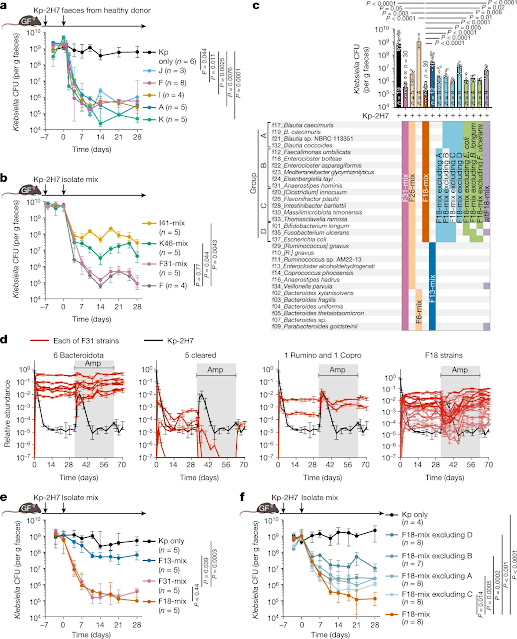
Researchers ... have isolated 18 bacterial strains from stool from healthy people that could potentially be a more effective treatment. The team found that these strains suppress the growth of Enterobacteriaceae and alleviate inflammation in the guts of mice by competing with the harmful bacteria for carbohydrates and preventing them from colonizing the intestine.  ...

Despite two decades of microbiome research, we are just beginning to understand how to define health-promoting features of the gut microbiome,”  ..."

From the abstract:
"Persistent colonization and outgrowth of potentially pathogenic organisms in the intestine can result from long-term antibiotic use or inflammatory conditions, and may perpetuate dysregulated immunity and tissue damage. Gram-negative Enterobacteriaceae gut pathobionts are particularly recalcitrant to conventional antibiotic treatment, although an emerging body of evidence suggests that manipulation of the commensal microbiota may be a practical alternative therapeutic strategy. Here we isolated and down-selected commensal bacterial consortia from stool samples from healthy humans that could strongly and specifically suppress intestinal Enterobacteriaceae. One of the elaborated consortia, comprising 18 commensal strains, effectively controlled ecological niches by regulating gluconate availability, thereby re-establishing colonization resistance and alleviating Klebsiella- and Escherichia-driven intestinal inflammation in mice. Harnessing these activities in the form of live bacterial therapies may represent a promising solution to combat the growing threat of proinflammatory, antimicrobial-resistant Enterobacteriaceae infection."

Scientists identify a unique combination of bacterial strains that could treat antibiotic-resistant gut infections | Broad Institute "The microbes control the growth of harmful bacteria in mice, promoting a healthier intestinal microbiome."


Fig. 1: Elaboration of an 18-strain-consortium capable of decolonizing Klebsiella.


Saturday, June 08, 2024

Drug-targetable driver of inflammatory bowel disease (IBD) discovered and can be treated with existing drugs

Good news!

"... The new study in Nature identified a gene called ETS2 is essential for inflammatory functions in macrophages – a type of immune cell important in IBD. ...
ETS2 can be blocked using drugs  which are already prescribed for other non-inflammatory conditions, and they result in reduced inflammation. ..."

From the abstract:
"Increasing rates of autoimmune and inflammatory disease present a burgeoning threat to human health. This is compounded by the limited efficacy of available treatments and high failure rates during drug development, highlighting an urgent need to better understand disease mechanisms. Here we show how functional genomics could address this challenge. By investigating an intergenic haplotype on chr21q22—which has been independently linked to inflammatory bowel disease, ankylosing spondylitis, primary sclerosing cholangitis and Takayasu’s arteritis—we identify that the causal gene, ETS2, is a central regulator of human inflammatory macrophages and delineate the shared disease mechanism that amplifies ETS2 expression. Genes regulated by ETS2 were prominently expressed in diseased tissues and more enriched for inflammatory bowel disease GWAS hits than most previously described pathways. Overexpressing ETS2 in resting macrophages reproduced the inflammatory state observed in chr21q22-associated diseases, with upregulation of multiple drug targets, including TNF and IL-23. Using a database of cellular signatures, we identified drugs that might modulate this pathway and validated the potent anti-inflammatory activity of one class of small molecules in vitro and ex vivo. Together, this illustrates the power of functional genomics, applied directly in primary human cells, to identify immune-mediated disease mechanisms and potential therapeutic opportunities."

Drug-targetable driver of IBD discovered Researchers in the UK have discovered a biological pathway that plays a major role in driving inflammatory bowel disease (IBD) and can be targeted using existing drugs.

Major cause of inflammatory bowel disease discovered (original news release) Researchers at the Francis Crick Institute, working with UCL and Imperial College London, have discovered a new biological pathway that is a principal driver of inflammatory bowel disease (IBD) and related conditions, and which can be targeted using existing drugs.


Fig. 1: Resolving molecular mechanisms at chr21q22. (Is this an example of information overload?)


Monday, September 18, 2023

Immune cell discovery offers hope for inflammatory bowel disease sufferers

Good news!

"... team of researchers ... have now characterized a subset of specialized T cells, V-gamma-4 (Vg4), which play a key role in gut-lining protection and repair. ...
Looking at healthy and IBD colon tissue samples from 150 patients, the researchers found a distinct difference in gamma delta (γδ) T cells between the two cohorts. In healthy guts, they found a robust population of Vg4 T cells, but in the tissue taken from IBD patients, this subset of cells was different, and in many cases significantly depleted. ...
If these protective immune cells are depleted, it leaves the gut vulnerable to disease progression. People with poorly managed IDB are at a higher risk of developing colorectal cancer. ...
The researchers also found that IBD patients who had a restored, functioning Vg4 T cell population were less likely to relapse after a bout of inflammation than those who didn’t. ..."

From the editor's note and the abstract:
"Editor’s summary
Inflammatory bowel disease (IBD) refers to two conditions, Crohn’s disease and ulcerative colitis. Individuals with IBD have chronic intestinal inflammation in which the intestinal epithelial barrier is disrupted. Dart et al. examined human colon biopsy samples and identified intestinal immune cells called Vγ4 γδ Τ lymphocytes (see the Perspective by Galipeau and Verdu). In healthy individuals, this γδ T cell subset is kept in check by intestinal epithelial cells displaying the butyrophilin-like (BTNL) proteins BTNL3 and BTNL8. By contrast, analysis of biopsies from Crohn’s disease patients revealed a polymorphism encoding a defective BTNL3:BTNL8 fusion protein, and this genetic mutation was correlated with IBD severity. These findings increase our understanding of barrier immunology and may provide new perspectives for IBD management. 
Structured Abstract
INTRODUCTION
Together with B cells and αβ T cells, γδ T lymphocytes comprise a third component of adaptive immunity conserved across vertebrates. ... Such γδ lymphocytes can contribute to the maintenance of tissue homeostasis and to its restoration after injury. Thus, any conservation of this biology in humans could have profound implications for basic tissue biology and for inflammatory pathologies at barrier sites, such as inflammatory bowel disease (IBD), which comprises the relapsing and remitting conditions Crohn’s disease (CD) and ulcerative colitis (UC). In humans, Vγ4+ cells that engage heteromers of BTNL3 and BTNL8 have been identified. However, the degree to which the human intestinal γδ T cell compartment mirrors that of the mouse and the potential implications for IBD are unresolved. IBD is of increasing global prevalence, and despite treatment advances, there remain many unmet needs. Although anti-inflammatory agents may ameliorate symptoms and inflammation in some cases, they have little capacity for curative epithelial repair, added to which the field lacks reliable prognostic biomarkers of disease progression.
RATIONALE
Using mucosal samples obtained at colonoscopy from more than 150 individuals, we characterized the healthy human gut γδ T cell population. We then investigated how this compartment changes in patients with IBD and in people who carry a germline mutation in BTNL3 and BTNL8. Finally, we explored whether the status of the colonic γδ T cell compartment might be associated with remission in IBD patients on treatment.
RESULTS
We established that the human colon harbors a complex γδ T cell repertoire, within which a subcompartment comprises Vγ4+ cells coexpressing the integrin CD103, which can engage E-cadherin on epithelial cells. The CD103+Vγ4+ cells have a distinct phenotype, combining T cell and natural killer cell ligand recognition systems, but they are also noticeably recalcitrant to conventional effector activation. By contrast, these cells respond strongly to BTNL3 and BTNL8 heteromers, and although they do not dominate the γδ T cell compartment to the degree observed for counterpart murine BTNL-reactive cells, they are BTNL selected. This was illustrated by our demonstration of the cells’ loss and dysregulation in persons homozygous for a BTNL3 and BTNL8 copy number variant (CNV) allele that we showed to be severely hypomorphic. Using a case-control genetic screen, we also showed that the CNV allele is a risk modifier, predisposing CD patients to a severe, penetrating pathology. Consistent with this, the distinct CD103+Vγ4+ T cell subset is vulnerable to the impacts of IBD-associated cytokines, and Vγ4+ T cells are disproportionately depleted and dysregulated in inflamed CD and UC. Conversely, restoration of the compartment in areas of healing was associated with on-treatment remission over a sustained period.
CONCLUSION
BTNL-mediated selection is an evolutionarily conserved biology driving the emergence of intestinal γδ T cells with a distinct phenotype. The frequent depletion and dysregulation of those BTNL-selected cells in UC and CD, and the association of BTNL hypomorphism with the CD disease phenotype, points to the cells’ evolutionarily conserved roles in regulating and/or restoring tissue integrity. Thus, for a disease of increasing global incidence that is primarily treated with anti-inflammatories but remains uncurable through medical therapy, IBD may benefit from clinical modalities that restore local γδ T cell activity, thereby promoting tissue surveillance and repair. Moreover, monitoring local γδ T cell status may add a much-needed prognostic biomarker of a patient’s likelihood of disease remission versus relapse."

Immune cell discovery offers hope for inflammatory bowel disease sufferers


Systematic analysis of human colonic γδ T cells.
Persons with genotype A (the more common genotype) harbor T cell receptor Vγ4-expressing colonic T cells that engage epithelial BTNL3+BTNL8 heteromers and display a distinct phenotype, coexpressing CD103, FcεRIγ, and natural killer (NK) receptors. That phenotype is disrupted in IBD, but its restoration on treatment is associated with sustained remission. Persons with genotype B are hypomorphic for BTNL3+8, harbor few Vγ4+ cells with the typical phenotype, and if they develop Crohn’s disease they are predisposed to a severe disease phenotype.


Tuesday, September 12, 2023

Smart pill can track key biological markers in real-time in the human gut

Good news! Are you ready for a Fantastic Voyage! "“Fantastic Voyage,” a 1966 film about four scientists who shrink themselves to fit into a tiny submarine that travels through the arteries of a sick man to treat a problem in his brain."

These pills are getting smaller and smaller and better!

"Researchers ... report a smart pill the size of a blueberry that could be a game changer in the diagnosis and treatment of bowel diseases. That’s because it is the first technology compatible with ingestion that can automatically detect — and report on in real time — key biological molecules that could be indicative of a problem. ...
The new study significantly advances earlier research reported in a 2018 issue of Science. The current pill is approximately one-sixth the size of the prototype reported in Science, conforming to safe, ingestible dosage forms on the market. It has also been designed to detect key biological molecules, such as nitric oxide and byproducts of hydrogen sulfide, which are important signals and mediators of the inflammation associated with bowel diseases. ...
The new pill, which has been successfully tested in pigs, combines specially engineered living bacteria with electronics and a tiny battery. When the bacteria sense a molecule of interest, they produce light (the bacteria by themselves have also been successfully tested outside of animals and in mice). The pill electronics then convert that light into a wireless signal that can be transmitted through the body to a smartphone or other computer in real time as the pill travels through the gut. ...
In their study, the researchers showed that the smart pill could detect nitric oxide, a short-lived molecule that is associated with many IBDs. Importantly, the sensors could also detect different concentrations of nitric oxide. ... It’s also important because biomarker levels vary greatly among patients. ... 
The team says the pill could be tweaked to detect other key biomarkers. ..."

From the abstract:
"Transient molecules in the gastrointestinal tract such as nitric oxide and hydrogen sulfide are key signals and mediators of inflammation. Owing to their highly reactive nature and extremely short lifetime in the body, these molecules are difficult to detect. Here we develop a miniaturized device that integrates genetically engineered probiotic biosensors with a custom-designed photodetector and readout chip to track these molecules in the gastrointestinal tract. Leveraging the molecular specificity of living sensors, we genetically encoded bacteria to respond to inflammation-associated molecules by producing luminescence. Low-power electronic readout circuits integrated into the device convert the light emitted by the encapsulated bacteria to a wireless signal. We demonstrate in vivo biosensor monitoring in the gastrointestinal tract of small and large animal models and the integration of all components into a sub-1.4 cm3 form factor that is compatible with ingestion and capable of supporting wireless communication. With this device, diseases such as inflammatory bowel disease could be diagnosed earlier than is currently possible, and disease progression could be more accurately tracked. The wireless detection of short-lived, disease-associated molecules with our device could also support timely communication between patients and caregivers, as well as remote personalized care."

Smart pill can track key biological markers in real-time | MIT News | Massachusetts Institute of Technology

Saturday, June 24, 2023

Hunter-gatherer lifestyle fosters thriving gut microbiome in Tanzania

Amazing stuff! What is in your gut? This study seems to be an eye opener!

Notice: It took only about 9 years from taking the fecal samples in 2013/14 to publishing the results now. Perhaps, the hunter-gatherers from Tanzania could have done it faster. Pardon my facetiousness! 😊

"... Now, a team of researchers has sequenced gut microbiomes from Hadza people — members of a hunter-gatherer society in northern Tanzania — and compared them with those from people in Nepal and California. The study has found not only that the Hadza tend to have more gut microorganisms than people in the other groups, but that a Western lifestyle seems to diminish the diversity of gut populations.
The Hadza had an average of 730 species of gut microbe per person. The average Californian gut microbiome contained just 277 species, and the Nepali microbiomes fell in between. ...
Among the genome sequences recovered from the Hadza samples, more than 1,000 were from bacterial or archaeal species that are new to science.
Furthermore, gut-microbe species commonly found in industrialized populations often contained genes associated with responding to oxidative damage. The team suspects chronic inflammation in the gut could trigger such damage ..."

From the highlights and abstract:
"Highlights
• The largest set of gut microbiome sequencing data from a hunter-gatherer population
• Assembly of thousands of novel human gut bacteria, archaea, eukaryotes, and phages
• Identification of distinct functions in lifestyle-associated VANISH and BloSSUM taxa
• Extensive non-kin strain sharing associated with a unique Hadza social structure
Summary
The gut microbiome modulates immune and metabolic health. Human microbiome data are biased toward industrialized populations, limiting our understanding of non-industrialized microbiomes. Here, we performed ultra-deep metagenomic sequencing on 351 fecal samples from the Hadza hunter-gatherers of Tanzania and comparative populations in Nepal and California. We recovered 91,662 genomes of bacteria, archaea, bacteriophages, and eukaryotes, 44% of which are absent from existing unified datasets. We identified 124 gut-resident species vanishing in industrialized populations and highlighted distinct aspects of the Hadza gut microbiome related to in situ replication rates, signatures of selection, and strain sharing. Industrialized gut microbes were found to be enriched in genes associated with oxidative stress, possibly a result of microbiome adaptation to inflammatory processes. This unparalleled view of the Hadza gut microbiome provides a valuable resource, expands our understanding of microbes capable of colonizing the human gut, and clarifies the extensive perturbation induced by the industrialized lifestyle."

Hunter-gatherer lifestyle fosters thriving gut microbiome Samples from the Tanzanian Hadza group included species previously unknown to science.


The Hadza people of Tanzania are among the last hunter-gatherer societies in Africa

Graphical abstract:


Figure 2. The Hadza gut microbiota contains substantial multi-domain novelty

More Unraveling of the bidirectional connections between the brain and gut with multifunctional microelectronic fibers

Amazing stuff! Very interesting work! This work may have huge potential!

"... designed a new technology for probing those connections. Using fibers embedded with a variety of sensors, as well as light sources for optogenetic stimulation, the researchers have shown that they can control neural circuits connecting the gut and the brain, in mice.
In a new study, the researchers demonstrated that they could induce feelings of fullness or reward-seeking behavior in mice by manipulating cells of the intestine. In future work, they hope to explore some of the correlations that have been observed between digestive health and neurological conditions such as autism and Parkinson’s disease. ...
More importantly, we have the ability to start accessing the crosstalk between the gut and the brain with the millisecond precision of optogenetics, and we can do it in behaving animals ...
The mechanical properties of the fibers can be tailored for use in different parts of the body. For the brain, the researchers created stiffer fibers that could be threaded deep into the brain. For digestive organs such as the intestine, they designed more delicate rubbery fibers that do not damage the lining of the organs but are still sturdy enough to withstand the harsh environment of the digestive tract. ...
The fibers are also designed so that they can be controlled wirelessly, using an external control circuit that can be temporarily affixed to the animal during an experiment. ...
First, they used the fibers to deliver optogenetic stimulation to a part of the brain called the ventral tegmental area (VTA), which releases dopamine. They placed mice in a cage with three chambers, and when the mice entered one particular chamber, the researchers activated the dopamine neurons. The resulting dopamine burst made the mice more likely to return to that chamber in search of the dopamine reward. ...
Next, ... the researchers found they could induce the same reward-seeking behavior by skipping the sucrose and optogenetically stimulating nerve endings in the gut that provide input to the vagus nerve, which controls digestion and other bodily functions. ...
fibers’ ability to control feeding behaviors. They found that the devices could optogenetically stimulate cells that produce cholecystokinin, a hormone that promotes satiety. When this hormone release was activated, the animals’ appetites were suppressed, even though they had been fasting for several hours. ..."

From the abstract:
"Progress in understanding brain–viscera interoceptive signaling is hindered by a dearth of implantable devices suitable for probing both brain and peripheral organ neurophysiology during behavior. Here we describe multifunctional neural interfaces that combine the scalability and mechanical versatility of thermally drawn polymer-based fibers with the sophistication of microelectronic chips for organs as diverse as the brain and the gut. Our approach uses meters-long continuous fibers that can integrate light sources, electrodes, thermal sensors and microfluidic channels in a miniature footprint. Paired with custom-fabricated control modules, the fibers wirelessly deliver light for optogenetics and transfer data for physiological recording. We validate this technology by modulating the mesolimbic reward pathway in the mouse brain. We then apply the fibers in the anatomically challenging intestinal lumen and demonstrate wireless control of sensory epithelial cells that guide feeding behaviors. Finally, we show that optogenetic stimulation of vagal afferents from the intestinal lumen is sufficient to evoke a reward phenotype in untethered mice."

Unraveling connections between the brain and gut | MIT News | Massachusetts Institute of Technology MIT engineers’ new technology can probe the neural circuits that influence hunger, mood, and a variety of diseases.


Fig. 1: Schematic illustration of microelectronics-integrated multifunctional fibers that enable wireless modulation of brain and gut neural circuits.