Recommendable!
Showing posts with label origin of life. Show all posts
Showing posts with label origin of life. Show all posts
Tuesday, October 20, 2026

Sunday, August 23, 2026
Sedimentary rocks from east India point to early traces of life about 3.5 billion years ago
Amazing stuff! Out of Africa or out of India?
It appears the German University of Technology in Oman has done similar research in Singhbhum Craton, India at least since March 2024, see Sedimentology and geochronology of Mesoarchean siliciclastic successions of the Singhbhum Craton, India and their implications
"Early in Earth’s history, the planet was covered in oceans. But the real hotspots were hydrothermal environments, where volcanic and tectonic activity provided the energy and nutrients needed for life to develop.
Over 3 billion years later, sedimentary rock formations known as cherts preserve traces of these ancient landscapes. Now, a new study presents evidence that they contain traces of life, too. ...
The findings provide the earliest evidence of life’s carbon signatures from a directly dated rock sample, reinforcing previous estimates of when life began."
From the significance and abstract:
"Significance
Kerogen, insoluble organic matter preserved in sediments, represents some of the earliest known terrestrial biosignatures which have provided important insights into the origin of life and planetary habitability.
Direct dating of these materials can be complicated by the lack of suitable geochronometers, instead relying on indirect constraints from, for example, the age of cross cutting lithologies.
Here, we report a 3.5-billion-year-old carbonaceous chert from eastern India containing what are interpreted to be contemporaneous tuffaceous zircons.
The chert exhibits micron-scale alternating layers of carbonaceous and siliceous materials.
δ13C isotope data of carbonaceous matter (CM) together with stratigraphic relationships indicate a biogenic origin of the kerogen marking this to our knowledge the oldest directly dated rock with a confirmed biosignature.
Abstract
Zircons interpreted to be of syn-volcanic origin recovered from the lower greenschist “black and white banded” Bhitardari chert, Eastern Iron Ore greenstone belt, Singhbhum craton, India, yield a 207Pb/206Pb zircon age of 3497 ± 5 Ma (n = 4; MSWD = 1.2).
This chert contains abundant carbonaceous matter (CM) that occurs in two textural modes:
1) ultrafine laminae distributed within the matrix and
2) graphite flakes in late quartz veins.
1) ultrafine laminae distributed within the matrix and
2) graphite flakes in late quartz veins.
Bulk δ13CCM of both modes in the Bhitardari chert yield a value of −30.9‰, which we interpret as reflecting a biogenic origin.
This represents the documentation of a directly dated, CM-bearing, Paleoarchean rock with δ13CCM diagnostic of biologic activity.
The observed isotopic compositions are consistent with the rise of relatively sophisticated metabolic mechanisms (e.g., Calvin cycle) by 3.5 Ga."
Direct dating of 3.5 Ga biogenic carbon in a microbial mat remnant, Singhbhum Craton, India (no public access)
Direct dating of 3.5 Ga biogenic carbon in a microbial mat remnant, Singhbhum Craton, India (This repository appears to provide access to the research article PDF file)


Friday, August 07, 2026
A Magnetic Clue to Life’s Origins Chemistry
Amazing stuff!
"... Their study, recently published in Chem, offers a possible missing link in a theory proposing that life first emerged on magnetic surfaces, such as the beds of shallow lakes rich in magnetic minerals. ...
an experiment ... used right- and left-handed versions of methionine – an amino acid that typically initiates protein synthesis – and passed a solution containing this amino acid through a paper filter embedded with micron-sized magnetic particles.
To track the molecules, the researchers incorporated two carbon isotopes – atoms of the same element with different weights – into the amino acid.
In some experiments, right-handed molecules contained the more common, lighter carbon-12 isotope and left-handed ones the heavier carbon-13;
in others, the assignment was reversed. The direction of magnetization was also switched: In different iterations of the experiment, the magnets first pointed toward the solution with one of their poles, north or south, then with the other. After filtering the solution, the scientists used mass spectrometry to measure the ratio of isotopes and the balance between the two chiral forms.
The result was unexpected. The magnetic filter appeared to separate methionine not only by chirality but also by isotope composition. Molecules containing the heavier carbon isotope – regardless of their handedness – showed a stronger attraction to particles magnetized in one direction over the other. ..."
From the highlights and abstract:
"The bigger picture
Isotopic fractionation in biomolecules provides key insight into chemical and biochemical formation pathways, yet the mechanisms underlying isotope selectivity in chiral molecular systems remain poorly understood.
This work demonstrates a direct experimental connection between spin-dependent interactions and isotopic effects in a chiral amino acid, showing that molecules differing only in their carbon isotope composition interact differently with oppositely magnetized surfaces. These findings reveal a previously unexplored contribution of electronic spin polarization to isotopic behavior in molecular systems.
More broadly, the results introduce spin selectivity as a new physical dimension in isotope chemistry.
In the longer term, such spin- and chirality-dependent interactions may enable new approaches for isotope discrimination or separation in chiral chemical environments, with potential relevance to analytical chemistry and materials design.
By linking magnetic interactions, molecular chirality, and isotope effects, this study establishes a framework for investigating how subtle spin-mediated processes can influence isotopic outcomes in complex molecular systems.
Highlights
• Spin-polarized magnetic filters induce carbon isotope fractionation in L-methionine
• Volume-resolved elution reveals metastable spin-dependent interactions
• Chirality couples electronic spin selectivity to isotope chemistry
• Spin-dependent effects may shape isotopic signatures in early biomolecules
Summary
Distinct isotopic fractionation in biomolecules, compared with atmospheric values, reflects their biosynthetic origin.
Monitoring these fractionation changes offers a valuable approach for probing early metabolic networks.
A key question in the study of life’s origins is the role of electronic spin and magnetic surfaces in symmetry breaking and the emergence of homochirality.
Here, we used magnetic filters to show that the dynamical interaction with the magnetic surfaces changes the isotope fractions of 13C L-methionine compared with 12C L-methionine.
Specifically, mass spectrometry analysis reveals that the isotopic fractionation of both natural and ¹³C-enriched L-methionine is influenced by electron spin-dependent interactions."
Spin-dependent isotopic fractionation of L-methionine (no public access, appeared in March 2026)
Graphical abstract

Wednesday, July 15, 2026
Space is sweet: interstellar sugars found in our Milky Way galaxy
Amazing stuff!
"Astronomers have found sugars in interstellar medium for the first time, suggesting an answer to a riddle about the origin of life.
Sugars are critical organic molecules. They form the backbone of DNA and RNA as well as playing a key role in metabolic processes.
Scientists have long wondered how sugars first formed on Earth. ..."
From the abstract:
"Sugars are essential biomolecules, serving as metabolic fuels, nucleic acid backbone components and structural or energy-storage polymers.
A central question in origin-of-life research is how monosaccharides formed on the primitive Earth, as laboratory experiments under prebiotic conditions yield insufficient concentrations.
The detection of ribose, glucose and other monosaccharides in asteroids and meteorites suggests an exogenous origin, possibly in the interstellar medium (ISM) before meteoritic parent-body formation. However, no sugar has been observed in the ISM so far.
Here we report the discovery of erythrulose, a chiral four-carbon ketose, in the ISM. The detection was achieved through ultrasensitive, broadband spectral surveys of the Galactic Centre molecular cloud G+0.693−0.027, using the Yebes 40 m and IRAM 30 m telescopes.
Erythrulose appears to be at least eight times more abundant than analogous three-carbon sugars, which remain undetected in our ultrasensitive observations. Quantum chemical and astrochemical models indicate that erythrulose forms efficiently on interstellar dust grains from simpler two-carbon aldehydes and alcohols.
As ketoses readily isomerize into aldoses in aqueous conditions, interstellar erythrulose could have contributed to the sugar inventory available for early metabolic and replication processes."

Fig. 1: Brightest and most unblended transitions of erythrulose observed towards the G+0.693 molecular cloud.

Tuesday, March 17, 2026
Near-earth asteroid contains all five DNA, RNA bases and Vitamin B3, boosting origin of life theories
Amazing stuff!
"Samples collected from the near-Earth asteroid Ryugu have been found to contain all five nucleobases, adding to evidence that life’s building blocks exist elsewhere in the solar system. The researchers think that such asteroids may have helped deliver these molecules to Earth, potentially kick-starting life.
The Japan Aerospace Exploration Agency launched a spacecraft to the carbon-rich Ryugu asteroid in December 2014 as part of its Hayabusa 2 mission. The spacecraft made two landings on the asteroid’s surface in 2019, before returning to Earth in December 2020.
Initial analysis of a sample from the mission revealed the presence of the nucleobase uracil, as well as nicotinic acid (vitamin B3), its derivatives and several imidazoles.
Scientists in Japan have now analysed two other samples collected during the mission, using high-performance liquid chromatography and high-resolution mass spectrometry to determine the type and abundance of molecules in the sample. ..."
Samples from the asteroid Ryugu (bottom left) were found to contain all five nucleobases

Thursday, November 27, 2025
AI spots signatures of earliest life on Earth—and now turns to other worlds
Amazing stuff!
"... Now, researchers have devised an artificial intelligence (AI) that can identify signs of ancient life in rocks of unknown provenance, based only on the pattern of chemicals left behind as biomolecules degrade over eons.
Using this automated pattern recognition technique, the researchers say they can see life’s signature in 3.3-billion-year-old rocks, which pre-dates Earth’s oldest fossils by hundreds of millions of years.
But the new work also claims to push back the biomolecular signature of the earliest photosynthetic life some 800 million years to 2.5 billion years ago. Researchers are now working to adapt this approach to search for signs of life on Mars and moons of Jupiter and Saturn. ..."
From the significance and abstract:
"Significance
Teasing out biochemical information from ancient organic-rich sediments, notably the timing of the emergence of photosynthesis relative to the inferred oxygenation of Earth’s atmosphere, remains a challenging opportunity.
To tackle this problem, we analyzed 406 diverse ancient and modern samples and used supervised machine learning to discriminate samples of biogenic vs. abiogenic origin, as well as photosynthetic vs. nonphotosynthetic physiology. Comparing organic-rich samples of uncertain affinity to our training data, ca. 3.33-billion-year-old sedimentary rocks group among microbial samples, and rocks as old as 2.52 billion years ally with more recent photosynthetic life. The application of supervised machine learning thus approximately doubles the interval within which fossil organic matter can be shown to retain molecular information of evolutionary relationships and physiology.
Abstract
Throughout Earth’s history, organic molecules from both abiogenic and biogenic sources have been buried in sedimentary rocks. Most of these organic molecules have been significantly altered by geologic processes through deep time. Nonetheless, the nature and distribution of those ancient fragmentary organic remains have the potential to reveal diagnostic biomolecular information after billions of years of burial.
Here, we analyzed 406 fossil, modern biological, meteoritic, and synthetic samples using pyrolysis gas chromatography and mass spectrometry. We explored these analytical data via supervised machine-learning methods to discriminate samples of biogenic vs. abiogenic origin, plant vs. animal phylogenetic affinity, and photosynthetic vs. nonphotosynthetic physiology. Dividing 272 samples with known phylogenetic affinity and physiology into 9 categories, each further divided into 75% training and 25% testing sets, our random forest models accurately predict pairwise assignments of modern vs. fossil or meteoritic organics (100% correct assignments), fossil plant tissues vs. meteoritic organics (97%), modern vs. fossil plant tissues (98%), and modern plants vs. animal tissues (95%).
Pairwise comparisons between fossil biogenic samples vs. abiogenic samples resulted in 93% correct classifications, while analysis of modern and ancient photosynthetic vs. nonphotosynthetic samples also resulted in 93% correct assignments.
Our analyses demonstrate that molecular biosignatures can survive in ancient fossils and allow for the identification of organismal origins and traits. Consistent with previous morphological and isotopic inferences, we present evidence for biogenic molecular assemblages in Paleoarchean rocks (3.33 Ga) and for photoautotrophy in Neoarchean rocks (2.52 Ga)."
Chemical evidence of ancient life detected in 3.3-billion-year-old rocks (original news release) "New study shows life’s signature still exists in rocks long after the original biomolecules are gone."

Tuesday, September 09, 2025
Thioesters could explain how proteins first formed on early Earth
Amazing stuff! Could this be a breakthrough?
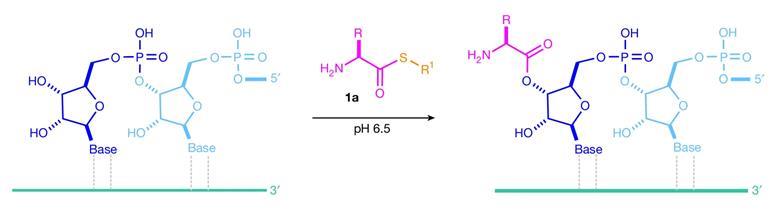
"A sulfurous intermediate could be the missing puzzle piece that explains how simple molecules on early Earth first assembled into proteins. New research shows that aminoacyl–thiols can react with RNA molecules to initiate the first steps of protein synthesis, while avoiding competing side reactions, all without the need for enzymes. ...
In particular, the initial activating step – an aminoacylation reaction – has proven challenging to replicate without enzymes. Previous studies have proposed various electrophiles including phosphates, imidazoles, and N-carboxyanhydrides as chemical activating agents but the resulting species are highly reactive, leading to uncontrolled background reactions and poor stability in water.
According to ... [a team] ... the solution must therefore involve a milder mechanism of activation. The researchers chose to focus their attention on thioesters, which are prevalent motifs in metabolic processes. Through a panel of experiments, they demonstrated that aminoacyl–thiols derived from from prebiotic precursors provided sufficient activation to enable these units to selectively bind to tRNA molecules. The water-based reaction seamlessly tolerated 15 different amino acid units while also suppressing the uncontrolled competing reactions of these amino acids directly with each other. ..."
From the abstract:
"To orchestrate ribosomal peptide synthesis, transfer RNAs (tRNAs) must be aminoacylated, with activated amino acids, at their 2′,3′-diol moiety, and so the selective aminoacylation of RNA in water is a key challenge that must be resolved to explain the origin of protein biosynthesis.
So far, there have been no chemical methods to effectively and selectively aminoacylate RNA-2′,3′-diols with the breadth of proteinogenic amino acids in water.
Here we demonstrate that (biological) aminoacyl-thiols (1) react selectively with RNA diols over amine nucleophiles, promoting aminoacylation over adventitious (non-coded) peptide bond formation.
Broad side-chain scope is demonstrated, including Ala, Arg, Asp, Glu, Gln, Gly, His, Leu, Lys, Met, Phe, Pro, Ser and Val, and Arg aminoacylation is enhanced by unprecedented side-chain nucleophilic catalysis.
Duplex formation directs chemoselective 2′,3′-aminoacylation of RNA.
We demonstrate that prebiotic nitriles, N-carboxyanhydrides and amino acid anhydrides, as well as biological aminoacyl-adenylates, all react with thiols (including coenzymes A and M) to selectively yield aminoacyl-thiols (1) in water. Finally, we demonstrate that the switch from thioester to thioacid activation inverts diol/amine selectivity, promoting peptide synthesis in excellent yield. Two-step, one-pot, chemically controlled formation of peptidyl-RNA is observed in water at neutral pH. Our results indicate an important role for thiol cofactors in RNA aminoacylation before the evolution of proteinaceous synthetase enzymes."
[T]eam has shown that aminoacyl–thiols are sufficiently reactive to load amino acid units onto RNA molecules without the help of enzymes
Thursday, July 17, 2025
Why Is All DNA Right Handed? with Matt O'Dowd
Wow, the whole episode was about chemistry! No wonder I was able to understand much more than usual. 😊
Saturday, June 07, 2025
Saturday, March 29, 2025
Tuesday, March 25, 2025
Origin of life: How a special group of single-celled organisms laid the foundation for complex cells
Amazing stuff!
I have recently blogged here that the Asgard archaea were already linked to the Eukaryotic Immune System.
"Ten years ago, nobody knew that Asgard archaea even existed. In 2015, however, researchers examining deep-sea sediments discovered gene fragments that indicated a new and previously undiscovered form of microbes. ...
After a further search, microbiologists identified the corresponding organisms, described them and classified them as a separate archaeal sub-group: Asgard archaea. ...
They turned out to be a missing link between archaea and eukaryotes—that is, between archaea and organisms whose cells contain a nucleus, such as plants and animals. ..."
From the highlights and absract:
"Highlights
• Asgard archaea express tubulins related to eukaryotic α/β-tubulin and bacterial BtubA/B
• Asgard tubulins (AtubA/B/B2) assemble into canonical and non-canonical heterodimers
• Asgard tubulin heterodimers polymerize into 5 or 7 protofilament microtubules
• AtubA/B form cytoskeletal structures in Ca. Lokiarchaeum ossiferum
Summary
Microtubules are a hallmark of eukaryotes. Archaeal and bacterial homologs of tubulins typically form homopolymers and non-tubular superstructures. The origin of heterodimeric tubulins assembling into microtubules remains unclear.
Here, we report the discovery of microtubule-forming tubulins in Asgard archaea, the closest known relatives of eukaryotes. These Asgard tubulins (AtubA/B) are closely related to eukaryotic α/β-tubulins and the enigmatic bacterial tubulins BtubA/B. Proteomics of Candidatus Lokiarchaeum ossiferum showed that AtubA/B were highly expressed.
Cryoelectron microscopy structures demonstrate that AtubA/B form eukaryote-like heterodimers, which assembled into 5-protofilament bona fide microtubules in vitro.
The additional paralog AtubB2 lacks a nucleotide-binding site and competitively displaced AtubB. These AtubA/B2 heterodimers polymerized into 7-protofilament non-canonical microtubules. In a sub-population of Ca. Lokiarchaeum ossiferum cells, cryo-tomography revealed tubular structures, while expansion microscopy identified AtubA/B cytoskeletal assemblies.
Our findings suggest a pre-eukaryotic origin of microtubules and provide a framework for understanding the fundamental principles of microtubule assembly."
Microtubules in Asgard archaea (open access)
Redrawing the tree of life, with eukaryotes descending from Asgard archaea

Graphical abstract

Thursday, March 06, 2025
Building Blocks of Life Discovered on Distant Asteroid
Amazing stuff! Very recommendable! We are not alone!
Tuesday, February 25, 2025
Lots of volcanic activity may have leached phosphorus into bodies of water starting life on earth
Amazing stuff! You wonder why this obvious explanation took so long!
I suspect the article got it a little bit wrong about focusing on "small", "highly alkaline soda lakes". It seems more plausible that there was generally much more volcanic activity across many areas affecting any bodies of water.
"Be they microbes or monkeys, organisms require phosphorus—and lots of it. It’s a key component of DNA and RNA, of the adenosine triphosphate that fuels living cells, and of the lipids that make up cell membranes. The element’s centrality has long puzzled researchers trying to understand early life, because phosphorus isn’t naturally abundant in most watery environments, where life probably began.
Researchers have grappled for decades with what they’ve called the “phosphorus problem,” knowing that the origin of life would likely have required high concentrations of compounds such as phosphate—a phosphorus atom surrounded by four oxygens. In oceans, rivers, and most lakes the phosphate concentration is typically 10,000 times too low.
Now, a trio of new papers supports a recent proposal that volcanic activity around highly alkaline “soda” lakes—and perhaps hot springs— could have enabled phosphorus compounds to accumulate to levels needed for life to start and spread.
Phosphorus is present in volcanic lavas, and the young Earth had a lot more volcanic activity than today. The new reports suggest that volcanic activity in and around lakes may have produced abundant phosphates and allowed them to concentrate enough in small soda lakes to promote vital biochemical reactions. Similar processes around larger soda lakes may have provided a more stable supply of phosphates that allowed early life to thrive and spread. ..."
P.S. I ignored the three scientific articles mentioned in this article.
Unusual ‘soda lakes’ may have kick-started life on Earth by concentrating key compounds "Phosphorus leached from volcanic rocks in warm waters could have triggered reactions needed to launch biochemistry"
Saturday, December 21, 2024
How Earth’s first life came to have cell membranes
Amazing stuff!
"A reaction between 2 simple molecules might be the secret to uncovering how the building blocks of life were first encapsulated in a cell membrane, according to new research. ..."
From the abstract:
"All known forms of life are composed of cells, whose boundaries are defined by lipid membranes that separate and protect cell contents from the environment. It is unknown how the earliest forms of life were compartmentalized.
Several models have suggested a role for single-chain lipids such as fatty acids, but the membranes formed are often unstable, particularly when made from shorter alkyl chains (≤C8) that were probably more prevalent on prebiotic Earth.
Here we show that the amino acid cysteine can spontaneously react with two short-chain (C8) thioesters to form diacyl lipids, generating protocell-like membrane vesicles. The three-component reaction takes place rapidly in water using low concentrations of reactants. Silica can catalyse the formation of protocells through a simple electrostatic mechanism. Several simple aminothiols react to form diacyl lipids, including short peptides. The protocells formed are compatible with functional ribozymes, suggesting that coupling of multiple short-chain precursors may have provided membrane building blocks during the early evolution of cells."
On the Origin of Life: How the First Cell Membranes Came to Exist (original news release) "New research provides a possible explanation on the development of early Earth protocells"
Protocells by spontaneous reaction of cysteine with short-chain thioesters (no public access)
Friday, November 15, 2024
Gamma radiation converts methane into complex organic molecules and could explain the origin of life
Amazing stuff!
"... "Gamma rays, high-energy photons commonly existing in cosmic rays and unstable isotope decay, provide external energy to drive chemical reactions of simple molecules in the icy mantles of interstellar dust and ice grains," ... "This can result in more complex organic molecules, presumably starting from methane (CH4), which is widely present throughout the interstellar medium." ..."
From the abstract:
"Fundamental understanding of initial evolutions of molecules in the universe is of great interest and importance. CH4 is one of the abundant simple molecules in the universe. Herein we report γ-ray, high-energy photons commonly existing in cosmic rays and unstable isotope decay, as an external energy to efficiently drives aqueous-phase CH4 conversions to various products with the presence of oxygen at room temperature. Glycine also forms with an additional introduction of ammonia. Both CH4 conversions and product distributions are modified by solid granules, and a CH3COOH selectivity as high as 82 % is obtained when SiO2 is added. Our results point to γ-ray driven aqueous-phase CH4 conversions as a likely formation network of initial complex organic compounds in the universe and offer an alternative strategy for efficiently utilizing CH4 as the carbon source to produce value-added products at mild conditions, a long-standing challenging task in heterogeneous catalysis."
γ-Ray Driven Aqueous-Phase Methane Conversions into Complex Molecules up to Glycine (no public access)
γ-Ray is capable of driving an aqueous-phase CH4+H2O+O2 conversion selectively into CH3COOH via ⋅CH3 and ⋅OH radical intermediates, and driving an aqueous-phase CH3COOH+NH3 conversion into NH2CH2COOH via ⋅CH2COOH and ⋅NH2 radical intermediates. Such γ-ray driven aqueous-phase methane conversions probably play an important role in the formation network of complex organic molecules in the universe, and provides a strategy to convert abundant CH4 into value-added products at mild conditions.

Monday, October 28, 2024
Deep ocean crystals in hydrothermal vents reveal clues about origins of life
Amazing stuff!
"Researchers ... have discovered inorganic nanostructures surrounding deep-ocean hydrothermal vents that are strikingly similar to molecules that make life as we know it possible. These nanostructures are self-organized and act as selective ion channels, which create energy that can be harnessed in the form of electricity. ... the findings impact not only our understanding of how life began, but can also be applied to industrial blue-energy harvesting. ...
researchers were studying serpentinite-hosted hydrothermal vents because this kind of vent has mineral precipitates with a very complex layered structure formed from metal oxides, hydroxides, and carbonates. “Unexpectedly ... discovered that osmotic energy conversion, a vital function in modern plant, animal, and microbial life , can occur abiotically in a geological environment ...
The researchers were studying samples collected from the Shinkai Seep Field, located in the Pacific Ocean’s Mariana Trench at a depth of 5743 m. The key sample was an 84-cm piece composed mostly of brucite. Optical microscopes and scans with micrometer-sized X-ray beams revealed that brucite crystals were arranged in continuous columns that acted as nano-channels for the vent fluid. The researchers noticed that the surface of the precipitate was electrically charged, and that the size and direction of the charge—positive or negative—varied across the surface. Knowing that structured nanopores with variable charge are the hallmarks of osmotic energy conversion, they next tested whether osmotic energy conversion was indeed occurring naturally in the inorganic deep-sea rock.
The team used an electrode to record the current-voltage of the samples. When the samples were exposed to high concentrations of potassium chloride, the conductance was proportional to the salt concentration at the surface of the nanopores. But at lower concentrations, the conductance was constant, not proportional, and was determined by the local electrical charge of the precipitate’s surface. This charge-governed ion transport is very similar to voltage-gated ion channels observed in living cells like neurons.
By testing the samples with chemical gradients that exist in the deep ocean from where they were extracted, the researchers were able to show that the nanopores act as selective ion channels. At locations with carbonate adhered to the surface, the nanopores allowed positive sodium ions to flow through. However, at nanopores with calcium adhered to the surface, the pores only allowed negative chloride ions to pass through. ..."
From the abstract:
"Cells harvest energy from ionic gradients by selective ion transport across membranes, and the same principle is recently being used for osmotic power generation from salinity gradients at ocean-river interfaces. Common to these ionic gradient conversions is that they require intricate nanoscale structures. Here, we show that natural submarine serpentinite-hosted hydrothermal vent (HV) precipitates are capable of converting ionic gradients into electrochemical energy by selective transport of Na+, K+, H+, and Cl-. Layered hydroxide nanocrystals are aligned radially outwards from the HV fluid channels, constituting confined nanopores that span millimeters in the HV wall. The nanopores change the surface charge depending on adsorbed ions, allowing the mineral to function as a cation- and anion-selective ion transport membrane. Our findings indicate that chemical disequilibria originating from flow and concentration gradients in geologic environments generate confined nanospaces which enable the spontaneous establishment of osmotic energy conversion."
Nanostructures in the deep ocean floor hint at life's origin (original news release)
Nanostructures in the deep ocean floor hint at life’s origin (original news release by RIKEN)
Fig. 6: Osmotic power generation by selective ion transport in hydrothermal vent (HV) precipitates.

Monday, August 19, 2024
Self-assembling RNA strands tamed the chemical chaos in the prebiotic primordial soup
Amazing stuff! Interesting hypothesis about the origins of life in the primordial soup!
In a few decades, humans will be able to create new forms of and modify existing forms of life like God! What a challenging journey ahead for humanity!
"New research explores mechanisms that boost RNA’s stability and resistance to hydrolysis"
"New research shows how complex molecules that were key to kickstarting life on the early Earth could have survived, despite their inherent instability. The findings suggest that self-assembly processes could have boosted RNA sequences’ resistance to hydrolysis, helping to ‘tame the chemical chaos’ in prebiotic mixtures. ..."
"The origins of life remain a major mystery. How were complex molecules able to form and remain intact for prolonged periods without disintegrating? A team ... has demonstrated a mechanism that could have enabled the first RNA molecules to stabilize in the primordial soup. When two RNA strands combine, their stability and lifespan increase significantly."
From the abstract:
"One of science’s greatest challenges is determining how life can spontaneously emerge from a mixture of molecules. A complicating factor is that life and its molecules are inherently unstable—RNA and proteins are prone to hydrolysis and denaturation. For the de novo synthesis of life or to better understand its emergence at its origin, selection mechanisms are needed for unstable molecules. Here we present a chemically fuelled dynamic combinatorial library to model RNA oligomerization and deoligomerization and shine new light on selection and purification mechanisms under kinetic control. In the experiments, oligomers can only be sustained by continuous production. Hybridization is a powerful tool for selecting unstable molecules, offering feedback on oligomerization and deoligomerization rates. Moreover, we find that templation can be used to purify libraries of oligomers. In addition, template-assisted formation of oligomers within coacervate-based protocells changes its compartment’s physical properties, such as their ability to fuse. Such reciprocal coupling between oligomer production and physical properties is a key step towards synthetic life."
New insights into the origins of life What gave the first molecules their stability? (original news release)
A Journey Towards Understanding the Stabilization of Labile Molecules "Life emerged from a mix of simple molecules. Here, we describe how stabilization mechanisms under kinetic control can tame the chemical chaos and lead to a stable copying process, the first step toward self-replication mechanisms, which are the heart of life."
Figure 1. Template-based copying controls selection in chemical-fueled libraries and alters the coacervate’s physical properties when happening inside of coacervates.

Fig. 2: Description of the chemically fuelled library.

Sunday, August 11, 2024
Isolated community of complex life may have existed 2 billion years ago on Earth. Was life perhaps reinvented twice?
Amazing stuff! If confirmed, then this is huge!
Why should the origin of life not have happened more than once?
"... Life appears to have gotten started pretty quickly after Earth formed about 4.5 billion years ago. Direct evidence shows that microbes were abundant by 3.5 billion years ago, with other fossils dating back 3.7 billion years. Other finds even suggest Earth could have been inhabited extremely quickly, as far as 4.3 billion years ago, though these fossils are heavily contested. ...
The researchers say that these favorable conditions would have been restricted to this inland sea – beyond that, Earth was still quite hostile to complex life. And even then, the oasis was short-lived, geologically speaking, and these creatures eventually went extinct. ..."
The researchers say that these favorable conditions would have been restricted to this inland sea – beyond that, Earth was still quite hostile to complex life. And even then, the oasis was short-lived, geologically speaking, and these creatures eventually went extinct. ..."
"But a team ... has discovered evidence of a much earlier ecosystem in the Franceville Basin near Gabon on the Atlantic coast of Central Africa over 1.5 billion years earlier. ...
Their study ... describes an episode of unique underwater volcanic activity following the collision of two continents, which created a nutrient-rich ‘laboratory’ for the earliest experiments in complex biological evolution. ..."
From the highlights and abstract:
"Highlights
• Paleoproterozoic seawater nutrient enrichment linked to hydrothermal weathering of a seafloor nutrient-rich reservoir.
• Nutrient enrichment triggered the onset of negative δ13C excursion in organic carbon in the Francevillian sub-basin.
• Nutrient enrichment initiated localized emergence of large colonial macrofossils in the Franceville sub-basin.
Abstract
It is thought that the global predominance of small-size unicellular prokaryotic life in the oceans until the emergence of large-size multicellular organisms to ecological dominance in the Ediacaran Ocean after 635 million years ago (Ma), was partly constrained by paleo-dynamic nutrient limitation, with phosphorus (P) being the principal limiting resource. Here we couple an episode of intense submarine hydrothermal alteration of a nutrient-rich seafloor reservoir to the collision of the Congo-São Francisco cratons at ∼2100 Ma, to unravel a paleo-geodynamic incident of seawater P enrichment in the Paleoproterozoic Francevillian sub-basin. We propose that this previously unrecognized local pulse in dissolved seawater P concentration, of comparable magnitude to Ediacaran seawater levels, set the stage for Earth’s earliest biospheric experimentation towards macrobiological complexity ∼2100 million years ago."
Complex life on Earth began around 1.5 billion years earlier than previously thought, new study claims (original press release) "Environmental evidence of the very first experiments in the evolution of complex life on Earth, has been uncovered by an international team of scientists."
Graphical abstract:

The team’s research provides strong validation for the biological affinity of the lobate macrofossils whose validity has been widely debated in the scientific community.

Friday, July 26, 2024
The Physics of Cold Water May Have Jump-Started Complex Life
I did not read the article, but I found the idea quite intriguing!
Saturday, July 20, 2024
Subscribe to:
Posts (Atom)