Showing posts with label chirality. Show all posts

Friday, August 07, 2026

A Magnetic Clue to Life’s Origins Chemistry

Amazing stuff!

"... Their study, recently published in Chem, offers a possible missing link in a theory proposing that life first emerged on magnetic surfaces, such as the beds of shallow lakes rich in magnetic minerals. ...

an experiment ... used right- and left-handed versions of methionine – an amino acid that typically initiates protein synthesis – and passed a solution containing this amino acid through a paper filter embedded with micron-sized magnetic particles.

To track the molecules, the researchers incorporated two carbon isotopes – atoms of the same element with different weights – into the amino acid.
In some experiments, right-handed molecules contained the more common, lighter carbon-12 isotope and left-handed ones the heavier carbon-13;
in others, the assignment was reversed. The direction of magnetization was also switched: In different iterations of the experiment, the magnets first pointed toward the solution with one of their poles, north or south, then with the other. After filtering the solution, the scientists used mass spectrometry to measure the ratio of isotopes and the balance between the two chiral forms.

The result was unexpected. The magnetic filter appeared to separate methionine not only by chirality but also by isotope composition. Molecules containing the heavier carbon isotope – regardless of their handedness – showed a stronger attraction to particles magnetized in one direction over the other. ..."

From the highlights and abstract:
"The bigger picture
Isotopic fractionation in biomolecules provides key insight into chemical and biochemical formation pathways, yet the mechanisms underlying isotope selectivity in chiral molecular systems remain poorly understood.
This work demonstrates a direct experimental connection between spin-dependent interactions and isotopic effects in a chiral amino acid, showing that molecules differing only in their carbon isotope composition interact differently with oppositely magnetized surfaces. These findings reveal a previously unexplored contribution of electronic spin polarization to isotopic behavior in molecular systems.
More broadly, the results introduce spin selectivity as a new physical dimension in isotope chemistry.
In the longer term, such spin- and chirality-dependent interactions may enable new approaches for isotope discrimination or separation in chiral chemical environments, with potential relevance to analytical chemistry and materials design.
By linking magnetic interactions, molecular chirality, and isotope effects, this study establishes a framework for investigating how subtle spin-mediated processes can influence isotopic outcomes in complex molecular systems.

Highlights
• Spin-polarized magnetic filters induce carbon isotope fractionation in L-methionine
• Volume-resolved elution reveals metastable spin-dependent interactions
• Chirality couples electronic spin selectivity to isotope chemistry
• Spin-dependent effects may shape isotopic signatures in early biomolecules

Summary
Distinct isotopic fractionation in biomolecules, compared with atmospheric values, reflects their biosynthetic origin.
Monitoring these fractionation changes offers a valuable approach for probing early metabolic networks.
A key question in the study of life’s origins is the role of electronic spin and magnetic surfaces in symmetry breaking and the emergence of homochirality.
Here, we used magnetic filters to show that the dynamical interaction with the magnetic surfaces changes the isotope fractions of 13C L-methionine compared with 12C L-methionine.
Specifically, mass spectrometry analysis reveals that the isotopic fractionation of both natural and ¹³C-enriched L-methionine is influenced by electron spin-dependent interactions."

A Magnetic Clue to Life’s Origins - Chemistry | Weizmann Wonder Wander - News, Features and Discoveries "Study suggests that magnetic surfaces may influence not only the handedness of biological molecules but also their isotope composition – thus connecting two fundamental fingerprints of life"

Spin-dependent isotopic fractionation of L-methionine (no public access, appeared in March 2026)


Graphical abstract


Tuesday, June 02, 2026

A Glimpse at the Origins of Life Through chirality

Amazing stuff!

"... In a new study ... the researchers found that an electron experiences a magnetic field of different strength when traveling through each mirror-image form. This asymmetric behavior not only challenges conventional assumptions but also lends support to a theory about how life began on Earth. ...

Although chiral molecules can exist in two forms, scientists realized more than 150 years ago that living organisms “choose” only one: a left-handed form for proteins and a right-handed form for sugars, DNA and RNA. ...

A first step toward solving the puzzle came in 1999, when ... passed an electric current – a stream of electrons – through chiral molecules and discovered that each mirror-image form behaves differently. Electrons act like tiny magnets, with north and south poles, and possess a property called spin, which determines their magnetic orientation. As these tiny magnets move through a chiral molecule, they follow a spiral path, which causes them to experience a magnetic force that can either accelerate or hinder their motion. The researchers found that the two mirror-image forms exert opposite effects: One mainly speeds up electrons whose north pole aligns with their direction of motion, while the other speeds up electrons whose north pole points in the opposite direction. ...

that the two mirror-image forms not only favor electrons with opposite spins but also transmit them with different efficiencies. ...

The experiments revealed substantial differences in the strength of the magnetic field experienced by electrons in the two forms ...

“Our breakthrough was realizing that the difference between these two seemingly identical forms only emerges in motion,” ..."

From the abstract:
"Two fundamental questions have puzzled scientists for more than 150 years. “How did life become homochiral?” and “why was this specific handedness selected?”
Recently, it has been shown that homochirality could have emerged through the enantioselective interactions of molecules with magnetic substrates due to the asymmetric crystallization of an RNA precursor on a magnetite substrate, abundant on early Earth.
This phenomenon is based on the chirality-induced spin selectivity (CISS) effect. Despite its robustness, this model could not provide an answer to the second question: Why one specific handedness (D for RNA) was selected.
Here, we demonstrate that spin-involving processes can have different outcomes in the two enantiomers of chiral molecules.
In chiral molecules with unpaired electrons or while electrons are passing through them, the total angular momentum vector, J, is aligned along the “easy axis,” which is defined by the magnetic anisotropy induced by the spin-orbit coupling and asymmetry of the molecular field.
The magnitude J is the same for both enantiomers, but the vectors may be aligned differently relative to the molecular frame in the two enantiomers.
This difference can be quantified by, for example, by the angle between J and electric dipole moment of the molecule, μ.
We show by direct measurements, theory, and ab initio calculations that dynamic spin processes in chiral molecules could result in different efficiencies of spin-related phenomena, including the interaction of chiral molecules with magnetic surfaces. The findings may provide an explanation for the specific homochirality in nature."

A Glimpse at the Origins of Life Through a Deceptive Mirror - Chemistry | Weizmann Wonder Wander - News, Features and Discoveries "Scientists may have solved a 150-year-old puzzle about why life favors one mirror-image molecule over another"


Adsorption of crystals of a biological chiral molecule onto a gold-coated cobalt surface. Larger crystals of one specific form of the molecule (left) tend to accumulate on this surface to a greater degree than those of its mirror-image form (right). ...


Fig. 1. The alignment of the total spin and the magnetic vectors.


Sunday, October 19, 2025

Cosmic Handedness Might Show Up in Galaxy Spins

Amazing stuff!

"Could galaxies be organized in a preferentially left- or right-handed way? Possible hints of such “parity violation” have been found in the way galaxies group together. In a new study ... explore whether a similar signal might be visible in the way galaxies rotate. The researchers predict that galaxy-rotation maps could exhibit a parity-violating pattern that is strong enough to be detectable in upcoming galaxy surveys. ..."

From the abstract:
"We explore the potential of using late-time galaxy spins to test the parity symmetry of primordial vector fossils. Using 𝑁-body simulations, we analyze halo spins as a reliable proxy for galaxy spins to investigate the detectability of this effect.
We develop a novel approach to generate initial conditions (ICs) that have substantial parity asymmetry but do not alter the initial matter power spectrum. We construct the initial spin fields from the parity broken ICs and halo spin fields using late-time halos evolved from such ICs. Focusing on the helicity of these vector fields, we detect substantial asymmetry in the initial spin field. In addition, we find that over 50% of the initial spin field’s asymmetry remains in the late-time halo spin field on a range of scales.
Based on mock galaxy spin fields derived from the halo spin fields, we forecast that a maximum detection at 13⁢𝜎 is possible with the final DESI BGS for the model considered in this analysis.
Our findings demonstrate that primordial vectorial parity violation survives nonlinear gravitational evolution, and thus, can be effectively probed with galaxy spins at late times."

Physics - Cosmic Handedness Might Show Up in Galaxy Spins "Cosmological simulations show that a left–right asymmetry in the early Universe could leave a mark in the distribution of galaxy rotations."


Cosmological simulations show that a left–right asymmetry in the early Universe could leave a mark in the distribution of galaxy rotations.


Thursday, July 17, 2025

Monday, June 30, 2025

Crystal defies Pasteur's chirality rules in breakthrough discovery

Amazing stuff! Will it be confirmed or is it a fluke?

"Researchers observed optical behaviours linked to chirality in crystalline lithium cobalt selenium oxide (Li2Co3(SeO3)4), a centrosymmetric crystal that as such cannot be chiral. ‘Within the inorganic crystal community there’s been a strong sentiment that you cannot have chiroptical effects under centrosymmetry’ ...

Chirality refers to two versions of a structure – be that light, molecules or crystals – that are almost identical but cannot be superimposed on each other, just like your left and right hand. When a structure displays centrosymmetry it has lines of symmetry in every direction from a central point, ruling out any possibility of chirality. ...

Chiral materials have a chiroptical response – they rotate linearly polarised light and absorb circularly polarised light differently depending on whether it is left-or right-handed ...

As centrosymmetric crystals have no chirality in the first place, no-one expected to see chirality in their optical response at all. However, the researchers showed that centrosymmetric crystalline Li2Co3(SeO3)4 transmits more left circularly polarised light than right. ..."

From the editor's note and abstract:
"Editor’s summary
For nearly two centuries, chemists have relied on absorption and rotation of polarized light to distinguish chiral compounds, so much so that the term “optically active” is often used synonymously with the structural absence of mirror or inversion symmetry. Parrish et al. now report that a particular centrosymmetric crystalline solid, a lithium cobalt selenium oxide compound, can nonetheless differentially absorb circularly polarized light. They explain the observation as an interference effect between linear dichroism and linear birefringence, and they derive the general symmetry requirements distinguishing the response from conventional optical activity. ...

Abstract
Crystalline solids are governed by universal structure-property relationships derived from their crystal symmetry, leading to paradigmatic rules on what properties they can and cannot exhibit.
A long-held structure-property relationship is that centrosymmetric crystals cannot differentially absorb circularly polarized light.
In this study, we demonstrate the design, synthesis, and characterization of the centrosymmetric material Li2Co3(SeO3)4, which violates this relationship not by defying symmetry-imposed selection rules but by invoking a photophysical process not previously characterized for crystalline solids.
This process originates from an interference between linear dichroism and linear birefringence, referred to as LD-LB, and involves strong chiroptical signals that invert upon sample flipping. In addition to enabling a chiroptical response under centrosymmetry, this process opens up photonic engineering opportunities based on crystalline solids."

Crystal defies Pasteur's chirality rules in breakthrough discovery | Chemistry World


Saturday, February 22, 2025

Discovery of a new type of control over RNA splicing in animals and plants

Amazing stuff!

"RNA splicing is a cellular process that is critical for gene expression. After genes are copied from DNA into messenger RNA, portions of the RNA that don’t code for proteins, called introns, are cut out and the coding portions are spliced back together.

This process is controlled by a large protein-RNA complex called the spliceosome. MIT biologists have now discovered a new layer of regulation that helps to determine which sites on the messenger RNA molecule the spliceosome will target.

The research team discovered that this type of regulation, which appears to influence the expression of about half of all human genes, is found throughout the animal kingdom, as well as in plants. The findings suggest that the control of RNA splicing, a process that is fundamental to gene expression, is more complex than previously known. ...

In the new study, the MIT team discovered that a family of proteins called LUC7 also helps to determine whether splicing will occur, but only for a subset of introns — in human cells, up to 50 percent.

Before this study, it was known that LUC7 proteins associate with U1 snRNA, but the exact function wasn’t clear. There are three different LUC7 proteins in human cells, and ... experiments revealed that two of these proteins interact specifically with one type of 5’ splice site, which the researchers called “right-handed.”
A third human LUC7 protein interacts with a different type, which the researchers call “left-handed.”

The researchers found that about half of human introns contain a right- or left-handed site, while the other half do not appear to be controlled by interaction with LUC7 proteins. ..."

From the abstract (poorly written, for experts only):
"Mutation or deletion of the U1 snRNP-associated factor LUC7L2 is associated with myeloid neoplasms, and knockout of LUC7L2 alters cellular metabolism.
Here, we show that members of the LUC7 protein family differentially regulate two major classes of 5′ splice sites (5′SS) and broadly regulate mRNA splicing in both human cell lines and leukemias with LUC7L2 copy number variation.
We describe distinctive 5′SS features of exons impacted by the three human LUC7 paralogs: LUC7L2 and LUC7L enhance splicing of “right-handed” 5′SS with stronger consensus matching on the intron side of the near invariant /GU, while LUC7L3 enhances splicing of “left-handed” 5′SS with stronger consensus matching upstream of the /GU.
We validated our model of sequence-specific 5′SS regulation both by mutating splice sites and swapping domains between human LUC7 proteins.
Evolutionary analysis indicates that the LUC7L2/LUC7L3 subfamilies evolved before the split between animals and plants. Analysis of Arabidopsis thaliana mutants confirmed that plant LUC7 orthologs possess similar specificity to their human counterparts, indicating that 5′SS regulation by LUC7 proteins is highly conserved."

MIT biologists discover a new type of control over RNA splicing | MIT News | Massachusetts Institute of Technology "They identified proteins that influence splicing of about half of all human introns, allowing for more complex types of gene regulation."


Fig. 3: Regulation of splicing by LUC7 proteins depends on 5′SS handedness.


Friday, August 02, 2024

Layered superconductor coaxed to show unusual properties with potential for quantum computing

Amazing stuff! The holy grail of superconductors at room temperature and low pressure.

"... Conventional superconductors usually fail under magnetic fields of a certain strength. The new material continued to retain superconducting properties under a much higher magnetic field than the theoretical limit of a conventional superconductor. The team also measured how large an electrical current the new material can accommodate before it breaks superconductivity, applying electricity from one direction and then again from the opposite direction. The researchers found that one direction allowed notably higher current than the other. This is often referred to as the superconducting diode effect. In contrast, conventional superconductors would lose their zero-resistance property at equal current from either direction. ...
The UCLA-led team created a lattice with alternating layers. One layer made of tantalum disulfide, a conventional superconductor, was as thin as three atoms. The next was made of a “left-handed” or “right-handed” molecular layer of a different compound. The investigators tested tiny nanoscale devices made from their lattice to evaluate whether the material showed the properties of a chiral superconductor. ..."

From the abstract:
"Chiral superconductors, a unique class of unconventional superconductors in which the complex superconducting order parameter winds clockwise or anticlockwise in the momentum space, represent a topologically non-trivial system with intrinsic time-reversal symmetry breaking (TRSB) and direct implications for topological quantum computing. Intrinsic chiral superconductors are extremely rare, with only a few arguable examples, including UTe2, UPt3 and Sr2RuO4. It has been suggested that chiral superconductivity may exist in non-centrosymmetric superconductors, although such non-centrosymmetry is uncommon in typical solid-state superconductors. Alternatively, chiral molecules with neither mirror nor inversion symmetry have been widely investigated. We suggest that an incorporation of chiral molecules into conventional superconductor lattices could introduce non-centrosymmetry and help realize chiral superconductivity. Here we explore unconventional superconductivity in chiral molecule intercalated TaS2 hybrid superlattices. Our studies reveal an exceptionally large in-plane upper critical field Bc2,|| well beyond the Pauli paramagnetic limit, a robust π-phase shift in Little–Parks measurements and a field-free superconducting diode effect (SDE). These experimental signatures of unconventional superconductivity suggest that the intriguing interplay between crystalline atomic layers and the self-assembled chiral molecular layers may lead to exotic topological materials. Our study highlights that the hybrid superlattices could lay a versatile path to artificial quantum materials by combining a vast library of layered crystals of rich physical properties with the nearly infinite variations of molecules of designable structural motifs and functional groups."

Layered superconductor coaxed to show unusual properties with potential for quantum computing | UCLA


Illustration of lattice with alternating layers in purple and yellow, and pink and gray


Sunday, March 03, 2024

How molecular “handedness” emerged in early biology

Homochirality is still a research subject of great interest. This is the second research article in a few weeks that I came across (here is my blog post).

"... Research chemists, in two high-profile studies, have now proposed an elegant solution to this mystery, showing how this single-handedness or “homochirality” could have become established in biology. ...
Together, they suggest that the emergence of homochirality was due largely to a chemistry phenomenon called kinetic resolution, in which one chiral form becomes more abundant than another due to faster production and/or slower depletion. ...
“Origin of life” chemistry has been a busy field for much of the past century. Its practitioners have discovered dozens of key reactions that plausibly occurred on the early, “prebiotic” Earth to produce the first DNAs, RNAs, sugars, amino acids and other molecules that sustain life. Missing from this body of work, however, has been a plausible prebiotic theory for the emergence of homochirality. ...
The researchers specifically sought to reproduce homochirality in a central process in amino acid production called transamination, by using a relatively simple, plausibly prebiotic chemistry that excludes complex enzymes. ...
Ultimately, they discovered that when one type of amino acid in the starting pool of amino acids had even a moderate dominance of the left-handed form—as their other study made plausible—the faster reaction rate for left-handed-to-right-handed linkages preferentially depleted right-handed amino acids, leaving an ever-greater concentration of left-handed ones. Additionally, the left-right-left-right peptides had a stronger tendency to clump together and fall out of solution as solids. These kinetic resolution-related phenomena thus ended up yielding a surprisingly pure solution of almost fully left-handed peptides. ..."

From the significance and abstract 1:
"Significance
While much progress has been made in developing prebiotically plausible synthetic chemical routes to RNA, DNA, and peptides, as well as in prebiotic metabolic pathways, the question of the emergence of biological homochirality has often been left unexplored. Our work suggests that modern biological transamination may have evolved from a prebiotic half-reaction in reverse, effecting a kinetic resolution of racemic amino acids that preferentially leaves behind the proteinogenic amino acid enantiomer. This reaction joins several other recently reported prebiotically plausible kinetic resolutions that have been shown to produce enantioenriched sugar and amino acid building blocks. Kinetic resolution may be seen as an effective means of imparting stereochemical control that preceded and aided the development of highly selective asymmetric biocatalysts.
Abstract
The kinetic resolution of racemic amino acids mediated by dipeptides and pyridoxal provides a prebiotically plausible route to enantioenriched proteinogenic amino acids. The enzymatic transamination cycles that are key to modern biochemical formation of enantiopure amino acids may have evolved from this half of the reversible reaction couple. Kinetic resolution of racemic precursors emerges as a general route to enantioenrichment under prebiotic conditions."

From the abstract 2:
"The single chirality of biological molecules is a signature of life. Yet, rationalizing how single chirality emerged remains a challenging goal. Research has commonly focused on initial symmetry breaking and subsequent enantioenrichment of monomer building blocks—sugars and amino acids—that compose the genetic polymers RNA and DNA as well as peptides. If these building blocks are only partially enantioenriched, however, stalling of chain growth may occur, whimsically termed in the case of nucleic acids as “the problem of original syn”. Here, in studying a new prebiotically plausible route to proteinogenic peptides, we discovered that the reaction favours heterochiral ligation (that is, the ligation of L monomers with D monomers). Although this finding seems problematic for the prebiotic emergence of homochiral L-peptides, we demonstrate, paradoxically, that this heterochiral preference provides a mechanism for enantioenrichment in homochiral chains. Symmetry breaking, chiral amplification and chirality transfer processes occur for all reactants and products in multicomponent competitive reactions even when only one of the molecules in the complex mixture exhibits an imbalance in enantiomer concentrations (non-racemic). Solubility considerations rationalize further chemical purification and enhanced chiral amplification. Experimental data and kinetic modelling support this prebiotically plausible mechanism for the emergence of homochiral biological polymers."

How molecular “handedness” emerged in early biology | Scripps Research Scripps Research chemists fill a major gap in origin-of-life theories.


Tuesday, February 27, 2024

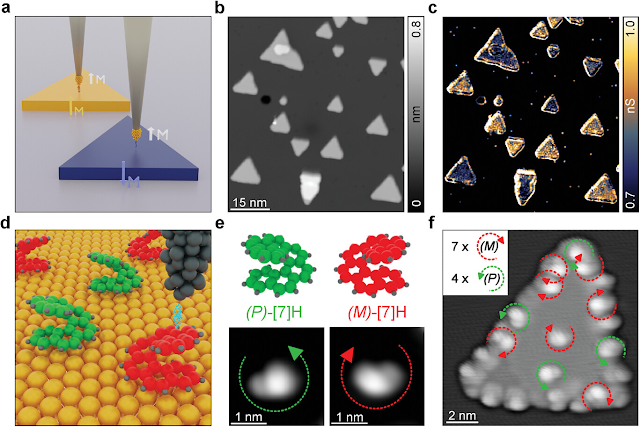
Magnetic effects at the origin of life? It's the spin that makes the difference

Amazing stuff!

"The so-called homochirality of life – the fact that all biomolecules in living organisms only ever occur in one of two mirror-image forms – has puzzled a number of scientific luminaries, from the discoverer of molecular chirality, Louis Pasteur, to William Thomson (Lord Kelvin) and Nobel Prize winner Pierre Curie. A conclusive explanation is still lacking, as both forms have, for instance, the same chemical stability and do not differ from each other in their physico-chemical properties. The hypothesis, however, that the interplay between electric and magnetic fields could explain the preference for one or the other mirror-image form of a molecule – so-called enantiomers – emerged early on. ..."

From the abstract:
"From the beginning of molecular theory, the interplay of chirality and magnetism has intrigued scientists. There is still the question if enantiospecific adsorption of chiral molecules occurs on magnetic surfaces. Enantiomer discrimination was conjectured to arise from chirality-induced spin separation within the molecules and exchange interaction with the substrate's magnetization. Here, it is shown that single helical aromatic hydrocarbons undergo enantioselective adsorption on ferromagnetic cobalt surfaces. Spin and chirality sensitive scanning tunneling microscopy reveals that molecules of opposite handedness prefer adsorption onto cobalt islands with opposite out-of-plane magnetization. As mobility ceases in the final chemisorbed state, it is concluded that enantioselection must occur in a physisorbed transient precursor state. State-of-the-art spin-resolved ab initio simulations support this scenario by refuting enantio-dependent chemisorption energies. These findings demonstrate that van der Waals interaction should also include spin-fluctuations which are crucial for molecular magnetochiral processes."

Magnetic effects at the origin of life? It's the spin that makes the difference

Magnetic effects at the origin of life? It's the spin that makes the difference (EMPA) Biomolecules such as amino acids and sugars occur in two mirror-image forms – in all living organisms, however, only one is ever found. Why this is the case is still unclear. Researchers at Empa and Forschungszentrum Jülich in Germany have now found evidence that the interplay between electric and magnetic fields could be at the origin of this phenomenon.


Fig. 1 Principles of spin-polarized and enantio-resolved STM


Sunday, February 12, 2023

Chiral logic gates create ultrafast data processors

Exciting research from Finland!

"Light-based optical logic gates operate much faster than their electronic counterparts and could be crucial for meeting the ever-growing demand for more efficient and ultrafast data processing and transfer. A new type of “optical chirality” logic gate developed by researchers at Aalto University works about a million times faster than existing technologies. ...
Optical chirality, which is defined by left-handed and right-handed circularly polarized light, shows great promise for fundamental research and applications such as quantum technologies, chiral nonlinear optics, sensing, imaging and the emerging field of “valleytronics”. ..."

From the abstract:
"The ever-growing demand for faster and more efficient data transfer and processing has brought optical computation strategies to the forefront of research in next-generation computing. Here, we report a universal computing approach with the chirality degree of freedom. By exploiting the crystal symmetry–enabled well-known chiral selection rules, we demonstrate the viability of the concept in bulk silica crystals and atomically thin semiconductors and create ultrafast (<100-fs) all-optical chirality logic gates (XNOR, NOR, AND, XOR, OR, and NAND) and a half adder. We also validate the unique advantages of chirality gates by realizing multiple gates with simultaneous operation in a single device and electrical control. Our first demonstrations of logic gates using chiral selection rules suggest that optical chirality could provide a powerful degree of freedom for future optical computing."

Chiral logic gates create ultrafast data processors – Physics World

Chirality logic gates (open access)


Fig. 1. Illustration of the chirality logic gate and its concept universality in the selection of materials and optical processes.


Tuesday, August 16, 2022

Helical x-ray light tells chiral molecules apart

Good news!

"A new optical technique that is very efficient at distinguishing between molecules that are mirror images of each other could have major applications in areas such as drug development, biochemistry and toxicology. Being able to differentiate between such molecules is critical in these areas because the different mirror-image forms, or enantiomers, often produce very different effects in the body. ..."

From the abstract:
"Chirality is a structural property of molecules lacking mirror symmetry that has strong implications in diverse fields, ranging from life sciences to materials science. Chirality-sensitive spectroscopic methods, such as circular dichroism, exhibit weak signal contributions on an achiral background. Helical dichroism, which is based on the orbital angular momentum (OAM) of light, offers a new approach to probe molecular chirality, but it has never been demonstrated on disordered samples. Furthermore, in the optical domain the challenge lies in the need to transfer the OAM of the photon to an electron that is localized on an ångström-size orbital. Here we overcome this challenge using hard X-rays with spiral Fresnel zone plates, which can induce an OAM. We present the helical dichroism spectra of a disordered powder sample of enantiopure salts of the molecular complex of [Fe(4,4′-diMebpy)3]2+ at the iron K edge (7.1 keV) with OAM-carrying beams. The asymmetry ratios for the helical dichroism spectra are within one to five percent for OAM beams with topological charges of one and three. These results open a new window into the studies of molecular chirality and its interaction with the OAM of light."

Helical light tells chiral molecules apart – Physics World


Wednesday, December 30, 2020

Left-Handed DNA Has a Biological Role Within a Dynamic Genetic Code

Very recommendable! Nice overview article! Left-handed DNA was only discovered in 1970 and appears for a long time was treated more like a curiosity.

"... Whether this bizarre form of DNA existed in cells and had any function, and what that might be, was hotly debated for nearly half a century. But research has recently confirmed its biological relevance. ...
So-called Z-DNA is now thought to play roles in cancer and autoimmune diseases, and last year scientists confirmed its link to three inherited neurological disorders. ..."

Left-Handed DNA Has a Biological Role Within a Dynamic Genetic Code | The Scientist Magazine®

Monday, October 12, 2020

The nature of chirality

Recommendable! Fascinating chirality! Nice overview of the riddles of chirality on earth and in the universe we live in! Understanding chirality is probably one of the fundamental issues of science.

"... the weak nuclear force only interacts with left-handed particles ... Why that might be is one of the big questions in physics ...
the preferred handedness in biomolecules ... right-handed sugars and left-handed amino acids ...
The spin of a right-chiral particle points along the particle’s direction of motion, while the spin of a left-chiral particle points opposite to the particle’s direction of motion. ...
A chiral twin has been found for every matter and antimatter particle in the Standard Model—with the exception of neutrinos. ..."

Nature through the looking glass | symmetry magazine Handedness—and the related concept of chirality—are double-sided ways of understanding how matter breaks symmetries.