Showing posts with label pain management. Show all posts

Thursday, November 13, 2025

AI is changing how we quantify and measure human pain. Really!

Amazing stuff! Good news! Who would have only a few years ago guessed that we will be able to measure human pain? One of the most subjective and individual expressions.

The article actually appears to be dated and it was only recently refreshed/updated: "This story has been updated to reflect the FDA’s decision on PainChek’s adult app in October 2025. " That is disappointing for MIT Technology Review! How lazy is that! May we call it a piece of junk journalism?

"Researchers around the world are racing to turn pain—medicine’s most subjective vital sign—into something a camera or sensor can score as reliably as blood pressure.

The push has already produced PainChek—a smartphone app that scans people's faces for tiny muscle movements and uses artificial intelligence to output a pain score—which has been cleared by regulators on three continents and has logged more than 10 million pain assessments. Other startups are beginning to make similar inroads. ..."

"Then, in January 2021, Orchard Care Homes began a trial of PainChek, a smartphone app that scans a resident’s face for microscopic muscle movements and uses artificial intelligence to output an expected pain score. Within weeks, the pilot unit saw fewer prescriptions and had calmer corridors. “We immediately saw the benefits: ease of use, accuracy, and identifying pain that wouldn’t have been spotted using the old scale,” Baird recalls.

In nursing homes, neonatal units, and ICU wards, researchers are racing to turn pain into something a camera or sensor can score as reliably as blood pressure.

This kind of technology-assisted diagnosis hints at a bigger trend. In nursing homes, neonatal units, and ICU wards, researchers are racing to turn pain—medicine’s most subjective vital sign—into something a camera or sensor can score as reliably as blood pressure. The push has already produced PainChek, which has been cleared by regulators on three continents and has logged more than 10 million pain assessments. Other startups are beginning to make similar inroads in care settings. ...

Research groups are pursuing two broad routes.
The first listens underneath the skin. Electrophysiologists strap electrode nets to volunteers and look for neural signatures that rise and fall with administered stimuli. A 2024 machine-learning study reported that one such algorithm could tell with over 80% accuracy, using a few minutes of resting-state EEG, which subjects experienced chronic pain and which were pain-free control participants.
Other researchers combine EEG with galvanic skin response and heart-rate variability, hoping a multisignal “pain fingerprint” will provide more robust measurements.

One example of this method is the PMD-200 patient monitor from Medasense, which uses AI-based tools to output pain scores. The device uses physiological patterns like heart rate, sweating, or peripheral temperature changes as the input and focuses on surgical patients, with the goal of helping anesthesiologists adjust doses during operations. ..."

Most related to AI seems to be following unsourced and undated excerpt:
"... The second path is behavioral. A grimace, a guarded posture, or a sharp intake of breath correlates with various levels of pain. Computer-vision teams have fed high-speed video of patients’ changing expressions into neural networks trained on the Face Action Coding System (FACS), which was introduced in the late 1970s with the goal of creating an objective and universal system to analyze such expressions—it’s the Rosetta stone of 44 facial micro-movements. In lab tests, those models can flag frames indicating pain from the data set with over 90% accuracy, edging close to the consistency of expert human assessors. Similar approaches mine posture and even sentence fragments in clinical notes, using natural-language processing, to spot phrases like “curling knees to chest” that often correlate with high pain. ..."

AI is changing how we quantify pain | MIT Technology Review

Monday, September 08, 2025

Powerful new oral painkiller ADRIANA shows promise in ending opioid dependence

Good news!

"Japanese scientists have developed ADRIANA, a non-opioid painkiller that could provide powerful relief without the dangers of addiction. With successful trials already completed, large U.S. studies are now underway, raising hopes for a safer future in pain treatment. ...

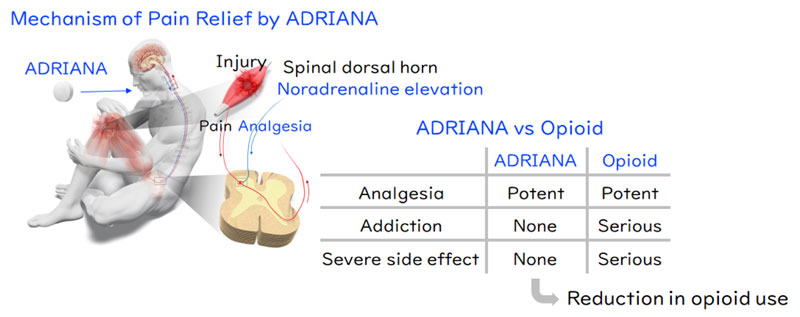
The research team was first inspired by substances that mimic noradrenaline, which is released in life-threatening situations andactivates α2A-adrenoceptors to suppress pain. However, these pose a high risk of cardiovascular instability. After observing noradrenaline levels and α2B-adrenoceptors, the team hypothesized that selectively blocking α2B-adrenoceptors could elevate noradrenaline levels, leading to activation of α2A-adrenoceptors and resulting in pain relief without causing cardiovascular instability.

To identify selective inhibitors of α2B-adrenoceptors and measure the activity of individual α2-adrenoceptor subtypes, the researchers employed a novel technology known as the TGFα shedding assay and conducted compound screening leading to their discovery of the world's first selective α2B-adrenoceptor antagonist.

After success in administering the compound to mice and conducting non-clinical studies to assess its safety, physician-led clinical trials were conducted at Kyoto University Hospital. Both the Phase I trial in healthy volunteers and the Phase II trial in patients with postoperative pain following lung cancer surgery yielded highly promising results. ..."

From the significance and abstract:
"Significance
Control of pain is a global social health issue because severe pain strongly affects patients’ quality of life. Although opioids are the strongest painkillers, continuous use of opioids often leads to addiction with numerous adverse effects, including respiratory depression, constipation, and hyperalgesia.
An emerging alternative to opioid-based analgesics is dexmedetomidine, an α2-adrenergic receptor agonist. We found that administration of an α2B-specific antagonist, adrenergic inducer of analgesia (ADRIANA), induced noradrenaline release in the spinal dorsal horn and suppressed pain through an α2A-dependent pathway without causing hemodynamic instability. ADRIANA did not cause addiction or any behavioral change in mice and monkeys. A phase I/II clinical trial of the ADRIANA oral tablet is underway to test its effectiveness in reducing postoperative pain.

Abstract
Noradrenaline is a major monoaminergic neurotransmitter involved in pain modulation through an α2A-adrenergic receptor. Hence, α2-adrenergic agonists such as clonidine and dexmedetomidine exhibit analgesic and opioid-sparing effects. However, their use is restricted to hospital settings due to potential risks of acute hypertension/hypotension and bradycardia.
Here, we report that (Z)-1-(3-ethyl-5-fluorobenzo[d] thiazol-2(3H)-ylidene)propan-2-one [adrenergic inducer of analgesia (ADRIANA)], a newly identified α2B subtype-specific antagonist, specifically promotes noradrenaline release in the murine spinal dorsal horn and produces analgesic effects by stimulating the α2A-dependent pain inhibitory pathway.
Orally administered ADRIANA has potent analgesic effects in several nociceptive pain models of mice and nonhuman primates without cardiovascular effects.
Mice with genetic loss of the α2B adrenoceptor showed normal responses to mechanical pain, but the analgesic effect of ADRIANA was not significantly detected.
These findings reveal that the α2B adrenoceptor is a promising target for nonopioid analgesics through the activation of the α2A-dependent descending pathway."


A new alternative to opioids (original news release)


Credits: Global Health NOW: Ebola Outbreak Tests Shaky Global Health Ground; Burkina Faso’s Gene-Drive Reversal; and Cuts Undermine Quest for Autism’s Cause


Mechanism of pain relief by ADRIANA


Wednesday, April 23, 2025

Neuron groups in mice spinal cord found responsible for encoding different types of pain

Amazing stuff!

"... Researchers ... recently carried out a study aimed at better understanding how networks of nerve cells in the spinal cord of adult mice contribute to the encoding of pain originating from exposure to heat and mechanical pain, which is caused by applied physical forces (e.g., pinches, cuts, etc.). ...

Their findings ... suggest that in mice, heat-related and mechanical pain are encoded by different neural ensembles (i.e., groups of neurons) in the spinal cord. ..."

From the abstract:
"Acute pain is an unpleasant experience caused by noxious stimuli. How the spinal neural circuits attribute differences in quality of noxious information remains unknown.
By means of genetic capturing, activity manipulation and single-cell RNA sequencing, we identified distinct neural ensembles in the adult mouse spinal cord encoding mechanical and heat pain.
Reactivation or silencing of these ensembles potentiated or stopped, respectively, paw shaking, lifting and licking within but not across the stimuli modalities.
Within ensembles, polymodal Gal+ inhibitory neurons with monosynaptic contacts to A-fiber sensory neurons gated pain transmission independent of modality.
Peripheral nerve injury led to inferred microglia-driven inflammation and an ensemble transition with decreased recruitment of Gal+ inhibitory neurons and increased excitatory drive.
Forced activation of Gal+ neurons reversed hypersensitivity associated with neuropathy.
Our results reveal the existence of a spinal representation that forms the neural basis of the discriminative and defensive qualities of acute pain, and these neurons are under the control of a shared feed-forward inhibition."

Neuron groups in mice spinal cord found responsible for encoding different types of pain


Fig. 1: Capturing ensembles encoding mechanical and heat pain in the spinal dorsal horn.


Wednesday, April 16, 2025

Inflammation May Be the Link Between Chronic Pain, number of pain sites and Depression

This seems to be very plausible, if not plain obvious!


"Chronic pain—or pain that lasts at least three months—is closely intertwined with depression. Individuals living with pain’s persistent symptoms may be up to four times more likely to experience depression, research shows.

Almost 30% of people worldwide suffer from a chronic pain condition such as lower back pain and migraines, and one in three of these patients also report co-existing pain conditions.

Now, a new study published in Science Advances shows that a person’s risk of depression increases alongside the number of places in the body in which they experience pain. Furthermore, inflammatory markers such as C-reactive protein (a protein produced by the liver in response to inflammation) help explain the association between pain and depression.

This finding suggests that the mechanisms underlying chronic pain and depression may be driven by systemic inflammation, the researchers say. ..."

From the abstract:
"Chronic pain conditions frequently coexist and share common genetic vulnerabilities. Despite evidence showing associations between pain and depression, the additive effect of co-occurring pain conditions on depression risk and the underlying mechanisms remain unclear.
Leveraging data from 431,038 UK Biobank participants with 14-year follow-up, we found a significantly increased risk of depression incidence in individuals reporting pain, irrespective of body site or duration (acute or chronic), compared with pain-free individuals.
The depression risk increased with the number of co-occurring pain sites. Mendelian randomization supported potential causal inference.
We constructed a composite pain score by combining individual effects of acute or chronic pain conditions across eight body sites in a weighted manner.
We found that depression risks increased monotonically in parallel with composite pain scores.
Moreover, some inflammatory markers, including C-reactive protein, partially mediated the association between composite pain scores and depression risk. Considering the high prevalence of comorbid depression and pain, pain screening may help identify high-risk individuals for depression."

Inflammation May Be the Link Between Chronic Pain and Depression < Yale School of Medicine


Fig. 1. Overview of study workflow.


Fig. 2. Prospective associations of acute or chronic pain across eight body sites and incidence of depression.


Saturday, April 05, 2025

Immune cells have unexpected role in fighting pain, but only in female mice

Amazing stuff!

A case of sex discrimination in nature! I will call my attorney!😊 Just kidding!

"Unlike the combative immune cells that protect us from pathogens, regulatory T cells (Tregs) are nurturers. They salve inflammation, promote healing of injured tissue, and rein in immune attacks to curb self-inflicted damage.
Now, a study of mice ... suggests some Tregs also act on nerve cells to quell a specific type of pain—but only in females. Why only female rodents seem to benefit remains unclear, but researchers hope they might someday enlist these Tregs to address pain conditions, many of which disproportionately affect women. ..."

From the editor's summary and abstract:
"Editor’s summary
Regulatory T (Treg) cells play a well-defined role in restraining inflammatory immune responses. Midavaine et al. found that depleting Treg cells specifically localized to the meninges of the central nervous system (mTreg cells) increased the responses of female, but not male, mice to mechanical pain stimuli.
These mTreg cells were a source of enkephalin, an endogenous opioid peptide, within the cerebrospinal fluid.
In the context of nerve injury, the enkephalin associated with mTreg cells could decrease pain sensing by activating the δ-opioid receptor expressed by a subset of nociceptive neurons involved in mechanical pain sensing.
Injecting the cytokine interleukin-2 (IL-2) into the spinal fluid increased mTreg cell numbers and decreased mechanical pain sensing in female mice after nerve injury. The analgesic effect of IL-2 in female mice could be prevented by blocking female sex hormones. ...

Abstract
T cells have emerged as orchestrators of pain amplification, but the mechanism by which T cells control pain processing is unresolved.
We found that regulatory T cells (Treg cells) could inhibit nociception through a mechanism that was not dependent on their ability to regulate immune activation and tissue repair.
Site-specific depletion or expansion of meningeal Treg cells (mTreg cells) in mice led to female-specific and sex hormone–dependent modulation of mechanical sensitivity. Specifically, mTreg cells produced the endogenous opioid enkephalin that exerted an antinociceptive action through the delta opioid receptor expressed by MrgprD+ sensory neurons.
Although enkephalin restrains nociceptive processing, it was dispensable for Treg cell–mediated immunosuppression.
Thus, our findings uncovered a sexually dimorphic immunological circuit that restrains nociception, establishing Treg cells as sentinels of pain homeostasis."

Immune cells have unexpected role in fighting pain | Science | AAAS "Inflammation-suppressing regulatory T cells reduce pain in female mice by targeting nerve cells"

[I was unable to find an original news release for this discovery!]


Regulatory T cells (pink) in membranes near the mouse spinal cord send pain-suppressing signals to nerves.


Tuesday, November 19, 2024

Pain Refugees: Collateral Damage of the War on Drugs

Food for thought! This is not an easy issue to deal with, i.e. individuals with chronic pain and the risk of becoming addicts.

When will we finally have better and lasting pain treatments available than frequently popping pain killer drugs!

As usual, healthy skepticism regarding single year comparisons is advised (in this case 1992).

"For much of the 21st century, public health officials and policymakers have blamed doctors for overprescribing opioids and causing the overdose crisis. In response, the Centers for Disease Control and Prevention issued pain management guidelines aimed at reducing opioid prescriptions. Most states have codified them into law.

Federal and local drug task forces have arrested doctors whom they accuse of overprescribing opioids. This has led to a situation where many physicians either undertreat pain or choose to abandon their long-term pain patients. As a result, opioid prescribing has dropped below 1992 levels, while overdose deaths among nonmedical users have skyrocketed.

This crackdown has also created a population of “pain refugees”—chronic pain patients who have lost or were abandoned by their doctor and are left searching for a doctor willing to treat them. Many, out of desperation, turn to the black market for relief, while others resort to suicide. ..."

Pain Refugees: Collateral Damage of the War on Drugs | Cato Institute

Wednesday, May 03, 2023

FDA approves novel device measuring pain during surgery

Amazing stuff!

"... Medasense Biometrics ... developed the groundbreaking NOL [Nociception Level] device for monitoring nociception (the physiological response to pain).
NOL’s unique multi-parametric sensor platform and advanced AI algorithms convert complicated data into a patient’s personal “signature of pain.” ..."

FDA approves novel device measuring pain during surgery - ISRAEL21c Clearance paves way for commercialization in US of world’s only system to gauge patients’ pain when they cannot communicate.

A new device in the surgery room!


Saturday, March 20, 2021

CRISPR-based gene therapy dampens chronic pain in mice

Good news! Why not eliminate pain genes or sneeze genes etc.? Or convert pain associated genes into laugh genes? 😄

Remember the animals (mice) that suffered for this progress to be achieved (I blogged here, here about it)!

"A gene-silencing technique based on CRISPR can relieve pain in mice, according to a study. ... it is a promising approach for squelching chronic pain that lasts for months or years. ...
The new version of CRISPR doesn’t edit genes directly — it stops them from being expressed — and so shouldn’t cause permanent changes, although it’s unclear how long its effects last for. ...
Although there are many types of ion channel, studies have suggested that a sodium channel called Nav1.7 could play a central part in chronic pain. When people have mutations in the gene coding for this channel, they either experience extreme, constant pain, or can’t feel any pain at all. ...
[researchers] thought they might be able to stop pain signals travelling to the brain by preventing neurons from producing Nav1.7. Chemists have been trying to block Nav1.7 with small-molecule drugs and antibodies, but have struggled because these therapies also interact with structurally similar sodium channels in the body, causing side effects including numbness and poor coordination. ...
The researchers attached to the modified Cas9 a second, ‘repressor’ protein that stops the Nav1.7 gene from being expressed. The researchers packaged this system in a small, inactive virus called an adeno-associated virus that could shuttle it into cells.
They gave mice a spinal injection of the gene-silencing therapy, then tried to induce chronic pain by injecting the animals with chemotherapy drugs or inflammatory agents. ...
The pain relief seemed to last, in some cases, for as long as 44 weeks after the injection. ..."

"... In particular, a hereditary loss-of-function mutation in NaV1.7, a sodium channel protein associated with signaling in nociceptive sensory afferents, leads to insensitivity to pain without other neurodevelopmental alterations. However, the high sequence and structural similarity between NaV subtypes has frustrated efforts to develop selective inhibitors. ..."

CRISPR-based gene therapy dampens pain in mice Targeted approach could lead to an opioid-free way of treating chronic pain.

Here is the link to the underlying research paper: