Showing posts with label Allen Institute. Show all posts

Tuesday, April 21, 2026

Designing better weapons to fight prostate cancer based on distinct tissue niches

Good news! Cancer is history (soon)!

"... A new study in the journal Immunity reveals that the prostate has its own defense force and unlocks key insights into how this army of cells, known as tissue-resident memory CD8 T cells, or Trm cells, works.

“We found that different types of T cells live in different areas, or neighborhoods, within the tissue, and where they live determines how they behave,” ..."

From the highlights and abstract:
"Highlights
• Long-lived prostate Trm cells protect against reinfection
• The prostate Trm population is heterogeneous in mice and humans
• IL-15, IL-7, and TGFβ differentially regulate prostate Trm cell subsets
• Distinct prostate cytokine and chemokine niches define Trm cell heterogeneity

Summary
The prostate is an important exocrine organ, a barrier tissue of the male reproductive system, and a common site of malignancy, yet CD8+ T cells in the prostate remain largely uncharacterized.
Here, we show that a protective, heterogeneous pool of long-lived, tissue-resident memory CD8+ T (Trm) cells forms in the prostate following acute infection in mice.
Characterization of prostate Trm cell differentiation over time, combined with functional interrogation of TGFβ, IL-7, and IL-15 signaling, revealed niche-dependent phenotypic and functional diversity arising from distinct prostate stromal and glandular epithelial niches in both mice and humans. 
For instance, the Trm-promoting cytokines IL-15 and TGFβ were highest in the prostate epithelium, where CD8+ T cells were most persistent, cytotoxic, and enriched for the Trm molecular program.
In sum, we provide a spatial framework for prostate Trm cell differentiation, charting the discrete tissue regions that influence T cell fate through dynamic regulation of localized signals."

Designing better weapons to fight prostate cancer - Allen Institute "New study unlocks key insights that could help develop next-generation immunotherapies"


Graphical abstract


Thursday, November 20, 2025

Scientists build most detailed 'digital mouse brain' on supercomputer at the Allen Institute

Good news!

How age affects vaccine responses and how to make them better

Good news!

"... In the largest study of its kind, published in Nature, scientists discovered that our T cells—key players in coordinating immune responses—undergo profound and specific changes as we age. These changes, far from being random or a byproduct of chronic disease and inflammation, are a fundamental feature of healthy aging and will happen to all of us as we get older. ..."

From the abstract:
"The generation and maintenance of immunity is a dynamic process that is dependent on age Here, to better understand its progression, we profiled peripheral immunity in more than 300 healthy adults (25 to 90 years of age) using single-cell RNA sequencing, proteomics and flow cytometry, following 96 adults longitudinally across 2 years with seasonal influenza vaccination.
The resulting resource generated a single-cell RNA-sequencing dataset of more than 16 million peripheral blood mononuclear cells with 71 immune cell subsets from our Human Immune Health Atlas and enabled us to interrogate how immune cell composition and states shift with age, chronic viral infection and vaccination. From these data, we demonstrate robust, non-linear transcriptional reprogramming in T cell subsets with age that is not driven by systemic inflammation or chronic cytomegalovirus infection.
This age-related reprogramming led to a functional T helper 2 (TH2) cell bias in memory T cells that is linked to dysregulated B cell responses against highly boosted antigens in influenza vaccines.
Collectively, this study reveals unique features of the immune ageing process that occur prior to advanced age and provides novel targets for age-related immune modulation. We provide interactive tools for exploring this extensive human immune health resource at https://apps.allenimmunology.org/aifi/insights/dynamics-imm-health-age/."

How age affects vaccine responses and how to make them better - Allen Institute "Age-related shifts in T cells weaken vaccine response in older adults, but new findings pave the way for next generation of vaccines"


Fig. 1: Maintenance of age-related changes in the healthy human immune cell transcriptome over time.


Scientists unveil the world's most comprehensive AI-powered tool for neuroscience: Brain Knowledge Platform

Good news! Very impressive! Just what we have been waiting for! 😊 What's next? This is only the beginning!

"... This first-of-its-kind database and research tool has launched with data from over 34 million brain cells. It compiles and standardizes the world’s neuroscience data into a common format and language allowing deep, seamless collaboration between international teams all united in the common goal of finding cures for brain disease.

The Allen Institute partnered with technology leaders like Amazon Web Services, which built the core computing infrastructure powering Brain Knowledge Platform, and Google to develop AI models for neuroscience. ..."

Scientists unveil the world's most comprehensive AI-powered tool for neuroscience: Brain Knowledge Platform - Allen Institute "Massive, first-of-its-kind data resource aims to accelerate medical breakthroughs in brain diseases like Alzheimer’s and Parkinson’s"


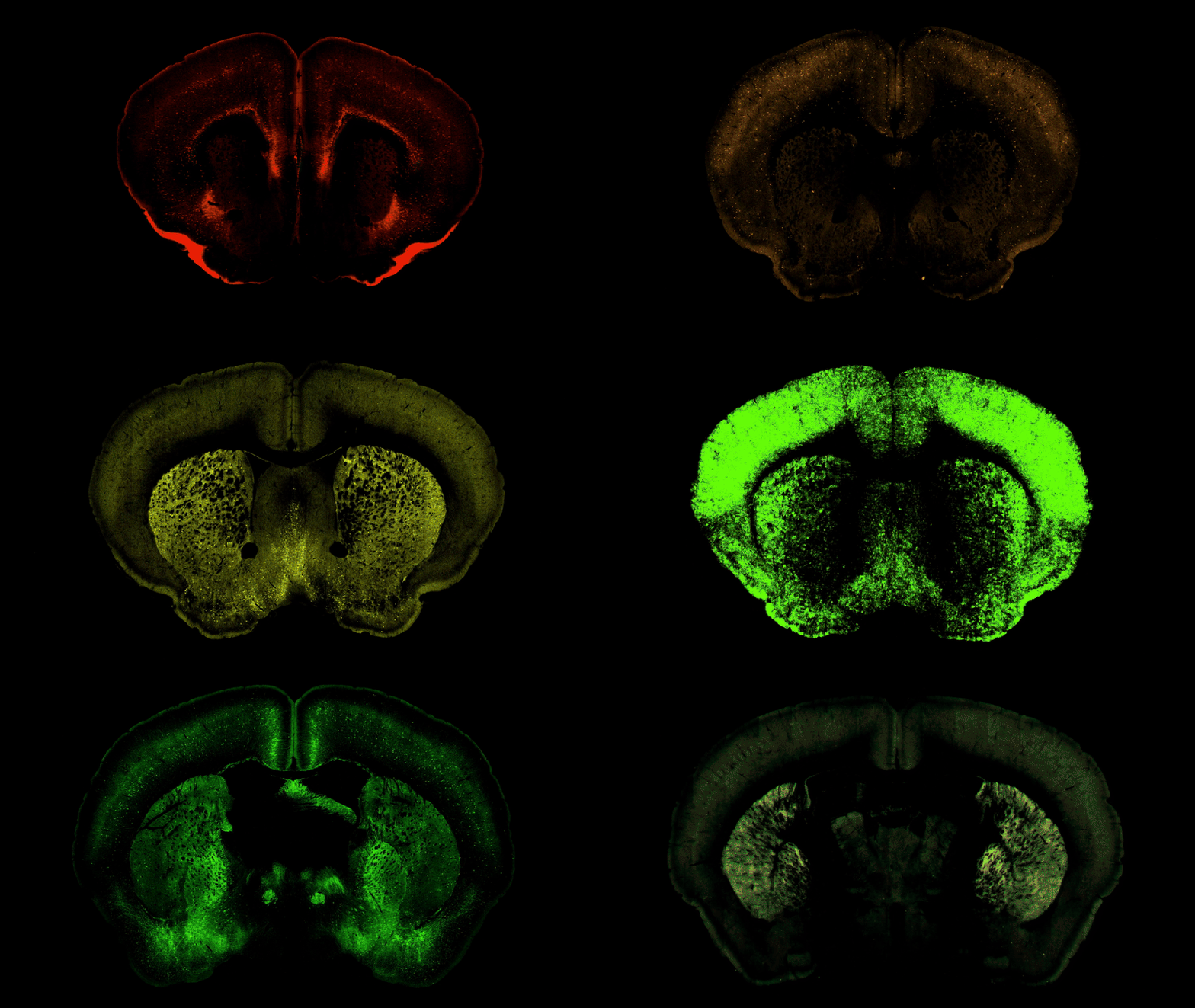
Montage of mouse brains from the Allen Institute’s Genetic Tools Atlas.


Wednesday, October 08, 2025

Data-driven fine-grained region discovery in the mouse brain with transformers

Amazing stuff!

"Unleash artificial intelligence on an atlas that catalogs all cell types in a mouse brain, and—voilà! – you get one of the most granular and complex data-driven brain visualizations of any animal to date: a technicolor dream highlighting 1300 brain regions and subregions, including many that were previously uncharted.

“It’s like going from a map showing only continents and countries to one showing states and cities,” ... She and her colleagues developed a new AI tool called CellTransformer to make sense of vast spatial transcriptomics datasets that record where millions of cells sit and which genes they express. Traditional methods for mapping the brain’s cellular geography rely on hand-drawn, or annotated, atlases; CellTransformer’s algorithms infer from transcription patterns how cells are organized into functional neighborhoods.

When the researchers applied CellTransformer to the Allen Brain Cell Atlas, which encompasses nearly four million cells, it recapitulated known structures in the mouse brain such as the hippocampus but also uncovered hundreds of previously unannotated microregions, the team reported. ..."

"... CellTransformer, a powerful AI model that can automatically identify important subregions of the brain from massive spatial transcriptomics datasets. Spatial transcriptomics reveals where certain brain cell types are positioned in the brain but does not reveal regions of the brain based on their composition. Now, CellTransformer allows scientists to define brain regions and subdivisions based on calculations of shared cellular neighborhoods, much like sketching a city’s borders based on the types of buildings within it. ..."

From the abstract:
"Spatial transcriptomics offers unique opportunities to define the spatial organization of tissues and organs, such as the mouse brain. We address a key bottleneck in the analysis of organ-scale spatial transcriptomic data by establishing a workflow for self-supervised spatial domain detection that is scalable to multimillion-cell datasets.
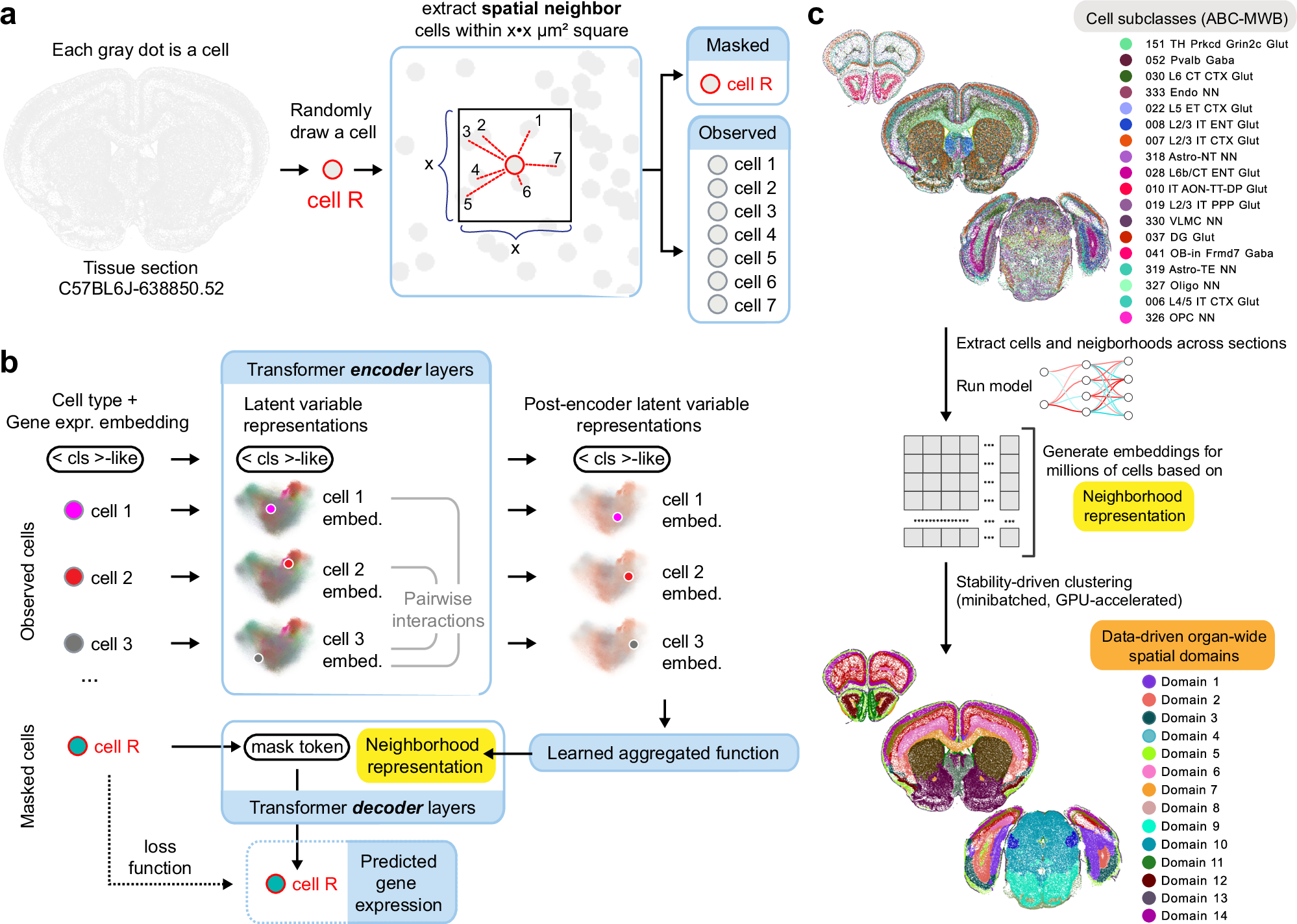
This workflow uses a self-supervised framework for learning latent representations of tissue spatial domains or niches. We use an encoder-decoder architecture, which we named CellTransformer, to hierarchically learn higher-order tissue features from lower-level cellular and molecular statistical patterns.
Coupling our representation learning workflow with minibatched GPU-accelerated clustering algorithms allows us to scale to multi-million cell MERFISH datasets where other methods cannot.
CellTransformer is effective at integrating cells across tissue sections, identifying domains highly similar to ones in existing ontologies such as Allen Mouse Brain Common Coordinate Framework (CCF) while allowing discovery of hundreds of uncataloged areas with minimal loss of domain spatial coherence. CellTransformer domains recapitulate previous neuroanatomical studies of areas in the subiculum and superior colliculus and characterize putatively uncataloged subregions in subcortical areas, which currently lack subregion annotation.
CellTransformer is also capable of domain discovery in whole-brain Slide-seqV2 datasets.
Our workflows enable complex multi-animal analyses, achieving nearly perfect consistency of up to 100 spatial domains in a dataset of four individual mice with nine million cells across more than 200 tissue sections.
CellTransformer advances the state of the art for spatial transcriptomics by providing a performant solution for the detection of fine-grained tissue domains from spatial transcriptomics data."

ScienceAdviser


Scientists create ChatGPT-like AI model for neuroscience to build detailed mouse brain map (original news release) "Artificial intelligence reveals undiscovered regions of the brain from large-scale spatial transcriptomics data"


Fig. 1: Overall training and architectural scheme for CellTransformer.


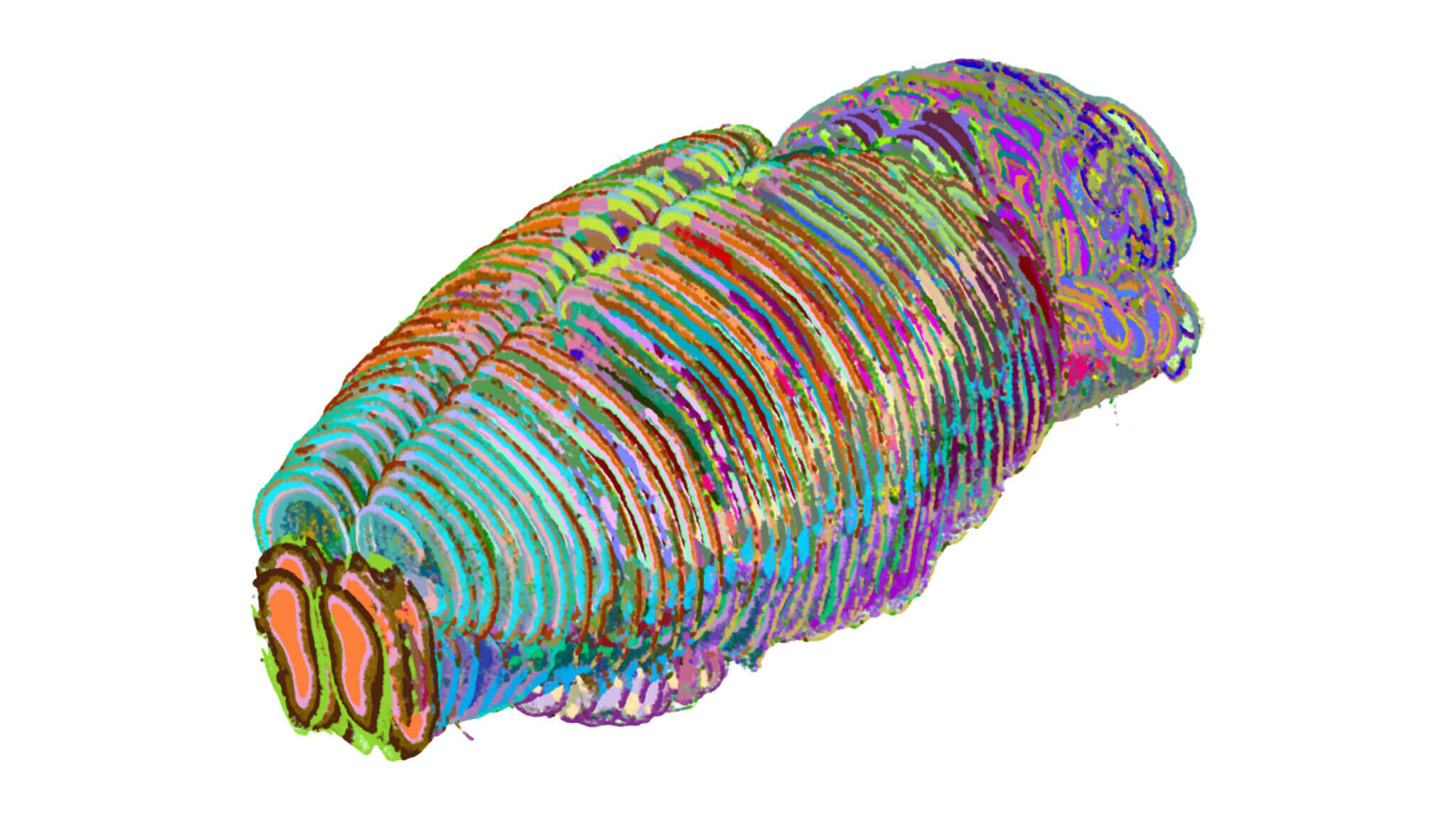
Three-dimensional representation of regions/subregions in mouse brain map created by CellTransformer. Fewer regions are generated for visual clarity and simplicity.


Wednesday, April 09, 2025

AI2 OLMoTrace points model output back to training data

Good news! Does this new model also address hallucination? 😊

Always keep in mind: When was the training/last training update cutoff date? Or fast do these large language/multi-modal models get outdated?

"For years it’s been an open question — how much is a language model learning and synthesizing information, and how much is it just memorizing and reciting? 

Introducing OLMoTrace, a new feature in the Ai2 Playground that begins to shed some light.

OLMoTrace connects phrases or even whole sentences in the language model’s output back to verbatim matches in its training data. It does this by searching billions of documents and trillions of tokens in real time and highlighting where it finds compelling matches. ...

Through OLMoTrace, you can gain insights into why the model generates certain sequences of words. ..."

OLMoTrace points model output back to training data

Tuesday, February 18, 2025

New research reveals how location influences how our immune system fights disease

Amazing stuff!

"... In a new study ... researchers reveal how cells known as tissue-resident memory CD8 T cells, play unique and specialized roles based on where they are located within the small intestine. Tissue-resident memory cells provide a local first line of defense against re-infection and call for “backup” from other immune cells and are also critical for maintaining peace in a tissue exposed to many outside pathogens.

This discovery sheds light on how tissue-resident memory CD8 T cells adapt to their location in the body, ensuring a coordinated and effective immune response and how microenvironments and cellular interactions shape this location-specific adaptation. ..."

From the abstract:
"Tissue-resident memory CD8 T (TRM) cells provide protection from infection at barrier sites. In the small intestine, TRM cells are found in at least two distinct subpopulations:
one with higher expression of effector molecules and 
another with greater memory potential.
However, the origins of this diversity remain unknown.
Here we proposed that distinct tissue niches drive the phenotypic heterogeneity of TRM cells.
To test this, we leveraged spatial transcriptomics of human samples, a mouse model of acute systemic viral infection and a newly established strategy for pooled optically encoded gene perturbations to profile the locations, interactions and transcriptomes of pathogen-specific TRM cell differentiation at single-transcript resolution.
We developed computational approaches to capture cellular locations along three anatomical axes of the small intestine and to visualize the spatiotemporal distribution of cell types and gene expression.
Our study reveals that the regionalized signalling of the intestinal architecture supports two distinct TRM cell states:
differentiated TRM cells and progenitor-like TRM cells, located in the upper villus and lower villus, respectively.
This diversity is mediated by distinct ligand–receptor activities, cytokine gradients and specialized cellular contacts. Blocking TGFβ or CXCL9 and CXCL10 sensing by antigen-specific CD8 T cells revealed a model consistent with anatomically delineated, early fate specification. Ultimately, our framework for the study of tissue immune networks reveals that T cell location and functional state are fundamentally intertwined."

New research reveals how location influences how our immune system fights disease - Allen Institute "Findings could pave the way for improved immunotherapies and vaccines."


Fig. 1: Characterization of the spatial and transcriptional state of antigen-specific CD8 T cells in response to acute viral infection in the mouse SI with spatial transcriptomics.


Fig. 2: Intestinal regionalization along key axes informs TRM cell diversity in the mouse intestine.


Tuesday, October 22, 2024

Allen Institute for Immunology unveils landmark Human Immune Health Atlas

Amazing stuff! The news is about a month old, but came to my attention only today!

Are you feeling healthier already? 😊

"... The atlas provides detailed profiles of 71 distinct immune cell subsets, based on the analysis of 1.8 million cells taken from over 100 healthy volunteers [aged 11-65]. This high-resolution view addresses a critical need in immunology research for a resource that accurately reflects the immune system’s complexity and diversity.  ..."

Allen Institute for Immunology unveils landmark Human Immune Health Atlas - Allen Institute "Comprehensive dataset maps the landscape of healthy immune cells across the human lifespan"

This visualization, called a UMAP, shows human immune cells from the dataset organized and color-coded based on cell type determined by their gene expression.


Wednesday, April 10, 2024

Unraveling the Complexity of the Mammalian Brain

Impressive visuals! Immerse yourself into the mouse brain to your hearts delight!

"... Over six years, hundreds of scientists across North America built the atlas and discovered over 5,000 brain cell types. ..."

Unraveling the Complexity of the Mammalian Brain - Allen Institute Mapping the whole mouse brain.


Sunday, February 11, 2024

Aging is evolutionary, according to a new molecular ‘clock’ that predicts age in all mammals

Very recommendable! Amazing stuff! This research is dated from August 2023.

"According to a pair of new studies ... aging is evolutionary ... suggest that we evolved to age. ...
a “universal pan-mammalian epigenetic clock,” which is an assay that uses chemical changes in an animal’s DNA to predict that animal’s age. ...
The fact that this single clock works in mammals ranging from humans to mice to bowhead whales tells us something about why we age ...
“These mammalian species that we studied were separated by over 200 million years of evolution, and we have found one measurement that predicts their age,” ... In evolutionary terms, traits that are conserved are those that persist despite other changes evolution enacts over time. Things like hair or fur, warm-bloodedness, having four limbs — these are all conserved in mammals. And so, it turns out, is aging. ...
The molecular clock works by tracking age-related changes to our DNA known as methylation. This modification is a tiny chemical addition to one of the letters of DNA’s backbone. DNA methylation serves a variety of biological purposes, but for the case of the molecular clock, what’s important is that it changes with age. Some regions of our genome increase their methylation as we get older, others decrease. ...
In 2011, ... discovered that age-related changes in DNA methylation are consistent enough to accurately predict humans’ age based on a saliva sample. Two years later ... demonstrated the same thing in all human tissue types, including blood and organ biopsies. ...
over the past seven years ... has studied molecular aging in humans, capybaras, ring-tailed lemurs, horses and sea lions. He has collaborators from six continents. ... Ultimately, he ended up collecting samples from 348 different species of mammals. The pan-mammalian clock constructed  ... uses samples from 185 of those species. In another study ... showed that they can use DNA methylation patterns as a proxy for evolution. Modern evolutionary biologists create evolutionary trees of different species by comparing their DNA sequences. It turns out that DNA methylation patterns work just as well — the family trees ...  constructed matched those traditionally made using DNA alone. ..."

Note: Unfortunately, the article below does not seem to provide links to the two new research papers featured in this article!

Aging is evolutionary, according to a new molecular ‘clock’ that predicts age in all mammals - Allen Institute The first-of-its-kind clock could also be used to test rejuvenation therapies

A new biological clock ... predicts the age of hundreds of species of mammals. In this figure, mammal species are arranged by their maximum lifespan (black dashed line), from lowest (the cinerus shrew) to highest (bowhead whale). The red and purple lines show the accuracy of the molecular clock per species.


Monday, October 10, 2022

Mapping the whole human brain: Allen Institute to lead global collaboration

Good news! Very exciting! Exploration and discovery at its best! The human brain is still largely terra incognita!

Thanks to the generosity and philanthropy of the co-founder of Microsoft Paul Allen!

"Scientists at the Allen Institute are launching the brain equivalent of the Human Genome Project, leading a new global collaboration to map the approximately 200 billion cells in the human brain by their type and function.  ...
The collaboration is funded by the National Institutes of Health’s Brain Research Through Advancing Innovative Neurotechnologies (BRAIN) Initiative as part of The BRAIN Initiative Cell Atlas Network, or BICAN, and will also build detailed atlases of macaque and marmoset brains. ... the human and primate atlas grant project also includes sub-projects led by researchers from 17 other institutions in the U.S., Europe and Japan. ..."

Mapping the whole human brain: Allen Institute to lead global collaboration NIH BRAIN Initiative to fund primate brain atlases, maps of developing mouse brain, coordination and knowledge sharing, and brain function research

Human brain cell type diversity in the primary motor cortex, the region of the brain that controls movement. These data were generated using a technique known as single-cell transcriptomics to capture the full suite of genes switched on in each brain cell.


Thursday, November 19, 2020

Projects launch to map the nucleus, the information center of our cells

Good news! Seems to be a very ambitious undertaking: multi-scale and 4D analysis, comprehensive multi-modal data integration etc.

Projects launch to map the nucleus, the information center of our cells Through the NIH-funded 4D Nucleome program, new efforts are underway to model the nucleus in human stem cells and capture 3D genome organization in mouse and human brain cells

Wednesday, January 01, 2020

Neuropeptides reveal a new kind of brain cell diversity

Recommendable!

"These data revealed that there are substantially more unique types of brain cells in a single mouse or human brain than previously thought — upwards of 100 or more in just one or two regions of the cortex. ... the variation among synapses, the connection points between neurons. ... a possible connection between brain cell diversity and synapse diversity: a large class of small proteins known as neuropeptides. You’ve probably heard of the most famous neuropeptide, endorphins, but there are close to 100 more kinds. ... The genes that code for neuropeptides were not only switched on, or expressed, in pretty much every individual mouse neuron, their expression was incredibly diverse. Each type of neuron in the dataset switches on a different collection of neuropeptide genes. That diversity isn’t the case for other kinds of neuro-signaling molecules, like neurotransmitters. ... Neuropeptides could also prove a good target for new psychiatric therapies, ... Most modern psychiatric drugs target other types of brain signaling molecules, such as dopamine and serotonin, which are much more ubiquitous across the brain. Targeting a single neuropeptide could instead limit a therapy’s effects to a smaller set of neurons, or even a specific brain cell type, which might mean fewer side effects. "


These small proteins reveal a new kind of brain diversity: Endorphins and other neuropeptides vary widely between brain cell types and point to new possible targets for psychiatric drugs, study finds

Why Drugs that Work on Mice Don't Work on Humans

Recommendable!

"Neuropsychiatric drug development is “in the midst of a crisis”. This is because, for every 100 neuropsychiatric drugs tested in clinical trials for ailments from autism and depression to Alzheimer’s, only nine end up as approved medications, one of the lowest approval rates across disease categories. ... To understand why this is the case, a team of neuroscientists from the Allen Institute for Brain Science in Seattle used a new procedure, known as a single-nucleus RNA-sequencing analysis, to study the medial temporal gyrus, the area of the brain involved in language processing and deductive reasoning, in both humans and mice ... the researchers worked through almost 16,000 cells to identify 75 different cell types. Although the data set they had from mice matched their human findings almost completely, they found that ... genes that were switched on or off inside those cells, stark differences between human and mouse brains arose ... In particular, the research demonstrated large differences in neurotransmitter receptors between humans and mice, an area that has been very active in drug discovery. Although both species have these receptors, they’re expressed via different types of cell. This means that, although these neurotransmitters exist in both humans and mice, they have very different functions, putting serotonin-based drugs such as antidepressants including Prozac under even more scrutiny ... Other significant differences between mice and human brains were found in genes coding for ion channels, which interconnect neurons by controlling the electrical potential across membranes ... Also an area that has undergone a lot of study for drug discovery for ailments including neuropathic pain and cardiovascular problems"


Why Drugs that Work on Mice Don't Work on Humans | Drug Discovery And Development: Mice are used as the frontline for drug testing for brain disorders. Why? Their brains are supposed to have much of the same functioning as ours. Moreover, | Drug Discovery And Development

Monday, December 30, 2019

A new high-resolution map of how the brain is wired

Amazing stuff! This could well revolutionize our understanding of the brain! The speed of progress in brain research in recent years has been nothing but breathtaking! This is about a major expansion of the Allen Mouse Brain Connectivity Atlas.

"Their study, which was published today in the journal Nature, traced thousands of connections between brain areas and lays the groundwork for researchers to better understand how brain circuitry might go awry in diseases and disorders such as Alzheimer’s disease and schizophrenia.

The publicly available dataset resulting from approximately a thousand new experiments represents the most detailed map of connections in a mammalian brain to date, tracing neural wiring within and between the thalamus and cortex ... The newly acquired dataset captures connections between neurons in the thalamus and the cortex, using special labels to light up five different kinds of neurons that inhabit different layers of the cortex. The mouse brain has approximately 85 million neurons that make roughly 100 billion connections, or synapses."

A new high-resolution map of how the brain is wired Systematic tracing of how neurons connect reveals mammalian brain’s ‘org chart’ of possible information flow