Showing posts with label computer. Show all posts

Monday, April 13, 2026

The largest orbital compute cluster of 10 satellites is open for business

Good news!

"For all the hype about data centers in space, there just aren’t very many GPUs up there. As that starts to change, the near-term business of orbital compute is starting to take shape.

The largest compute cluster currently in orbit was launched by Canada’s Kepler Communications in January, and boasts about 40 Nvidia Orin edge processors onboard 10 operational satellites, all linked together by laser communications links.

The company now has 18 customers, and announced its newest on Monday — Sophia Space, a startup that will test the software for its unique orbital computer onboard Kepler’s constellation. ...

In the new partnership, Sophia will upload its proprietary operating system to one of Kepler’s satellites and attempt to launch and configure it across six GPUs on two spacecraft. ..."

The largest orbital compute cluster is open for business | TechCrunch

Saturday, November 08, 2025

Simple mix of enzymes shows how information and computing arises out of chemical chaos

Amazing stuff!

"... Researchers have long sought to make chemical computers where molecules, rather than transistors, do the work. The appeal lies not in speed, but in setting computation loose in fluid environments—and potentially even within living cells.
For years, the research involved wiring reactions together one by one so that one enzyme’s product became the next enzyme’s fuel, like tiny chemical circuits. “Until recently, most molecular computing relied on painstaking design—every reaction mapped in advance like lines of code,”  ...

The approach worked for small systems but faltered as networks grew more tangled and unpredictable. The harder chemists tried to control every pathway, the faster disorder crept in. ...

The team built a simple network of enzymes—proteins that speed up chemical reactions—competing for their fuel in the form of tiny protein fragments called peptides. When an enzyme consumes some of that shared fuel or releases its products, it subtly alters the mixture’s acidity and composition, conditions that determine how fast other enzymes work. Those shifts, in turn, ripple back to influence the first reaction. No enzyme directs the process, yet together their competing actions form a coordinated pattern. ...

The team then prepared the enzyme mixture at different starting conditions: variations in acidity, temperature, and exposures to pulses of blue LED light. Each test was run until the reactions in the mixture reached equilibrium. Using mass spectrometry—a tool that identifies molecules by their weight—the researchers read the chemical fingerprints in the final steady state. Those measurements showed that each set of external conditions provoked a distinct, repeatable pattern of reactions: the network’s way of sensing what was happening outside the vial.

Next, Huck’s team trained a simple computer model to read the final reaction patterns. It could tell which changes in acidity, temperature, or light had produced the patterns—proof that the chemistry had captured and encoded information about its surroundings. That the reaction mixture managed to classify these changes “was the most surprising” to Huck, as it meant “the system can sense the environment.” ..."

From the abstract:
"Living cells understand their environment by combining, integrating and interpreting chemical and physical stimuli. Despite considerable advances in the design of enzymatic reaction networks that mimic hallmarks of living systems, these approaches lack the complexity to fully capture biological information processing.
Here we introduce a scalable approach to design complex enzymatic reaction networks capable of reservoir computation based on recursive competition of substrates. This protease-based network can perform a broad range of classification tasks based on peptide and physicochemical inputs and can simultaneously perform an extensive set of discrete and continuous information processing tasks.
The enzymatic reservoir can act as a temperature sensor from 25 °C to 55 °C with 1.3 °C accuracy, and performs decision-making, activation and tuning tasks common to neurological systems.
We show a possible route to temporal information processing and a direct interface with optical systems by demonstrating the extension of the network to incorporate sensitivity to light pulses. Our results show a class of competition-based molecular systems capable of increasingly powerful information-processing tasks."

Simple mix of enzymes shows how information arises out of chemical chaos | Science | AAAS "Roots of computational intelligence may lie deeper in matter than scientists thought"


Fig. 1: Design of a recursive enzymatic competition network.


Fig. 2: Chemical and physicochemical non-linear classification tasks.


Sunday, October 19, 2025

Advances in light-speed analogue computing for matrix computations

Good news!

"... researchers have designed an analogue computer circuit which uses radio and microwave signals to do massive calculations while using less energy than conventional digital electronics.

“Unlike quantum systems, which face major challenges in scalability and stability, our analogue computing platform is feasible today and capable of delivering real-world applications much sooner,” ...

“This breakthrough paves the way for next-generation analogue radio frequency and microwave processors with applications in radar, advanced communications, sensors and space technologies that require real-time operations.” ..."

From the abstract:
"Matrix operations are at the core of signal processing in radiofrequency and microwave networks. While analog matrix computations can dramatically speed up signal processing in multiport networks, they can also reduce the size, weight, and power of radiofrequency and microwave devices by partially eliminating the need for power-hungry electronics. These computing devices exploit fundamental properties of electromagnetic waves, enabling parallel signal processing at the speed of light.
Here, we propose and demonstrate a microwave-integrated circuit capable of implementing universal unitary matrix transformations. The proposed device operates by alternating non-reconfigurable and reconfigurable layers of basic RF components, comprising cascaded power dividers and programmable phase elements, respectively. The controllable multipath interference through conjunctive use of linear wave mixing with active phase control enables creating complex transformations in this device.
We experimentally demonstrate this device concept using a four-port integrated circuit operating across the frequency range of 1.5–3.0 GHz and at hundreds of micro-Watt power levels.
The proposed device can pave the way for universal analog radiofrequency and microwave processors and preprocessors with programmable functionalities for multipurpose applications in advanced communications and radar systems."

Light-speed analogue could be the future of computing


Fig. 2: Fabricated unitary universal device and its power-divider layer.


Sunday, March 16, 2025

Superconducting quantum processor prototype operates 10¹⁵ times faster than fastest supercomputer

Amazing stuff!

"Zuchongzhi-3, a superconducting quantum computing prototype with 105 qubits and 182 couplers, has made significant advancements in random quantum circuit sampling. This prototype was successfully developed by a research team from the University of Science and Technology of China (USTC).

This prototype operates at a speed that is 1015 times faster than the fastest supercomputer currently available and one million times faster than the latest results published by Google. This achievement marks a milestone in enhancing the performance of quantum computation, following the success of Zuchongzhi-2. ...

Following the achievement of the strongest quantum computational advantage with Zuchongzhi-3, the team is actively advancing research in quantum error correction, quantum entanglement, quantum simulation, quantum chemistry, and other areas. Researchers adopted a 2D grid qubit architecture, facilitating efficient interconnections among qubits and enhancing data transfer rates. ..."

From the abstract:
"In the relentless pursuit of quantum computational advantage, we present a significant advancement with the development of Zuchongzhi 3.0. This superconducting quantum computer prototype, comprising 105 qubits, achieves high operational fidelities, with single-qubit gates, two-qubit gates, and readout fidelity at 99.90%, 99.62%, and 99.13%, respectively.
Our experiments with an 83-qubit, 32-cycle random circuit sampling on the Zuchongzhi 3.0 highlight its superior performance, achieving 1×10⁶ samples in just a few hundred seconds. This task is estimated to be infeasible on the most powerful classical supercomputers, Frontier, which would require approximately 5.9×10⁹  yr to replicate the task. This leap in processing power places the classical simulation cost 6 orders of magnitude beyond Google’s SYC-67 and SYC-70 experiments, firmly establishing a new benchmark in quantum computational advantage. Our work not only advances the frontiers of quantum computing but also lays the groundwork for a new era where quantum processors play an essential role in tackling sophisticated real-world challenges."

Superconducting quantum processor prototype operates 10¹⁵ times faster than fastest supercomputer

Zuchongzhi-3: A 105-Qubit Superconducting Quantum Processor with 10¹⁵ times Speedup in Circuit Sampling (original news release)


Schematic diagram of the Zuchongzhi-3 chip. 105 qubits and 182 couplers are integrated on the same chip to perform quantum random circuit sampling tasks. 


Sunday, October 06, 2024

Genetically engineered bacteria solve computational problems

Amazing stuff! A promising approach!

"... Now a research team from the Saha Institute of Nuclear Physics in India has used genetically modified bacteria to create a cell-based biocomputer with problem-solving capabilities. The researchers created 14 engineered bacterial cells, each of which functioned as a modular and configurable system. They demonstrated that by mixing and matching appropriate modules, the resulting multicellular system could solve nine yes/no computational decision problems and one optimization problem. ..."

From the abstract:
"Here, we report a modular multicellular system created by mixing and matching discrete engineered bacterial cells. This system can be designed to solve multiple computational decision problems. The modular system is based on a set of engineered bacteria that are modeled as an ‘artificial neurosynapse’ that, in a coculture, formed a single-layer artificial neural network-type architecture that can perform computational tasks. As a demonstration, we constructed devices that function as a full subtractor and a full adder. The system is also capable of solving problems such as determining if a number between 0 and 9 is a prime number and if a letter between A and L is a vowel. Finally, we built a system that determines the maximum number of pieces of a pie that can be made for a given number of straight cuts. This work may have importance in biocomputer technology development and multicellular synthetic biology."

Genetically engineered bacteria solve computational problems – Physics World

Multicellular artificial neural network-type architectures demonstrate computational problem solving (no public access, but article above contains link to the PDF file)

Graphical abstract:


Thursday, September 05, 2024

For First Time, DNA Tech Offers Both Data Storage and Computing Functions

The research on DNA based computers continues!

"... DNA is rather fragile to work with, it can be hard to reliably write to, read from, move and process information on it. But the new study claims to have developed a new system that can solve those problems. The key is a soft polymer material that acts like a scaffold for the DNA, which can be dehydrated for long term storage and rehydrated for retrieval. ...
To write data to the DNA, algorithms first convert it into sequences of nucleic acids – the familiar ACGT letters of DNA code. Specific pieces of information can be retrieved using RNA molecules that copy the data from the DNA, and then sequencing that RNA. That means you don’t have to destroy the DNA to read back from it, unlike some existing DNA data techniques. ..."

"Researchers f... have demonstrated a technology capable of a suite of data storage and computing functions – repeatedly storing, retrieving, computing, erasing or rewriting data – that uses DNA rather than conventional electronics. Previous DNA data storage and computing technologies could complete some but not all of these tasks. ..."

From the abstract:
"... Here we present a DNA-based store and compute engine that captures these primordial capabilities. This system comprises multiple image files encoded into DNA and adsorbed onto ~50-μm-diameter, highly porous, hierarchically branched, colloidal substrate particles comprised of naturally abundant cellulose acetate. Their surface areas are over 200 cm2 mg−1 with binding capacities of over 1012 DNA oligos mg−1, 10 TB mg−1 or 104 TB cm−3. This ‘dendricolloid’ stably holds DNA files better than bare DNA with an extrapolated ability to be repeatedly lyophilized and rehydrated over 170 times compared with 60 times, respectively. Accelerated ageing studies project half-lives of ~6,000 and 2 million years at 4 °C and −18 °C, respectively. The data can also be erased and replaced, and non-destructive file access is achieved through transcribing from distinct synthetic promoters. The resultant RNA molecules can be directly read via nanopore sequencing and can also be enzymatically computed to solve simplified 3 × 3 chess and sudoku problems. Our study establishes a feasible route for utilizing the high information density and parallel computational advantages of nucleic acids."

DNA "computer" solves sudoku and stores millions of GB for millennia "A full DNA computer is a step closer, thanks to a new technology that could store petabytes of data in DNA for thousands or even millions of years. The system can also process data, as demonstrated by solving sudoku puzzles."


Friday, May 31, 2024

Some NSA advice for your phone security

It probably does not hurt to go over this every so often!

To turn off and restart your phone once a week is probably one good idea to make sure things are erased, recent updates are fully activated etc. 

The NSA advises you to turn your phone off and back on once a week - here's why | ZDNET

Thursday, January 18, 2024

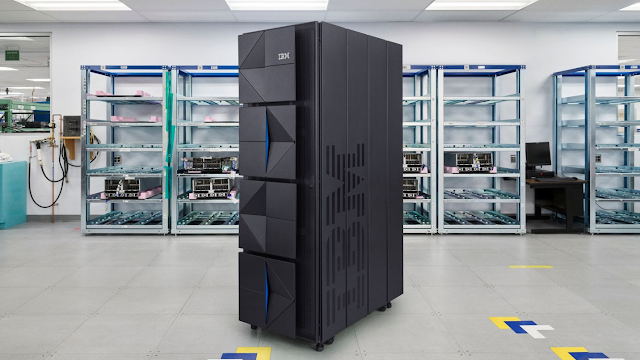
Mainframes are mainstays

It appears Big Blue IBM is still selling/maintaining mainframes in the year 2024!

Mainframes went mainstream about 1961. A very distinguished history!

IBM: Mainframes are computers

IBM z16 mainframe


Saturday, September 16, 2023

Liquid biological Computer Made From DNA Comprises Billions of Circuits

Amazing stuff! Silicon is not the only stuff computers are made of! This could be a breakthrough!

"... In recent years engineers have explored a subtly new role for the molecule's unique capabilities, as the basis for a biological computer. Yet in spite of the passing of 30 years since the first prototype, most DNA computers have struggled to process more than a few tailored algorithms.

A team researchers from China has now come up with a DNA integrated circuit (DIC) that's far more general purpose. Their liquid computer's gates can form an astonishing 100 billion circuits, showing its versatility with each capable of running its own program.

DNA computing has the potential to create machines that offer significant leaps in speeds and capacities, and – as with quantum computing – there are various approaches that can be taken. Here, scientists wanted to build something that was more adaptable than previous efforts, with a broader range of potential uses. ...
What's more, the experimental systems showed little in the way of signal attenuation, or the gradual loss of the strength of a signal as it travels. That's another key part of being able to build DNA computers that can scale and adapt. ..."

From the abstract:
"The past decades have witnessed the evolution of electronic and photonic integrated circuits, from application specific to programmable. Although liquid-phase DNA circuitry holds the potential for massive parallelism in the encoding and execution of algorithms, the development of general-purpose DNA integrated circuits (DICs) has yet to be explored. Here we demonstrate a DIC system by integration of multilayer DNA-based programmable gate arrays (DPGAs). We find that the use of generic single-stranded oligonucleotides as a uniform transmission signal can reliably integrate large-scale DICs with minimal leakage and high fidelity for general-purpose computing. Reconfiguration of a single DPGA with 24 addressable dual-rail gates can be programmed with wiring instructions to implement over 100 billion distinct circuits. Furthermore, to control the intrinsically random collision of molecules, we designed DNA origami registers to provide the directionality for asynchronous execution of cascaded DPGAs. We exemplify this by a quadratic equation-solving DIC assembled with three layers of cascade DPGAs comprising 30 logic gates with around 500 DNA strands. We further show that integration of a DPGA with an analog-to-digital converter can classify disease-related microRNAs. The ability to integrate large-scale DPGA networks without apparent signal attenuation marks a key step towards general-purpose DNA computing."

Liquid Computer Made From DNA Comprises Billions of Circuits : ScienceAlert


Computing functions were matched to DNA molecules in a test tube.


Saturday, December 10, 2022

Designing and Programming Living Computers challenging the predominant Silicon computer hardware paradigm

Silicon based hardware still dominates computing, but is it always superior to other forms of computing? At present, computer hardware e.g. consumes a lot more energy than our human brain. Machine learning often needs millions of samples, hours if not days of computation etc.

This is very exciting research into biological computers! Escherichia coli again is the superstar of this research!

"The genetic material was inserted into the bacterial cell in the form of a plasmid: a relatively short DNA molecule that remains separate from the bacteria’s “natural” genome. Plasmids also exist in nature, and serve various functions. The research group designed the plasmid’s genetic sequence to function as a simple computer, or more specifically, a simple artificial neural network. This was done by means of several genes on the plasmid regulating each other’s activation and deactivation according to outside stimuli. ...
But our cells are also computers, of a different sort. There, the presence or absence of a molecule can act as a switch. Genes activate, trigger or suppress other genes, forming, modifying, or removing molecules. Synthetic biology aims (among other goals) to harness these processes, to synthesize the switches and program the genes that would make a bacterial cell perform complex tasks. Cells are naturally equipped to sense chemicals and to produce organic molecules. Being able to “computerize” these processes within the cell could have major implications for biomanufacturing and have multiple medical applications. ...
The group were able to create flexible bacterial cells that can be dynamically reprogrammed to switch between reporting whether at least one of a test chemicals, or two, are present (that is, the cells were able to switch between performing the OR and the AND functions). Cells that can change their programming dynamically are capable of performing different operations under different conditions. (Indeed, our cells do this naturally.) Being able to create and control this process paves the way for more complex programming, making the engineered cells suitable for more advanced tasks. Artificial Intelligence algorithms allowed the scientists to produce the required genetic modifications to the bacterial cells at a significantly reduced time and cost.
Going further, ... living cells: they are capable of responding to gradients. Using artificial intelligence algorithms, the group succeeded in harnessing this natural ability to make an analog-to-digital converter – a cell capable of reporting whether the concentration of a particular molecule is “low”, “medium”, or “high.” Such a sensor could be used to deliver the correct dosage of medicaments, including cancer immunotherapy and diabetes drugs. ..."

From the abstract:
"Computational properties of neuronal networks have been applied to computing systems using simplified models comprising repeated connected nodes, e.g., perceptrons, with decision-making capabilities and flexible weighted links. Analogously to their revolutionary impact on computing, neuro-inspired models can transform synthetic gene circuit design in a manner that is reliable, efficient in resource utilization, and readily reconfigurable for different tasks. To this end, we introduce the perceptgene, a perceptron that computes in the logarithmic domain, which enables efficient implementation of artificial neural networks in Escherichia coli cells. We successfully modify perceptgene parameters to create devices that encode a minimum, maximum, and average of analog inputs. With these devices, we create multi-layer perceptgene circuits that compute a soft majority function, perform an analog-to-digital conversion, and implement a ternary switch. We also create a programmable perceptgene circuit whose computation can be modified from OR to AND logic using small molecule induction. Finally, we show that our approach enables circuit optimization via artificial intelligence algorithms."

Designing and Programming Living Computers Technion and MIT collaborate to transform bacterial cells into living artificial neural circuits. Applications include biomanufacturing and therapeutics


Fig. 1: Perceptgene theory and implementation


Thursday, December 16, 2021

The ancient 'computer' from about 100 BC that simply shouldn't exist

Very recommendable! I remember having learnt about this device (Antikythera mechanism) many years ago.
Too bad, apparently we have not yet discovered another device like it.

Wednesday, October 27, 2021

Intel partners with Google to deploy first application-specific integrated circuit-based GPU

Good news! Anew category of computer chip!

"... First announced this summer at Intel’s Architecture Day, Mount Evans pairs up to four Xeon CPUs with packet processing technology developed by Barefoot Networks, a networking startup Intel acquired in 2019. The IPU also packs up to sixteen Arm Neoverse N1 cores running as fast as 3Ghz as well as I/O interfaces, caches, and three dual-mode LPDDR4 controllers with 102Gbps of memory bandwidth. ...
“This ASIC supports many existing use cases including vSwitch offload, firewalls, virtual routing,” and telemetry functions, while supporting up to 200 million packets per second and up to 16 million secure connections ... “The Mount Evans IPU emulates NVMe devices at very high input and output operations per second (IOPS) rates by leveraging and extending the Intel Optane NVMe controller. The same Intel infrastructure OS that runs on FPGA-based IPUs will run on Mount Evans as well. Additional technology innovations in the Mount Evans IPU are a next-generation reliable transport protocol, co-innovated with [Google] to solve the long-tail latency problem on lossy networks, and our advanced crypto and compression accelerators.” ..."

Intel partners with Google to deploy 'Mount Evans' ASIC-based GPU | VentureBeat

Wednesday, January 23, 2019

Jacquard Portrait Or The Beginnings Of Machine Learning

Posted: 1/23/2019


Portrait of Joseph Marie Jacquard of Lyon, France, woven in silk by a Jacquard loom using ca. 24,000 punch cards. Truly amazing! Just zoom into this picture and discover the astonishingly fine details. Grateful to a BBC documentary by Jim Al-Khalili about the science of information, who made me aware of this! (see Source 1)


The mechanized, power loom: Another invention not by one human, but by several humans in short order (See Sources 3, 4, and 5). Intellectual property rights need to be reformed.

Reportedly, Charles Babbage was inspired by this portrait and to come up with perforated cards for his analytical machine. As they say, the rest is history … (to paraphrase Paul Harvey)


Sources: