Showing posts with label pharmacology. Show all posts

Wednesday, April 22, 2026

Nuclear magnetic resonance (NMR) is coming back into vogue among drug developers

Good news!

"Nuclear magnetic resonance (NMR) could be on the brink of a renaissance among drug developers.

For decades, other techniques that assess the structure of drugs — such as X-ray crystallography and, more recently, cryo-electron microscopy — have overshadowed NMR because of its complexity and slowness.

But over the past five years, a suite of contract research organizations (which manage research for drug companies) have been founded with the aim of bringing NMR back into the limelight as the technology improves, to help drug discovery.

Meanwhile, NMR has been used to uncover a completely new conformational state in a group of proteins strongly linked with cancer progression. The newly discovered ‘invisible fold’ in kinases could help make kinase inhibitors more selective. “Conformational dynamics in drug discovery are critical and underappreciated,” ..." 

Nature Briefing: Translational Research

NMR-as-you-go for drug hunters (no public access) "Craving speed and convenience, biopharma companies turn to providers with NMR know-how."

Friday, April 17, 2026

Big Pharma Bets Big on AI

Good news!

"... What’s new: Pharma giant Eli Lilly agreed to give as much as $2.75 billion to Insilico Medicine, a Hong Kong-based biotechnology company that applies generative AI across its drug-discovery pipeline.
Initially, Lilly will pay $115 million for exclusive rights to develop and sell undisclosed drugs that have not yet been tested in humans, while further payments will be tied to developmental, regulatory, and commercial milestones ... 
This is the third agreement between the companies following an AI software license in 2023 and a $100 million research collaboration in November 2025.

AI drug-discovery: Founded in 2014, Insilico has used AI to develop 28 candidate drugs, roughly half of which are in clinical trials.
The most advanced one, Rentosertib, targets idiopathic pulmonary fibrosis (IPF), a disease in which scarring progressively reduces lung function. A Phase 2a trial (an early, small-scale test of efficacy) showed positive results.
A second drug, Garutadustat, which is intended to treat inflammatory bowel disease, entered Phase 2a in January 2026. ...

Insilico’s pipeline suggests generative AI can tackle one of the hardest problems in science: finding a molecule that binds to a particular protein, is absorbed by the body, isn’t toxic, and helps patients. ..."

Meta Pivots From Open Weights, Big Pharma Bets On AI, Regulatory Patchwork, Simulating Human Cohorts


Insilico Medicine pipeline


Thursday, January 08, 2026

Potential Anti-Cancer Fungal Compound Finally Synthesized After 55 Years

Good news! Cancer is history (soon)! Memories of the miracle drug penicillin revived?

"For the first time in 55 years, scientists from MIT and Harvard Medical School successfully synthesized a fungal compound with cancer-fighting potential that was previously impossible to produce in the lab."

"The fungal compound verticillin A, discovered more than 50 years ago, has long been regarded for its potential cancer-fighting capabilities. Scientists have now managed to artificially synthesize the compound for the first time, meaning they can study it in more detail and potentially develop new cancer treatments.

Being able to produce verticillin A on demand in the lab is a major step forward. In nature, it's found only in small amounts in a microscopic fungus and is very difficult to extract. ..."

"... Killing cancer cells

Once the researchers had successfully completed the synthesis, they were also able to tweak it to generate derivates of verticillin A. Researchers at Dana-Farber then tested these compounds against several types of diffuse midline glioma (DMG), a rare brain tumor that has few treatment options.

The researchers found that the DMG cell lines most susceptible to these compounds were those that have high levels of a protein called EZHIP. This protein, which plays a role in the methylation of DNA, has been previously identified as a potential drug target for DMG. ...

The verticillin derivatives appear to interact with EZHIP in a way that increases DNA methylation, which induces the cancer cells to undergo programmed cell death. The compounds that were most successful at killing these cells were N-sulfonylated (+)-11,11'-dideoxyverticillin A and N-sulfonylated verticillin A. N-sulfonylation — the addition of a functional group containing sulfur and oxygen — makes the molecules more stable. ..."

From the abstract:
"We report the first total synthesis of (+)-verticillin A, over 50 years after the fungal metabolite was first isolated. Our initial strategy for sulfidation of a dimeric diketopiperazine (DKP) delivered the undesired stereochemistry for the epidithiodiketopiperazine (ETP) substructures of the alkaloid (+)-verticillin A.
We later developed a protocol to directly introduce the disulfide with the correct relative stereochemistry on a complex DKP using benzhydryl hydrodisulfide prior to dimerization. Given the sensitivity of ETPs to carbon-centered radicals and UV irradiation, we developed a strategy to mask the disulfide as a pair of alkyl sulfides prior to an ambitious radical dimerization, fusing two bis-sulfide DKPs at the C3–C3′ linkage, followed by photochemical N1 desulfonylation.
A final-stage unveiling of the ETP substructures furnished (+)-verticillin A, the first dimeric ETP natural product containing C12 oxygenation to be accessed by total synthesis. (+)-Verticillin A and its N1-sulfonylated derivatives demonstrated potent biological activity in cancer cell lines and effectively regulated histone lysine 27 trimethylation (H3K27me3) levels in the cell, leading to apoptosis. Treatment of cell lines expressing high levels of EZH inhibitory protein (EZHIP) with (+)-verticillin A led to the upregulation of H3K27me3, suggesting that (+)-verticillin A and its N1-sulfonylated derivatives interact with EZHIP.
A thermal shift assay using cell lysates confirmed that N1-sulfonylated (+)-dideoxyverticillin A binds to EZHIP, whereas the structurally related ETP (+)-chaetocin A did not show any in-cell engagement with EZHIP.
The interaction between (+)-verticillin A and its derivatives with EZHIP may be leveraged to treat pediatric cancers that are sensitive to H3K27me3 alteration."

Thursday, January 8, 2026 - Join The Flyover


MIT chemists synthesize a fungal compound that holds promise for treating brain cancer (original news release) "Preliminary studies find derivatives of the compound, known as verticillin A, can kill some types of glioma cells."


Friday, November 14, 2025

China overtakes US and Europe for complex antibody drugs development. Really!

Concerning? However, it appears this peace was written to blame President Trump and to solicit more government research funding (Trump Derangement Syndrome?)!

"China has surpassed the United States and Europe in the development of sophisticated antibody therapeutics, according to an analysis by scientific consultants Silvia Crescioli and Janine Reichert. China’s biopharmaceutical industry has capitalized on government support for drug innovation to help bring enhanced antibody drugs, such as antibody-drug conjugates (ADCs) and bispecific and multispecific antibodies, to market. The global clinical pipeline currently includes close to 500 enhanced antibody drugs, over half of which were created by Chinese companies. ..."

"During the past decade, the biopharmaceutical industry in China has been transformed by government policies designed to support innovation and modernize drug discovery, development and review processes. Biopharmaceutical companies in China have used this support to create platforms for the development of highly sophisticated drugs such as antibody–drug conjugates (ADCs) and bispecific and multispecific antibodies.

Here, we examine trends in the development of such ‘enhanced’ antibody therapeutics in China compared with the USA and Europe, particularly in the past decade (2015–2024). ...

Our analysis provides evidence that China’s recent focus on policy-driven innovation has enabled companies based there to surpass those in the USA and Europe in the development of sophisticated antibody therapeutics. The USA and Europe are thus at a competitive disadvantage in this area, and the USA, in particular, is not well positioned to respond, given the recent reductions in the workforce at key government agencies, such as the Food and Drug Administration and the National Institutes of Health, and the defunding of scientific programmes. ..."

Nature Briefing: Translational Research

Tuesday, September 30, 2025

NIH launches new Standardized Organoid Modeling (SOM) Center in planned move away from animal testing in medical research

Good news! Long overdue!

Where are the animal rights activists when you need them! Animal testing for research is a disturbing blind spot by these activists.

"... The centre, which will be funded with $87 million (£65 million) in contracts spread out over three years and housed at the NIH’s Frederick National Laboratory for Cancer Research in Maryland, aims to address reproducibility challenges through the use of advanced technologies like artificial intelligence (AI), robotics and various human cell lines. The hope is that the standardised organoid models created will be widely used by researchers and accepted by regulators, accelerating scientific discoveries and decisions. ..."

"... launching the Standardized Organoid Modeling (SOM) Center, a national resource that will be dedicated to using cutting-edge technologies to develop standardized organoid-based new approach methodologies (NAMs) that deliver robust, reproducible, and patient-centered research findings. ..."

US launches $87m organoid centre to replace animal testing in drug discovery | Chemistry World

NIH establishes nation's first dedicated organoid development center to reduce reliance on animal modeling (original news release) "The Standardized Organoid Modeling Center aims to produce standardized protocols for organoid research, addressing reproducibility challenges."


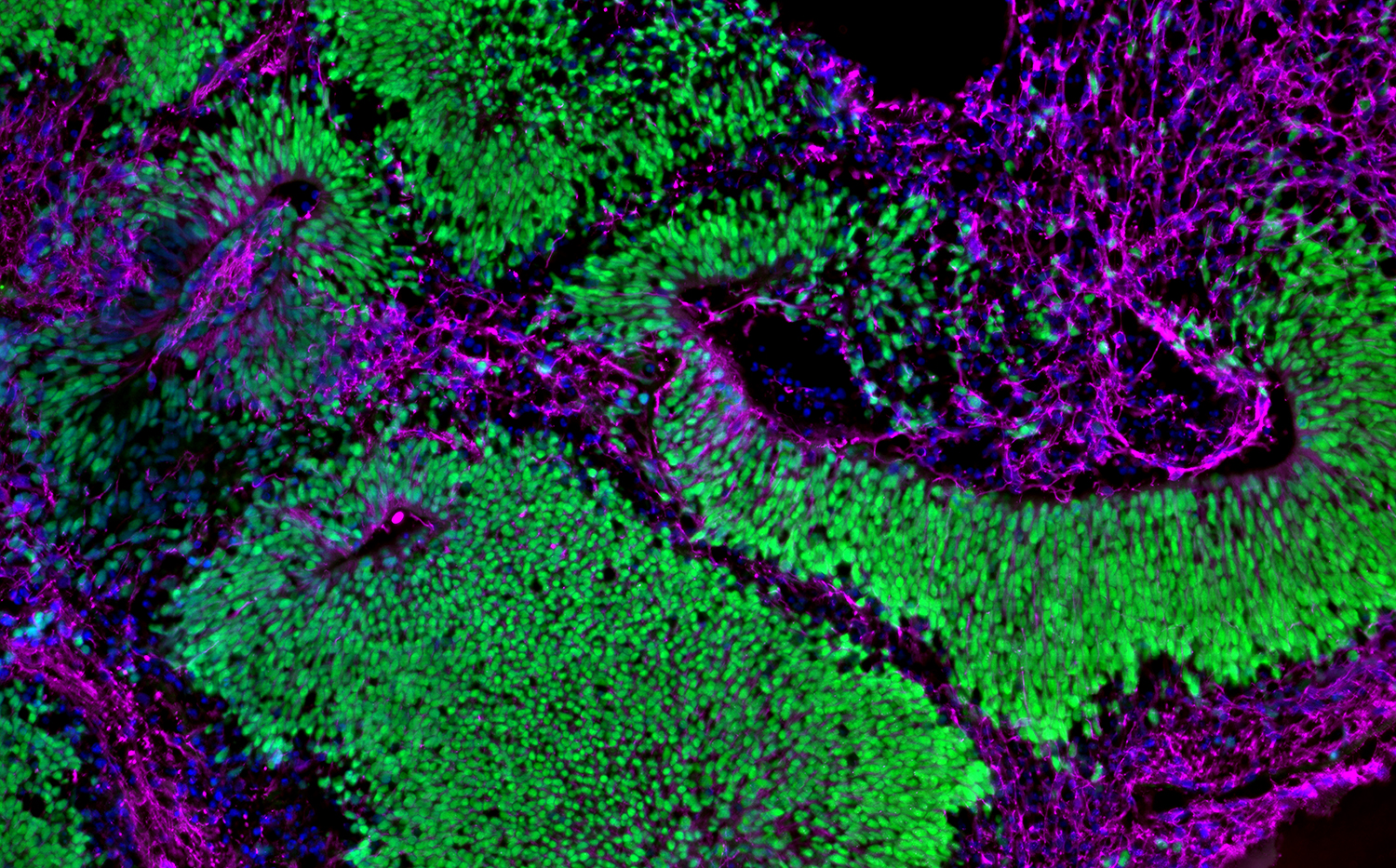
Brain organoid depicting neural stem cells in green and neurons in magenta. Both cell types are abundant, showing normal development.


Sunday, June 15, 2025

The Swiss pharmaceutical company Roche to begin phase III trial on a new antibiotic to combat one of the world’s deadliest drug-resistant infections.

Good news! Human ingenuity beats any bacteria!

"The drug [zosurabalpin} targets Acinetobacter baumannii, a hospital-acquired superbug resistant to nearly all existing antibiotics. Roche plans to begin Phase III trials in late 2025—a rare late‑stage advance in a field long stalled by limited commercial incentives."

"... Zosurabalpin is a tethered macrocyclic peptide (MCP) antibiotic that was identified through the screening of nearly 45,000 compounds. As described in two papers published in Nature in January 2024 by scientists at Roche and Harvard University, MCPs work by blocking the transport of lipopolysaccharide from the inner bacterial membrane to the outer membrane, which is essential for outer membrane formation and antibiotic resistance in A baumannii. ..."

Weekly Progress Roundup - by Malcolm Cochran - Doomslayer


Chemical Structure Depiction (Source)


Tuesday, April 01, 2025

Google's Isomorphic Labs announces $600m external investment round

Good news! Let AI dazzle us with new drugs!

"... Isomorphic Labs, a division within Google using AI to accelerate drug design, has raised $600 million from outside investors. Jared Kushner-owned Thrive Capital led the round ..."

Isomorphic Labs announces $600m external investment round - Isomorphic Labs

Sunday, March 30, 2025

Repurposing Old drugs with AI

This kind of repurposing has been a very exciting approach for decades!

This survey article below does not even seem to care for machine learning and AI very much although ML & AI are going to revolutionize drug repurposing in a major way unlike what was done before.

In a recent article, the New York Times also described how ML & AI are aiding drug repurposing (see below).

"Developing a new drug for a disease is a lengthy and expensive process, so researchers are increasingly turning to existing drugs — some of which have never been approved — to see if they can treat diseases other than the ones they were designed for. The speed at which drugs can be repurposed made this a popular strategy during the COVID-19 pandemic, when drugs such as the corticosteroid dexamethasone and the rheumatoid arthritis drug baricitinib were used to treat severe cases of the disease. Now, a review has compiled a list of hundreds of databases and prediction models, including machine-learning algorithms, that can support drug-repurposing studies. But researchers will still need to collect clinical data, such as side effects, when the drugs are used in new ways."

From the abstract:
"Repurposing of existing drugs for new indications has attracted substantial attention owing to its potential to accelerate drug development and reduce costs. Hundreds of computational resources such as databases and predictive platforms have been developed that can be applied for drug repurposing, making it challenging to select the right resource for a specific drug repurposing project. With the aim of helping to address this challenge, here we overview computational approaches to drug repurposing based on a comprehensive survey of available in silico resources using a purpose-built drug repurposing ontology that classifies the resources into hierarchical categories and provides application-specific information.
We also present an expert evaluation of selected resources and three drug repurposing case studies implemented within the Horizon Europe REMEDi4ALL project to demonstrate the practical use of the resources. This comprehensive Review with expert evaluations and case studies provides guidelines and recommendations on the best use of various in silico resources for drug repurposing and establishes a basis for a sustainable and extendable drug repurposing web catalogue."

"In labs around the world, scientists are using A.I. to search among existing medicines for treatments that work for rare diseases. Drug repurposing, as it’s called, is not new, but the use of machine learning is speeding up the process — and could expand the treatment possibilities for people with rare diseases and few options.

Thanks to versions of the technology developed ... at the University of Pennsylvania and elsewhere, drugs are being quickly repurposed for conditions including rare and aggressive cancers, fatal inflammatory disorders and complex neurological conditions. And often, they’re working."

Nature Briefing: Translational Research


Doctors Told Him He Was Going to Die. Then A.I. Saved His Life. "Scientists are using machine learning to find new treatments among thousands of old medicines." (Credits: Human Progress weekly newsletter)

Wednesday, March 12, 2025

Scientists discover how aspirin could prevent some cancers from spreading

Good news! Cancer is history (soon)!

Just amazing how good old aspirin keeps on giving! When I take my next low dose aspirin today, I will feel much better immediately!

"... Studies of people with cancer have previously observed that those taking daily low-dose aspirin have a reduction in the spread of some cancers, such as breast, bowel, and prostate cancers, leading to ongoing clinical trials. However, until now it wasn’t known exactly how aspirin could prevent metastases. ...

The researchers determined that ARHGEF1 suppresses a type of immune cell called a T cell, which can recognise and kill metastatic cancer cells. 

To develop treatments to take advantage of this discovery, they needed to find a way for drugs to target it. The scientists traced signals in the cell to determine that ARHGEF1 is switched on when T cells are exposed to a clotting factor called thromboxane A2 (TXA2).

This was an unexpected revelation for the scientists, because TXA2 is already well-known and linked to how aspirin works. ..."

From the abstract:
"Metastasis is the spread of cancer cells from primary tumours to distant organs and is the cause of 90% of cancer deaths globally. Metastasizing cancer cells are uniquely vulnerable to immune attack, as they are initially deprived of the immunosuppressive microenvironment found within established tumours. There is interest in therapeutically exploiting this immune vulnerability to prevent recurrence in patients with early cancer at risk of metastasis.
Here we show that inhibitors of cyclooxygenase 1 (COX-1), including aspirin, enhance immunity to cancer metastasis by releasing T cells from suppression by platelet-derived thromboxane A2 (TXA2). TXA2 acts on T cells to trigger an immunosuppressive pathway that is dependent on the guanine exchange factor ARHGEF1, suppressing T cell receptor-driven kinase signalling, proliferation and effector functions. T cell-specific conditional deletion of Arhgef1 in mice increases T cell activation at the metastatic site, provoking immune-mediated rejection of lung and liver metastases.
Consequently, restricting the availability of TXA2 using aspirin, selective COX-1 inhibitors or platelet-specific deletion of COX-1 reduces the rate of metastasis in a manner that is dependent on T cell-intrinsic expression of ARHGEF1 and signalling by TXA2 in vivo.
These findings reveal a novel immunosuppressive pathway that limits T cell immunity to cancer metastasis, providing mechanistic insights into the anti-metastatic activity of aspirin and paving the way for more effective anti-metastatic immunotherapies."

Scientists discover how aspirin could prevent some cancers from spreading | University of Cambridge "Scientists have uncovered the mechanism behind how aspirin could reduce the metastasis of some cancers by stimulating the immune system."


Fig. 5: Aspirin promotes anti-metastatic immunity by releasing T cells from ARHGEF1-dependent suppression by TXA2.


Wednesday, February 05, 2025

How America became the world leader in pharmaceutical innovation and why to keep big government out of it

How to ruin a dynamic, competitive, and innovative industry to the benefit of our health! Big government!

Increase competition through more imports, reduced intellectual property rights, lower taxes, less regulation etc.!

"... In the 1970s, Europe was the global hub for pharmaceutical innovation.  Fast forward and around two-thirds of new drugs developed in the last decade or so have originated in the United States, compared to just 22 percent from Europe.  ...

America did not become the world’s innovation leader because of government – private companies have long tackled complex health care problems far better than government agencies.

Unfortunately, Democrats and even some Republicans are now pushing the United States to follow Europe and embrace price controls on prescription drugs.  This is a grave mistake.  ..."

Read the new book by Sally Pipes & sign up for webinar

Sunday, January 26, 2025

AI-Developed Drugs Are Headed to Trial, DeepMind CEO Says

Good news! More to come!

"“Drugs developed by Alphabet’s drug discovery subsidiary and designed by artificial intelligence are expected to head to trial by the end of the year, according to a Google executive…

The four-year-old Isomorphic Labs was spun off from DeepMind in 2021 as a stand-alone subsidiary under Alphabet. In July, it announced deals to work on research with Eli Lilly & Co. and Novartis to leverage its AI technology — namely AlphaFold, its model that predicts a protein’s 3D structure — to discover therapeutics against multiple targets. ..."

AI-Developed Drugs Are Headed to Trial, DeepMind CEO Says - Human Progress


Sir Demis Hassabis, PhD
Demis is our founder and CEO. He is also the founder and CEO of DeepMind.


Wednesday, January 22, 2025

Typical Cost of Developing a New Drug Is Skewed by Few High-Cost Outliers

An interesting hypothesis! Food for thought!

"The typical cost of developing new medications may not be as high as generally believed, with a few ultra-costly medications skewing public discussions about the cost of pharmaceutical research and development, according to a new RAND study.

Using a novel method to assess spending on research and development for 38 drugs that were recently approved by the U.S. Food and Drug Administration, researchers found that the mean, or average, cost of developing a new drug was much higher than the mid-point (median) cost of development.

Researchers estimated a median direct research and development cost of $150 million compared to a mean of $369 million. ...

The average cost of developing a new drug was 26 percent lower when excluding just two drugs, dropping from $1.3 billion to $950 million. The findings are published in the journal JAMA Network Open. ..."


Thursday, January 02, 2025

New method may enhance drug effectiveness

Good news!

"The pharmaceutical industry is constantly searching for new drugs, but can existing drugs be rendered more effective? More than half of the drugs we use are, in terms of their chemical properties, weakly basic. In a new study ... showed that this property may reduce the drugs’ effectiveness: Their availability in the cell is decreased by their tendency to bind to large, charged molecules within the cell or to become trapped inside acidic organelles, such as the cellular recycling bin called the lysosome. The result is decreased activity, which leads to the use of larger doses that can aggravate side effects and cause unwanted interactions with other drugs.

The researchers then showed that this problem can be overcome by a chemical modification – addition of an acetyl group – that makes these drugs more available for activity in the cell. These findings highlight the importance of taking intra-cellular dynamics into account in the course of drug development. They may help improve the effectiveness of a wide range of drugs, making it possible to reduce their dosage, thereby decreasing side effects."

"eLife Assessment
This is a valuable study on the diffusion rates of drug molecules in human-derived cells, presenting convincing data indicating that their diffusion behavior depends on their charged state. It proposes that blocking drug protonation enhances diffusion and fractional recovery, suggesting improved intracellular availability of weakly basic drugs. The findings are significant for drug design and understanding the biophysical behavior of small molecules in cells."

From the abstract:
"For drugs to be active they have to reach their targets. Within cells this requires crossing the cell membrane, and then free diffusion, distribution, and availability. Here, we explored the in-cell diffusion rates and distribution of a series of small molecular fluorescent drugs, in comparison to proteins, by microscopy and fluorescence recovery after photobleaching (FRAP). While all proteins diffused freely, we found a strong correlation between pKa and the intracellular diffusion and distribution of small molecule drugs. 
Weakly basic, small-molecule drugs displayed lower fractional recovery after photobleaching and 10- to-20-fold slower diffusion rates in cells than in aqueous solutions. As, more than half of pharmaceutical drugs are weakly basic, they, are protonated in the cell cytoplasm. Protonation, facilitates the formation of membrane impermeable ionic form of the weak base small molecules. This results in ion trapping, further reducing diffusion rates of weakly basic small molecule drugs under macromolecular crowding conditions where other nonspecific interactions become more relevant and dominant. Our imaging studies showed that acidic organelles, particularly the lysosome, captured these molecules. Surprisingly, blocking lysosomal import only slightly increased diffusion rates and fractional recovery. Conversely, blocking protonation by N-acetylated analogues, greatly enhanced their diffusion and fractional recovery after FRAP. Based on these results, N-acetylation of small molecule drugs may improve the intracellular availability and distribution of weakly basic, small molecule drugs within cells."

Ants vs. Humans: The Maze Challenge – plus more news from the Weizmann Institute of Science


Fig. 3 Fluorescein, CCF2 and CF514 diffusion in PBS and inside HeLa cells.


Sunday, November 17, 2024

New non-addictive painkiller precisely targets sites of chronic pain and does not induce tolerance

Good news! We have been waiting for it for decades! Is this finally the breakthrough!

"Researchers have developed a non-addictive painkiller that remains inactive until it reaches sites of chronic pain. Instead of dulling the nerves that send the pain signals like other analgesics, this new pain pill directly addresses the underlying cause. Its makers are currently working towards testing the compound in human trials.

Different from other medications, a prodrug remains inactive until it encounters a specific circumstance in the body that activates it. ..."

"... The mechanism of action for the targeted prodrug involves activation of the active drug by a chemical reaction with reactive oxygen species such as hydrogen peroxide, which are present in much higher amounts at sites of pain than the rest of the body. ...

The prodrug was tested in both chemical and preclinical models and found to provide localised relief of sciatic nerve injuries, as well as other models of chronic pain featuring oxidative stress like osteoarthritis, chemotherapy-induced peripheral neuropathy and diabetic neuropathy. ...

“This showed us that the compound did not induce a tolerance, which is a major limiting factor to powerful painkillers like morphine,” ..."

From the abstract:
"Treatment of diseases of oxidative stress through activation of the antioxidant nuclear factor E2-related factor 2 (NRF2) is limited by systemic side effects. We chemically functionalize the NRF2 activator monomethyl fumarate to require Baeyer–Villiger oxidation for release of the active drug at sites of oxidative stress. This prodrug reverses chronic pain in mice with reduced side effects and could be applied to other disorders of oxidative stress."

New painkiller precisely targets sites of chronic pain

Researchers discover localised pain relief using known chemical reaction (original news release) "A team of international researchers including those from the University of Adelaide have taken a well-known chemical reaction as the basis of a new generation of targeted pain relief medication."


Fig. 1: Pathological peroxides are required for compound 1c to activate NRF2 in vitro.


Tuesday, November 12, 2024

Google DeepMind open-sources AlphaFold 3, ushering in a new era for drug discovery and molecular biology

Good news!

"Google DeepMind has unexpectedly released the source code and model weights of AlphaFold 3 for academic use, marking a significant advance that could accelerate scientific discovery and drug development. The surprise announcement comes just weeks after the system’s creators, Demis Hassabis and John Jumper, were awarded the 2024 Nobel Prize in Chemistry for their work on protein structure prediction. ..."

Google DeepMind open-sources AlphaFold 3, ushering in a new era for drug discovery and molecular biology | VentureBeat

Thursday, September 26, 2024

Want a Paracetamol? Find out why it Could be Dangerous with Palki Sharma

Bad news! India is a major manufacturer of medications, vaccines etc., but substandard quality seems to remain a serious issue.

Tuesday, September 03, 2024

Antidepressant pollution is rewiring fish behavior and reproduction

How depressing! It is all in the food chain. Don't choke!

Is this a case of alarmism and hysteria? How much are artificial lab results comparable to reality? How much of this kind of research is more comparable to a worst case scenario?

The possible effects of medications dissolved in bodies of water has been reported for several decades. So  far it seems we have managed the issue quite well without causing a catastrophe or anything like it. 

The strengths of this study seems to be that it is a long-term study (five years) over several generations of subjects.

"An international study ... has revealed how long-term exposure to pharmaceutical pollutants is dramatically altering fish behavior, life history, and reproductive traits. ...
Pharmaceutical pollutants, especially antidepressants like fluoxetine, have become a pervasive issue in water bodies worldwide. These pollutants, often introduced through wastewater discharge, persist at low levels in rivers, lakes, and oceans. ...
The five-year investigation, focusing on wild-caught guppies exposed to the widely prescribed antidepressant fluoxetine (Prozac), highlights the profound and interconnected effects of this pollutant on aquatic ecosystems. ..."

From the abstract:
"1. In our rapidly changing world, understanding how species respond to shifting conditions is of paramount importance. Pharmaceutical pollutants are widespread in aquatic ecosystems globally, yet their impacts on animal behaviour, life-history and reproductive allocation remain poorly understood, especially in the context of intraspecific variation in ecologically important traits that facilitate species' adaptive capacities.

2. We test whether a widespread pharmaceutical pollutant, fluoxetine (Prozac), disrupts the trade-off between individual-level (co)variation in behavioural, life-history and reproductive traits of freshwater fish.

3. We exposed the progeny of wild-caught guppies (Poecilia reticulata) to three field-relevant levels of fluoxetine (mean measured concentrations: 0, 31.5 and 316 ng/L) for 5 years, across multiple generations. We used 12 independent laboratory populations and repeatedly quantified activity and risk-taking behaviour of male guppies, capturing both mean behaviours and variation within and between individuals across exposure treatments. We also measured key life-history traits (body condition, coloration and gonopodium size) and assessed post-copulatory sperm traits (sperm vitality, number and velocity) that are known to be under strong sexual selection in polyandrous species. Intraspecific (co)variation of these traits was analysed using a comprehensive, multivariate statistical approach.

4. Fluoxetine had a dose-specific (mean) effect on the life-history and sperm trait of guppies: low pollutant exposure altered male body condition and increased gonopodium size, but reduced sperm velocity. At the individual level, fluoxetine reduced the behavioural plasticity of guppies by eroding their within-individual variation in both activity and risk-taking behaviour. Fluoxetine also altered between-individual correlations in pace-of-life syndrome traits: it triggered the emergence of correlations between behavioural and life-history traits (e.g. activity and body condition) and between life-history and sperm traits (e.g. gonopodium size and sperm vitality), but collapsed other between-individual correlations (e.g. activity and gonopodium size).

5. Our results reveal that chronic exposure to global pollutants can affect phenotypic traits at both population and individual levels, and even alter individual-level correlations among such traits in a dose-specific manner. We discuss the need to integrate individual-level analyses and test behaviour in association with life-history and reproductive traits to fully understand how animals respond to human-induced environmental change."

Antidepressant pollution is rewiring fish behavior and reproduction, biologists reveal


Fig. 1 Schematic of the exposure protocol and experimental design.


Sunday, August 18, 2024

New compound flips memory back on in Alzheimer's cases

Good news! Are we finally beginning to address more effectively the causes instead of the symptoms in neurodegenerative disorders!

The brain got rhythm, but with age it becomes out of tune! Just kidding!

"... Seeking an alternative treatment option, ... team turned to gamma oscillations – high-frequency brain waves that have been associated with memory and other cognitive processes. These frequencies are often degraded in people with Alzheimer's and previous research has shown that stimulating Alzheimer's patients with auditory, visual or transcranial signals that mimic gamma oscillations led to reduced plaques. Once again though, no cognitive improvements were seen. ...
They created a molecular compound called DDL-920 that worked to inhibit the action of the chemical messenger known as GABA, which serves to dampen gamma oscillations in fast-firing structures known as parvalbumin neurons. ...

In mouse tests, that's exactly what happened. When mice that were genetically modified to have Alzheimer's disease were given the compound, their previously poor performance in a maze improved to equal that of healthy mice. ... it only took two weeks of twice daily oral dosing for the improvement to be seen. The researchers also did not notice any visible side effects during the testing phase. ..."

From the significance and abstract:
"Significance
Wei et al., have studied the subunit composition of γ-aminobutyric acid type A receptors responsible for the tonic inhibition of parvalbumin positive interneurons and identified a small molecule (DDL-920) as a potent, efficacious, and selective negative allosteric modulator of these receptors. DDL-920 increases the power of γ-oscillations following oral administration and remedies the memory impairment of Alzheimer’s disease model mice in the Barnes maze.
Abstract
Brain rhythms provide the timing for recruitment of brain activity required for linking together neuronal ensembles engaged in specific tasks. The γ-oscillations (30 to 120 Hz) orchestrate neuronal circuits underlying cognitive processes and working memory. These oscillations are reduced in numerous neurological and psychiatric disorders, including early cognitive decline in Alzheimer’s disease (AD). Here, we report on a potent brain-permeable small molecule, DDL-920 that increases γ-oscillations and improves cognition/memory in a mouse model of AD, thus showing promise as a class of therapeutics for AD. We employed anatomical, in vitro and in vivo electrophysiological, and behavioral methods to examine the effects of our lead therapeutic candidate small molecule. As a novel in central nervous system pharmacotherapy, our lead molecule acts as a potent, efficacious, and selective negative allosteric modulator of the γ-aminobutyric acid type A receptors most likely assembled from α1β2δ subunits. These receptors, identified through anatomical and pharmacological means, underlie the tonic inhibition of parvalbumin (PV) expressing interneurons (PV+INs) critically involved in the generation of γ-oscillations. When orally administered twice daily for 2 wk, DDL-920 restored the cognitive/memory impairments of 3- to 4-mo-old AD model mice as measured by their performance in the Barnes maze. Our approach is unique as it is meant to enhance cognitive performance and working memory in a state-dependent manner by engaging and amplifying the brain’s endogenous γ-oscillations through enhancing the function of PV+INs."

New compound flips memory back on in Alzheimer's cases "Instead of focusing on fighting the plaques linked to Alzheimer's, researchers took a look at boosting electrical oscillations in the brain. The molecule they invented got the job done in mice, offering hope for a new treatment path for humans."

Molecule restores cognition and memory in Alzheimer’s disease mouse study


Fig. 4 Effects of DDL-920 (10 mg/kg) oral administration with a pipettor on θ- and γ-oscillations recorded in the hippocampi of AD model mice and on their memory test in the Barnes maze.