Showing posts with label physics. Show all posts

Friday, July 31, 2026

2D quantum memory device reaches single-electron limit of information storage

Amazing stuff!

"... a design strategy for making individual-electron states easier to discern at room temperature ..."

From the editor's summary and abstract:
"Editor’s summary
Realizing stable and distinguishable quantum memory at the single-electron level has long been challenged by increased parasitic gate-channel fringe capacitance, which substantially lowers the threshold voltage shift (ΔVth) caused by stored electrons as device dimensions are scaled down.
Using atomically thin two-dimensional materials and edge-contacted metal electrodes, Liu et al. designed a coplanar drain channel source structure that enabled a nonvolatile ΔVth of 0.5 volts at room temperature. Their work demonstrates the ability to control single-electron quantum behavior, offering promising prospects for nanoscale memory device engineering. ...

Abstract
The ultimate goal of information storage is single-electron memory.
Quantum mechanics predicts that two distinguishable quantum states can be realized by confining a single electron within an ultrasmall space.
However, scaling down such devices paradoxically amplifies fringe capacitance effects, which hinders the experimental observation of single-electron memory.
We report a two-dimensional single-electron memory device based on a coplanar drain-channel-source structure that suppressed fringe capacitance, exhibiting a nonvolatile threshold voltage shift of 0.5 volts after the change of a single electron.
Two intriguing quantum behaviors have also been verified regarding the programming voltage.
Additionally, we have predicted and observed a distinctive quantum memory effect: A quantum state is cut off by density of states scissors."

2D quantum memory device reaches single-electron limit of information storage


Room-temperature 2D single-electron memory device


Thursday, July 23, 2026

Cooler Earth core could solve Earth’s magnetic mystery

Amazing stuff! In the age of so called "climate change" and global warming hoax when cooler heads will hopefully prevail!

"New experiments suggest Earth’s iron core could be more than 1000°C cooler than longstanding estimates, potentially resolving a puzzle that has vexed geophysicists for decades.
By squeezing iron to nearly 2 million atmospheres between diamond anvils and heating it with rapid electrical pulses, researchers measured iron’s melting point at corelike conditions and found it melts at much lower temperatures than previous studies suggested. The result could help explain the so-called “new core paradox.”

Earth’s magnetic field has existed for at least 4 billion years. But many thermal models indicate the solid inner core—which as it slowly freezes today helps power the magnetic dynamo in the molten outer core—formed only about 500 million years ago.
The new measurements suggest the core lost heat more slowly than previous models assumed, allowing heat-driven convection alone to power the magnetic dynamo for most of Earth’s history, without requiring an ancient inner core. ..."

"... Today, that dynamo is sustained mainly by the slow freezing of the inner core, which releases heat and buoyant light elements into the liquid metal above. But some models of Earth’s cooling history suggest the inner core began to form just over half a billion years ago, raising the so-called “new core paradox”: What kept the dynamo running for the 3.5 billion years before the arrival of the inner core? ..."

From the abstract of the oral presentation:
"The melting temperatures and electrical resistivity of iron at high pressure are essential for understanding the thermal history and dynamics of Earth’s core, but significant differences in experimental results have led to divergent Earth models. We developed a pulsed Joule heating system to investigate the melting temperature and electrical resistivity of iron under the high pressure of Earth’s core. The system heats metal samples to temperatures exceeding 4000 K at pressures exceeding 2 Mbar. Precise sample fabrication, combined with a novel 5-color multianode spectroradiometer, enables high-precision heating control and temperature measurement (~ ±30 K) with sub-microsecond time resolution. Plateaus in temperature-time traces due to the latent heat of melting show outstanding reproducibility.
Our findings on the high-pressure melting curve of iron, based on more than 200 melting measurements extending to over 2 Mbar, reveal lower melting temperatures and a shallower Clapeyron slope relative to previous studies.
By extrapolating these to inner-core pressure and combining them with our measured resistivity of liquid iron (~75 μΩ cm), we propose that a relatively low adiabatic outer-core heat flow of < 10 TW and relatively low core-mantle boundary temperatures.
Our results indicate that thermal convection alone may have powered the geodynamo before the formation of the inner core, and that today’s lowermost mantle is likely to be fully solid."

ScienceAdviser


Monday, July 20, 2026

Analyzing the interplay between electronic excitation and nuclear motion in single atoms of a molecule

Amazing stuff!

"... The study provides evidence that excitation by light can enhance an atom's sensitivity to the motion of nearby atoms. The new method for following ultrafast chemical reactions at the atomic scale, in real time, can help researchers understand photostability in DNA, energy flow in light-harvesting materials and other fundamental processes driven by light.

The team investigated 3-fluoropyridine, a small ring-shaped molecule. When the molecule absorbs light like a short pulse from an ultraviolet laser, it is promoted into an electronically excited state and rapidly distorts out of its original planar shape. It then passes through a so-called conical intersection: a short-lived but crucial crossing point where movements of electrons and the atoms’ cores become strongly coupled. After this point, the molecule returns to the ground state.
At that moment, electronic energy is converted into vibrations.
The researchers found that this conversion leaves distinct fingerprints at different atomic sites: the fluorine atom acts as a clean marker of vibrational relaxation, while the nitrogen atom, which is more directly involved in the excitation, reflects an intertwined response of electron redistribution and structural motion. ..."

From the abstract:
"The advent of novel free-electron laser sources enabling time-resolved X-ray photoelectron spectroscopy (tr-XPS) provides a unique opportunity to monitor local chemical environments in real time by measuring sub-eV shifts in core-electron binding energies. These shifts reflect the interplay between electronic excitation and nuclear motion, an interplay that remains largely unexplored.
In our combined theoretical and experimental study of fluoropyridine (C5H4FN), we investigate this link by monitoring the evolving chemical environment at the N and F atomic sites as the photoexcited S1 state relaxes to the ground state via a conical intersection.
We find that the F site responds primarily to vibrational relaxation, showing minimal sensitivity to the electronic excited state.
In contrast, excitation to S1 induces a measurable energy shift at the N site and significantly enhances its sensitivity to local vibrations within the ring.
This behavior arises from a photoinduced redistribution of charge, which also increases the Coulomb interaction between the 1s electron at the N atom and the atomic partial charge at an adjacent C atom.
This insight opens new avenues for exploring ultrafast dynamics and conical intersection pathways in more complex systems, from photostable DNA bases to light-harvesting materials."

Atoms tell different stories when light hits a molecule in trillionths of a second

Researchers watch chemistry unfold atom by atom "Study suggests a new way to follow electronic and vibrational dynamics in real time"


Graphical abstract


Figure 1. Chemical shifts during conical intersection passage.


Thursday, July 09, 2026

Swiss researchers invented a new type of pixel that can both control and analyze light

Amazing stuff! This could be a breakthrough!

"Swiss researchers at ETH Zurich invented a new type of pixel that can both control and analyze light, a breakthrough that could dramatically improve digital photography."

"In brief
  • Pixels create images on screens or capture them in cameras. Until now, however, there have been no pixels that could do both.  
  • Researchers have now developed a new kind of pixel that can both create and analyse images and patterns. 
  • In the future, these pixels could be used to realise two-way camera–displays
In 1927, the term „picture element“, later abbreviated to „pixel“, appeared for the first time in the American technology magazine Wireless World.  ...

These pixels can both steer light and analyse it. Not only the intensity of the light, but also its oscillation phase and polarisation can be controlled and analysed. ...

Patters and images from overlapping light waves

The new results ... are based on a fundamental physical effect: the so-called interference of light waves. When light is scattered by a surface, the waves originating from different points on the surface overlap. The shape of the surface determines the oscillation phases with which the waves propagate further. If the phases are equal, the light waves reinforce each other, but if they are opposed, the waves cancel out. ...

use this effect to precisely control light with wave-shaped sculpted surfaces. They developed this processing method, which is precise to within a few nanometres, already a few years ago. For steering, the pixel—that is, the area on the chip where the material has been processed—first transforms the incoming light into a surface wave (a so-called surface plasmon polariton) propagating along the surface of the chip. 

At a different position within the pixel, the surface wave is scattered back out of the material as a light wave. Through interference of the light waves, patterns and images can be created. Using mathematical Fourier analysis, the researchers can calculate what these images will look like and what kind of surface pattern is needed for a specific image.  ...."

From the abstract:
"Digital cameras and displays use picture elements (pixels) that perform a single function: detecting or emitting light intensity. To exploit the full information content of electromagnetic waves, more advanced elements are required. This has driven the development of multifunctional components that, for example, simultaneously detect and emit intensity or extract intensity and spectral information.
However, no pixel exists that both senses and generates optical wavefronts with full control over amplitude, phase and polarization, limiting bidirectional control and feedback of sophisticated light fields.
Here we present a route to such pixels by demonstrating a versatile platform of miniaturized diffractive elements based on Fourier optics.
We use plasmonic surface waves, which propagate coherently and efficiently across metallic surfaces. When these plasmons are launched towards wavy microstructures designed with simple Fourier analysis, arbitrary and background-free optical wavefronts are generated. Conversely, incoming light can be sensed, and its amplitude, phase and polarization can be fully characterized.
By combining or superposing several such components, we create multifunctional ‘Fourier pixels’ that provide compact and accurate control over the optical field. Our approach, which we extend to photonic waveguide modes, establishes a scalable, universal architecture for vectorially programmable pixels with applications in adaptive optics, holographic displays, optical communication and quantum information processing."

Wednesday, July 8, 2026 - Join The Flyover

Researchers in Switzerland invent a new type of pixel "Pixels either control light or analyze it. This one does both."

A new type of pixel (original news release) "Researchers at ETH Zurich have developed pixels that can not only create images, but also analyse them. In the future, this could lead to the development of devices that function as camera and display at the same time."


The coloured logo was created using the new ETH researchers‘ Fourier pixels. The letter “E” is roughly 1 millimetre tall on the camera.


Fig. 1: Fourier pixels for generating light with arbitrary amplitude and phase.


Monday, July 06, 2026

Graphene can hold multiple states of superconductivity, a new study finds

Good news! More, but incremental progress! 

Superconductivity like nuclear fusion hold huge promises to improve global energy supply!

"In a study appearing ... in the journal Nature, ... researchers report that a certain microscopic structure found in natural graphite can host multiple superconducting states. Superconductivity is an electronic state of matter in which electrons pair up and glide through a material with zero resistance.  ..."

"... In our work, we present a family of three surprising states of superconductivity in 4- or 5-layer rhombohedral graphene, all of which are are able to persist in the presence of strong in-plane magnetic fields up to ~9 T, exceeding the Pauli limit by far more than a factor of 10.
In a further surprise, one state is even enhanced by a perpendicular magnetic field. This is in contract to bernal graphene, which showed only relatively weak in-plane enhancement. The two other states are boosted by the in-plane field, and one of them is only created above ~5 Tesla in-plane field. None of these states could be suppressed with the 9 T magnet of this experiment. 

This establishes a new family of unconventional, magnetic field-boosted superconductors in rhombohedral graphene. It is currently still unclear what the microscopic pairing mechanism is. One possible explanation is that the electrons in these states pair differently than in the paradigmatic simple superconductors — for example, with their spins aligned in the same direction in a triplet state. This could make them less sensitive to magnetic fields. ..."

From the abstract:
"In some unconventional superconductors, time-reversal symmetry can be broken in addition to the gauge symmetry, resulting in superconductivities that can be enhanced or induced by magnetic fields.
However, field-enhanced superconductors are more vulnerable to impurities than Bardeen-Cooper-Schrieffer counterparts.
Crystalline rhombohedral multilayer graphene is a promising platform to explore them due to its superior material quality and gate-tunable strong correlation effects.
Here we report transport measurements of rhombohedral tetralayer and pentalayer graphene, demonstrating a spectrum of clean-limit superconductivities. We found three different types of field-enhanced and field-induced superconductivities in the pentalayer. They are all robust against an in-plane field up to 8.5 Tesla, exceeding the Pauli limit by tens of times.
Compared to Bernal bilayer graphene showing only in-plane field-enhancement, pentalayer graphene features superconductors enhanced by out-of-plane as well as in-plane fields. They also reside at much lower gate electric fields owing to the intrinsically flatter band dispersion—facilitating their study and further engineering.
Additionally, we observed that proximitized spin-orbit coupling (SOC) generates multiple new superconductors without introducing additional disorder effects.
Our work establishes a new family of magnetic field-boosted superconductors in rhombohedral graphene.
Utilizing the high accessibility with moderate gate voltages, this will pave the way for realizing non-Abelian quasiparticles through interfacial engineering in the extreme clean limit, in that proximitized SOC leads to topological states8 and maintains the ultrahigh quality of crystalline graphene."

Graphene can hold multiple states of superconductivity, a new study finds | MIT News | Massachusetts Institute of Technology "What’s more, the superconducting states get stronger under conditions expected to kill them."

Published in Nature: Family of magnetic field-boosted superconductors in rhombohedral graphene (second original news release)


The cartoon sketch shows the family of three different states found in the experiment indicated with three different colors


Saturday, July 04, 2026

Directional routing of single photons

Amazing stuff! However, through Google search I found what appears to be a  similar work published in 2015 (a PhD dissertation).

"Photons are robust and can travel long distances, making them ideal carriers of quantum information. However, communication between nodes on a network requires directional control of the photons. Emission from excited atoms, for instance, can generally take any direction.
Li et al. demonstrated a direction-switchable single-photon emitter using Rydberg polaritons. The ensemble of cesium atoms is first excited with a laser pulse, and then a second retrieval pulse is used to de-excite the system and extract the stored photon. The direction of the retrieval laser determines the direction of the emitted photon. Using this protocol, the angle difference between the incoming and redirected photon can be up to 100°. Such control over the directional emission should prove useful for quantum communication."

From the abstract:
"A promising route toward quantum networking is via photons as information carriers, requiring deterministic quantum nonlinear optical operations and single-photon routing.
Here, we demonstrate a direction-switchable single-photon emitter using a Rydberg polariton. The Rydberg component of the stored photon is changed using a stimulated Raman transition with a specific intermediate state.
By adjusting the direction of the retrieval laser, we can redirect the emitted photon into a rich variety of alternative modes. We experimentally demonstrate a redirection angle of  . 
Building upon this scheme, we propose a quantum routing of single photons with  output channels by rotation of the retrieval laser, where all directions have identical routing efficiency. In addition, the protocol reduces the effect of motional dephasing, increasing the photon lifetime to µs (  times the photon processing time), enabling functional quantum devices based on Rydberg polaritons."

In Other Journals | Science


Fig. 1. Experimental realization and relevant energy levels. 


Tuesday, May 26, 2026

‘A new form of engineered artificial matter’: Atomic manipulation enters the mesoscale as 40,000 atoms repositioned in single crystal

Amazing stuff! "a new way to produce programmable matter in which ‘functionality is engineered from the atom up’." This could be huge!

"By creating 40,000 user-defined defects in a single crystal lattice, researchers have shown that atomic manipulation can be achieved on the mesoscopic scale – between the single-atom and bulk-material ranges. The work potentially offers a way to engineer materials with desired properties by fine-tuning the positions of individual atoms within their structures. ...

Now, a team from the US and Europe has scaled up the concept to a whole new level. Using the electron beam in a specially programmed scanning transmission electron microscope, the researchers introduced 40,000 defects into a chromium sulfur bromide lattice. The CrSBr semiconductor was selected as a model sample and, with their automated process, the researchers could subtly reposition individual chromium atoms in a predictable manner.
They describe the resulting material as ‘a new form of engineered artificial matter’, and note that it remains stable at room temperature outside of the microscope.

The defects were introduced within minutes across an area measuring 150nm × 100nm with a depth of 13nm. However, the team believes that the method is generalisable and could be scaled up to the macroscopic level. The researchers write that the technique offers a new way to produce programmable matter in which ‘functionality is engineered from the atom up’. ..."

"It’s been 37 years since scientists first demonstrated the ability to move single atoms, suggesting the possibility of designing materials atom by atom to customize their properties. Today there are several techniques that allow researchers to move individual atoms in order to give materials exotic quantum properties and improve our understanding of quantum behavior.

But existing techniques can only move atoms across the surface of materials in two dimensions. Most also require painstakingly slow processes and high-vacuum, ultracold lab conditions.

Now a team of researchers ... has created a way to precisely move tens of thousands of individual atoms within a material in minutes at room temperature. The approach uses a set of algorithms to carefully position an electron beam at specific locations of a material, then scan the beam to drive atomic motions. ..."

From the abstract:
"Controlling individual atoms using lasers, ion traps and scanning probe tips has transformed our understanding of matter and enabled breakthroughs in quantum science.
Extending this control into three-dimensional (3D) solids and across mesoscopic scales, however, remains a foundational challenge. Electron irradiation in electron microscopes is known to induce atomic displacements, and atomic manipulation has been proposed and demonstrated. Yet repeated and deterministic control has remained elusive.
Here we demonstrate deterministic atomic engineering in a 3D crystal, creating ordered arrangements of more than 40,000 user-defined defects within minutes across a 150 nm × 100 nm × 13 nm volume.
By steering individual Cr atoms in the magnetic semiconductor CrSBr into selected interstitial sites using an electron beam directed with sub-20-pm-scale accuracy, we create vacancy–interstitial complexes.
The resulting impurity array forms a mesoscale crystal embedded within the host lattice, a new form of engineered artificial matter that remains stable at room temperature and outside the microscope.
By tracking Cr atom displacements, we identify conditions under which the defect structures are predictable. Our calculations suggest that these defects form correlated impurity states with intra-defect optical transitions and inter-defect kinetic and Coulomb interactions.
This establishes a generalizable platform for atomic defect engineering at mesoscopic, and potentially macroscopic, scales, opening opportunities for scalable quantum technologies, including deterministic colour-centre placement, quantum simulation of many-body lattice models and atomic-scale manufacturing."

Scientists create 40,000 atomic defects in crystal to engineer programmable materials | Chemistry World

Researchers “reprogram” materials by quickly rearranging their atoms (original news release) "A new method for precisely moving columns of individual atoms within a material could give rise to exotic quantum properties."


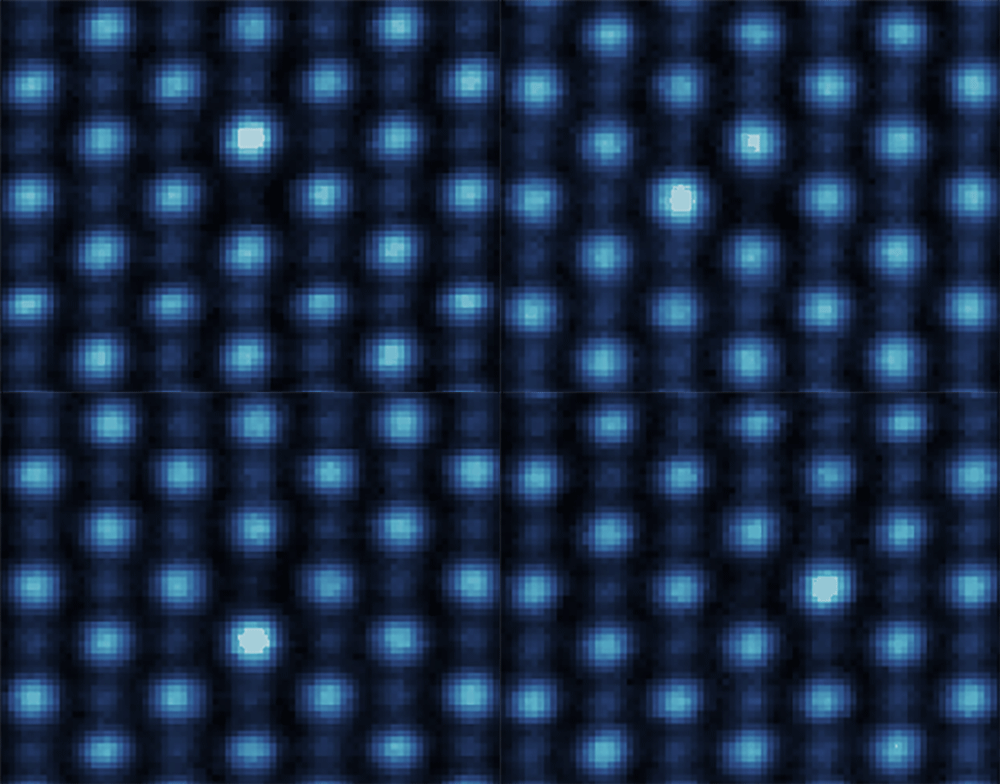
Autonomous atomic engineering at scale by moving the electron beam between target locations. At each target location, the beam is positioned with picometre precision with chromium atoms then repositioned


“The results demonstrate the ability to deterministically move atoms repeatedly within a material’s 3D atomic lattice,” ... An animation shows how researchers controlled the movement of atoms.


Monday, May 25, 2026

Europe physicists plan to build the next large, 91-kilometer particle collider

Good news!

"Particle physicists in Europe intend to build a 91-kilometer-long circular collider—the largest accelerator ever—to smash electrons into positrons, officials at the European particle physics laboratory, CERN, announced today in an online press conference. The Future Circular Collider (FCC) would be completed by the mid-2040s, after CERN’s current atom smasher, the 27-kilometer-long Large Hadron Collider (LHC), winds down. It would cost 15 billion Swiss francs, or about $19 billion—and it might pave the way for a much more powerful, and expensive, successor. ...

The new machine, officially the FCC-ee, would actually be the first of two new accelerators. It would occupy a huge new tunnel at CERN and smash electrons into positrons at energies up to 0.365 tera-electron volts (TeV), generating, among other things, large numbers of Higgs bosons. The Higgs, discovered in 2012 by the LHC, anchors physicists’ explanation of how fundamental particles get their mass. Although the FCC-ee’s collision energy would be lower than the LHC’s 13.6 TeV, its electron-positron collisions would be cleaner than the LHC’s proton-proton collisions, enabling physicists to study the Higgs in unprecedented detail. ..."

It’s official: Europe physicists plan to build 91-kilometer particle collider | Science | AAAS

Monday, May 11, 2026

The hidden structure behind a widely used class of materials: Relaxor ferroelectrics

Amazing stuff!

"Materials called relaxor ferroelectrics have been used for decades in technologies like ultrasounds, microphones, and sonar systems. Their unique properties come from their atomic structure, but that structure has stubbornly eluded direct measurement.

Now a team of researchers f... has directly characterized the three-dimensional atomic structure of a relaxor ferroelectric for the first time. The findings ... provide a framework for refining models used to design next-generation computing, energy, and sensing devices. ...

In their paper, the researchers describe how they used an emerging technique to reveal the distribution of electric charges in the material, with a surprising result.

“We realized the chemical disorder we observed in our experiments was not fully considered previously,” ... “Working with our collaborators, we were able to merge the experimental observations with simulations to refine the models and better predict what we see in experiments.” ...

Probing disordered materials

Leading simulations of relaxor ferroelectrics suggest that when an electric field is applied, the interactions of positively and negatively charged atoms in different nanoregions of the material help give rise to exceptional energy storage and sensing capabilities. The details of those nanoregions have been impossible to directly measure to date. ...

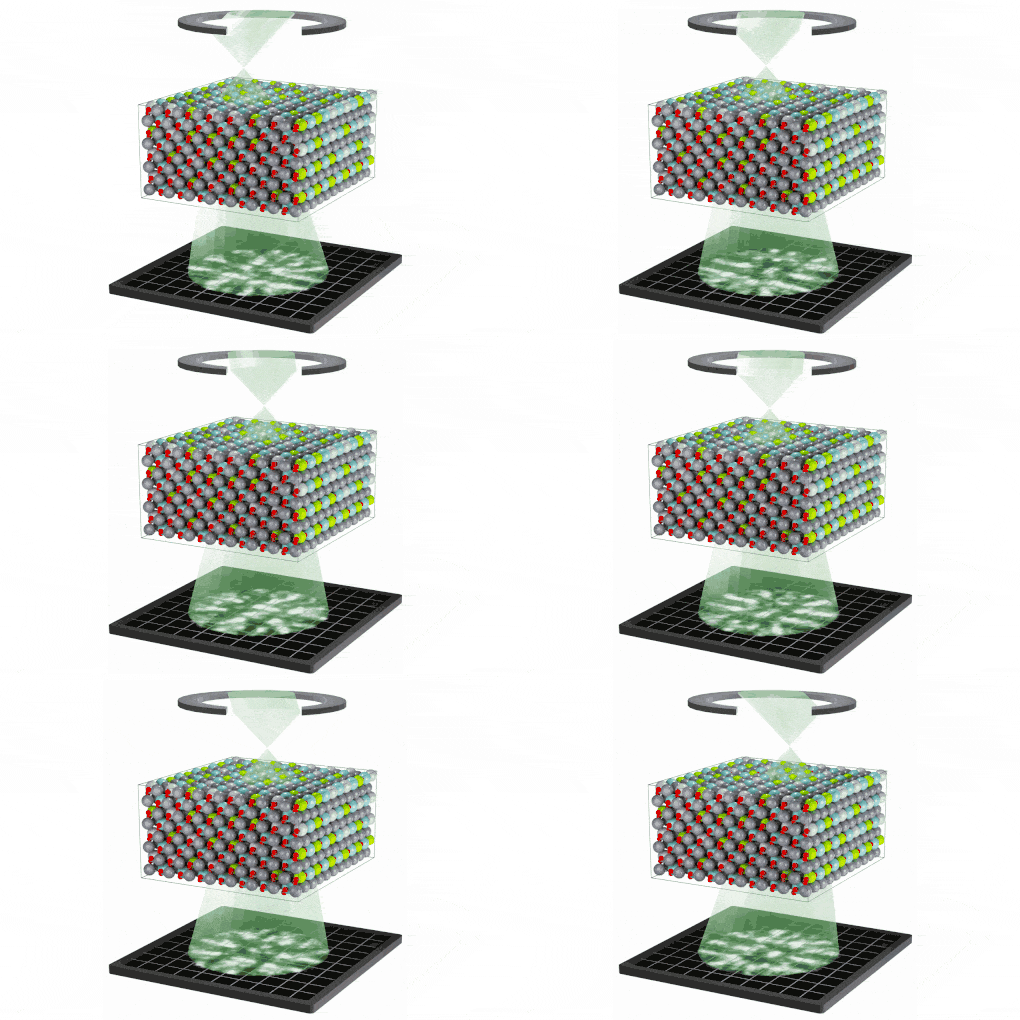
the researchers studied a relaxor ferroelectric material used in sensors, actuators, and defense systems that is a lead magnesium niobate-lead titanate alloy. They used an emerging measurement technique, called multi-slice electron ptychography (MEP), in which researchers move a nanoscale-sized probe of high-energy electrons over a material and measure the resulting electron diffraction patterns. ...

The technique revealed a hierarchy of chemical and polar structures that spanned from atomic to mesoscopic scales. The researchers also found that many regions of differing polarization in the material were much smaller than predicted by the leading simulations. The researchers then fed their new data back into those computer simulations and refined the models to better reflect their findings under different conditions. ..."

From the editor's summary and abstract:
"Editor’s summary
The complexity of lead-based relaxor ferroelectrics makes connecting microscopic characterization with macroscopic properties challenging.
One approach is to compare experimental and theoretical studies, but experiment often averages over material inhomogeneities and theory provides an atomistic view.
To overcome this mismatch, Zhu et al. used multislice electron ptychography, which provided three-dimensional volumetric characterization of the structure and chemistry of a prototypical relaxor material.
Direct comparison with bond valence molecular dynamics simulations revealed that a fully chemically disordered model with residual short-range ordering was necessary to enable agreement with experiment.  ...

Abstract
Introducing structural and/or chemical heterogeneity into otherwise ordered crystals can dramatically alter material properties.
Lead-based relaxor ferroelectrics such as 0.68Pb(Mg1/3Nb2/3)O3-0.32PbTiO3 are prototypical examples.
We performed three-dimensional (3D) volumetric characterization using multislice electron ptychography (MEP) and bond valence molecular dynamics (BVMD) simulations.
Real-space comparisons between the two under varying strain states revealed a coherent 3D view of the “polar slush.” Dipolar correlations from the atomic to domain scales are shown to be jointly modulated by strain and chemical configurations, with the best agreement found in a model accounting for both overall chemical disorder and residual short-range order.
Together, MEP and BVMD provide a framework for linking atomic-scale heterogeneity in complex materials by means of complementary 3D imaging and predictive modeling."

The hidden structure behind a widely used class of materials | MIT News | Massachusetts Institute of Technology "Relaxor ferroelectrics have been used in electronics and sensors for decades, but the source of their unique properties was a mystery until now."


Bridging experiment and theory of relaxor ferroelectrics at the atomic scale with multislice electron ptychography (preprint, open access, published August 2024, could be dated, contains no images)


Using a technique called multi-slice electron ptychography (MEP), researchers move a nanoscale-sized probe of electrons over a material and measure the resulting electron diffraction patterns. Overlapping regions can be used to create a 3-D scan of the material’s atomic structure.


Monday, May 04, 2026

Hopfions split into multiple lower H-hopfions

Amazing stuff!

"In the past few years, physicists have created long-predicted quasiparticles called hopfions—3D, localized, knot-like arrangements of a magnetic material’s spin texture.
A hopfion can be described in terms of its Hopf number H, which counts how many loops of spins are interlinked in the knot.
Researchers have proposed using hopfions in spintronic computers, where H would encode information. This is because a hopfion is a topologically protected state, meaning H stays the same under many deformation conditions.

In new computational work ... have developed a method for splitting high-H hopfions into multiple lower-H hopfions, an operation that would be useful for such spintronic information-storage devices.

The team modeled a two-layer structure in which hopfions were hosted by a magnetic material adjacent to a heavy metal.
An electric current flowing along the heavy-metal layer generated a perpendicular spin-polarized current via the spin Hall effect. This spin-polarized current leaked into the magnetic layer and exerted a torque on the magnetic moments, pulling different parts of the magnetic texture in opposite directions and thereby stretching the hopfions. The researchers found that, once the torque exceeded a threshold, it could overcome a hopfion’s topological protection and tear a higher-H hopfion into multiple lower-H hopfions. An H = 4 hopfion, for example, could split into four H = 1 hopfions or two H = 2 hopfions depending on the strength of the spin-orbit torque. ..."

From the abstract:
"Knots formed by the intertwining of strings have attracted broad interest across various scientific disciplines owing to their rich topology. This concept has recently gained increasing importance in condensed matter physics, as exemplified by a magnetic hopfion labeled by a topological invariant called the Hopf number 𝐻.
Here, we show that spin-orbit torque (SOT) enables dynamic manipulation of the Hopf number of magnetic hopfions. We investigate the SOT-driven evolution of hopfions, revealing the splitting of a high-𝐻 hopfion into multiple lower-𝐻 ones, a process that can be quantified by an effective tension picture.
Comparative analysis across different 𝐻 uncovers a hierarchy of instabilities that dictates these dynamical topological transitions.
These findings not only indicate potential applications of hopfions in SOT-driven multilevel memory devices, but also provide a paradigm for the dynamical control of knot topology."

Physics - Hopfions at the Breaking Point "Simulations show that knot-like magnetic structures called hopfions can be pulled apart—a capability that could be harnessed for spintronic memory devices."


Fig. 1
(a) Schematic illustrations of magnetic hopfions with 𝐻=1,2, and 4, shown by the isosurfaces of 𝑆𝑧=0, along with their corresponding preimages that satisfy 𝑆𝑥=1 (blue) and 𝑆𝑥=−1 (red). The color code in the inset is used throughout this Letter to depict spin orientations.
(b) A typical setup for this study. A spin current injected from the lower heavy metal layer works on magnetic moments as a SOT, thereby inducing hopfion dynamics in the upper magnetic layer. Snapshots of the 𝐻=2
(c) and 𝐻=4
(d) hopfions under (𝐵,𝜁)=(0.003,0.002) and (𝐵,𝜁)=(0.003,0.0021), respectively. The lower panels show their preimages to support the observation of changes in the knot topology.


Saturday, May 02, 2026

Physicists Discover the Most Complex Forms of Ice Yet

Recommendable! The many wonders of water!

"... Since 1900, scientists have observed more than 20 phases of ice, many of them shaped under extreme conditions. The growing list includes hot ice and even ice that conducts electricity. ...

Over the past decade, computer simulations have predicted tens of thousands of possible forms of ice. Though uncommon on our planet, exotic ice may exist in off-Earth environments, from cold and amorphous comet tails to the hot and crushing cores of icy planets.

As physicists put water to the test with improved experimental techniques, they keep finding surprises. “You take water, and just the way you compress it — a little bit faster, a bit slower, up and down, at the right timescale — and then you can find this completely unexpected behavior,” ...

In 2018, an international research group from Europe and Japan created an ambitious computer simulation of the dynamics of water molecules that aimed to predict undiscovered forms of ice. The result was a catalog of over 75,000 phases, each characterized by a slightly different way that the water molecules could fit together when subjected to a different combination of temperature and pressure. ...

In 2025, Bove’s team in Lausanne discovered a smaller but in some ways stranger metastable phase of ice. In a study published in Nature, they reported the first observation of plastic ice VII. This is a variation of ice VII, a high-pressure phase of ice, that appears when the ice is heated to around 500 degrees Celsius. ..."

Physicists Discover the Most Complex Forms of Ice Yet | Quanta Magazine "Scientists keep detecting new forms of ice. According to simulations, there could be many more left to find."

Fig. 1: Phase diagram of the QENS experiment and investigated thermodynamic paths.
a, Experimental phase diagram of water in the investigated P–T region, melting lines are reproduced from refs. 31,43. The region of stability of plastic ice VII from numerical simulations8 is shown with white dashed lines, pressures and temperatures are shifted to match the experimental melting line. The measured thermodynamic points are represented as circles with colours corresponding to the phase attribution (a selection of thermodynamic points from previous experiments34 are represented as squares). Error bars on the pressure determination are of ±0.5 GPa for the high-pressure isobars, whereas they are of 0.1 GPa for the thermodynamic points close to the melting as the melting was used to calibrate the pressure. 


Tuesday, April 28, 2026

Self-organizing “pencil beam” laser could help scientists design brain-targeted therapies

Amazing stuff!

"... researchers discovered a paradoxical phenomenon in optical physics that could enable a new bioimaging method that’s faster and higher-resolution than existing technology.

They discovered that, under the right conditions, a chaotic mess of laser light can spontaneously self-organize into a highly focused “pencil beam.”

Using this self-organized pencil beam, the researchers captured 3D images of the human blood-brain barrier 25 times faster than the gold-standard method, while maintaining comparable resolution.

By showing individual cells absorbing drugs in real-time, this technology could help scientists test whether new drugs for neurodegenerative disease like Alzheimer’s or ALS reach their targets in the brain, with greater speed and resolution. ..."

From the abstract:
"The formation of organized optical states in multidimensional systems is crucial for understanding light–matter interaction and advancing light-shaping technologies.
Here we report the observation of a self-localized, ultrafast pencil beam near the critical power in a standard multimode fiber.
We demonstrate that self-focusing, traditionally considered detrimental, facilitates a nonlinear spatiotemporal localized state with a sidelobe-suppressed Bessel-like profile and markedly improved stability.
Generated simply by an on-axis Gaussian launch, this beam is readily integrated into standard multiphoton microscopes.
We applied this self-localized beam to two-photon imaging of mouse enteric nervous systems, where it outperformed conventional Bessel beams through reduced sidelobes and enhanced aberration resilience.
Lastly, we monitored transferrin uptake dynamics in a live human blood–brain barrier model using minute-resolved three-dimensional scans, revealing spatiotemporal heterogeneity across different cell types.
Our findings offer a robust approach for generating ultrafast pencil beams, enabling high-throughput three-dimensional biosystem imaging to elucidate biological transport pathways."

Self-organizing “pencil beam” laser could help scientists design brain-targeted therapies | MIT News | Massachusetts Institute of Technology "MIT researchers leveraged a surprise discovery to devise a faster and more precise biomedical imaging technique."


Sunday, April 26, 2026

Pure classical physics can explain quantum phenomena, study shows

Amazing stuff!

"A reformulation of the classical Hamilton-Jacobi equation, incorporating density and multiple least-action paths, can exactly reproduce quantum phenomena such as the double-slit experiment, quantum tunneling, and hydrogen atom wave functions. This approach mathematically bridges classical and quantum mechanics, showing that quantum behavior can be computed using classical principles without approximations."

" ... MIT scientists have now shown that certain mathematical ideas from everyday classical physics can be used to describe the often weird and nonintuitive behavior that occurs at the quantum, subatomic scale.

In a paper appearing today in the journal Proceedings of the Royal Society A Mathematical Physical and Engineering Science, the team shows that the motion of a quantum object can be calculated by applying an idea from classical physics known as "least action." With their new formulation, they show they can arrive at exactly the same solution as the Schrödinger equation—the main description of quantum mechanics—for a number of textbook quantum-mechanical scenarios, including the double-slit experiment and quantum tunneling. ..."

From the abstract:
"We show that the Schrödinger equation can be solved exactly based only on classical least action.
Fundamental postulates of quantum mechanics can in turn be derived directly from this construction. The results extend to the relativistic Klein-Gordon, Pauli, and Dirac equations, and suggest a smooth transition between physics across scales
Most quantum mechanics problems have classical versions which involve multiple least action solutions. The associated classical multipaths stem either from the initial position or momentum distribution, or from branch points, generated, e.g. by a multiply connected manifold (double slit experiment), by spatial inequality constraints (particle in a box), or by a singularity (Coulomb potential). We show that the exact Schrödinger wave function  can be constructed by combining this classical multi-valued action with the classical density ⁠, computed analytically from  along each extremal action path.
The construction is general and does not involve any semi-classical approximation.
Quantum wave collapse at measurement can be derived from the classical density change. Entanglement corresponds to a sum of classical particle actions mapping to a tensor product of spinors. The results also provide a simpler computational alternative to Feynman path integrals, as they use only a minimal subset of classical paths."

Classical physics can explain quantum weirdness, study shows


New study bridges the worlds of classical and quantum physics (original news release) "The weird quantum behavior of subatomic particles can be understood through everyday classical ideas, MIT researchers show."

On computing quantum waves exactly from classical and relativistic action (prepint, first published 5/10/2024, open access)

Wednesday, April 22, 2026

Will the quantum superposition of time soon be tested in a laboratory?

Amazing stuff! Food for thought! Can time run simultaneously faster and slower?

"Trapped ions are versatile platforms used for quantum computing and ultra-precise timekeeping. New results now show that combining these capabilities can reveal a deeper layer of physical reality: quantum superpositions of the passage of time. ...

Few concepts in physics are as familiar, yet as enigmatic, as time.
In Einstein’s theory of relativity, time is not absolute: its passage depends on motion and gravity.
But when combined with quantum physics, this relativistic form of time becomes even more counterintuitive. According to quantum theory, the flow of time itself may exist in a genuine quantum superposition, ticking faster and slower at the same time. ...

Now, a new paper titled Quantum signatures of proper time in optical ion clocks, published on April 20, 2026 in Physical Review Letters ... shows that this striking possibility may soon be tested in the laboratory. ...

In this work, a team ... explores quantum aspects of the flow of time and how they can be accessed with atomic clocks. Their results suggest that the same quantum technologies being developed for next-generation clocks and quantum computers may soon probe something far more fundamental: When a clock’s motion obeys quantum mechanics, its movement can exist in superposition, and with it the recorded passage of time itself.
This is analogous to Schrödinger’s famous thought experiment, where the counterintuitive nature of quantum superposition is illustrated by a cat being both alive and dead; here it is the passage of time itself that is in superposition, like a cat that is both young and old at once. ..."

From the abstract:
"Optical clocks based on atoms and ions probe relativistic effects with unprecedented sensitivity.
They resolve time dilation due to atom motion or different positions in the gravitational potential through frequency shifts. However, all measurements of time dilation so far can be explained effectively as the result of dynamics with respect to a classical proper time parameter.
Here we show that atomic clocks can probe effects where a classical description of the proper time dynamics is insufficient as superpositions of proper time emerge.
We apply a Hamiltonian formalism to derive time dilation effects in harmonically trapped clock atoms and show how second-order Doppler shifts due to the vacuum energy, squeezing, and quantum corrections to the dynamics arise.
We also demonstrate that time-dilation-induced entanglement between motion and clock evolution can become observable in state-of-the-art clocks when the motion of the atoms is strongly squeezed, realizing proper time interferometry.
Our results show that experiments with trapped ion clocks are within reach of probing relativistic evolution of clocks for which a quantum description of proper time becomes necessary."

Scientists at Stevens Institute of Technology Reveal That Time Can Go Quantum in Ion Clock Experiments "Physicists show that atomic clocks can probe time ticking both faster and slower simultaneously, revealing how time itself unfolds in quantum superposition"

Credits: Einstein trifft Quantenphysik: Wenn Zeit gleichzeitig schneller und langsamer läuft "Physiker testen ein radikales Szenario: Zeit könnte gleichzeitig schneller und langsamer vergehen. Atomuhren machen es prüfbar."


Illustration of classical, semiclassical, and quantum proper time dynamics of a trapped-ion atomic clock that we consider. 


Illustration of time-dilation-induced entanglement between clock and motional degrees of freedom, and how it can be observed using trapped atomic clocks with squeezing of motional states. The protocol proceeds from left to right.
The top row shows the motional states in a phase-space representation, where a squeezed state is prepared which then evolves at different frequencies in superposition, depending on the internal clock states.
The bottom row shows the same sequence from the perspective of the clock degrees of freedom represented on a Bloch sphere, where a Ramsey sequence results in a superposition of different time evolutions of the clocks due to the different motional energies.
The entanglement between motion and clock (last column) causes a reduction in visibility of the clock ... which can be measured with current state-of-the-art ion clock systems.


Saturday, April 18, 2026

Solid-state quantum sensors can measure several properties at once

Amazing stuff! This could be a breakthrough!

"A special class of sensors leverages quantum properties to measure tiny signals at levels that would be impossible using classical sensors alone. Such quantum sensors are currently being used to study the inner workings of cells and the outer depths of our universe.

Particularly promising are solid-state quantum sensors, which can operate at room temperature. Unfortunately, most solid-state quantum sensors today only measure one physical quantity at a time — such as the magnetic field, temperature, or strain in a material. Trying to measure both the magnetic field and temperature of a material at the same time causes their signals to get mixed up and measurements to become unreliable.

Now, ... researchers have created a way to simultaneously measure multiple physical quantities with a solid-state quantum sensor. They achieved this by exploiting entanglement, where particles become correlated into a single quantum state. In a new paper, the team demonstrated its approach in a commonly used quantum sensor at room temperature, measuring the amplitude, frequency, and phase of a microwave field in a single measurement. They also showed the approach works better than sequentially measuring each property or using traditional sensors.

The researchers say the approach could enable quantum sensors that can deepen our understanding of the behavior of atoms and electrons inside materials and living systems like cancer cells. ...

Although the researchers say their sensor didn’t measure each quantity at the highest possible precision, in future work they plan to explore if their approach can achieve higher precision for each parameter. ..."

From the abstract:
"Quantum multiparameter estimation promises to extend quantum advantage to the simultaneous high-precision measurements of multiple physical quantities. However, realizing this capability in practical quantum sensors under realistic conditions remains challenging due to intrinsic system imperfections.
Here, we experimentally demonstrate multiparameter estimation using a nitrogen-vacancy (NV) center in diamond, a widely adopted solid-state quantum sensor.
Leveraging electronic-nuclear spin entanglement and optimized Bell-state measurement at room temperature, we simultaneously estimate the amplitude, detuning, and phase of a microwave drive from a single measurement sequence.
Despite practical constraints, our results achieve linear sensitivity scaling for all parameters with respect to interrogation time. This work bridges the gap between foundational quantum estimation theory and real-world quantum sensing, opening pathways toward enhanced multiparameter quantum sensors suitable for diverse scientific and technological applications."

Multitasking quantum sensors can measure several properties at once | MIT News | Massachusetts Institute of Technology "The devices represent a key step toward practical quantum sensing, with applications in biomedical sensing, materials characterization, and more."


Fig. 1. Principles of multiparameter estimation based on a single NV center in diamond.


Thursday, April 16, 2026

New laser method gives insight into radioactive atomic nuclei size and shape of Actinides

Amazing stuff!

"... They have developed a new analysis method using a pulsed laser, based on an Optical Parametric Oscillator (OPO). This laser technology can achieve wavelengths and colours that conventional laser systems struggle to produce with sufficient intensity and wavelength precision.

The laser pulses are directed at the atoms, revealing small changes in energy in the wavelengths that are absorbed. ... 

The results of the study can be used to refine theoretical models of atoms and atomic nuclei, making it easier to identify new possible elements and isotopes in future experiments. ..."

New laser method gives insight into radioactive atomic nuclei

New laser method gives insight into radioactive atomic nuclei (original news release) "By directing pulses of laser light at atoms, researchers can study how radioactive elements decay in a matter of seconds. The method is described in a new thesis from the University of Gothenburg, which shows that the atomic nuclei of the elements neptunium and fermium are shaped like rugby balls."


Shapes of an atomic nucleus. The nucleus is always prolate-shaped for fermium-255, but it can vary, for the same element, depending on how many neutrons the nucleus has.


UK invests £2.5bn in nuclear fusion energy development plan

Good news! When will nuclear fusion take over nuclear fission to generate power?

"The UK Atomic Energy Authority (UKAEA) has released its five-year plan to accelerate the growth of the UK nuclear fusion industry and ‘maintain the UK’s position as a global thought-leader in the field’.

In March, the UK government announced £2.5 billion for the fusion sector between 2026 and 2030 as part of its industrial strategy.

UKAEA’s plan – released earlier this month – assigns
£1.3 billion for the next phase of the UK’s prototype fusion power plant in West Burton, Nottinghamshire, as well as 
£920 million for building and operating fusion research facilities across the UK. The rest of the budget is set for projects that foster international collaboration and develop the next generation of fusion scientists. ..."

UK invests £2.5bn in nuclear fusion energy development plan | Chemistry World


Hosting the Joint European Torus experimental fusion reactor has helped to make the UK a leader in this technology


Nature might have a universal rhythm for communication signals across species

Amazing stuff!

"... In a new study, ... scientists found that communication signals across a wide range of species tend to repeat at about 2 hertz, or roughly two beats per second.

The researchers propose this tempo might reflect a shared biological constraint. Animal brains, including humans, may be naturally tuned to process signals arriving at that pace. In other words, two beats per second may be a rhythmic "sweet spot" that enables brains to detect signals more easily and process communication more efficiently. ..."

"Why it matters: Understanding this potentially universal tempo could help scientists better interpret animal signaling and social behavior across species. ..."

From the abstract:
"During fieldwork in Thailand, we observed nearly identical tempos of co-located flashing fireflies and chirping crickets.
Motivated by this, we survey published data showing that an abundance of evolutionarily distinct species communicate isochronously at ~0.5–4 Hz, suggesting that this might be a tempo “hotspot.”
We hypothesize that this timescale may have a universal basis in the biophysics of the receiver’s neurons.
We test this by demonstrating that small receiver circuits constructed from elements representing typical neurons will be most responsive in the observed tempo range."

Nature might have a universal rhythm

Nature might have a universal rhythm (original news release) "From insects to birds to mammals, communication signals follow a common tempo"


Fig 1. Tempo comparison across scales, taxa, modalities, and media.


Fig 3. Schematic of the modeling methodology.