Showing posts with label human memory. Show all posts

Tuesday, March 17, 2026

Why some moments endure: Episodic memory encoding fluctuates with brain's theta rhythms

Amazing stuff!

"... One memory-related theoretical framework, rooted in behavioral science, is the Separate Phases for Encoding and Retrieval (SPEAR) model. This model outlines the idea that the human brain rapidly switches between the encoding of information and the retrieval of stored information. ...

Researchers ... recently carried out a study aimed at testing this theory and the possibility that memory processes change moment-by-moment following this rhythmic pattern. Their findings ... are aligned with the SPEAR model's predictions and suggest that the brain is only disposed to learn new information during brief time windows. ..."

From the abstract:
"Why do some experiences endure in memory better than others? Here we explore the possibility that learning fluctuates rhythmically several times per second, with fortuitously timed experiences being more memorable. Although such fleeting opportunities for encoding would evade our awareness, they are predicted by a prominent model describing how theta rhythms in the brain coordinate memory—the Separate Phases for Encoding and Retrieval (SPEAR) model.
In a preregistered study, we adapted a dense sampling approach to reconstruct the millisecond time course of memory encoding in n = 125 participants. We found that memory encoding fluctuated at a theta rhythm (3–10 Hz), that these rhythms were not a by-product of rhythmic attention and that—like theta rhythms in the brain—memory rhythms were modulated by putative markers of acetylcholine.
Our findings provide behavioural evidence consistent with the SPEAR model of episodic memory."

Why some moments endure: Episodic memory encoding fluctuates with brain's theta rhythms


Object classification, memory test and overall performance.


Thursday, September 04, 2025

Iron's role in memory decline and brain aging

Good news!

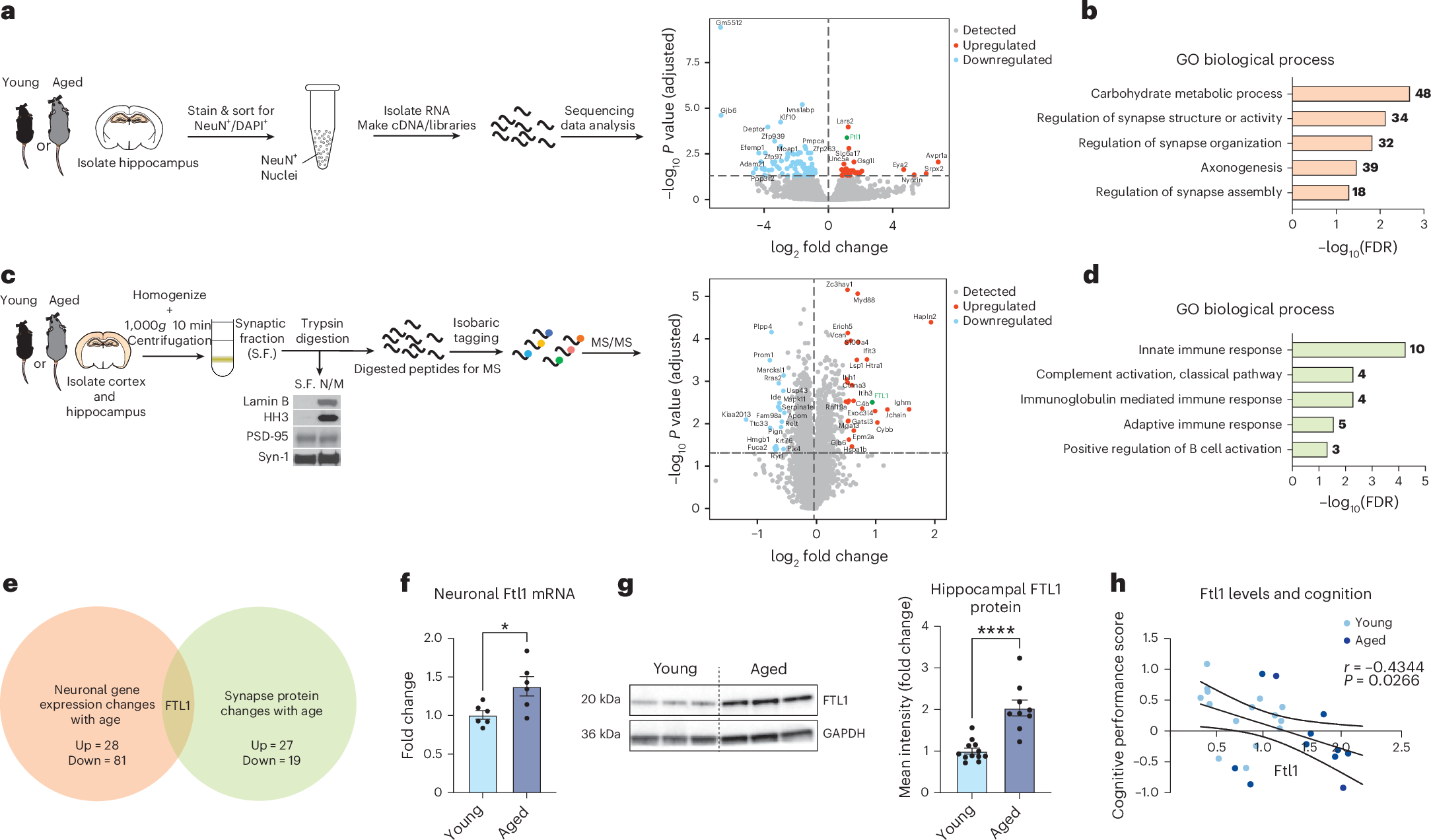
"... the hippocampus, a brain region responsible for regulating learning and memory, and highly vulnerable to the effects of aging. Using a process called neuronal nuclei RNA sequencing they identified ferritin light chain 1 (FTL1), an iron-associated protein, as a pro-aging neuronal factor that impairs cognition.

Using transcriptomics and mass spectrometry, researchers found that older mice had more FTL1 in their hippocampus, the brain's memory HQ. This iron-handling protein wasn't just loitering; it was actively disrupting neural connections and dimming cognitive performance. ..."

"... They looked at how the genes and proteins in the hippocampus changed over time in mice and found just one protein that differed between old and young animals. It’s called FTL1. Old mice had more FTL1, as well as fewer connections between brain cells in the hippocampus and diminished cognitive abilities.

When the researchers artificially increased FTL1 levels in young mice, their brains and behavior began to resemble that of old mice. In experiments in petri dishes, nerve cells engineered to make lots of FTL1 grew simple one-armed neural wires, or neurites, rather than the branching neurites that normal cells create.

But when scientists reduced the amount of FTL1 in the hippocampus of the old mice, they regained their youth. They had more connections between nerve cells, and the mice did better on memory tests. ..."

From the abstract:
"Understanding cellular and molecular drivers of age-related cognitive decline is necessary to identify targets to restore cognition at old age.
Here we identify ferritin light chain 1 (FTL1), an iron-associated protein, as a pro-aging neuronal factor that impairs cognition.
Using transcriptomic and mass spectrometry approaches, we detect an increase in neuronal FTL1 in the hippocampus of aged mice, the levels of which correlate with cognitive decline.
Mimicking an age-related increase in neuronal FTL1 in young mice alters labile iron oxidation states and promotes synaptic and cognitive features of hippocampal aging.
Targeting neuronal FTL1 in the hippocampi of aged mice improves synaptic-related molecular changes and cognitive impairments.
Using neuronal nuclei RNA sequencing, we detect changes in metabolic processes, such as ATP synthesis, and boosting these metabolic functions through NADH supplementation mitigated pro-aging effects of neuronal FTL1 on cognition. Our data identify neuronal FTL1 as a key molecular mediator of cognitive rejuvenation."

Iron's role in memory decline and brain aging "'Master switch' brain protein could reverse age-related memory loss"


Fig. 1: Neuronal FTL1 increases in the hippocampus with age and negatively correlates with cognitive function.


Wednesday, July 16, 2025

Scientists unravel how a tiny region of the brain helps us form distinct memories

Amazing stuff!

"Key takeaways:
  • A tiny region in the brain works like a reset button that separates memory of one meaningful event from the next. Without this reset mechanism, moments could blur together and lead to the kinds of memory disruptions seen in PTSD, Alzheimer’s disease, anxiety and even healthy aging. 
  • Data from the study suggests that stress may disrupt processes that organize events in memory.
  • The findings not only reveal how the brain builds distinct episodes in memory but also identify a potential target for interventions to restore memory function and improve quality of life. 
..."

From the highlights and abstract:
"Highlights
• Context shifts, or boundaries, promote perception and memory of distinct events
• Arousal and locus coeruleus activity at boundaries predict later memory separation
• Boundary-evoked LC activation enhances pattern separation in dentate gyrus
• Markers of chronically elevated LC output relate to disruptions in event perception

Summary
Memories reflect the ebb and flow of experiences, capturing distinct events from our lives.
Using a combination of functional magnetic resonance imaging (fMRI), neuromelanin imaging, and pupillometry, we show that arousal and locus coeruleus (LC) activation segment continuous experiences into discrete memories. As sequences unfold, encountering a context shift or event boundary triggers pupil-linked arousal and LC processes that predict later memory separation. Boundaries, furthermore, promote temporal pattern separation within the left hippocampal dentate gyrus, which correlates with heightened LC responses to those same transition points.
Unlike transient LC effects, indirect structural and functional markers of elevated background LC activation correlate with reduced arousal-related LC and pupil responses at boundaries, suggesting that hyperarousal disrupts event segmentation. Our findings support the idea that arousal mechanisms initiate a neural and memory “reset” in response to significant changes, fundamentally shaping the episodes that define episodic memory."

Scientists unravel how a tiny region of the brain helps us form distinct memories | UCLA


Figure 1. Auditory event boundaries elicit increased attention and the segmentation of distinct events in memory.


Saturday, June 29, 2024

Research uncovers kidney and brain expressed KIBRA protein that helps ensure memory formation and stabilization

Amazing stuff! When will humans have a better memory?

They say love goes through the stomach. Perhaps memory goes through the kidney? 😊

"... A study ... has uncovered a biological explanation for long-term memories. It centers on the discovery of the role of a molecule, KIBRA, that serves as a "glue" to other molecules, thereby solidifying memory formation. ..."

"... In a study using laboratory mice, the scientists focused on the role of KIBRA, or kidney and brain expressed protein, the human genetic variants of which are associated with both good and poor memory. They focused on KIBRA’s interactions with other molecules crucial to memory formation—in this case, protein kinase Mzeta (PKMzeta). This enzyme is the most crucial molecule for strengthening normal mammalian synapses that is known, but it degrades after a few days.

Their experiments reveal that KIBRA is the “missing link” in long-term memories, serving as a “persistent synaptic tag,” or glue, that sticks to strong synapses and to PKMzeta while also avoiding weak synapses. ..."

From the abstract:
"How can short-lived molecules selectively maintain the potentiation of activated synapses to sustain long-term memory? Here, we find kidney and brain expressed adaptor protein (KIBRA), a postsynaptic scaffolding protein genetically linked to human memory performance, complexes with protein kinase Mzeta (PKMζ), anchoring the kinase’s potentiating action to maintain late-phase long-term potentiation (late-LTP) at activated synapses. Two structurally distinct antagonists of KIBRA-PKMζ dimerization disrupt established late-LTP and long-term spatial memory, yet neither measurably affects basal synaptic transmission. Neither antagonist affects PKMζ-independent LTP or memory that are maintained by compensating PKCs in ζ-knockout mice; thus, both agents require PKMζ for their effect. KIBRA-PKMζ complexes maintain 1-month-old memory despite PKMζ turnover. Therefore, it is not PKMζ alone, nor KIBRA alone, but the continual interaction between the two that maintains late-LTP and long-term memory."

Research uncovers 'molecular glue' that helps ensure memory formation and stabilization

How Do Our Memories Last a Lifetime? New Study Offers a Biological Explanation (original news release) Ground-breaking research uncovers “molecular glue” that helps ensure memory formation and stabilization


Fig. 1. Strong synaptic stimulation facilitates formation of persistent KIBRA-PKMζ complexes in late-LTP maintenance.


Memories are stored by the interaction of two proteins: a structural protein, KIBRA (green), that acts as a persistent synaptic tag, and a synapse-strengthening enzyme, protein kinase Mzeta (red). Drugs that disrupt the memory-perpetuating interaction (other colors) erase pre-established long-term and remote memories. 


Monday, August 07, 2023

New University of Arizona study links brain waves directly to memory

Amazing stuff! Do we not all wish to have better and faster memories? Perhaps, AI to the rescue!

This still seems to be some very preliminary research confirming that we still know so little about how our memory works! As an aside: Anybody, who claims that we live in the age of the anthropocene is obscene!

"Neurons produce rhythmic patterns of electrical activity in the brain. One of the unsettled questions in the field of neuroscience is what primarily drives these rhythmic signals, called oscillations. University of Arizona researchers have found that simply remembering events can trigger them, even more so than when people are experiencing the actual event.
The researchers ... specifically focused on what are known as theta oscillations, which emerge in the brain’s hippocampus region during activities like exploration, navigation and sleep. The hippocampus plays a crucial role in the brain’s ability to remember the past. ..."

From the abstract:
"Decades of work in rodents suggest that movement is a powerful driver of hippocampal low-frequency “theta” oscillations. Puzzlingly, such movement-related theta increases in primates are less sustained and of lower frequency, leading to questions about their functional relevance. Verbal memory encoding and retrieval lead to robust increases in low-frequency oscillations in humans, and one possibility is that memory might be a stronger driver of hippocampal theta oscillations in humans than navigation. Here, neurosurgical patients navigated routes and then immediately mentally simulated the same routes while undergoing intracranial recordings. We found that mentally simulating the same route that was just navigated elicited oscillations that were of greater power, higher frequency, and longer duration than those involving navigation. Our findings suggest that memory is a more potent driver of human hippocampal theta oscillations than navigation, supporting models of internally generated theta oscillations in the human hippocampus."

New UArizona study links brain waves directly to memory | AZBio

Tuesday, June 20, 2023

Your memory might benefit from a daily multivitamin pill as you age

As someone, who has been taking almost daily multivitamins/-minerals for several decades I must concede my memory is still not good enough! (Caution: irony) 😊

Apparently, it makes even sense and has benefits to start taking daily doses at high age! So pop it! 😊

"Researchers ... reported last month that a randomized trial of the humble multivitamin found surprisingly potent effects on memory as we age. The COSMOS-Web Study showed that, among 3,500 subjects 60 and older, a daily multivitamin led to 3.1 years less cognitive aging than for those assigned a placebo. The clinical study was the second cognition trial in COSMOS to suggest that multivitamins can slow memory loss. ...
We saw better performance on memory tests among the participants randomized to multivitamins compared to those assigned to placebo. The benefit was apparent at one year and was sustained over the three years of the trial. Although an initial improvement in memory was seen, possibly due to replenishing of micronutrients in those with deficiencies, the longer-term effect was slowing of age-related memory loss and cognitive aging. ..."

From the abstract:
"Background
Maintenance of cognitive abilities is of critical importance to older adults, yet few effective strategies to slow cognitive decline currently exist. Multivitamin supplementation is used to promote general health; it is unclear whether it favorably affects cognition in older age.
Objectives
To examine the effect of daily multivitamin/multimineral supplementation on memory in older adults.
Methods
The COcoa Supplement and Multivitamin Outcomes Study Web (COSMOS-Web) ancillary study (NCT04582617) included 3562 older adults. Participants were randomly assigned to a daily multivitamin supplement (Centrum Silver) or placebo and evaluated annually with an Internet-based battery of neuropsychological tests for 3 y. The prespecified primary outcome measure was change in episodic memory, operationally defined as immediate recall performance on the ModRey test, after 1 y of intervention. Secondary outcome measures included changes in episodic memory over 3 y of follow-up and changes in performance on neuropsychological tasks of novel object recognition and executive function over 3 y.
Results
Compared with placebo, participants randomly assigned to multivitamin supplementation had significantly better ModRey immediate recall at 1 y, the primary endpoint (t(5889) = 2.25, P = 0.025), as well as across the 3 y of follow-up on average (t(5889) = 2.54, P = 0.011). Multivitamin supplementation had no significant effects on secondary outcomes. Based on cross-sectional analysis of the association between age and performance on the ModRey, we estimated that the effect of the multivitamin intervention improved memory performance above placebo by the equivalent of 3.1 y of age-related memory change.
Conclusions
Daily multivitamin supplementation, compared with placebo, improves memory in older adults. Multivitamin supplementation holds promise as a safe and accessible approach to maintaining cognitive health in older age. ..."

Your memory might benefit from a multivitamin – Harvard Gazette Researcher details ‘remarkable’ findings, but with a caveat: Healthy lifestyle needs to come first

Sunday, May 29, 2022

Brain Fluid from Youngsters Gives Old Mice a Memory Boost

Amazing stuff! Another step closer to the age old quest for the fountain of youth! Don't try this at home! šŸ˜„

"... In the study, 18-to-25-month-old mice that had the CSF [cerebral spinal fluid] of 2-to-3-month-old mice injected directly into their brains outperformed controls on a fear conditioning memory task. The study authors say that’s thanks to the growth of new oligodendrocytes, which support other brain cells by producing myelin, the insulation that shields neurons’ axons. ...
“Oligodendrocytes are unique because their progenitors are still present in vast numbers in the aged brain, but [those progenitors] are very slow in responding to cues that promote their differentiation,” ... “We found that when they are re-exposed to young CSF, they proliferate and produce more myelin in the hippocampus,” a brain region associated with memory formation and retention. ...
more recent research has begun to appreciate the key roles played by glia cells (like oligodendrocytes), which seem to be just as important to brain function as neurons. ..."

From the abstract:
"... Cerebrospinal fluid (CSF) makes up the immediate environment of brain cells, providing them with nourishing compounds4,5. We discovered that infusing young CSF directly into aged brains improves memory function. Unbiased transcriptome analysis of the hippocampus identified oligodendrocytes to be most responsive to this rejuvenated CSF environment. We further showed that young CSF boosts oligodendrocyte progenitor cell (OPC) proliferation and differentiation in the aged hippocampus and in primary OPC cultures. ... we identified serum response factor (SRF), a transcription factor that drives actin cytoskeleton rearrangement, as a mediator of OPC proliferation following exposure to young CSF. With age, SRF expression decreases in hippocampal OPCs, and the pathway is induced by acute injection with young CSF. We screened for potential SRF activators in CSF and found that fibroblast growth factor 17 (Fgf17) infusion is sufficient to induce OPC proliferation and long-term memory consolidation in aged mice while Fgf17 blockade impairs cognition in young mice. These findings demonstrate the rejuvenating power of young CSF and identify Fgf17 as a key target to restore oligodendrocyte function in the ageing brain."

Brain Fluid from Youngsters Gives Old Mice a Memory Boost | The Scientist Magazine® A growth factor found in the cerebrospinal fluid of young mice triggered the proliferation of myelin-making cells when injected into the brains of older mice.

Young CSF restores oligodendrogenesis and memory in aged mice via Fgf17 (no public access, but article above provides access to PDF file)

Thursday, May 12, 2022

Transfusion of brain fluid from young mice to old mice improves memory

Good news! This is already rejuvenating my old memory! šŸ˜„
When will we have memory boosters for all ages not only for old age?

"... But researchers at Stanford University discovered that if you transfuse cerebrospinal fluid from a young mouse into an old one, it will recover its former powers of recall and freeze in anticipation. They also identified a protein in that cerebrospinal fluid, or CSF, that penetrates into the hippocampus, where it drives improvements in memory. ...
suggests that youthful factors circulating in the CSF, or drugs that target the same pathways, might be tapped to slow the cognitive declines of old age. ...
“This is the first study that demonstrates real improvement in cognitive function with CSF infusion, and so that’s what makes it a real milestone,” ...
Only in the last 10 years have researchers begun to probe whether the CSF is more than just a passive chemical current and in fact has an active role to play in directing development and maintaining brain health. ...
In 2014, [researchers] showed that an influx of young blood improved memory and learning in middle-aged mice using a technique that involved stitching young mice to old ones, and fusing their blood vessels to create a two-animal circuit. ...
used single-cell RNA sequencing to pry open the memory centers of these mice, the hippocampus, where they found about 270 genes whose expression had changed in response to the young CSF. They saw the biggest changes in a specific type of cell called oligodendrocytes, which produce myelin — a fat and protein-rich material that coats the connections between neurons. ...
a promising candidate, a fibroblast growth factor called Fgf17, which triggers oligodendrocyte proliferation in young mice and decreases expression as they get older. When they infused just Fgf17 into the CSF of aged mice, they saw similar memory improvements as with the young CSF. Finally, they infused young mice with an anti-Fgf17 antibody to block their cells from taking it up, which impaired their recall and decreased their performance in a maze challenge ..."

From the abstract:
"Recent understanding of how the systemic environment shapes the brain throughout life has led to numerous intervention strategies to slow brain ageing. Cerebrospinal fluid (CSF) makes up the immediate environment of brain cells, providing them with nourishing compounds. We discovered that infusing young CSF directly into aged brains improves memory function. Unbiased transcriptome analysis of the hippocampus identified oligodendrocytes to be most responsive to this rejuvenated CSF environment. We further showed that young CSF boosts oligodendrocyte progenitor cell (OPC) proliferation and differentiation in the aged hippocampus and in primary OPC cultures. Using SLAMseq to metabolically label nascent mRNA, we identified serum response factor (SRF), a transcription factor that drives actin cytoskeleton rearrangement, as a mediator of OPC proliferation following exposure to young CSF. With age, SRF expression decreases in hippocampal OPCs, and the pathway is induced by acute injection with young CSF. We screened for potential SRF activators in CSF and found that fibroblast growth factor 17 (Fgf17) infusion is sufficient to induce OPC proliferation and long-term memory consolidation in aged mice while Fgf17 blockade impairs cognition in young mice. These findings demonstrate the rejuvenating power of young CSF and identify Fgf17 as a key target to restore oligodendrocyte function in the ageing brain."

Transfusion of brain fluid from young mice improves memory in old mice

Young CSF restores oligodendrogenesis and memory in aged mice via Fgf17 (no public access. Article above contains link to PDF)

Monday, August 02, 2021

Memory-making involves extensive DNA breaking

Recommendable!

"The urgency to remember a dangerous experience requires the brain to make a series of potentially dangerous moves: Neurons and other brain cells snap open their DNA in numerous locations — more than previously realized, according to a new study — to provide quick access to genetic instructions for the mechanisms of memory storage. ...
The extent of these DNA double-strand breaks (DSBs) in multiple key brain regions is surprising and concerning ..., because while the breaks are routinely repaired, that process may become more flawed and fragile with age. Tsai’s lab has shown that lingering DSBs are associated with neurodegeneration and cognitive decline and that repair mechanisms can falter. ...
The creation of a fear memory doubled the number of DSBs among neurons in the hippocampus and the prefrontal cortex, affecting more than 300 genes in each region. Among 206 affected genes common to both regions ..."

Memory-making involves extensive DNA breaking | MIT News | Massachusetts Institute of Technology To quickly express learning and memory genes, brain cells snap both strands of DNA in many more places and cell types than previously realized, a new study shows.

Tuesday, February 09, 2021

How the brain helps us remember what we’ve seen

Recommendable! What little we still know about our brain!

"... This capability of “visual working memory” feels effortless, but a new MIT study shows that the brain works hard to keep up. Whenever a key object shifts across our field of view — either because it moved or our eyes did — the brain immediately transfers a memory of it by re-encoding it among neurons in the opposite brain hemisphere. ..."

"Visual working memory (WM) storage is largely independent between the left and right visual hemifields/cerebral hemispheres, yet somehow WM feels seamless. ... An instructed saccade during the WM delay shifted the remembered location from one hemifield to the other. Before the shift, spike rates and oscillatory power showed clear signatures of memory laterality. After the shift, the lateralization inverted, consistent with transfer of the memory trace from one hemisphere to the other. ..."

How the brain helps us remember what we’ve seen | MIT News | Massachusetts Institute of Technology Research finds that as one looks around, mental images bounce between right and left brain as they shift around in our visual system.

Here is the underlying research paper: