Showing posts with label organoid. Show all posts

Saturday, August 29, 2026

New biobank of patient-derived tumour organoid 3D models reveals cancers’ weak spots of five different cancer types

Good news! Cancer is history (soon)! This could be a major advance!

"... The biobank is expected to have wide utility, enabling scientists to identify the genes that specific cancers depend on for growth, revealing potential weak points that could be targeted with future treatments.

The study is published alongside two complementary papers from international collaborators, reflecting a wider multi-year effort to refine organoid models and make them more accessible to the research community.

For decades, cancer researchers have relied on two-dimensional (2D) cell lines to study cancer. These workhorse models, in which cells are grown in a flat layer on laboratory plates, have provided important insights into cancer biology and remain widely used.
However, 2D models have limitations: they do not fully capture the diversity and complexity of tumours seen in patients and they have adapted to laboratory conditions over time. Researchers are therefore increasingly looking to develop next-generation models that better reflect tumours found in patients, such as organoids, to complement 2D cell lines and help address some of these gaps. ...

In a first of its kind study in organoids, the researchers went on to use CRISPR screening, a method they used to systematically switch off genes one by one to see if the cells survived, in order to map the genes that are critical to cancer cell survival across 162 of the organoid models. They identified thousands of genetic dependencies, including both common genes required by many cancers to survive, and more specific vulnerabilities linked to particular tumour types. ..."

From the abstract:
"Cancer cell lines remain foundational for research and drug discovery, yet they incompletely capture tumour diversity, lack linked patient context, and have undergone adaptation to culture.
Tumour organoids are three-dimensional cultures derived from patient tissue that offer a powerful complement to cell lines.
Here we derived and characterized 256 clinically annotated tumour organoids directly from colorectal, oesophageal, ovarian, pancreatic and gastric cancers as renewable, genetically stable models.
Extensive characterization of each model and matched patient tumour samples included whole-genome and transcriptome sequencing, and genome-wide CRISPR–Cas9 screens across 162 organoids mapped gene dependencies. Integrative analyses revealed genomic and clinical markers of dependency across common and rare subtypes, identified organoid-specific essential genes, and revealed targetable vulnerabilities following tumour evolution in paired pre- and post-treatment samples.
In colorectal cancer, functional and pharmacological interrogation of the EGFR–RAS–MAPK axis uncovered differential effects of KRAS variant alleles.
This open, publicly available resource provides a systematic map of gene dependencies in patient-derived organoids, expanding the model diversity and mechanistic insight needed to advance precision oncology."

New biobank of tumour models reveals cancers’ weak spots "The largest characterised collection of patient-derived tumour organoids to date is helping scientists identify the genes cancers need to grow and survive."


Fig. 1: Establishment of organoid biobank and patient-linked clinical data.


Fig. 2: Genomic features are conserved between organoid and patient-matched tumour.


Thursday, August 20, 2026

Brain organoids, kept alive more than five years, matured like human brains

Amazing stuff! This could be a breakthrough!

"... scientists feared ruining their oldest brain organoids. Instead, the tiny models kept developing, revealing remarkable internal clock"

"... ‘Mini Brains’ Offer Major Breakthrough in Neural Research
In a new research milestone, scientists have kept human brain organoids—tiny, lab-grown neural tissue clusters—alive and developing for up to five years, a dramatic time extension that unlocks new opportunities to investigate neural development, disease, and potential treatments ..."

From the abstract:
"The human brain develops and matures over an exceptionally prolonged period of time that spans nearly two decades of life. Processes that govern species-specific aspects of human postnatal brain development are difficult to study in animal models.
While human brain organoids offer a promising in vitro model, they have thus far been shown to largely mimic early stages of brain development.
Here we develop human brain organoids for 5 years in culture, optimizing growth conditions to extend excitatory neuron viability beyond previous limits. Using maturation-associated modules derived from endogenous human brain, we show that brain organoids transcriptionally age with cell type specificity over years in culture.
Whole-genome methylation profiling reveals that the predicted epigenomic age of organoids correlates precisely with time spent in vitro, and parallels epigenomic ageing in vivo.
Notably, we show that in chimeric organoids generated by mixing neural progenitors of different ages, old progenitors rapidly produce late neuronal fates, skipping the production of earlier neuronal progeny, therefore showing that progenitors that age in organoids retain a memory of the time spent in vitro.
The data indicate that human brain organoids can continue to mature and record the passage of time over many years in culture."


‘Mini brains’ kept alive for years appear to age like real brains "Miniature models of the human brain can be kept alive for years, allowing scientists to study neural development and brain diseases"

Lab-grown brain ‘organoids’ set longevity record (original news release) "Researchers show that brain cells cultured in a dish can mimic normal cerebral development and even retain “memory” of their own histories"

Scientists kept brain organoids alive for years. Then they looked inside | STAT "Eraser-sized balls of tissue could aid research on early stages of neurological diseases"


Fig. 1: Cortical organoids undergo progressive maturation during long-term culture.


Fig. 3: Activity-permissive medium enhances the maturation of cortical organoids.


Monday, February 16, 2026

Reprogrammed Human Stomach Organoids Secrete Insulin

Good news! This is about an older research article.

"... differentiated human embryonic stem cells into gastric organoids. They engineered the organoids such that the structures could be reprogrammed into pancreatic beta-like cells upon flipping a genetic switch using appropriate molecular cues.

The researchers then transplanted these organoids into the abdomen of mice and coaxed the organoids to produce insulin-secreting cells. Within three weeks, they observed insulin-producing cells within the organoids, which expressed key markers of pancreatic beta cells. ..."

"Highlights
• Engrafted human gastric organoids (hGOs) model human stomach in vivo
• NPM factor induction converts hGOs into insulin+ β-like cells in vitro and in vivo
•In situ gastric reprogramming offers potential for autologous diabetes cell therapy

Summary
Insulin-dependent diabetes could be treated by supplying patients with primary pancreatic islets or other types of insulin-secreting cells. Functional insulin-secreting cells can be induced in situ from the murine stomach using defined genetic factors, offering a promising method to directly produce autologous insulin-secreting cells.
Here, we modeled whether such gastric insulin-secreting (GINS) cells could be generated in vivo from human stomach tissues. We produced human gastric organoids (hGOs) from human embryonic stem cells engineered with inducible expression of reprogramming factors. The hGOs were stably transplanted for 6 months and showed robust cytodifferentiation resembling the human stomach in structure and cellular composition.
Upon hGO maturation in vivo, we activated the reprogramming factors and observed the formation of insulin+ cells, which secreted insulin into the circulation and ameliorated experimental diabetes. Our modeling indicates that GINS cells can be induced from human stomach tissues in vivo, warranting further therapeutic development for this technology."

Reprogrammed Human Stomach Organoids Secrete Insulin | The Scientist "Transplanting human gastric organoids engineered to release insulin in diabetic mice reduced hyperglycemia, offering a therapeutic avenue for type 1 diabetes."


Figure 1 Generation of hGOs from hESCs with inducible expression of NPM factors


Friday, November 28, 2025

Time for global oversight of mini-brain organoid research work

Food for thought! Has the time come for regulation and codes?

"Brain-organoid researchers are calling for global oversight as lab-grown mini-brains become increasingly complex and countries reduce reliance on animal models.
Once primitive cell clusters, neural organoids can now mimic aspects of human brain development and disease — and even integrate into animal brains — prompting concerns over donor consent, animal welfare and the possibility of emerging sentience. “What does it mean if human cells are causing gains in animals’ abilities?” says bioethicist Insoo Hyun. “Currently, we’re not set up to deal with that.” The call to action was signed by 17 scientists across five countries."

From the abstract:
"Human neural organoid and assembloid research, unknown until a little more than a decade ago, has recently exploded. The amount of research, the types of organoids and assembloids, and the scope of the work have expanded markedly. Although some of the ethical and social questions that arise have been previously discussed, these issues continue to grow and become more pressing.
In such a fast-moving field, any conclusions will be challenged by new developments. We argue that there is a crucial need for a continuing international process to watch, and to guide, the progress of this field.
Whether operationalized through existing organizations or a new one, this process would collect and disseminate evolving information about research involving human neural organoids, assembloids, and their transplantation into nonhuman animals; promote discussion and engagement with associated ethics and policy issues among researchers and the public; and offer guidance when needed."

Nature Briefing: Translational Research

Lab-grown models of human brains are advancing rapidly. Can ethics keep pace? Whether neural organoids feel pain or should be placed in animals are among the questions swirling around biology’s hot new technology

As brain organoids grow increasingly complex, leading scientists and bioethicists call for global oversight "Lab-grown 3D structures spark emerging concerns over donor consent, animal welfare, and developing sentience in a dish"

The need for a global effort to attend to human neural organoid and assembloid research (no public access; great the pamphlet can not be viewed by the public) "A continuing international process is needed to monitor and advise this rapidly progressing field"

Wednesday, November 26, 2025

Reprogrammed Human Stomach Organoids Secrete Insulin

Good news!

"... Now, researchers ... engineered human stomach organoids to secrete insulin. Transplanting these into diabetic mice reduced hyperglycemia.2 Their findings, published today in Stem Cell Reports, could help develop technologies to engineer a person’s own insulin-secreting cells for diabetes treatment. ..."

From the highlights and abstract:
"Highlights
• Engrafted human gastric organoids (hGOs) model human stomach in vivo
• NPM factor induction converts hGOs into insulin+ β-like cells in vitro and in vivo
• In situ gastric reprogramming offers potential for autologous diabetes cell therapy

Summary
Insulin-dependent diabetes could be treated by supplying patients with primary pancreatic islets or other types of insulin-secreting cells. Functional insulin-secreting cells can be induced in situ from the murine stomach using defined genetic factors, offering a promising method to directly produce autologous insulin-secreting cells.
Here, we modeled whether such gastric insulin-secreting (GINS) cells could be generated in vivo from human stomach tissues. We produced human gastric organoids (hGOs) from human embryonic stem cells engineered with inducible expression of reprogramming factors.
The hGOs were stably transplanted for 6 months and showed robust cytodifferentiation resembling the human stomach in structure and cellular composition.
Upon hGO maturation in vivo, we activated the reprogramming factors and observed the formation of insulin+ cells, which secreted insulin into the circulation and ameliorated experimental diabetes.
Our modeling indicates that GINS cells can be induced from human stomach tissues in vivo, warranting further therapeutic development for this technology."

Reprogrammed Human Stomach Organoids Secrete Insulin | The Scientist


Figure 1 Generation of hGOs from hESCs with inducible expression of NPM factors


Monday, November 24, 2025

Severe depression tied to immune system imbalance, not just brain chemistry

Good news! What about lack of sunshine?

"... They found that this immune abnormality affects brain function, and the "Immune Neural Axis" imbalance is the core mechanism of depression, opening up the possibility for the discovery of new biomarkers and the development of new drugs for depression treatment. ...

performed a multi-omics analysis combining blood analysis, single-cell analysis, and patient-derived brain organoids (mini-brains). ..."

From the abstract:
"Major depressive disorder (MDD) with atypical features accompanied by psychotic symptoms represents a severe and under-researched subtype of depression and severe mental illness, characterized by significant personal and social impact.
This study aims to explore novel biomarkers through a precision medicine approach by combining clinical data, white blood cell (WBC) single-cell RNA sequencing (scRNA-seq), plasma proteomics, and brain organoid models to uncover immunological and neurological alterations in patients with this condition. Patients exhibited elevated stress, anxiety, depression, and increased WBC counts, although the difference in WBC count is not significant after adjusting for age.
Plasma proteomic profiling identified an upregulation of proteins implicated in synaptic formation, including Doublecortin-Like Kinase 3 (DCLK3) and Calcyon (CALY), as well as immune-related proteins such as Complement Component 5 (C5).
WBC scRNA-seq revealed significant neutrophil and monocyte transcriptomic alterations, suggesting increased inflammation and immune dysregulation. Patient-derived brain organoids display reduced growth and distinct gene expression patterns compared to controls, particularly under dexamethasone-induced stress conditions.
Combining WBC scRNA-seq, plasma proteomics, and brain organoid models offers a novel framework for understanding the pathophysiology of psychiatric disorders, which is one of the most complex disorders."

Depression tied to immune system imbalance, not just brain chemistry


Figure 2
Differential WBC Single-cell Transcriptomic Profiles in the Patient Group Elevated Inflammatory Gene Expression in Neutrophils and Monocytes


Sunday, November 02, 2025

Lab-grown tiny human kidneys yield urine and is able to model a kidney disease

Good, but a bit of old news! Impressive!

"Researchers have created the most sophisticated kidney organoid to date, offering a real shot at growing transplantable kidneys from stem cells. These mini kidneys were capable of making urine when transplanted into mice. ... Plumbing — encouraging the organoid to develop blood vessels and the duct that carries urine to the bladder — is the major hold-up. The researchers estimate a transplantable kidney will be ready for animal testing in less than five years."

"... Reared from kidney stem cells, the 1-millimeter-wide structures, known as organoids, recapitulate some of the intricate internal organization of the kidney and, when transplanted into mice, make urine. ...

Exceeded in complexity only by the brain, kidneys contain a filigree of tiny tubules that filter blood and then recapture water and other substances the body needs. ..."

"... “This is a revolutionary tool for creating more accurate models for studying kidney disease, which affects one in seven adults,” ...

Scientists from the Li Lab previously constructed organoids composed of nephrons, the kidney’s filtering units. They had also produced organoids resembling the kidney’s collecting ducts, which concentrate urine.

Now, led by first authors Biao Huang, Pedro Medina, and Zipeng Zeng from the Li Lab, and Jincan He from Tongji University in Shanghai, the team has successfully combined nephron and collecting duct components to produce what they have dubbed “assembloids.” ..."

From the highlights and abstract:
"Highlights
• Human kidney progenitor assembloid (hKPA) develops from hPSC-derived iNPCs and iUPCs
• hKPA shows polarized RVs from iNPCs around a central iUPC-derived UB
• Patterned nephrons fuse with the central CD and display kidney-like functions
• In vivo-grown PKD2−/− hKPA models complex pathogenic cell-cell interactions

Summary
Current kidney organoids do not recapitulate the kidney’s complex spatial patterning and function, limiting their applications. The human kidney comprises one million nephrons, derived from nephron progenitor cells, that connect to an arborized ureteric progenitor cell-derived collecting system.
Here, we develop spatially organized mouse and human kidney progenitor assembloid (KPA) models in which the nephrons undergo extensive development and fuse to a centrally located collecting system, recapitulating kidney progenitor self-assembly processes observed in vivo.
KPAs show dramatically improved cellular complexity and maturity and exhibit several aspects of major kidney functions in vitro and in vivo. Modeling human autosomal dominant polycystic kidney disease (ADPKD) with genome-edited, in vivo-grown human KPAs recapitulated the cystic phenotype and the molecular and cellular hallmarks of the disease and highlighted the crosstalk among cyst epithelium, stroma, and macrophages.
The KPA platform opens new avenues for high-fidelity disease modeling and lays a strong foundation for kidney regenerative medicine."

Nature Briefing: Translational Research

Scientists make most authentic kidney replicas so far "Lab-grown organoids reproduce some of a kidney’s internal structure and function"

USC Stem Cell-led team makes major advance toward building a synthetic kidney (original news release) "Scientists combine kidney filtering and urine-concentrating components to create “assembloids,” the most mature and complex kidney structures ever grown in a lab and a tool for developing new therapies."


Using human stem cells, researchers grew this organoid that features glomeruli (purple), the blood-filtering subunits of a real kidney.


Figure 3 Functional maturation of mKPAs in vitro and in vivo


Tuesday, September 30, 2025

NIH launches new Standardized Organoid Modeling (SOM) Center in planned move away from animal testing in medical research

Good news! Long overdue!

Where are the animal rights activists when you need them! Animal testing for research is a disturbing blind spot by these activists.

"... The centre, which will be funded with $87 million (£65 million) in contracts spread out over three years and housed at the NIH’s Frederick National Laboratory for Cancer Research in Maryland, aims to address reproducibility challenges through the use of advanced technologies like artificial intelligence (AI), robotics and various human cell lines. The hope is that the standardised organoid models created will be widely used by researchers and accepted by regulators, accelerating scientific discoveries and decisions. ..."

"... launching the Standardized Organoid Modeling (SOM) Center, a national resource that will be dedicated to using cutting-edge technologies to develop standardized organoid-based new approach methodologies (NAMs) that deliver robust, reproducible, and patient-centered research findings. ..."

US launches $87m organoid centre to replace animal testing in drug discovery | Chemistry World

NIH establishes nation's first dedicated organoid development center to reduce reliance on animal modeling (original news release) "The Standardized Organoid Modeling Center aims to produce standardized protocols for organoid research, addressing reproducibility challenges."


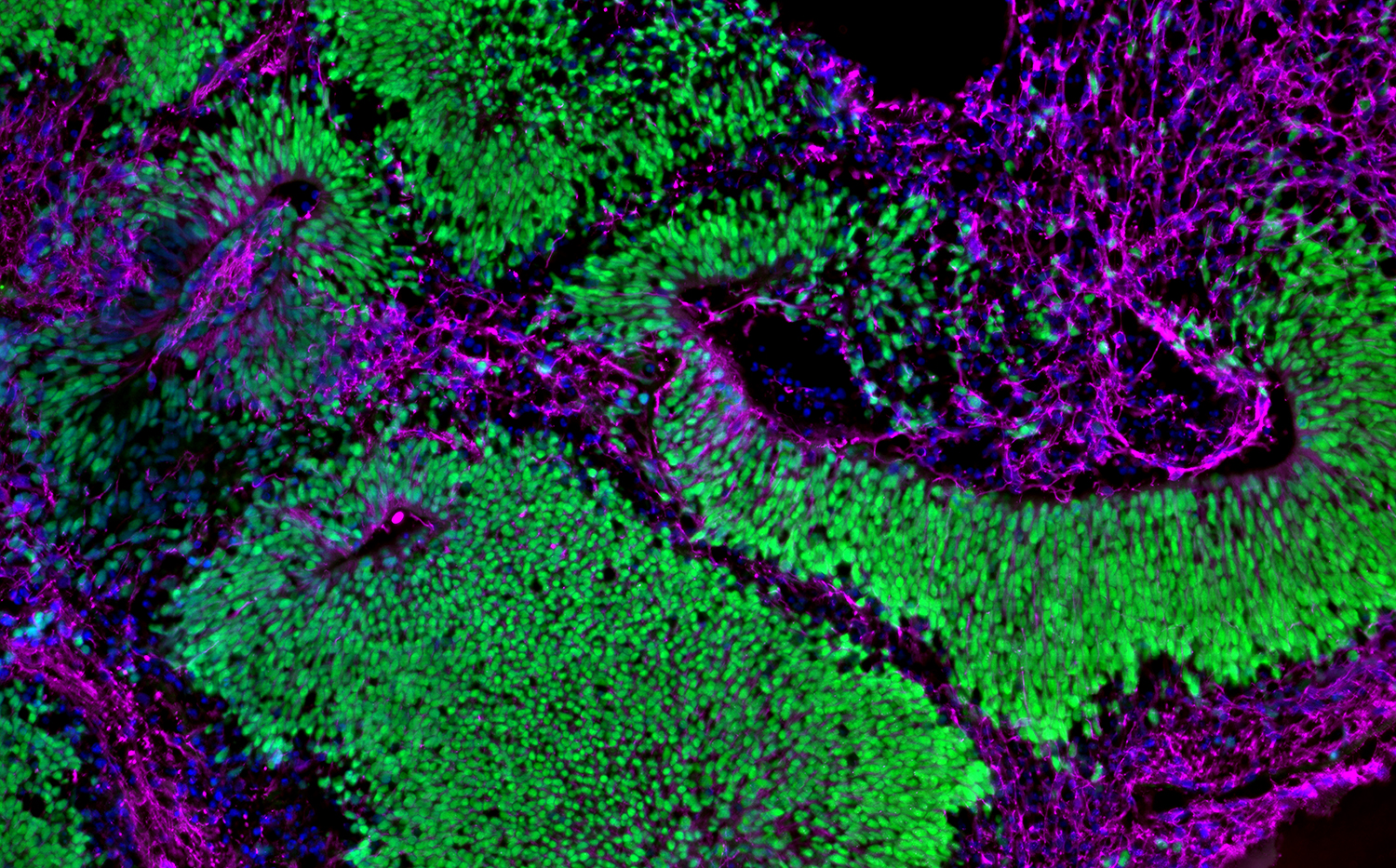
Brain organoid depicting neural stem cells in green and neurons in magenta. Both cell types are abundant, showing normal development.


Wednesday, September 24, 2025

Neural basis of schizophrenia and bipolar disorder found in patient-derived brain organoids

Good news!

They even used support vector machines for this! SVMs are very early, old fashioned machine learning models.

"Pea-sized brains grown in a lab have for the first time revealed the unique way neurons might misfire due to schizophrenia and bipolar disorder, psychiatric ailments that affect millions of people worldwide but are difficult to diagnose because of the lack of understanding of their molecular basis. ...

"Schizophrenia and bipolar disorder are very hard to diagnose because no particular part of the brain goes off. No specific enzymes are going off like in Parkinson's ...

"Our hope is that in the future we can not only confirm a patient is schizophrenic or bipolar from brain organoids, but that we can also start testing drugs on the organoids to find out what drug concentrations might help them get to a healthy state." ..."

From the abstract:
"Neuropsychiatric disorders such as schizophrenia (SCZ) and bipolar disorder (BPD) remain challenging to diagnose due to the absence of objective biomarkers, with current assessments relying largely on subjective clinical evaluations.
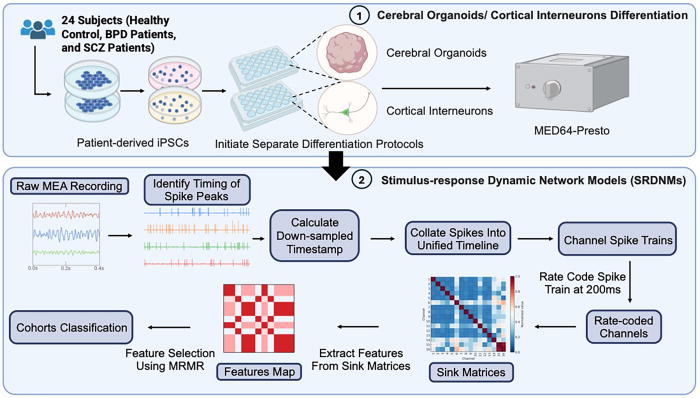
In this study, we present a computational analysis pipeline designed to identify disease-specific electrophysiological signatures from multi-electrode array (MEA) recordings of patient-derived cerebral organoids (COs) and two-dimensional cortical interneuron cultures (2DNs).
Using a Support Vector Machine classifier optimized for high-dimensional data, we achieved 95.8% classification accuracy in distinguishing SCZ from control samples in 2DNs under both baseline and post-electrical-stimulation (PES) conditions with the extracted electrophysiological signatures.
In COs, classification accuracy improved from 83.3% at baseline to 91.6% following PES, enabling robust separation of control, SCZ, and BPD cohorts.
Key discriminative features included channel-specific measures of network activity, with PES significantly enhancing classification performance, particularly for BPD.
These results underscore the potential of MEA-based functional phenotyping, coupled with machine learning, to uncover reliable, stimulation-sensitive electrophysiological biomarkers, offering a path toward more objective diagnosis and personalized treatment strategies for neuropsychiatric disorders."

Neural basis of schizophrenia and bipolar disorder found in brain organoids | Hub "Using machine learning, Johns Hopkins researchers identified healthy and unhealthy patterns based on electrical activity"


FIG. 1.The workflow of the proposed analysis pipeline was designed from EEG analysis to uncover distinct electrophysiological signatures associated with schizophrenia (SCZ) and bipolar disorder (BPD).


Monday, May 05, 2025

How molecular traffic cops guide development of the human brain soon after conception

Amazing stuff! Are we finally understanding the development of the human brain a little better.

"Just a few weeks after conception, stem cells are already orchestrating the future structure of the human brain. A new Yale-led study shows that, early in development, molecular “traffic cops” known as morphogens regulate the activation of gene programs that initiate stem cells’ differentiation into more specialized brain cells. ...

The team ... developed a device called Duo-MAPs, which allowed them to expose organoids derived from human stem cells to two crucial morphogens naturally present within the developing brain. The WNT morphogen, active along the posterior-anterior (bottom to top) axis of the nascent central nervous system, interacts with the Sonic Hedgehog morphogen, which operates along ventro-dorsal (front to back) axis of developing nervous system.

Together, the location and concentrations of the two morphogens over just 5 days regulated the gene activity that determined the eventual structure and cell composition of almost all brain regions, the researchers found.

Intriguingly, the high-throughput analysis enabled by the device showed distinct differences in the two morphogens’ gene activity in organoids derived from different individuals and different stem cell lines. For instance, organoids from some stem cell lines showed higher sensitivity to the WNT morphogen and the activated genes were concentrated towards the bottom of the brain where the hindbrain develops. 

Other lines showed lower sensitivity to WNT and activity shifted toward anterior or frontal brain areas, such as the developing cortex. Similarly, stem cell lines more sensitive to Sonic Hedgehog showed higher gene activity in the developing basal ganglia, while stem cells less sensitive to the morphogen had a greater gene response in the developing cerebellum. The morphogen-response genes that were most variable among different donors involved functions such as immune response, other experiments showed.  ..."

From the highlights and abstract:
"Highlights
• Orthogonal WNTs/SHH gradients pattern organoids into forebrain, midbrain, and hindbrain
• WNT/SHH crosstalk triggers transcriptional programs driving lineage specification
• There are donor- and line-specific variations in morphogen response
• Patterned regions generate neuronal networks with different functional organization

Summary
The repertoire of neurons and their progenitors depends on their location along the antero-posterior and dorso-ventral axes of the neural tube.
To model these axes, we designed the Dual Orthogonal-Morphogen Assisted Patterning System (Duo-MAPS) diffusion device to expose spheres of induced pluripotent stem cells (iPSCs) to concomitant orthogonal gradients of a posteriorizing and a ventralizing morphogen, activating WNT and SHH signaling, respectively.
Comparison with single-cell transcriptomes from the fetal human brain revealed that Duo-MAPS-patterned organoids generated an extensive diversity of neuronal lineages from the forebrain, midbrain, and hindbrain.
WNT and SHH crosstalk translated into early patterns of gene expression programs associated with the generation of specific brain lineages with distinct functional networks.
Human iPSC lines showed substantial interindividual and line-to-line variations in their response to morphogens, highlighting that genetic and epigenetic variations may influence regional specification. 
Morphogen gradients promise to be a key approach to model the brain in its entirety."

How molecular traffic cops guide development of the human brain | Yale News "A new Yale study offers new insight into how morphogens help regulate the development of stem cells into specialized brain cells."


Graphical abstract


Saturday, February 15, 2025

A Novel Three-in-One Pancreatic Organoid

Good news!

"Organoids—tiny, lab-grown 3D clusters of cells—are a useful tool for studying organ development, disease, and drug responses. These miniature organs-in-a-dish are powerful, but they’re not perfect: Recreating the complex interplay of different cell types found in full-sized organs remains tricky.

For example, most pancreatic organoids only contain a single cell type, which makes it difficult for researchers to fully understand how different cell types work together in a functioning pancreas. ...

at the Hubrecht Institute, set out to build a better pancreatic organoid, she decided to include all three main cell types found in this organ. She would have to figure out how to co-culture acinar cells, which produce digestive enzymes, ductal cells, which transport these enzymes, and endocrine cells, which regulate blood sugar levels by releasing hormones. ..."

From the highlights and abstract:
"Highlights
• Human fetal pancreatic organoids (hfPOs) established from 8 to 17 GWs expand long-term
• hfPOs recapitulate the epithelial complexity of human fetal pancreas
• hfPOs generate functional acinar and endocrine cell lineages upon differentiation
• LGR5 marks tripotent stem cells, precursors to all exocrine and endocrine lineages
Summary
The mammalian pancreas consists of three epithelial compartments: the acini and ducts of the exocrine pancreas and the endocrine islets of Langerhans. Murine studies indicate that these three compartments derive from a transient, common pancreatic progenitor.
Here, we report derivation of 18 human fetal pancreas organoid (hfPO) lines from gestational weeks 8–17 (8–17 GWs) fetal pancreas samples.
Four of these lines, derived from 15 to 16 GWs samples, generate acinar-, ductal-, and endocrine-lineage cells while expanding exponentially for >2 years under optimized culture conditions.
Single-cell RNA sequencing identifies rare LGR5+ cells in fetal pancreas and in hfPOs as the root of the developmental hierarchy. These LGR5+ cells share multiple markers with adult gastrointestinal tract stem cells.
Organoids derived from single LGR5+ organoid-derived cells recapitulate this tripotency in vitro. We describe a human fetal tripotent stem/progenitor cell capable of long-term expansion in vitro and of generating all three pancreatic cell lineages."

A Novel Three-in-One Pancreatic Organoid | The Scientist "An innovative organoid model mirrors the pancreas' complexity, generating all three key cell types to explore development and possible regeneration."


Graphical abstract


Figure 1 Establishment of hfPOs


Wednesday, June 05, 2024

Hautmodelle als Alternative zu Tierversuchen

Gute Nachrichten!

"Tierversuche sind seit langem ein fester Bestandteil in der medizinischen und pharmazeutischen Forschung, doch alternative Methoden gewinnen immer mehr an Bedeutung. Mittels innovativer Verfahren wird direkt mit Blick auf den Menschen geforscht – ohne den Umweg über Tierversuche. Diesen Ansatz wählt auch das geplante Fraunhofer-Start-up TigerShark Science, eine Ausgründung des Fraunhofer-Translationszentrums für Regenerative Therapien TLZ-RT am Fraunhofer-Institut für Silicatforschung ISC. Mit Hautmodellen aus menschlichen Stammzellen will TigerShark Science Tierversuche deutlich reduzieren. ..."

Hautmodelle als Alternative zu Tierversuchen

Thursday, April 18, 2024

Understanding the 3D Cell Culture Revolution

Recommendable! Seems to be a nice, brief overview article!
Caveat: I only skimmed this article.

Understanding the 3D Cell Culture Revolution | The Scientist Magazine® 3D cell culture techniques closely mimic in vivo conditions, generating more accurate data for disease modeling and drug toxicity testing.

3D Cell Culture Model Types
3D cell culture types include scaffold-free spheroids, scaffold-based organoids, and microfluidic-based organ on a chip devices. These are useful in disease research applications, such as studying the brain tumor microenvironment, modeling inflammatory conditions like chronic obstructive pulmonary disease (COPD), and investigating drug toxicity in vitro.


Tuesday, March 05, 2024

Organoids grown from amniotic fluid could shed light on rare diseases

Amazing stuff! This could be huge! A breakthrough?

"Cells taken from the fluid around growing fetuses have been used to make organoids, 3D bundles of cells that mimic tissue. These organoids could help researchers to understand diseases that develop in the fetus during pregnancy.

The researchers grew organoids from lung, kidney and small intestine cells shed into amniotic fluid collected from 12 pregnancies between the 16th and 34th weeks of gestation. This is the first time that organoids have been grown directly from cells taken from ongoing pregnancies ...
Around 13,000 children in the United Kingdom were born with at least one congenital anomaly in 2020, out of nearly 600,000 births. The authors hope that the organoids could one day provide information about how congenital conditions progress, and even be used to personalize treatment for individual fetuses in future. ..."

From the abstract:
"Isolation of tissue-specific fetal stem cells and derivation of primary organoids is limited to samples obtained from termination of pregnancies, hampering prenatal investigation of fetal development and congenital diseases. Therefore, new patient-specific in vitro models are needed. To this aim, isolation and expansion of fetal stem cells during pregnancy, without the need for tissue samples or reprogramming, would be advantageous. Amniotic fluid (AF) is a source of cells from multiple developing organs. Using single-cell analysis, we characterized the cellular identities present in human AF. We identified and isolated viable epithelial stem/progenitor cells of fetal gastrointestinal, renal and pulmonary origin. Upon culture, these cells formed clonal epithelial organoids, manifesting small intestine, kidney tubule and lung identity. AF organoids exhibit transcriptomic, protein expression and functional features of their tissue of origin. With relevance for prenatal disease modeling, we derived lung organoids from AF and tracheal fluid cells of congenital diaphragmatic hernia fetuses, recapitulating some features of the disease. AF organoids are derived in a timeline compatible with prenatal intervention, potentially allowing investigation of therapeutic tools and regenerative medicine strategies personalized to the fetus at clinically relevant developmental stages."

Organoids grown from amniotic fluid could shed light on rare diseases Organ-like groups of cells can be grown from amniotic fluid samples and offer hope for studying congenital conditions.

Single-cell guided prenatal derivation of primary fetal epithelial organoids from human amniotic and tracheal fluids (open access)

An kidney organoid made from amniotic cells


Fig. 1: Single-cell analysis of the AF content.


Fig. 3: Characterization and maturation of small intestine AFO.


Wednesday, February 21, 2024

Researchers develop world's first test-tube testicles

Amazing stuff! Homunculus is coming closer one organoid at a time!

"The world’s first test-tube testes have been created by a group of researchers at Bar-Ilan University, signaling a huge advancement in several key fields of research such as fetal sex determination, male infertility solutions, and strategic conversation starters to get yourself excused from the Thanksgiving dinner table. ..."

"... are testis organoids – tiny, artificial organs produced from real mouse testis. Development of organoids has greatly advanced in the last decade with the realization that two-dimensional cellular sample in vitro cannot mimic the behavior of an entire organ. Today, organoids of the brain, kidneys, intestines, and other organs have already been produced. The testicular organoids created by Gonen's group closely simulate a natural testicle. ..."

From the abstract:
"The testis is responsible for sperm production and androgen synthesis. Abnormalities in testis development and function lead to disorders of sex development and male infertility. Currently, no in vitro system exists for modelling the testis. Here, we generated testis organoids from neonatal mouse primary testicular cells using transwell inserts and show that these organoids generate tubule-like structures and cellular organization resembling that of the in vivo testis. Gene expression analysis of organoids demonstrates a profile that recapitulates that observed in in vivo testis. Embryonic testicular cells, but not adult testicular cells are also capable of forming organoids. These organoids can be maintained in culture for 8-9 weeks and shows signs of entry into meiosis. We further developed defined media compositions that promote the immature versus mature Sertoli cell and Leydig cell states, enabling organoid maturation in vitro. These testis organoids are a promising model system for basic research of testes development and function, with translational applications for elucidation and treatment of developmental sex disorders and infertility."

Researchers develop world's first test-tube testicles  - ISRAEL21c The petri dish privates mark a milestone in the study of sexual development disorder and male infertility research.

Bar-Ilan University researchers produce “laboratory testicles” The artificial testicles will contribute to the advancement of research in male fertility and sexual development disorders, and are expected to facilitate the eventual production of sperm in the laboratory


Caption: A bright field image of a testicular organoid created from mouse embryos and incubated in a dish for 14 days. The tubular structures formed in the dish are clearly visible. 


Graphical abstract


Sunday, September 24, 2023

Cerebral organoids Reveal The Genetic Origins of Autism Spectrum Disorder at high speed and high throughput and multiple mutations simultaneously

Amazing stuff! Potentially a breakthrough! This is stunning!

"... With a revolutionizing novel system that combines brain organoid technology and intricate genetics, researchers can now comprehensively test the effect of multiple mutations in parallel and at a single-cell level within human brain organoids. This technology ... permits the identification of vulnerable cell types and gene regulatory networks that underlie autism spectrum disorders. ...
Compared to other animal species, the human brain has a mind of its own. To develop, the human brain relies on processes unique to humans, allowing us to build an intricately layered and connected cortex. These unique processes also make neurodevelopmental disorders more likely in humans. As an example, many genes conferring a high risk of developing autism spectrum disorder (ASD) are crucial for cortex development. Although clinical studies have shown causality between multiple genetic mutations and autism, researchers still do not understand how these mutations lead to brain developmental defects – and because of the uniqueness of human brain development, animal models are of limited use. ...
To help crack this black box open, researchers ... developed a technique to screen a complete set of key transcriptional regulator genes linked to autism. This development is especially impactful since the genes of interest can be examined simultaneously within a single mosaic organoid, marking the beginning of an era of intricate, efficient, and expedient genetic screening in human tissue. In the newly developed system, called “CHOOSE” (CRISPR-human organoids-scRNA-seq), each cell in the organoid carries at most one mutation in a specific ASD gene. The researchers could trace each mutation’s effect at a single-cell level and map each cell’s developmental trajectory. “With this high-throughput methodology, we can systematically inactivate a list of disease-causing genes. As the organoids carrying these mutations grow, we analyze the effect of each mutation on the development of each cell type,” ...
With the CHOOSE system ... advance research on disease-causing genes by a whole leap, providing researchers with access to a versatile and high-throughput method that can be applied to any disease and in any human model system. Importantly, CHOOSE considerably speeds up the analysis in comparison to traditional genetic loss-of-function approaches. “We can see the consequence of every mutation in one experiment, thus shortening the analysis time dramatically in comparison to traditional methods, using an approach that for decades was only possible in organisms like the fruit fly” ...
Using the CHOOSE system, the researchers show that mutations of 36 genes, known to put carriers at high risk of autism, lead to specific cell type changes in the developing human brain. They identified critical transcriptional changes regulated through common networks, called “gene regulatory networks” or GRNs. A GRN is a set of molecular regulators that interact with each other to control a specific cell function ... “We demonstrated that some cell types are more susceptible than others during brain development and identified the networks that are most vulnerable to autism mutations,” ..."

From the abstract:
"The development of the human brain involves unique processes (not observed in many other species) that can contribute to neurodevelopmental disorders. Cerebral organoids enable the study of neurodevelopmental disorders in a human context. We have developed the CRISPR–human organoids–single-cell RNA sequencing (CHOOSE) system, which uses verified pairs of guide RNAs, inducible CRISPR–Cas9-based genetic disruption and single-cell transcriptomics for pooled loss-of-function screening in mosaic organoids. Here we show that perturbation of 36 high-risk autism spectrum disorder genes related to transcriptional regulation uncovers their effects on cell fate determination. We find that dorsal intermediate progenitors, ventral progenitors and upper-layer excitatory neurons are among the most vulnerable cell types. We construct a developmental gene regulatory network of cerebral organoids from single-cell transcriptomes and chromatin modalities and identify autism spectrum disorder-associated and perturbation-enriched regulatory modules. Perturbing members of the BRG1/BRM-associated factor (BAF) chromatin remodelling complex leads to enrichment of ventral telencephalon progenitors. Specifically, mutating the BAF subunit ARID1B affects the fate transition of progenitors to oligodendrocyte and interneuron precursor cells, a phenotype that we confirmed in patient-specific induced pluripotent stem cell-derived organoids. Our study paves the way for high-throughput phenotypic characterization of disease susceptibility genes in organoid models with cell state, molecular pathway and gene regulatory network readouts."

Artificial Brain Reveals The Genetic Origins of Autism Spectrum Disorder : ScienceAlert (secondary news source)


Fig. 1: The CHOOSE system for multiplexed screening of ASD risk genes in human cerebral organoids.


Thursday, March 02, 2023

Organoid intelligence: Could future computers run on human brain cells?

The next meeting of the minds on a Petri dish? 😊 Is there a new scientific discipline, i.e. biocomputing, in the making? Quite possible!

Biological versus material computing (in silicio)! The race is on!

"A "biocomputer" powered by human brain cells could be developed within our lifetime, according to ... researchers who expect such technology to exponentially expand the capabilities of modern computing and create novel fields of study. ..."

From the abstract and key points:
"Recent advances in human stem cell-derived brain organoids promise to replicate critical molecular and cellular aspects of learning and memory and possibly aspects of cognition in vitro. Coining the term “organoid intelligence” (OI) to encompass these developments, we present a collaborative program to implement the vision of a multidisciplinary field of OI. This aims to establish OI as a form of genuine biological computing that harnesses brain organoids using scientific and bioengineering advances ... Standardized, 3D, myelinated brain organoids can now be produced with high cell density and enriched levels of glial cells and gene expression critical for learning. Integrated microfluidic perfusion systems can support scalable and durable culturing, and spatiotemporal chemical signaling. Novel 3D microelectrode arrays permit high-resolution spatiotemporal electrophysiological signaling and recording to explore the capacity of brain organoids to recapitulate the molecular mechanisms of learning and memory formation and, ultimately, their computational potential. Technologies that could enable novel biocomputing models via stimulus-response training and organoid-computer interfaces are in development. We envisage complex, networked interfaces whereby brain organoids are connected with real-world sensors and output devices, and ultimately with each other and with sensory organ organoids (e.g. retinal organoids), and are trained using biofeedback, big-data warehousing, and machine learning methods. In parallel, we emphasize an embedded ethics approach to analyze the ethical aspects raised by OI research in an iterative, collaborative manner involving all relevant stakeholders. The many possible applications of this research urge the strategic development of OI as a scientific discipline. We anticipate OI-based biocomputing systems to allow faster decision-making, continuous learning during tasks, and greater energy and data efficiency. Furthermore, the development of “intelligence-in-a-dish” could help elucidate the pathophysiology of devastating developmental and degenerative diseases (such as dementia), potentially aiding the identification of novel therapeutic approaches to address major global unmet needs.
Key points
  1. Biological computing (or biocomputing) could be faster, more efficient, and more powerful than silicon-based computing and AI, and only require a fraction of the energy.
  2. ‘Organoid intelligence’ (OI) describes an emerging multidisciplinary field working to develop biological computing using 3D cultures of human brain cells (brain organoids) and brain-machine interface technologies.
  3. OI requires scaling up current brain organoids into complex, durable 3D structures enriched with cells and genes associated with learning, and connecting these to next-generation input and output devices and AI/machine learning systems.
  4. OI requires new models, algorithms, and interface technologies to communicate with brain organoids, understand how they learn and compute, and process and store the massive amounts of data they will generate.
  5. OI research could also improve our understanding of brain development, learning, and memory, potentially helping to find treatments for neurological disorders such as dementia.
  6. Ensuring OI develops in an ethically and socially responsive manner requires an ‘embedded ethics’ approach where interdisciplinary and representative teams of ethicists, researchers, and members of the public identify, discuss, and analyze ethical issues and feed these back to inform future research and work.
"

Could future computers run on human brain cells? | Hub Johns Hopkins researchers tout the promise of 'organoid intelligence,' which could one-day yield computers that are faster, more efficient, and more powerful than silicon-based computing and AI


Thursday, October 13, 2022

Human neurons implanted in a rat brain influence its behavior

Amazing stuff! Possibly a game changer! Humans are taking over and accelerating evolution! Merging of brain function! Working on the age old Homunculus!

"The experiment — part of a study published Wednesday in Nature — is the first describing human neurons influencing another species’ behavior. The study also showed that signals could go the other way; tendrils of human neurons mingled with the rodent brain cells and fired in response to air rustling the rats’ whiskers."

From the abstract:
"Self-organizing neural organoids represent a promising in vitro platform with which to model human development and disease. However, organoids lack the connectivity that exists in vivo, which limits maturation and makes integration with other circuits that control behaviour impossible. Here we show that human stem cell-derived cortical organoids transplanted into the somatosensory cortex of newborn athymic rats develop mature cell types that integrate into sensory and motivation-related circuits. MRI reveals post-transplantation organoid growth across multiple stem cell lines and animals, whereas single-nucleus profiling shows progression of corticogenesis and the emergence of activity-dependent transcriptional programs. Indeed, transplanted cortical neurons display more complex morphological, synaptic and intrinsic membrane properties than their in vitro counterparts, which enables the discovery of defects in neurons derived from individuals with Timothy syndrome. Anatomical and functional tracings show that transplanted organoids receive thalamocortical and corticocortical inputs, and in vivo recordings of neural activity demonstrate that these inputs can produce sensory responses in human cells. Finally, cortical organoids extend axons throughout the rat brain and their optogenetic activation can drive reward-seeking behaviour. Thus, transplanted human cortical neurons mature and engage host circuits that control behaviour. We anticipate that this approach will be useful for detecting circuit-level phenotypes in patient-derived cells that cannot otherwise be uncovered."

Human neurons implanted in a rat brain influence its behavior - STAT A long overview article.


Fig. 1: Transplantation of human cortical organoids in the developing rat cortex.


A transplanted human organoid labeled with a fluorescent protein in a section of the rat brain.


Saturday, October 01, 2022

Brain organoids replicate key events in human brain development

Amazing stuff!

"... Now, researchers ... have found that human brain organoids replicate many important cellular and molecular events of the developing human cortex, the part of the brain responsible for movement, perception, and thought. ...
The team grew brain organoids from stem cells and closely studied their growth over a six-month period, using tools that map cell position, gene expression, and chromatin accessibility — which determines how gene activity is regulated — at a single-cell level and over time. They then constructed an “atlas” characterizing more than 600,000 cells from organoids that were sampled as they developed and matured. The team found that after the first month, in each organoid they made, the same types of cells developed in the same order and expressed the same genes as cells in the developing human embryo. ...
The researchers were also able to identify gene expression patterns and other key developmental factors that are unique to humans. They suggest that because these organoids are reasonably accurate models of early brain development and can be grown in relatively large numbers in the lab from just a small pool of stem cells, these models could help accelerate research on brain health and neurodevelopmental disorders. ...
The researchers also analyzed early stages of development that typically only occur in the womb. They observed that a type of cell called callosal projection neurons, which have a larger variety of subtypes in adult humans than in mice, were already becoming diverse even at these early stages. ..."

From the abstract:
"Realizing the full utility of brain organoids to study human development requires understanding whether organoids precisely replicate endogenous cellular and molecular events, particularly since acquisition of cell identity in organoids can be impaired by abnormal metabolic states. We present a comprehensive single-cell transcriptomic, epigenetic, and spatial atlas of human cortical organoid development, comprising over 610,000 cells, from generation of neural progenitors through production of differentiated neuronal and glial subtypes. We show that processes of cellular diversification correlate closely to endogenous ones, irrespective of metabolic state, empowering the use of this atlas to study human fate specification. We define longitudinal molecular trajectories of cortical cell types during organoid development, identify genes with predicted human-specific roles in lineage establishment, and uncover early transcriptional diversity of human callosal neurons. The findings validate this comprehensive atlas of human corticogenesis in vitro as a resource to prime investigation into the mechanisms of human cortical development."

Brain organoids replicate key events in human brain development | Broad Institute A single-cell analysis of 3D models of the human cerebral cortex suggests they can be used to study important brain processes that have been difficult to investigate.