Showing posts with label variety is the spice of life. Show all posts

Wednesday, December 10, 2025

Image of the day

Variety is the spice of life! But what kind of spice is DEI? 

Today, I discovered that the Penzeys store in my neighborhood had a new Welcome Diversity, Equity, and Inclusion sign next to the entrance door


Wednesday, October 29, 2025

An artificial tongue for spiciness using skim milk powder

"Variety's the very spice of life, That gives it all its flavor!" (from a poem by William Cowper's 1785)

"... Scientists have previously developed artificial tongues that measure sweet and umami flavors, so researchers wanted to alter the technology for spicy foods by using the milk protein casein, which binds to capsaicin, the active compound in spicy peppers. They added skim milk powder to a flexible, opaque, tongue-shaped gel that conducted an electrical current; when the technology touched capsaicin, as well as pungent compounds in garlic, onion, horseradish, and ginger, the current changed and signaled their presence.

To validate their fake tongue against real ones, the researchers exposed their gel and a panel of taste testers to eight peppers and eight spicy foods. The tongue’s electrical responses matched the taste testers’ spiciness rankings and measured capsaicin concentrations from undetectable-by-humans to painful. ..."

"... So, researchers made an artificial tongue to quickly detect spiciness. Inspired by milk’s casein proteins, which bind to capsaicin and relieve the burn of spicy foods, the researchers incorporated milk powder into a gel sensor. The prototype, reported in ACS Sensors, detected capsaicin and pungent-flavored compounds (like those behind garlic’s zing) in various foods. ...

As a proof-of-concept, the researchers tested eight pepper types and eight spicy foods (including several hot sauces) on the artificial tongue and measured how spicy they were by changes in electrical current. A panel of taste testers rated the spiciness of the same items. Results from the artificial tongue and the tasting panel matched well. ..."

From the abstract:
"Artificial tongues have been extensively studied to detect the five basic tastes like humans. Spiciness, or pungency, is essential for food selection for both humans and animals. However, it is challenging to fully mimic human tongue-like performance for spicy taste.
Inspired by the fact that milk can relieve the pungent taste on the tongue, we introduced a soft gel-based artificial tongue as a flexible chemiresistive sensor for pungency detection.
When exposed to pungent compounds, it leads to the formation of hydrophobic complexes and conformational changes that decrease the ionic conductivity. The artificial tongue enables pungent compounds to be detected over a wide range (0.0001–1 wt %) with high sensitivity (0.259 wt %–1) and fast response times (<10 s).
Moreover, our artificial tongue can detect the pungency degree in a variety of spicy foods and condiments with intertranslatable ionic currents. Our work could enable both pungent compound detection and spicy sensation estimation, making a powerful platform for future applications involving movable humanoid robots and portable spicy taste monitoring devices."

ScienceAdviser


Monday, September 25, 2023

Turmeric’s unexpected link to lead poisoning in Bangladesh and its remedy, a successful anti-lead campaign

Good news! I like turmeric a lot! Spice is the variety of life (pardon my permutation)!

But beware of shiny yellow turmeric.

From the highlights and abstract:
"Highlights
• The impact of an intervention to reduce lead in turmeric in Bangladesh is assessed.
• The percent of market turmeric samples containing lead decreased from 47% to 0%.
• The percent of mills adding lead chromate to turmeric decreased from 30% to 0%.
Turmeric mill worker blood lead levels dropped a median of 30% (IQR: 21–43%).
• Future research should evaluate if this intervention can be replicated elsewhere.
Abstract
Turmeric adulterated with lead chromate pigment has been previously identified as a primary source of lead exposure in Bangladesh. This study assesses the impact of a multi-faceted intervention between 2017 and 2021 to reduce lead-tainted turmeric in Bangladesh. The intervention involved:
i) disseminating findings from scientific studies via news media that identified turmeric as a source of lead poisoning,
ii) educating consumers and businesspeople about the risks of lead chromate in turmeric via public notices and face-to-face meetings, and
iii) collaborating with the Bangladesh Food Safety Authority to utilize a rapid lead detection technology to enforce policy disallowing turmeric adulteration. Before and after the intervention, evidence of lead chromate turmeric adulteration was assessed at the nation's largest turmeric wholesale market and at turmeric polishing mills across the country. Blood lead levels of workers at two mills were also assessed. Forty-seven interviews were conducted with consumers, businesspeople, and government officials to assess changes in supply, demand, and regulatory capacity.
The proportion of market turmeric samples containing detectable lead decreased from 47% pre-intervention in 2019 to 0% in 2021 (n = 631, p < 0.0001).
The proportion of mills with direct evidence of lead chromate adulteration (pigment on-site) decreased from 30% pre-intervention in 2017 to 0% in 2021 (n = 33, p < 0.0001).
Blood lead levels dropped a median of 30% (IQR: 21–43%), while the 90th percentile dropped 49% from 18.2 μg/dL to 9.2 μg/dL 16 months after the intervention (n = 15, p = 0.033). Media attention, credible information, rapid lead detection tools and swift government action to enforce penalties all contributed to the intervention's success. Subsequent efforts should evaluate if this is an example of an effective intervention that can be replicated to reduce lead chromate adulteration of spices globally."

Turmeric’s unexpected link to lead poisoning in Bangladesh A hunt for the sources of lead poisoning in Bangladesh. The rural areas of Bangladesh are quilted with verdant rice paddies nestled between glittering, blue river tributaries. Women wrapped in fuchsia, pomegranate-red and tangerine-orange saris walk among tan-and-brown cows. Market stalls are piled high with multicolored produce and spices. It is a country of vibrant colors.


Fig. 1. Bangladesh Food Safety Authority flyer of which they printed and distributed more than 50,000 copies.


Friday, November 25, 2022

Indoor Farming Revolution For World’s Priciest Spice

Will we soon get a cheaper taste of saffron? As an aficionado of spices I look forward to trying saffron! Variety is the spice of life! 😊

"... Saffron-Tech, a startup founded in 2020, is transforming the way saffron is grown, and, possibly, the way it is traded.

Its team of expert agronomists have developed technology to produce four harvests a year, instead of one, and to grow the corms (that’s the correct term for a saffron bulb) indoors, rather than in open fields.

They use sophisticated vertical-farming methods, with layer above layer of the corms, in conditions where the temperature, humidity, and irrigation and are strictly regulated by artificial intelligence.

It’s the first significant change to the way saffron has been grown commercially in centuries, and is 50 times more productive than field cultivation."

Indoor Farming Revolution For World’s Priciest Spice AI method of growing saffron is 50 times more productive


Wednesday, September 05, 2018

What People Do For Protein!

Posted: 9/5/2018

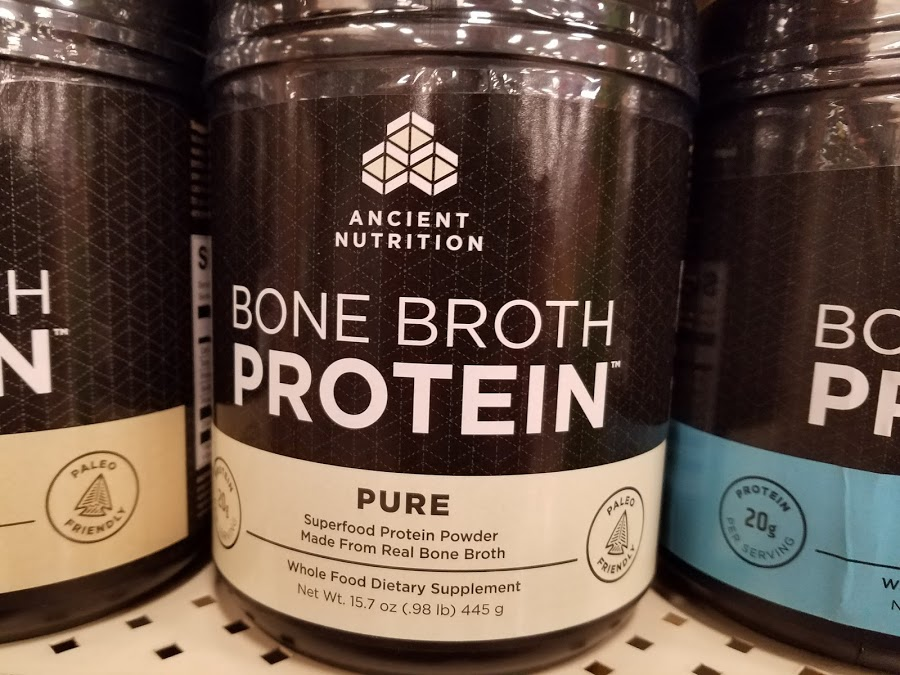
Just have seen these two odd balls at a local grocery store (not sure I would like any of them):

Unflavored bulletproof collagen based protein

Pure bone broth protein