Showing posts with label biochemistry. Show all posts

Thursday, March 19, 2026

Banana aroma is a result of acetohydroxyacid synthase and isopropylmalate synthase alternative isoforms that bypass feedback inhibition

Comment from a daily banana eater: Everything you ever wanted to know about the aroma of bananas! 😊

From the significance and abstract:
"Significance
During banana fruit ripening, the two feedback-inhibited, rate-limiting enzymes of the valine and leucine biosynthetic pathway are simultaneously alternatively spliced, effectively losing their feedback regulation and promoting carbon flux into the pathway for the accumulation of precursors to branched-chain amino acids and volatile branched-chain esters. The fact that the two reactions are positioned sequentially in the pathway may help explain why the production of significant levels of “banana” flavor compounds is so rare in nature. Understanding this phenomenon is timely given the current threat to global Cavendish production due to the spread of Fusarium wilt. Coordinated, dual alternative splicing of rate-limiting enzymes is a means to metabolic dysregulation to enable unidirectional, committed processes like aroma formation during fruit ripening.

Abstract
The distinctive aroma of banana fruit (Musa spp.) results from the upregulation of a pathway that is, paradoxically, understood to be feedback limited. The primary character impact compounds in banana are branched-chain esters with 3-methylbutyl moieties. Recent work has established that these esters, as well as prominent “fruity” 2-methylpropyl and butyl esters, are derived from the ripening-dependent de novo synthesis of the branched-chain amino acids valine and leucine, and their respective α-ketoacid precursors.
The biosynthetic pathway possesses two sequential, rate-limiting, and feedback-inhibited enzymes: acetohydroxyacid synthase and isopropylmalate synthase. We found these enzymes to be alternatively spliced in ripening banana fruit pulp. Unripe fruit and nonfruit tissues had only trace levels of alternative splicing. Revealingly, the domains corresponding to the allosteric inhibitory binding of valine and/or leucine were truncated in the altered isoforms. During ripening, the expression and frequency of the shorter splice forms increased concomitantly with production of branched-chain esters and accumulation of their α-ketoacid precursors. Purified proteins of the modified isoforms were active but relieved of feedback inhibition. Transient expression of the shortened isoforms in Nicotiana benthamiana led to a greater accumulation of iso-branched-chain metabolites than the full-length isoforms. Results indicate that a developmentally dependent and simultaneous dysregulation in two sequential steps of the branched-chain amino acid synthetic pathway enables the biosynthesis of banana fruit’s unique character-impact esters."

Banana aroma is a result of acetohydroxyacid synthase and isopropylmalate synthase alternative isoforms that bypass feedback inhibition | PNAS (no public access)


Thursday, May 22, 2025

Living beings emit a faint light that extinguishes upon death, according to a new study

Amazing stuff! Do living beings have an aura, an ancient question?

"... According to a recent study by researchers from University of Calgary, every living system emits light without requiring external excitation due to a biological phenomenon known as ultraweak photon emission (UPE). ...

Unlike bioluminescence, which produces high-intensity light visible to the naked eye, UPE, also known as biophoton emission, is a spontaneous release of extremely low-intensity light that is invisible to the human eye and falls within the spectral range of 200–1,000 nm. This faint light has been detected in a wide range of life forms—from single-celled organisms and bacteria to plants, animals, and even humans. ..."

P.S. The University of Calgary website sucks! Most of the authors of this paper are affiliated with this website, but try finding a news release about their research. So does the National Research Council Canada website.

From the abstract:
"The phenomenon of biological ultraweak photon emission (UPE), that is, extremely low-intensity emission (10 − 103 photons/cm2/sec) in the spectral range of 200 − 1000 nm, has been observed in all living systems that have been examined. Here we report experiments that exemplify the ability of novel imaging systems to detect variations in UPE for a set of physiologically important scenarios.
We use EMCCD and CCD cameras to capture single visible-wavelength photons with low noise and quantum efficiencies higher than 90%. Our investigation reveals significant contrast between the UPE from live vs. dead mice.
In plants we observed that an increase in temperature and injuries both caused an increase in UPE intensity. Moreover, chemical treatments modified the UPE emission characteristics of plants, particularly the application of an anesthetic (benzocaine) to injury, which showed the highest emission among the compounds tested.
As a result, UPE imaging provides the possibility of non-invasive label-free imaging of vitality in animals and the responses of plants to stress."


Credits: Forscher messen Lebenslicht: Aura von Lebewesen nachgewiesen


FIG. 3. Reduced biophoton emission in euthanized mice compared to live mice. (A) UPE images from live mice (top row, N=4) and recently euthanized mice (bottom row, N=4) following 30 minutes of dark acclimation and a 60-minute biophoton imaging session.


Thursday, January 16, 2025

New Technique Maps Hundreds of Proteins Simultaneously within Cell Nuclei

Amazing stuff! Could be a breakthrough!

"... Despite its importance, understanding gene regulation has been very challenging because previous methods to study regulatory proteins map them one at a time. ChIP–DIP now enables researchers to simultaneously map hundreds of DNA-associated regulatory proteins and take snapshots of how they change over time. ...

"We used ChIP–DIP to show how after an inflammatory event, cells of the immune system rapidly alter their histone proteins within a span of hours in order to activate inflammatory genes. We also used ChIP–DIP to identify combinations of proteins that regulate which genes are active or will become active in response to stress or during development. Previous consortium-based international projects have taken nearly a decade to conduct a few thousand experiments, but we have now done over 500 in the span of a few weeks." ..."

From the abstract:
"Gene expression is controlled by dynamic localization of thousands of regulatory proteins to precise genomic regions. Understanding this cell type-specific process has been a longstanding goal yet remains challenging because DNA–protein mapping methods generally study one protein at a time.
Here, to address this, we developed chromatin immunoprecipitation done in parallel (ChIP-DIP) to generate genome-wide maps of hundreds of diverse regulatory proteins in a single experiment. ChIP-DIP produces highly accurate maps within large pools (>160 proteins) for all classes of DNA-associated proteins, including modified histones, chromatin regulators and transcription factors and across multiple conditions simultaneously.
First, we used ChIP-DIP to measure temporal chromatin dynamics in primary dendritic cells following LPS stimulation.
Next, we explored quantitative combinations of histone modifications that define distinct classes of regulatory elements and characterized their functional activity in human and mouse cell lines.
Overall, ChIP-DIP generates context-specific protein localization maps at consortium scale within any molecular biology laboratory and experimental system."

New Technique Maps Hundreds of Proteins Simultaneously within Cell Nuclei - www.caltech.edu "Caltech researchers have developed a new method to map the positions of hundreds of DNA-associated proteins within cell nuclei all at the same time. The method, called ChIP–DIP (Chromatin ImmunoPrecipitation Done In Parallel), is a versatile tool for understanding the inner workings of the nucleus during different contexts, such as disease or development."

Computer simulation of carbonless DNA prompt researchers to consider alternative biochemistries

Amazing stuff! Just fooling around or eccentric research?

Can it be realized or is it just simulation?

Could other life in the universe be based on this?

Google AI generated: "In a single DNA nucleotide, there are five carbon atoms present in the deoxyribose sugar molecule, which is the sugar component of DNA"

Computer simulation of carbonless DNA prompt researchers to consider alternative biochemistries | Research | Chemistry World "Researchers swap nitrogen and boron into DNA to create analogues that are geometrically and electrostatically equivalent to conventional DNA"


Wednesday, November 27, 2024

Chart of the day

I blogged here about the research behind this chart. 

Fig. 3 This figure presents a comparative illustration of workflows, challenges, objectives, and implementations across different geometry handling protocols. The ‘example’ column focuses on applications within the field of 3D molecular generation, while the ‘other models' column spans a broader range of geometry-centric topics. Key abbreviations include MG: Molecular Generation (without structures), S-MG: Structure-based Molecular Generation, CG: Conformation Generation (without structures), and S-CG: Structure-based Conformation Generation (also known as Docking).


AI tool learns to build molecules fragment by fragment

You bet that ML & AI will advance chemical synthesis like anything before!

"A new machine learning tool for drug design proposes better and more realistic drugs through clever handling of molecular geometries. The FragGen software builds molecules fragment by fragment, and uses different machine learning processes for each decision, to minimise the inherent drawbacks of each. FragGen’s creators were able to select an anticancer target, design a new drug, synthesise it and demonstrate its potency experimentally. ..."

From the absract:
"3D structure-based molecular generation is a successful application of generative AI in drug discovery. Most earlier models follow an atom-wise paradigm, generating molecules with good docking scores but poor molecular properties (like synthesizability and drugability). In contrast, fragment-wise generation offers a promising alternative by assembling chemically viable fragments. However, the co-design of plausible chemical and geometrical structures is still challenging, as evidenced by existing models. To address this, we introduce the Deep Geometry Handling protocol, which decomposes the entire geometry into multiple sets of geometric variables, looking beyond model architecture design. Drawing from a newly defined six-category taxonomy, we propose FragGen, a novel hybrid strategy as the first geometry-reliable, fragment-wise molecular generation method. FragGen significantly enhances both the geometric quality and synthesizability of the generated molecules, overcoming major limitations of previous models. Moreover, FragGen has been successfully applied in real-world scenarios, notably in designing type II kinase inhibitors at the ∼nM level, establishing it as the first validated 3D fragment-based drug design algorithm. We believe that this concept-algorithm-application cycle will not only inspire researchers working on other geometry-centric tasks to move beyond architecture designs but also provide a solid example of how generative AI can be customized for drug design."

AI tool learns to build molecules fragment by fragment | Research | Chemistry World


Fig. 2 (A) Illustration of symmetry requirements for various geometric variables. (B) Structure-aware and fragment-wise molecular generation (C). Workflow of our proposed combined geometry handling protocol, which is specifically designed for 3D fragment-wise molecular generation.


Fig. 3 This figure presents a comparative illustration of workflows, challenges, objectives, and implementations across different geometry handling protocols. The ‘example’ column focuses on applications within the field of 3D molecular generation, while the ‘other models' column spans a broader range of geometry-centric topics. Key abbreviations include MG: Molecular Generation (without structures), S-MG: Structure-based Molecular Generation, CG: Conformation Generation (without structures), and S-CG: Structure-based Conformation Generation (also known as Docking).


Friday, October 11, 2024

Ending jet lag: Scientists discover secret to regulating our body clock

Good news! Now we need hypersonic planes to travel faster!

"Scientists have discovered a revolutionary way to put an end to jet lag by uncovering the secret at the tail end of Casein Kinase 1 delta (CK1δ), a protein that regulates our body clock. This breakthrough, achieved by researchers ... offers a new approach to adjusting our circadian rhythms, the natural 24-hour cycles that influence sleep-wake patterns and overall daily functions. ...

Using advanced spectroscopy and spectrometry techniques to zoom in on the tails, the researchers found that how the proteins are tagged is determined by their distinct tail sequences. ..."

"... This discovery highlights how a small part of CK1δ can greatly influence its overall activity. This self-regulation is vital for keeping CK1δ activity balanced, which, in turn, helps regulate our circadian rhythms.

The study also addressed the wider implications of these findings. CK1δ plays a role in several important processes beyond circadian rhythms, including cell division, cancer development, and certain neurodegenerative diseases. By better understanding how CK1δ’s activity is regulated, scientists could open new avenues for treating not just circadian rhythm disorders but also a range of conditions. ..."

From the significance and abstract:
"Subtle control of kinase activity is critical to physiologic modulation of multiple physiological processes including circadian rhythms. Casein kinase 1δ (CK1δ) and the closely related Casein kinase 1 epsilon (CK1ε) regulate circadian rhythms by phosphorylation of PERIOD2 (PER2), but how kinase activity itself is controlled is not clear. Building on the prior observation that two splice isoforms of CK1δ have opposite effects on the circadian period, we show that the difference maps to three phosphorylation sites specific to δ1 in the variably spliced region [extreme C termini (XCT)] that cause feedback inhibition of the kinase domain. More broadly, the data suggest a general model where CK1 activity on diverse substrates can be controlled by signaling pathways that alter tail phosphorylation.
Abstract
Casein kinase 1δ (CK1δ) controls essential biological processes including circadian rhythms and wingless-related integration site (Wnt) signaling, but how its activity is regulated is not well understood. CK1δ is inhibited by autophosphorylation of its intrinsically disordered C-terminal tail. Two CK1 splice variants, δ1 and δ2, are known to have very different effects on circadian rhythms. These variants differ only in the last 16 residues of the tail, referred to as the extreme C termini (XCT), but with marked changes in potential phosphorylation sites. Here, we test whether the XCT of these variants have different effects in autoinhibition of the kinase. Using NMR and hydrogen/deuterium exchange mass spectrometry, we show that the δ1 XCT is preferentially phosphorylated by the kinase and the δ1 tail makes more extensive interactions across the kinase domain. Mutation of δ1-specific XCT phosphorylation sites increases kinase activity both in vitro and in cells and leads to changes in the circadian period, similar to what is reported in vivo. Mechanistically, loss of the phosphorylation sites in XCT disrupts tail interaction with the kinase domain. δ1 autoinhibition relies on conserved anion-binding sites around the CK1 active site, demonstrating a common mode of product inhibition of CK1δ. These findings demonstrate how a phosphorylation cycle controls the activity of this essential kinase."

Ending jet lag: Scientists discover secret to regulating our body clock

Scientists discover a secret to regulating our body clock, offering new approach to end jet lag (original news release) "A team of scientists in Singapore and the US uncovered how a protein that controls our biological clock modifies its own function, offering new ways for treating jet lag and seasonal adjustments"


Fig. 1 CK1δ isoforms change kinase activity in vitro and regulation of XCT phosphorylation in cells.


A peptide (shown in mesh) with attached phosphate tags (red and orange spheres) blocks the active site of CK1δ. Tagging the tail end of CK1δ, a process known as auto-phosphorylation, makes the protein less active, and with that less able to fine-tune the body’s internal clocks.


Monday, August 19, 2024

Self-assembling RNA strands tamed the chemical chaos in the prebiotic primordial soup

Amazing stuff! Interesting hypothesis about the origins of life in the primordial soup!

In a few decades, humans will be able to create new forms of and modify existing forms of life like God! What a challenging journey ahead for humanity!

"New research explores mechanisms that boost RNA’s stability and resistance to hydrolysis"

"New research shows how complex molecules that were key to kickstarting life on the early Earth could have survived, despite their inherent instability. The findings suggest that self-assembly processes could have boosted RNA sequences’ resistance to hydrolysis, helping to ‘tame the chemical chaos’ in prebiotic mixtures. ..."

"The origins of life remain a major mystery. How were complex molecules able to form and remain intact for prolonged periods without disintegrating? A team  ... has demonstrated a mechanism that could have enabled the first RNA molecules to stabilize in the primordial soup. When two RNA strands combine, their stability and lifespan increase significantly."

From the abstract:
"One of science’s greatest challenges is determining how life can spontaneously emerge from a mixture of molecules. A complicating factor is that life and its molecules are inherently unstable—RNA and proteins are prone to hydrolysis and denaturation. For the de novo synthesis of life or to better understand its emergence at its origin, selection mechanisms are needed for unstable molecules. Here we present a chemically fuelled dynamic combinatorial library to model RNA oligomerization and deoligomerization and shine new light on selection and purification mechanisms under kinetic control. In the experiments, oligomers can only be sustained by continuous production. Hybridization is a powerful tool for selecting unstable molecules, offering feedback on oligomerization and deoligomerization rates. Moreover, we find that templation can be used to purify libraries of oligomers. In addition, template-assisted formation of oligomers within coacervate-based protocells changes its compartment’s physical properties, such as their ability to fuse. Such reciprocal coupling between oligomer production and physical properties is a key step towards synthetic life."


Self-assembling RNA strands ‘tamed the chemical chaos’ in prebiotic mixtures | Research | Chemistry World


A Journey Towards Understanding the Stabilization of Labile Molecules "Life emerged from a mix of simple molecules. Here, we describe how stabilization mechanisms under kinetic control can tame the chemical chaos and lead to a stable copying process, the first step toward self-replication mechanisms, which are the heart of life."


Figure 1. Template-based copying controls selection in chemical-fueled libraries and alters the coacervate’s physical properties when happening inside of coacervates.


Fig. 2: Description of the chemically fuelled library.


Tuesday, February 27, 2024

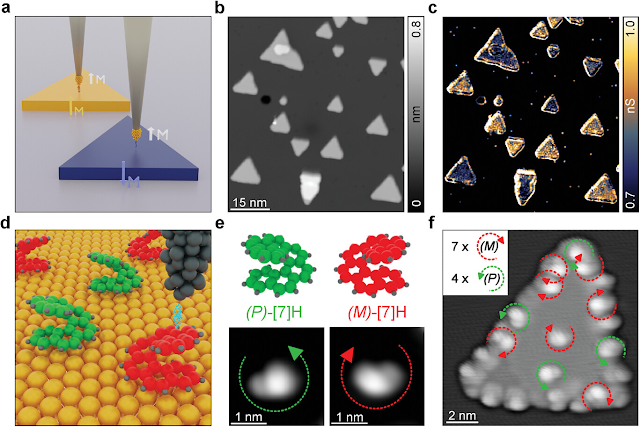
Magnetic effects at the origin of life? It's the spin that makes the difference

Amazing stuff!

"The so-called homochirality of life – the fact that all biomolecules in living organisms only ever occur in one of two mirror-image forms – has puzzled a number of scientific luminaries, from the discoverer of molecular chirality, Louis Pasteur, to William Thomson (Lord Kelvin) and Nobel Prize winner Pierre Curie. A conclusive explanation is still lacking, as both forms have, for instance, the same chemical stability and do not differ from each other in their physico-chemical properties. The hypothesis, however, that the interplay between electric and magnetic fields could explain the preference for one or the other mirror-image form of a molecule – so-called enantiomers – emerged early on. ..."

From the abstract:
"From the beginning of molecular theory, the interplay of chirality and magnetism has intrigued scientists. There is still the question if enantiospecific adsorption of chiral molecules occurs on magnetic surfaces. Enantiomer discrimination was conjectured to arise from chirality-induced spin separation within the molecules and exchange interaction with the substrate's magnetization. Here, it is shown that single helical aromatic hydrocarbons undergo enantioselective adsorption on ferromagnetic cobalt surfaces. Spin and chirality sensitive scanning tunneling microscopy reveals that molecules of opposite handedness prefer adsorption onto cobalt islands with opposite out-of-plane magnetization. As mobility ceases in the final chemisorbed state, it is concluded that enantioselection must occur in a physisorbed transient precursor state. State-of-the-art spin-resolved ab initio simulations support this scenario by refuting enantio-dependent chemisorption energies. These findings demonstrate that van der Waals interaction should also include spin-fluctuations which are crucial for molecular magnetochiral processes."

Magnetic effects at the origin of life? It's the spin that makes the difference

Magnetic effects at the origin of life? It's the spin that makes the difference (EMPA) Biomolecules such as amino acids and sugars occur in two mirror-image forms – in all living organisms, however, only one is ever found. Why this is the case is still unclear. Researchers at Empa and Forschungszentrum Jülich in Germany have now found evidence that the interplay between electric and magnetic fields could be at the origin of this phenomenon.


Fig. 1 Principles of spin-polarized and enantio-resolved STM


Saturday, December 09, 2023

Key chemical found at the edge of the Milky Way galaxy suggests alien life is common thanks to e.g. Galactic Fountains

Amazing stuff! We are not alone!

"Phosphorus – a key ingredient for life as we know it – was thought to be relatively rare in space. But now, astronomers have detected a surprising amount of the stuff on the fringes of the galaxy, suggesting life may be more common in the cosmos. ...
Life on Earth requires six critical elements: nitrogen, carbon, hydrogen, oxygen, phosphorus and sulfur (NCHOPS). Most of those are relatively easy to come by, as they’re blown into space as common low-mass stars reach the end of their lives. Phosphorus, meanwhile, is much rarer, and as such is generally considered the limiting factor for life in the universe. ...
The team used the radio telescopes at the Arizona Radio Observatory and IRAM in Spain to observe a molecular cloud named WB89-621. And sure enough, they detected the telltale signs of phosphorus monoxide and phosphorus nitride.

This cloud is located about 74,000 light-years away from the center of the Milky Way, which is almost twice as far out as phosphorus had previously been found. ...
Other teams have found evidence of phosphorus-rich stars, which could be contributing too. ..."

"... Their observations detected the telltale signatures of phosphorus – specifically phosphorus monoxide and phosphorus nitride – in a molecular cloud named WB89-621. Located nearly 74,000 light-years from the center of the Milky Way, the discovery extends the presence of phosphorus almost twice as far out as where it was known to exist. ..."

From the abstract:
"Despite its importance in planet formation and biology, phosphorus has been identified only in the inner 12 kpc of the Galaxy. The study of this element has been hindered in part by unfavourable atomic transitions. Phosphorus is thought to be created by neutron capture on 29Si and 30Si in massive stars, and released into the interstellar medium by Type II supernova explosions. However, models of galactic chemical evolution must arbitrarily increase the supernovae production to match observed abundances. Here we present the detection of gas-phase phosphorus in the Outer Galaxy through millimetre spectra of PO and PN. Rotational lines of these molecules were observed in the dense cloud WB89-621, located 22.6 kpc from the Galactic Centre. The abundances of PO and PN in WB89-621 are comparable to values near the Solar System. Supernovae are not present in the Outer Galaxy, suggesting another source of phosphorus, such as ‘Galactic Fountains’, where supernova material is redistributed through the halo and circumgalactic medium. However, fountain-enriched clouds are not found at such large distances. Any extragalactic source, such as the Magellanic Clouds, is unlikely to be metal rich. Phosphorus instead may be produced by neutron-capture processes in lower mass asymptotic giant branch stars which are present in the Outer Galaxy. Asymptotic giant branch stars also produce carbon, flattening the extrapolated metallicity gradient and accounting for the high abundances of C-containing molecules in WB89-621."

Key chemical found at the edge of galaxy suggests alien life is common

The case of the missing phosphorus: Astronomers find life ingredient at galaxy's edges The discovery of phosphorus in a molecular cloud at the edge of the Milky Way galaxy challenges current views of how the element originates and extends the galactic habitable zone.


Fig. 3: Abundances of PN and PO, as well as atomic phosphorus, as a function of distance from the Galactic Centre.


Saturday, March 04, 2023

Ancient proteins offer new clues about origins of life on Earth

Amazing stuff! What was going on in the primordial soup between 4.6 and 3.8 billion years ago? Can you guess? 😊

With AI can humans shorten evolution from millions of years to perhaps hours? Time will tell!

"... In the lab, the researchers mimicked primordial protein synthesis of 4 billion years ago by using an alternative set of amino acids that were highly abundant before life arose on Earth.
They found ancient organic compounds integrated the amino acids best suited for protein folding into their biochemistry. In other words, life thrived on Earth not just because some amino acids were available and easy to make in ancient habitats but because some of them were especially good at helping proteins adopt specific shapes to perform crucial functions. ...
Even though the primordial Earth had hundreds of amino acids, all living things use the same 20 of these compounds. Fried calls those compounds "canonical." But science has struggled to pinpoint what's so special—if anything—about those 20 amino acids. ...
Scientists have spotted amino acids in asteroids far from Earth, suggesting those compounds are ubiquitous in other corners of the universe. ..."

From the abstract:
"Whereas modern proteins rely on a quasi-universal repertoire of 20 canonical amino acids (AAs), numerous lines of evidence suggest that ancient proteins relied on a limited alphabet of 10 “early” AAs and that the 10 “late” AAs were products of biosynthetic pathways. However, many nonproteinogenic AAs were also prebiotically available, which begs two fundamental questions: Why do we have the current modern amino acid alphabet and would proteins be able to fold into globular structures as well if different amino acids comprised the genetic code? Here, we experimentally evaluate the solubility and secondary structure propensities of several prebiotically relevant amino acids in the context of synthetic combinatorial 25-mer peptide libraries. The most prebiotically abundant linear aliphatic and basic residues were incorporated along with or in place of other early amino acids to explore these alternative sequence spaces. The results show that foldability was likely a critical factor in the selection of the canonical alphabet. Unbranched aliphatic amino acids were purged from the proteinogenic alphabet despite their high prebiotic abundance because they generate polypeptides that are oversolubilized and have low packing efficiency. Surprisingly, we find that the inclusion of a short-chain basic amino acid also decreases polypeptides’ secondary structure potential, for which we suggest a biophysical model. Our results support the view that, despite lacking basic residues, the early canonical alphabet was remarkably adaptive at supporting protein folding and explain why basic residues were only incorporated at a later stage of protein evolution."

Ancient proteins offer new clues about origins of life on Earth | Hub In early Earth simulation co-led by researchers at Johns Hopkins, scientists gain insights into how amino acids shaped the genetic code of ancient microorganisms