Showing posts with label contraceptives. Show all posts

Wednesday, April 08, 2026

Study advances safe, reversible male contraceptive without hormones

Good news! Why did men have to wait for so many decades since the contraceptive pill for women came out!

"A proof of principle study in mice, six years in the making, shows how targeting a natural checkpoint in meiosis, the process by which sex cells reproduce, safely stopped sperm production. ...

The researchers made use of JQ1, a small molecule inhibitor that was developed as a research tool to study cancer and inflammatory disease. Because of its neurological side effects, it wasn't a viable therapy for disease, or as a final contraceptive, but it's known to disrupt a stage of meiosis called prophase 1. This enabled Cornell researchers to provide the first proof of principle that meiosis – and sperm production – can be targeted safely and reversibly. ..."

"... In the study, the researchers administered JQ1 in male mice for three weeks. They found that the mice produced no sperm, and that all the molecular parameters of meiosis were disrupted, including chromosomal behavior during prophase 1.

Then they stopped delivering JQ1, and within six weeks, most of the healthy parameters of prophase 1 returned, along with normal sperm production. They then bred those mice and found they were all fertile, and bred the pups to show that they too were fertile, yielding healthy offspring. ..."

From the significance and abstract:
"Significance
Few reversible male contraceptives have advanced toward clinical translation, largely because the optimal biological stage for safe intervention remains undefined.
Meiosis represents a natural checkpoint in sperm production where transient inhibition could achieve precise and reversible fertility control.
Using the small-molecule BRDT inhibitor (+)-JQ1, we demonstrate that brief suppression of meiotic prophase I halts spermatogenesis yet permits complete recovery of germ-cell differentiation, recombination fidelity, and fertility after withdrawal. While acknowledging the need for robust future safety assessments of any candidate drugs, these studies provide a blueprint for developing new contraceptive approaches that act safely and selectively within the germline.

Abstract
Developing safe, reversible, and nonhormonal male contraceptives has been hindered by the lack of defined biological windows that can be transiently interrupted without compromising long-term fertility.
Here, we tested whether meiotic prophase I can serve as such a window by pharmacologically inhibiting the testis-specific chromatin reader BRDT using the small-molecule bromodomain inhibitor (+)-JQ1 as proof-of-principle.
Short-term JQ1 administration (3 wk) selectively disrupted the pachytene transcriptional program, depleted postmeiotic germ cells, and induced a reversible arrest in spermatogenesis.
Upon drug withdrawal, prophase I cytological markers normalized within 6 wk, accompanied by restoration of testis architecture and germ-cell composition. Crossover metrics and transcriptional programs recovered more gradually, reaching full normalization by 30 wk alongside complete restoration of fertility and fecundity.
These results demonstrate that meiotic prophase I can be transiently inhibited to suppress spermatogenesis reversibly without inducing lasting genomic or reproductive defects, defining a stage-specific framework for the rational design of nonhormonal male contraceptives."


Fig. 1 Three-week JQ1 treatment causes postmeiotic cell loss with full recovery after withdrawal.


Cross‑section of testis tubules showing stages of spermatogenesis: green meiotic cells, pink developing sperm (dots in top right corner) and pink mature sperm (long cells in middle left), and the pre-meiotic white/gray spermatogonia along the basement membrane (lower left) are stem cells the researchers aim to preserve.


Tuesday, October 28, 2025

Brazil's mass Teen Pregnancy challenge and turnaround

Good news!

"Brazil once had one of the highest teenage pregnancy rates in Latin America, with ~750,000 Brazilian girls ages 15–19 giving birth in 2000.  
 
But over 25 years, births among that age have plummeted 44%, falling below 400,000 in 2019, with ~281,000 projected for 2025
 
Contraception intervention: The primary driver for the reversal has been the rapid expansion of birth control access, with free birth control, condoms, and IUDs provided by the country’s national health system, Sistema Unica de Saude.  
 
Outreach: Community health program Saude da Familia sends educators door to door to share family planning options ..."

Global Health NOW: U.S., Canada Risk Measles-Free Status; WHO Warns of Tobacco Treaty Interference; and Brazil's Teen Pregnancy Turnaround

How Brazil reversed its teenage pregnancy epidemic "Prosperity, education and social media have all played a part in tackling one of the country’s largest and most stubborn health challenges"

Friday, September 12, 2025

Trump admin orders destruction of $10 million in contraceptives earmarked for foreign aid

Food for thought! It is a political decision what constitutes foreign aid and what not! Contraceptives certainly are debatable. Some receiving countries may also view such contraceptives as an interference in their domestic policies etc.
However, destroying these contraceptives is not a good solution!

Tuesday, August 05, 2025

Adolescents in Rwanda aged 15 or older will be able to access family planning services without parental consent

Food for thought! Is this positive news? Is this progress? Is this a dubious or apparent solution?

"Adolescents in Rwanda aged 15 or older will be able to access family planning services without parental consent under a new law passed by the country’s parliament aimed at reducing teenage pregnancies."

"Rwanda’s Parliament has passed a new law granting adolescent girls the right to access Sexual and Reproductive Health (SRH) services—particularly family planning—without requiring parental consent. This decision aims to address the rising number of teenage pregnancies across the country.

The bill was first tabled in 2022 but faced a setback after Members of Parliament (MPs) expressed concerns that such a law might encourage teenage promiscuity. As a result, the original version required parental consent for minors to receive SRH services. ..."

Global Health NOW: The Troubled Fight Against Polio; Plastics: A ‘Grave, Growing’ Danger; and Wartime Russia is Losing the Battle Against HIV

Friday, August 01, 2025

The Negligible Effect of Free Contraception on Fertility: Experimental Evidence from Burkina Faso

Is there any subject that economists do not want to research?

Such a study limited to one country only is of little value! Free access to contraceptives does e.g. not equal actual usage.

Maybe the women of Burkina Faso are an exception!

From the abstract:
"We conducted a randomized trial among 14,545 households in rural Burkina Faso to test the oft-cited hypothesis that limited access to contraception is an important driver of high fertility rates in West Africa.
We do not find support for this hypothesis. Women who were given free access to modern contraception for three years did not have lower birth rates; we can reject even modest effects. We cross-randomized additional interventions to address inefficiencies that might depress demand for free contraception, specifically misperceptions about the child mortality rate and social norms. Free contraception did not significantly influence fertility even in combination with these interventions."

The Negligible Effect of Free Contraception on Fertility: Experimental Evidence from Burkina Faso - American Economic Association


Sunday, July 27, 2025

First Hormone-Free Male Birth Control Pill Shown Safe and well tolerated in first Human Trial

Good news! Sixteen males so far have tested this new pill!

How many more years will it take to become available?

Here is my previous blog post on this pill!

"... In the first clinical trial of its kind, a non hormonal oral contraceptive that reversibly stops sperm production has just been deemed safe for human use. The daily pill, called YCT-529, blocks a vitamin A metabolite from binding to its receptor in the testes; this prevents the chain of gene-expression changes that are required to start the sperm-making process. Safety results from the early phase 1 clinical trial were published on Tuesday in Communications Medicine.

The trial did not assess the pill’s efficacy in reducing sperm, and the drug’s developer, YourChoice Therapeutics, is currently running trials to collect that data. ..."

From the abstract:
"Background
Since nearly half of all pregnancies in the US and worldwide are unintended, there is a critical need for additional contraceptive options for men and women. After a hiatus in non-hormonal male contraceptive development of about half a century, the new chemical entity YCT-529 – a retinoic acid receptor-α antagonist - is being developed as a non-hormonal oral male contraceptive to decrease sperm count by impairing retinoic acid signaling in the testes.

Methods
Here, we report the results of the first in human Phase 1a clinical trial with YCT-529 to assess its safety, tolerability, pharmacokinetics and pharmacodynamics, and its potential effects on heart rate, inflammatory biomarkers, sexual desire and mood
Sixteen male volunteers were enrolled to receive single oral doses of 10, 30, 90 or 180 mg of YCT-529 in the fasted state. Volunteers also received 30 mg in the fed state to study the effect of food on the pharmacokinetics of YCT-529.

Results
Single doses of up to 180 mg of YCT-529 had no effects on heart rate, hormone (follicle-stimulating hormone, luteinizing hormone, and testosterone), sex hormone-binding globulin or inflammatory biomarker levels, sexual desire or mood. Further, there was no clear food effect on the pharmacokinetics of YCT-529.

Conclusions
Overall, YCT-529 was well tolerated in this single ascending dose study (ClinicalTrials.gov registration: NCT06094283), which is a substantial requirement in contraceptive development."

Hormone-Free Male Birth Control Pill Shown Safe in Human Trial - Human Progress

First Hormone-Free Male Birth Control Pill Shown Safe in Early Human Trial "A hormone-free pill, called YCT-529, that temporarily stops sperm production by blocking a vitamin A metabolite has just concluded its first safety trial in humans, getting a step closer to increasing male contraceptive options"


Fig. 1: Phase 1a study design.


Monday, June 09, 2025

200-year-old condom decorated with amusing erotic art (a nun and three clergymen) goes on display in Amsterdam's Rijksmuseum

Looks like some of our ancestors had a refined taste when it comes to contraception! 😊 Was it a single use or multiple use item?

"The Netherlands' national museum has a new object on display that merges art with Amsterdam's infamous Red Light District: a nearly 200-year-old condom, emblazoned with erotic art. ..."

"... Seated with her legs apart in front of three clergymen, the nun points her finger at one of them. The men, standing, hold their robes up to display their state of sexual arousal. The inscription Voilà mon choix, meaning ‘This is my choice’, makes the print a parody of both celibacy and the Judgement of Paris from Greek mythology. ..."

200-year-old condom decorated with erotic art goes on display in Amsterdam's Rijksmuseum

Rijksmuseum exhibits 200-year-old condom featuring erotic print (press release) "A rare condom dating from 1830 will go on display at the Rijksmuseum on 3 June 2025. This almost 200-year-old contraceptive – probably made from a sheep’s appendix – features an erotic etching depicting a nun and three clergymen. Thought to have been a souvenir from a brothel, only two such objects are known to have survived to the present day. It reveals that printing was being used in a wide range of contexts, and provides an insight into sexuality and prostitution in the 19th century."


This image made available by the Rijksmueum shows a condom with print, circa 1830, which has gone on display at Amsterdam's Rijksmuseum.


Here is another Rijksmuseum depiction of this condom


Thursday, March 27, 2025

Hormone-free Male birth control clears another regulatory hurdle

Good news! Though, this new medication seems to be slowly acting. It may take weeks to inhibit sperm production.

Turns out, I blogged here already about this same drug, i.e. YourChoice Therapeutics YCT-529, in November of 2022. 😊

"Male birth control that is hormone-free is slated to enter clinical trials after research published in Nature Communications found that the new drug, YCT-529, effectively lowered sperm count in male mice, and was 99% effective in preventing pregnancies."

"... While the FDA has approved over 20 different categories of contraceptives, only two are available for men to prevent pregnancy in their partners — condoms and vasectomies. 25% of women who use contraception use an oral birth control pill, but there are no equivalent methods currently available for men.  ..."

From the abstract:
"Background
The retinoic acid receptor alpha (Rarα) has been validated as a male contraceptive target by genetic knockouts resulting in male sterility. The effects on spermatogenesis in the absence of RARα resemble the loss of RAR signaling in vitamin A deficiency, and the mice are otherwise normal. The effects on spermatogenesis in animals treated orally with the dual RARα/RARγ antagonist BMS-189453 closely phenocopies the absence of RARα function. Notably, the resulting male sterility is reversible. We, therefore, wished to identify RARα−selective inhibitors for potential male non-hormonal contraception.

Methods
YCT-529 was investigated for RARα selective inhibition, physicochemical characteristics, oral bioavailability, and pharmacokinetic properties in mice and non-human primates. It was assessed in mouse mating trials to determine the most effective dosing regimen to induce infertility in male mice and in male non-human primates to reduce sperm levels.

Results
Characterization of YCT-529 shows suitable biochemical, physicochemical, and pharmacokinetic properties for in vivo testing
YCT-529 inhibits mouse fertility of male mice within 4 weeks of oral administration, correlating with disrupted spermatogenesis demonstrating specific inhibition of the RARα pathway.
Within 6 weeks after cessation of dosing, mouse fertility reverses.
Furthermore, YCT-529 inhibits sperm production in a non-human primate model within 2 weeks of oral dosing without adverse side effects. Within 10–15 weeks after cessation of dosing, non-human primates’ sperm counts fully reverses.

Conclusions
These results lay the groundwork for evaluating YCT-529 in human clinical trials."

Global Health NOW: Gutting the Global Vaccine Effort; PEPFAR’s Precarious Future; and The Dog Days of Cinema


Fig. 6: Decrease and recovery of sperm counts and unchanged hormone levels in cynomolgus monkeys.


Tuesday, January 21, 2025

On the progress of the male contraceptive pill

How many times over how many decades were we told it would happen anytime soon? Will this time be different ? Don't hold your breath!

The female contraceptive pill was invented in the 1960s.

Vasectomy, very effective, but not a preferred method by many. What is an ejaculation without semen like?

"... After decades of stalled progress, dedicated research funding programmes and male contraception advocacy groups have reinvigorated the field. Two non-hormonal and four hormonal male contraceptives have recently begun human clinical trials, deploying diverse chemistries to prevent unintended pregnancy. At least a dozen other options are close behind, in the development to pre-clinical phase of research. ..."

On the trail of the male contraceptive pill | Feature | Chemistry World "As multiple novel male contraception compounds enter clinical trials, is family planning about to undergo a second revolution? James Mitchell Crow reports"

Wednesday, October 02, 2024

Structure of important male contraceptive target solved, a hormone-free reversible contraceptive becomes possible, but doubts remain

It is a great and profound injustice that women have had much better contraceptives available than men for a long time! 😊 Hopefully, this is finally going to change!

This is a little weird: The research article cited does not seem to be about male contraceptives at all at least not according to the abstract!

I am not convinced that diminishing the contractility of the vas deference is the way to go. It could interfere with the pleasures of sex. I would venture to suggest that making the sperm itself temporarily/reversibly impotent/inactive is a better way.

"A team ... developing a hormone-free, reversible male contraceptive has now figured out the 3D structure of one of their primary therapeutic targets – the P2X1-purinergic receptor (P2X1). ...
In previous research in mice, the team showed that simultaneous inactivation of P2X1 and a second protein, α1A-adrenergic receptor, resulted in male infertility. ..."

"Melbourne-based scientists behind the development of a hormone-free, reversable male contraceptive pill have, for the first time, solved the molecular structure of the discovery program’s primary therapeutic target, significantly increasing the chance of the drug becoming a reality. ..."

From the abstract (however the abstract is mute on male contraceptive):
"The P2X1 receptor is a trimeric ligand-gated ion channel that plays an important role in urogenital and immune functions, offering the potential for new drug treatments. However, progress in this area has been hindered by limited structural information and a lack of well-characterised tool compounds. In this study, we employ cryogenic electron microscopy (cryo-EM) to elucidate the structures of the P2X1 receptor in an ATP-bound desensitised state and an NF449-bound closed state. NF449, a potent P2X1 receptor antagonist, engages the receptor distinctively, while ATP, the endogenous ligand, binds in a manner consistent with other P2X receptors. To explore the molecular basis of receptor inhibition, activation, and ligand interactions, key residues involved in ligand and metal ion binding were mutated. Radioligand binding assays with [3H]-α,β-methylene ATP and intracellular calcium ion influx assays were used to evaluate the effects of these mutations. These experiments validate key ligand-receptor interactions and identify conserved and non-conserved residues critical for ligand binding or receptor modulation. This research expands our understanding of the P2X1 receptor structure at a molecular level and opens new avenues for in silico drug design targeting the P2X1 receptor."

From the introduction:
"... P2X1 receptor knockouts revealed reduced fertility in male mice, attributed to diminished contractility of the vas deferens, suggesting a P2X1 receptor antagonist could be used as a male contraceptive ..."

Structure of important male contraceptive target solved


Fig. 1: Cryo-EM P2X1 receptor maps and models.


Saturday, May 25, 2024

A promising, non hormonal, and reversible approach to develop a birth control pill for men and male mice

Good news!

However, how many times has this been promised over the last 50 years or so or since the birth control pill for women (invented 1960)? I would guess at least a few dozen times!

Maybe one day ... Something as effective and simple as the birth control pill for women will one day be available to men too! I am quite confident it will happen in my lifetime! It is a race between possible ED later in life and effective contraception in my case. And the winner will be ... 😊

Given that it is a non hormonal and very different approach, perhaps this time there is indeed more success!

"... In a study published in the journal Science, researchers at Baylor College of Medicine and collaborating institutions show in animal models that a novel, non-hormonal sperm-specific approach offers a promising option for reversible human male contraception. ...
“In this study we focused on a novel approach – identifying a small molecule that would inhibit serine/threonine kinase 33 (STK33), a protein that is specifically required for fertility in both men and mice.”  ...
Previous research has shown that STK33 is enriched in the testis and is specifically required for the formation of functional sperm. ..."

From the editor's summary and abstract:
"Editor’s summary
There are numerous forms of female contraception in clinical use, but male contraception continues to be very limited and lacks a medication-based approach. A poorly understood kinase called STK33 is enriched in the testis, and both men and mice that lack this kinase are infertile. Building on these findings, Ku et al. performed large-scale drug screening to identify chemical inhibitors of STK33, obtained crystal structures of STK33 with some of the compounds, and used this information to inform structure-activity relationship studies (see the Perspective by Holdaway and Georg). The most promising compound successfully reduced fertility in vivo in male mice without any detectable safety concerns. Importantly, the effects of this treatment were reversible, and the mice recovered their fertility soon after the treatment was discontinued. ...
Abstract
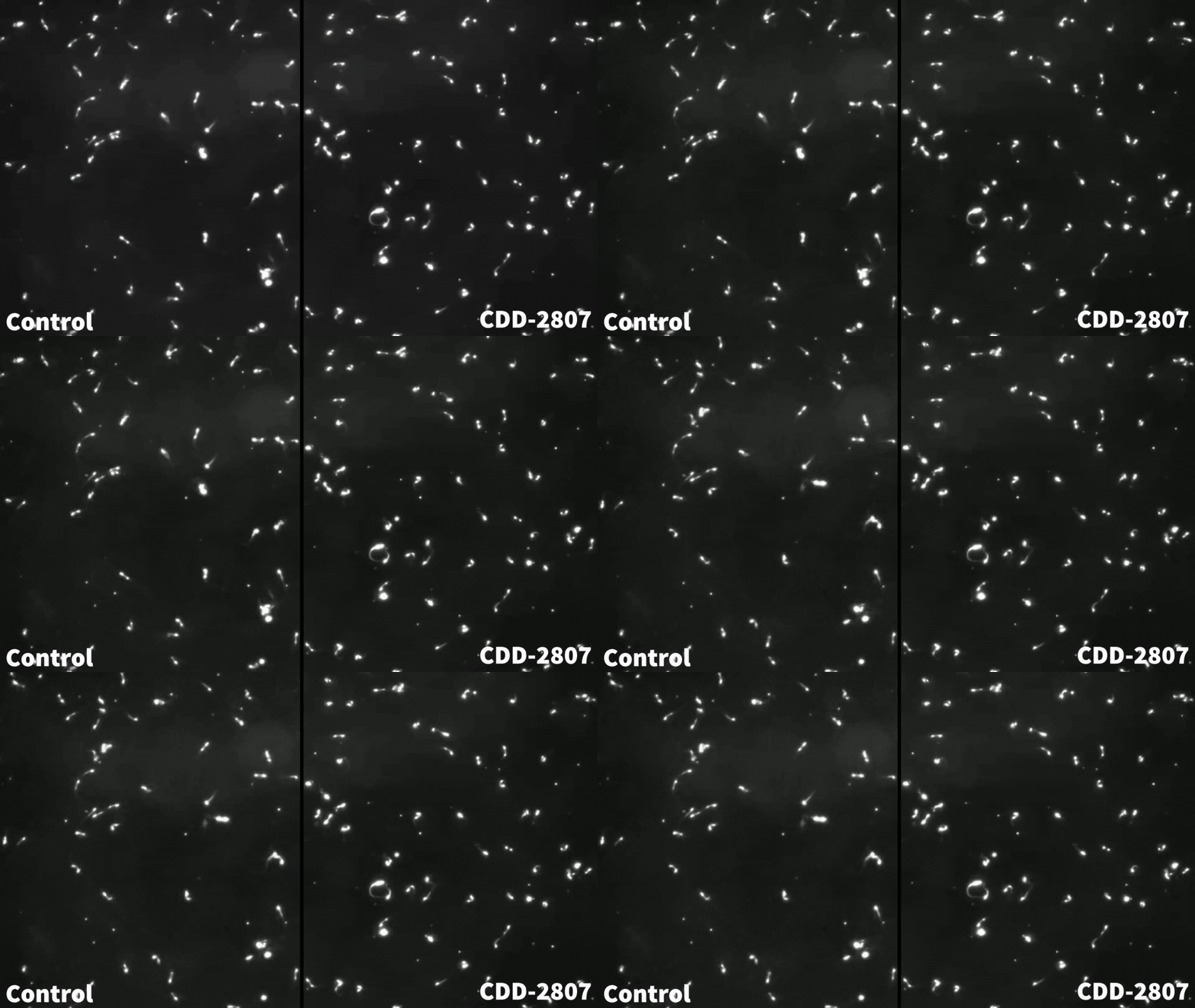
Men or mice with homozygous serine/threonine kinase 33 (STK33) mutations are sterile owing to defective sperm morphology and motility. To chemically evaluate STK33 for male contraception with STK33-specific inhibitors, we screened our multibillion-compound collection of DNA-encoded chemical libraries, uncovered potent STK33-specific inhibitors, determined the STK33 kinase domain structure bound with a truncated hit CDD-2211, and generated an optimized hit CDD-2807 that demonstrates nanomolar cellular potency (half-maximal inhibitory concentration = 9.2 nanomolar) and favorable metabolic stability. In mice, CDD-2807 exhibited no toxicity, efficiently crossed the blood-testis barrier, did not accumulate in brain, and induced a reversible contraceptive effect that phenocopied genetic STK33 perturbations without altering testis size. Thus, STK33 is a chemically validated, nonhormonal contraceptive target, and CDD-2807 is an effective tool compound."

A promising approach to develop a birth control pill for men | ScienceDaily


Perspective: An emerging target for male contraception (no public access) An inhibitor of a nonhormonal target is identified using a DNA-encoded chemical library

Microscopic image showing the effects of compound CDD-2807 on sperm motility.


Saturday, March 23, 2024

New discovery reveals how the human egg controls sperm entry by modulating the architecture of the egg coat

Good news! Maybe it leads to new and better contraceptives or infertility treatment!

"... Researchers ... have now made a breakthrough in understanding how fertilization in mammals is precisely regulated. They found that immediately after the egg is fertilized by a sperm, the surrounding egg coat tightens, acting as a hard barrier that stops additional sperm. This critical process, detailed for the first time, prevents a potentially lethal state for the embryo — polyspermy. In this state, multiple sperm cells fuse with a single egg and can make it unviable. ..."

From the highlights and abstract:
"Highlights
• Post-fertilization cleavage of zona pellucida (ZP) subunit ZP2 makes it oligomerize
• Premature ZP2 oligomerization causes infertility by impairing sperm penetration of ZP
• A native egg coat fragment structure sheds light on heteromeric ZP filament assembly
Cleaved ZP2 cross-links ZP filaments to harden the egg coat and prevent polyspermy
Summary
Following the fertilization of an egg by a single sperm, the egg coat or zona pellucida (ZP) hardens and polyspermy is irreversibly blocked. These events are associated with the cleavage of the N-terminal region (NTR) of glycoprotein ZP2, a major subunit of ZP filaments. ZP2 processing is thought to inactivate sperm binding to the ZP, but its molecular consequences and connection with ZP hardening are unknown. Biochemical and structural studies show that cleavage of ZP2 triggers its oligomerization. Moreover, the structure of a native vertebrate egg coat filament, combined with AlphaFold predictions of human ZP polymers, reveals that two protofilaments consisting of type I (ZP3) and type II (ZP1/ZP2/ZP4) components interlock into a left-handed double helix from which the NTRs of type II subunits protrude. Together, these data suggest that oligomerization of cleaved ZP2 NTRs extensively cross-links ZP filaments, rigidifying the egg coat and making it physically impenetrable to sperm."

P.S. It is very annoying that popular science articles do not reveal the source of their information as happened again here. I made the effort again to find the official news release! This is clearly bad practice!

The human egg locks like Fort Knox after it's fertilized. Scientists finally find out how This research could lead to new non-hormonal contraceptives and other insights into female fertility.

New discovery reveals how the egg controls sperm entry (official news release) After the egg has been fertilized by a sperm, the surrounding egg coat tightens, mechanically preventing the entry of additional sperm and the ensuing death of the embryo. This is according to a new study led by researchers at Karolinska Institutet and published in the journal Cell. The work also explains how mutations in egg coat proteins can cause female infertility and may eventually lead to new contraceptive methods.


Graphical abstract (this is a nice one)


Wednesday, February 21, 2024

Have scientists uncovered an alternative to condoms and vasectomies?

Good news! Hopefully, finally men have better options too! However, this is very early research!

Gender equality in contraceptives!

That men have been so dependent for so many years on women to effectively control reproduction without interfering with the joy of sex was hard to swallow (pardon my pun).

"... surveys show most American men are interested in using male contraceptives, yet they have almost no options. Recent attempts to develop drugs that block sperm production, maturation, or fertilization have had limited success, providing incomplete protection or severe side effects. New approaches to male contraception are needed, but because sperm development is so complex, researchers have struggled to identify parts of the process that can be safely and effectively tinkered with.
Now, scientists at the Salk Institute in California have found a new method of interrupting sperm production that is both non-hormonal and reversible. The study, just published in Proceedings of the National Academy of Sciences under the title “Targeting nuclear receptor corepressors for reversible male contraception,” has found a  new protein complex in regulating gene expression during sperm production. The researchers demonstrate that treating male mice with an existing class of drugs called HDAC (histone deacetylase) inhibitors can interrupt the function of this protein complex and block fertility without affecting libido.  ...
Salk scientists found that for this to work, retinoic acid receptors must bind with a protein called SMRT (silencing mediator of retinoid and thyroid hormone receptors) that then recruits HDACs, and this complex of proteins goes on to synchronize the expression of genes that produce sperm. ..."

From the significance and abstract:
"Significance
With unintended pregnancies costing billions of dollars a year in the United States alone, the socioeconomic and health benefits of improved birth control cannot be overemphasized. Despite the pressing need for population control, male contraceptive options are limited. These rodent studies demonstrate reversible male contraception by targeting silencing mediator of retinoid and thyroid hormone receptors-retinoid acid receptor signaling to identify a non-hormonal approach to male contraception.
Abstract
Despite numerous female contraceptive options, nearly half of all pregnancies are unintended. Family planning choices for men are currently limited to unreliable condoms and invasive vasectomies with questionable reversibility. Here, we report the development of an oral contraceptive approach based on transcriptional disruption of cyclical gene expression patterns during spermatogenesis. Spermatogenesis involves a continuous series of self-renewal and differentiation programs of spermatogonial stem cells (SSCs) that is regulated by retinoic acid (RA)–dependent activation of receptors (RARs), which control target gene expression through association with corepressor proteins. We have found that the interaction between RAR and the corepressor silencing mediator of retinoid and thyroid hormone receptors (SMRT) is essential for spermatogenesis. In a genetically engineered mouse model that negates SMRT-RAR binding (SMRTmRID mice), the synchronized, cyclic expression of RAR-dependent genes along the seminiferous tubules is disrupted. Notably, the presence of an RA-resistant SSC population that survives RAR de-repression suggests that the infertility attributed to the loss of SMRT-mediated repression is reversible. Supporting this notion, we show that inhibiting the action of the SMRT complex with chronic, low-dose oral administration of a histone deacetylase inhibitor reversibly blocks spermatogenesis and fertility without affecting libido. This demonstration validates pharmacologic targeting of the SMRT repressor complex for non-hormonal male contraception."

Have scientists uncovered an alternative to condoms and vasectomies? - The Jerusalem Post Salk Institute scientists discover new target for reversible, non-hormonal male birth control

Salk Scientists Discover New Target For Reversible, Non-Hormonal Male Birth Control Oral administration of HDAC inhibitor blocked sperm production and fertility in mice without affecting libido


Sperm, pictured inside the cross-sectioned tube of the epididymis, were not generated while mice took the HDAC inhibitor drug (top right), but after 60 days off the drug, spermatogenesis was recovered (bottom right). The left column shows sperm at the same time points in a mouse that did not receive the drug.


Thursday, July 13, 2023

FDA backs first over-the-counter birth control pill in the U.S.

Good news! Long overdue! What took so long!!!

When will other products be approved by the sluggish FDA?

"U.S. officials have approved the first over-the-counter birth control pill, which will let American women and girls buy contraceptive medication from the same aisle as aspirin and eyedrops.
The Food and Drug Administration said Thursday it cleared Perrigo’s once-a-day Opill to be sold without a prescription, making it the first such medication to be moved out from behind the pharmacy counter. The company won’t start shipping the pill until early next year, and there will be no age restrictions [???] on sales. ..."

FDA backs first over-the-counter birth control pill


Wednesday, May 10, 2023

FDA panel supports over-the-counter birth control pill, paving way for final, US approval

Good news! What took so long! The pill was introduced in 1950 and became available by 1960 (Source).

"An advisory panel at the U.S. Food and Drug Administration on Wednesday said that a decades-old birth control pill should be sold without a prescription, paving the way for the first over-the-counter contraceptive pill to be approved nationally.  ..."

FDA panel supports over-the-counter birth control pill, paving way for final, US approval | Just The News

Thursday, May 04, 2023

A snipless vasectomy delivered promising results. Really!

What they forgot to tell is whether this new procedure is easily reversible! And the referenced article is behind paywall!

"A snipless vasectomy delivered promising results in a small preliminary clinical test; the no-scalpel, hydrogel injection decreased sperm concentration by nearly 100% within 2 weeks, and maintained that status through day 30 in the first 6 men to undergo the procedure. MedPage Today"

Global Health NOW: Approved: New Vaccine Against RSV; Uganda’s Anti-Gay Bill Amended; and I Didn’t See Anyone Like Me

Tuesday, April 18, 2023

A testicular specific gene in mammals is discovered with potential for male contraceptive

The long elusive male contraceptive! Several previous discoveries were made and attempts were tried, but will it happen this time? It sounds very promising this time!

It has been so unfair that men have been without better contraceptives for so many decades! The first oral contraceptive for women was approved in 1960! What a stain on gender equality! (Caution: Satire)

"... the discovery of a gene that is only expressed in testicular tissue in multiple mammals, including humans. Disabling the gene changed the shape and function of sperm and has researchers hopeful that it could lead to an oral contraceptive for men that would work while taken, and allow sperm to resume their normal function when stopped. ...
gene dubbed Arrdc5 in the testicular tissue of pigs, cows, mice and humans. When they disabled it in mice, it stopped the production of a protein that led the rodents to develop a condition known as oligoasthenoteratospermia (OAT), the most commonly found cause of male infertility in humans. ..."

"... Discovery of a gene in multiple mammalian species could pave the way for a highly effective, reversible and non-hormonal male contraceptive for humans and animals. ...
In the ... study, the male mice lacking this gene produced 28% less sperm that moved 2.8 times slower than in normal mice — and about 98% of their sperm had abnormal heads and mid-pieces. ..."

From the abstract:
"In sexual reproduction, sperm contribute half the genomic material required for creation of offspring yet core molecular mechanisms essential for their formation are undefined. Here, the α-arrestin molecule arrestin-domain containing 5 (ARRDC5) is identified as an essential regulator of mammalian spermatogenesis. Multispecies testicular tissue transcriptome profiling indicates that expression of Arrdc5 is testis enriched, if not specific, in mice, pigs, cattle, and humans. Knockout of Arrdc5 in mice leads to male specific sterility due to production of low numbers of sperm that are immotile and malformed. Spermiogenesis, the final phase of spermatogenesis when round spermatids transform to spermatozoa, is defective in testes of Arrdc5 deficient mice. Also, epididymal sperm in Arrdc5 knockouts are unable to capacitate and fertilize oocytes. These findings establish ARRDC5 as an essential regulator of mammalian spermatogenesis. Considering the role of arrestin molecules as modulators of cellular signaling and ubiquitination, ARRDC5 is a potential male contraceptive target."

Genetic advance eyes reversible male contraceptive by warping sperm


Fig. 3: Impact of Arrdc5 genetic inactivation in mice


Thursday, March 23, 2023

Protein behind streamlined sperm opens door for male contraceptives

Once more the holy grail of male contraceptives! It may also help with the genetic diagnosis of male infertility.

Here is another, recent of my blog posts on this subject.

"... Inside a germ cell, which develops into either an egg or a sperm, there exist tiny membrane-less structures rich in RNA called nuage. Nuage are thought to be essential to germ cell specialization and interact with a protein-coding gene involved in sperm production, testis-specific serine kinase substrate (TSKS).
Researchers from Osaka University in Japan examined how using the CRISPR/Cas9 system to delete the entire coding sequence of TSKS in mice affects the shape of the spermatozoa they produce. ...
“We found that spermatozoa from the mice with disrupted TSKS failed to develop a streamlined form, resulting in male infertility.” ..."

From the significance and abstract:
"Significance
Spermatozoa have a streamlined shape to swim through the female reproductive tract to fertilize oocytes. However, little is known about the process of elimination of spermatid cytoplasm. When we created Tsks-null mice, the knockout mice cannot generate two types of nuage, reticulated body (RB) and chromatoid body remnant (CR), and are sterile with abnormal elimination of spermatid cytoplasm. Due to the absence of RB and CR, Tsks knockout spermatozoa have excess residual cytoplasm because the cytoplasmic contents cannot be eliminated from spermatid cytoplasm. These results suggest that TSKS-derived nuage are essential for spermatozoa to be streamlined. This study contributes to our understanding of spermiation, genetic diagnosis of idiopathic male infertility, and treatment of patients with infertility.
Abstract
Spermatozoa have a streamlined shape to swim through the oviduct to fertilize oocytes. To become svelte spermatozoa, spermatid cytoplasm must be eliminated in several steps including sperm release, which is part of spermiation. Although this process has been well observed, the molecular mechanisms that underlie it remain unclear. In male germ cells, there are membraneless organelles called nuage, which are observed by electron microscopy in various forms of dense material. Reticulated body (RB) and chromatoid body remnant (CR) are two types of nuage in spermatids, but the functions of both are unknown. Using CRISPR/Cas9 technology, we deleted the entire coding sequence of testis-specific serine kinase substrate (TSKS) in mice and demonstrate that TSKS is essential for male fertility through the formation of both RB and CR, prominent sites of TSKS localization. Due to the lack of TSKS-derived nuage (TDN), the cytoplasmic contents cannot be eliminated from spermatid cytoplasm in Tsks knockout mice, resulting in excess residual cytoplasm with an abundance of cytoplasmic materials and inducing an apoptotic response. In addition, ectopic expression of TSKS in cells results in formation of amorphous nuage-like structures; dephosphorylation of TSKS helps to induce nuage, while phosphorylation of TSKS blocks the formation. Our results indicate that TSKS and TDN are essential for spermiation and male fertility by eliminating cytoplasmic contents from the spermatid cytoplasm."

Protein behind streamlined sperm opens door for male contraceptives


Fig 1 TSKS-deleted male mice are sterile