Showing posts with label scatology. Show all posts

Tuesday, August 19, 2025

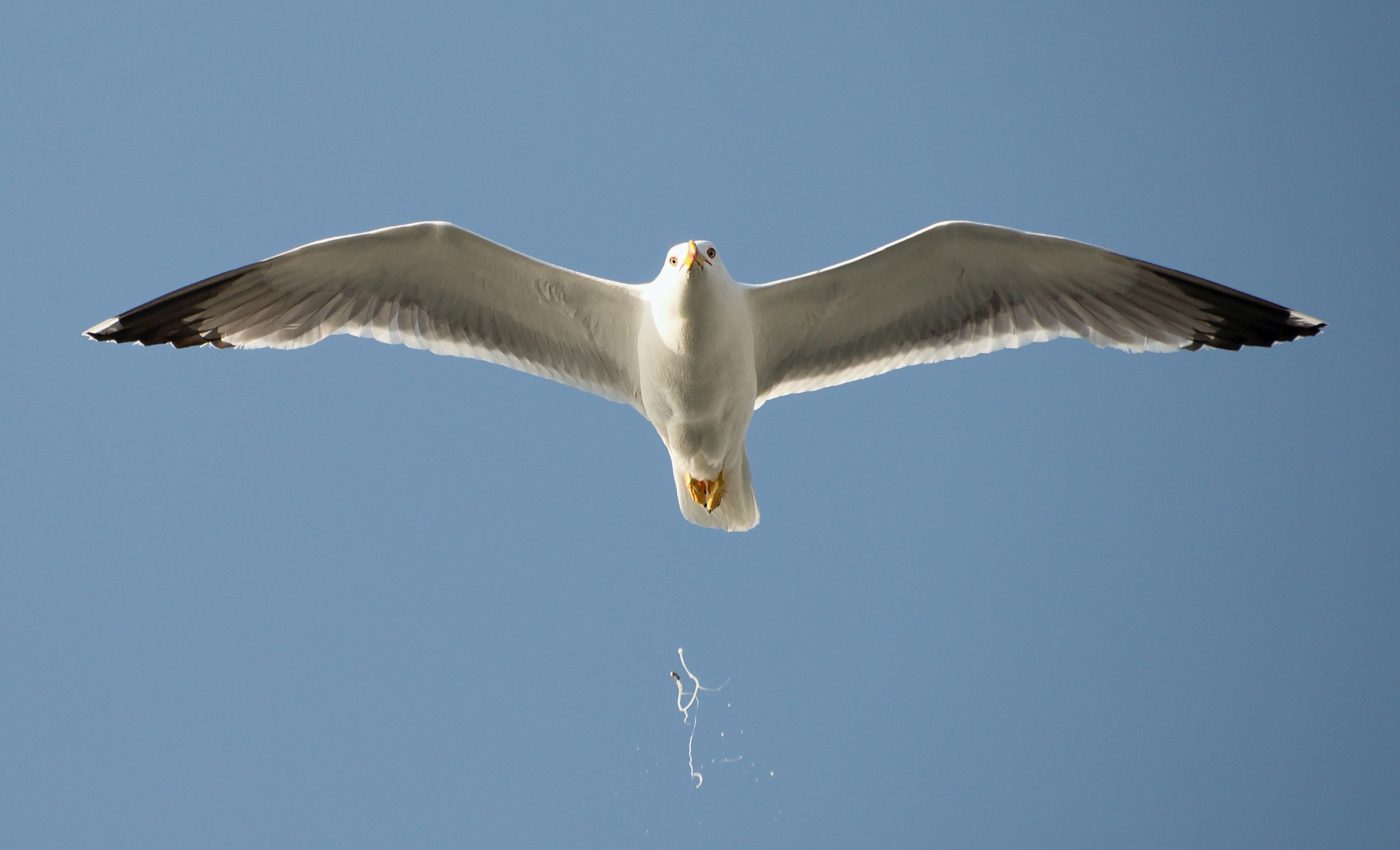
Some Seabird species only poop while flying, researchers observe via belly mounted video camera

Some new surprises from the science of poop! It's nutritious! 😊

Voyeurism comes in different flavors! 😊


The original headline of the popular science article is very misleading headline (see below) so is the title of the scientific paper!

"On Japan's desert islands, researchers uncovered a peculiar bathroom ritual among seabirds. ... the team found that streaked shearwaters (Calonectris leucomelas) poop while flying—not while floating on water—and they do so every 4 to 10 minutes. This habit may help the birds stay clean and fertilize the ocean below. ...

While in flight, the birds pooped about every 4 to 10 minutes. The team estimated that the birds excrete 30 grams of poop every hour, which is about 5% of their body mass. ..."

From the abstract:
"Understanding when and how often seabirds excrete at sea is important for understanding their potential influence on marine ecosystems. Whales are known to redistribute nutrients through excretion, the ‘whale pump’. Large and widespread populations of seabirds could similarly shape key pelagic ecosystem processes, but such effects cannot be evaluated without basic data on their excretion behavior. Because of the challenges of observing seabirds traveling over the open sea, current knowledge of such effects is restricted to the terrestrial environment, and their excretion characteristics in open ocean are almost entirely unknown
Here, we report our observations of excretions of streaked shearwaters (Calonectris leucomelas) in the open ocean made using a belly-mounted video camera. The streaked shearwaters exhibited a marked tendency to avoid excretion while floating on the sea surface and consistently excreted during flight.
Excretion timings showed periodicity, occurring every 4–10 min during daylight hours with inter-event intervals varying within a few minutes.
Streaked shearwaters excreted approximately 5% of their body mass per hour, potentially substantial enough to influence flight energetics. Our study opens a path toward evaluating seabirds’ contributions to regional nutrient cycles and their epidemiological interactions within marine ecosystems."

Seabirds only poop while flying, researchers observe


Tuesday, March 04, 2025

Machine learning designs efficacious synthetic microbial communities as antibiotics

Good news! Synthetic antibiotics by design based on microbiota.

"... The research team set out to identify C. difficile’s “friends” and “foes;” in other words, those that tend to either co-occur with C. difficile or those that may reduce the growth of C. difficile. They gathered information on the human microbiome from 12 previously published studies, which included microbiome sequencing data and clinical diagnoses of C. difficile colonization. They then used machine learning to home in on the key features of microorganisms that were positively and negatively associated with C. difficile.

Thirty-seven strains of bacteria were found to be negatively correlated with C. difficile. In other words, when these microorganisms were present, there was no C. difficile infection.
Another 25 bacteria were positively correlated with C. difficile, meaning that they were present alongside C. difficile infection.

In the lab, the researchers then combined bacteria that appeared to repress C. difficile and developed a synthetic version of a fecal transplant.

When tested in vitro and given orally to mice, the synthetic microbiome therapy significantly reduced growth of C. difficile, resisted infection and was as effective as a traditional human fecal transplant. In mice, it was also shown to protect against severe disease, delay relapse and decrease severity of recurrent infections caused by antibiotic use. ..."

From the highlights and abstract:
"Highlights
Machine learning designs microbial communities through robust cross-cohort signals
Synthetic consortia form stable communities in vivo suppressing C. difficile
• Proline-fermenting strains are necessary and sufficient for C. difficile repression
• P. anaerobius is as efficacious as a human fecal transplant in a gnotobiotic model

Summary
Clostridioides difficile, a major cause of antibiotic-associated diarrhea, is suppressed by the gut microbiome, but the precise mechanisms are not fully described.
Through a meta-analysis of 12 human studies, we designed a synthetic fecal microbiota transplant (sFMT1) by reconstructing microbial networks negatively associated with C. difficile colonization.
This lab-built 37-strain consortium formed a functional community suppressing C. difficile in vitro and in animal models.
Using sFMT1 as a tractable model system, we find that bile acid 7α-dehydroxylation is not a determinant of sFMT1 efficacy while one strain performing Stickland fermentation—a pathway of competitive nutrient utilization—is both necessary and sufficient for the suppression of C. difficile, replicating the efficacy of a human fecal transplant in a gnotobiotic mouse model.
Our data illustrate the significance of nutrient competition in suppression of C. difficile and a generalizable approach to interrogating complex community function through robust methods to leverage publicly available sequencing data."

A Microbe from Poo Suppresses Bacterial Infection | The Scientist "A group of gut bacteria successfully hindered recurrent Clostridium difficile infection in mice, offering alternative therapeutic strategies to antibiotics and fecal transplant."

Synthetic microbiome therapy suppresses bacterial infection without antibiotics (original news release) "Precise, targeted treatment using limited strains of gut bacteria effectively protected against C. difficile infection, severe symptoms and recurrent infections in mice"


Figure 1. Meta-analysis of studies enables rational design of communities that correlate with C. difficile