Some new surprises from the science of poop! It's nutritious! 😊
Voyeurism comes in different flavors! 😊
The original headline of the popular science article is very misleading headline (see below) so is the title of the scientific paper!
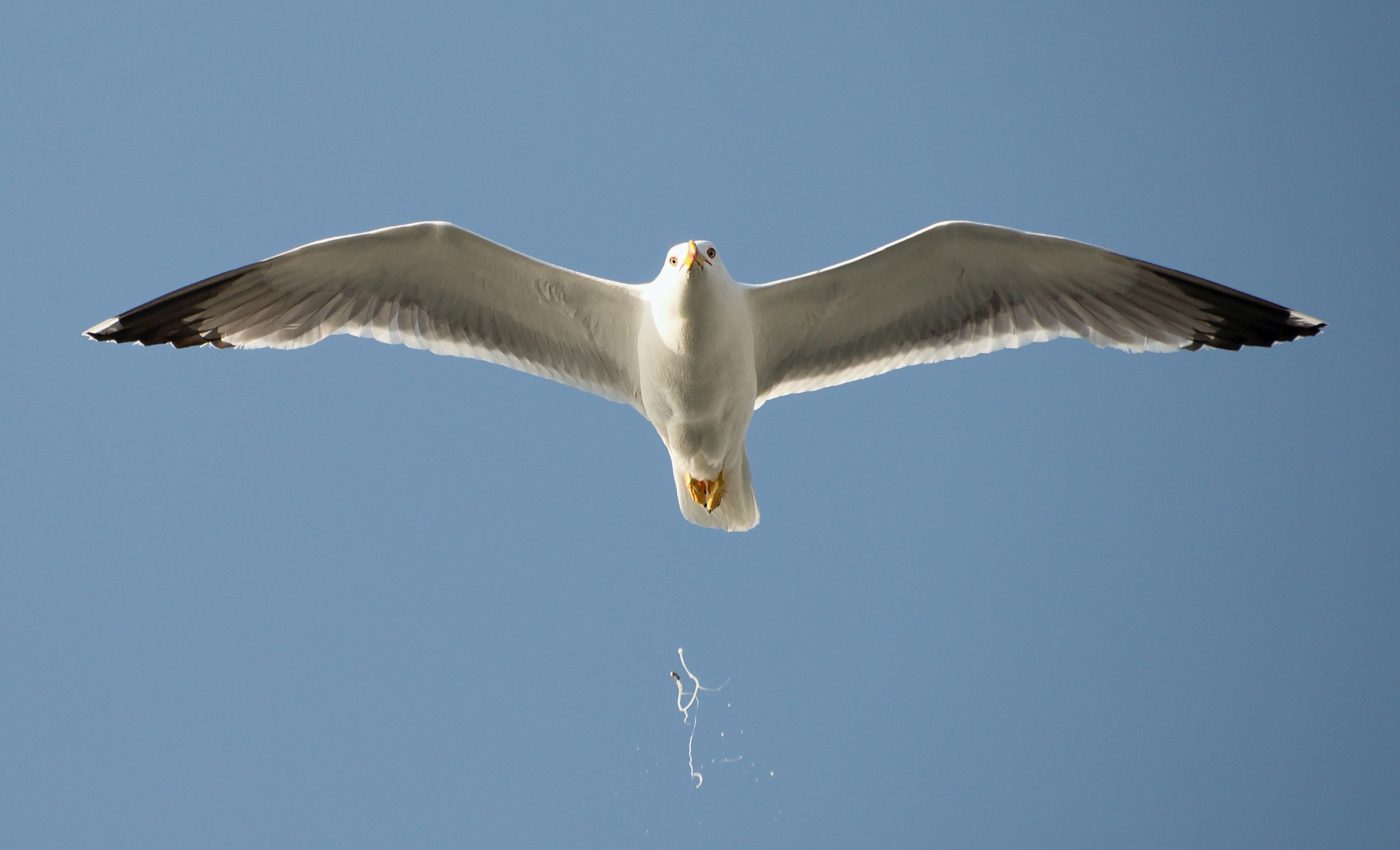
"On Japan's desert islands, researchers uncovered a peculiar bathroom ritual among seabirds. ... the team found that streaked shearwaters (Calonectris leucomelas) poop while flying—not while floating on water—and they do so every 4 to 10 minutes. This habit may help the birds stay clean and fertilize the ocean below. ...
While in flight, the birds pooped about every 4 to 10 minutes. The team estimated that the birds excrete 30 grams of poop every hour, which is about 5% of their body mass. ..."
From the abstract:
"Understanding when and how often seabirds excrete at sea is important for understanding their potential influence on marine ecosystems. Whales are known to redistribute nutrients through excretion, the ‘whale pump’. Large and widespread populations of seabirds could similarly shape key pelagic ecosystem processes, but such effects cannot be evaluated without basic data on their excretion behavior. Because of the challenges of observing seabirds traveling over the open sea, current knowledge of such effects is restricted to the terrestrial environment, and their excretion characteristics in open ocean are almost entirely unknown.
Here, we report our observations of excretions of streaked shearwaters (Calonectris leucomelas) in the open ocean made using a belly-mounted video camera. The streaked shearwaters exhibited a marked tendency to avoid excretion while floating on the sea surface and consistently excreted during flight.
Excretion timings showed periodicity, occurring every 4–10 min during daylight hours with inter-event intervals varying within a few minutes.
Streaked shearwaters excreted approximately 5% of their body mass per hour, potentially substantial enough to influence flight energetics. Our study opens a path toward evaluating seabirds’ contributions to regional nutrient cycles and their epidemiological interactions within marine ecosystems."
Periodic excretion patterns of seabirds in flight (no public access)

No comments:
Post a Comment