Recommendable!
"... analyzed 128 samples of embryonic tissues from humans and nearly two dozen other primate species from museums in the U.S. and Europe. These collections included century-old specimens mounted on glass slides or preserved in jars.
The researchers also studied human embryonic tissues collected by the Birth Defects Research Laboratory at the University of Washington. They took CT scans and analyzed histology (the microscopic structure of tissues) to reveal the anatomy of the pelvis during early stages of development. ...
The researchers discovered that evolution reshaped the human pelvis in two major steps. First, it shifted a growth plate by 90 degrees to make the human ilium wide instead of tall. Later, another shift altered the timeline of embryonic bone formation. ...
In the early stages of development, the human iliac growth plate formed with growth aligned head-to-tail just as it did in other primates. But by day 53, the growth plates in humans evolved to radically shift perpendicularly from the original axis — thus shortening and broadening the hipbone. ..."
From the abstract:
"Bipedalism is a human-defining trait. It is made possible by the familiar, bowl-shaped pelvis, whose short, wide iliac blades curve along the sides of the body to stabilize walking and support internal organs and a large-brained, broad-shouldered baby. The ilium changes compared with living primates are an evolutionary novelty. However, how this evolution came about remains unknown.
Here, using a multifaceted histological, comparative genomic and functional genomic approach, we identified the developmental bases of the morphogenetic shifts in the human pelvis that made bipedalism possible.
First, we observe that the human ilium cartilage growth plate underwent a heterotopic shift, residing perpendicular to the orientation present in other primate (and mouse) ilia.
Second, we observe heterochronic and heterotopic shifts in ossification that are unlike those in non-human primate ilia or human long bones.
Ossification initiates posteriorly, resides externally with fibroblast (and perichondral) cells contributing to osteoblasts, and is delayed compared with other bones in humans and with primate ilia.
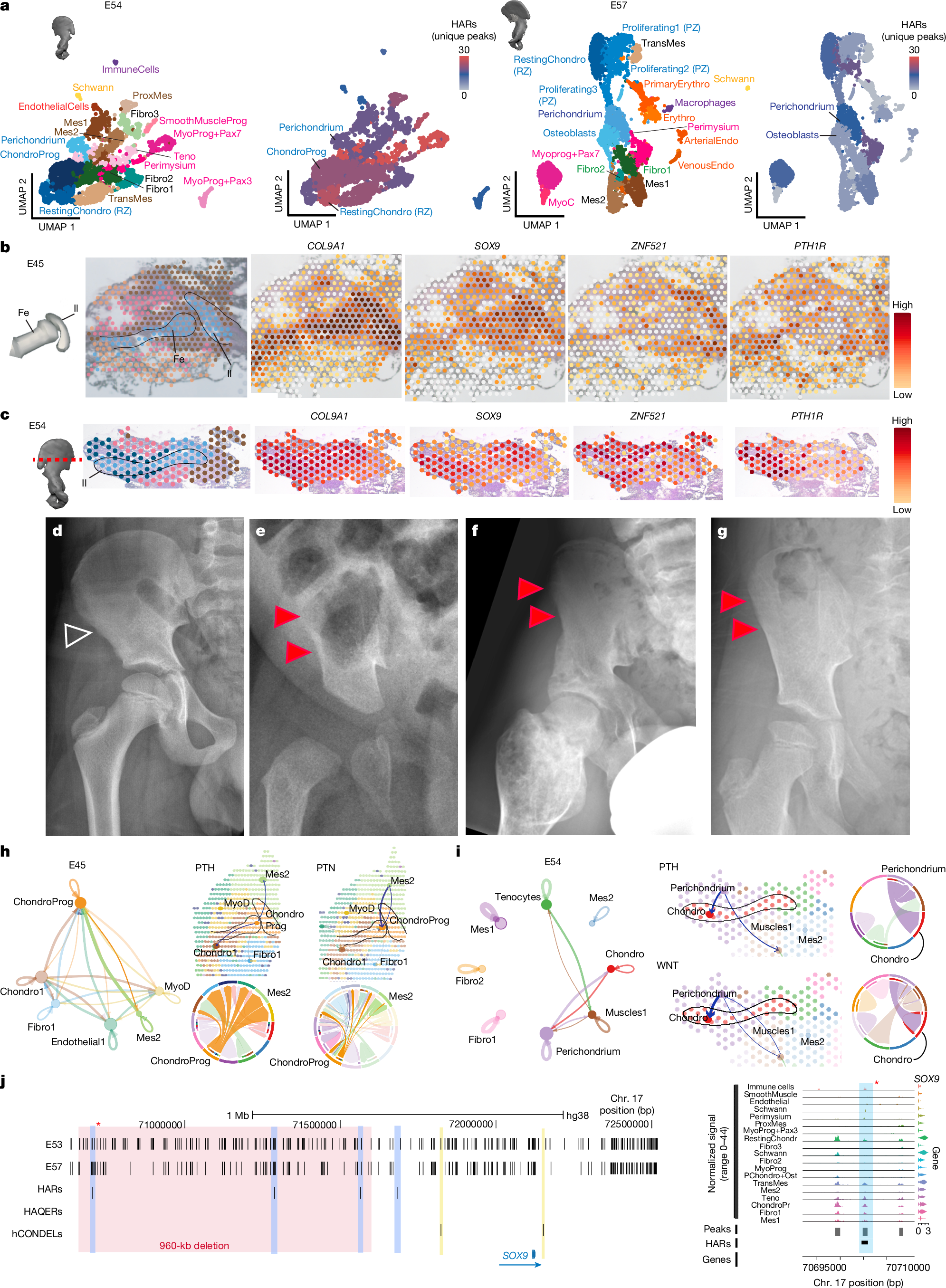
Underlying these two shifts are regulatory changes in an integrated chondrocyte–perichondral–osteoblast pathway, involving complex hierarchical interactions between SOX9–ZNF521–PTH1R and RUNX2–FOXP1/2. These innovations facilitated further growth of the human pelvis and the unique formation of the ilium among primates."
The evolution of hominin bipedalism in two steps (open access)
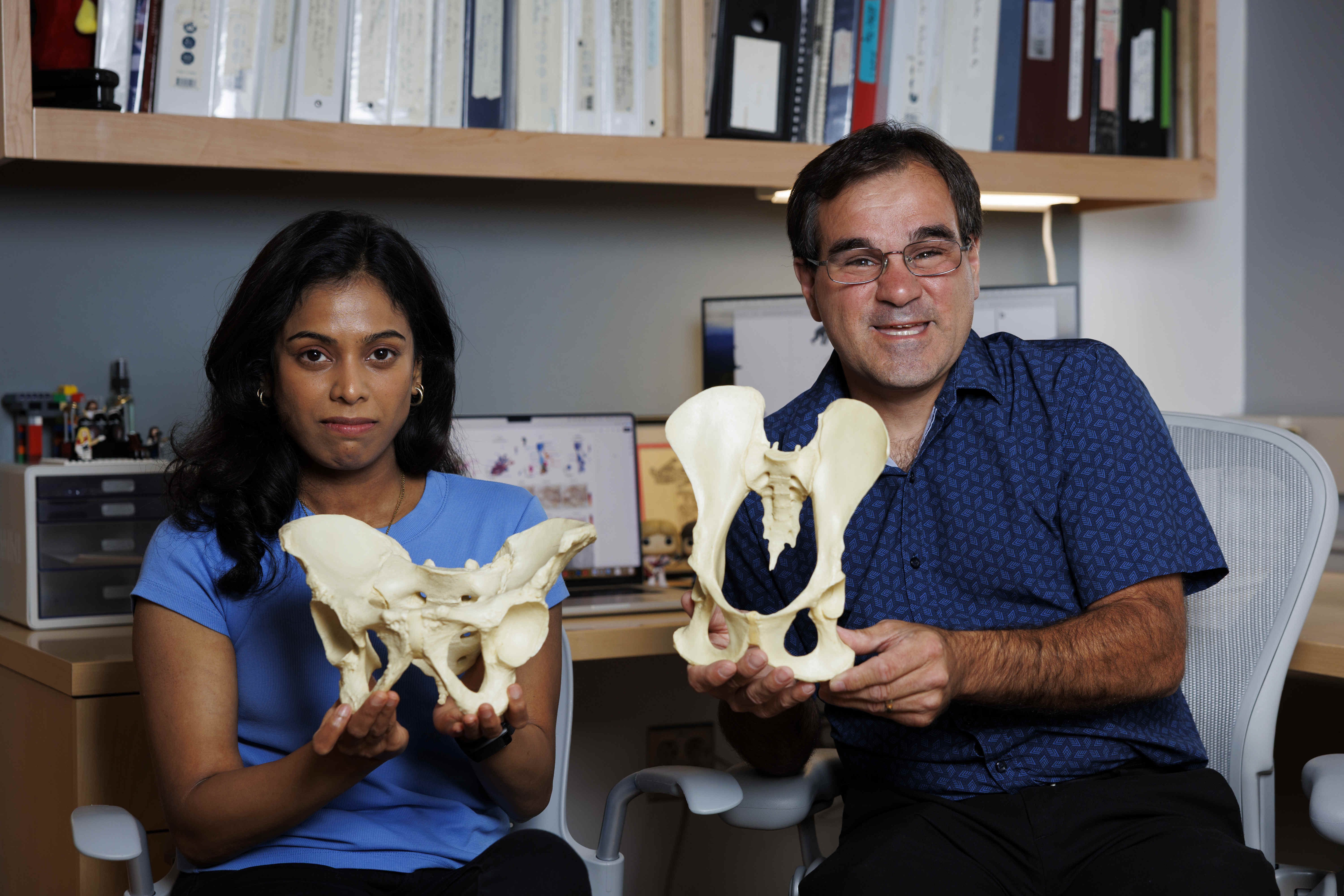
Gayani Senevirathne (left) holds the shorter, wider human pelvis, which evolved from the longer upper hipbones of primates, which Terence Capellini is displaying.
Fig. 1: Comparative chondrogenesis of human, primate and mouse iliac growth plate.
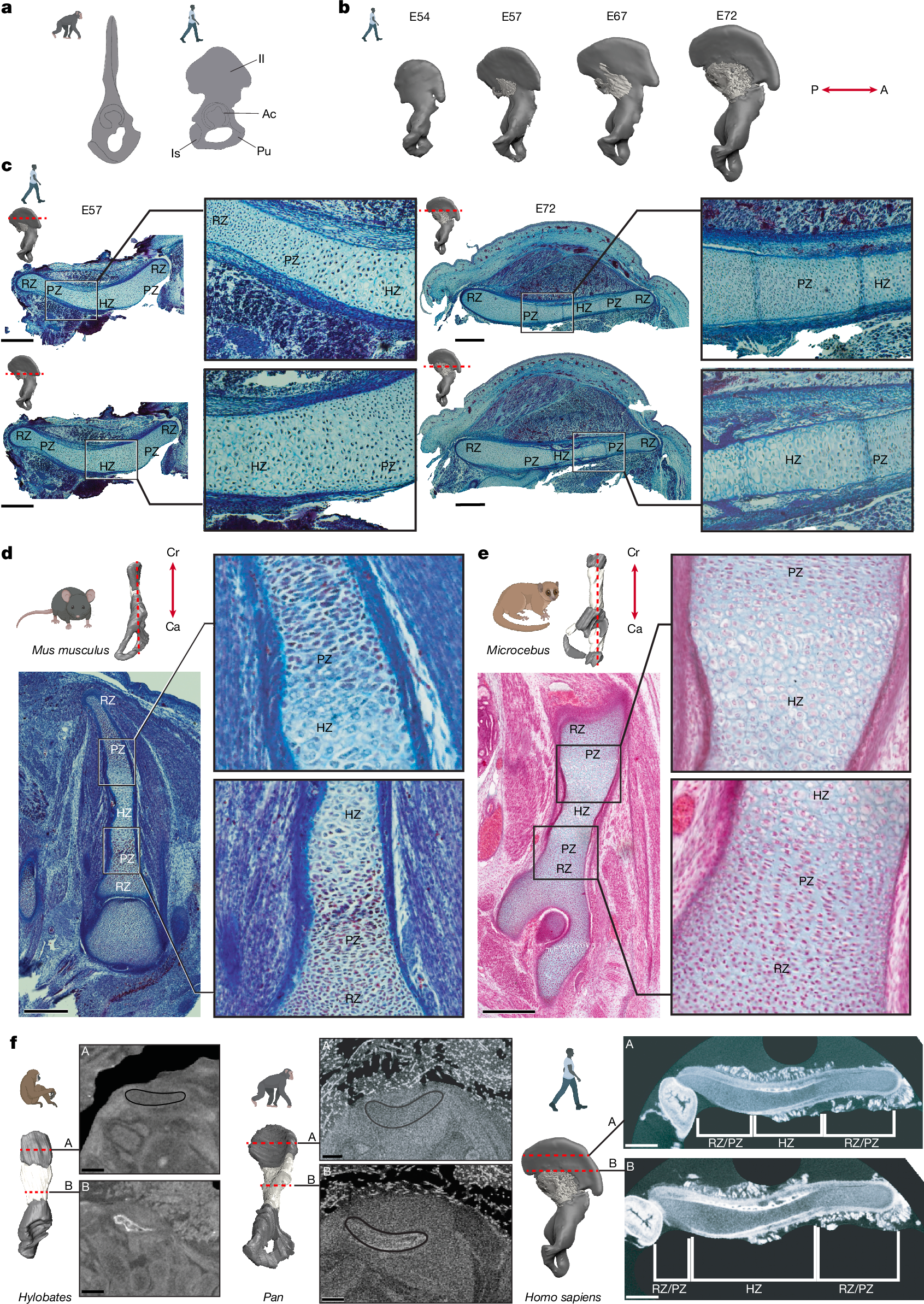
Fig. 2: Genetic architecture of the human iliac growth plate.

No comments:
Post a Comment