Showing posts with label Yale University. Show all posts

Friday, March 27, 2026

Trump, Xi, and the Specter of 1914 | Foreign Affairs. Really!

This article headline makes very little sense if no sense at all! 

China is very different than any of the European countries involved in World War I!

Maybe the author, a professor of history, should first read Sun Tzu's The Art of War!

Caveat: I did not read the article given the idiotic headline!

Written by "ODD ARNE WESTAD is Elihu Professor of History and Global Affairs at Yale University. This essay is adapted from his forthcoming book, The Coming Storm: Power, Conflict, and Warnings From History (Henry Holt, BBC Books). Copyright © 2026 by Odd Arne Westad."

Trump, Xi, and the Specter of 1914 | Foreign Affairs "How America and China Can Avoid the Blunders That Led to World War I [???]"

Saturday, December 13, 2025

Yale University: The massive, hidden burden of neurological disorders: More than half of Americans have a neurological disorder. Really!

Is this a solicitation for more business for doctors by the Yale School of Medicine? It has the appearance!

Or is this alarmism and hysteria? Quite possibly!

Junk science? You bet! E.g. they use dubious measurements like disability-adjusted life-years (DALYs)!

This article seems to mix willy nilly all kinds of things! Like throw all ingredients in the pot, stir it and see what comes out! A Mixtum compositum (hodge podge)!

The first author John Ney shows only a lifetime citation count of 3405 according to Google Scholar. This is very little for an author, who started publishing around 2003 and has published about 180 papers or more! 

From the keypoints and abstract:
"Key Points
Question  What is the US burden of disorders affecting the nervous system?

Findings  This cross-sectional study of the Global Burden of Disease 2021 study data found that, among the US population of 332.7 million, disorders affecting nervous system health impacted 180.3 million US individuals and were the top cause of disability, with 16.6 million disability-adjusted life-years. Conditions with the greatest collective disability were stroke, Alzheimer disease and other dementias, diabetic neuropathy, and migraine.

Meaning  Given the high prevalence of disorders affecting the nervous system, the United States should prioritize efforts to combat these conditions with new prevention strategies, therapeutics, and focused rehabilitation.

Abstract
Importance
Nervous system health is a major contributor to population health, which is directly affected by neurological conditions and other disorders where nervous system damage occurs.

Objective
To quantify aggregated health loss from diseases affecting the nervous system, including neurological disorders; neurodevelopmental disorders; congenital, neonatal, and systemic illnesses; and infectious diseases in the United States.

Design, Setting, and Participants
This is a cross-sectional study of the Global Burden of Disease 2021 study data for nervous system health loss confined to the United States from 1990 through 2021 among the entire US population. Data analysis was performed from December 2021 to January 2025.

Exposure  Thirty-six unique conditions that cause harm to the nervous system.

Main Outcomes and Measures  Totals and age-standardized estimates with 95% uncertainty intervals (UIs) for disability-adjusted life-years (DALYs), years lived with disability (YLDs), years of life lost (YLLs), total attributable deaths (where applicable), and prevalence.

Results
In 2021, of the US population of 332.7 million, disorders affecting nervous system health impacted 180.3 million (95% UI, 170.7 million to 190.4 million) US individuals and were the top cause of disability, with 16.6 million (95% UI, 12.9 million to 20.9 million) DALYs.
The most prevalent conditions were tension-type headache [???] (121.9 million; 95% UI, 109.4 million to 135.1 million), migraine [???] (57.7 million; 95% UI, 50.1 million to 66.1 million), and diabetic neuropathy (17.1 million; 95% UI, 14.4 million to 19.9 million).
Conditions with the greatest collective disability were stroke (3.9 million DALYs; 95% UI, 3.5 million to 4.2 million DALYs), Alzheimer disease and other dementias (3.3 million DALYs; 95% UI, 1.6 million to 6.9 million DALYs), diabetic neuropathy (2.2 million DALYs; 95% UI, 1.5 million to 3.0 million DALYs), and migraine (2.1 million DALYs; 95% UI, 0.4 million to 4.6 million DALYs).
Compared with age-standardized metrics in 1990, the prevalence of disorders affecting the nervous system was nearly identical (−0.2%; 95% UI, −1.5% to 1.9%), with decreased attributable deaths (−14.6%; 95% UI, −18.3% to −11.3%) but increased YLDs (9.8%; 95% UI, 4.6% to 16.6%).
By state, Mississippi, Alabama, and Louisiana had the largest age-standardized DALY rates, while New York, Massachusetts, and New Jersey had the smallest.

Conclusions and Relevance
Disorders affecting the nervous system are highly prevalent and cause disability for millions of US individuals, with reduced mortality leading to more YLDS. The United States should prioritize efforts to combat these conditions with development and implementation of new and effective prevention strategies, therapeutics, and focused rehabilitation."

The massive, hidden burden of neurological disorders | Yale News "A new Yale study finds that more than half of Americans have a neurological disorder — and many don’t realize it. In a Q&A, study author John Ney explains why these disorders are so common and the risks they pose."


First author of study John Ney. What neurological disorders may he have and how often did he "blow off warning signs"? 😊


Wednesday, December 10, 2025

Finding common ground on firearm safety by framing firearm injuries as a (public) health problem. Really!

Nice try of framing a policy issue!

The example used here, without explicitly saying so, was an apparent suicide committed by a man using a firearm of a family member.

The use of a firearms is not a (public) health problem, but an attempt to mess with the Second Amendment!

It is the individual using a firearm that might have (public) health problems not the tool!

Finding common ground on firearm safety | Yale News

Friday, November 21, 2025

Reversing Fibrosis: New Research Provides Insight for Novel Therapies

Good news!

"Yale School of Medicine (YSM) researchers have made key breakthroughs in understanding how to treat fibrotic diseases such as scleroderma and graft-versus-host disease.

Fibrotic diseases are a group of conditions—often autoimmune—characterized by excessive tissue scarring. They can drastically hinder patients’ quality of life, and in some cases, they can be life-threatening—fibrosis contributes to approximately 45% of all deaths in developed nations. However, there are no effective treatments.

Now, in a study ... researchers have developed a monoclonal antibody that is showing promise as a new therapy for patients. And in a [second] ... study, the same team discovered a signaling pathway that may be mediating fibrosis and could be a target for future therapies. ...

Then, the team tested their anti-EREG antibody in humanized mouse models and skin biopsies from patients and found that inhibiting epiregulin reduced biomarkers associated with fibrosis. These findings suggest that the therapeutic antibody could be a promising new therapy for patients with various types of fibrotic conditions. ...

In a second recent study, the researchers aimed to further understand mechanisms that differentiate fibrotic and non-fibrotic skin diseases. The team compared single-cell RNA sequencing data from seven different inflammatory skin diseases. Some of the diseases, like atopic dermatitis and psoriasis, were associated with redness and scaling, but not fibrosis. They also analyzed data from patients with fibrotic diseases such as scleroderma, graft-versus-host disease, and lupus.

Their analyses revealed that fibrotic diseases were associated with greater activity of a protein called STAT1 in fibroblasts, the key cell type that’s hyperactivated in fibrotic diseases. To better understand how STAT1 interacts with the EGFR signaling pathway to drive fibrosis, the researchers developed mouse models that lacked STAT1. When the team activated EGFR, they found that mice without STAT1 showed less fibrosis compared to regular animal models.

“If we activate EGFR by inducing injury when there’s no STAT1 present, none of the fibrotic genes are activated,” ...

The researchers conducted further experiments on cultured fibroblasts in vitro which confirmed that STAT1 was required for the onset of fibrosis. ...

Importantly, the upregulation of epiregulin activation of EGFR-STAT1 pathway isn’t always active—it’s only switched on under specific conditions such as the presence of injury or inflammation. ..."

"Key Points
  • New fully human anti-EREG therapeutic antibody is highly developable and demonstrates antifibrotic capabilities in vivo.
  • Sclerotic GvHD and SSc share EREG-TNC-TLR4 signaling axis that is reduced by anti-EREG treatment in patient skin explants.
..."

From the abstract:
"Chronic inflammatory skin diseases affect the health of millions of people worldwide, and those that feature fibrosis are refractory to treatments. The signals that determine whether fibrosis occurs during chronic skin inflammation are poorly understood.
We generated a scRNA-seq atlas of seven inflammatory skin diseases and their healthy controls.
Diseases with fibrosis demonstrate higher expression and activity of STAT1 in fibroblasts.
Fibroblast STAT1 is required for skin fibrosis development in mice. STAT1 activation promotes a fibrotic gene expression profile which can be activated directly by EGFR in a JAK-independent manner and abrogated by genetic and pharmacologic STAT1 inhibition.
The EGFR-STAT1 pathway is stimulated by high affinity EGFR ligands expressed by activated keratinocytes, suggesting keratinocyte-derived signals as triggers of skin fibrosis.
In sum, fibroinflammatory skin diseases are characterized by fibroblast EGFR-STAT1 signaling that controls expression of fibrotic genes, elucidating an interferon independent function of STAT1 to mediate fibrotic skin diseases."

Reversing Fibrosis: New Research Provides Insight for Novel Therapies | Yale School of Medicine


Fig. 1: Integrated inflammatory skin disease atlas shows upregulated STAT1 expression in SFRP2+ fibroblasts.


Fig. 2: SCENIC analysis of fibroblasts identifies STAT1 as a central regulon in fibrotic skin.


Tuesday, September 30, 2025

Young Yale alumna Taking the lead in Iceland to return to her alma mater

What a round trip for her!

"In December 2024, 36-year-old Kristrún Frostadóttir ’16MA became the youngest prime minister ever to lead Iceland. She went into politics just four years ago after having trained at the Jackson Institute for Global Affairs, now the Yale Jackson School, and working as an economist. She has been a voice for a welfare state that balances its books, and she has called for free trade in the face of US tariffs.  ..."

Taking the lead | Where They Are Now | Yale Alumni Magazine "How Kristrún Frostadóttir '16MA became Iceland's youngest-ever prime minister."


How Gene Mutations Drive Dementia in Parkinson’s Disease separate and independent from motor deficits

Good news!

"Parkinson’s disease causes both movement and cognitive deficits, and for a long time both were thought to be caused by the accumulation of a protein called alpha-synuclein in the brain. But a new ... study has found that the cognitive deficits arise through a different—and unexpected—mechanism.

The new findings suggest that mutations in a gene called GBA—which are a risk factor for developing Parkinson’s disease—drive cognitive decline by disrupting how neurons communicate with each other in the brain. ...

In the study, the researchers analyzed three types of mouse models:
animals that overexpressed a gene called SNCA that encodes the alpha-synuclein protein,
GBA mutants, and
crossbred GBA-SNCA double mutants.

Using these models, the team conducted a series of experiments that tested the animals’ motor and cognitive functions over time between three and 12 months of age.

The experiments showed that motor dysfunction was linked to elevated alpha-synuclein. SNCA and GBA-SNCA mutants—the two models that had elevated alpha-synuclein—experienced motor deficits that worsened over time, but GBA mutants did not develop any motor deficits.

Cognitive deficits, on the other hand, were associated with GBA mutations. GBA and GBA-SNCA mutants developed comparable cognitive deficits as early as three months that persisted at 12 months, while SNCA mutants did not show any dysfunction. ..."

From the abstract:
"GBA is the major risk gene for Parkinson’s disease (PD) and dementia with Lewy bodies (DLB), two common α-synucleinopathies with cognitive deficits.
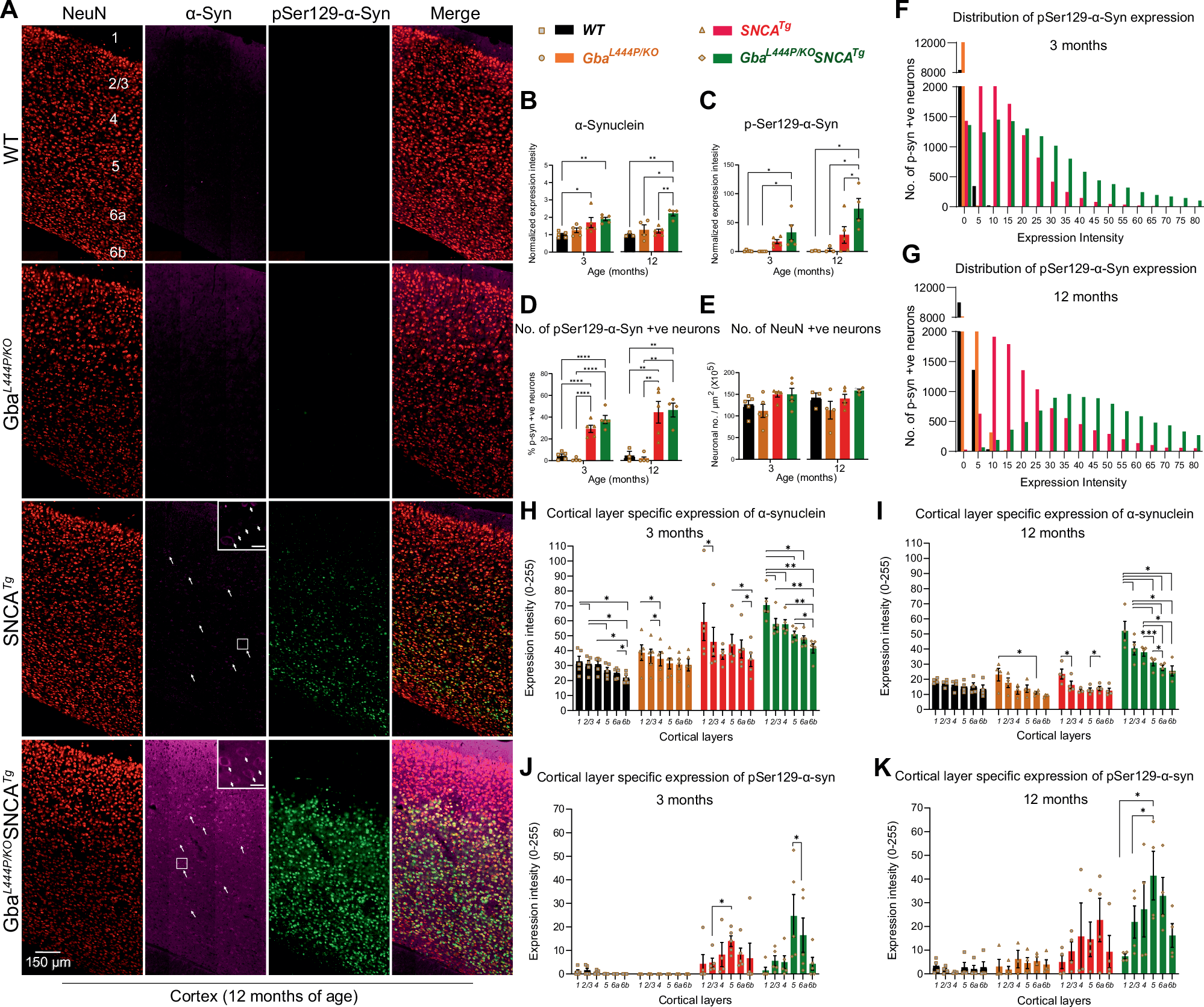
Here we investigate the role of mutant GBA in cognitive decline by utilizing Gba (L444P) mutant, SNCA transgenic (tg), and Gba-SNCA double mutant mice. Notably, Gba mutant mice show cognitive decline but lack PD-like motor deficits or α-synuclein pathology.
Conversely, SNCA tg mice display age-related motor deficits, without cognitive abnormalities. Gba-SNCA mice exhibit both cognitive decline and exacerbated motor deficits, accompanied by greater cortical phospho-α-synuclein pathology, especially in layer 5 neurons.
Single-nucleus RNA sequencing of the cortex uncovered synaptic vesicle (SV) endocytosis pathway defects in excitatory neurons of Gba mutant and Gba-SNCA mice, via downregulation of genes regulating SV cycle and synapse assembly. Immunohistochemistry and electron microscopy validate these findings.
Our results indicate that Gba mutations, while exacerbating pre-existing α-synuclein aggregation and PD-like motor deficits, contribute to cognitive deficits through α-synuclein-independent mechanisms, involving dysfunction in SV endocytosis."

How Gene Mutations Drive Dementia in Parkinson’s Disease < Yale School of Medicine


Fig. 2: Gba mutation exacerbates α-synuclein pathology in the cortices of SNCA tg mice.


Wednesday, September 17, 2025

The origins of the European joint-stock Corporation Is Centuries Older than We Thought‌‌

Recommendable!

"... “We propose a counterexample,” ... in the new study ... They focus on several cases from medieval France and Italy, well before 1600, in which organizations akin to the modern joint-stock company emerged simultaneously in different geographies. “We argue for and show evidence that there is this long-term tradition, particularly in southern Europe, that allowed for the creation of perpetually lived corporations like the modern joint-stock company.”‌

The researchers identify organizations, from the mills of Toulouse in the 1100s to the financial institution Casa San Giorgio in Genoa in the 1400s, that held a form and function like today’s modern company. Importantly, they emerged not from legal institutions designed to support the mercantile class—as with the English East India Company and Dutch East India Company—but from inheritance law that, since Roman times, had been negotiating the division of illiquid assets.‌

Consider a lord who willed his castle to his children. After he died they could sell their shares for cash; they could manage the castle as a timeshare (an arrangement, Goetzmann notes, that long predates the Florida vacation rental); they could rent it out and share the revenue; or each could occupy a separate wing. Each option relies on the same principle: treating the castle—or any asset—as a partnership divided into distinct shares.‌

“And then in about 1100 or 1200, this idea was adopted for business purposes,” ...  “It’s not exactly clear how it made the leap, but there’s some evidence it went through mining companies in early medieval times.” This inheritance-type structure allowed for joint investment and ownership, a semi-egalitarian governance structure, and importantly, an institution that did not dissolve if a partner died. ... “this is a very nice feature for attracting capital.”‌ ..."

From the abstract:
"The origin of the modern joint-stock company is typically traced to the concomitant appearance of large-scale maritime trading companies in England and the Netherlands in the early seventeenth century.
Highlighting medieval cases in southern Europe, we claim that the joint-stock company emerged earlier in history.
These prior appearances support the theory of convergent evolution towards the joint-stock company.
We document alternative and largely independent developmental paths that suggest the joint-stock company can emerge in a variety of legal, political and socioeconomic contexts.
This evidence has implications for identifying the necessary background underlying the emergence of the joint-stock company, and for the debate regarding the link between business institutions and economic growth."

The Corporation Is Centuries Older than We Thought‌‌ | Yale Insights "The genesis of the joint-stock company is usually traced to the founding of the English East India Company and the Dutch East India Company around 1600. New research co-authored by Prof. William Goetzmann says this origin story may be off by centuries.‌"

Convergent evolution towards the joint-stock company (I suspect this is the research article since a link in the article above is missing. No public access)

Saturday, July 05, 2025

Kidney Cancer Vaccine Shows Success in Small Trial

Good news! Cancer is history (soon)!

Hopefully, machine learning & AI will dramatically speed up the process of developing powerful treatments for any cancer very soon! I am convinced this will happen!

Very disappointing, but it appears the Yale University article omitted to reference the corresponding study/research article (or it was not yet published). Likewise, the profile page of the featured researcher, i.e. David A. Braun, MD, PhD, does not appear to contain the respective reference to the study.

"... Though the study is small and early stage, the results are very promising. ...

The study involved nine patients with advanced kidney cancer. All nine had undergone surgery for an advanced form of clear cell renal cell carcinoma (the most common type of kidney cancer) and remained cancer-free for approximately three years and beyond after treatment with a personalized vaccine. Those results demonstrated a robust immune response in patients with stage III and IV cancer who were at a high risk for the cancer returning. These personalized vaccines were designed specifically to arm each person’s immune system to fight the specific cancer-causing genetic mutations found within their tumors. ...

I always try to put myself in the patient’s place before I walk into the examination room. My own mother passed away from cancer when I was in graduate school, but she was diagnosed when I was in middle school, so we lived with it for some time. ...

It took us, on average, about 12 weeks per vaccine, in part because it was the first time we had done it, but also because this is an academic setting—and we really did want to learn. We wanted to be thoughtful because there’s actually a huge amount of nuance to these choices. ...

When will you and your team know the outcomes of the clinical trial’s next phase of research into the personalized vaccines?
It is likely to be two to three years, so by 2027 or 2028. It is a large-scale, randomized international trial involving approximately 270 patients at many large cancer centers, including Yale. ..."

Kidney Cancer Vaccine Shows Success in Small Trial > News > Yale Medicine "Yale ... research team created personalized vaccines that kept patients cancer-free for about three years."

Friday, June 27, 2025

New Soil DNA Monitoring Technique Provides Data for Better Urban Wildlife Planning. Really!

Again the obsession with the ideology of diversity! 

Notice also the following significant bias by these scientists: Humans disturb the animal communities! This is shoddy science!

I would argue the biggest problem with wildlife in urban areas is overpopulation not loss of biodiversity! From my personal observations here in the Phoenix metro area I would say that e.g. there are way too many birds my neighborhood and that is true for all kinds of bird species. Apparently birds survive and adopt very well in urban areas. I have noticed this all through my life.

"With more than half the world now living in cities and urban land cover expected to increase by about 1.2 million square kilometers by 2030, built environments are altering ecosystems through habitat fragmentations, heat islands, and road networks. Disrupted habitats caused by urbanization can lead to invasive species, disease outbreaks, and increased human-wildlife conflict.

Using eDNA, which captures genetic material shed by organisms into their surroundings, ... scientists tracked how human disturbance is impacting mammal communities. ..."

From the abstract:
"
  1. Urban ecosystems are expanding rapidly, significantly altering natural landscapes and impacting biodiversity.
  2. Here we explore seasonal variation in mammal diversity using environmental DNA (eDNA) from soil samples collected during winter and summer across 21 urban parks in Detroit, Michigan.
    We estimated gamma (regional), alpha (local) and beta (compositional change) diversity to determine if seasonal shifts, reflecting winter scarcity and summer abundance in mammal community composition and human activity, could be detected using eDNA.
    We expected that larger parks would exhibit greater diversity and higher seasonal turnover, consistent with the species-area relationship (SAR) and hypothesised that increased summer resource availability would lead to decreased network density as species disperse more broadly.
  3. We found that urban parks show subtle, park-specific changes in community composition influenced by both ecological and anthropogenic factors, with species including striped skunk, brown rat and groundhog responsible for the observed seasonal variation. Consistent with the SAR, larger parks supported higher species richness and diversity.
    Ecological network analysis, focusing on metrics such as clustering coefficient and network density, revealed a decrease in the overall connectivity and cohesiveness of species interactions from winter to summer, supporting our hypothesis of broader species dispersal during resource-rich periods.
    Notably, human DNA was prevalent in all parks [???], alongside detections of pig and cow eDNA, potentially reflecting human disturbance and anthropogenic food inputs.
  4. Our findings underscore the efficacy of eDNA analysis in capturing urban mammal community dynamics, the impact of human activities on biodiversity and its potential as a valuable tool for urban ecological research. Ultimately, enhancing monitoring capacity aids in conservation and urban planning efforts that will promote human-wildlife coexistence and preserve the socio-ecological benefits stemming from biodiversity across cityscapes.
"

New Soil DNA Monitoring Technique Provides Data for Better Urban Wildlife Planning "Yale School of the Environment scientists pioneered  a novel approach to studying the impact of urbanization on biodiversity in cities."


Nyeema Harris, one of the authors


Thursday, February 27, 2025

Cold War redux? Weighing the risks of a ‘great-power’ contest with China and weakens democracy. Really!

Could it be that the author overemphasizes the famous Mark Twain quote that history does not repeat, but it often rhymes?

Comparisons with the Cold War are far fetched! China is very different from the former Soviet Union. China is an ancient civilization of extraordinary achievements, while Russia was a backwater before Peter the Great!

The US and China should engage in "constructive diplomacy" to "effectively address climate change". What a joke! How many coal fired power plants is China building every year?

Did you know that the US was a "multiracial democracy"? Don't we love leftist jargon!

Many people around the world are eagerly awaiting the day that the Chinese people get rid of their Communist Party dictatorship to become a democracy.

Caveat: I did not read the book.

"The rise of China as a global power has cast a shadow over U.S. foreign policy. For nearly a decade, elected leaders from both major political parties have described China as a sinister threat to America’s national interests and democracy worldwide. 

As a result, the U.S. government has committed to a full-throated rivalry with China reminiscent of its Cold War with the Soviet Union. ...

His new book, “The Rivalry Peril: How Great-Power Competition Threatens Peace and Weakens Democracy” ..., makes the case for taking a less aggressive approach to China. This, he argues, would ease tensions between the two powers and achieve constructive diplomacy, enhancing their ability to effectively address climate change and other pressing global challenges. ...

Great-power competition with China assumes that the United States is engaged in a new Cold War with China. The rise of China as a great power, combined with Chinese President Xi Jinping’s assertive and nationalistic view of his country’s role in the world, has made U.S. policymakers see a return to the dynamics that existed during the Cold War with the Soviet Union. ...

One major cost is to democracy itself. The anti-China rhetoric utilized by Republicans and Democrats has stoked anti-Chinese sentiments that exacerbate nativism and xenophobia, which erodes the foundation of a pluralistic, multiracial democracy [???] like the United States. ...

Another flawed reading of history is the idea that the Cold War united Americans, regardless of political party, in an existential contest against communism. That ignores the rise of McCarthyism and the Red Scare ..."

Cold War redux? Weighing the risks of a ‘great-power’ contest with China | Yale News "In a new book, Yale historian Michael Brenes argues that engaging in great-power competition with China ultimately weakens the United States both at home and abroad."


Friday, February 21, 2025

Yale University: Tracking the decline of social mobility in the U.S. — and how to reverse the trend. Really!

Let me speculate that this trend of decline of social mobility is to a large extent a hallucination or junk science!

The article appears to be focused solely on upward mobility in terms of income.

Another deep flaw of this article: Given the high income levels of current parents, why would their children be able to earn more than their parents? I suspect there is more of a apples to oranges comparison going on here. At what age of the children where their incomes compared to their parents income?

Does this article account for:
  • Several millions of illegal immigrants during the 46th President's term
  • People moving away from blue states like California
  • Remote work/work from home
Thus, most likely, the policy recommendations are flawed or dubious as well!

"... In an hour-long presentation ... used a series of maps and charts to reveal the dramatic decline in upward mobility in the U.S. (especially for kids in low-income families), the factors that are the strongest determinants of economic mobility, and how these findings can be used to guide policy changes that can improve mobility. ...

that while more than 90% of children born in 1940 went on to earn more than their parents did — a cornerstone assumption of the American dream — children born in the middle of the 1980s only have a 50-50 chance of doing better than their parents. ...

Opportunity Insights is using these findings to promote policy changes to increase upward mobility at the local level. For example, the group ran a trial in the Seattle area to test strategies for helping low-income families receiving government-subsidized housing vouchers to move into rentals in high-opportunity areas, where their kids would be more likely to succeed. ..."

Tracking the decline of social mobility in the U.S. — and how to reverse the trend | Yale News

Saturday, February 15, 2025

Yale University: Centralized fiscal systems reduce economic inequality. Really!

How an elite university tries to manipulate public opinion by messing with headlines! Socialist central planners at work! May we call this another example of junk science.

Yale U also propagates centralization versus federalism of government by ignoring e.g. voting with your feet mobility! 

Moreover, this study seems to be totally oblivious of important factors like population density/concentration per state and total income per state. Take Arizona as an example: This state has only two major metro areas, i.e. Phoenix and Tucson, the rest of the state is thinly populated.

The headlines are changing from "economic inequality." to "Economic Mobility" to "Children’s Economic Mobility". Very nice propaganda trick abusing children!

Caveat: I did not read the paper.

"A new Yale study finds that when state or county governments handle most of the taxing and spending instead of towns, low-income children often benefit."

From the abstract:
"Disparities in state and local government spending are key drivers of spatial inequality in social outcomes, including economic mobility. Yet beyond spending levels, the fiscal centralization of state and local governments—that is, the relative role of higher- versus lower-level governments in taxing, spending, and public employment—also differs substantially, traceable to place-specific founding circumstances and path dependent historical trajectories.
In this study, we ask, in more centralized fiscal systems, is there less spatial inequality in the economic mobility outcomes of low-income children? To answer this, we construct a novel Fiscal Centralization Index for each state and each county using data from the U.S. Census of Governments. We then use place-based estimates of intergenerational economic mobility, provided by Opportunity Insights, to measure cross-census-tract variation in the mobility outcomes of children within each state and each county.
We find that more centralized fiscal structures exhibit less spatial inequality in the economic mobility outcomes of low-income children, and this is driven by improving outcomes in lower-performing census tracts. Our findings motivate the fiscal sociology of place as a framework for revealing how historically conditioned fiscal systems are implicated in the production of place-based inequalities, with the potential to generate new insights and policy interventions."


Figure 1. Expenditure Centralization of U.S. States (2017) "This measure is simply the fraction of total state and local government spending performed by the state government."