Good news! However, genetic predisposition should not become an excuse for not choosing and maintaining a more healthier lifestyle.
"... Now, a huge international consortium of researchers has developed an enhanced PRS [polygenic risk scores] for obesity. The score predicted increased risk of adulthood obesity in children as young as five. ..."
From the abstract:
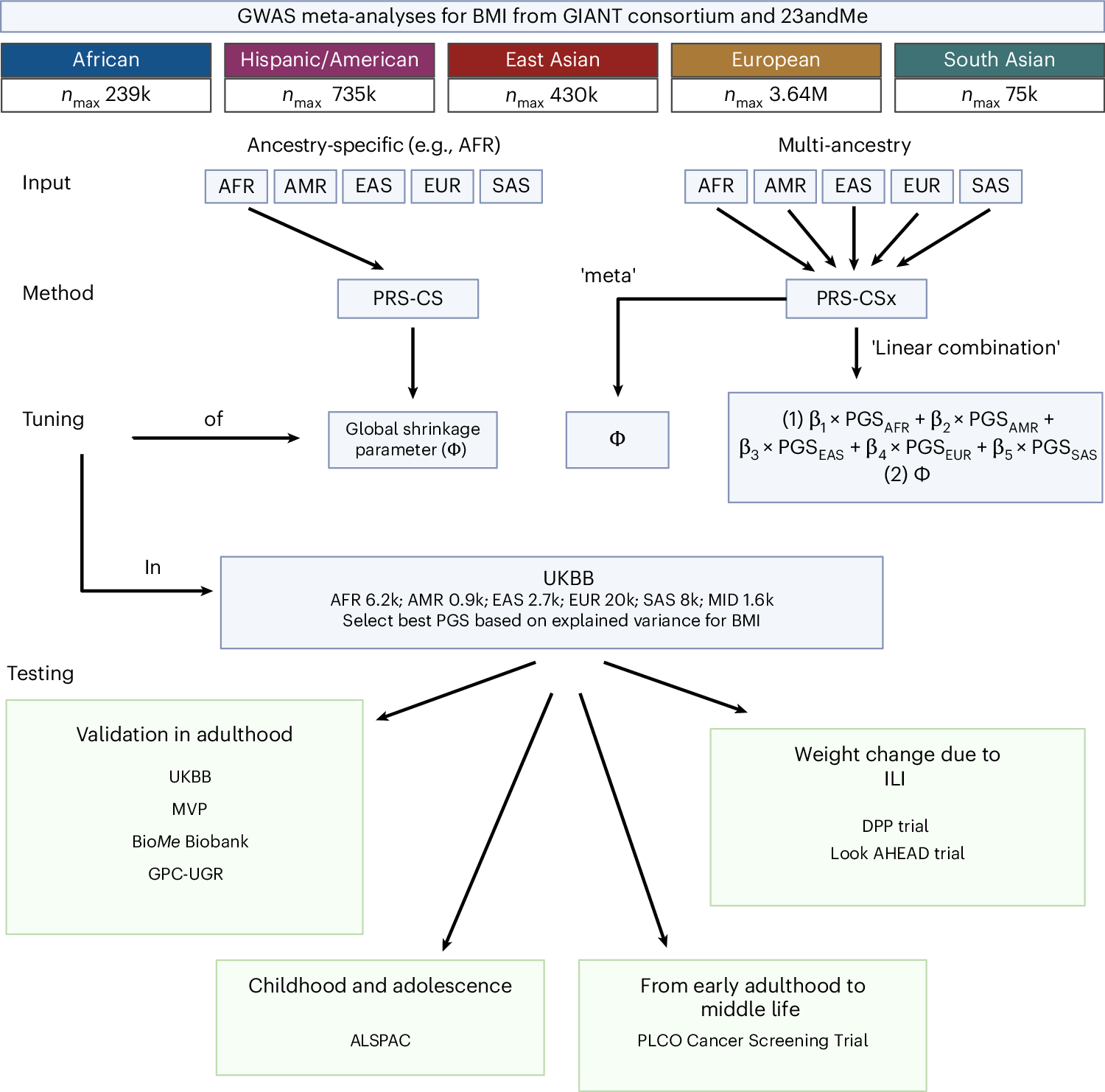
"Polygenic scores (PGSs) for body mass index (BMI) may guide early prevention and targeted treatment of obesity. Using genetic data from up to 5.1 million people (4.6% African ancestry, 14.4% American ancestry, 8.4% East Asian ancestry, 71.1% European ancestry and 1.5% South Asian ancestry) from the GIANT consortium and 23andMe, Inc., we developed ancestry-specific and multi-ancestry PGSs.
The multi-ancestry score explained 17.6% of BMI variation among UK Biobank participants of European ancestry. For other populations, this ranged from 16% in East Asian-Americans to 2.2% in rural Ugandans.
In the ALSPAC study, children with higher PGSs showed accelerated BMI gain from age 2.5 years to adolescence, with earlier adiposity rebound.
Adding the PGS to predictors available at birth nearly doubled explained variance for BMI from age 5 onward (for example, from 11% to 21% at age 8).
Up to age 5, adding the PGS to early-life BMI improved prediction of BMI at age 18 (for example, from 22% to 35% at age 5). Higher PGSs were associated with greater adult weight gain.
In intensive lifestyle intervention trials, individuals with higher PGSs lost modestly more weight in the first year (0.55 kg per s.d.) but were more likely to regain it. Overall, these data show that PGSs have the potential to improve obesity prediction, particularly when implemented early in life."
Polygenic prediction of body mass index and obesity through the life course and across ancestries (open access)
Fig. 1: Study overview.

No comments:
Post a Comment