Good news! Cancer is history (soon)! This seems to be a very interesting approach.
"... Cancer immunotherapy originated in 1868 when the German physician Busch reported a case of a cancer patient who was intentionally infected with bacteria and subsequently cured. In 1893, Dr. William Coley proposed the use of bacteria for cancer treatment, and immunotherapies have been evolving into modern treatments such as checkpoint inhibitors and CAR-T cells for over 150 years. While powerful, these approaches fundamentally depend on immune cells—making them ineffective for many cancer patients with compromised immune systems due to chemotherapy or radiotherapy. ...
The newly developed AUN therapy overturns this long-standing limitation. ...
AUN is composed of two naturally occurring bacteria:
- Proteus mirabilis (A-gyo), a tumor-resident microbe
- Rhodopseudomonas palustris (UN-gyo), a photosynthetic bacterium
Working in perfect synergy, these AUN bacteria produce exceptional tumor eradication in both murine and human cancer models, even in immunocompromised environments—all without the help of immune cells. The therapy exhibits high biocompatibility and minimal side effects, including suppression of cytokine release syndrome (CRS). ..."
"... In this study, AUN exhibits transcendent antitumor effects through uniquely orchestrated bacterial mechanisms, including:
- Selective destruction of tumor vasculature and cancer cells
- Structural transformation of A-gyo (filamentation) triggered by tumor metabolites, enhancing its antitumor potency ...
- Functional optimization via intratumoral population shift -- although the initial bacterial mixture is A-gyo : UN-gyo ≈ 3:97, it dramatically shifts to 99:1 within the tumor microenvironment
- Suppression of pathogenicity and minimization of side effects, including the avoidance ofCRS [cytokine release syndrome]
... Notably, UN-gyo functions as a regulatory partner only when coexisting with A-gyo, helping to suppress the pathogenicity of both strains while simultaneously enhancing their tumor-specific cytotoxicity. This "cooperation of labor" [synergy] mirrors the Japanese philosophical concept of "AUN"-- perfect harmony between opposites. It is this delicate and dynamic interplay between the two bacterial species that unlocks the remarkable antitumor efficacy-- a feat previously unattainable through conventional therapies. ..."
From the abstract:
"Intratumoural bacteria represent a promising drug-free strategy in cancer therapy. Here we demonstrate that a tumour-resident bacterial consortium—Proteus mirabilis (A-gyo) and Rhodopseudomonas palustris (UN-gyo)—in a precise 3:97 ratio (A-gyo:UN-gyo), exhibits potent antitumour efficacy independent of immune cell infiltration.
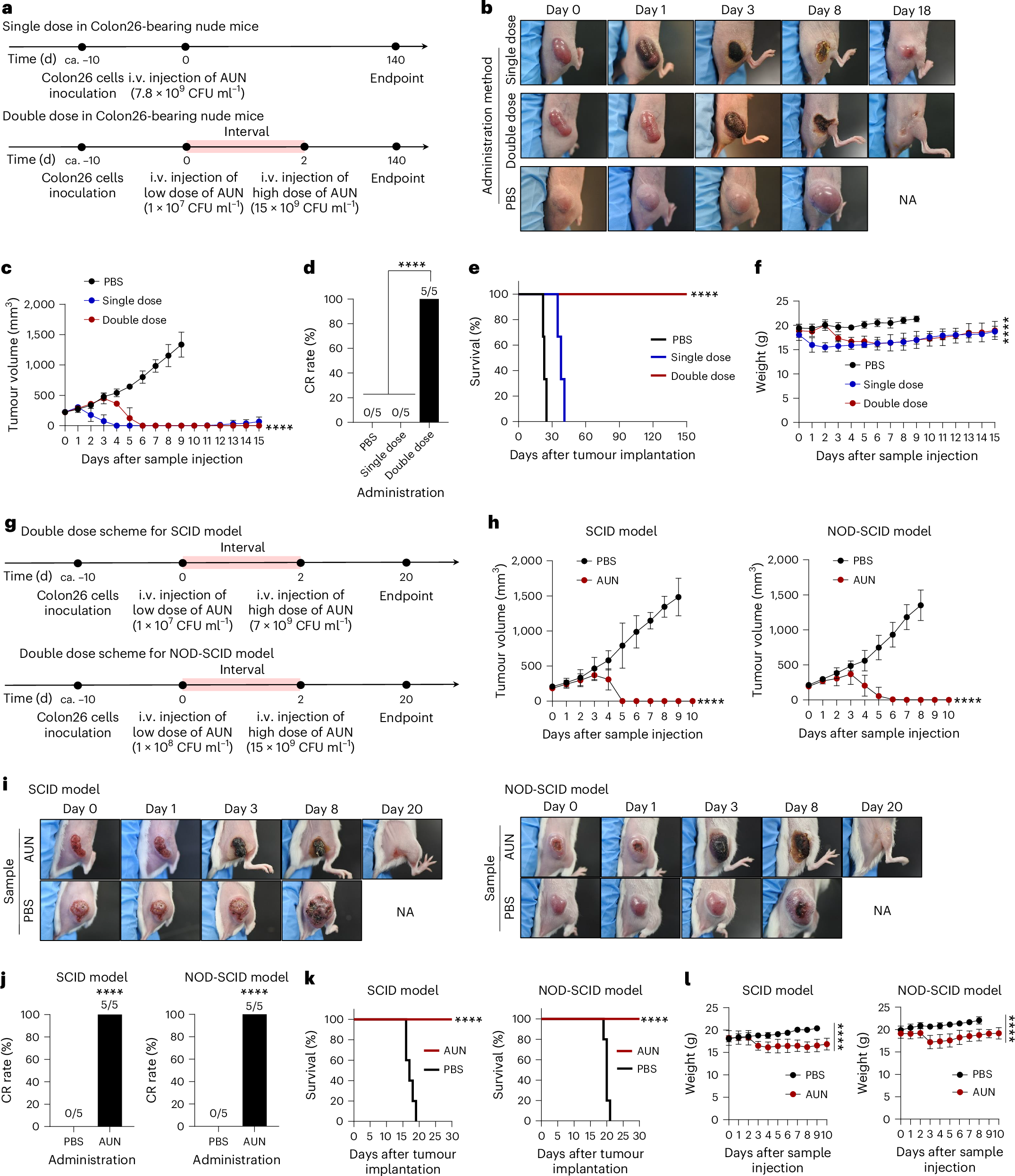
In both immunocompetent and immunocompromised mouse models, including human tumour xenografts, intravenous administration of the bacterial consortium led to complete tumour remission, prolonged survival, and no observable systemic toxicity or cytokine release syndrome.
Genomic and phenotypic analyses revealed A-gyo’s unique non-pathogenic profile and impaired motility, while UN-gyo modulated A-gyo’s biogenic activity, enhanced safety and promoted cancer-specific transformation.
Mechanistically, the bacterial consortium triggered selective intratumoural thrombosis and vascular collapse—supported by cytokine induction, fibrin deposition and platelet aggregation—culminating in widespread tumour necrosis.
The consortium also proliferated within tumours, formed biofilms and exerted direct oncolytic effects. This natural bacterial synergy—achieved without genetic engineering—offers a self-regulating and controllable strategy for safe, tumour-targeted therapy."
Challenging Over 150 Years of Cancer Immunotherapy: AUN Bacteria Herald an Immune-Independent Breakthrough (original news release)
Tumour-resident oncolytic bacteria trigger potent anticancer effects through selective intratumoural thrombosis and necrosis (open access)
Fig. 1: Characterization of the bacterial consortium AUN.

Fig. 2: Antitumour efficacy of AUN against various immunocompromised models.

No comments:
Post a Comment