Recommendable!
Sunday, November 30, 2025

Zwischen Stunts und Hakenkreuz: 4 deutsche Pionierinnen der Luftfahrt
Empfehlenswert! So Beate Uhse war die erste Stuntpilotin! Ich kannte Beate Uhse eher nur durch ihre Geschäfte mit der Erotik.
Unmasking 'Dr. Evil': The Russian Prison Medic Accused Of Torturing Ukrainian POWs
No surprise in the land of Putin the Terrible!
Forced sterilization of women with disabilities in Europe
Very recommendable, but horrible! Unfortunately, the video does not address the forced sterilization of men with disabilities!
"In 12 EU countries, women with disabilities can still be sterilized without their consent." Germany too! Portugal, Belgium.
Apparently, sometimes the parents are behind this sterilization.
Uber rolls out fully driverless robotaxis in Abu Dhabi
Good news!
"It’s the Middle East’s first commercial robotaxi service with no safety driver on board."
"Key Points
- Uber users in Abu Dhabi can ride in a fully driverless WeRide robotaxi starting Wednesday.
- Uber and the China-based company first announced plans to bring the technology to the United Arab Emirates last September.
- Uber has bet big on autonomous vehicle technology, partnering with Google’s Waymo and electric vehicle maker Lucid.
..."
WeRide and Uber Launch Middle East’s First Fully Driverless Robotaxi Commercial Operations in Abu Dhabi, UAE (original news release)

Credits: Human Progress weekly newsletter
Driverless WeRide robotaxis for Uber.
The killer of UnitedHealthcare’s CEO has received 6,000 letters in jail in his support
Bizarre! Weird! Strange!
"The number of letters that [killer name], the accused killer of UnitedHealthcare’s CEO, has received in jail. Support for [the killer], who is set to appear in state court this week, has proved surprisingly enduring, with fans, social activists and those who fought their own battles with insurers making outsize efforts around the case of the 27-year-old Ivy League graduate."
First totally synthetic human brain model has been realized
Amazing stuff!
"Neural tissue engineering aims to mimic the brain's complex environment, the extracellular matrix, which supports nerve cell growth, development, and proper connectivity. This environment is carefully structured and carries signals that guide how cells behave and interact. ...
Scientists ... have now, for the first time, developed functional brain-like tissue without relying on animal-derived materials or biological coatings. Their innovation, called the Bijel-Integrated PORous Engineered System (BIPORES), offers a new, fully synthetic platform for neural tissue engineering. ..."
"... The new material ... functions as a scaffold on which to grow donor brain cells and could be used to model traumatic brain injuries, strokes, or neurological diseases like Alzheimer’s.
It is primarily composed of a common polymer known for its chemical neutrality called polyethylene glycol, or PEG. Typically, living cells do not attach to PEG without the addition of proteins like laminin or fibrin.
By reshaping PEG into a maze of textured, interconnected pores, the research team turned an inert material into a matrix that cells recognize, colonize, and use to build functional neural networks. Once these cells mature, they could exhibit donor-specific neural activity, allowing direct evaluation of drugs targeted to their neurological conditions. ..."
From the abstract:
"3D tissue-engineered models hold great promise for recreating the intricate architecture and dynamic functions of neural tissues. However, replicating the nuanced structural cues of the brain in vitro remains challenging, as existing platforms often fail to capture the precise architectural motifs that regulate biological responses.
Here, a bicontinuous interfacially jammed emulsion gel (bijel)-based fabrication strategy that combines solvent transfer-induced phase separation (STrIPS), microfluidics, and bioprinting to develop a Bijel-Integrated PORous Engineered System (BIPORES) for neural tissue engineering is introduced.
This multifaceted approach yields scaffolds featuring interconnected micropores and textured surfaces interspersed with a hyperbolic curvature, seamlessly integrated within macroscale fibrous networks.
By leveraging STrIPS of a ternary precursor mixture stabilized by amphiphilic nanoparticles, we synthesized poly(ethylene glycol) diacrylate (PEGDA) BIPORES support neural stem cell adhesion within 30 s without additional biological factors—a first for PEGDA scaffolds.
Long-term cultures demonstrate extensive migration, robust proliferation, and differentiation into neuronal and astrocytic lineages, forming 3D networks with enhanced synaptic activity. Collagen encapsulation amplifies 3D cell growth, simulating native neuroanatomical compartmentalization.
From a biomimicry standpoint, this multiscale fabrication strategy better approximates native neural tissue dynamics with significant implications for disease modeling, drug screening, and regenerative therapies."
Scientists engineer first fully synthetic brain tissue model (original news release)
Bicontinuous Microarchitected Scaffolds Provide Topographic Cues That Govern Neuronal Behavior and Maturation (open access)
Fig. 1 PEGDA-BIPORES fiber formation via STrIPS and flow-controlled morphology.

Experimental proof shows quantum world is even stranger than previously thought
Amazing stuff!
"... To see whether any system is behaving classically, scientists use a mathematical test called the Leggett-Garg inequality (LGI). Classical systems always obey the LGI limit while quantum systems violate it, proving they are non-classical.
Breaking a quantum limit
But even in quantum systems, this violation has a limit called the temporal Tsirelson's bound (TTB). In this research, scientists wanted to see if they could break the TTB limit and find even more extreme forms of quantum weirdness.
... theorized that a new kind of quantum motion, in which a particle follows two distinct sets of movement instructions simultaneously, could be powerful enough to break the TTB limit. They called this superposition of unitaries.
The team tested their idea in an NMR (nuclear magnetic resonance) machine, which let them control a qubit (the basic building block of quantum information). In this experiment, the qubit was a carbon nucleus within a molecule. The researchers designed a precise quantum circuit using a helper particle (an ancillary qubit) to make the qubit follow two sets of instructions at the same time. Specifically, they combined two different kinds of magnetic rotation on the qubit.
Results and applications
When the system evolved under this new combined motion, the changes were immediate and dramatic. The researchers measured the LGI violation and found it had smashed the TTB limit, confirming a new level of quantum weirdness. ..."
From the abstract:
"The violation of Leggett-Garg inequality (LGI) indicates general temporal correlations in quantum systems that cannot be explained classically.
Under unitary dynamics and projective measurements, the violation of LGI is restricted up to the temporal Tsirelson’s bound (TTB).
Here, we consider superposition of unitary time evolutions and find them to produce an enhancement in the violation of LGI beyond the TTB, growing monotonically with increasing superposition.
We experimentally realize superposition of unitaries in NMR systems and demonstrate this enhanced violation.
In the presence of noise, such superposition of unitaries remarkably extend the time of LGI violation, showcasing improved robustness against decoherence.
This opens up possibilities of employing such nontrivial dynamical maps for robust quantum control, along with provoking research on characterizing correlations in general sequential measurement scenarios."
Extreme Violations of Leggett-Garg Inequalities for a System Evolving under Superposition of Unitaries (no public access)
Enhanced non-macrorealism: Extreme violations of Leggett-Garg inequalities for a system evolving under superposition of unitaries (preprint, open access)

An electric VTOL plane in your garage
How about that!
"The aircraft developed by AIR is essentially a giant drone that takes off and lands vertically and is powered by eight battery-driven rotors. It falls into a new category in the aviation industry called eVTOL (Electric Vertical Take-Off and Landing), which aims to scale up drones to carry cargo and passengers. These are new, futuristic vehicles that are in various planning stages at many companies around the world, but it has yet to be proven that they are suitable for large-scale commercial use - and in the meantime, several of those companies have already gone bankrupt. ..."

Diamond coatings prevent mineral scale inside of industrial pipes
Amazing stuff! Diamonds are a man's best friend! 😊
"Industrial pipes carrying water or chemicals invariably get gunked up as deposits accumulate on their internal surfaces. That slows flow, and slowly damages the equipment, leading to the need for periodic maintenance and higher operational costs. ...
Now, researchers ... have hit upon a more effective solution to resisting scale formation: coatings made with lab-grown diamonds.
The material scientists note their chosen coating material can stay clean without regular intervention. Their work builds on previous studies which found that diamond, besides being incredibly hard and chemically stable, can also stave off bacterial growth. ..."
From the abstract:
"Mineral scaling, particularly gypsum deposition, remains a costly and persistent problem in industrial systems, lowering efficiency, raising energy demands, and accelerating equipment degradation.
Conventional chemical and mechanical mitigation methods are temporary and often introduce secondary environmental or operational concerns, underscoring the need for intrinsically scale-resistant materials.
Herein, we report a systematic investigation of polycrystalline diamond (PCD) films with varied surface terminations (oxygen, hydrogen, fluorine, or nitrogen) for their resistance to CaSO4 scaling. Nitrogen-terminated PCD (N-PCD) exhibits an order-of-magnitude reduction in Ca2+ accumulation compared with other terminations.
Scanning electron microscopy (SEM) reveals that N-PCD supports only sparse, dendritic gypsum crystallites, in contrast to the dense, continuous scale layers observed on other surfaces.
Consistently, adhesion force measurements confirm extremely low adhesion between the CaSO4 crystal and N-PCD.
Molecular dynamics and density functional theory simulations show that a strongly bound, ordered water layer forms on N-PCD, creating an energetic barrier that repels CaSO4 ions and suppresses heterogeneous nucleation.
Further enhancement is achieved by bulk nitrogen doping, which smooths the surface morphology and suppresses scale formation by up to 6-fold.
Finally, applying nitrogen functionalization to commercial boron-doped diamond (BDD) electrodes yields seven times lower scale loading without compromising electrochemical performance.
This combined experimental–theoretical study establishes nitrogen-functionalized diamond as a robust, durable platform for antiscaling coatings, with potential applications across water treatment, energy production, and other scaling-prone industries."
Rice engineers show lab-grown diamond films can stop costly mineral buildup in pipes (original news release)

A scanning electron microscope image of the Nitrogen-terminated diamond films for antiscaling coatings

Nanoflowers rejuvenate old and damaged human cells by replacing their mitochondria
Good news! This could be huge!
"Biomedical researchers ... may have discovered a way to stop or even reverse the decline of cellular energy production—a finding that could have revolutionary effects across medicine. ...
The study ... used a combination of microscopic flower-shaped particles—called nanoflowers—and stem cells. In the presence of these nanoflowers, the stem cells produced twice the normal amount of mitochondria. When these boosted stem cells were placed near damaged or aging cells, they transferred their surplus mitochondria to their injured neighbors. ..."
From the significance and abstract:
"Significance
Mitochondrial dysfunction plays a key role in many diseases, yet treatments to restore function remain limited. Cells naturally transfer mitochondria to help repair damage, but this process is inefficient.
Here, we use molybdenum disulfide (MoS2) nanoflowers to boost mitochondrial production, turning donor cells into mitochondrial biofactories.
These cells transfer more mitochondria to damaged cells, significantly improving energy production and function. In disease models, this approach restores cell health, offering a strategy for treating mitochondrial-related disorders. By enhancing the body’s own repair mechanisms, this nanomaterial-based method could pave the way for innovative therapies in regenerative medicine.
Abstract
Intercellular mitochondrial transfer, the spontaneous exchange of mitochondria between cells, is a recently described phenomenon crucial for cellular repair, regeneration, and disease management. Enhancing this natural process holds promise for developing novel therapies targeting diseases associated with mitochondrial dysfunction.
Here, we introduce a nanomaterial-based approach employing molybdenum disulfide (MoS2) nanoflowers with atomic-scale vacancies to stimulate mitochondrial biogenesis in cells to make them mitochondrial biofactories.
Upon cellular uptake, these nanoflowers result in a two-fold increase in mitochondrial mass and enhancing mitochondrial transfer to recipient cells by several-fold.
This enhanced efficiency of transfer significantly improves mitochondrial respiratory capacity and adenosine triphosphate production in recipient cells under physiological conditions.
In cellular models of mitochondrial and cellular damage, MoS2 enhanced mitochondrial transfer achieved remarkable restoration of cell function.
This proof-of-concept study demonstrates that nanomaterial-boosted intercellular mitochondrial transfer can enhance cell survivability and function under diseased conditions, offering a promising strategy for treating mitochondrial dysfunction-related diseases."
Nanomaterial-induced mitochondrial biogenesis enhances intercellular mitochondrial transfer efficiency (open access)
Fig. 1 Synthesis and characterization of size-tunable MoS2 nanoflowers.

Fig. 2 Treatment with MoS2 nanoflowers stimulates mitochondrial biogenesis and bioenergetics.

New magnetic component discovered in the Faraday effect after nearly two centuries
Amazing stuff!
"Researchers at the Hebrew University of Jerusalem discovered that the magnetic component of light plays a direct role in the Faraday effect, overturning a 180-year-old assumption that only its electric field mattered. ...
It presents the first theoretical proof that the oscillating magnetic field of light directly contributes to the Faraday effect, a phenomenon in which the polarization of light rotates as it passes through a material exposed to a constant magnetic field. ..."
From the abstract:
"The Faraday effect (FE) is commonly attributed to the electrical component of optical radiation. Recently, we reported on an inverse-FE (IFE) that emerges from the Zeeman energy arising from the optical magnetic field.
Here, we show that the magnetic component of light reproduces additional signatures observed experimentally in the IFE. Consequently, we show that the magnetic component of light also contributes to the reciprocal, direct FE. Calculating the Verdet constant for the well-studied Terbium-Gallium-Garnet, we find that it accounts for of the measured value at 800 mm.
The Verdet constants derived for the FE and IFE are found to be different, consistent with the breakdown of reciprocity between the two effects in the nonequilibrium ultrafast timescales as reported previously.
Our findings highlight the role of the optical magnetic field in the interaction between light and spins, in addition to the primary effects that stem from the electrical field."
Faraday effects emerging from the optical magnetic field (open access)
Fig. 4 FE stemming from the optical magnetic field.
(a) Schematic illustration of the steady dynamics induced by a CP CW optical beam in the presence of an external static field.
(b) Comparison between the calculated and the Verdet constants ... Empirical data adopted from Ref.
(a) Schematic illustration of the steady dynamics induced by a CP CW optical beam in the presence of an external static field.
(b) Comparison between the calculated and the Verdet constants ... Empirical data adopted from Ref.

Bauphysik aus 7000 Jahren: Chinas erstaunliche Erdloch-Häuser
Sehr empfehlenswert! Erstaunlich!
"Im Norden Chinas gibt es Häuser, die vor 7000 Jahren so gebaut wurden, dass sie sich sowohl bei Kälte als auch bei Hitze angenehm bewohnen lassen. Eingegraben in eine dicke Schicht aus Löss benötigen sie im Winter keine Heizung und im Sommer keine Klimaanlage. Noch heute leben Menschen in diesen Gebäuden, die als Dikengyuan bezeichnet werden. Wir schauen uns die erstaunlichen Erdloch-Häuser genauer an. ...
Trotzdem betonen ... Bauexperten, dass nachweislich erhaltene Häuser in dieser Region selten älter als rund 400 Jahre sind, da die Erdstrukturen Witterung und Verfall ausgesetzt sind. Die Tradition selbst reicht jedoch unbestritten Tausende von Jahren zurück. ...
Es entstanden teils ganze unterirdische Netzwerke von Dörfern, die von außen kaum sichtbar waren. Schätzungen gehen davon aus, dass in der Geschichte Millionen von Menschen in solchen Höfen gewohnt haben. ...
Sogar bedeutende politische Figuren Chinas nutzten diese Art von Höhlenwohnungen. Beispielsweise wohnten Mao Zedong und seine Gefährten zeitweise in der Region Yan’an in Yaodong-Häusern. Chinas Präsident Xi Jinping verbrachte zudem als Jugendlicher mehrere Jahre in solchen Höhlenhäusern, als er im Rahmen der kommunistischen „Down to the Countryside“-Bewegung auf dem Land eingesetzt wurde. ..."
Die Dikengyuan

AI tool spots blood cell abnormalities missed by doctors
Good news! This seems to be an excellent example of applying machine learning & AI to medicine.
"Researchers have created a system called CytoDiffusion that uses generative AI – the same type of technology behind image generators such as DALL-E – to study the shape and structure of blood cells.
Unlike many AI models, which are trained to simply recognise patterns, CytoDiffusion ... could accurately identify a wide range of normal blood cell appearances and spot unusual or rare cells that may indicate disease.
Spotting subtle differences in blood cell size, shape and appearance is a cornerstone of diagnosing many blood disorders. But the task requires years of training, and even then, different doctors can disagree on difficult cases. ..."
From the abstract:
"Blood cell morphology assessment via light microscopy constitutes a cornerstone of haematological diagnostics, providing crucial insights into diverse pathological conditions. This complex task demands expert interpretation owing to subtle morphological variations, biological heterogeneity and technical imaging factors that obstruct automated approaches.
Conventional machine learning methods using discriminative models struggle with domain shifts, intraclass variability and rare morphological variants, constraining their clinical utility.
We introduce CytoDiffusion, a diffusion-based generative classifier that faithfully models the distribution of blood cell morphology, combining accurate classification with robust anomaly detection, resistance to distributional shifts, interpretability, data efficiency and uncertainty quantification that surpasses clinical experts.
Our approach outperforms state-of-the-art discriminative models in
anomaly detection (area under the curve, 0.990 versus 0.916),
resistance to domain shifts (0.854 versus 0.738 accuracy) and
performance in low-data regimes (0.962 versus 0.924 balanced accuracy).
In particular, CytoDiffusion generates synthetic blood cell images that expert haematologists cannot distinguish from real ones (accuracy, 0.523; 95% confidence interval: [0.505, 0.542]), demonstrating good command of the underlying distribution.
Furthermore, we enhance model explainability through directly interpretable counterfactual heat maps.
Our comprehensive evaluation framework establishes a multidimensional benchmark for medical image analysis in haematology, ultimately enabling improved diagnostic accuracy in clinical settings."
Deep generative classification of blood cell morphology (open access)
Fig. 1: Overview of the diffusion-based classification model.

Fig. 4: Counterfactual visualizations for model explainability.

Saturday, November 29, 2025
Der Angriff auf Tichys Einblick: DGB-Schläger verfolgt TE und hetzt Mob auf uns
Einblicke in die Bananenrepublik D.! Wo blieb die Polizei? Warum wurden diese vermummten Schläger nicht gleich festgenommen?
Golden retriever and human behaviours are driven by same genes. Really!
Why the Golden Retriever? This research was even published in the once prestigious PNAS!
I believe my genes are driven by the Chihuahua genes! Just kidding! 😊
How the lovely Golden Retriever or the love for dogs messed up the minds of scientists? A case of wishful thinking involving our most favorite pet?
Or can GWAS studies prove anything? Call me a little bit skeptical here!
From the significance and abstract:
"Significance
Dogs display temperamental and behavioral variation and possess tractable genetics, making them a compelling model for studying the genetics of psychiatric, temperamental, and cognitive traits.
Using a behavioral questionnaire, we phenotyped over 1,000 golden retrievers and identified 12 genome-wide significant loci and 9 suggestive loci.
Of the 18 proximal candidate genes at these loci, 12 were also associated with psychiatric, temperamental, or cognitive traits in humans.
Seven of these genes were at genome-wide loci and five at suggestive loci.
For example, the gene nearest the dog-directed aggression locus, PTPN1, is associated in humans with intelligence, cognitive performance, educational attainment, and major depressive disorder. These findings suggest shared genetic mechanisms underlying behavior across species and inform emotional states underlying canine behaviors.
Abstract
Dogs display temperamental and behavioral variation between individuals, just as psychiatric, temperamental, and cognitive traits vary in humans.
In both species, these traits are highly heritable, yet causal genes remain incompletely understood.
We performed 14 genome-wide association studies (GWAS) for behavioral traits quantified using the Canine Behavioral Assessment and Research Questionnaire (C-BARQ) in ~1,000 golden retrievers, identifying 12 genome-wide significant loci (P < 2.97 × 10⁻⁶) for 8 traits and 9 additional loci exceeding a suggestive threshold (P < 1 × 10⁻⁵).
A human phenome-wide association study (PheWAS) showed that most of the 18 canine positional candidate genes identified were associated with one or more of 190 psychiatric, temperamental, or cognitive traits in humans (7/12 genes at genome-wide loci and 5/9 at suggestive loci).
For example, a genome-wide significant locus near PTPN1 (dog-directed aggression) overlapped with human measures of Intelligence, Educational attainment, and major depressive disorder.
The gene ROMO1 was within a genome-wide significant locus for trainability in dogs and associated with intelligence, depression, irritability, and sensitivity/hurt feelings in humans.
Other genes located at genome-wide significant loci associated with behavioral, psychiatric, temperamental, or cognitive traits in both species included PRDX1(dog-directed fear), VWA8 (touch sensitivity), ITPR2, and ADGRL2/LPHN2 (trainability), and ADD2 (stranger-directed fear).
From suggestive loci we also found cross-species associations for HUNK, and ZC3H12C, (dog-directed fear), SLC35F6 and IGSF11 (separation-related problems).
These results suggest that shared genetic and molecular mechanisms underlie complex behavioral and temperamental states across species and may inform our understanding of emotional states driving undesirable behaviors in dogs."
GWAS for behavioral traits in golden retrievers identifies genes implicated in human temperament, mental health, and cognition (open access)
Fig. 1 Manhattan plots of genome-wide association studies (GWAS) of behavioral traits in golden retrievers highlighting loci associated with C-BARQ factor scores.

Windpark-Projekte auf hoher See: Die Furcht vor der Flaute. Wirklich!
Der Klimawahn in der Bananenrepublik Deutschland findet sich natürlich auch in der deutschen Presse!
Unsere Ahnen (z.B. Windmühlenbetreiber) wussten schon warum Windenergie nicht viel taugt!
Das Wort Windpark ist eine ganz üble Demagogie! Das sind keine Parks sondern schreckliche Verschandelungen der Umwelt/Natur!
Ein Horrorbild! Und die vielen toten oder verletzten Seevögel und Insekten

How donating your poop to a stool bank can save lives
Food for thought and poop! In the past, I have only been a blood donor! 😊
Where is the next stool bank? 😊 Google says "Yes, there is a stool bank in Arizona, specifically a GoodNature donation center in Tempe." Am I good natured to donate? Tempe here I come! This will be my first poop bank run! 😊
Why does this suggestion come from Down Under? 😊
P.S. Despite all the amusement, this is a serious issue.
"... What’s the take-home message? ..."
"... As well as blood, plasma and organs, you can now donate fecal samples to stool banks for research and use in transplants. ...
One scientist from the University of New South Wales Sydney (UNSW Sydney) has penned a public service announcement to raise awareness of the emergence and importance of stool banks – and it's something researchers and medical outlets across the world are now also working on. ...
fecal transplantation ... there's growing evidence suggesting it will be a key way to treat a suite of conditions as we learn more about the microbiome and its impact on health. To date, there are studies into how the procedure could benefit treatment of autism spectrum disorder, alcohol use disorder, obesity, melanoma and cancer. Transplants have also been investigated as possible avenues to treat inflammatory bowel and liver diseases, long-term urinary tract infections and much more. ..."
How to donate your poo to science or medicine "The microbes in your poo could be a gift to others. Here’s what to think about if you’re interested in donating your poo."
How to donate your poo to science or medicine (the article as it appeared originally in The Conversation)

How tissue-resident memory T cells transform to defend our organs
Good news!
"We owe a lot to tissue resident memory T cells (TRM). These specialized immune cells are among the body's first responders to disease.
Rather than coursing through the bloodstream—as many T cells do—our TRM cells specialize in defending specific organs. They battle viruses, breast cancer, liver cancer, melanomas, and many other health threats. ...
shown that a greater density of TRM cells is linked to better survival outcomes in lung cancer patients. ...
discovered the cellular driver that leads to TRM cell development. Their findings ... offer a potential way to boost TRM cell numbers to better fight disease.
"We found a new molecule that is likely to play an important role in the development and function of TRM cells," ...
In a previous study ... found that TRM cells are studded with a membrane receptor molecule called G-protein coupled receptor 25 (GPR25). This high level of GPR25 expression is unusual. ...
In their new study, the ... scientists are the first to show that GPR25 is induced by a signaling molecule called TGF-β. GPR25 sustains TGF-β downstream signaling, which promotes a process called differentiation, during which a regular memory T cell transforms into a TRM cell. ...
confirmed the importance of GPR25. ... mice with GPR25 deficiency don't sustain TGF-β signaling properly and cannot maintain a functional population of TRM cells. Further experiments suggested that tweaking GPR25 activity could work as a way to enhance or suppress TRM cell activity. ..."
From the editor's summary and abstract:
"Editor’s summary
Effective immunity against secondary infection and tumor rechallenge depends on tissue-resident memory CD8 T (TRM) cells. Feng et al. uncovered the key role of G protein–coupled receptor GPR25 in promoting TRM cell differentiation instead of an effector memory phenotype.
Tracking of T cell differentiation into TRM cells upon tumor rechallenge, viral reinfection, and parabiosis revealed that GPR25 acts downstream of TGF-β signaling to promote TRM cell differentiation and tissue residency in the lung and liver. GPR25 expression was induced by TGF-β and maintained a T cell factor 1 (TCF1)–dependent stem-like TRM cell program, highlighting its potential as a target to augment antiviral and antitumor TRM cell responses. ...
Abstract
Tissue-resident memory CD8 T (TRM) cells provide critical antiviral and antitumor immunity, but the molecular pathways guiding their development are not fully defined.
Here, we identify the G protein–coupled receptor GPR25, induced by TGF-β signaling, as a regulator of TRM cell formation.
Using adoptive transfer, we found that Gpr25-deficient T cells infiltrated tissues normally after viral infection but failed to efficiently develop into TRM cells.
In a tumor challenge model, Gpr25 deficiency impaired TRM cell expansion and tumor control. Single-cell transcriptomics revealed defective acquisition of stem-like TRM cell features, including expression of T cell factor 1 (TCF1).
After antigen rechallenge, Gpr25-deficient TRM cells showed impaired secondary TRM cell differentiation and maintenance.
Moreover, Gpr25-deficient T cells displayed negative enrichment of TGF-β signature genes and impaired responses to TGF-β, indicating that GPR25 enhances TGF-β signaling to promote TRM cell development.
Our findings suggest that modulating GPR25 function may provide a therapeutic strategy to improve TRM cell responses in infection and cancer."
LJI scientists discover how T cells transform to defend our organs (original news release) "Future drugs could target specialized T cells to help the body fight tumors, infections, and more"
GPR25 promotes the formation of lung and liver tissue-resident memory CD8 T cells (no public access)

Canada: Examining the Growth of Public Sector Employment Since 2015
Bad news! Big and bigger government in Canada! Headed in the wrong direction!
"...
- The public sector in Canada added 950,000 jobs between 2015 and 2024. This accounted for roughly 30% of all employment gains.
- Public sector employment as a share of total employment has grown from 19.7% in 2015 to 21.5% in 2024. Moreover, public sector employment grew at an annual average rate of 2.7% per year, while private sector employment grew at 1.7% per year.
..."
As usual, the Fraser Institute forgot to show Canada overall.10 provinces overshadow Canada as a whole or who cares about Canada if you have 10 provinces?

New biosensor technology maps enzyme mystery inside cells
Amazing stuff!
"... researchers have developed a powerful new biosensor that reveals, in unprecedented detail, how and where kinases – enzymes that control nearly all cellular processes – turn on and off inside living cells.
The advance provides scientists with a new way to study the molecular switches that regulate cellular processes, including cell growth and DNA repair, as well as cellular responses to chemotherapy drugs and pathological conditions such as cancer.
Cells rely on kinases to control processes from cellular metabolism and growth to stress responses. Unraveling how the more than 500 kinases in human cells all work together is one of biology’s biggest puzzles. Until now, researchers lacked robust tools to see exactly where and how these enzymes act inside cells. ..."
From the abstract:
"Understanding kinase action requires precise quantitative measurements of their activity in vivo. In addition, the ability to capture spatial information of kinase activity is crucial to deconvolute complex signaling networks, interrogate multifaceted kinase actions, and assess drug effects or genetic perturbations.
Here we develop a proteomic kinase activity sensor technique (ProKAS) for the analysis of kinase signaling using mass spectrometry.
ProKAS is based on a tandem array of peptide sensors with amino acid barcodes that allow multiplexed analysis for spatial, kinetic, and screening applications.
We engineered a ProKAS module to simultaneously monitor the activities of the DNA damage response kinases ATR, ATM, and CHK1 in response to genotoxic drugs, while also uncovering differences between these signaling responses in the nucleus, cytosol, and replication factories.
Furthermore, we developed an in silico approach for the rational design of specific substrate peptides expandable to other kinases.
Overall, ProKAS is a versatile system for systematically and spatially probing kinase action in cells."
Proteomic sensors for quantitative multiplexed and spatial monitoring of kinase signaling (open access)
Fig. 1: Design and rationale of ProKAS, a modular technique for multiplexed analysis of kinase activity using mass spectrometry.

Fig. 2: Development and validation of a ProKAS sensor specific for ATR using phosphoproteomic data.

Scientists discover caves carved by water on Mars that may have once harbored life
The theme or mystery of life on Mars never dies!
However, the research article appears to be only about skylights and water and the potential of (previous) life on Mars.
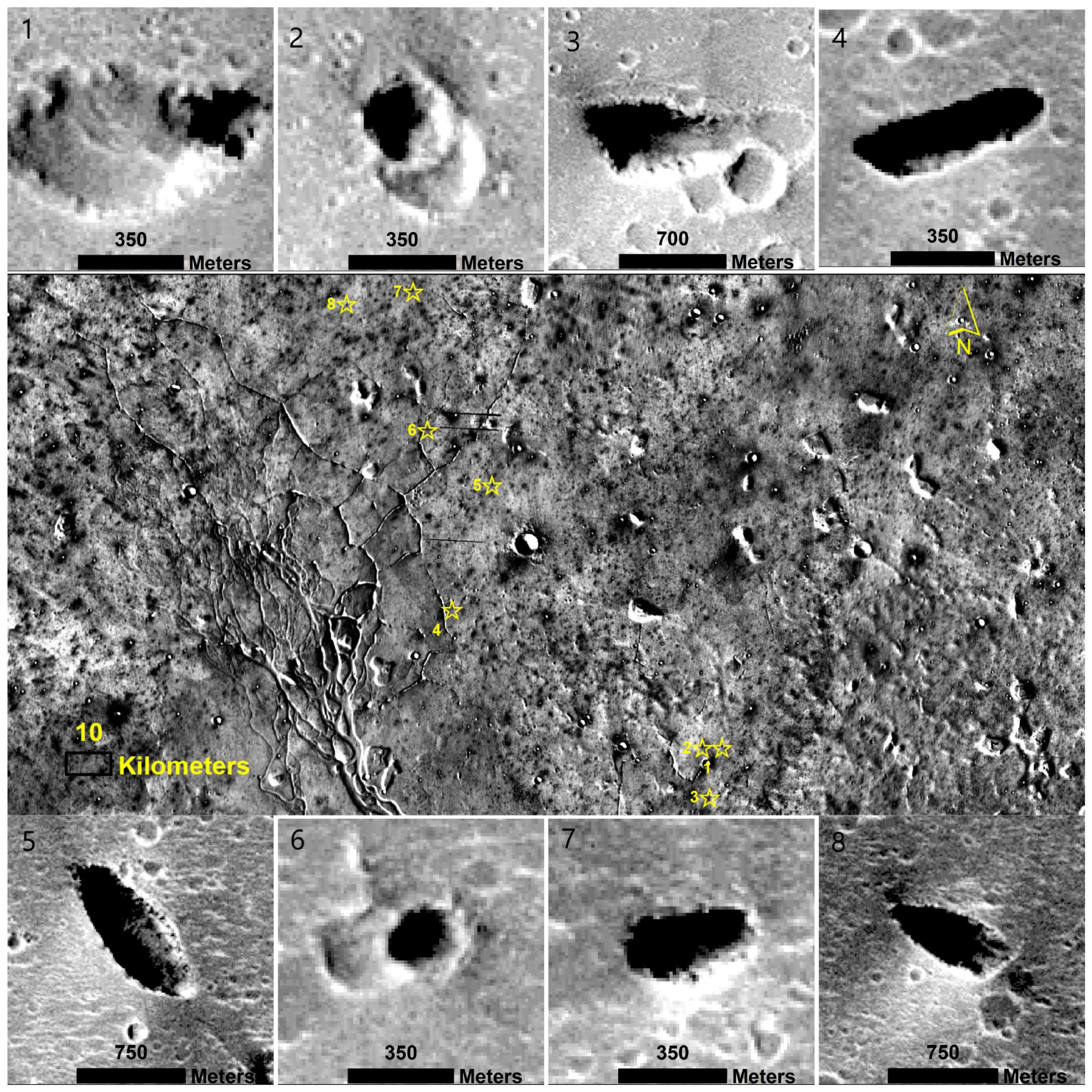
"If there is, or ever has been, life on Mars, the chances are it would exist in caves protected from the severe dust storms, extreme temperatures, and high radiation present on its surface. One place to focus our attention could be eight possible cave sites (called skylights) recently discovered ..."
From the abstract:
"The Hebrus Valles region on Mars exhibits geomorphological indicators of past aqueous activity, such as fluvial channels and aligned sinkholes.
While Martian skylights have mostly been linked to volcanic or tectonic origins, caves formed by water-mediated dissolution remain unexplored.
This study investigates eight skylight features in Hebrus Valles as the first potential karstic cave candidates on Mars. We evaluate whether these features are indicative of collapse entrances formed through dissolution of carbonate- and sulfate-rich lithologies.
To this end, the investigation is carried out by integrating mineralogical maps from the Thermal Emission Spectrometer (TES), hydrogen data from the Gamma Ray Spectrometer (GRS), and TES-derived thermal inertia and dust index maps. 3D structural modeling was performed using High Resolution Imaging Science Experiment (HiRISE)–derived Digital Terrain Models.
Morphological assessments were conducted using Context Camera and HiRISE images.
The skylights exhibit morphologies consistent with subsurface dissolutional collapse. TES data reveal enrichment in carbonates and sulfates near the skylights, and GRS data show elevated water-equivalent hydrogen. The skylights lie within indurated, low-dust terrains and are spatially associated with fluvial features. A 3D reconstruction from morphological data of cavity geometry is consistent with its being karstic."
Water-driven Accessible Potential Karstic Caves in Hebrus Valles, Mars: Implications for Subsurface Habitability (open access)
Figure 1. Regional context and geospatial distribution of potential karstic skylight features in Hebrus Valles, Mars.

Figure 2. Geological context of skylight candidates in Hebrus Valles. Skylight candidates (yellow stars) are mapped in relation to pit lines, outflow channels, and sinkholes, revealing their spatial association with fluvial systems.
Breakthrough could lead to plants that use water more efficiently
Good news! Could this be a game changer for e.g. agriculture?
"... researchers have discovered a previously unknown way plants regulate water that is so fundamental it may change plant biology textbooks – and open the door to breeding more drought-tolerant crops. ...
But a new study describes for the first time how water regulation also occurs under the leaf’s surface, at the membranes of photosynthesizing cells. The result was made possible thanks to AquaDust, a ... developed nanoscale sensor that measures water status inside leaves. ...
This study found that while the mesophyll cells remain saturated with water, the tiny intercellular spaces around them can become very dry. This difference in water status is created as the water moves across the mesophyll cells’ membranes, providing a second regulator of water flow along with stomata.
Having a window into how water moves inside the leaf made the finding possible.
“Our lab developed a tool to peer into the tiny airspaces in leaves to measure the dynamics of water stress at the cellular scale,” ... AquaDust, a soft, synthetic, water-absorbent gel that occupies intercellular spaces in the mesophyll area and swells and shrinks based on water availability in the leaves.
AquaDust also contains dyes that fluoresce depending on how close dye molecules are to each other. Fiber optics or fluorescence microscopy let the researchers shine a light and receive a spectral measurement that reveals the local water stress in the leaf. ..."
From the significance and abstract:
"Significance
This research provides experimental and theoretical evidence that stomates are not the sole regulators of transpiration in plants. We use a nanoreporter of water potential (AquaDust) to document significant nonstomatal control of transpiration, with significant gains in water-use efficiency and large local disequilibrium within leaf tissue under moderate drought stress.
With the methods and biophysical model introduced here, we quantitatively explain this nonstomatal control of water loss based on loss of conductance of plasma membranes in the leaf. These developments open paths to investigate this phenomenon and pursue its implications for the design of crops with high water-use efficiency and for our understanding of water stress responses across both agricultural and natural ecological contexts.
Abstract
The conventional assumption is that stomatal conductance () dominates the regulation of water and carbon dioxide fluxes between leaves and the atmosphere. Here, a nanoreporter of water status at the mesophyll cell surface and local xylem within intact maize leaves documents significant undersaturation of water vapor in the outside-xylem zone (OXZ) and a large loss of conductance of this zone () at moderate xylem water stress, without stomatal closure or turgor loss.
The ratio of the resistances serves as a predictive phenotype of undersaturation, nonstomatal regulation of transpiration, errors in standard gas exchange analysis, and an increase of intrinsic water use efficiency ().
Cell-scale access to water status reveals symplasmic-apoplasmic disequilibrium and informs a biophysical model that can explain experimental observations quantitatively based on localization of variable conductance to the plasma membrane. This work opens paths of inquiry into the molecular basis and functional consequences of nonstomatal regulation of transpiration."
Loss of conductance between mesophyll symplasm and intercellular air spaces explains nonstomatal control of transpiration (open access)
Fig. 1 Stomatal and nonstomatal control of transpiration.

Fig. 4 Model of leaf water transport in Outside-Xylem Zone with large loss of conductance in plasma membrane.

Margit Wennmachers im Portrait: „Europa ist ein Museum.“ Wirklich!
Diese Klage, dass Europa ein Museum sei, hat man schon vor einigen Jahrzehnten vernommen (z.B. Frankreich, Italien, Griechenland). Also eine bestätigte, wohl bekannte Phrase.
Trotzdem wurstelt Europa irgendwie weiter!
Margit Wennmachers "Dort arbeitete sie vier Jahre als Angestellte, bis sie 1997 ihre eigene Marketing-Agentur gründete. 2007 verkaufte sie diese für über zehn Millionen Dollar. Anschließend stieg sie als Partnerin bei der Investmentfirma Andreessen Horowitz ein. Sie wird in Amerika zur Prominenz gerechnet." (Wikipedia)

On Flow Matching Guide and Code
A very recommendable and important paper! This paper attempts to unify several different approaches, but it involves heavy math.
"Flow Matching (FM) is a recent framework for generative modeling that has achieved state-of-the-art performance across various domains, including image, video, audio, speech, and biological structures. This guide offers a comprehensive and self-contained review of FM, covering its mathematical foundations, design choices, and extensions. By also providing a PyTorch package featuring relevant examples (e.g., image and text generation), this work aims to serve as a resource for both novice and experienced researchers interested in understanding, applying and further developing FM."

NASA: Black Hole Environments, Explained
Recommendable! Why did NASA only use women in this video to explain it? DEI ideology?
Friday, November 28, 2025
Is Georgia's government abandoning EU integration, aligning with Russia?
Recommendable! What is going on in Georgia?
PM Modi Unveils Plan for Private companies in India's Nuclear Sector with Palki Sharma
Good news! India plans to expand nuclear power generation!
How Underwater Drones Became Key to Modern Defence Strategy with Palki Sharma
Recommendable! Something to be aware of!
Why China’s international Ports network around the world Has the US Worried
Recommendable! Concerning!
Trump terminates all Biden documents authorized through autopen
Good news! Bravo President Trump! Good approach to figure out which documents are possibly legitimate and which are not!
The former senile, demented and corrupt 46th President has been a lifelong, pathological and serial liar.
"... "Any document signed by Sleepy Joe Biden with the Autopen, which was approximately 92% of them, is hereby terminated, and of no further force or effect," Trump wrote on Truth Social. "The Autopen is not allowed to be used if approval is not specifically given by the President of the United States. ..."
About the evolution of musicality, rhythm, and dancing
Amazing stuff!
"More than a hundred years ago, Charles Darwin’s ideas about the evolution of music were pitted against those of the sociologist Herbert Spencer .
Darwin believed that the ability to make music evolved as a trait with adaptive value across different animal groups before the advent of contemporary humans, whereas Spencer believed that only humans can make true music.
Adaptive explanations for the evolution of human music still abound. In the absence of compelling fossil or archaeological evidence of music making, however, 21st century researchers rely as much on conjecture as they did in Darwin and Spencer’s time. ...
Do the findings of Rajendran et al. falsify the vocal-learning hypothesis by showing that a nonvocal learner can synchronize its motor responses to a musical beat and do this at different tempos? Rejecting the vocal-learning hypothesis would mean accepting that there is no mediation (neurobiological or otherwise) between vocal learning and beat processing.
However, rhythmically inclined monkeys and parrots are performing in a captive context and would not have the opportunity to learn such behaviors in their respective habitats. Rajendran et al. are careful to note that the abilities that were observed are not natural behaviors: They were conditioned through extrinsic rewards, not the seemingly intrinsic ones that humans experience when they follow rhythmic beats. A behavior that has been conditioned may not be equivalent to a behavior that emerges spontaneously. ..."
From the editor's summary and abstract:
"Editor’s summary
Musicality and especially moving to a beat—i.e., dancing—is a fundamental human trait.
Very few other species have been found to do this, and all of these species are vocal learners, leading to the conclusion that such a tendency is reserved for species with this ability.
Notably, most nonhuman [???] primates are not vocal learners, leading to an evolutionary conundrum with regard to when our own ancestors may have begun to dance. Rajendran et al. now show that macaques are capable of synchronizing taps to a real musical beat and choose to do so spontaneously ...
Abstract
Synchronizing movements to music is a hallmark of human culture, but its evolutionary and neurobiological origins remain unknown.
This ability requires
(i) extracting a steady rhythmic pulse, or beat, out of continuous sounds;
(ii) projecting this pattern forward in time; and
(iii) timing motor commands to anticipate future beats.
Here, we demonstrate that macaques can synchronize to a subjective beat in real music and even spontaneously do so over alternative strategies.
This contradicts the influential “vocal-learning hypothesis” that musical beat synchronization is privileged to species with complex learned vocalizations.
We propose an alternative view of musical beat perception and synchronization as a continuum onto which different species can be mapped based on their capacity to coordinate the general abilities listed above through association with reward."
Groove to the music "What can tapping macaques reveal about the evolution of musicality?"
Monkeys have rhythm (open access)
Fig. 1. Macaques synchronize their taps to music.

Subscribe to:
Comments (Atom)