Good news!
"Scientists have built an artificial neuron that’s so realistic it fires, learns, and responds to chemical signals just like the real thing – a breakthrough that could transform computing, medicine, and the way that tech merges with biology. ...
Now, a team ... has created an artificial neuron that doesn’t just mimic how real neurons behave, but also matches them in size, energy use, signal strength, timing, and responsiveness to chemical signals. ..."
"A team ... has announced the creation of an artificial neuron with electrical functions that closely mirror those of biological ones. Building on their previous groundbreaking work using protein nanowires synthesized from electricity-generating bacteria, the team’s discovery means that we could see immensely efficient computers built on biological principles which could interface directly with living cells. ..."
From the abstract:
"The efficient signal processing in biosystems is largely attributed to the powerful constituent unit of a neuron, which encodes and decodes spatiotemporal information using spiking action potentials of ultralow amplitude and energy. Constructing devices that can emulate neuronal functions is thus considered a promising step toward advancing neuromorphic electronics and enhancing signal flow in bioelectronic interfaces.
However, existent artificial neurons often have functional parameters that are distinctly mismatched with their biological counterparts, including signal amplitude and energy levels that are typically an order of magnitude larger.
Here, we demonstrate artificial neurons that not only closely emulate biological neurons in functions but also match their parameters in key aspects such as signal amplitude, spiking energy, temporal features, and frequency response.
Moreover, these artificial neurons can be modulated by extracellular chemical species in a manner consistent with neuromodulation in biological neurons.
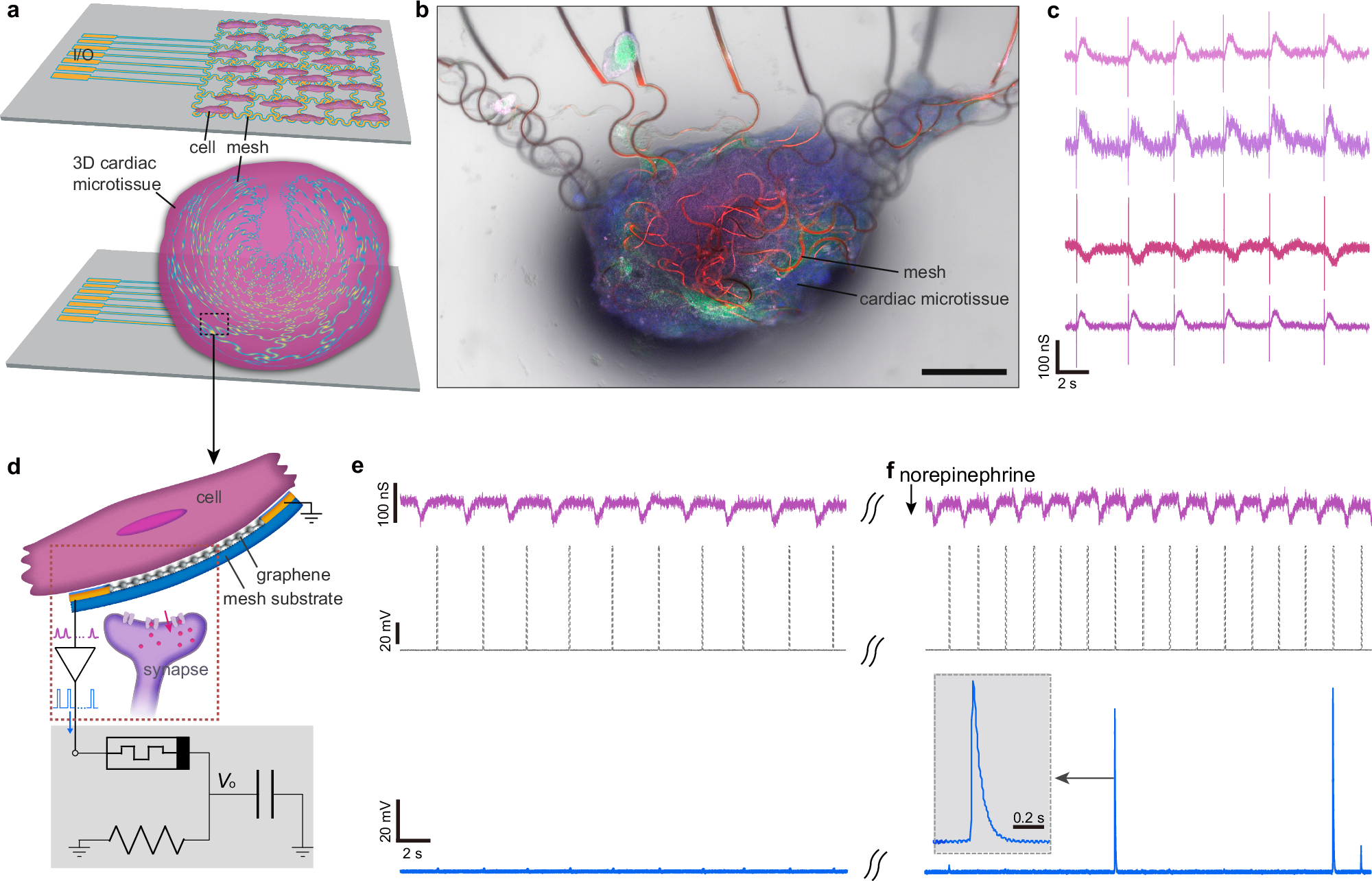
We further show that an artificial neuron can connect to a biological cell to process cellular signals in real-time and interpret cell states.
These results advance the potential for constructing bio-emulated electronics to improve bioelectronic interface and neuromorphic integration."
UMass Engineers Create First Artificial Neurons That Could Directly Communicate With Living Cells "Built of low-powered protein nanowires, made from bacteria, these neurons open the door to vastly more efficient, bio-inspired computers"
Constructing artificial neurons with functional parameters comprehensively matching biological values (open access)
Fig. 1: Constructing memristor working with biological parameters.
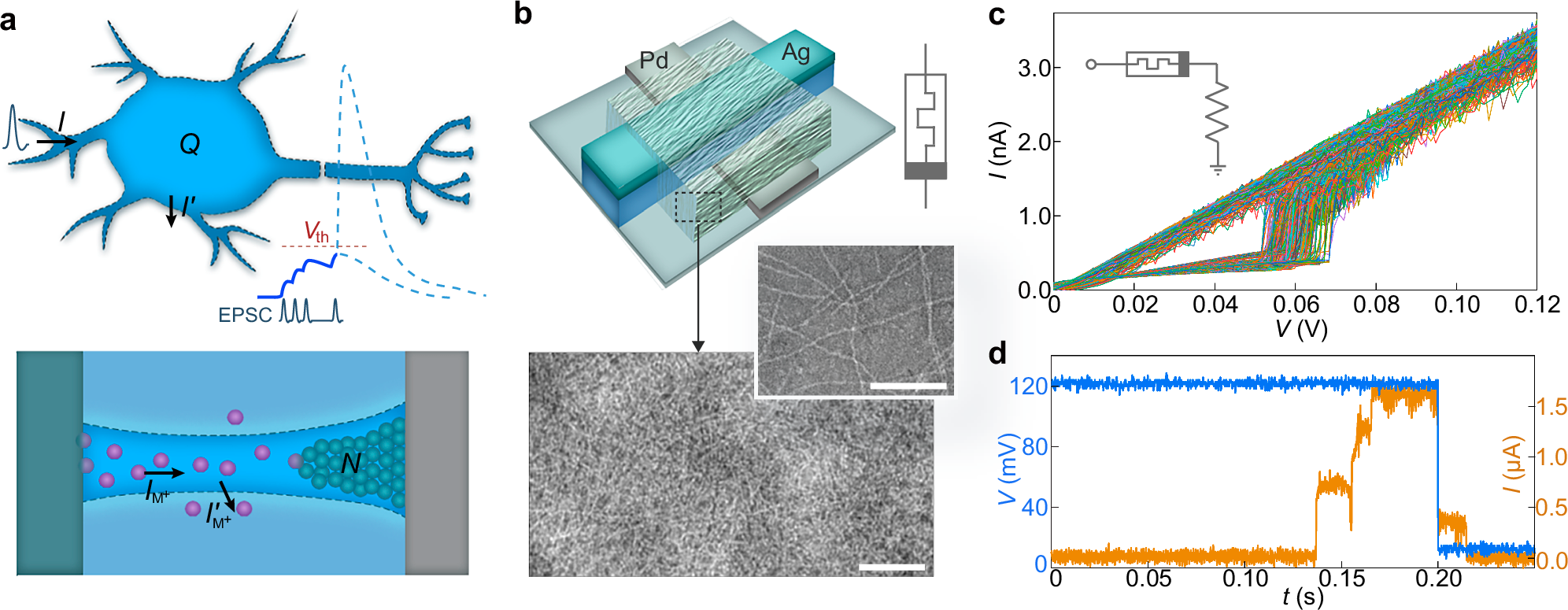
Fig. 4: Connecting the artificial neuron to a biological cell.

No comments:
Post a Comment