Showing posts with label laser. Show all posts

Friday, July 31, 2026

An ancient civilization of 1-3 millions once flourished in the Amazonia

Amazing stuff!

"The first hint that sprawling ancient populations once occupied the Amazon rainforest in Brazil was found through the most mundane of happenstances. More than 20 years ago, geographer Alceu Ranzi, now at the University of Acre, sat on the right side of a plane flying over the ocean of green. Looking down, he saw a perfect circle inscribed on the ground, an unnatural shape produced only, he felt certain, by humans. He was right.

Decades of subsequent research ... have slowly revealed remnants of peoples that occupied even the forest’s most remote areas. ... what archaeologists call earthworks—a type of architecture carved into the landscape. Now, using a laser-based form of radar known as lidar, researchers suggest ancient Amazonians were widespread in territories previously considered uninhabited. ...

The area surveyed by the researchers cuts through Acre and Amazonas, two northern Brazilian states that border Venezuela, Colombia, Peru, and Bolivia. Although scientists already knew there were earthworks in the region, the new study delineated the western and northern borders of the geoglyph-building society, which researchers had previously named Aquiry. Far away from any major rivers, which historically sustained thriving populations, the scientists did not expect the Aquiry to reach such high numbers. ...

The team identified most of the earthworks in the new study as geoglyphs, ditches made in the ground that form geometric shapes including squares and circles, as well as more complex shapes such as pentagrams and octagons. Some are even more sophisticated, combining, for example, circles inside a perfect square. ..."

From the abstract:
"Numerous geometric earthworks have been found in southwestern Amazonia, evidence of a monument-building precolonial civilization. This knowledge has contributed to the discussion about the deep history and the precolonial urbanism of Amazonia, its sociocultural contexts and its environmental legacy.
Estimates of the geographical extent and population size of the forest civilization have remained weak, because the detection of earthworks has been almost exclusively limited to deforested areas where vegetation does not completely hide the structures.
Here we used canopy-penetrating LiDAR data over 4,430 km of flight to define the geographical distribution and quantity of earthworks in this region better. On the basis of both existing data and our LiDAR documentation, we show that this cultural area alone contains as many earthworks as previously estimated for the whole of Amazonia.
We also propose that the total human population of the area in 100–300 ad was 1.25–3 million people.
If similar results are found elsewhere in Amazonia, the total precolonial population density and its effect on the current Amazonian soil and forest structure, biodiversity and even some modelling of the global climate should be re-evaluated."

An ancient civilization of millions once flourished in the Amazon

Odd shapes hidden in dense Amazon rainforest reveal sprawling ancient civilization "Newly found earthworks suggest about 3 million people might have lived in just about 3% of the forest’s entire area"


An aerial shot shows a square-shaped geoglyph in Acre, a state at Brazil’s northern border


Lidar uses infrared light to uncover the shapes hidden underneath dense tree canopies.


Fig. 2: Diverse earthwork types with their topographical contexts.


Fig. 1: Map of the study area.


Monday, July 20, 2026

Analyzing the interplay between electronic excitation and nuclear motion in single atoms of a molecule

Amazing stuff!

"... The study provides evidence that excitation by light can enhance an atom's sensitivity to the motion of nearby atoms. The new method for following ultrafast chemical reactions at the atomic scale, in real time, can help researchers understand photostability in DNA, energy flow in light-harvesting materials and other fundamental processes driven by light.

The team investigated 3-fluoropyridine, a small ring-shaped molecule. When the molecule absorbs light like a short pulse from an ultraviolet laser, it is promoted into an electronically excited state and rapidly distorts out of its original planar shape. It then passes through a so-called conical intersection: a short-lived but crucial crossing point where movements of electrons and the atoms’ cores become strongly coupled. After this point, the molecule returns to the ground state.
At that moment, electronic energy is converted into vibrations.
The researchers found that this conversion leaves distinct fingerprints at different atomic sites: the fluorine atom acts as a clean marker of vibrational relaxation, while the nitrogen atom, which is more directly involved in the excitation, reflects an intertwined response of electron redistribution and structural motion. ..."

From the abstract:
"The advent of novel free-electron laser sources enabling time-resolved X-ray photoelectron spectroscopy (tr-XPS) provides a unique opportunity to monitor local chemical environments in real time by measuring sub-eV shifts in core-electron binding energies. These shifts reflect the interplay between electronic excitation and nuclear motion, an interplay that remains largely unexplored.
In our combined theoretical and experimental study of fluoropyridine (C5H4FN), we investigate this link by monitoring the evolving chemical environment at the N and F atomic sites as the photoexcited S1 state relaxes to the ground state via a conical intersection.
We find that the F site responds primarily to vibrational relaxation, showing minimal sensitivity to the electronic excited state.
In contrast, excitation to S1 induces a measurable energy shift at the N site and significantly enhances its sensitivity to local vibrations within the ring.
This behavior arises from a photoinduced redistribution of charge, which also increases the Coulomb interaction between the 1s electron at the N atom and the atomic partial charge at an adjacent C atom.
This insight opens new avenues for exploring ultrafast dynamics and conical intersection pathways in more complex systems, from photostable DNA bases to light-harvesting materials."

Atoms tell different stories when light hits a molecule in trillionths of a second

Researchers watch chemistry unfold atom by atom "Study suggests a new way to follow electronic and vibrational dynamics in real time"


Graphical abstract


Figure 1. Chemical shifts during conical intersection passage.


Wednesday, June 03, 2026

The world’s largest privately owned laser just turned on

Good news!

"Fusion startup Xcimer Energy on Wednesday flipped the switch on its Phoenix laser system, which the company says is the largest privately owned example in the world.

Xcimer’s approach to fusion power is modeled after the National Ignition Facility (NIF), which proved in December 2022 that a controlled fusion reaction could release more power than required to ignite it. ...

Xcimer’s plans for a fusion power plant call for two lasers capable of firing in microsecond-long pulses. Light from those pulses will be fed through a compression system, of sorts, which will delivers the lasers’ energy to the fuel target in nanoseconds. The quicker the fuel is compressed, the more likely it is to generate usable fusion reactions.

Phoenix is a step toward an eventual power plant. The system uses excimer amplification, similar to those used in semiconductor manufacturing but significantly more powerful. At full strength, the krypton-fluoride laser generates over 1 kilojoule of energy ... and its core is 38 meters long. ..."

"... What comes next

Phoenix is the first step in Xcimer’s roadmap toward commercial fusion energy.
  • Anvil (2028): Commercial-scale excimer amplifier delivering 200 kilojoules on target in a complete two-sided beamline.
  • Vulcan (early 2030s): 4–12 megajoule laser system targeting wall-plug breakeven and supporting high-energy-density and national-security applications. Xcimer expects to select a Vulcan site this year.
  • Athena (mid-2030s): Commercial-scale laser fusion power plant designed for continuous grid-scale electricity generation.
..."

The world’s largest privately owned laser just turned on | TechCrunch


Scientist adjusts laser optics at Xcimer Energy in Denver, Colorado.


Tuesday, April 28, 2026

Self-organizing “pencil beam” laser could help scientists design brain-targeted therapies

Amazing stuff!

"... researchers discovered a paradoxical phenomenon in optical physics that could enable a new bioimaging method that’s faster and higher-resolution than existing technology.

They discovered that, under the right conditions, a chaotic mess of laser light can spontaneously self-organize into a highly focused “pencil beam.”

Using this self-organized pencil beam, the researchers captured 3D images of the human blood-brain barrier 25 times faster than the gold-standard method, while maintaining comparable resolution.

By showing individual cells absorbing drugs in real-time, this technology could help scientists test whether new drugs for neurodegenerative disease like Alzheimer’s or ALS reach their targets in the brain, with greater speed and resolution. ..."

From the abstract:
"The formation of organized optical states in multidimensional systems is crucial for understanding light–matter interaction and advancing light-shaping technologies.
Here we report the observation of a self-localized, ultrafast pencil beam near the critical power in a standard multimode fiber.
We demonstrate that self-focusing, traditionally considered detrimental, facilitates a nonlinear spatiotemporal localized state with a sidelobe-suppressed Bessel-like profile and markedly improved stability.
Generated simply by an on-axis Gaussian launch, this beam is readily integrated into standard multiphoton microscopes.
We applied this self-localized beam to two-photon imaging of mouse enteric nervous systems, where it outperformed conventional Bessel beams through reduced sidelobes and enhanced aberration resilience.
Lastly, we monitored transferrin uptake dynamics in a live human blood–brain barrier model using minute-resolved three-dimensional scans, revealing spatiotemporal heterogeneity across different cell types.
Our findings offer a robust approach for generating ultrafast pencil beams, enabling high-throughput three-dimensional biosystem imaging to elucidate biological transport pathways."

Self-organizing “pencil beam” laser could help scientists design brain-targeted therapies | MIT News | Massachusetts Institute of Technology "MIT researchers leveraged a surprise discovery to devise a faster and more precise biomedical imaging technique."


Saturday, March 28, 2026

First microlasers capable of detecting individual molecules and ions could one day aid diagnosis

Amazing stuff! Notice it is in whispering-gallery mode! 😊

"Scientists have created the first microlasers capable of detecting individual molecules and even single atomic ions, a breakthrough that could significantly advance early disease diagnosis and molecular-scale medical testing.  ... The paper opens up new possibilities for microlaser biosensing technology, including "lab-on-a-chip" technology capable of instant medical testing and diagnosis. ..."

From the abstract:
"Whispering-gallery-mode microlasers have emerged as powerful tools for label-free biosensing, yet their sensitivity has been limited to detecting nanoparticles larger than 10 nm.
Here we demonstrate a plasmon-enhanced whispering-gallery-mode microlaser capable of detecting single atomic ions in solution, achieving unprecedented sensitivity.
By integrating gold nanorods onto ytterbium-doped silica microspheres, we reduce the effective mode volume by approximately 1,000-fold and enhance the local electromagnetic field, amplifying the signal-to-noise ratio. The self-heterodyne detection of beatnote frequency shifts between split lasing modes enables the real-time monitoring of transient and permanent interactions of zinc (Zn2+) and cadmium (Cd2+) ions with nanorod sensing sites.
We report peak sensitivities with beatnote shifts of 3.7 fm for Zn2+ and 7.2 fm for Cd2+, showcasing the potential of plasmon-enhanced whispering-gallery-mode microlasers for single-molecule and atomic-scale sensing applications, including in vivo probing."

First microlasers capable of detecting individual molecules and ions could one day aid diagnosis


Fig. 1: Experimental setup and microlaser mode splitting.


Thursday, January 01, 2026

Boosting the Coherence of X-Ray Free-Electron Lasers

Amazing stuff!

"X-ray free-electron lasers (XFELs) have transformed the study of matter by delivering femtosecond and attosecond pulses at angstrom wavelengths, enabling direct observation of ultrafast structural and electronic dynamics. Despite these successes, XFELs have long lacked a capability central to precision optical science: stable temporal phase coherence.

Most XFEL facilities operate in the self-amplified spontaneous-emission (SASE) regime, in which radiation originates from microscopic shot noise in an electron beam. This mechanism produces extremely bright pulses, but shot-to-shot fluctuations in their temporal structure limit their use in phase-sensitive experiments useful for metrology, interferometry, and ultrafast spectroscopy. ...

In conventional lasers, mode locking enforces a fixed phase relationship among an optical cavity’s longitudinal modes—discrete, equally spaced frequencies that resonate with the cavity. Without mode locking, these modes would oscillate independently, and their random phases would lead to noisy emission in time. When mode locking synchronizes their phases, the modes interfere constructively at regular intervals, producing a periodic train of ultrashort pulses. ...

XFELs, however, lack a physical resonator and therefore do not possess longitudinal modes in the usual sense of a cavity-based laser. They operate in a single pass, as electron bunches propagating through a sequence of undulators emit x-ray radiation. Nevertheless, theory has shown that an effective set of longitudinal modes can be synthesized by inserting, between undulator modules, magnetic chicanes that introduce a fixed delay between successive amplification stages. These delays define a comb of allowed frequencies—sometimes described as “synthetic” longitudinal modes—whose spacing is determined by the relative temporal slippage between the emitted x rays and the electrons. Recent experiments have demonstrated that such multichicane schemes enhance temporal coherence in SASE operation ..."

From the abstract:
"X-ray free-electron lasers (FELs) are powerful photon sources offering a wide wavelength range, subfemtosecond pulse duration, and high brightness. Most x-ray FELs are based on self-amplified spontaneous emission (SASE). SASE-FEL radiation has excellent transverse but only limited longitudinal coherence, with power and spectral profiles consisting of multiple randomly distributed spikes.
In this Letter, we present the first experimental demonstration of mode-locked SASE, which generates periodic trains of phase-locked sub femtosecond pulses, thus providing an x-ray analog of the optical frequency comb.
Our approach combines the mode-coupled SASE scheme, where magnetic chicanes between the undulator modules of the FEL increase the coherence of the output radiation, and an external optical laser that restricts the FEL amplification to periodic and short regions of the electron bunch.
The work relies on evidence in the frequency and time domains for photons and electrons, respectively, and will benefit investigations of ultrafast dynamics as well as coherent spectroscopy, and enable new types of experiments requiring phase-correlated x-ray pulses."

Physics - Boosting the Coherence of X-Ray Free-Electron Lasers "Mode locking—a laser technique that revolutionized optical physics—has been extended to x rays, producing stable trains of attosecond pulses with unprecedented phase coherence."


Fig. 1 (a) Schematic layout of the experiment. (b) and (c) Longitudinal phase space measurements of the electron beam without and with the 790-nm seed laser, respectively.


Saturday, October 04, 2025

Kirigami-inspired parachute falls on target

Amazing stuff! Out with the origami, in with the kirigami! Just kidding!

"Inspired by the Japanese art of kirigami, researchers in Canada and France have designed a parachute that can safely and accurately deliver its payloads when dropped directly above its target. Tested in realistic outdoor conditions, the parachute’s deformable design stabilizes the airflow around its porous structure, removing the need to drift as it falls. With its simple and affordable design, the parachute could have especially promising uses in areas including drone delivery and humanitarian aid. ..."

"... a laser is working away inside a large metal box. The beam moves over a thin sheet of plastic, cutting it with surgical precision along a computer-charted path.  

In about ten minutes, the laser has finished the job ... removes the intricately cut sheet from the box. It’s round, about 20 centimetres in diameter, and as springy as a Slinky, but it isn’t a toy. Attach a weight to the centre and you have a parachute. ..."

From the abstract:
"The art of kirigami allows programming a sheet to deform into a particular manner with a pattern of cuts, endowing it with exotic mechanical properties and behaviours.
Here we program discs to deform into stably falling parachutes as they deploy under fluid–structure interaction.
Parachutes are expensive and delicate to manufacture, which limits their use for humanitarian airdrops or drone delivery.
Laser cutting a closed-loop kirigami pattern in a disc induces porosity and flexibility into an easily fabricated parachute.
By performing wind tunnel testing and numerical simulations using a custom flow-induced reconfiguration model, we develop a design tool to realize kirigami-inspired parachutes.
Guided by these results, we fabricate parachutes from the centimetre to the metre scale and test them in realistic conditions.
We show that at low load-to-area ratios, kirigami-inspired parachutes exhibit a comparable terminal velocity to conventional ones.
However, unlike conventional parachutes that require a gliding angle for vertical stability and fall at random far from a target, our kirigami-inspired parachutes always fall near the target, regardless of their initial release angle.
These kinds of parachutes could limit material losses during airdropping as well as decrease manufacturing costs and complexity."

Kirigami-inspired parachute falls on target – Physics World


Kirigami-inspired parachutes with programmable reconfiguration (no public access, but article above contains link to PDF)


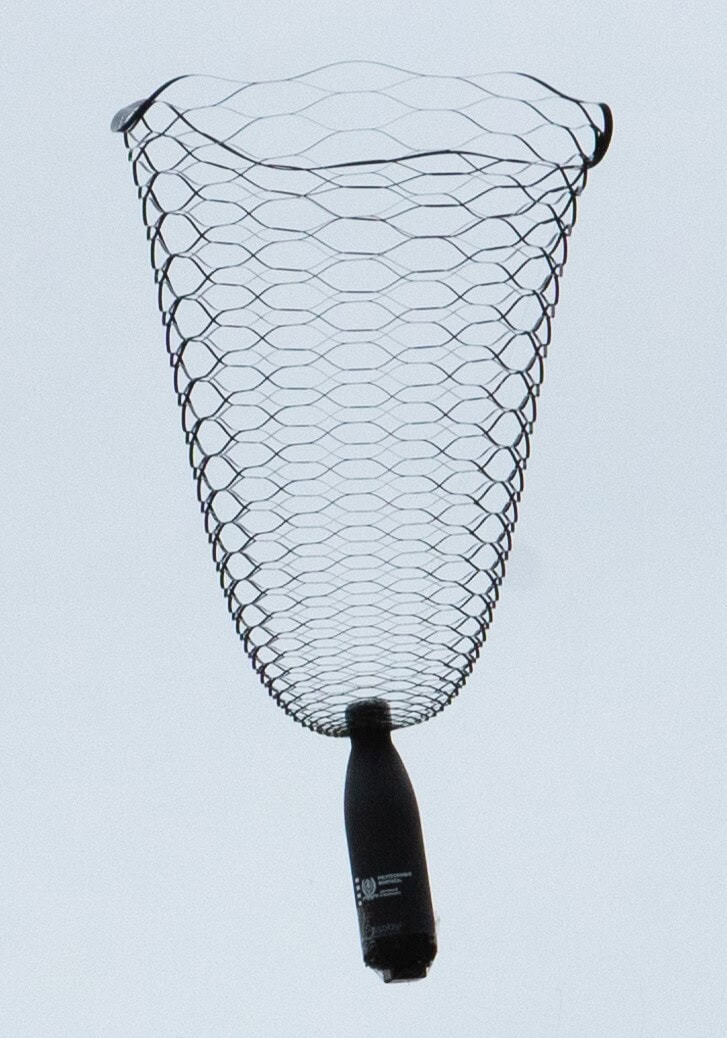
With a bottle attached


Wednesday, September 10, 2025

Physicists devise an idea for lasers that shoot beams of neutrinos

Amazing stuff!

"... Now ... physicists propose a much more compact and efficient way to generate neutrinos that could be realized in a tabletop experiment.

In a paper ... the physicists introduce the concept for a “neutrino laser” — a burst of neutrinos that could be produced by laser-cooling a gas of radioactive atoms down to temperatures colder than interstellar space. At such frigid temps, the team predicts the atoms should behave as one quantum entity, and radioactively decay in sync.

The decay of radioactive atoms naturally releases neutrinos, and the physicists say that in a coherent, quantum state this decay should accelerate, along with the production of neutrinos. This quantum effect should produce an amplified beam of neutrinos, broadly similar to how photons are amplified to produce conventional laser light. ..."

From the abstract:
"Superradiance emerges from collective spontaneous emission in optically pumped gases, and is characterized by photon emission enhancements of up to 1/4 ⁢𝑁2 in an 𝑁 atom system.
The gain mechanism derives from correlations developed within the decay medium rather than from stimulated emission as in lasing, so an analog of this process should be possible for fermionic final states.
We introduce here the concept of superradiant neutrino emission from a radioactive Bose Einstein condensate, which can form the basis for a superradiant neutrino laser.
A plausible experimental realization based on a condensate of electron-capture isotope  83 Rb could exhibit effective radioactive decay rates accelerated from 86.2 days to minutes in viably sized rubidium condensates of 106 atoms."

Physicists devise an idea for lasers that shoot beams of neutrinos | MIT News | Massachusetts Institute of Technology "Super-cooling radioactive atoms could produce a laser-like neutrino beam, offering a new way to study these ghostly particles — and possibly a new form of communication."

Envisioning a Neutrino Laser "A Bose-Einstein condensate of radioactive atoms could turn into a source of intense, coherent, and directional neutrino beams, according to a theoretical proposal."


A Bose-Einstein condensate of radioactive atoms could turn into a source of intense, coherent, and directional neutrino beams, according to a theoretical proposal.


Thursday, August 07, 2025

Scientists Shine a near-infrared Laser Through a Human Head

Amazing stuff!

"The first step toward an inexpensive new medical imager was proving that near-infrared photons can fly all the way through your head. It was a comically difficult experiment. ..."

"... Optical brain imaging primarily uses near-infrared light, to which human tissue is relatively transparent. But human heads are so good at blocking even those wavelengths that ... only a billionth of a billionth of all near-infrared photons make it through an entire adult human head from one side to the other. ...

the difficult trade-off of expensive, deeper-penetrating imaging equipment versus cheaper but shallower sensors is starting to break down. ..."

From the abstract:
"Significance
The highly scattering nature of near-infrared light in human tissue makes it challenging to collect photons using source-detector separations larger than several centimeters. The limits of detectability of light transmitted through the head remain unknown. Detecting photons in the extreme case through an entire adult head explores the limits of photon transport in the brain.

Aim
We explore the physical limits of photon transport in the head in the extreme case wherein the source and detector are diametrically opposite.

Approach
Simulations uncover possible migration pathways of photons from source to detector. We compare simulations with time-resolved photon counting experiments that measure pulsed light transmitted through the head.

Results
We observe good agreement between the peak delay time and width of the time-correlated histograms in experiments and simulations. Analysis of the photon migration pathways indicates sensitivity to regions of the brain well beyond accepted limits. Source repositioning can isolate sensitivity to targeted regions of the brain, including under the cerebrum.

Conclusions
We overcome attenuation of ∼1018 and detect photons transmitted through an entire adult human head for a subject with fair skin and no hair. Photons measured in this regime explore regions of the brain currently inaccessible with noninvasive optical brain imaging."

Affordable Optical Brain Imaging Advances - IEEE Spectrum "It’s the first step toward an inexpensive new medical imager"


Fig. 2
Experimental results.
(a) The experimental configuration used in laboratory experiments—an ultrafast pulsed laser (1.2 W power, 800 nm wavelength, 140 fs pulse duration, 80 MHz repetition rate) is expanded to a uniformly distributed 1 in. diameter circle and projected against the side of the head. Diametrically opposite the source, a PMT is synchronized to the laser trigger such that a histogram of photon ToF can be measured using TCSPC.
(b) The normalized simulated ToF (black dashed) and the mean of 15 experimental trials (2 min exposure) on day 1 (blue) and day 2 (red). The uncertainty bands indicate the standard error of the mean at each time stamp. The IRF (black) with the peak centered at time = 0 ns is shown for comparison. The start time of all time traces are aligned to the peak of the IRF.
(c) The mean of the background-subtracted counts (black) of day 1 data in each timebin for 15 2-min exposures. The filtered mean counts for each timebin using a Savitzky–Golay filter (window = 251, order = 3). The normalized IRF is shown in red for comparison.


Saturday, July 26, 2025

Lasers pick up weak magnetism in non-magnetic metals like gold, copper, and aluminum

Amazing stuff!

"Scientists have cracked a century-old physics mystery by detecting magnetic signals in non-magnetic metals using only light and a revamped laser technique. Previously undetectable, these faint magnetic “whispers” are now measurable, revealing hidden patterns of electron behavior. The breakthrough could revolutionize how we explore magnetism in everyday materials—without bulky instruments or wires—and may open new doors for quantum computing, memory storage, and advanced electronics. ...

For over a century, scientists have known that electric currents bend in a magnetic field—a phenomenon known as the Hall effect. In magnetic materials like iron, this effect is strong and well understood. But in ordinary, non-magnetic metals like copper or gold, the effect is much weaker.

In theory, a related phenomenon—the optical Hall effect—should help scientists visualize how electrons behave when light and magnetic fields interact. But at visible wavelengths, this effect has remained far too subtle to detect.  ...

To solve this, the researchers upgraded a method called the magneto-optical Kerr effect (MOKE), which uses a laser to measure how magnetism alters light’s reflection. ...

By combining a 440-nanometer blue laser with large-amplitude modulation of the external magnetic field, they dramatically boosted the technique’s sensitivity. The result: they were able to pick up magnetic “echoes” in non-magnetic metals like copper, gold, aluminum, tantalum, and platinum—a feat previously considered near-impossible. ...

The technique offers a non-invasive, highly sensitive tool for exploring magnetism in metals—without the need for massive magnets or cryogenic conditions. Its simplicity and precision could help engineers build faster processors, more energy-efficient systems, and sensors with unprecedented accuracy. ..."

From the abstract:
"It is well known that the anomalous Hall effect displayed in ferromagnets is much stronger than the ordinary Hall effect. Therefore, the optical Hall effect is significantly weaker than the magneto-optical Kerr effect (MOKE) such that it is barely detectable at visible wavelengths.
We present a sensitive MOKE technique which is based on large-amplitude modulation of the externally applied magnetic field that is suitable for non-magnetic metals. Using a 440 nm laser, we measure Cu, Au, Al, Ta, and Pt and find partial agreement with the Lorentz-Drude theory implying contributions of the plasma dynamics and interband transitions beyond the approximations of the model.
Interestingly, we find that the noise scales with the spin-orbit coupling of the metals. This is manifested by a remarkable correlation between the noise amplitude and the Gilbert damping enhancement associated with these metals. These results suggest that the electromagnetic noise arises from optical interactions with spins that is mediated by the spin-orbit interaction and highlight a possible avenue for measuring the spin-orbit coupling using optical techniques."

Lasers just unlocked a hidden side of gold, copper, and aluminum | ScienceDaily


Fig. 1: Schematic illustration of the OHE and the experimental setup.


Thursday, July 24, 2025

Lasers match common herbicides at zapping weeds

Good news! However, the machine (see photo below) looks unwieldy! Some miniaturization might be necessary.

"Commercial laser weeders are large machines that pass over crop rows and take photos. A deep learning computer program analyzes the images to distinguish weeds from crops. Then, the lasers zap the weeds to kill them. The machine’s computer program also allows farmers to prioritize types of weeds, such as smaller plants that are close to the crop that may be difficult for humans to see and eliminate, for the lasers to target. ..."

From the abstract:
"BACKGROUND
Herbicides are the primary weed management method for processing vegetable growers, but challenges such as limited chemical options, herbicide resistance, crop injury risks, regulatory changes, and shifting consumer preferences are driving interest in nonchemical alternatives like laser weeding. In 2024, three research trials in New Jersey and New York evaluated the effectiveness of laser weeding using a commercial unit and comparing it with pre-emergence- and postemergence-applied herbicides on beet (Beta vulgaris L.), spinach (Spinacia oleracea L.), and pea (Pisum sativum L.).

RESULTS
Across all trials, laser weeding was as effective as or superior to S-metolachlor, bentazon and phenmedipham herbicides applied at label rate in controlling erect annual weeds, including common lambsquarters (Chenopodium album L.) and common ragweed (Ambrosia artemisiifolia L.). However, laser weeding was less effective on purslane (Portulaca oleracea L.) and annual grasses in New York because of sequential emergence patterns and protected meristems, respectively. Compared with untreated controls, laser weeding reduced weed cover by ≥45% and density by ≥66%, resulting in ≥97% less weed biomass by the season's end. In addition, crop stunting did not exceed 1% and crop biomass increased by ≥30% when laser weeding replaced herbicide applications.

CONCLUSIONS
These findings demonstrate that multiple laser passes can control weeds without damaging crops, leading to higher yields than conventional herbicides. Further research is needed to optimize laser weeding across different environments and weed species, and to evaluate commercial units with increased laser capacity and faster processing speeds."

Lasers match common herbicides at zapping East Coast weeds | Cornell Chronicle


Carbon Robotics Autonomous LaserWeeder™ demonstration unit in operation in Geneva, NY.


Tuesday, July 15, 2025

Zap mosquitoes at home with an AI-guided laser system of the size of a smartphone

Amazing stuff! Do you need to wear any eye protection goggles?

"This new AI-powered gadget claims to shoot down up to 30 mosquitoes per second using laser bursts. It retails for $500."

"... It does so using a LiDAR (light detection and ranging) module which determines the locations of objects by emitting laser light pulses, then measuring how long it takes that laser light to be reflected back by whatever it hits.
When a mosquito is detected in this fashion, a second galvanometer-directed laser is instantaneously used to fatally zap the insect. ...

It should be noted that mosquitoes won't be detected if they're flying any faster than 1 meter (3.3 ft) per second. For this reason, the device isn't ideal for use on speedier pest insects such as houseflies.

The Basic Edition model of the Photon Matrix has a 90-degree, 3-meter (9.8-ft) scanning/killing range, which is boosted to 6 meters (19.7 ft) in the Pro Version. Both models are claimed to be capable of dispatching up to 30 mosquitoes per second. And yes, they even work in pitch-black bedrooms. ..."

Tuesday, July 15, 2025 - Join The Flyover

This ‘Iron Dome’ for mosquitoes shoots down bugs with lasers "The Photon Matrix is an AI-guided laser system that claims it can zap up to 30 mosquitoes per second."

Saturday, June 28, 2025

Liquid carbon reveals its secrets

Amazing stuff!

"Thanks to new experiments using the DIPOLE 100-X high-performance laser at the European X-ray ... Electron Laser (XFEL) ... has obtained the first detailed view of the microstructure of carbon in its liquid state. The work will help refine models of liquid carbon, enabling important insights into the role that it plays in the interior of ice giant planets like Uranus and Neptune, where liquid carbon exists in abundance. It could also inform the choice of ablator materials in future technologies such as nuclear fusion. ..."

"... Under normal pressure carbon does not melt but immediately changes into a gaseous state. Only under extreme pressure and at temperatures of approximately 4,500 degrees Celsius – the highest melting point of any material – does carbon become liquid. No container would withstand that.

Laser compression, on the other hand, can turn solid carbon into liquid for fractions of a second. And the challenge was to use these fractions of a second to take measurements. In a previously unimaginable way, this has now become reality at the European XFEL, the world’s largest X-ray laser with its ultrashort pulses, in Schenefeld, near Hamburg. ...

The unique combination of the European XFEL with the high-performance laser DIPOLE100-X was crucial for the success of the experiment. ... A community of leading international research institutions at the HED-HIBEF (High Energy Density) experimental station at European XFEL has now combined powerful laser compression with ultrafast X-ray analysis and large-area X-ray detectors for the first time.

In the experiment, the high-energy pulses of the DIPOLE100-X laser drive compression waves through a solid carbon sample and liquefy the material for nanoseconds ... During this nanosecond, the sample is irradiated with the ultrashort X-ray laser flash of the European XFEL. The carbon atoms scatter the X-ray light – similar to the way light is diffracted by a grating. The diffraction pattern allows inferences to be drawn about the current arrangement of the atoms in the liquid carbon.

The whole experiment only lasts a few seconds but is repeated many times: every time with a slightly delayed X-ray pulse or under slightly different pressure and temperature conditions. Many snapshots combine to make a movie. Researchers have thus been able to trace the transition from solid to liquid phase one step at a time. ..."

From the abstract:
"Carbon has a central role in biology and organic chemistry, and its solid allotropes provide the basis of much of our modern technology. However, the liquid form of carbon remains nearly uncharted, and the structure of liquid carbon and most of its physical properties are essentially unknown. But liquid carbon is relevant for modelling planetary interiors and the atmospheres of white dwarfs, as an intermediate state for the synthesis of advanced carbon materials, inertial confinement fusion implosions, hypervelocity impact events on carbon materials and our general understanding of structured fluids at extreme conditions.
Here we present a precise structure measurement of liquid carbon at pressures of around 1 million atmospheres obtained by in situ X-ray diffraction at an X-ray free-electron laser.
Our results show a complex fluid with transient bonding and approximately four nearest neighbours on average, in agreement with quantum molecular dynamics simulations.
The obtained data substantiate the understanding of the liquid state of one of the most abundant elements in the universe and can test models of the melting line.
The demonstrated experimental abilities open the path to performing similar studies of the structure of liquids composed of light elements at extreme conditions."

Liquid carbon reveals its secrets – Physics World

Structure of liquid carbon measured for the first time (original news release) "With the declared aim of measuring matter under extreme pressure, an international research collaboration headed by the University of Rostock and the Helmholtz-Zentrum Dresden-Rossendorf (HZDR) used the high-performance laser DIPOLE 100-X at European XFEL for the first time in 2023. With spectacular results: In this initial experiment they managed to study liquid carbon – an unprecedented achievement ... "


Groundbreaking experiment at European XFEL: Research team measured structure of liquid carbon for the first time (illustration ...)


Fig. 1: Schematic of the experimental setup.


Friday, June 27, 2025

The US has a new most powerful laser at 2 petawatts, but only for a 25 quintillionth of a second. Next 3 petawatts

Good news! Amazing stuff!

"The ZEUS laser facility at the University of Michigan has roughly doubled the peak power of any other laser in the U.S. with its first official experiment at 2 petawatts (2 quadrillion watts). 

At more than 100 times the global electricity power output, this huge power lasts only for the brief duration of its laser pulse—just 25 quintillionth of a second long. ...

The road to 2 petawatts has been slow and careful. Just getting the pieces they need to assemble the system has been harder than expected.
The biggest challenge is a sapphire crystal, infused with titanium atoms. Almost 7 inches in diameter, it is the critical component of the final amplifier of the system, which brings the laser pulse to full power. ...

In the meantime, jumping from the 300 terawatt power of the previous HERCULES laser to just 1 petawatt on ZEUS resulted in worrying darkening of the gratings.
First, they had to determine the cause: Were they permanently damaged or just darkened by carbon deposits from the powerful beam tearing up molecules floating in the imperfect vacuum chamber? ..."

The US has a new most powerful laser - Michigan Engineering News "Hitting 2 petawatts, the NSF-funded ZEUS facility at U-M enables research that could improve medicine, national security, materials science and more."


A view through the titanium-sapphire crystal that helps to transfer power into ZEUS’s laser pulses. At two petawatts, ZEUS is now the most powerful laser in the U.S.


... holds up a laser burn mark on photographic paper in a control room of the ZEUS lab. This test reveals any potentially damaging hot spots in the expanded laser pulse as it enters the compressor that will shrink it into a tiny, intense and powerful laser pulse. The lines come from imperfections in the final amplifying crystal, which must be replaced before ZEUS can reach its full power of 3 petawatts. At two petawatts, ZEUS is now the most powerful laser in the U.S.


Tuesday, June 03, 2025

New high-resolution laser device reads millimeter-scale text from a mile away

Amazing stuff!

I bet former KGB agent Putin the Terrible is doing this every day aping Nero, who watched Rome burning!

"... According to the study published in Physical Review Letters, the developed setup includes multiple laser emitters that enable super-resolution imaging of targets as small as millimeters in scale from a 1.36 kilometers (0.85 miles) distance in an outdoor urban environment. The device successfully images letter-shaped physical targets measuring 8×9 mm, with letter widths of 1.5 mm, placed at the far end of its imaging range. ..."

From the abstract:
"Long baseline diffraction-limited optical aperture synthesis technology by interferometry plays an important role in scientific study and practical application. In contrast to amplitude (phase) interferometry, intensity interferometry—which exploits the second-order coherence of thermal light—is robust against atmospheric turbulence and optical defects. However, a thermal light source typically has a broadband spectrum, a low average photon number per mode, and a wide divergence angle, forestalling extended applications.
Here, we propose and demonstrate active intensity interferometry for optical synthetic aperture imaging over the kilometer range. Our scheme employs multiple phase-independent laser emitters to generate thermal illumination and utilizes a flexible computational algorithm for image reconstruction.
Through outdoor experiments, we have successfully imaged millimeter-scale targets located at 1.36 km away, achieving a resolution enhancement by about 14 times over the diffraction limit of a single telescope. The application of long-baseline active intensity interferometry holds promise for advancing high-resolution optical imaging and sensing."

New high-resolution laser device reads millimeter-scale text from a mile away


Super-resolution imaging based on active optical intensity interferometry (this seems to be the preprint version, open access)


Thursday, May 15, 2025

China Pioneers High-Speed Laser Links in Orbit between satellites

Amazing stuff! The news is dated! Google search can not find this Chinese company's website (i.e. Laser Starcom).

"A commercial Chinese firm has demonstrated ultrafast data laser transmission between two satellites, marking a step forward for the country’s communications megaconstellation plans.

Laser Starcom, a commercial aerospace firm established in Beijing in 2020, announced in March that it had achieved a 400-gigabit-per-second communications link between satellites. Its two satellites, Guangchuan 01 and 02, launched into low Earth orbit (LEO) in November last year on a commercial Zhuque-2 rocket developed by the Beijing-based Landspace company. The pair of Guangchuan spacecraft completed their optical transmission test on 18 March, according to a Laser Starcom statement, across a separation between satellites of 640 kilometers.

The company said the test established an enhanced intersatellite, or crosslink, communication system, supporting future high-bandwidth space networks. In addition to showcasing the growth of the nation’s satellite Internet development, the news further highlights the role of commercial companies in China’s growing space ambitions. ..."

China Pioneers High-Speed Laser Links in Orbit - IEEE Spectrum "400-gigabit-per-second intersatellite comms reduce the need for ground stations"

Sunday, April 27, 2025

Laser cooling for high density processors may significantly reduce power consumption and improve performance in data centers

Good news!

"... We've previously seen laser cooling methods being used to chill antimatter, aid in biological research, and to study quantum phenomena. Together with researchers at the University of New Mexico, this team is working on a completely new technology called laser-based photonic cooling. ...

Data center chips are typically cooled using cold water that flows through microscopic channels in copper plates mounted on top of the processors. The scientists are taking a totally different approach. They intend to create a photonic cold plate with tiny features, about a thousand times smaller than the width of a human hair, to channel cooling lasers to target hotspots. ..."

"... Because laser light will heat up impurities, erasing any cooling effect, the cold plate needs to have extremely pure, thin layers of crystalline gallium arsenide, also known as epitaxial layers, to work. ..."

"... development of a photonic cold plate designed to replace or complement traditional air- and water-based cooling systems. By harnessing laser light to target and cool localized hot spots on chips – such as GPUs – the technology aims to reduce power consumption, improve efficiency, and enable energy recovery paradigms not possible with conventional methods. ...

“A successful project will not only address the immediate need for energy savings but also pave the way for processors to operate at performance levels that were previously thought impossible,” ...

Under the CRADA [Cooperative Research and Development Agreement], Maxwell Labs will provide the technical designs, Sandia Labs will fabricate highly pure gallium arsenide-based devices using its expertise in molecular beam epitaxy, and UNM will evaluate the thermal performance of the resulting systems. ..."

Laser cooling could make data centers more energy efficient

A surprise contender for cooling computers: lasers (original news release) "One company says lasers may save energy and water. Sandia Labs is helping test the idea"

Sunday, March 16, 2025

Laser light made into a supersolid for the first time

Amazing stuff!

"... To create their supersolid, the researchers fired a laser at a piece of gallium arsenide that had been shaped with special ridges. As the light struck the ridges, interactions between it and the material resulted in the formation of polaritons—a kind of hybrid particle—which were constrained by the ridges in a predesigned way. Doing so forced the polaritons into forming themselves into a supersolid. ..."

From the abstract:
"A supersolid is a counter-intuitive phase of matter in which its constituent particles are arranged into a crystalline structure, yet they are free to flow without friction. This requires the particles to share a global macroscopic phase while being able to reduce their total energy by spontaneous, spatial self-organization. The existence of the supersolid phase of matter was speculated more than 50 years ago.
However, only recently has there been convincing experimental evidence, mainly using ultracold atomic Bose–Einstein condensates (BECs) coupled to electromagnetic fields. There, various guises of the supersolid were created using atoms coupled to high-finesse cavities, with large magnetic dipole moments, and spin–orbit-coupled, two-component systems showing stripe phases.
Here we provide experimental evidence of a new implementation of the supersolid phase in a driven-dissipative, non-equilibrium context based on exciton–polaritons condensed in a topologically non-trivial, bound state in the continuum (BiC) with exceptionally low losses, realized in a photonic-crystal waveguide.
We measure the density modulation of the polaritonic state indicating the breaking of translational symmetry with a precision of several parts in a thousand. Direct access to the phase of the wave function allows us to also measure the local coherence of the supersolid. We demonstrate the potential of our synthetic photonic material to host phonon dynamics and a multimode excitation spectrum."

Laser light made into a supersolid for the first time

A supersolid made using photons (no public access) "Supersolids are a unique phase of matter that combine the friction-free flow of superfluids with an ordered structure. They have previously been achieved only with condensates of ultracold atoms. The observation of the supersolid state in photons provides a new window through which to peer into its mysteries."


System in reciprocal and coordinate space.


Friday, March 14, 2025

Das erste Laser-Fusionskraftwerk am alten Kernkraftwerk Biblis

Gute Nachrichten!

Laserfusion am alten Kernkraftwerk Biblis "„Deutschland ist der beste Ort für die Laserfusion“" "Das erste Laser-Fusionskraftwerk soll in Biblis stehen. Die Gründer von Focused Energy zeigen sich überzeugt vom Standort Deutschland. Rückenwind kommt durch das Land Hessen und eine Industrie-Allianz."