Showing posts with label solar system. Show all posts

Friday, September 18, 2026

New moon crater formed sometime between 11 April and 22 May 2024

Amazing stuff!

"The new crater, named McGetchin, formed sometime between 11 April and 22 May 2024, when, unbeknownst to us, a comet or asteroid the size of a three-to-six-story building slammed into the Moon. The depression it left behind on the eastern side is two football fields long—a size only formed from collisions that occur once every 132 years, on average. Researchers found it by comparing images of large swaths of the lunar surface taken with the Wide-Angle Camera on NASA’s Lunar Reconnaissance Orbiter (LRO), then checking closer in with its Narrow-Angle Camera.

They soon realized that the crater wasn’t just impressive for its size, but for the effects it has had on its surroundings. LRO also observed that the 7-kilometer-wide area around the crater was about 8°C to 9°C cooler at night than the surrounding surface. Researchers think that the impact of the asteroid or comet stirred up nearby lunar dust, making it less dense and less effective at trapping heat. ..."

From the abstract (1):
"Observing the aftermath of recent impact events on the Moon tests models of impact frequency, surface change rates, and cratering physics.
The Lunar Reconnaissance Orbiter Camera (LROC) Wide Angle Camera (WAC; 100-meter scale) images the whole Moon each month and has done so since 2010. 
Comparing images from two months under similar lighting conditions enables automated detection of surface changes.
In fall 2025, a routine temporal comparison of WAC image sets revealed a new 222-meter-diameter crater that formed in spring 2024. This is the largest contemporary impact crater found in the Solar System and, according to current models, a once-in-132-year event.
Later, a series of LROC Narrow Angle Camera (NAC) images provided high-resolution (meter-scale) photometric and topographic information.
These images show that the crater exposed complex geology, inform current models of cratering mechanics, and document widespread surface changes extending more than 1000 crater radii."

ScienceAdviser


The crater site, before and after impact


Midnight temperature maps before and after impact reveal a ~7-km-wide “cold spot” around McGetchin crater.


Fig. 4. Key geomorphic features of McGetchin crater.


Saturday, September 12, 2026

Meteorite dust holds records of magnetism that may have helped form the sun

Amazing stuff!

"Around 4.6 billion years ago, the solar system was little more than a giant ball of gas and dust. Over the next few million years, this “solar nebula” underwent a huge transformation, flattening into a disk of matter that then condensed to form the central sun and orbiting planets. 

Scientists have assumed that the early solar system was shaped mainly through gravity. But a new study finds that magnetism also likely played a role. 

... scientists have discovered records of ancient magnetism in the oldest samples of meteorites known today. The team analyzed microscopic grains embedded in a meteorite that was discovered in Antarctica in 2008. These grains, called calcium-aluminum-rich inclusions, or CAIs, originally formed during the solar system’s first 200,000 years, making the samples the oldest known solar system material.

The findings suggest that a magnetic field existed very early on, during the time of the solar nebula. The researchers estimate that this nebular magnetic field was stronger than Earth’s magnetic field today, and likely played a significant role in pulling together primordial matter to form the early sun. ..."

From the significance and abstract:
"Significance
A key step in the formation of planetary systems is the collapse of a cloud of gas and dust into a protoplanetary disk. It has been unclear what forces transformed the disk into the final configuration of a central massive star surrounded by planets. In particular, it has been proposed that in the earliest stages of disk evolution gravity and/or magnetism played a central role.
Here we report studies of the remanent magnetization in calcium-aluminum-rich inclusions, the oldest known solar system solids. We find that they record ancient magnetic fields with intensities stronger than that of the Earth today. This supports the hypothesis that magnetism played a key role in driving mass transport in the early protoplanetary disk.

Abstract
The initial stage of planet formation is expected to take place in a nascent protoplanetary disk (PPD) accreting onto the protostar embedded in an infalling envelope.
This stage is likely accompanied by the formation of high-condensation temperature solids resembling calcium-aluminum-rich inclusions (CAIs), the oldest known solar system solids. However, it is unknown whether magnetism and/or gravity dominantly drove accretion in the youngest evolutionary stages of PPDs and the solar nebula.
Here we report paleomagnetic measurements of CAIs indicating that they record a nebular magnetic field of ∼150 to 600 μT.
This intensity is consistent with magnetic fields playing a key role driving disk accretion while also heating the very inner disk to 103 K at the earliest stages of solar system formation."

Meteorite dust holds records of magnetism that may have helped form the sun | MIT News | Massachusetts Institute of Technology "The discovery likely represents the earliest known evidence of a magnetic field in the infant solar system"


Fig. 3 Summary of high-resolution imaging of CAI 11 indicating the presence of primary magnetic phases.


Thursday, August 27, 2026

How the sun's galactic journey shapes Earth's climate

Amazing stuff! How does the temporal dynamics of the heliosphere (shrinking/expanding) influence climate on Earth while our solar system travels through the Milky Way?

Notice the researchers limit the frequency of such disturbances to "every couple of million years", while I would propose it may happen more often.
If I am not mistaken, we still know very little about the trajectory of our solar system traversing the interstellar space within the Milky Way galaxy. For example, the researchers investigated only the extreme event when the heliosphere shrank so much that the Earth was no longer protected by heliosphere anymore.

Notice Merav Opher (the author of the paper below) has extensively written about the influence of the heliosphere on paleoclimate on Earth for several years (see e.g. her webpage on this subject).

I have been arguing here on blog for some years that the climate (e.g. long warming and cooling periods) on Earth may significantly be influenced by our solar system traveling or its trajectory through the Milky Way galaxy.

"... In new research ... trace the trajectory of the heliosphere, the massive bubble created by our sun that envelops our solar system, as it moved through our galaxy and influenced Earth's climate along the way. ...

Our heliosphere orbits around the center of our galaxy, the Milky Way. Throughout the sun's 4.6-billion-year existence, our heliosphere has traversed various regions within our galaxy. In a paper ..., researchers ... used computer modeling to reverse-engineer the path of the heliosphere through our galaxy, revealing that the environments it passed through may have triggered changes on Earth. ...

ran simulations that showed the sun has encountered frigid expanses of gas and dust at least three times in the past few million years. In these instances, massive interstellar "cold clouds" pushed against the heliosphere to such an extent that it shrank to smaller than Earth's orbit, stranding our planet outside the sun's protective shield. 

These exposures—approximately 2–3 million years, 6–7 million years and 13–14 million years ago—would have exposed Earth's atmosphere to different surroundings. The simulation results match geologic evidence: Elements prevalent in interstellar dust appear in deep-sea sediment core samples, Antarctic snow and lunar samples from these periods.

These heliosphere collapse events may also explain ancient climatic patterns on Earth. In the simulations, when Earth's atmosphere was exposed to a cold, dense galactic hydrogen cloud, water vapor content increased and upper-atmospheric dynamics shifted, ultimately altering conditions at the surface. In summary, our heliosphere's trips through colder regions in our galaxy may be a key factor in driving some of Earth's ancient climate changes, including possible ice ages. ..."

From the abstract:
"This article reviews today's open issues, frontiers of research, and advances in our understanding of the heliosphere throughout the Sun's last 10 million years. Today's heliosphere, the cocoon formed by the solar wind as it moves through the Galaxy, engulfs all the planets extending in the nose direction to ∼120 astronomical units (AU).
  • ▪  The Sun moves at 19 pc/Myr and has traversed many different structures in the interstellar medium that affect the heliosphere, at times collapsing it to sub-astronomical-unit scales. These periods of collapse introduce climate and radiation changes in Earth's environment.
  • ▪  The frequency of such encounters could be as often as every couple of million years, making it a major external disturbance to the development of life on Earth.
  • ▪  Stepwise shifts in past global climate, seen in deep-sea sediment cores, indicate intervals of more rapid cooling at 13–14 Mya, 6–7 Mya, and 2–3 Mya, for which the driving mechanisms are subject to ongoing debate. Such cooling events might be triggered by heliosphere collapse."

How the sun's galactic journey and superflare-filled youth shaped Earth's climate


Fig. 1 Schematic of the heliosphere. Several elements that form the heliosphere are noted (see also the definitions in the margins throughout this article). The width of the sector region is expected to vary with the solar cycle.


Figure 3 
(a) The heliosphere of today is immersed in a warm ISM ...
(b) The heliosphere of the past after the Sun encountered dense cold clouds ... that compressed the heliosphere to sub-astronomical-unit scales
Abbreviation: AU, astronomical unit; ISM, interstellar medium.


Monday, August 17, 2026

Planet Venus may be geologically active

Amazing stuff! This was discovered on NASA images from the 1990s? What took so long?

Do we need a new Venus mission?

"... New research shows our planetary neighbor may be less dormant than thought. Scientists reanalyzed rift valleys on Venus’s surface, which are low-lying regions formed as the crust pulls apart or due to volcanic activity. On Venus, rift valleys can span as long as 10,000 kilometers ...

High-resolution computer models of the underlying geological processes revealed that broad ridges called rift flanks form at the valleys’ edges when they are either young or still forming. Soon after, the rift flanks widen and flatten as Venus’s crust relaxes. When the researchers looked at images of the venusian surface taken by NASA’s Magellan spacecraft in the 1990s, wide, high flanks were visible. The features indicate that the surface was active somewhat recently—and the world is far from dead. ..."

"In brief
  • ETH researchers have developed innovative computer models to study the rift valley systems on Venus.
  • The simulations indicate that recently formed rift valleys feature high, broad flanks, whereas older valleys tend to subside and are less elevated.
  • The new findings can help us identify geologically active regions that require particularly close examination for future Venus missions. 
..."

From the abstract:
"Rifts are prominent tectonic features on Venus, yet their formation, evolution and tectonic activity remain debatable.
Here we conducted 3D numerical thermomechanical experiments with visco-elasto-plastic compressible rock rheology to systematically investigate the rifting dynamics and topography under Venusian conditions. To compare active and inactive rift morphologies, the relaxation of rift topography after extension ceases was also investigated.
Our modelling results suggest a relatively thick thermal lithosphere and a strong crust with dry diabase or mafic granulite rheology in rifted regions and demonstrate that wide rift flank uplifts strongly indicate either presently ongoing Venusian rifting or activity within the past few tens of millions of years.
The rift valleys in the Ganis, Dali and Devana Chasmata have wide rift flank uplifts, and their characteristic topographic features are comparable to the modelled early-stage active rifts undergoing relatively high extension rates of 3−10 cm yr−1.
This suggests that the Venus rifts in these regions are still active or were active very recently. Their morphology also indicates faster extension rates than commonly assumed for Venusian rifting, potentially associated with recent vigorous mantle plume activity."

ScienceAdviser


Venus: Dead? Far from it (original news release) "Simulations conducted by researchers at ETH Zurich suggest a strong likelihood that Venus’s rift valleys are still geologically active rather than being mere relics of a bygone era, as had been previously believed. This finding reshapes our understanding of Earth’s sister planet and will influence future missions to Venus. "


There are huge rift valleys on Venus. They suggest that the planet is still geologically active. 


Thursday, July 30, 2026

Stardust may have seeded the Solar System

Amazing stuff! The charm of stardust! Or when stardust catches the eyes of scientists! 😊

"... Roughly 4.6 billion years ago, part of a giant molecular cloud collapsed, with most mass collecting to form what would one day become our Sun. The leftover matter flattened into a rotating protoplanetary disc, which ultimately gave rise to planets, moons, and other objects that make up the Solar System. As the disc cooled, some of its matter condensed to form tiny mineral structures known as calcium-aluminum-rich inclusions (CAIs). These materials, which are preserved inside meteorites, represent some of the Solar System’s oldest known rocks.

Scientists recently found that some of these CAIs contain large amounts of strontium-84, a relatively rare isotope found in certain kinds of stardust that existed before the Sun formed. The discovery came as a surprise, since it was previously assumed that the region where CAIs formed was hot enough to completely vaporize this dust. The team posits that grains of ancient stardust instead acted as nucleation seeds, drawing the Solar System’s earliest solids to condense around them—just as a particle of dust might accumulate water droplets that freeze to form a snowflake."

From the abstract:
"Recent reports of extreme strontium-84 excesses in primitive Solar System condensates, known as fine-grained calcium-aluminum–rich inclusions (fg-CAIs), suggest that presolar stardust may be preserved in refractory meteoritic components.
This is at odds with preconceptions that presolar grains were completely vaporized in the CAI-forming region.
Here, we reappraise the role of presolar materials in early condensation and overall disk heterogeneity by isolating strontium from primary fg-CAI phases.
We demonstrate that extreme strontium-84 anomalies are likely hosted in a subpopulation of CAI oxides. The anomalies of primitive noncarrier phases are shown to be attenuated but correlated with the abundance of presolar precursors, which suggests that carriers exert leverage on ensuing condensate compositions. We propose that this relationship between isotope anomalies in refractory CAI components stems from stardust acting as nucleation seeds for the earliest solids formed in the Solar System."

ScienceAdviser

Thursday, May 07, 2026

Solar System’s largest moon is unique with a still forming core for billions of years

Amazing stuff!

"In 1996, NASA’s Galileo spacecraft made a shocking discovery at Ganymede, Jupiter’s—and the Solar System’s—largest moon. Unlike every other known moon, it hosted an internally powered magnetic field called a dynamo. Now, scientists think the reason might make the moon doubly unique: its core may still be forming. ...

Typically, the elements within a planet or moon stratify over time, with heavier elements like iron sinking down to form a dense core. When that core churns, it generates electrical currents that sustain a magnetic field.
Scientists only know of such dynamos on the gas giants, Earth, and Mercury. But when researchers modeled the process on Ganymede to match the magnetic field measurements from Galileo, they found that the core might not simply be churning, but actively growing, with new iron still dripping down from rocks in the moon’s mantle. If true, that would render Ganymede the only known body still to be forming its center. ..."

From the abstract:
"Ganymede is the only known moon with an active dynamo today.
Previous studies interpret Ganymede’s dynamo as arising from convection in a metal core that formed billions of years ago.
However, Ganymede likely accreted too cold to form with a metal core, which confounds interpretations of Ganymede’s magnetic field as a constraint on the moon’s broader history.
Here, we reevaluate the thermal evolution of Ganymede’s rock-metal interior from a cold start. Our models show that Ganymede’s observed dynamo is consistent with ongoing core formation, a process not yet observed elsewhere.
If Ganymede has an Fe-FeS core with a sub-eutectic composition, then gradual mantle warming may expel dense Fe melt onto the growing protocore and stir liquid metal, sustaining a dynamo for billions of years."

ScienceAdviser

Core of Solar System’s largest moon may still be forming "Ganymede discovery could force rethink of how worlds power their magnetic fields"


Fig. 1. Possible thermal evolution of Ganymede’s interior based on assumed initial temperatures.


Deep inside Jupiter’s largest moon, Ganymede, molten iron may be sinking, adding to a still-growing core.


Wednesday, January 21, 2026

Polar weather on Jupiter and Saturn hints at the planets’ interior details

Amazing stuff!

"Over the years, passing spacecraft have observed mystifying weather patterns at the poles of Jupiter and Saturn. The two planets host very different types of polar vortices, which are huge atmospheric whirlpools that rotate over a planet’s polar region. On Saturn, a single massive polar vortex appears to cap the north pole in a curiously hexagonal shape, while on Jupiter, a central polar vortex is surrounded by eight smaller vortices, like a pan of swirling cinnamon rolls.

Given that both planets are similar in many ways — they are roughly the same size and made from the same gaseous elements — the stark difference in their polar weather patterns has been a longstanding mystery.

Now, MIT scientists have identified a possible explanation for how the two different systems may have evolved. Their findings could help scientists understand not only the planets’ surface weather patterns, but also what might lie beneath the clouds, deep within their interiors. ...

After comparing simulations, the team found that vortex patterns, and whether a planet develops one or multiple polar vortices, comes down to one main property: the “softness” of a vortex’s base, which is related to the interior composition.
The scientists liken an individual vortex to a whirling cylinder spinning through a planet’s many atmospheric layers. When the base of this swirling cylinder is made of softer, lighter materials, any vortex that evolves can only grow so large. The final pattern can then allow for multiple smaller vortices, similar to those on Jupiter. In contrast, if a vortex’s base is made of harder, denser stuff, it can grow much larger and subsequently engulf other vortices to form one single, massive vortex, akin to the monster cyclone on Saturn. ..."

From the significance and abstract:
"Significance
One intriguing difference between the two largest planets in the solar system is their polar vortex structures: Jupiter hosts multiple vortices at its poles, while Saturn exhibits a single polar vortex.
By systematically surveying the parameter space of a 2D quasi-geostrophic system, we demonstrate that 4 different polar vortex patterns may arise, depending on two key nondimensional numbers and the initial conditions. Analytical criteria predicting the 4 possible patterns are provided. Utilizing the observed vortex patterns, we further obtain constraints on Saturn’s vortex depth and stratification.

Abstract
The distinct polar vortex dynamics observed on Jupiter and Saturn may provide insights into their interiors. In this study, we examine how the number and structure of polar vortices vary with forcing strength, dissipation rate, and interior stratification using a 1.5-layer quasi-geostrophic model. This simplified setup enables a broad exploration of the parameter space, revealing that vortex characteristics are determined by the sequence in which three key length scales—the deformation radius , the zonostrophic scale , and the dissipative scale —are encountered as energy cascades from small to large scales.
Four distinct vortex patterns are identified, including a vortex crystal resembling Jupiter’s polar vortices and a single-vortex state akin to that of Saturn. The conditions under which these patterns emerge provide constraints on the stratification of Jupiter and Saturn."

Polar weather on Jupiter and Saturn hints at the planets’ interior details | MIT News | Massachusetts Institute of Technology "New research may explain the striking differences between the two planets’ polar vortex patterns."


Jupiter


Saturn


Thursday, December 18, 2025

Martian prisons could be built from ice on Mars surface

Food for thought! Pardon my sleight of hand and my facetiousness! 

Instead of capital punishment? No way to escape!

"... More than 5 million cubic kilometers of frozen water exists on or near Mars’s surface, with far more predicted to lie beneath. If the Red Planet’s ice proves obtainable, future astronauts could see themselves living in a world out of Disney’s Frozen, scientists reported here today at the annual meeting of the American Geophysical Union. Through various modeling exercises, the team showed the material could be molded into well-insulated, durable structures that effectively shield earthlings from the Sun’s harmful rays. ..."

Martian cities could be built from ice | Science | AAAS "Astronauts could theoretically harness frozen water on the Red Planet to construct habitats and research stations, new analysis suggests"

Tuesday, December 02, 2025

Lightning discovered on Mars via microphone

Amazing stuff!  So far lightning was discovered only three bodies of the solar system!

"Lightning has been detected on Mars for the first time, confirming longstanding theories that the dusty and windy Martian atmosphere could see electrical charges transferred.

Finding lightning could reveal new insights into the habitability of Mars and potential risks to future missions.

The discovery was made through analysis of data from NASA’s Perseverance rover which landed on Mars in 2021 ...

The researchers compared 28 hours of audio data with electrical signals.

They found 55 electrical events which had acoustic signatures characteristic of lightning. Almost all of these coincided with high winds with only 1 occurring during winds outside the strongest 30% recorded during the study period.

Lightning has previously been spotted on 3 bodies in the solar system: Earth, Jupiter and Saturn. ..."

From the abstract:
"Lightning is among the most energetic manifestation of electrical activity in planetary atmospheres, with documented observations not only on Earth but also on Saturn and Jupiter.
On Mars, the existence of electrical activity has long been suspected, but never directly demonstrated. The dusty atmosphere of Mars undergoes aeolian processes, ranging from wind-blown dust and sand, metre-to-hundred-metre-sized dust devils to thousand-kilometre-scale dust storms, which, in Earth’s deserts, can become electrified through triboelectric charging. For this reason, electric fields have been predicted to build up on Mars, but with no measurement of Martian atmospheric electrical activity so far.
Here we report in situ detections of triboelectric discharges, identified by their electrical and acoustic signatures captured by the SuperCam microphone aboard the Perseverance rover.
Fifty-five events have been detected over two Martian years, usually associated with dust devils and dust storm convective fronts. These serendipitous observations demonstrate that Martian electric fields can reach the breakdown threshold of the near-surface atmosphere of Mars, predicted to be on the order of several tens of kV m−1.
Such electrical activity could affect dust dynamics and potentially fuel a reactive electrochemical environment enhancing the oxidizing capacity of the atmosphere, with consequences for the preservation of organic molecules. This in situ evidence may have implications for surface chemistry, habitability and human exploration."

Lightning on Mars spells trouble for future missions and search for life | News | ConnectSci

Electric discharges detected on Mars for the first time (original news release) "Electric discharges have for the first time been recorded within the storms and whirlwinds of dust – known as dust devils – that sweep across the surface of Mars. Captured by the microphone of the SuperCam instrument on board NASA’s Perseverance rover, the signals were analysed by a team of scientists from the CNRS, Université de Toulouse and the Observatoire de Paris – PSL, working as part of an international team. The discharges represent a major discovery with immediate implications for our understanding of the atmospheric chemistry, climate and habitability of Mars, as well as for future robotic and manned missions there. These findings are published in the journal Nature on November 26, 2025."


Detection of electric discharges in dust devils by the SuperCam instrument, on board the Perseverance rover on Mars


Saturday, November 29, 2025

Scientists discover caves carved by water on Mars that may have once harbored life

The theme or mystery of life on Mars never dies!

However, the research article appears to be only about skylights and water and the potential of (previous) life on Mars.

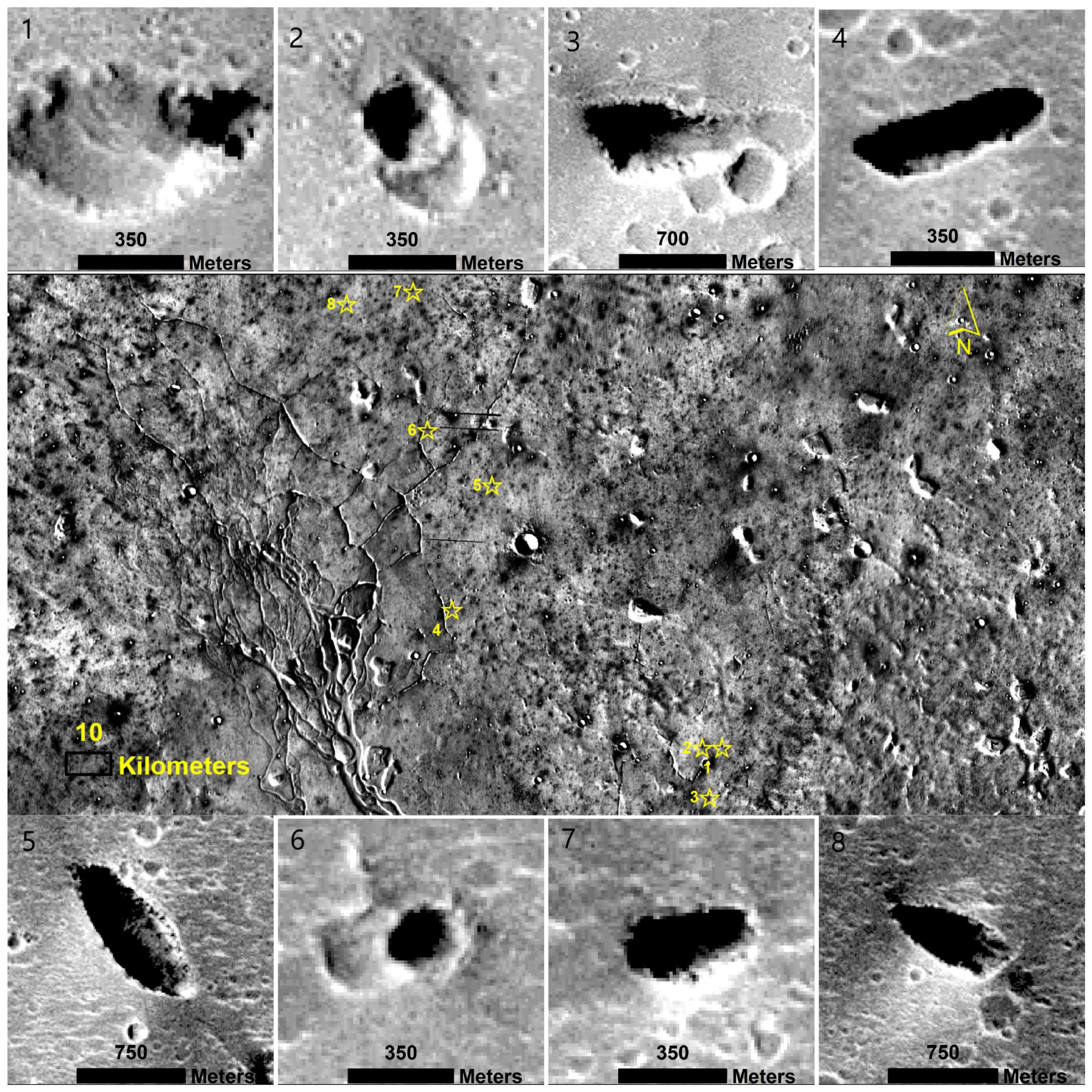
"If there is, or ever has been, life on Mars, the chances are it would exist in caves protected from the severe dust storms, extreme temperatures, and high radiation present on its surface. One place to focus our attention could be eight possible cave sites (called skylights) recently discovered ..."

From the abstract:
"The Hebrus Valles region on Mars exhibits geomorphological indicators of past aqueous activity, such as fluvial channels and aligned sinkholes.
While Martian skylights have mostly been linked to volcanic or tectonic origins, caves formed by water-mediated dissolution remain unexplored.
This study investigates eight skylight features in Hebrus Valles as the first potential karstic cave candidates on Mars. We evaluate whether these features are indicative of collapse entrances formed through dissolution of carbonate- and sulfate-rich lithologies.
To this end, the investigation is carried out by integrating mineralogical maps from the Thermal Emission Spectrometer (TES), hydrogen data from the Gamma Ray Spectrometer (GRS), and TES-derived thermal inertia and dust index maps. 3D structural modeling was performed using High Resolution Imaging Science Experiment (HiRISE)–derived Digital Terrain Models.
Morphological assessments were conducted using Context Camera and HiRISE images.
The skylights exhibit morphologies consistent with subsurface dissolutional collapse. TES data reveal enrichment in carbonates and sulfates near the skylights, and GRS data show elevated water-equivalent hydrogen. The skylights lie within indurated, low-dust terrains and are spatially associated with fluvial features. A 3D reconstruction from morphological data of cavity geometry is consistent with its being karstic."

Scientists discover caves carved by water on Mars that may have once harbored life


Figure 1. Regional context and geospatial distribution of potential karstic skylight features in Hebrus Valles, Mars.


Figure 2. Geological context of skylight candidates in Hebrus Valles. Skylight candidates (yellow stars) are mapped in relation to pit lines, outflow channels, and sinkholes, revealing their spatial association with fluvial systems.


Sunday, October 05, 2025

Scientists discovered new organic compounds in geysers on Saturn’s moon Enceladus

Amazing stuff! We are not alone!

"Scientists using NASA’s Cassini spacecraft data discovered new organic compounds in geysers on Saturn’s moon Enceladus, strengthening evidence a hidden ocean world could harbor conditions suitable for life."

From the abstract:
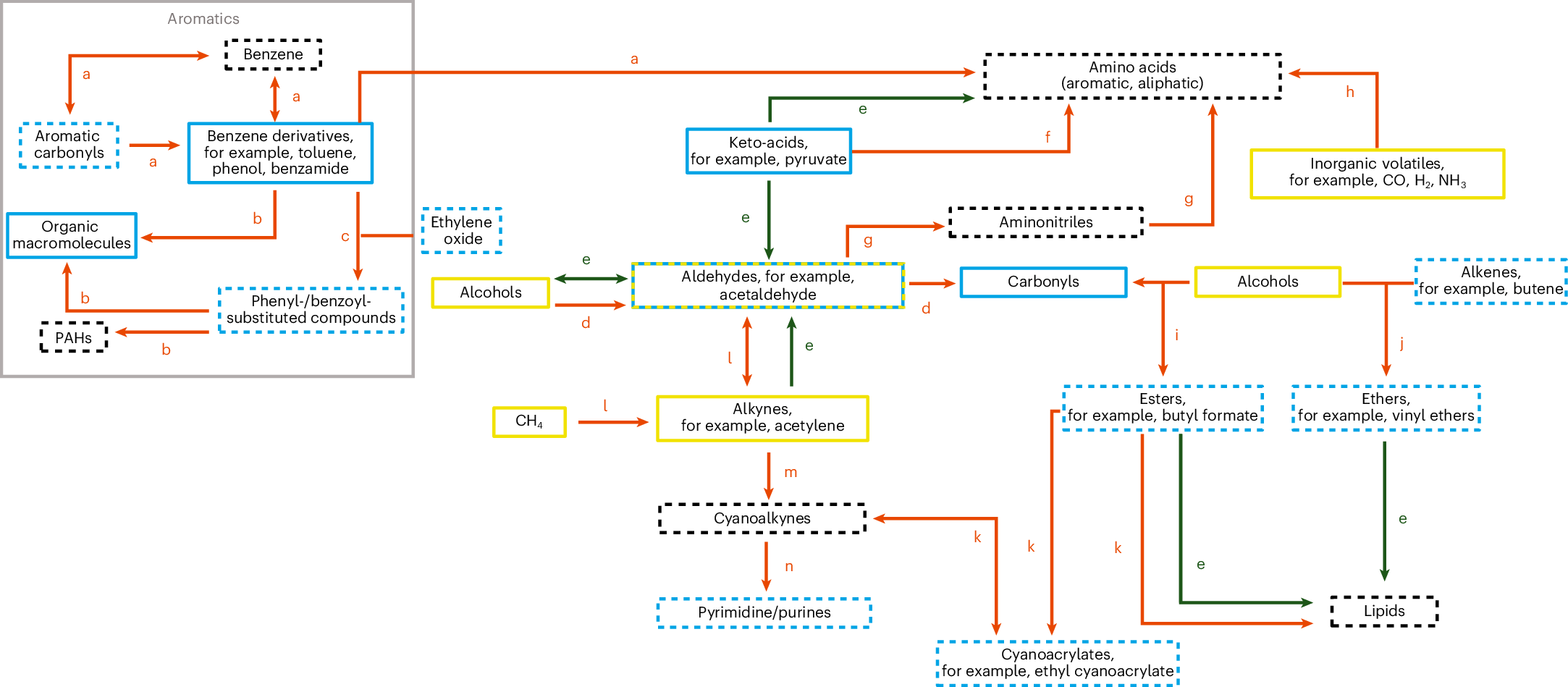
"Saturn’s moon Enceladus ejects a plume of ice grains and gases originating from a subsurface ocean via fractures near its south pole. The chemical characterization of organic material in such ice grains was previously conducted via the analysis of mass spectra obtained in Saturn’s E ring by Cassini’s Cosmic Dust Analyzer at impact speeds below 12 km s−1.
Here we present a comprehensive chemical analysis of organic-bearing ice grains sampled directly from the plume during a Cassini fly-by of Enceladus (E5) at an encounter speed of nearly 18 km s−1.
We again detect aryl and oxygen moieties in these fresh ice grains, as previously identified in older E-ring grains.
Furthermore, the unprecedented high encounter speed revealed previously unobserved molecular fragments in Cosmic Dust Analyzer spectra, allowing the identification of aliphatic, (hetero)cyclic ester/alkenes, ethers/ethyl and, tentatively, N- and O-bearing compounds. These freshly ejected species are derived from the Enceladus subsurface, hinting at a hydrothermal origin and involvement in geochemical pathways towards the synthesis and evolution of organics."

Thursday, October 2, 2025 - Join The Flyover


Fig. 6: Potential chemical pathways between organic compounds on Enceladus.


Sunday, August 10, 2025

The third interstellar flying object observed within our solar system

When one of those objects hits Earth again, then we have a real climate crisis, not the phony climate change!

"The Hubble Space Telescope captured an image of the fastest comet ever observed, moving through our solar system at 130,000 mph, after traveling the universe for hundreds of millions of years.

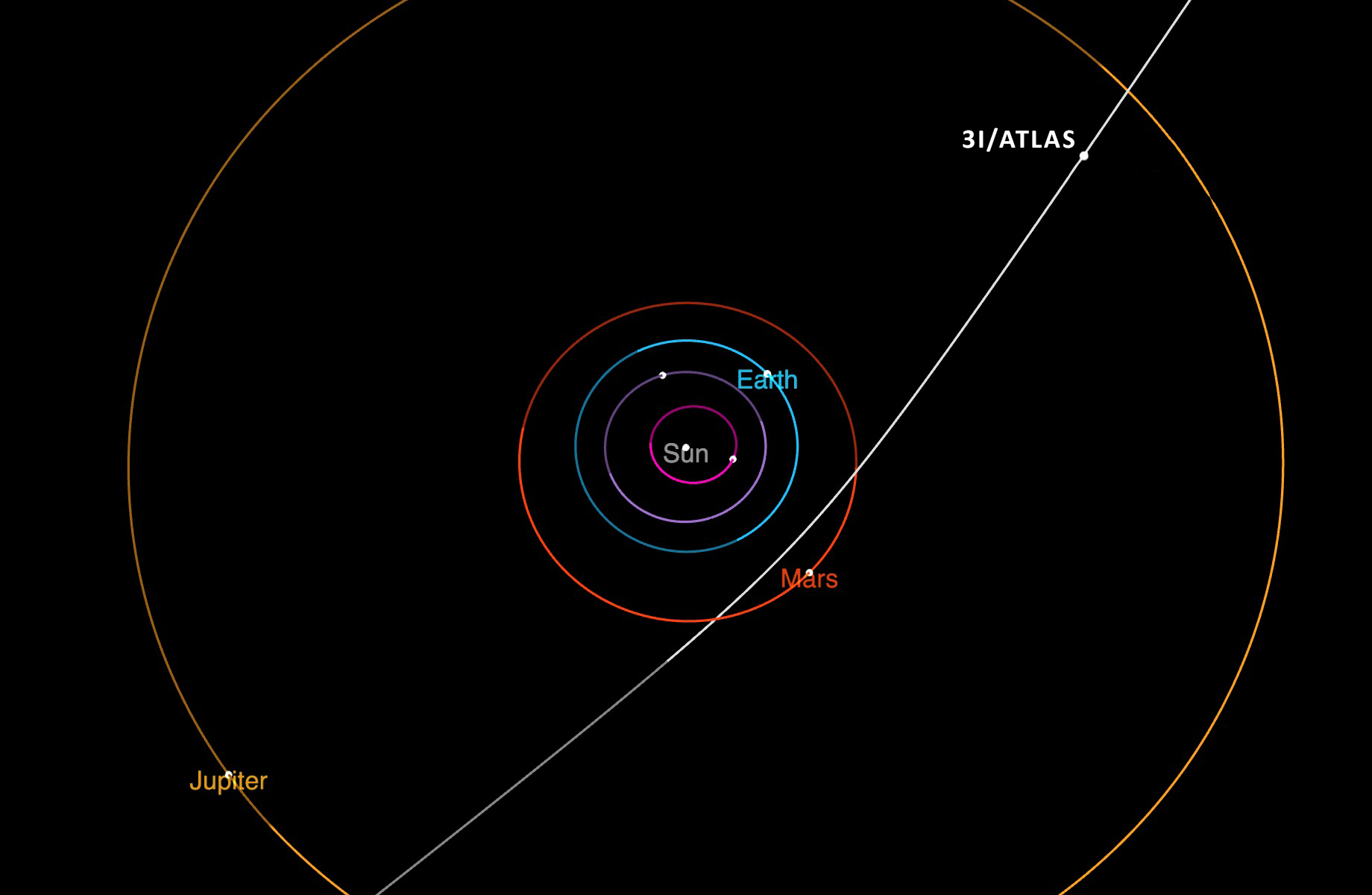
NASA discovered the 3I/ATLAS comet last month and determined that it was from interstellar space, only the third interstellar object witnessed within our solar system. ..."

"... The NASA-funded ATLAS (Asteroid Terrestrial-impact Last Alert System) survey telescope in Rio Hurtado, Chile, first reported observations to the Minor Planet Center of comet 3I/ATLAS on July 1, 2025.

Hubble’s observations allow astronomers to more accurately estimate the size of the comet’s nucleus. The upper limit on its diameter is 3.5 miles (5.6 kilometers), though it could be as small as 1,000 feet (320 meters) across, researchers report. ..."

Saturday, August 9, 2025 - Join The Flyover

Comet 3I/ATLAS (undated article by NASA, very unprofessional)


This diagram shows the trajectory of interstellar comet 3I/ATLAS as it passes through the solar system. It will make its closest approach to the Sun in October.


This Hubble Space Telescope image of comet 3I/ATLAS was taken with Hubble's Wide Field Camera 3.


Thursday, July 17, 2025

For the first time, astronomers witness a new solar system born some 1400 light-years away

Amazing stuff!

"Some 1400 light-years away, a solar system is just getting started. Researchers have observed clouds of gas and mineral solids that appear to be the beginnings of rocky worlds, they reported this week. “It really is the first time we’ve seen this stage of planet formation in the process,” one expert noted."

From the abstract:
"Terrestrial planets and small bodies in our Solar System are theorized to have assembled from interstellar solids mixed with rocky solids that precipitated from a hot, cooling gas. The first high-temperature minerals to recondense from this gaseous reservoir start the clock on planet formation. However, the production mechanism of this initial hot gas and its importance to planet formation in other systems are unclear.
Here we report the astronomical detection of this t = 0 moment, capturing the building blocks of a new planetary system beginning its assembly. The young protostar HOPS-315 is observed at infrared and millimetre wavelengths with the James Webb Space Telescope (JWST) and the Atacama Large Millimeter Array (ALMA), revealing a reservoir of warm silicon monoxide gas and crystalline silicate minerals low in the atmosphere of a disk within 2.2 au of the star, physically isolated from the millimetre SiO jet. Comparison with condensation models with rapid grain growth and disk structure models suggests the formation of refractory solids analogous to those in our Solar System. Our results indicate that the environment in the inner disk region is influenced by sublimation of interstellar solids and subsequent refractory solid recondensation from this gas reservoir on timescales comparable with refractory condensation in our own Solar System."

ScienceAdviser

This star offers the earliest peek at the birth of a planetary system like ours "The surrounding gas and dust might be producing the first bits of planets"

For the first time, astronomers witness the dawn of a new solar system (original news release) "International researchers have, for the first time, pinpointed the moment when planets began to form around a star beyond the Sun. Using the ALMA telescope, in which the European Southern Observatory (ESO) is a partner, and the James Webb Space Telescope, they have observed the creation of the first specks of planet-forming material — hot minerals just beginning to solidify. This finding marks the first time a planetary system has been identified at such an early stage in its formation and opens a window to the past of our own Solar System."

Refractory solid condensation detected in an embedded protoplanetary disk (no public access, but ScienceAdvisor contains link to PDF.


The swirling disk of gas and dust (center black dot) around a baby star might be birthing a solar system, according to a new study. Farther from the star, called HOPS 315, carbon monoxide gas (orange) blows away in a butterfly-shaped wind and silicon monoxide gas (blue) is expelled in a jet of disk material.


Monday, March 31, 2025

Auroras Spotted on Neptune for the First Time with Palki Sharma

Very recommendable! Amazing stuff! This video also talks about the other auroras found in our solar system and compares them.

Wednesday, March 19, 2025

Saturn now has 274 moons – but what makes a moon is unclear

Amazing stuff! The more, the merrier! 😊

"Earlier this week, Saturn gained a whopping 128 new official moons, as the International Astronomical Union recognised discoveries from a team of astronomers  ... The sixth planet from the Sun now has a grand total of 274 moons, the most of any planet in the Solar System. ..."

Saturn now has 274 moons – but what makes a moon is unclear

Saturn has a whopping 274 moons ― scientists want to know why (some public access) "A huge haul of 128 newfound satellites might be a hint of past collisions in the planet’s orbit, or something else."


Saturn and a few of its many moons, as seen by the Hubble Space Telescope.