Amazing stuff! Absolutely stunning!
Showing posts with label extreme forms of life. Show all posts
Showing posts with label extreme forms of life. Show all posts
Monday, August 04, 2025

Saturday, June 05, 2021
More extreme life forms discovered in Antarctica under the ice shelf
Amazing stuff!
"Life finds all kinds of ways to survive extremes. Tube worms thrive in the superheated, super-sulfurous water near deep-sea hydrothermal vents. Tardigrades, also known as water bears or moss piglets, can go up to 30 years without food or water. Lichens that make their homes in the pores of sandstone survive such extremes that scientists have proposed them as possible analogs for Martian life forms.
And now, newly discovered Antarctic sea sponges are joining this rarefied group of extremophiles. Researchers from the British Antarctic Survey got a surprise when they drilled a bore hole through a half-mile thick ice shelf—and hit a boulder. Normally that’s a bad thing. But they dropped a camera down the hole (pictured above) and found something far more exciting. Beneath the ice, in total darkness and in near-freezing water, they saw a variety of animals clinging to the rock, including 16 sponges and 20 other unidentified creatures. ..."
Credits: National Geographic
"... New observations from two boreholes in the Filchner-Ronne Ice Shelf challenge the idea that sessile organisms reduce in prevalence the further under the ice you go. The discovery of an established community consisting of only sessile, probably filter feeding, organisms (sponges and other taxa) on a boulder 260 km from the ice front raises significant questions, especially when the local currents suggest that this community is somewhere between 625 km and 1500 km in the direction of water flow from the nearest region of photosynthesis. This new evidence requires us to rethink our ideas with regard to the diversity of community types found under ice shelves ..."
Monday, March 16, 2020
These microbial communities have learned to live at Earth’s most extreme reaches
Global Warming is a hoax! We humans do not even know how much live their is on our planet!
These extreme microorganisms are amazing stuff!
"These types of microorganism were once considered ‘extreme’ forms of life, but research over the past couple of decades has shown that as much as 70% of all microbes on Earth live in similarly harsh environments. Other studies have shown that life is abundant in places long deemed inhospitable, such as deep sediments under the oceans, the cold deserts of Antarctica and even the stratosphere. ... And others, like those found buried deep in the sludgy ocean floor, live so incredibly slowly that they might survive to be hundreds or thousands of years old, eating and reproducing infrequently ... Early hints that life existed deep within Earth’s crust first surfaced in the 1920s, when oil prospectors noticed that groundwater around their oil fields was laced with hydrogen sulfide and bicarbonate, which are both made by bacteria. In the 1980s, microbiologists began counting the microbes in cores brought back from the Deep Sea Drilling Project — a large-scale effort to explore the sea floor — and were astounded by the numbers. ... It wasn’t until the early 2000s, with the launch of an expedition devoted solely to exploring life in the deep biosphere, that scientists started to understand the biology of these deep-sea-dwelling microbes. ... Most of these edge dwellers can’t be studied in a lab: they simply don’t grow in culture. ..."
These microbial communities have learned to live at Earth’s most extreme reaches: Researchers are uncovering the survival strategies of microorganisms found in rocks buried deep beneath the ocean floor.
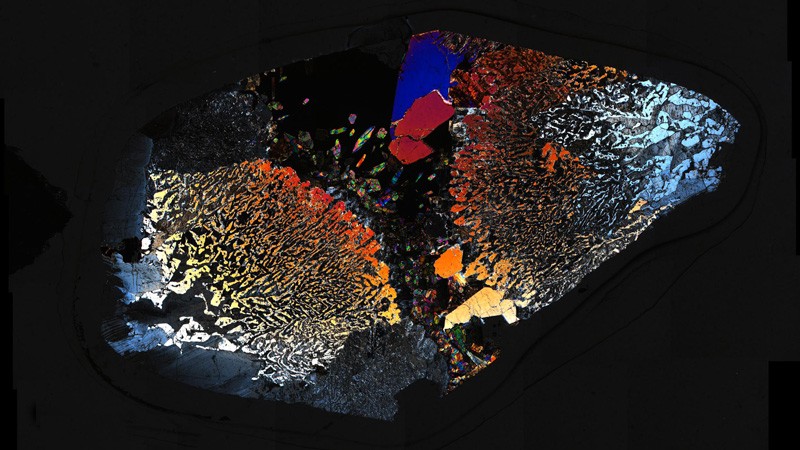
These extreme microorganisms are amazing stuff!
"These types of microorganism were once considered ‘extreme’ forms of life, but research over the past couple of decades has shown that as much as 70% of all microbes on Earth live in similarly harsh environments. Other studies have shown that life is abundant in places long deemed inhospitable, such as deep sediments under the oceans, the cold deserts of Antarctica and even the stratosphere. ... And others, like those found buried deep in the sludgy ocean floor, live so incredibly slowly that they might survive to be hundreds or thousands of years old, eating and reproducing infrequently ... Early hints that life existed deep within Earth’s crust first surfaced in the 1920s, when oil prospectors noticed that groundwater around their oil fields was laced with hydrogen sulfide and bicarbonate, which are both made by bacteria. In the 1980s, microbiologists began counting the microbes in cores brought back from the Deep Sea Drilling Project — a large-scale effort to explore the sea floor — and were astounded by the numbers. ... It wasn’t until the early 2000s, with the launch of an expedition devoted solely to exploring life in the deep biosphere, that scientists started to understand the biology of these deep-sea-dwelling microbes. ... Most of these edge dwellers can’t be studied in a lab: they simply don’t grow in culture. ..."
These microbial communities have learned to live at Earth’s most extreme reaches: Researchers are uncovering the survival strategies of microorganisms found in rocks buried deep beneath the ocean floor.
Subscribe to:
Posts (Atom)