Showing posts with label bacteriophage. Show all posts

Saturday, April 18, 2026

The Ancient Weapons Active in Your Immune System Today

Recommendable!

Caveat: I did not read the entire, long article!

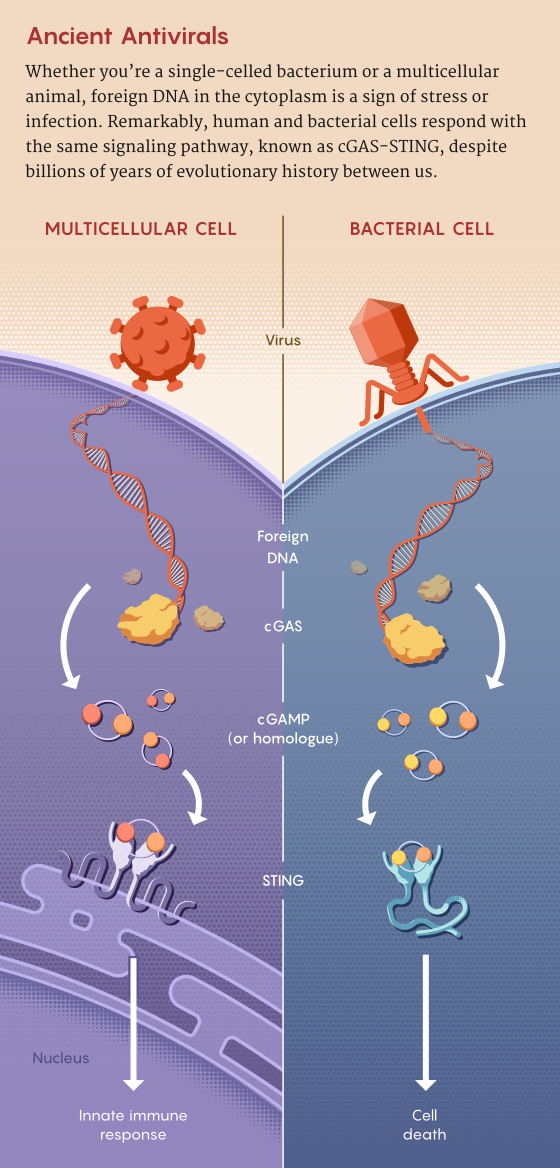
"... In recent years researchers have come upon a surprising finding: Some of the machinery that bacteria use to defend against phages exists, almost unchanged, in our own cells. According to dozens of discoveries made over the past decade, the rules of engagement between cells and viruses were written billions of years ago and still largely define how our innate immune system, the first responder to infection, defends us against viruses and bacteria today. ...

Two recent waves of discovery broke this field open.
First, in 2018, researchers reported a variety of novel bacterial defense systems against viruses(opens a new tab), which now number in the hundreds.
The second wave, starting around 2019, showed that some of these bacterial mechanisms exist in plant and animal cells, including our own — and that they still work the same way they did in those distant ancestors. ...

These and other discoveries that followed reveal an unexplored landscape of human innate immunity — one that could lead to new medical treatments and biotechnological tools ...

A few years later, ... team observed that big constellations of immune genes, including restriction-modification enzymes and CRISPR arrays, tended to cluster together in the same region of bacterial genomes. He and other labs observed that genes of unknown function within these “defense islands” or “genomic islands” could potentially represent novel anti-phage mechanisms. ...

In 2018, his team showed that many of the unknown genes in these defense islands did, in fact, function as a variety of anti-phage defense systems. ..."

The Ancient Weapons Active in Your Immune System Today | Quanta Magazine "Dozens of new discoveries reveal that defenses evolved by bacteria and viruses billions of years ago still define our own innate immune system."


Remarkably, the core machinery of the STING protein (top, protein diagrams) has remained structurally preserved across diverse organisms, although the underlying gene sequence differs widely. Some parts of the protein (bottom, dashed outline) have changed over billions of years.


Wednesday, March 18, 2026

Spaceflight supercharges anti-bacterial viruses thanks to microgravity

Amazing stuff! Good news!

"Viruses that infect bacteria, called phages, evolve different strategies to infect their targets on the International Space Station than they do on the ground, which could help create new treatments for antibiotic-resistant infections.
Researchers found that the phages took longer to infect E.coli in microgravity, and that the viruses developed microgravity-specific mutations, some of which helped them to better cling onto bacterial receptors.
Once they returned to earth, they were able to kill stubborn strains of E.coli responsible for urinary tract infections that tend to be resistant to bacteriophages."

"... Once the viruses adapted to microgravity by subtly shape-shifting, though, they became even more effective bacteria killers. “A simple microgravity experiment exposes these mutations that have much higher efficacy against pathogens,”  ..."

From the abstract:
"Bacteriophage–host interactions play a fundamental role in shaping microbial ecosystems. While extensively studied on Earth, their behavior in microgravity remains largely unexplored.
Here, we report the dynamics between T7 bacteriophage and Escherichia coli in microgravity aboard the International Space Station (ISS). Phage activity was initially delayed in microgravity but ultimately successful.
We identified de novo mutations in both phage and bacteria that enhanced fitness in microgravity. Deep mutational scanning of the phage receptor binding domain revealed striking differences in the number, position, and mutational preferences between terrestrial and microgravity conditions, reflecting underlying differences in bacterial adaptation. Combinatorial libraries informed by microgravity selections yielded T7 variants capable of productively infecting uropathogenic E. coli resistant to wild-type T7 under terrestrial conditions. These findings help lay the foundation for future research on the impact of microgravity on phage–host interactions and microbial communities and the terrestrial benefits of this research."

Nature Briefing: Translational Research

Spaceflight supercharges viruses’ ability to infect bacteria "Viruses develop tricks to attack bacteria without the help of gravity"


Fig 1. Experimental design to evaluate microgravity interactions on the ISS.


Thursday, December 11, 2025

The Trojan Horse Gene of a Marine Virus or how cyanophages harness a survival mechanism of cyanobacteria

Amazing stuff!

Should the cyanophages ever takeover the cyanobacteria then we have a real climate crisis and worse!

"Marine viruses deploy a sophisticated Trojan horse maneuver that enables them to dismantle the energy systems of ocean bacteria and use the breakdown products for self-replication. ...

Tiny cyanobacterial cells that live in the oceans play a crucial role in the global ecosystem, as they carry out photosynthesis to produce the organic carbon that serves as the basis of the oceanic food web. In the process they contribute significantly to oxygen production and carbon dioxide draw down from the atmosphere, influencing the global carbon cycle.

These essential bacteria are frequently attacked by viruses called cyanophages, which specialize in infecting and destroying marine cyanobacteria. During evolution, these viruses capture genes from cyanobacteria they had previously infected and integrated them into their own genome. The researchers focused on a gene called nblA, which is activated in cyanobacteria under stress conditions such as nutrient starvation. In such situations, it dismantles the cyanobacterial photosynthetic energy-harvesting systems to release amino acids vital for survival. Technion researchers have now shown for the first time that this process gives the viruses a significant advantage.

In cyanophages, a unique mechanism evolved whereby infection of the cyanobacterium triggers the same gene in the virus – nblA – to dismantle the energy-harvesting systems, but this time to the bacterium’s detriment. The amino acids released from this breakdown are used by the hostile virus for rapid self-replication. Thus, the virus converts the cyanobacterial host’s energy-harvesting system into resources for expanding its own population. This represents a sophisticated evolutionary move in which the virus harnesses the bacterium’s survival mechanism for its own benefit, exploiting the host’s resources and ultimately destroying it from within. ..."

From the abstract:
"Marine picocyanobacteria are abundant photosynthetic organisms of global importance. They coexist in the ocean with cyanophages—viruses that infect cyanobacteria. Cyanophages carry many auxiliary metabolic genes acquired from their hosts that are thought to redirect host metabolism for the phage’s benefit.
One such gene is nblA, which is present in multiple cyanophage families. Under nutrient deprivation cyanobacterial NblA is responsible for inducing proteolytic degradation of the phycobilisome, the large cyanobacterial photosynthetic light-harvesting complex. This increases the pool of amino acids available for essential tasks, serving as a survival mechanism.
Ectopic expression of different cyanophage nblA genes results in host pigment protein degradation. However, the benefit of the virus-encoded NblA for cyanophages and the broader impact on the host are unclear.
Here, using a recently developed genetic manipulation system for marine cyanophages, we reveal that viral NblA significantly accelerates the cyanophage infection cycle, directs degradation of the host phycobilisome and other proteins, and reduces host photosynthetic light-harvesting efficiency.
Metagenomic analysis revealed that cyanophages carrying nblA are widespread in the oceans and comprise 35% and 65% of oceanic T7-like cyanophages in surface and deep photic zones, respectively.
Our results show a large benefit of NblA to the cyanophage, while it exerts a negative effect on the host photosynthetic apparatus and host photosynthesis. These findings suggest that cyanophage NblA has an adverse global impact on light harvesting by oceanic picocyanobacteria."

The Trojan Horse Gene of the Marine Virus - הטכניון-מכון טכנולוגי לישראל "Technion Faculty of Biology researchers: Marine viruses use “hijacked” genes to take over bacteria and exploit their energy systems"


Fig. 1: The influence of nblA on S-TIP37 cyanophage infection dynamics.


Fig. 5: The global distribution of T7-like cyanophages with and without nblA genes.

Tuesday, December 17, 2024

New insights into the vast diversity of nature’s most abundant viruses, the bacteriophages

Amazing stuff! Bacteriophage coexistence and heterogeneity.

"... A new study reveals a different story, suggesting that multiple phage species can coexist even when competing for a single, genetically identical population of bacterial cells.

The reason, researchers say, is that each species of phage has its own “niche,” with each virus specializing on a subpopulation of bacterial cells that have different growth phenotypes.  ...

“Our study similarly suggests that we’ve underestimated niche availability for phages, and how differing growth stages of host cells alone can help explain the abundance and diversity of phage species seen in nature.” ..."

From the editor's summary and abstract:
"Editor’s summary
Bacteriophages, the viruses that parasitize bacteria, are exceedingly diverse. The mechanisms that drive such phage diversity are unknown but have implications for all types of microbial communities, from those living in hot springs to those residing in our gut. ... investigated phage community dynamics experimentally by passaging wild-caught phage communities on a stable clone of Escherichia coli. The authors found that multiple phage species can stably coexist because of phage preference for different variants in growth phenotype that spontaneously emerge in populations of host bacteria. ...
Abstract
Bacteriophages are the most abundant and phylogenetically diverse biological entities on Earth, yet the ecological mechanisms that sustain this extraordinary diversity remain unclear. In this study, we discovered that phage diversity consistently outstripped the diversity of their bacterial hosts under simple experimental conditions. We assembled and passaged dozens of diverse phage communities on a single, nonevolving strain of Escherichia coli until the phage communities reached equilibrium. In all cases, we found that two or more phage species coexisted stably, despite competition for a single, clonal host population. Phage coexistence was supported through host phenotypic heterogeneity, whereby bacterial cells adopting different growth phenotypes served as niches for different phage species. Our experiments reveal that a rich community ecology of bacteriophages can emerge on a single bacterial host."

New insights into the vast diversity of nature’s most abundant viruses | Yale News "A new Yale-led study offers insights into the “social lives” of viruses — findings that might advance  the fight against antibiotic resistance."

Diverse phage communities are maintained stably on a clonal bacterial host (no public access)


A petri dish with a lawn culture of E.coli and different phage species in each spot. The whiter spots on the plate shows where the phage has killed the bacteria causing the petri dish to become transparent and allowing a white light to shine through.


Sunday, September 04, 2022

Targeted and personalized bacteriophage treatment of intestinal inflammation

Amazing stuff! This seems to be very promising approach!

"... researchers have demonstrated the feasibility of a potential therapy for killing inflammation-causing gut bacteria in a targeted manner: by using viruses that infect them. ...
“There are thousands of different phages, and their big advantage is that each of them specializes in attacking a different type of bacteria,” ...
They compared the composition of gut microbes in healthy volunteers to that in people with two major forms of inflammatory bowel disease, ulcerative colitis and Crohn’s disease. A detailed computational analysis helped them zero in on several bacterial strains not found in the healthy individuals that were substantially enriched in people with the disease, particularly in those whose condition was worsening. The study participants were recruited from four countries in different parts of the world – France, Germany, Israel and the United States – to make sure that the results would hold true regardless of locale. After identifying several strains of the Klebsiella pneumoniae bacterium as likely contributors to intestinal inflammation, the researchers confirmed this finding by implanting these bacteria into mice used for the study of inflammatory bowel disease. Indeed, the human Klebsiella pneumoniae strains associated with this disease worsened inflammation and intestinal damage in recipient mice.
They compared the composition of gut microbes in healthy volunteers to that in people with two major forms
Next, the researchers screened thousands of phages, selecting about 40 that were most active against the human bacterial strains they had identified as being related to intestinal inflammation. ... scientists used recent insights into the molecular mechanisms of this arms race in order to give their phages the upper hand against the bacteria. That is, they looked for the ideal combination of phages that would prevent the bacteria from fighting back. A cocktail of 5 phages was selected based on genetic profiles, structural features revealed through electron microscopy and extensive combinatorial screening for activity against a variety of Klebsiella pneumoniae strains, including ones resistant to antibiotics. Taken together, these 5 phages prevented the emergence of bacterial mutants that could spread resistance. ..."

From the abstract:
"Human gut commensals are increasingly suggested to impact non-communicable diseases, such as inflammatory bowel diseases (IBD), yet their targeted suppression remains a daunting unmet challenge. In four geographically distinct IBD cohorts (n = 537), we identify a clade of Klebsiella pneumoniae (Kp) strains, featuring a unique antibiotics resistance and mobilome signature, to be strongly associated with disease exacerbation and severity. Transfer of clinical IBD-associated Kp strains into colitis-prone, germ-free, and colonized mice enhances intestinal inflammation. Stepwise generation of a lytic five-phage combination, targeting sensitive and resistant IBD-associated Kp clade members through distinct mechanisms, enables effective Kp suppression in colitis-prone mice, driving an attenuated inflammation and disease severity. Proof-of-concept assessment of Kp-targeting phages in an artificial human gut and in healthy volunteers demonstrates gastric acid-dependent phage resilience, safety, and viability in the lower gut. Collectively, we demonstrate the feasibility of orally administered combination phage therapy in avoiding resistance, while effectively inhibiting non-communicable disease-contributing pathobionts."

The Viruses That Fight Disease - Life Sciences | Weizmann Wonder Wander - News, Features and Discoveries


Members of the 5-phage cocktail for treating inflammatory bowel disease, viewed with an electron microscope


Tuesday, July 26, 2022

There’s now a better way to create clinical-grade bacteriophages that kill antibiotic-resistant bacteria

Good news! This could be a breakthrough!

"... Now, a team of researchers based in Germany offers a potentially faster and better way to create these bacteriophages, or simply phages. Their method, which they dub a “phactory,” produces phages without having to culture the bacteria they are directed against, and allows tweaking of the viruses to tailor them to specific antibiotic-resistant infections. ...
In the new report, they show these E. coli extracts can produce viruses directed against other harmful bacteria, such as those that cause pneumonia or plague, if given the right phage DNA. ...
Another advantage of the team’s approach is the ability to engineer the assembled phages and study the results in detail. They don’t do this by changing the phage genome itself, but by adding to the soup DNA loops called plasmids that are independently translated to create modified phage proteins. These proteins are incorporated into the new viruses—but not into their progeny. ..."

From the abstract:
"Bacteriophages are potent therapeutics against biohazardous bacteria, which rapidly develop multidrug resistance. However, routine administration of phage therapy is hampered by a lack of rapid production, safe bioengineering, and detailed characterization of phages. Thus, we demonstrate a comprehensive cell-free platform for personalized production, transient engineering, and proteomic characterization of a broad spectrum of phages. Using mass spectrometry, we validated hypothetical and non-structural proteins and could also monitor the protein expression during phage assembly. Notably, a few microliters of a one-pot reaction produced effective doses of phages against enteroaggregative Escherichia coli (EAEC), Yersinia pestis, and Klebsiella pneumoniae. By co-expressing suitable host factors, we could extend the range of cell-free production to phages targeting gram-positive bacteria. We further introduce a non-genomic phage engineering method, which adds functionalities for only one replication cycle. In summary, we expect this cell-free methodology to foster reverse and forward phage engineering and customized production of clinical-grade bacteriophages."

There’s now a cleaner, better way to create viruses that kill antibiotic-resistant bacteria | Science | AAAS New method to make phages could help jump-start clinical trials


Wednesday, April 06, 2022

Bacteria eating Viruses that could save millions of lives

Very recommendable! Good news! Perhaps, bacteriophages will be an effective antidote to antimicrobial resistance!

The article mentions that a pioneering scientist Giorgi Eliava from Georgia was killed by Beria on the order of Stalin. According to the article Beria was from Georgia, but fails to mention that Stalin was from Georgia too:
"It didn't help that the man who did most to develop [bacteriophage], Georgian scientist Giorgi Eliava, was executed in 1937 on the orders of another Georgian, Lavrentiy Beria, Stalin's most notorious henchman and the head of his secret police."

"... This small nation in the Caucasus [Georgia] has pioneered research on a groundbreaking way to tackle the looming nightmare of bacteria becoming resistant to the antibiotics on which the world depends.
Long overlooked in the West, bacteriophages or bacteria-eating viruses are now being used on some of the most difficult medical cases ...
While phages-based medicines cannot completely replace antibiotics, researchers say they have major pluses in being cheap, not having side-effects nor damaging organs or gut flora.
"We produce six standard phages that are of wide spectrum and can heal multiple infectious diseases," ...
In some 10 to 15 percent of patients, however, standard phages don't work and "we have to find ones capable of killing the particular bacterial strain," ...
Tailored phages to target rare infections can be selected from the institute's massive collection -- the world's richest -- or be found in sewage or polluted water or soil  ...
hundreds of patients from around the globe who arrive in Georgia every year for last-resort treatment ...
In 2019, the United States Food and Drug Administration (FDA) authorised a clinical study on the use of bacteriophages to cure secondary infections in Covid patients.
Beyond medicine, phages are already being used to stop food going off, and they "can be used in agriculture to protect crops and animals from harmful bacteria," ...
Bacteriophages also have potential to counter biological weapons and combat bioterrorism, with Canadian researchers publishing a 2017 study on using them to counter an anthrax attack on crowded public places."

Viruses that could save millions of lives It may seem strange after a pandemic that has killed millions and turned the world upside down, but viruses could save just as many lives.

Friday, February 05, 2021

Bacteriophage against juice spoilage

Good news!

"... The students harnessed a bacteriophage – a virus that infects bacteria [Alicyclobacillus acidoterrestris] – to prevent spoilage of fruit juices, a phenomenon causing damage estimated at millions of dollars each year. ... Bacteriophages are abundant in nature, and following strenuous research, the group succeeded in isolating and identifying a bacteriophage that destroys the harmful bacteria. It takes just a small dose to efficiently eliminate the bacteria, and because it does so selectively, it is safe for use and it has no harmful effects on human health. ..."

The Juice Keepers | Technion - Israel Institute of Technology Technion students use viruses to prevent spoilage of fruit juices