Showing posts with label astrobiology. Show all posts

Friday, January 02, 2026

Did natural radioactivity help with habitability on Earth during the time of the primordial soup?

Amazing stuff!

"Habitability gets funky on worlds outside our own. While plants use sunlight for energy and animals, in turn, use plants, life in the subsurface oceans of icy moons has to find another way. New research suggests that primordial life could take advantage of radioactively decaying elements in rocks.

Typically, planetary scientists have thought that hydrothermal vents on Jupiter’s fourth-largest moon, Europa, spurred the rocky reactions needed to generate free energy for life in the form of movable electrons. ...

A team has theorized that trace radioactive elements in rocks, such as uranium-238 and phosphorus-40, might dissolve into the water over time, decaying and releasing heat. That heat could split apart water molecules, generating hydrogen and oxygen ions with available electrons—and thus energy for life. ..."

From the abstract:
"Europa and other icy ocean worlds have long been considered prime targets for astrobiology. Their potential for habitability has generally been thought to depend on chemical disequilibria produced by ongoing water-rock interaction. However, recent studies have raised questions about whether such interactions are currently active on Europa (Byrne et al. 2024, Austin et al. 2025). In addition to the ocean, the presence of liquid water bodies within the ice shell—so-called perched lakes--has been suggested (Schmidt et al. 2011). The latter represents another potential environment for future astrobiological exploration. Both of these environments where liquid water is present at Europa, but water-rock interaction may not currently be active, motivate consideration of alternative mechanisms for sustaining chemical energy sources.
We examine a novel mechanism in which the decay of radioactive isotopes (e.g., ⁴⁰K, 235U, ²³⁸U) drives liquid water radiolysis, generating local chemical disequilibria that could support microbial metabolism.
Our modeling shows that even low concentrations of these isotopes can produce both significant oxidants and reductants in aqueous environments without active water-rock interaction.
Depending on the salinity, these redox gradients could support approximately 1,000 microbial cells per liter under conditions similar to those inferred for Enceladus’s ocean, and up to 20,000 cells per liter at salinities comparable to terrestrial seawater. These values fall within the range of previous estimates for Europa’s ocean (~ 100-100,000 cells per liter, Hand+2017) and the equivalent biomass would be approximately 1023 - 1026 cells, comparable to the biomass of roughly 1,000-1,000,000 blue whales.
The decay of ⁴⁰K also leads to the production of ⁴⁰Ar, which could be detected by Europa Clipper’s MASPEX.
This mechanism offers a new perspective on the potential habitability of icy ocean worlds that may lack active water-rock interaction, i.e. Titan, Ganymede, and the Uranian moons."

ScienceAdviser

Life in Europa’s ocean could feed on rocks’ radioactive decay "After series of bleak findings, theory sparks hope for alternative energy source within Jupiter’s intriguing moon"

Wednesday, July 09, 2025

Desert lichen's remarkable UV resistance could inspire new sunscreens and suggests life is possible on high-radiation exoplanets

Amazing stuff! Extraterrestrial life?

"High-intensity ultraviolet radiation has been found to pose little trouble for a soil-dwelling lichen in the Mojave Desert. After three months of exposure to powerful UVC, the lichen still retained its photosynthetic function and cellular viability thanks to chemical shielding by its secondary metabolites. Compounds derived from these lichens could find UV-blocking applications in cosmetics, materials and agriculture and, according to researchers, provide evidence that exoplanets bombarded by intense UV light are not necessarily hostile to photosynthetic organisms. ...

To investigate, his team continually irradiated Clavascidium lacinulatum, a black desert lichen, for 90 days with 254nm UVC light at 55W/m². Despite receiving a cumulative dose of over 400,000kJ/m², the lichen showed only modest declines in photosynthetic quantum yield and retained approximately 65% viable algal photobiont cells. In comparison, when Deinococcus radiodurans, the most radiation-resistant bacteria ever found, was exposed to the same conditions, it died in under a minute. ...

The chemical basis of the lichen’s resistance lies in its UV-opaque cortex, a structural layer enriched with phenolic lichen acids. These complex aromatic metabolites serve as natural photostabilisers. The researchers identified one such compound with a tentative molecular formula of C₁₀H₁₄N₂O₅. ..."

"... the new research demonstrated that lichen found in the Mojave Desert survived for 3 months under levels of solar radiation previously considered lethal. The common lichen, Clavascidium lacinulatum, was injured, but able to recover and replicate. The results show that photosynthetic life may be possible on planets exposed to intense solar radiation. ..."

From the abstract:
"Many of the recently discovered Earth-like exoplanets are hosted by M and F stars, stars that emit intense UVC, especially during a flare. We studied whether such planets are nevertheless habitable by irradiating a desert lichen, Clavascidium lacinulatum, with 254-nm 55 W/m2 UVC nonstop for 3 months in the laboratory.
Only 50% of its algal photobiont cells were inactivated. To put this in perspective, we used the same setup to challenge the photobiont cells but grown in pure culture, and Deinococcus radiodurans, the most radiation-resistant bacterium on Earth. Entire monolayers of hundreds of cells were inactivated in just 60 s.
Further studies indicated that the cortex of the lichen was rendered UVC-opaque by deposits of phenolic secondary metabolites in its interstices. The lichen was injured only because, while most photochemical reactive oxygen species were quenched, photochemical ozone was not. We conclude that UVC-intense exoplanets are not necessarily uninhabitable to photosynthetic organisms."

Desert lichen's remarkable UV resistance could inspire new sunscreens and suggests life is possible on high-radiation exoplanets | Chemistry World

Desert Lichen Offers New Evidence for the Possibility of Life on Other Planets (original news release) "Lichen from the Mojave Desert can survive, and replicate, under levels of extreme solar radiation found on Earth-like planets in other solar systems."

UVC-Intense Exoplanets May Not Be Uninhabitable: Evidence from a Desert Lichen (open access)


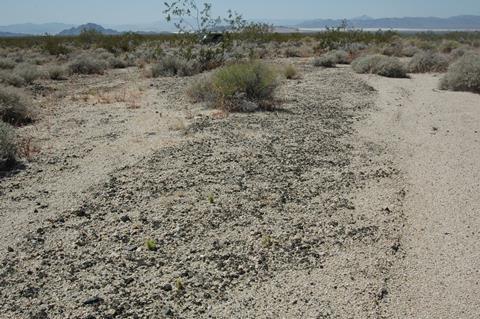
The Mojave Desert in the south-western US, where the soil-dwelling lichen was found
Mojave desert

Thursday, January 21, 2021

Astrobiology: Searching for life as we don’t know it

Astrobiology is still in its infancy! We are not alone!

"Living things leave behind tell-tale signs of their existence: fossilized bones, DNA, the chemical byproducts of metabolism. Living things on Earth, that is. There currently exists no predictive theory to completely guide astrobiologists searching for life beyond our planet, where the chemical signatures of life, and the geo- and atmospheric chemistries under which it evolved, might look quite different from Earth. In early November [2020], NASA’s Astrobiology Program launched the new Interdisciplinary Consortia for Astrobiology Research (ICAR), supporting eight teams focusing on specific outstanding questions in astrobiology. ..."

Searching for life as we don’t know it | Santa Fe Institute

Monday, November 09, 2020

More than three billion Milky Way’s sun-like stars could be home to Earth-like planets

We are not alone!

"Nearly 4,300 exoplanets have been discovered by astronomers, and it’s quite obvious now our galaxy is filled with them. ...
When applied to current estimates of 4.1 billion sun-like stars in the [Milky Way] galaxy, their model suggests there are at minimum 300 million with at least one habitable planet. ... Even less conservative predictions suggest it could be over 3.6 billion [sun-like stars]. ..."

Half the Milky Way’s sun-like stars could be home to Earth-like planets | MIT Technology Review A new study of exoplanet data suggests there are at least 300 million potentially habitable planets orbiting stars like the sun, and likely way more.

Here is the respective research article:

From reading the abstract of this paper you would never guess what the MIT Technology Review wrote about it. The paper is 43 pages long, not even the results chapter reflects what MIT TR wrote about it. However, I only briefly perused the paper.

Sunday, June 21, 2020

Astronomers detect regular rhythm of radio waves, with origins unknown

An unusual regular pattern of radio signals from only 500 million light years away! We are not alone in the universe! "There are about 1,000,000,000,000,000,000,000 stars in space, or about 10 raised to the 21 (10^21 power, roughly." (Source) There is a more than one in a million chance that other life exists out there somewhere ...

Astronomers detect regular rhythm of radio waves, with origins unknown | MIT News

Wednesday, May 06, 2020

Yeast thriving in hydrogen hints at possibility of life on exoplanets

Amazing stuff! We are not alone!

Yeast thriving in hydrogen hints at possibility of life on exoplanets | Research | Chemistry World: First demonstration of non-adapted microorganisms growing in 100% H2 shows that life could exist even under seemingly hostile conditions

Planets with hydrogen-rich atmospheres could harbor life | Science News Lab experiments show that yeast and E. coli survive and reproduce in hydrogen-rich conditions


Friday, April 10, 2020

New search methods are ramping up the hunt for extraterrestrial intelligence

Recommendable! We are not alone in the universe!

How to separate human artifacts from potentially extraterrestrial life signals is a huge challenge! Put autonomous, remotely controlled instruments on the moon!

New search methods are ramping up the hunt for alien intelligence | Science News: Six decades of radio silence hasn’t stopped scientists searching for intelligent life beyond Earth. In fact, new technologies are boosting efforts.


Friday, January 31, 2020

NESSI Emerges as New Tool for Exoplanet Atmospheres

The search for and research on exoplanets goes on!
We are not alone!

News | NESSI Emerges as New Tool for Exoplanet Atmospheres: The infrared instrument at Palomar Observatory's Hale Telescope holds the promise of deepening our understanding of planets beyond our Sun.

Wednesday, January 09, 2019

Exoplanets: We Are Not Alone?

Posted: 6/17/2012 Updated: 1/9/2019, 7/2/2016, 7/24/2015, 4/12/2015, 4/9/2015, 2/28/2015, 10/17/2014

Update of 1/9/2019

Just read this article about latest research on so called Fast Radio Bursts that were first discovered in 2007: Bevy of mysterious fast radio bursts spotted by Canadian telescope Bounty includes second known example of a repeating burst. If a wild speculation is allowed for a very brief moment, are these perhaps signals from aliens? Let’s stay tuned to what scientists may discover in the future.

Here are two older articles, I had not included so far:

Something went wrong, so I had to republish this almost lost blog post!

Update Of 7/2/2016

To cite:
“NASA’s Cassini spacecraft, currently orbiting Saturn, has made intriguing observations of icy jets spewing from a suspected underground liquid ocean … Enceladus has over 90 geysers that spew plumes of salty water vapor, organic compounds and ice particles from the underground ocean into the air. ”

Update 7/24/2015

This week we received news like this Earth's Closest Cousin Discovered Among New Pile of Planets Called Kepler 452b, the world is a bit bigger than Earth and could have a surface suitable for water and life. We read here: “Called Kepler 452b, the planet orbits a 6 billion-year-old sunlike star about 1,400 light-years away. Kepler 452b is about 60 percent larger than Earth, and perhaps five times as massive. With a year lasting 385 days, it sits in the region around its star where temperatures are just right for maintaining liquid water on a world’s surface. … A new haul of 500 planet candidates announced Thursday brings Kepler’s total catalog of possible planets to 4,696. Twelve of those are smaller than two Earth-widths, and nine orbit stars that are similar in size and temperature to the sun. More than 1,000 Kepler planets have been confirmed—and that’s just in one tiny piece of sky.”

Update 4/12/15

Just watched this very recommendable PBS Nova documentary “Alien Planets Revealed”.

Update (3)


I quote from the above article: “This discovery, made with the Atacama Large Millimeter/submillimeter Array (ALMA), reveals that the protoplanetary disk surrounding the million-year-old star MWC 480 is brimming with methyl cyanide (CH3CN), a complex carbon-based molecule. Both this molecule and its simpler cousin hydrogen cyanide (HCN) were found in the cold outer reaches of the star's newly formed disk, in a region that astronomers believe is analogous to our own Kuiper Belt - the realm of icy planetesimals and comets beyond Neptune.” (emphasis added)

Update (2)

Just read the abstract of “Untangling dips and pulses in starlight” (Unfortunately, you have to sign in to read even the abstract. What a stupidity!)

So I quote here freely from the above abstract:
“The menagerie of known exoplanets continues to grow with Kepler data. The NASA spacecraft has monitored stars for brightness dips due to planetary transits, enabling Campante et al. to find five rocky planets orbiting the K star Kepler-444—all between Mercury and Venus in size. Kepler's precise photometry also allowed the team to measure the star's asteroseismic pulsations. A comparison of those values with stellar evolution models revealed an age of 11.2 ± 1.0 billion years, or 80% as old as the universe itself. A planetary system this old (over twice the age of Earth) demonstrates the wide time frame in which Earth-sized planets have existed and helps astronomers discern the earliest times of planet formation.”

An Update

Recently, I came across this article in the Neue Zuericher Zeitung titled “Potenzial von Exoplaneten untersucht” (German language) published on 9/19/2013.

This article focuses on so called habitable zones and its lifetime. Habitable zones are defined as the distance from the star that allows for human like life or where water is liquid. I am afraid this is an artificially narrow focus, because life on other planets may be quite different from our own. To assume that life on other planets in the universe is similar to our own is heroic.

Encouraging Recent Developments
Exoplanet stands for extrasolar planet. Almost 800 of them have been identified by now (June 2012). In our Milky Way Galaxy alone, there are an estimated 160 billion exoplanets. The first confirmed detection of several terrestrial-mass planets occurred in 1992. Given these mind boggling numbers, how unique is planet earth?
May I Speculate About Extraterrestrial Life
I usually do not speculate, but I will make an exception here. Extra terrestrial life was something very remote to me to think about, but the confirmed discovery of exoplanets changes my cognition.
Some kind of extraterrestrial life will likely be discovered in space, it is only a matter of time. Probably, these forms of life are maybe quite different from life on earth.
Most likely there is even intelligent life out there. If so, how will we be able to communicate with these beings? I bet we will find a way. Perhaps, they are already trying to communicate with us, but we are yet too primitive to understand. How advanced are they? Are they peaceful? What do they know about us? Have they already visited us?
Extraterrestrial Life And Faith
Do these intelligent beings believe in something like religion or do they have some kind of faith? If yes, do they believe in something like god? If yes, what are the similarities or differences? Would Christians accept these beings as children of god or being made in the image of god? Was Jesus the only son of god? Will religious differences rather divide or unite us?

In the meantime (10/17/2014), astronomer David Weintraub has written a book about this subject titled “Religions and Extraterrestrial Life: How Will We Deal with It?” (See a review here). According to the review, the astronomer argues among other things that Asian religions like Buddhism can easier accommodate the existence of extraterrestrial life and that e.g. Judaism is kind of neutral.

Sunday, June 17, 2012

Exoplanets: We Are Not Alone?

Posted: 6/17/2012 Updated: 7/2/2016, 7/24/2015, 4/12/2015, 4/9/2015, 2/28/2015, 10/17/2014

Update Of 7/2/2016

To cite:
“NASA’s Cassini spacecraft, currently orbiting Saturn, has made intriguing observations of icy jets spewing from a suspected underground liquid ocean … Enceladus has over 90 geysers that spew plumes of salty water vapor, organic compounds and ice particles from the underground ocean into the air. ”

Update 7/24/2015

This week we received news like this Earth's Closest Cousin Discovered Among New Pile of Planets Called Kepler 452b, the world is a bit bigger than Earth and could have a surface suitable for water and life. We read here: “Called Kepler 452b, the planet orbits a 6 billion-year-old sunlike star about 1,400 light-years away. Kepler 452b is about 60 percent larger than Earth, and perhaps five times as massive. With a year lasting 385 days, it sits in the region around its star where temperatures are just right for maintaining liquid water on a world’s surface. … A new haul of 500 planet candidates announced Thursday brings Kepler’s total catalog of possible planets to 4,696. Twelve of those are smaller than two Earth-widths, and nine orbit stars that are similar in size and temperature to the sun. More than 1,000 Kepler planets have been confirmed—and that’s just in one tiny piece of sky.”

Update 4/12/15

Just watched this very recommendable PBS Nova documentary “Alien Planets Revealed”.

Update (3)


I quote from the above article: “This discovery, made with the Atacama Large Millimeter/submillimeter Array (ALMA), reveals that the protoplanetary disk surrounding the million-year-old star MWC 480 is brimming with methyl cyanide (CH3CN), a complex carbon-based molecule. Both this molecule and its simpler cousin hydrogen cyanide (HCN) were found in the cold outer reaches of the star's newly formed disk, in a region that astronomers believe is analogous to our own Kuiper Belt - the realm of icy planetesimals and comets beyond Neptune.” (emphasis added)

Update (2)

Just read the abstract of “Untangling dips and pulses in starlight” (Unfortunately, you have to sign in to read even the abstract. What a stupidity!)

So I quote here freely from the above abstract:
“The menagerie of known exoplanets continues to grow with Kepler data. The NASA spacecraft has monitored stars for brightness dips due to planetary transits, enabling Campante et al. to find five rocky planets orbiting the K star Kepler-444—all between Mercury and Venus in size. Kepler's precise photometry also allowed the team to measure the star's asteroseismic pulsations. A comparison of those values with stellar evolution models revealed an age of 11.2 ± 1.0 billion years, or 80% as old as the universe itself. A planetary system this old (over twice the age of Earth) demonstrates the wide time frame in which Earth-sized planets have existed and helps astronomers discern the earliest times of planet formation.”

An Update

Recently, I came across this article in the Neue Zuericher Zeitung titled “Potenzial von Exoplaneten untersucht” (German language) published on 9/19/2013.

This article focuses on so called habitable zones and its lifetime. Habitable zones are defined as the distance from the star that allows for human like life or where water is liquid. I am afraid this is an artificially narrow focus, because life on other planets may be quite different from our own. To assume that life on other planets in the universe is similar to our own is heroic.

Encouraging Recent Developments
Exoplanet stands for extrasolar planet. Almost 800 of them have been identified by now (June 2012). In our Milky Way Galaxy alone, there are an estimated 160 billion exoplanets. The first confirmed detection of several terrestrial-mass planets occurred in 1992. Given these mind boggling numbers, how unique is planet earth?
May I Speculate About Extraterrestrial Life
I usually do not speculate, but I will make an exception here. Extra terrestrial life was something very remote to me to think about, but the confirmed discovery of exoplanets changes my cognition.
Some kind of extraterrestrial life will likely be discovered in space, it is only a matter of time. Probably, these forms of life are maybe quite different from life on earth.
Most likely there is even intelligent life out there. If so, how will we be able to communicate with these beings? I bet we will find a way. Perhaps, they are already trying to communicate with us, but we are yet too primitive to understand. How advanced are they? Are they peaceful? What do they know about us? Have they already visited us?
Extraterrestrial Life And Faith
Do these intelligent beings believe in something like religion or do they have some kind of faith? If yes, do they believe in something like god? If yes, what are the similarities or differences? Would Christians accept these beings as children of god or being made in the image of god? Was Jesus the only son of god? Will religious differences rather divide or unite us?

In the meantime (10/17/2014), astronomer David Weintraub has written a book about this subject titled “Religions and Extraterrestrial Life: How Will We Deal with It?” (See a review here). According to the review, the astronomer argues among other things that Asian religions like Buddhism can easier accommodate the existence of extraterrestial life and that e.g. Judaism is kind of neutral.