Showing posts with label pesticides. Show all posts

Wednesday, September 02, 2026

Nearly half of the world’s farmers suffer unintentional, acute pesticide poisoning every year. Really!

Serious stuff, if confirmed! I have some serious doubts about this claim! My hunch is we are dealing here with junk journalism and junk science.

The study was reportedly commissioned by the NGO Pesticide Action Network?

Notice these poisoning numbers are based on estimates (extrapolation?) not hard data! From about 370,000 actually reported cases, they come up with over 400 million cases estimate!  This is a serious jump!

Notice they refer to farmers, but the hard data appears to be all people not just farmers! The abstract of the research article does not mention how many farmers were actually poisoned!

Notice also the use of "non fetal" in this context! How serious were these poisonings?

Notice the research article is primarily a meta study of research articles.

"... with southern Asia, southeast Asia, and East Africa most affected, finds a study published yesterday in Frontiers in Public Health, which also estimated 11,000 annual deaths from pesticide poisoning; the authors say immediate action is required to reduce pesticide use, which doubled from 1990 to 2023. ..."

"... The overall highest national incidence of poisoning was in Burkina Faso in west Africa, where nearly 84% of farmers and farm workers were reported to have experienced poisoning. ..."

From the abstract:
"Background: 
Human poisoning by pesticides has long been seen as a severe public health problem. 
As early as 1990, a task force of the World Health Organization (WHO) estimated that about one million unintentional pesticide poisonings occur annually, leading to approximately 20,000 deaths.
In 2020, a systematic review found that about 385 million cases of unintentional, acute pesticide poisoning (UAPP) were occurring every year.
Our aim is to update the annual global estimate of UAPP, based on a systematic review of available data.

Methods:
We updated the existing systematic review of the scientific literature to include the period from 2006 to 2023 supplemented by mortality data from WHO.
We extracted data from publications and the WHO Mortality Database, then performed country-wise synopses, and arrived at annual numbers of national UAPP. World-wide UAPP was estimated based on national figures and population data for worldwide regions. We conducted a sensitivity analysis to illustrate the effects of different study designs on the global estimate.

Results:
In total 139 countries were covered, including 62 countries covered by 214 articles from 2006 to 2023, and an additional 77 countries covered by data from the WHO Mortality Database. 
Approximately 369,632 annual cases of UAPP were reported by the extracted publications, resulting from 9,182 fatalities and 360,450 non-fatal cases.
On this basis, we estimate that about 402 to 433 million cases of UAPP occur annually worldwide, including around 11,000 fatalities.
Based on a worldwide farming population of approximately 934 million, this means that an estimated 46% of farmers are being poisoned by pesticides every year.
The greatest estimated number of non-fatal UAPP cases is in southern Asia, followed by south-eastern Asia and east Africa.

Conclusion:
Along with other estimates, robust evidence is presented that acute pesticide poisoning is an ongoing major global public health challenge.
There is an urgent need to recognize the high burden of non-fatal UAPP, particularly on farmers and farmworkers. The implementation of the recommendation by the Council of the Food and Agriculture Organization of the United Nations (FAO), to phase out highly hazardous pesticides (HHPs) could significantly reduce the burden of UAPP."

Global Health NOW: A Radically Reshaped Global Health Funding Paradigm; and West Nile Surges Across Southern Europe

Almost half of world’s farmers poisoned by pesticides every year, experts find "Study reveals that pesticide poisoning kills 11,000 people each year, with India accounting for nearly 60% of fatalities"


Notice that French language articles were not included and medical/clinical outcomes of these poisonings.


Fig. 2 Number (x 1,000) of non-fatal untentional pesticide poisonings in UN Regions (total = 433 million).


Tuesday, May 12, 2026

Garlic compound kills mosquitoes by halting mating and blocking egg-laying

Good news! I love garlic! Scientists were looking for an aphrodisiac and found the anaphrodisiac!

"... In fact, a new Yale study finds that garlic also functions as a de facto birth control for mosquitoes and other winged insects, an insight that could lead to eco-friendly pest control strategies. ...

the presence of garlic blocks mating in mosquitoes and a variety of fly species. ...

the idea that since fruit flies normally mate on fruits, maybe there’s something in fruits or vegetables that acts as an aphrodisiac and stimulates their mating. So, she went to the supermarket and bought 43 different fruits and vegetables. She made purées from each and put them in Petri dishes for the flies to sample. ...

The startling result was that garlic abolished mating completely. It blocked egg-laying, too. ..."

From the highlights and abstract:
"Highlights
• A “phytoscreen” identifies garlic as a potent deterrent of fly and mosquito behaviors
• Diallyl disulfide, a garlic compound, inhibits mating and egg laying
• Mating and egg-laying effects depend on taste and the TrpA1 channel
• Garlic exposure increases expression of a gene that encodes a satiety hormone

Summary
One means of controlling insect disease vectors and pests is with compounds that manipulate their behavior. An extraordinary variety of phytochemicals, i.e., compounds produced by plants, activate insect chemosensory systems. Fruits and vegetables present a source of compounds that are inexpensive and safe.
A “phytoscreen” of 43 fruits and vegetables identified garlic as a potent deterrent of mating and egg laying in Drosophila. 
Diallyl disulfide, a garlic compound, deters both behaviors. Mating and egg-laying effects depend on taste and the TrpA1 channel. 
Garlic inhibits mating and egg laying in Aedes vector mosquitoes and mating of the tsetse fly Glossina morsitans.
Garlic exposure increases expression of Drosophila head genes, including female-specific independent of transformer (fit), which encodes a satiety hormone that is essential for the effect of garlic on egg-laying preference."

From pantry to pest control: Garlic kills the mood — for mosquitoes, too | Yale News "Yale researchers discovered a naturally occurring compound in garlic that halts mating and egg-laying in insects."


Graphical abstract


Thursday, May 07, 2026

Könnten wir Stechmücken ausrotten?

Empfehlenswert! Wer braucht schon diese Blutsauger!

"... Keine dieser Methoden [der Vergangenheit} ist dazu geeignet, eine Mückenart komplett auszurotten. Aber es gibt eine Technik, die es schaffen könnte: der Gene-Drive. Eine einzige im Labor genetisch veränderte Mücke könnte ihre ganze Art ausrotten. ..."

NZZ Quantensprung


Saturday, May 02, 2026

The House voted 280-142 to strip pro-pesticide liability protections from the farm bill. Really!

I am not sure this is a good decision in a litigious country like the US!

As they say, the road to hell is paved with good intentions!

"The House voted 280-142 to strip pro-pesticide liability protections from the farm bill, a major win for MAHA-aligned Republicans who said the provisions shielded chemical companies like Bayer from lawsuits."

Friday, May 1, 2026 - Join The Flyover

Saturday, February 14, 2026

Persistent global pesticides threatens biodiversity. Really!

Maybe persistent demagoguery about pesticides since the 1960s! We have been having this discussion about the use of pesticides for several decades! It seems the benefits far outweigh the disadvantages or dangers!

More alarmism and hysteria about pesticides! What are the alternatives (less toxic pesticides, organic agriculture etc.)! Are these alternatives realistic at large scale!

If pesticides were so dangerous, we would be all dead now!

I also have a strong hunch that the metric used in this study, i.e. "total applied toxicity (TAT)" is possibly seriously flawed!

"...  a new analysis published last week in Science. Researchers combined safety thresholds from seven international regulatory agencies to follow a single toxicity metric created by the United Nations (UN) called “total applied toxicity” (TAT). They then applied TAT to 625 pesticides, 65 countries, and eight ecological groups including fish, pollinators, terrestrial vertebrates, and even aquatic and terrestrial plants.

The metric revealed that global ecological toxicity increased during the study period of 2013 to 2019. Not all creatures suffered equally; toxicity rose 27% for fish and 43% for terrestrial arthropods, for example. Unsurprisingly, big agricultural powerhouses were big polluters: Brazil, India, Russia, and the United States contributed as much as two-thirds of the toxicity. Crops like fruits, vegetables, maize, soybean, rice, and cereals contributed up to 83% of global TAT. ..."

From the editor's summary and abstract:
"Editor’s summary
During the 15th United Nations Biodiversity Conference, countries committed to reducing pesticide risk by 50% by 2030. To determine whether the world is on track to do so, Wolfram et al. looked at trends in usage and total applied toxicity (TAT) across more than 600 pesticides and eight species groups globally. They found that TAT has increased for most of these groups, but also that the majority of this impact comes from the 20 or so pesticides most commonly used in agriculture and from the largest crop-producing countries. Increased adoption of organic agriculture and shifts to less toxic pesticides are required to meet global commitments. ...

Abstract
The 15th United Nations Biodiversity Conference (COP15) obligates all countries to reduce pesticide risks by 50% by 2030. In this study, we derived the trends of total applied toxicity (TAT) globally between 2013 and 2019, weighting applied masses by ecotoxicity, of 625 pesticides for eight species groups to assess pathways toward this reduction goal.
We found that the TAT of most species groups has increased; that only 20 ± 14 pesticides per group define >90% of the TAT nationally;
that fruits, vegetables, maize, soybean, rice, and other cereals contribute 76 to 83% of the global TAT; and that 
China, Brazil, the United States, and India contribute 53 to 68% of the global TAT.
Our target achievement categorization shows that substantial actions, combining shifts to less-toxic pesticides, increased adoption of organic agriculture, and also provision of national pesticide use data, will be required globally to approach the United Nations’ target."

ScienceAdviser


Fig. 1. Global trends of the total applied toxicity of pesticides used in agriculture.


Saturday, January 17, 2026

In fish, chronic low dose exposure of common pesticide speed aging and death. Really!

Is this research part of the usual, frequently repeated propaganda and demagoguery regarding pesticides?

The featured research is about a single fish species and it is a predator fish!

Apparently, the researchers did not rule out any other factors that could have caused the shorter lifespans of this fish species in some of the lakes. How amateurish!

This research was done in China. How much does the Communist Party of China care for the environment and health? In general communist countries have a very bad historical record when it comes to protecting the environment.

"In fish, low doses of common pesticide speed aging and death

Chronic exposure to pesticides and other pollutants can devastate wildlife populations—sometimes in dramatically obvious ways. But more often, the exact cause of harm remains a mystery. Now, a study published this week in Science finds that the widely used insecticide chlorpyrifos speeds up aging in a common lake fish by shortening the protective caps on its chromosomes, leading to premature death. ..."

"... The research began with field studies in China where collaborators examined thousands of fish collected over several years from lakes with differing levels of pesticide contamination. Rohr and colleagues observed that fish living in contaminated lakes lacked older individuals, while populations in relatively uncontaminated lakes included many older fish. This pattern suggested that fish were not failing to add to their populations, but rather were dying earlier in life. ..."

From the editor's summary and abstract:
"Editor’s summary
Most studies of the negative effects of pesticides focus on acute lethality, but we are increasingly recognizing that chronic, low-dose exposure has pernicious effects. Huang et al. studied the effects of low but chronic exposure to the pesticide chlorpyrifos on the lake skygazer, a predatory fish common in lake ecosystems in China. They found that in lakes with persistent low-dose exposure, these fish had shorter telomeres, and the population was made up of mostly younger fish. Experiments in the lab confirmed that exposing fish to low doses of the pesticide shortened telomeres. ...

Abstract
Low concentrations of chemicals are widespread in the environment, but exploration of the effects of their chronic exposures on animal life span in the wild is limited.
Field investigations showed that fish populations of lake skygazer (Culter dabryi) with chronic low-dose chlorpyrifos loads had shortened telomeres and truncated age structures.
Laboratory experiments confirmed that chronic low-dose chlorpyrifos exposure induced telomere degradation and reduced survival in a dose- and physiological age–dependent manner, whereas acute high-dose exposure did not.
Together, these studies provide evidence that chronic low-level chlorpyrifos exposure reduces life span and population viability in a wild fish by accelerating physiological aging.
Given the pervasive presence of low pesticide concentrations in the environment and the conserved mechanisms of aging across vertebrates, these findings raise concerns that even low doses of pesticides may pose long-term risks to longevity."

ScienceAdviser


Wednesday, September 10, 2025

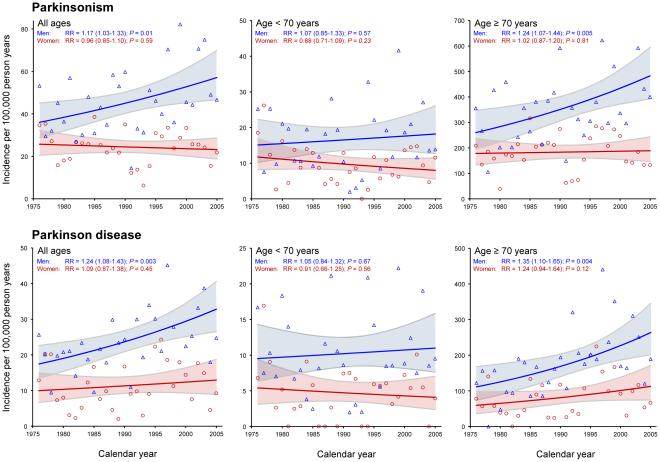
Blaming pesticides and other chemicals for parkinson disease. Really!

It is so easy and convenient to blame some chemicals for all kinds of diseases/disorders! Alarmism and hysteria again! Of course the article is laced with several tragic reports of individuals (the old trick: emotions trump facts)!

How many demagogues have tried this kind of propaganda over the past 50 or more years? Too many! Here is another one! Yawn, yawn!

However, we have lived with those chemicals for a long time!

As the chart below indicates (see age >=70), the recent increase in Parkinson's cases has more to do with aging/longevity/longer life spans than to be caused by chemicals.

P.S. I am not saying that these chemicals are harmless!

"Once rare, Parkinson's disease is now the fastest growing neurodegenerative disease, with a new case diagnosed every 6 minutes in the US. Why? I argue that it's lax regulation of toxic chemicals, from pesticides to those used in dry cleaning [???]" (The author's X post)

Global Health NOW: Women Denied Aid in Afghanistan; Contraceptive Gaps in Sub-Saharan Africa; and Mass-Producing Mosquitoes in Brazil


Figure 1. Secular Trends in Incidence Rates (Period Effects). (Source)


Monday, June 16, 2025

Suicide by pesticide: One of the globally leading causes of suicide in agricultural areas

Bad news! Why are not more countries banning or restricting the use of  dangerous pesticides?

"Curbing Pesticides to Save Lives

Suriname has one of the world's highest suicide rates, largely due to the pesticide paraquat—which is lethal even in tiny doses and is widely available in homes across the country. 

Global perspective: Pesticides are one of the leading means of suicide in agricultural areas of developing nations, leading to 100,000+ suicides annually. 

Banning paraquat and other pesticides has led to dramatic drops in suicide rates in other countries including Sri Lanka (70%+), South Korea (~50%), and China (60%). 

Ongoing efforts: The charity Open Philanthropy funded the launch in 2017 of the Centre for Pesticide Suicide Prevention, and the [UNEP] Global Alliance on Highly Hazardous Pesticides was formed in 2023 to phase out use of the deadliest pesticides in agricultural areas where risks have not been managed."

"... Developed by the chemical company Syngenta, paraquat is now banned in the European Union and China, as well as scattered other countries around the world, but it is still in widespread use elsewhere. The United States permits its use in nonresidential settings, requiring that buyers be trained and certified. ..."

UN Aid Cuts Force ‘Hyper-prioritizedʼ Plan; Deaths on the Street in Portland; and Memory Cafes Bridge a Gap

A Killer Within Easy Reach "Pesticides are a leading means of suicide. The tiny nation of Suriname is working to restrict access to one of the most common and dangerous ones."

Friday, June 13, 2025

Guardian Ag’s crop-spraying drone is replacing dangerous pilot missions

Good news!

"Every year during the growing season, thousands of pilots across the country climb into small planes loaded with hundreds of pounds of pesticides and fly extremely close to the ground at upward of 140 miles an hour, unloading their cargo onto rows of corn, cotton, and soybeans.

The world of agricultural aviation is as dangerous as it is vital to America’s farms. Unfortunately, fatal crashes are common.

Now Guardian Ag ... is offering an alternative in the form of a large, purpose-built drone that can autonomously deliver 200-pound payloads across farms. The company’s drones feature an 18-foot spray radius, 80-inch rotors, a custom battery pack, and aerospace-grade materials designed to make crop spraying more safe, efficient, and inexpensive for farmers. ..."

Guardian Ag’s crop-spraying drone is replacing dangerous pilot missions | MIT News | Massachusetts Institute of Technology "Founded by two former regulars at the MITERS makerspace, the company has built huge, rugged drones to more safely and sustainably apply fertilizers and pesticides on farms."


They even sprinkle the lawn in front of the US Capitol!


Thursday, October 10, 2024

The weeds are winning against pesticides. Really!

It is only a matter of time that human ingenuity will tackle this issue! 

No reason for alarmism and hysteria!

But it also tells us that nature is much more able to adopt than we acknowledge!

"Since the 1980s, more and more plants have evolved to become immune to the biochemical mechanisms that herbicides leverage to kill them. This herbicidal resistance threatens to decrease yields—out-of-control weeds can reduce them by 50% or more, and extreme cases can wipe out whole fields.

At worst, it can even drive farmers out of business. It’s the agricultural equivalent of antibiotic resistance, and it keeps getting worse. Weeds have evolved resistance to 168 different herbicides and 21 of the 31 known “modes of action,” which means the specific biochemical target or pathway a chemical is designed to disrupt.

Agriculture needs to embrace a diversity of weed control practices. But that’s much easier said than done. ..."

The weeds are winning

Wednesday, March 20, 2024

EWG's 2024 Shopper's Guide to Pesticides in Produce: The Dirty Dozen fruits and vegetables

The website is extremely professional and annoying, almost commercial in appearance! They claim, they represent 30 million people???? "The Environmental Working Group is a community 30 million strong, working to protect our environmental health by changing industry standards."

This alarmism and hysteria about pesticide in our diet goes back at least till the 1960s. So tiresome! We should be all dead now! In the meantime, pesticides have also advanced a lot to be safer and are used less and less. What is the alternative to pesticides?

Notice: Besides nice pictures, they don't tell you how much and what kind of pesticides these fruits and vegetables contain. 

EWG's 2024 Shopper's Guide to Pesticides in Produce | Dirty Dozen

Credits: Johns Hopkins Bloomberg School of Public Health: Global Health NOW


A commercial solicitation or donation?