Showing posts with label extraterrestrial life. Show all posts

Wednesday, July 15, 2026

Space is sweet: interstellar sugars found in our Milky Way galaxy

Amazing stuff!

"Astronomers have found sugars in interstellar medium for the first time, suggesting an answer to a riddle about the origin of life.

Sugars are critical organic molecules. They form the backbone of DNA and RNA as well as playing a key role in metabolic processes.

Scientists have long wondered how sugars first formed on Earth. ..."

From the abstract:
"Sugars are essential biomolecules, serving as metabolic fuels, nucleic acid backbone components and structural or energy-storage polymers.
A central question in origin-of-life research is how monosaccharides formed on the primitive Earth, as laboratory experiments under prebiotic conditions yield insufficient concentrations.
The detection of ribose, glucose and other monosaccharides in asteroids and meteorites suggests an exogenous origin, possibly in the interstellar medium (ISM) before meteoritic parent-body formation. However, no sugar has been observed in the ISM so far.
Here we report the discovery of erythrulose, a chiral four-carbon ketose, in the ISM. The detection was achieved through ultrasensitive, broadband spectral surveys of the Galactic Centre molecular cloud G+0.693−0.027, using the Yebes 40 m and IRAM 30 m telescopes.
Erythrulose appears to be at least eight times more abundant than analogous three-carbon sugars, which remain undetected in our ultrasensitive observations. Quantum chemical and astrochemical models indicate that erythrulose forms efficiently on interstellar dust grains from simpler two-carbon aldehydes and alcohols.
As ketoses readily isomerize into aldoses in aqueous conditions, interstellar erythrulose could have contributed to the sugar inventory available for early metabolic and replication processes."

Space is sweet: interstellar sugars found | News | ConnectSci

Fig. 1: Brightest and most unblended transitions of erythrulose observed towards the G+0.693 molecular cloud.


Tuesday, March 17, 2026

Near-earth asteroid contains all five DNA, RNA bases and Vitamin B3, boosting origin of life theories

Amazing stuff!

"Samples collected from the near-Earth asteroid Ryugu have been found to contain all five nucleobases, adding to evidence that life’s building blocks exist elsewhere in the solar system. The researchers think that such asteroids may have helped deliver these molecules to Earth, potentially kick-starting life.

The Japan Aerospace Exploration Agency launched a spacecraft to the carbon-rich Ryugu asteroid in December 2014 as part of its Hayabusa 2 mission. The spacecraft made two landings on the asteroid’s surface in 2019, before returning to Earth in December 2020.

Initial analysis of a sample from the mission revealed the presence of the nucleobase uracil, as well as nicotinic acid (vitamin B3), its derivatives and several imidazoles.

Scientists in Japan have now analysed two other samples collected during the mission, using high-performance liquid chromatography and high-resolution mass spectrometry to determine the type and abundance of molecules in the sample. ..."

Ryugu asteroid contains all five DNA and RNA bases, boosting origin of life theories | Chemistry World


Samples from the asteroid Ryugu (bottom left) were found to contain all five nucleobases


Friday, January 02, 2026

Did natural radioactivity help with habitability on Earth during the time of the primordial soup?

Amazing stuff!

"Habitability gets funky on worlds outside our own. While plants use sunlight for energy and animals, in turn, use plants, life in the subsurface oceans of icy moons has to find another way. New research suggests that primordial life could take advantage of radioactively decaying elements in rocks.

Typically, planetary scientists have thought that hydrothermal vents on Jupiter’s fourth-largest moon, Europa, spurred the rocky reactions needed to generate free energy for life in the form of movable electrons. ...

A team has theorized that trace radioactive elements in rocks, such as uranium-238 and phosphorus-40, might dissolve into the water over time, decaying and releasing heat. That heat could split apart water molecules, generating hydrogen and oxygen ions with available electrons—and thus energy for life. ..."

From the abstract:
"Europa and other icy ocean worlds have long been considered prime targets for astrobiology. Their potential for habitability has generally been thought to depend on chemical disequilibria produced by ongoing water-rock interaction. However, recent studies have raised questions about whether such interactions are currently active on Europa (Byrne et al. 2024, Austin et al. 2025). In addition to the ocean, the presence of liquid water bodies within the ice shell—so-called perched lakes--has been suggested (Schmidt et al. 2011). The latter represents another potential environment for future astrobiological exploration. Both of these environments where liquid water is present at Europa, but water-rock interaction may not currently be active, motivate consideration of alternative mechanisms for sustaining chemical energy sources.
We examine a novel mechanism in which the decay of radioactive isotopes (e.g., ⁴⁰K, 235U, ²³⁸U) drives liquid water radiolysis, generating local chemical disequilibria that could support microbial metabolism.
Our modeling shows that even low concentrations of these isotopes can produce both significant oxidants and reductants in aqueous environments without active water-rock interaction.
Depending on the salinity, these redox gradients could support approximately 1,000 microbial cells per liter under conditions similar to those inferred for Enceladus’s ocean, and up to 20,000 cells per liter at salinities comparable to terrestrial seawater. These values fall within the range of previous estimates for Europa’s ocean (~ 100-100,000 cells per liter, Hand+2017) and the equivalent biomass would be approximately 1023 - 1026 cells, comparable to the biomass of roughly 1,000-1,000,000 blue whales.
The decay of ⁴⁰K also leads to the production of ⁴⁰Ar, which could be detected by Europa Clipper’s MASPEX.
This mechanism offers a new perspective on the potential habitability of icy ocean worlds that may lack active water-rock interaction, i.e. Titan, Ganymede, and the Uranian moons."

ScienceAdviser

Life in Europa’s ocean could feed on rocks’ radioactive decay "After series of bleak findings, theory sparks hope for alternative energy source within Jupiter’s intriguing moon"

Saturday, November 29, 2025

Scientists discover caves carved by water on Mars that may have once harbored life

The theme or mystery of life on Mars never dies!

However, the research article appears to be only about skylights and water and the potential of (previous) life on Mars.

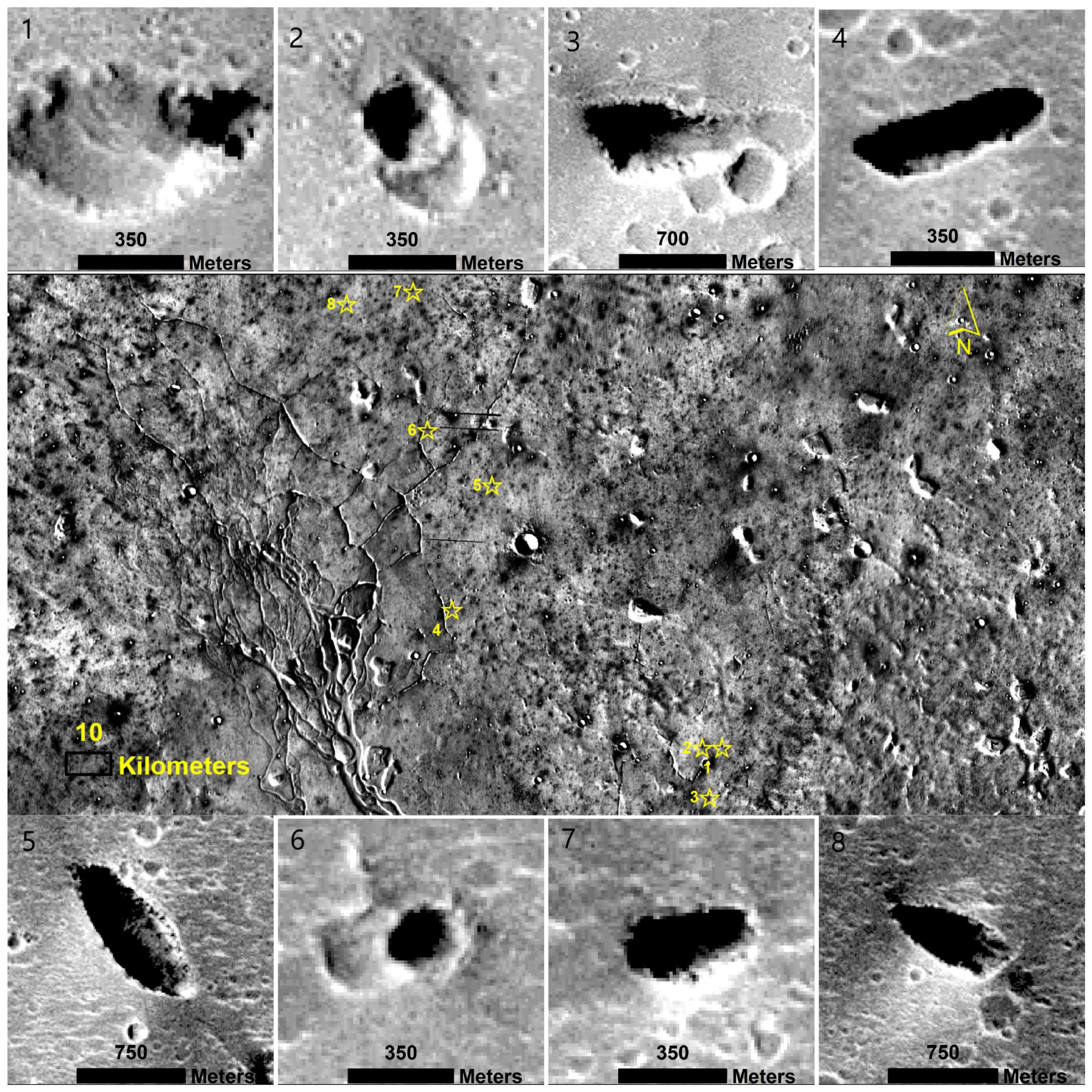
"If there is, or ever has been, life on Mars, the chances are it would exist in caves protected from the severe dust storms, extreme temperatures, and high radiation present on its surface. One place to focus our attention could be eight possible cave sites (called skylights) recently discovered ..."

From the abstract:
"The Hebrus Valles region on Mars exhibits geomorphological indicators of past aqueous activity, such as fluvial channels and aligned sinkholes.
While Martian skylights have mostly been linked to volcanic or tectonic origins, caves formed by water-mediated dissolution remain unexplored.
This study investigates eight skylight features in Hebrus Valles as the first potential karstic cave candidates on Mars. We evaluate whether these features are indicative of collapse entrances formed through dissolution of carbonate- and sulfate-rich lithologies.
To this end, the investigation is carried out by integrating mineralogical maps from the Thermal Emission Spectrometer (TES), hydrogen data from the Gamma Ray Spectrometer (GRS), and TES-derived thermal inertia and dust index maps. 3D structural modeling was performed using High Resolution Imaging Science Experiment (HiRISE)–derived Digital Terrain Models.
Morphological assessments were conducted using Context Camera and HiRISE images.
The skylights exhibit morphologies consistent with subsurface dissolutional collapse. TES data reveal enrichment in carbonates and sulfates near the skylights, and GRS data show elevated water-equivalent hydrogen. The skylights lie within indurated, low-dust terrains and are spatially associated with fluvial features. A 3D reconstruction from morphological data of cavity geometry is consistent with its being karstic."

Scientists discover caves carved by water on Mars that may have once harbored life


Figure 1. Regional context and geospatial distribution of potential karstic skylight features in Hebrus Valles, Mars.


Figure 2. Geological context of skylight candidates in Hebrus Valles. Skylight candidates (yellow stars) are mapped in relation to pit lines, outflow channels, and sinkholes, revealing their spatial association with fluvial systems.


Thursday, November 27, 2025

AI spots signatures of earliest life on Earth—and now turns to other worlds

Amazing stuff!

"... Now, researchers have devised an artificial intelligence (AI) that can identify signs of ancient life in rocks of unknown provenance, based only on the pattern of chemicals left behind as biomolecules degrade over eons.

Using this automated pattern recognition technique, the researchers say they can see life’s signature in 3.3-billion-year-old rocks, which pre-dates Earth’s oldest fossils by hundreds of millions of years.
But the new work also claims to push back the biomolecular signature of the earliest photosynthetic life some 800 million years to 2.5 billion years ago. Researchers are now working to adapt this approach to search for signs of life on Mars and moons of Jupiter and Saturn. ..."

From the significance and abstract:
"Significance
Teasing out biochemical information from ancient organic-rich sediments, notably the timing of the emergence of photosynthesis relative to the inferred oxygenation of Earth’s atmosphere, remains a challenging opportunity.
To tackle this problem, we analyzed 406 diverse ancient and modern samples and used supervised machine learning to discriminate samples of biogenic vs. abiogenic origin, as well as photosynthetic vs. nonphotosynthetic physiology. Comparing organic-rich samples of uncertain affinity to our training data, ca. 3.33-billion-year-old sedimentary rocks group among microbial samples, and rocks as old as 2.52 billion years ally with more recent photosynthetic life. The application of supervised machine learning thus approximately doubles the interval within which fossil organic matter can be shown to retain molecular information of evolutionary relationships and physiology.

Abstract
Throughout Earth’s history, organic molecules from both abiogenic and biogenic sources have been buried in sedimentary rocks. Most of these organic molecules have been significantly altered by geologic processes through deep time. Nonetheless, the nature and distribution of those ancient fragmentary organic remains have the potential to reveal diagnostic biomolecular information after billions of years of burial.
Here, we analyzed 406 fossil, modern biological, meteoritic, and synthetic samples using pyrolysis gas chromatography and mass spectrometry. We explored these analytical data via supervised machine-learning methods to discriminate samples of biogenic vs. abiogenic origin, plant vs. animal phylogenetic affinity, and photosynthetic vs. nonphotosynthetic physiology. Dividing 272 samples with known phylogenetic affinity and physiology into 9 categories, each further divided into 75% training and 25% testing sets, our random forest models accurately predict pairwise assignments of modern vs. fossil or meteoritic organics (100% correct assignments), fossil plant tissues vs. meteoritic organics (97%), modern vs. fossil plant tissues (98%), and modern plants vs. animal tissues (95%).
Pairwise comparisons between fossil biogenic samples vs. abiogenic samples resulted in 93% correct classifications, while analysis of modern and ancient photosynthetic vs. nonphotosynthetic samples also resulted in 93% correct assignments.
Our analyses demonstrate that molecular biosignatures can survive in ancient fossils and allow for the identification of organismal origins and traits. Consistent with previous morphological and isotopic inferences, we present evidence for biogenic molecular assemblages in Paleoarchean rocks (3.33 Ga) and for photoautotrophy in Neoarchean rocks (2.52 Ga)."

ScienceAdviser

Chemical evidence of ancient life detected in 3.3-billion-year-old rocks (original news release) "New study shows life’s signature still exists in rocks long after the original biomolecules are gone."


Thursday, October 02, 2025

Why Life on Mars Will DOOM Humanity with Matt O'Dowd

Very recommendable! I am not worried about a future "great filter". Probably this "great filter" is more imagination, speculation or a religious belief than anything else. Whether such a "great filter" existed in the past is also questionable. We still don't know enough!

Wednesday, July 09, 2025

Desert lichen's remarkable UV resistance could inspire new sunscreens and suggests life is possible on high-radiation exoplanets

Amazing stuff! Extraterrestrial life?

"High-intensity ultraviolet radiation has been found to pose little trouble for a soil-dwelling lichen in the Mojave Desert. After three months of exposure to powerful UVC, the lichen still retained its photosynthetic function and cellular viability thanks to chemical shielding by its secondary metabolites. Compounds derived from these lichens could find UV-blocking applications in cosmetics, materials and agriculture and, according to researchers, provide evidence that exoplanets bombarded by intense UV light are not necessarily hostile to photosynthetic organisms. ...

To investigate, his team continually irradiated Clavascidium lacinulatum, a black desert lichen, for 90 days with 254nm UVC light at 55W/m². Despite receiving a cumulative dose of over 400,000kJ/m², the lichen showed only modest declines in photosynthetic quantum yield and retained approximately 65% viable algal photobiont cells. In comparison, when Deinococcus radiodurans, the most radiation-resistant bacteria ever found, was exposed to the same conditions, it died in under a minute. ...

The chemical basis of the lichen’s resistance lies in its UV-opaque cortex, a structural layer enriched with phenolic lichen acids. These complex aromatic metabolites serve as natural photostabilisers. The researchers identified one such compound with a tentative molecular formula of C₁₀H₁₄N₂O₅. ..."

"... the new research demonstrated that lichen found in the Mojave Desert survived for 3 months under levels of solar radiation previously considered lethal. The common lichen, Clavascidium lacinulatum, was injured, but able to recover and replicate. The results show that photosynthetic life may be possible on planets exposed to intense solar radiation. ..."

From the abstract:
"Many of the recently discovered Earth-like exoplanets are hosted by M and F stars, stars that emit intense UVC, especially during a flare. We studied whether such planets are nevertheless habitable by irradiating a desert lichen, Clavascidium lacinulatum, with 254-nm 55 W/m2 UVC nonstop for 3 months in the laboratory.
Only 50% of its algal photobiont cells were inactivated. To put this in perspective, we used the same setup to challenge the photobiont cells but grown in pure culture, and Deinococcus radiodurans, the most radiation-resistant bacterium on Earth. Entire monolayers of hundreds of cells were inactivated in just 60 s.
Further studies indicated that the cortex of the lichen was rendered UVC-opaque by deposits of phenolic secondary metabolites in its interstices. The lichen was injured only because, while most photochemical reactive oxygen species were quenched, photochemical ozone was not. We conclude that UVC-intense exoplanets are not necessarily uninhabitable to photosynthetic organisms."

Desert lichen's remarkable UV resistance could inspire new sunscreens and suggests life is possible on high-radiation exoplanets | Chemistry World

Desert Lichen Offers New Evidence for the Possibility of Life on Other Planets (original news release) "Lichen from the Mojave Desert can survive, and replicate, under levels of extreme solar radiation found on Earth-like planets in other solar systems."

UVC-Intense Exoplanets May Not Be Uninhabitable: Evidence from a Desert Lichen (open access)


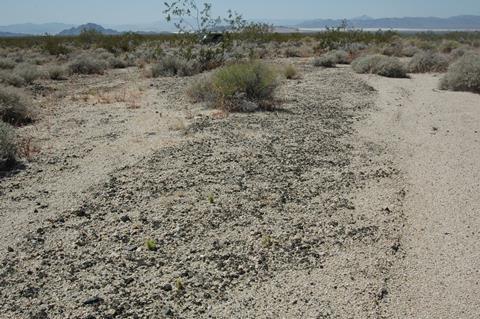
The Mojave Desert in the south-western US, where the soil-dwelling lichen was found
Mojave desert

Friday, April 18, 2025

Life on K2-18b? We’re probably not much closer to that finding than we were the day before. Really!

Don't believe this spoiler attempt! We are not alone!

This is the first time that such chemical signatures were found on an exoplanet! Further, investigations will be forthcoming, I am sure.

"The discovery of living organisms, no matter how primitive, on another world would be the most monumental scientific discovery of anyone’s lifetime. But, despite the headlines that swept the globe yesterday, we’re probably not much closer to that finding than we were the day before. ...

using NASA’s JWST telescope to detect the signatures of the gases dimethyl sulfide (DMS) and dimethyl disulfide (DMDS) in starlight that had passed through the atmosphere of K2-18b, a massive planet 120 light-years from Earth. Here on Earth, those gases are produced by marine phytoplankton and give sea air its distinctive scent. “ ..."

ScienceAdviser

Alien planet’s atmosphere bears chemical hints of life, astronomers claim "A study suggests a distant world has gases linked on Earth to algae, but others urge caution before invoking alien slime"

Saturday, October 05, 2024

Often overlooked, F-type stars could have planets in the habitable zone and harbour life

Amazing stuff! We are not alone! One day we will chat with other civilizations!

"... Our Sun, for example, is a G-type star known as a yellow dwarf. G-type stars have surface temperatures between 5,300 and 6,000 kelvin (K).

F-type stars fall right in the middle of the spectrum. They are larger and hotter than our Sun. They are yellowish white in colour and have surface temperatures of 6,000–7,600K. ..."

"... “F-type star systems are important and intriguing cases when dealing with habitability due to the larger HZs [habitable zone],” ..."

From the abstract:
"F-type star–planet systems represent an intriguing case for habitability studies. Although F-type stars spend considerably less time on the main sequence (MS) than G-, K-, and M-type stars, they still offer a unique set of features, allowing for the principal possibility of exolife. Examples of these features include the increased widths of stellar habitable zones as well as the presence of enhanced UV flux, which in moderation may have added to the origin of life in the Universe. In this study, we pursue a detailed statistical analysis of the currently known planet-hosting F-type stars by making use of the NASA Exoplanet Archive. After disregarding systems with little or no information on the planet(s), we identify 206 systems of interest. We also evaluate whether the stars are on the MS based on various criteria. In one approach, we use the stellar evolution code MESA. Depending on the adopted criterion, about 60–80 stars have been identified as MS stars. In 18 systems, the planet spends at least part of its orbit within the stellar habitable zone. In one case, i.e., HD 111998, known as 38 Vir, the planet is situated in the habitable zone at all times. Our work may serve as a basis for future studies, including studies on the existence of Earth-mass planets in F-type systems, as well as investigations of possibly habitable exomoons hosted by exo-Jupiters, as the lowest-mass habitable zone planet currently identified has a mass estimate of 143 Earth masses."

Often overlooked, F-type stars could have planets in the habitable zone and harbour life "An often-overlooked type of star could have planets in the habitable zone and harbour life, according to new research."


Wednesday, April 17, 2024

Saturn’s ocean moon Enceladus is able to support life − my research team is working out how to detect extraterrestrial cells there

Good news! We are not alone! Perhaps, other forms of life are closer than we thought!

"Saturn has 146 confirmed moons – more than any other planet in the solar system – but one called Enceladus stands out. It appears to have the ingredients for life.

From 2004 to 2017, Cassini – a joint mission between NASA, the European Space Agency and the Italian Space Agency – investigated Saturn, its rings and moons. Cassini delivered spectacular findings. Enceladus, only 313 miles (504 kilometers) in diameter, harbors a liquid water ocean beneath its icy crust that spans the entire moon.

Geysers at the moon’s south pole shoot gas and ice grains formed from the ocean water into space. ..."

Saturn’s ocean moon Enceladus is able to support life − my research team is working out how to detect extraterrestrial cells there

The interior of Saturn’s moon Enceladus. Surface: NASA/JPL-Caltech/Space Science Institute; interior: LPG-CNRS/U. Nantes/U. Angers. Graphic composition: ESA


Saturday, February 10, 2024

Another, this time a young ice-sealed ocean at a depth of 20-30 km has been found in our solar system on a moon near Saturn

Amazing stuff!

From the abstract:
"Moons potentially harbouring a global ocean are tending to become relatively common objects in the Solar System. The presence of these long-lived global oceans is generally betrayed by surface modification owing to internal dynamics. Hence, Mimas would be the most unlikely place to look for the presence of a global ocean. Here, from detailed analysis of Mimas’s orbital motion based on Cassini data, with a particular focus on Mimas’s periapsis drift, we show that its heavily cratered icy shell hides a global ocean, at a depth of 20–30 kilometres. Eccentricity damping implies that the ocean is likely to be less than 25 million years old and still evolving. Our simulations show that the ocean–ice interface reached a depth of less than 30 kilometres only recently (less than 2–3 million years ago), a time span too short for signs of activity at Mimas’s surface to have appeared."

Another ice-sealed ocean has been found in our solar system

Mimas' surprise: tiny moon holds young ocean beneath icy shell Hidden beneath the heavily cratered surface of Mimas, one of Saturn's smallest moons, lies a secret: a global ocean of liquid water. 


Moon Mimas. The picture is also a strong reminder of when will the earth be hit again by a huge object from space. This would be e.g. a real climate catastrophe


Saturday, December 30, 2023

Why we still can not find extraterrestrial life

I bet, there is extraterrestrial life somewhere in our Milky Way galaxy and in the universe at large. We are not alone!

There are several possible explanations:

  1. Human capabilities are still to primitive to detect and to make contact with extraterrestrial life
  2. Extraterrestrial life forms are so different from ours that we don't have the means to detect them yet
  3. Extraterrestrial life forms are so primitive as to be easily detectable
  4. Extraterrestrial life forms are so advanced that we are not able to detect them and/or their attempts to make contact with us have eluded us
  5. If extraterrestrial life forms are similar to ours they are not able to contact us and their signature is too faint to be detected
  6. Any combination of the above

Tuesday, August 08, 2023

Searching for extraterrestrial life — by keeping an eye on supernovae

We are not alone in the universe! How close is extraterrestrial life? What is it like?

Finding a needle in a haystack is child's play! 😊

"... For the study, ... chose four historical supernovae — exploding stars — from the past 1,000 years and compared how long it took their light to travel to Earth with light signals from more than 10 million stars recorded by the European Space Agency’s Gaia orbiting observatory. ... found 465 stars whose light took the same amount of time to reach Earth as one of the four supernovae (about 6,300 years, 8,970 years, 16,600 years, and 168,000 years, respectively). He found another 403 stars whose light signals come from an advantageous angle in relation to one of the supernovae. ...
And although none of the 868 star systems yielded evidence of an alien “technosignature” — or signs of extraterrestrial technology, past or present — ... authors said the effort provides a valuable blueprint for conducting additional searches. ..."

From the abstract:
"Spatiotemporal techniques for signal coordination with actively transmitting extraterrestrial civilizations, without the need for prior communication, can constrain technosignature searches to a significantly smaller coordinate space. With the variable star catalog from Gaia Data Release 3, we explore two related signaling strategies: the SETI Ellipsoid, and that proposed by Seto, which are both based on the synchronization of transmissions with a conspicuous astrophysical event. This data set contains more than 10 million variable star candidates with light curves from the first three years of Gaia's operational phase, between 2014 and 2017. Using four different historical supernovae as source events, we find that less than 0.01% of stars in the sample have crossing times, the times at which we would expect to receive synchronized signals on Earth, within the date range of available Gaia observations. For these stars, we present a framework for technosignature analysis that searches for modulations in the variability parameters by splitting the stellar light curve at the crossing time."

Searching for extraterrestrial life — by keeping an eye on exploding stars | YaleNews In a new study, Yale undergrad Andy Nilipour used supernovae to narrow the search for alien civilizations.

Geometry in the universe! Pythagoras in space
Figure 3. Diagram of the SETI Ellipsoid, which has its foci at the source event (purple dot) and Earth (green dot).


Thursday, August 03, 2023

Image of the day

Why is it so difficult to discover intelligent extraterrestrial life? Or for extraterrestrial life to discover us in one image. The slow speed of light!

This is a screenshot from a great video I blogged about yesterday.


Thursday, February 16, 2023

Psychic Uri Geller: US shooting down UFOs is a 'deadly mistake'

The infamous, notorious spoon bender Uri Geller is still alive at 76 and he saw an opportunity!

Uri Geller is perhaps the only living human with personal contact to extraterrestrials! (Caution: Satire)

US shooting down UFOs is a 'deadly mistake' - Uri Geller - The Jerusalem Post Israeli psychic and UFO expert Uri Geller has long claimed that aliens visiting Earth are coming in peace and said a few different civilizations are visiting.