Showing posts with label Massachusetts Institute of Technology. Show all posts

Saturday, October 03, 2026

The US spent billions on border surveillance. Why can’t it catch people before they die? Really!

What kind of a moronic headline is this by the MIT Technology Review!

What are these people doing at the border?

The US spent billions on border surveillance. Why can’t it catch people before they die? | MIT Technology Review "Surveillance towers, increasingly powered by AI, promised faster responses to crossings. Our investigation of deaths near the towers found they are failing to deliver."

She died at the San Diego border. A surveillance camera was in plain sight "In Southern California’s Otay Mountain Wilderness, the federal surveillance network seems unavoidable. But year after year, migrant deaths persist. "

Friday, August 21, 2026

Engineers connect bacteria to create living transistors

Amazing stuff! Are we getting closer to artificial biological intelligence? You bet!

The human brain is a lot more energy efficient than machine learning & artificial intelligence. The human brain does not need a voracious water and energy consuming data center!

"MIT researchers have engineered bacteria that can function as transistors, allowing the team to create living “circuit boards” that can be printed onto a growth medium in a Petri dish. ...

The research team designed two different transistors, along with three bacterial strains that relay information between the transistors, giving them the building blocks they need to design nearly any type of circuit. In a new study, they used these cells to create circuits that can add two or three inputs, or send one input to a specific location in the circuit. ..."

From the abstract:
"The multicellular forms and functions seen in biology are controlled by cellular communication and collective computation.
Reprogramming natural systems is difficult because they comprise many signaling molecules connecting a web of regulatory networks within cells.
Here we apply principles from pass transistor logic (PTL) to design bacteria that can be easily reconfigured to perform computations on a solid surface. Strains of Pantoea agglomerans were built to encode two transistors (N-type and P-type) whose inputs and outputs are small molecules. They are connected by three relay strains that convert molecular diffusion to unidirectional flow.
To build circuits, an acoustic liquid handler prints patterns of these five strains on a surface.
By changing the pattern, not requiring any genetic changes, different operations are implemented, including multi-input multioutput logic, demultiplexor, half-adder and full-adder.
This work demonstrates that only five cell types, each encoding a simple operation, can be scaled to create complex computational operations."

MIT engineers connect bacteria to create living transistors | MIT News | Massachusetts Institute of Technology "By wiring together colonies of these bacteria, the researchers built circuits that can perform complicated calculations."


Saturday, August 08, 2026

Physicists watch a material's electrons assemble, and reassemble, into coexisting phases

Amazing stuff!

"A new study by ... physicists sheds light on how two different phases of electron behavior can emerge and coexist in the same quantum material.

Their results ... can help explain how some materials host superconductivity, magnetism and other electronic phases. Untangling such phases and understanding how they emerge will help engineers control electronic behavior and design high-performance quantum devices. ...

Now, ... have teased apart erbium tritelluride's phases and observed how each phase emerges. They found that one phase forms gradually, similar to how liquid water transitions uniformly into vapor. This is the classic, textbook way in which electronic phase transitions are thought to occur.

But the second phase came about in an entirely new and unexpected way: Instead of emerging gradually, the electrons organized first in pockets that eventually expanded, similar to how liquid water crystallizes into ice. ...

Scientists have observed charge density waves for decades, most recently in materials that also host other, more complicated forms of electron coordination, such as various forms of magnetism and superconductivity, in which electrons pair up and flow through a material without friction.

"Just like superconductivity, charge density waves are a collective phenomenon in which electrons move together in certain ways," ... "The power of CDWs is that they are a much simpler form of matter compared to superconductivity. They offer a playground for fundamental understanding." ..."

From the abstract:
"Understanding the origin of phase transitions and the interactions between distinct phases remains a central task in condensed-matter physics.
Charge-density-wave (CDW) systems provide a useful setting to investigate these questions. Although the dominant CDW phases in many materials can be explained through electron–phonon interactions, certain CDW phase transitions remain poorly understood, challenging conventional paradigms.
One example is the rare-earth tritelluride ErTe3, which hosts two competing CDW orders. Although electron–phonon coupling accounts for the dominant order, the mechanism behind the subdominant order remains unclear.
In this study, we combine time- and angle-resolved photoemission spectroscopy and time-dependent Ginzburg–Landau theory to establish a time-domain approach for probing phase transitions in solid-state systems.
By analysing the distinct recovery dynamics of the two CDW orders in ErTe3 following light excitation, we reveal a novel nucleation and growth mechanism that probably drives the secondary CDW phase transition.
More broadly, this work provides a time-domain framework for studying phase transitions and phase competition in quantum materials."

Physicists watch a material’s electrons assemble, and reassemble, into coexisting phases (original news release) "The study could help scientists understand how superconductivity and other more complex phenomena emerge in quantum materials"

Wednesday, August 05, 2026

Diffuse puffs of “missing” matter surround most galaxies. Really!

Is the Big Bang real? What came before the Big Bang? God?

Is so called dark matter finally becoming matter?

However, it appears that the journalistic article promises/exaggerates/diverges too much relative to the abstract of the paper. Even the preprint does not agree! Regrettable!

"Now MIT scientists, as part of the CHIME/FRB Collaboration, are using far-off radio signals to reveal missing matter in the vast space between galaxies. The team has developed a new method to search out missing matter by combining locations of galaxies with detections of fast radio bursts. ...

A fast radio burst, or FRB, is an ultrabright, millisecond flash of radio waves emitted by extremely energetic phenomena in the distant universe. As it travels through space, the signal from a fast radio burst gets stretched, or “smeared,” in time. The more missing matter that it passes through, the more smeared the signal becomes. 

The MIT-led team measured the degree of smearing experienced by thousands of FRB signals detected on Earth. Then they compared each FRB smear with locations of galaxies across the universe to determine how much of an FRB’s smearing was due to galaxy matter versus other, missing matter. 

The new method revealed not only whether missing matter was present, but also where. Specifically, the researchers discovered that it exists in very diffuse clouds surrounding groups of galaxies. These clouds extend out from the galaxies, to much further distances than scientists had predicted. ..."

From the abstract:
"The dispersion of extragalactic fast radio bursts (FRBs) can serve as a powerful probe of the diffuse plasma between and surrounding galaxies, which contains most of the Universe’s baryons.
By cross-correlating the dispersion of background FRBs with the locations of foreground galaxies, we can study the relative spatial distributions of plasma and galaxies on scales of 0.1 to 50 Mpc, which are strongly affected by feedback processes in galaxy formation.
Here, we present the measurement of the dispersion-galaxy angular cross-power spectrum between 2870 FRBs from the Second CHIME/FRB Catalog and nearly 6 million galaxies from the Dark Energy Spectroscopic Instrument (DESI) Legacy Imaging Survey.
Over five photometric galaxy redshift bins spanning 0.05 <𝑧 <0.5 and at 4.9⁢𝜎 significance, we make the first definitive detection of spatial correlations in FRB dispersion measure due to cosmic structure.
While parameter inferences should be interpreted with caution because of incomplete modeling of both the signal and systematic errors, our data indicate that the plasma-galaxy cross-power spectrum cuts off relative to the matter power spectrum at a scale 𝑘−1 cut=0.8⁢4+0.46 −0.34  ⁢Mpc.
This scale is consistent with those x-ray stacking analyses that suggest dark-matter halos with group-scale masses are largely evacuated of their baryons by feedback processes.
Our Letter demonstrates that FRBs are promising tools to discern the physics of baryonic structure formation and will only become more powerful as FRB surveys expand."

Diffuse puffs of “missing” matter surround most galaxies | MIT News | Massachusetts Institute of Technology "An MIT-led team used bright radio bursts to illuminate a vast source of matter that was previously unaccounted for"

Tuesday, July 14, 2026

New flapping robot swims and flies like a diving bird

Amazing stuff!

"Loons, gulls, puffins, and petrels are some of the 100 species of birds that can both fly and swim. These diving birds can plunge in water to swim after prey, and leap back into the air to fly away. 

Inspired by these naturally aquatic aviators, engineers ... have designed a robot that can swim underwater, then flap out of the water to continue flying through air, much like diving birds. 

The “flapping-wing aerial-aquatic vehicle,” or FAAV, weighs less than 300 grams (about half a pound) and is designed to help scientists study the mechanics that enable diving birds to fly through air and water.  ..."

From the editor's summary and abstract:
"Editor’s summary
Diving birds transition between flying through air and navigating through water by flapping, but the mechanisms by which different species try to do this efficiently is challenging to study. Zufferey et al. developed a flapping-wing robot that can fly in the air and transition to, provide thrust under, and take off from water. The authors found that flight in air requires a higher-frequency wingbeat, and that larger wings do not increase power demands underwater. Performance was evaluated across wing sizes, flapping frequencies, and egression angles in both indoor and outdoor settings. Comparisons showed where various bird species have overlapping behavior and where differences in weight and mechanics affect overall motion. ...

Abstract
Wing-propelled diving birds flap their wings to move through air and water, yet the wing morphology and kinematics that enable this behavior remain poorly understood because of the difficulty of collecting in situ data.
The impact of flapping frequency, wing size, and stiffness on locomotion in—and transition between—the two media are still unknown.
We compared data from diving birds against experiments using a flapping-wing robot capable of flying, swimming, plunge diving, and exiting the water. We show that frequency adaptation, flexible wings, and powerful actuation enable seamless transitions without folding wings or legs, that large wings enhance flight without substantially reducing underwater efficiency, and that tail-body distance and egress angle affect water exit. These results clarify how birds (and robots) balance multifluid locomotion constraints."

New flapping robot swims and flies like a diving bird | MIT News | Massachusetts Institute of Technology "MIT engineers’ design could lead to a new class of aerial-aquatic vehicles for ocean exploration."

A flapping robot swims and flies like a diving bird (original news release by EPFL) "An aerial-aquatic vehicle developed at EPFL and MIT could lead to a new class of devices for ocean exploration."

Leaping out of the water: Aerial-aquatic locomotion with flapping wings (no public access, but this link provides access to the PDF file)


What happens when environmental change outpaces life’s ability to adapt? Really!

Is the MIT trying here to sell a banality as a new scientific discoveries?

"... Now, scientists ... have found that this connection between evolutionary adaptation and the pace of environmental change holds up at the global scale as well — and can determine life’s susceptibility to mass extinction. The researchers developed a theoretical model of this phenomenon, which they present in a paper appearing today in Physical Review Letters. ..."

From the abstract:
"It is widely assumed that extinction occurs when environmental change outpaces a species’ capacity to adapt. However, this hypothesis lacks support at the scale of global change, in part because the distribution of adaptation rates is unknown. Here, we test this idea by formulating a general model that predicts the distribution of adaptation rates across species. By assuming that species go extinct when they adapt too slowly, we derive a precise sigmoidal relationship between the rate of extinction and the rate of environmental change. We then show that above-background extinction rates in the fossil record follow the same sigmoidal response to global carbon-cycle change, indicating that the adaptation-rate distribution is effectively a distribution of critical thresholds.
The inferred range of adaptation rates is similar to the spread of extreme rates of environmental change. This suggests that macroevolution may align the diversity of adaptation rates with environmental forcing, thereby setting the biosphere’s sensitivity to global change. When rescaled to the slow rates of the geologic past, modern rates of environmental change appear to be below, but near, the point of maximal extinction susceptibility."
 
What happens when environmental change outpaces life’s ability to adapt? | MIT News | Massachusetts Institute of Technology "A new model links Earth’s mass extinctions to mismatches between rates of environmental change and biological adaptation."

Saturday, July 11, 2026

Logic and language is separated in the brain

Amazing stuff!

"... In research ... researchers ... have shown that people can perform well on tasks that require logical reasoning even if their language abilities are severely impaired. What’s more, brain imaging shows that language-processing parts of the brain are not called on for logical reasoning. ..."

From the significance and abstract:
"Significance
Which cognitive mechanisms allow humans to reason logically, to understand whether a conclusion follows from the premises? Are they the same ones that allow the assembly of words into structured representations?
Scholars have debated for millennia whether logical reasoning is inextricably tied to natural language, or instead relies on a distinct “language of thought” (LOT).
Using fMRI in healthy adults and evaluating logical ability in individuals with severe aphasia, we find that distinct neural systems support language processing vs. logical (inductive and deductive) reasoning. These results suggest that, at least in mature brains, language processing does not underpin logical inference, perhaps due to the distinct representational format of the logical LOT.

Abstract
Humans are endowed with a powerful capacity for inductive and deductive logical thought: we easily form generalizations based on a few examples and draw conclusions from known premises.
Humans also arguably have the most sophisticated communication system in the animal kingdom: natural language allows us to express complex and structured meanings.
Some have therefore argued for a tight relationship between complex thought and language, postulating that reasoning, including logical reasoning, relies on linguistic representations.
We systematically investigated the relationship between logical reasoning and language using two complementary approaches.
First, we used noninvasive brain imaging (fMRI) to examine neural activity as healthy adults engaged in logical reasoning tasks.
And second, we behaviorally evaluated logical abilities in individuals with extensive lesions to the language brain areas and consequent severe linguistic impairment.
Our findings reveal that the language brain network is not engaged during logical reasoning, and patients with severe aphasia exhibit intact performance on logic tasks.
Instead, inductive reasoning recruits the domain-general multiple demand network implicated broadly in goal-directed behaviors,
whereas deductive reasoning draws on brain regions that are distinct from both the language and the multiple demand networks.
Together, these results indicate that linguistic representations are neither utilized nor required for inductive or deductive logical reasoning."

Separating logic and language | MIT News | Massachusetts Institute of Technology "Neuroscientists find logical reasoning does not involve language-processing parts of the brain."


A functional brain scan of a neurotypical participant in a new study shows a distinct separation between logic (green) and language (red/yellow) activations.


Thursday, July 09, 2026

Scientists find ozone depletion began decades before discovery of ozone hole and was caused by carbon tetrachloride since the 1930s

Amazing stuff!

These authors seem to be obsessed with the instrument of a thought experiment! In this particular study it might have been overused.

"... In a study ... the scientists suggest that the first signs of ozone depletion appeared as early as 1957 — about 30 years before the ozone hole was discovered. And, this first signal of ozone loss popped up not in the Antarctic, but in the upper stratosphere of the tropics. What’s more, the cause of this early depletion was not due to CFCs, but to another industrial chemical: carbon tetrachloride.  ..."

From the significance and abstract:
"Significance
This paper examines the earliest emergence of human-caused ozone depletion: the when, the where, and the why.  ...
The “when” is as early as the late 1950s—about 30 y before the Antarctic ozone hole was discovered and 20 y before the Molina–Rowland theory. The “where” is the tropical upper stratosphere, where a relatively small signal stands out against even smaller noise, allowing the earliest emergence. The “why” is the use of carbon tetrachloride as a solvent decades before chlorofluorocarbons became common in refrigeration and spray cans.

Abstract
The Antarctic ozone hole was first reported in 1985, and small ozone losses at the global scale were also observed in the late 1980s. The combination of field and laboratory measurements, together with modeling, quickly established anthropogenic chlorofluorocarbons (CFCs) as the cause of both the Antarctic and global ozone depletion.
However, when, where, and why the earliest ozone depletion could have been detected has not been determined.  ...
We find that human-caused ozone depletion was likely identifiable as early as 1957 in the tropical upper stratosphere. This region’s low internal variability enables the earliest detection of the anthropogenic signal, even though tropical ozone losses in the upper stratosphere were smaller than those in higher-latitude regions. ... 
Further, while CFCs are widely recognized as the primary drivers of current ozone depletion, we find that early ozone loss was primarily caused by human-made carbon tetrachloride (CCl4), used mainly as a solvent. These findings suggest that a clear human influence on the stratospheric ozone layer began nearly 70 y ago, even before substantial emissions of CFCs from spray cans or air conditioning."

Scientists find ozone depletion began decades before discovery of ozone hole | MIT News | Massachusetts Institute of Technology "Using modern tools, they also determined that carbon tetrachloride, used as a dry-cleaning and degreasing agent as early as the 1930s, was at the root of early ozone loss."


Resonance structures of ozone with lone pairs indicated (Source)


Polarity of Carbon Tetrachloride (CCl4) (Source)


Monday, July 06, 2026

A portable ultrasound system could make reliable breast imaging more accessible and available for home use

Good news! Cancer is history (soon)!

Again the ideologues and demagogues at MIT demean women  as "people"!!! Horrible!

"For people [women] at high risk of developing breast cancer, yearly mammograms may not be enough to detect tumors early. To make earlier diagnosis easier, an MIT team has developed portable detectors based on ultrasound, which could be used much more frequently. ..."

From the abstract:
"Breast cancer screening and longitudinal monitoring require imaging technologies that are portable, operator-independent, and suitable for frequent use, a capability not fully met by mammography or conventional ultrasound.
We present a three-dimensional (3D) portable ultrasound system for real-time examination (3D PURE) that overcomes key limitations in volumetric breast imaging through advances in transducer design, acoustic materials, and adaptive beamforming.
A box-array design incorporating a corner-gap offset geometry suppresses peak crosstalk (by 3.73 dB at the corner-most element), prevents preamplifier saturation, and supports higher transmit voltages (up to 24 V).
A custom flowable backing layer (impedance 6.12 MRayl; attenuation 7.56 dB mm−1 MHz−1) integrates around fragile wirebonds, reduces inter-element crosstalk by ~4.5 dB throughout the array, and improves axial and lateral/elevational resolutions by ~200 µm and ~70 µm, respectively.
Layered Aberration-Correction Reconstruction (LACR), an adaptive 3D beamformer, compensates for heterogeneous speed-of-sound (SoS) in the breast, reducing depth localization error by 2 mm and aberration defocusing by 70 µm on average at a 5 cm depth.
Nine of the ten participants in an in vitro study showed improved microtarget detection efficiency with 3D PURE relative to a conventional 2D system (p = 0.0215), analogous to detection of microcalcifications.
These results, combined with in vivo imaging validation of various phenotypes, highlight the potential of 3D PURE for reliable breast imaging.
Furthermore, a vision-guided computer interface, MyFUS, ensures self-guided, user-friendly, and operator-independent probe positioning for longitudinal monitoring."

A portable ultrasound system could make reliable breast imaging more accessible | MIT News | Massachusetts Institute of Technology "The new technology, which generates high-resolution, 3D images of breast tissue, requires no expertise to operate and could be used at home."


Fig. 1: Overview of the 3D portable ultrasound for real-time examination (PURE) for portable and operator-independent monitoring.


Graphene can hold multiple states of superconductivity, a new study finds

Good news! More, but incremental progress! 

Superconductivity like nuclear fusion hold huge promises to improve global energy supply!

"In a study appearing ... in the journal Nature, ... researchers report that a certain microscopic structure found in natural graphite can host multiple superconducting states. Superconductivity is an electronic state of matter in which electrons pair up and glide through a material with zero resistance.  ..."

"... In our work, we present a family of three surprising states of superconductivity in 4- or 5-layer rhombohedral graphene, all of which are are able to persist in the presence of strong in-plane magnetic fields up to ~9 T, exceeding the Pauli limit by far more than a factor of 10.
In a further surprise, one state is even enhanced by a perpendicular magnetic field. This is in contract to bernal graphene, which showed only relatively weak in-plane enhancement. The two other states are boosted by the in-plane field, and one of them is only created above ~5 Tesla in-plane field. None of these states could be suppressed with the 9 T magnet of this experiment. 

This establishes a new family of unconventional, magnetic field-boosted superconductors in rhombohedral graphene. It is currently still unclear what the microscopic pairing mechanism is. One possible explanation is that the electrons in these states pair differently than in the paradigmatic simple superconductors — for example, with their spins aligned in the same direction in a triplet state. This could make them less sensitive to magnetic fields. ..."

From the abstract:
"In some unconventional superconductors, time-reversal symmetry can be broken in addition to the gauge symmetry, resulting in superconductivities that can be enhanced or induced by magnetic fields.
However, field-enhanced superconductors are more vulnerable to impurities than Bardeen-Cooper-Schrieffer counterparts.
Crystalline rhombohedral multilayer graphene is a promising platform to explore them due to its superior material quality and gate-tunable strong correlation effects.
Here we report transport measurements of rhombohedral tetralayer and pentalayer graphene, demonstrating a spectrum of clean-limit superconductivities. We found three different types of field-enhanced and field-induced superconductivities in the pentalayer. They are all robust against an in-plane field up to 8.5 Tesla, exceeding the Pauli limit by tens of times.
Compared to Bernal bilayer graphene showing only in-plane field-enhancement, pentalayer graphene features superconductors enhanced by out-of-plane as well as in-plane fields. They also reside at much lower gate electric fields owing to the intrinsically flatter band dispersion—facilitating their study and further engineering.
Additionally, we observed that proximitized spin-orbit coupling (SOC) generates multiple new superconductors without introducing additional disorder effects.
Our work establishes a new family of magnetic field-boosted superconductors in rhombohedral graphene.
Utilizing the high accessibility with moderate gate voltages, this will pave the way for realizing non-Abelian quasiparticles through interfacial engineering in the extreme clean limit, in that proximitized SOC leads to topological states8 and maintains the ultrahigh quality of crystalline graphene."

Graphene can hold multiple states of superconductivity, a new study finds | MIT News | Massachusetts Institute of Technology "What’s more, the superconducting states get stronger under conditions expected to kill them."

Published in Nature: Family of magnetic field-boosted superconductors in rhombohedral graphene (second original news release)


The cartoon sketch shows the family of three different states found in the experiment indicated with three different colors


Monday, June 08, 2026

Chemists design impact-resistant plastics for shoe soles, tires and other products

Amazing stuff! In my next life I'll become a chemist! 😊 

What about more bounce and springiness for soles?

"With help from a novel cross-linking molecule, MIT chemists have shown they can substantially improve the ballistic impact resistance of common polymers, including polystyrene and a type of rubber used to make shoe soles. ...

To make the polymer more resistant to sudden impact, the MIT team added weak bonds scattered throughout the material as cross-links, which allows the material to dissipate energy much more effectively under deformations. When struck by a projectile, these weak bonds selectively break at the site of impact to open up pathways for enhanced energy absorption.

The researchers found that this approach can also fortify styrene-butadiene-styrene rubber, and they are now investigating whether it will also work for other types of polymers such as latex or the rubber that is used to make tires.  ..."

From the abstract:
"Mechanical failure is a marked limitation for plastics used in structural, protective and coating applications. In particular, perforation under high-rate deformation is difficult to mitigate through conventional molecular design.
Cross-linking is widely used to improve the thermal and chemical stability of polymers, yet under mechanical deformation, it typically renders materials more brittle, limiting impact resistance and functional lifetime. Overcoming this fundamental trade-off between stability and toughness remains a central challenge. Here we demonstrate that embedding a small fraction of force-sensitive mechanophores as cross-links into common polymers fundamentally reverses this trade-off, producing materials with substantially enhanced ballistic energy dissipation.
At strain rates exceeding 107 s−1, we show that mechanophore-cross-linked networks absorb up to about 115% more energy than conventional thermosets and surpass even their uncross-linked thermoplastic counterparts.
We attribute this behaviour to a force- and adiabatic-heating-driven local thermoset-to-thermoplastic transition, in which selective mechanophore scission facilitates viscoplastic deformation at the impact site while preserving network integrity in the surrounding regions.
We demonstrate the generality of this strategy in both glassy polystyrene and rubbery styrene–butadiene–styrene triblock copolymers.
These results establish mechanophore cross-linking as a design principle for converting commodity polymers into impact-resilient materials and open directions at the intersection of polymer mechanochemistry and extreme-strain-rate material behaviour."

MIT chemists design impact-resistant plastics | MIT News | Massachusetts Institute of Technology "Introducing weaker bonds into polystyrene and rubber helps these materials dissipate energy, making them more resistant to destructive forces."


Saturday, June 06, 2026

New propulsion system could make tiny satellites both fast and fuel-efficient

Amazing stuff!

"MIT engineers are testing a new propulsion system that combines the power and speed of conventional chemical thrusters with the precision and fuel-efficiency of electrical thrusters. 

The system could enable the design of nimbler, more flexible small satellites, which could perform both fast, powerful maneuvers and slower, precise adjustments, depending on the mission and moment at hand.

The key to the new system is a special propellant that can power both chemical and electrical thrusters, which traditionally have required separate, bulky fuel sources.  ..."

New propulsion system could make tiny satellites both fast and fuel-efficient | MIT News | Massachusetts Institute of Technology "For satellites as small as a briefcase, getting around in space just got a whole lot easier."

Saturday, May 30, 2026

A new approach to cancer vaccination yields more powerful T cells to fight multiple different cancers

Good news! Cancer is history (soon)!

"... have developed a new way to amplify the T-cell response to mRNA vaccines — an advance that could lead to much more powerful cancer vaccines and stronger protection against infectious diseases.

Most vaccines generate both antibodies and T cells that can target the vaccine antigen by activating antigen-presenting cells, such as dendritic cells. 
In this study, the researchers boosted the T-cell response with a new type of vaccine adjuvant (a material that can help stimulate the immune system). The new adjuvant consists of mRNA molecules encoding genes that turn on immune signaling pathways and promote a supercharged T-cell response. 

In studies in mice, this mRNA-encoded adjuvant enabled the immune system to completely eradicate most tumors, either on its own or delivered along with a tumor antigen. ..."

From the abstract:
"Although immunotherapy has benefited a subset of persons with cancer, its broader efficacy remains limited, primarily because of an immunosuppressive tumor microenvironment characterized by insufficient numbers of functional tumor-specific T cells, antigen-presenting cells (APCs) and tumor-infiltrating lymphocytes.
Here we engineer immune cells in the tumor microenvironment using lipid nanoparticles (LNPs) to deliver immune-remodeling mRNAs (IR-mRNAs) encoding NF-κB-inducing kinase or interferon regulatory factor 8.
These IR-mRNAs activate APCs in tumors, significantly increasing activated type 1 conventional dendritic cells, immunostimulatory cytokines and priming antitumor CD8+ T cells.
IR-mRNAs encapsulated in LNPs elicited durable antitumor responses in multiple syngeneic mouse tumor models through both intratumoral and intravenous delivery.
Coadministration of IR-mRNA and ovalbumin mRNA elicited a ~10-fold increase in antigen-specific CD8+ T cell responses, sustained long-term memory and effectively prevented tumor growth in vaccinated mice.
Additionally, coadministration of IR-mRNA and hemagglutinin mRNA enhanced the humoral response ~5-fold and the cellular response ~15-fold, underscoring their potential as adjuvants for boosting adaptive immunity."

A new approach to cancer vaccination yields more powerful T cells | MIT News | Massachusetts Institute of Technology "Using immune-remodeling mRNA molecules, researchers generated T cells that can slow tumor growth and, in some cases, eradicate tumors."

Tuesday, May 26, 2026

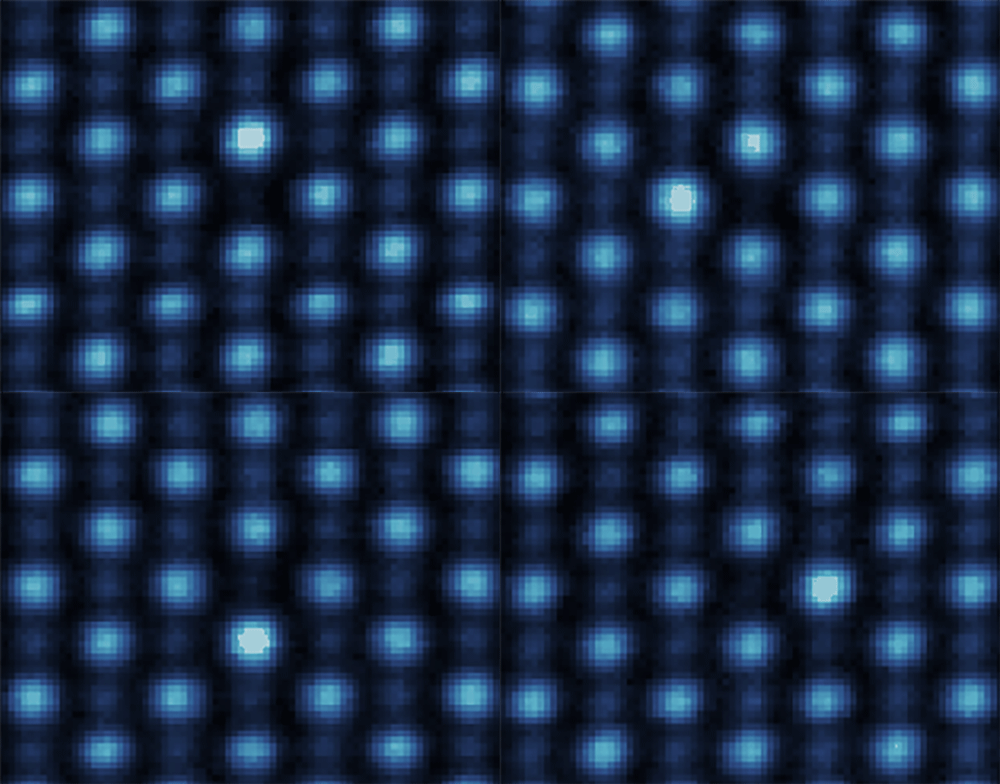
‘A new form of engineered artificial matter’: Atomic manipulation enters the mesoscale as 40,000 atoms repositioned in single crystal

Amazing stuff! "a new way to produce programmable matter in which ‘functionality is engineered from the atom up’." This could be huge!

"By creating 40,000 user-defined defects in a single crystal lattice, researchers have shown that atomic manipulation can be achieved on the mesoscopic scale – between the single-atom and bulk-material ranges. The work potentially offers a way to engineer materials with desired properties by fine-tuning the positions of individual atoms within their structures. ...

Now, a team from the US and Europe has scaled up the concept to a whole new level. Using the electron beam in a specially programmed scanning transmission electron microscope, the researchers introduced 40,000 defects into a chromium sulfur bromide lattice. The CrSBr semiconductor was selected as a model sample and, with their automated process, the researchers could subtly reposition individual chromium atoms in a predictable manner.
They describe the resulting material as ‘a new form of engineered artificial matter’, and note that it remains stable at room temperature outside of the microscope.

The defects were introduced within minutes across an area measuring 150nm × 100nm with a depth of 13nm. However, the team believes that the method is generalisable and could be scaled up to the macroscopic level. The researchers write that the technique offers a new way to produce programmable matter in which ‘functionality is engineered from the atom up’. ..."

"It’s been 37 years since scientists first demonstrated the ability to move single atoms, suggesting the possibility of designing materials atom by atom to customize their properties. Today there are several techniques that allow researchers to move individual atoms in order to give materials exotic quantum properties and improve our understanding of quantum behavior.

But existing techniques can only move atoms across the surface of materials in two dimensions. Most also require painstakingly slow processes and high-vacuum, ultracold lab conditions.

Now a team of researchers ... has created a way to precisely move tens of thousands of individual atoms within a material in minutes at room temperature. The approach uses a set of algorithms to carefully position an electron beam at specific locations of a material, then scan the beam to drive atomic motions. ..."

From the abstract:
"Controlling individual atoms using lasers, ion traps and scanning probe tips has transformed our understanding of matter and enabled breakthroughs in quantum science.
Extending this control into three-dimensional (3D) solids and across mesoscopic scales, however, remains a foundational challenge. Electron irradiation in electron microscopes is known to induce atomic displacements, and atomic manipulation has been proposed and demonstrated. Yet repeated and deterministic control has remained elusive.
Here we demonstrate deterministic atomic engineering in a 3D crystal, creating ordered arrangements of more than 40,000 user-defined defects within minutes across a 150 nm × 100 nm × 13 nm volume.
By steering individual Cr atoms in the magnetic semiconductor CrSBr into selected interstitial sites using an electron beam directed with sub-20-pm-scale accuracy, we create vacancy–interstitial complexes.
The resulting impurity array forms a mesoscale crystal embedded within the host lattice, a new form of engineered artificial matter that remains stable at room temperature and outside the microscope.
By tracking Cr atom displacements, we identify conditions under which the defect structures are predictable. Our calculations suggest that these defects form correlated impurity states with intra-defect optical transitions and inter-defect kinetic and Coulomb interactions.
This establishes a generalizable platform for atomic defect engineering at mesoscopic, and potentially macroscopic, scales, opening opportunities for scalable quantum technologies, including deterministic colour-centre placement, quantum simulation of many-body lattice models and atomic-scale manufacturing."

Scientists create 40,000 atomic defects in crystal to engineer programmable materials | Chemistry World

Researchers “reprogram” materials by quickly rearranging their atoms (original news release) "A new method for precisely moving columns of individual atoms within a material could give rise to exotic quantum properties."


Autonomous atomic engineering at scale by moving the electron beam between target locations. At each target location, the beam is positioned with picometre precision with chromium atoms then repositioned


“The results demonstrate the ability to deterministically move atoms repeatedly within a material’s 3D atomic lattice,” ... An animation shows how researchers controlled the movement of atoms.


Sunday, May 24, 2026

A new approach to cancer vaccination yields more powerful T cells

Good news! Cancer is history (soon)!

"... have developed a new way to amplify the T-cell response to mRNA vaccines — an advance that could lead to much more powerful cancer vaccines and stronger protection against infectious diseases.

Most vaccines generate both antibodies and T cells that can target the vaccine antigen by activating antigen-presenting cells, such as dendritic cells.
In this study, the researchers boosted the T-cell response with a new type of vaccine adjuvant (a material that can help stimulate the immune system). The new adjuvant consists of mRNA molecules encoding genes that turn on immune signaling pathways and promote a supercharged T-cell response. 

In studies in mice, this mRNA-encoded adjuvant enabled the immune system to completely eradicate most tumors, either on its own or delivered along with a tumor antigen. The adjuvant also boosted the T-cell response to vaccines against influenza and Covid-19. ...

As an alternative approach, the researchers decided to deliver mRNA strands encoding two genes, IRF8 and NIK, which are involved in antigen presentation and can switch immune cells into a more active state. ...

The researchers tested the immune-remodeling mRNAs in several mouse models of cancer, including an aggressive bladder cancer, colon carcinoma, melanoma, and metastatic lung cancer.
In nearly all of these mice, the injected mRNA stimulated a strong T-cell response that significantly slowed tumor growth and in many cases completely eradicated the tumors. This happened even when the mice were not given a vaccine against a specific cancer antigen. When they were, the response was even stronger. ..."

From the abstract:
"Although immunotherapy has benefited a subset of persons with cancer, its broader efficacy remains limited, primarily because of an immunosuppressive tumor microenvironment characterized by insufficient numbers of functional tumor-specific T cells, antigen-presenting cells (APCs) and tumor-infiltrating lymphocytes.
Here we engineer immune cells in the tumor microenvironment using lipid nanoparticles (LNPs) to deliver immune-remodeling mRNAs (IR-mRNAs) encoding NF-κB-inducing kinase or interferon regulatory factor 8. These IR-mRNAs activate APCs in tumors, significantly increasing activated type 1 conventional dendritic cells, immunostimulatory cytokines and priming antitumor CD8+ T cells.
IR-mRNAs encapsulated in LNPs elicited durable antitumor responses in multiple syngeneic mouse tumor models through both intratumoral and intravenous delivery.
Coadministration of IR-mRNA and ovalbumin mRNA elicited a ~10-fold increase in antigen-specific CD8+ T cell responses, sustained long-term memory and effectively prevented tumor growth in vaccinated mice.
Additionally, coadministration of IR-mRNA and hemagglutinin mRNA enhanced the humoral response ~5-fold and the cellular response ~15-fold, underscoring their potential as adjuvants for boosting adaptive immunity."

A new approach to cancer vaccination yields more powerful T cells | MIT News | Massachusetts Institute of Technology "Using immune-remodeling mRNA molecules, researchers generated T cells that can slow tumor growth and, in some cases, eradicate tumors."

Monday, May 11, 2026

Photonics advance could enable compact, high-performance lidar sensors with no moving parts

Good news!

"... A new study from ... researchers could help to enable next-generation lidar sensors that are compact, durable, and have no moving parts. The key advance is a novel design for a silicon-photonics chip, which is a semiconductor device that manipulates light rather than electricity.  ...

To avoid these drawbacks, the ... researchers designed and demonstrated an array of integrated antennas that minimizes unwanted crosstalk between the antennas. Their innovation allows a lidar chip to scan a wider field of view while maintaining low-noise operation compared to other silicon-photonics-based approaches. ..."

From the abstract:
"Integrated optical phased arrays (OPAs) have emerged as a promising technology for many applications due to their ability to dynamically control free-space optical beams in a compact and non-mechanical manner.
However, these integrated OPAs typically have a restricted field of view (FOV), limited by grating lobes caused by large antenna pitches that are typically necessary to reduce crosstalk between the antennas in the integrated OPA.
In this work, we develop and experimentally demonstrate for the first time, to the best of our knowledge, a set of integrated grating-based antennas with significantly-reduced inter-antenna crosstalk that enable half-wavelength-pitch integrated OPAs with grating-lobe-free and wide-FOV functionality.
First, we derive a generalized theoretical model to describe the coupling dynamics between lossy modes in a system and use this model to analyze the coupling between antennas.
Next, we design and demonstrate a set of three integrated grating-based antennas with different propagation coefficients to enable reduced inter-antenna crosstalk, successfully measuring a significant reduction from 100% to 1% coupling.
Finally, using these reduced-crosstalk antennas, we develop and demonstrate a half-wavelength-pitch integrated OPA, successfully demonstrating grating-lobe-free and wide-FOV functionality.
This work facilitates new functionality for high-performance integrated OPAs."

Photonics advance could enable compact, high-performance lidar sensors | MIT News | Massachusetts Institute of Technology "With a novel design, MIT researchers overcame a stubborn problem that has limited the effectiveness of chip-based systems for lidar."


Fig. 1: Wide-FOV integrated-OPA concept.


Fig. 2: Design of reduced-crosstalk antennas.


Jelena Notaros, senior author (Source)


The Simple Macroeconomics of AI. Really!

It appears this economist Daron Acemoglu and winner of the John Bates Clark Medal 2005 and Economics Nobel Prize 2024 has little clue regarding machine learning & AI! He has an impressive lifetime citation count of over 297,000!

Apparently, this economist is a total factor productivity fetishist! Or a one trick pony!

This fool does not even recognize that AI will dramatically and highly affect high skilled labor (e.g. economists, physicians, engineers, scientists) in the near future. Unfortunately, productivity for high skilled labor is, if I am not mistaken, more difficult to measure than for low skilled labor, a serious challenge for the total factor productivity fetishist!

This economist totally underestimates the fast pace of the AI revolution! What Ivory Tower is he living in? What a dismal economist!

This economist is even a professor at MIT since 1993! Apparently, he has little contact or understanding of what his ML & AI colleagues do at MIT!

"A few months before he was awarded the Nobel Prize in economics in 2024, Daron Acemoglu published a paper that earned him few fans in Silicon Valley. Contrary to what Big Tech CEOs had been promising—an overhaul of all white-collar work [???] —Acemoglu estimated that AI would give only a small boost to US productivity and would not obviate the need for human work. It’s okay at automating certain tasks, he wrote, but some jobs will be perfectly fine. ..."

From the abstract:
"This paper evaluates claims about large macroeconomic implications of new advances in AI. It starts from a task-based model of AI’s effects, working through automation and task complementarities. So long as AI’s microeconomic effects are driven by cost savings/productivity improvements at the task level, its macroeconomic consequences will be given by a version of Hulten’s theorem: GDP and aggregate productivity gains can be estimated by what fraction of tasks are impacted and average task-level cost savings.
Using existing estimates on exposure to AI and productivity improvements at the task level, these macroeconomic effects appear nontrivial but modest—no more than a 0.66% increase in total factor productivity (TFP) over 10 years. The paper then argues that even these estimates could be exaggerated, because early evidence is from easy-to-learn tasks, whereas some of the future effects will come from hard-to-learn tasks, where there are many context-dependent factors affecting decision-making and no objective outcome measures from which to learn successful performance.
Consequently, predicted TFP gains over the next 10 years are even more modest and are predicted to be less than 0.53%. 
I also explore AI’s wage and inequality effects. I show theoretically that even when AI improves the productivity of low-skill workers in certain tasks (without creating new tasks for them), this may increase rather than reduce inequality. Empirically, I find that AI advances are unlikely to increase inequality as much as previous automation technologies because their impact is more equally distributed across demographic groups, but there is also no evidence that AI will reduce labor income inequality. Instead, AI is predicted to widen the gap between capital and labor income [???].
Finally, some of the new tasks created by AI may have negative social value (such as design of algorithms for online manipulation), and I discuss how to incorporate the macroeconomic effects of new tasks that may have negative social value."

The Simple Macroeconomics of AI | NBER (open access, published May 2024)


Daron Acemoglu. Is the a simpleton?


Saturday, May 02, 2026

MIT Study by economists: Immigrants help address the US eldercare shortage. Really!

I guess, lefties always have an excuse for illegal mass immigration!

Why does the MIT not develop robots to assist elderly?

These MIT economists are jokers!

"... Overall, [MIT economist Jonathan] Gruber and his colleagues determined that when there is more immigration, registered nurses and other aides work more hours at nursing homes, without displacing already-employed caregivers, while patient outcomes improve. Essentially, a 10 percent increase in female immigrants in a given metro area leads to a 1.1 percent increase in hours that registered nurses spend with elderly patients, while hospitalizations for those patients drop, among other things. ..."

It appears the same three authors and economists like to churn the same subject again and again. See also their paper Immigration, The Long-Term Care Workforce, and Elder Outcomes in the U.S. (published February 2023)

Study: Immigrants help address the US eldercare shortage | MIT News | Massachusetts Institute of Technology "Economists find that in metro areas with more immigration, nurses are spending more time with elderly patients."

Immigration, The Long-Term Care Workforce, and Elder Outcomes in the U.S.  (no public access, not even for the abstract!!!)


MIT economist Jonathan Gruber


Tuesday, April 28, 2026

Self-organizing “pencil beam” laser could help scientists design brain-targeted therapies

Amazing stuff!

"... researchers discovered a paradoxical phenomenon in optical physics that could enable a new bioimaging method that’s faster and higher-resolution than existing technology.

They discovered that, under the right conditions, a chaotic mess of laser light can spontaneously self-organize into a highly focused “pencil beam.”

Using this self-organized pencil beam, the researchers captured 3D images of the human blood-brain barrier 25 times faster than the gold-standard method, while maintaining comparable resolution.

By showing individual cells absorbing drugs in real-time, this technology could help scientists test whether new drugs for neurodegenerative disease like Alzheimer’s or ALS reach their targets in the brain, with greater speed and resolution. ..."

From the abstract:
"The formation of organized optical states in multidimensional systems is crucial for understanding light–matter interaction and advancing light-shaping technologies.
Here we report the observation of a self-localized, ultrafast pencil beam near the critical power in a standard multimode fiber.
We demonstrate that self-focusing, traditionally considered detrimental, facilitates a nonlinear spatiotemporal localized state with a sidelobe-suppressed Bessel-like profile and markedly improved stability.
Generated simply by an on-axis Gaussian launch, this beam is readily integrated into standard multiphoton microscopes.
We applied this self-localized beam to two-photon imaging of mouse enteric nervous systems, where it outperformed conventional Bessel beams through reduced sidelobes and enhanced aberration resilience.
Lastly, we monitored transferrin uptake dynamics in a live human blood–brain barrier model using minute-resolved three-dimensional scans, revealing spatiotemporal heterogeneity across different cell types.
Our findings offer a robust approach for generating ultrafast pencil beams, enabling high-throughput three-dimensional biosystem imaging to elucidate biological transport pathways."

Self-organizing “pencil beam” laser could help scientists design brain-targeted therapies | MIT News | Massachusetts Institute of Technology "MIT researchers leveraged a surprise discovery to devise a faster and more precise biomedical imaging technique."