Showing posts with label mental disorder. Show all posts

Friday, May 29, 2026

Schizophrenia linked to body’s most prevalent white blood cell

Good news!

"In brief
  • Stanford researchers discovered that neutrophils, a type of white blood cell, can produce the schizophrenia-associated protein C4A.
  • This finding links the increased neutrophil count seen in schizophrenia patients to the disease’s underlying mechanisms.
  • The research could lead to novel diagnostic methods and treatments by targeting neutrophil activity and protein production in schizophrenia.
The most common white blood cells in your body – immune cells called neutrophils – can make a protein nobody knew they were making ... That unexpected sighting joins a growing list of hints tying schizophrenia, a disorder of the brain, to events occurring elsewhere in our bodies. ...

Current treatments for schizophrenia are palliatives, Kalinowski said. They don’t stop disease progression or restore motivation or cognitive sharpness. ..."

From the significance and abstract:
"Significance
The number of C4A gene copies is associated with the risk of schizophrenia in genome-wide association studies of individuals with European ancestry.
Higher C4A gene expression is associated with higher levels of synaptic pruning in the brain.
We found that neutrophils from people with schizophrenia show C4 protein amounts that are positively correlated with the number of C4A gene copies.
Neutrophils may gain access to the central nervous system, during some critical periods in the development of schizophrenia. The role of neutrophils both outside the brain in the peripheral circulation and within the brain invites further exploration, potentially leading to new therapeutics.

Abstract
The lack of highly effective disease-modifying treatments for schizophrenia necessitates exploration of novel aspects of its pathophysiology, including attention to innate immune mechanisms outside the brain. 
C4 protein activation, associated with the complement cascade of innate immunity, associates with symptoms and predicts outcomes in schizophrenia. However, C4 protein activation does not coincide with expected changes to other proteins in the complement cascade, suggesting another source of C4 protein activation.
Studying a combination of fresh whole blood from 10 anonymous donors and a large set of publicly available microarray data, we show that C4 protein is found and expressed primarily in neutrophils and monocytes.
Then, we compared the correlation between C4 protein in neutrophils, classical monocytes, plasma, and the number of C4A gene copies. We determined the number of C4A genes using digital droplet PCR, C4 protein in neutrophils (15 patients/21 controls) and plasma (30 patients/38 controls) using Western blotting, and classical monocytes (30 patients/38 controls) using flow cytometry.
We found a large positive correlation between the number of C4A gene copies and the amount of C4 protein only in neutrophils and only in the schizophrenia group (Spearman’s rho = 0.63, 95% BCa CI: 0.12 to 0.89, P = 0.012).
Our results indicate a convergence of innate immunity mechanisms associated with schizophrenia. The involvement of innate immunity deserves further attention to determine whether it could be a target for therapy in schizophrenia."

Schizophrenia linked to body’s most prevalent white blood cell | Stanford Report


Fig. 2 Neutrophil C4 protein is positively correlated with the number of C4A gene copies in SZ.


Sunday, December 14, 2025

Genetic overlap of 14 psychiatric disorders explains why patients often have multiple diagnoses

Good news! Amazing stuff!

"An international collective of researchers is delivering new insights into why having multiple psychiatric disorders is the norm rather than the exception. In a study ... the team provides the largest and most detailed analysis to date on the genetic roots shared among 14 conditions. ..."

"... The majority of people diagnosed with a psychiatric disorder will ultimately be diagnosed with a second or third disorder in their lifetime, creating challenges for defining and treating these conditions. While a person’s environment and lived experience influence their risk for developing multiple disorders, their genetic makeup can also play a significant role.

By analyzing data from over 6 million individuals, the working group mapped the genetic landscape of 14 psychiatric conditions and revealed five families of disorders with high levels of genetic overlap. The results mark an important step toward understanding the genetic connections among psychiatric disorders and could ultimately help clinicians better serve their patients. ..."

"Psychiatric disorders display high levels of comorbidity and genetic overlap, challenging current diagnostic boundaries. For disorders for which diagnostic separation has been most debated, such as schizophrenia and bipolar disorder, genomic methods have revealed that the majority of genetic signal is shared.
While over a hundred pleiotropic loci have been identified by recent cross-disorder analyses, the full scope of shared and disorder-specific genetic influences remains poorly defined.
Here we addressed this gap by triangulating across a suite of cutting-edge statistical and functional genomic analyses applied to 14 childhood- and adult-onset psychiatric disorders (1,056,201 cases).
Using genetic association data from common variants, we identified and characterized five underlying genomic factors that explained the majority of the genetic variance of the individual disorders (around 66% on average) and were associated with 238 pleiotropic loci.
The two factors defined by (1) Schizophrenia and bipolar disorders (SB factor); and (2) major depression, PTSD and anxiety (Internalizing factor) showed high levels of polygenic overlap and local genetic correlation and very few disorder-specific loci.
The genetic signal shared across all 14 disorders was enriched for broad biological processes (for example, transcriptional regulation), while more specific pathways were shared at the level of the individual factors.
The shared genetic signal across the SB factor was substantially enriched in genes expressed in excitatory neurons, whereas the Internalizing factor was associated with oligodendrocyte biology.
These observations may inform a more neurobiologically valid psychiatric nosology and implicate targets for therapeutic development designed to treat commonly occurring comorbid presentations."

Genetic overlap of 14 psychiatric disorders explains why patients often have multiple diagnoses

Study reveals genetic overlap of 14 psychiatric disorders, explaining why patients often have multiple diagnoses (original news release) "Co-led by VCU expert Kenneth Kendler, a global research group has developed the most comprehensive genetic map to date, revealing five families of disorders with high levels of overlap."


Fig. 1: Genome-wide structural models.
a, Heatmap of rgs across the 14 disorders ... Disorders that load on the same factor are shown in the same colour. Per the legend at the bottom of the panel, darker blue shading indicates larger, positive rgs. LDSC estimates were used as the input to genomic SEM to produce the results in b and c. b, Estimates from the five-factor model along with standard errors in parentheses. Estimates are standardized relative to SNP-based heritabilities, where this is equal to the sum of the squared factor loading (the single-headed arrow(s) from the factor to the disorder) and the residual variance (the values on the double-headed arrows on the single-colour circles with text labels that begin with u). Disorders are shown as pie charts; the proportion of residual variance is shaded in purple and the variance explained by the psychiatric factors is shaded in the colour of the corresponding factor. c, Standardized estimates from the p-factor model. The disorders are colour coded as in b, and the first-order factors (F1–F5) are also colour coded to show variance explained by the second-order p-factor in yellow.


Wednesday, December 10, 2025

Discovering GRIN2A: A Single Gene's Role in Childhood Mental Illness

Amazing stuff! This suggests that perhaps more genetics research is necessary for mental disorders!

"In a breakthrough study, scientists have discovered that a variant in one gene, GRIN2A, can directly cause mental illness – something previously believed to be the result of several mutations working together. What's more, these conditions often present in childhood instead of more commonly during adulthood. ..."

"Until now, researchers assumed that schizophrenia, anxiety disorders or depression arise from an interplay of many different factors, including genetic ones. An international study led by the Institute of Human Genetics at the University of Leipzig Medical Center has now demonstrated for the first time that changes in a single gene can in fact cause a mental illness. ..."

From the abstract:
"Rare genetic factors have been shown to substantially contribute to mental illness, but so far, no precision treatments for mental disorders have been described. It was recently identified that rare variants in GRIN2A encoding the GluN2A subunit of the N-methyl-D-aspartate receptor (NMDAR) confer a substantial risk for schizophrenia.
To determine the prevalence of mental disorders among individuals with GRIN2A-related disorders, we enquired the presence of psychiatric symptoms in 235 individuals with pathogenic variants in GRIN2A who had previously enrolled in our global GRIN registry.
We identified null variants in GRIN2A (GRIN2Anull) to be significantly associated with a broad spectrum of mental disorders including schizophrenia compared to a longitudinal population cohort (FinRegistry) as well as missense variants (GRIN2Amissense).
In our cohort, GRIN2Anull-related mental disorders manifest in early childhood or adolescence, which is substantially earlier than the average adult onset in the general population. In 68% of co-incident epilepsy and mental disorder, mental disorders start after epilepsy offset and the age of epilepsy offset correlated with mental disorder onset.
GRIN2Anull-related phenotypes appear to occasionally even manifest as isolated mental disorder, i.e. as schizophrenia or mood disorder without further GRIN2A-specific symptoms, such as intellectual disability and/or epilepsy.
As L-serine is known to mediate co-agonistic effects on the NMDAR, we applied it to four individuals with GRIN2Anull-related mental disorders, all of whom experienced improvements of their neuropsychiatric phenotype.
GRIN2Anull appears to be the first monogenic cause of early-onset and even isolated mental disorders, such as early-onset schizophrenia.
Genetic testing should be considered in the diagnostic work-up of affected individuals to improve diagnosis and potentially offer personalized treatment as increasing brain concentrations of NMDAR co-agonists appears to be a promising precision treatment approach successfully targeting deficient glutamatergic signaling in individuals with mental disorders, i.e. due to GRIN2Anull."

Discovering GRIN2A: A Single Gene's Role in Childhood Mental Illness


Fig. 1: Cumulative incidence of mental disorders and Hazard Ratios for index carriers of pathogenic GRIN2A variants carriers.


Monday, November 03, 2025

A conservative Oregon state representative is shocked that Medicaid spending covers Strip Club Outings for developmentally disabled individuals. Really!

What is wrong with that as long as those visits are not excessive or exclusive or against the will of the individuals?

Should mentally disabled individuals never have a chance to see a strip club or perhaps even to participate in the event?

Even the employees or owners of strip club may benefit from such a visit.

"Oregon state Rep. Dwayne Yunker began asking questions when he discovered the state was using tax dollars to bring developmentally disabled clients to a strip club this past summer. 

Yunker—a Republican lawmaker in a very blue state with a Democrat super majority in the legislature—has exposed this and other controversial Medicaid spending in the state that has little or nothing to do with medical or health issues. ...

The Oregon Department of Human Services informed the lawmaker in mid-August that denying the strip club outing could jeopardize federal Medicaid funding, Yunker told The Daily Signal. 

Specifically, the state agency referred to a federal law that requires state Medicaid programs to help disabled people integrate into the community. ..."

Oregon Medicaid Funds Used for Strip Club Outings

Friday, October 10, 2025

Schizophrenia is linked to iron and myelin deficits in the brain, implicate oligodendrocyte dysfunction

Good news!

"... Using these experimental techniques, the researchers' results suggested iron and myelin anomalies that affected specific regions in the brains of individuals diagnosed with schizophrenia, including the caudate, putamen, and globus pallidus. Their findings are aligned with those of some earlier studies and could help to paint a clearer picture of disease pathophysiology. ...

"This was most significant in regions rich in oligodendrocytes. As oligodendrocytes utilize iron to synthesize myelin, this links oligodendrocyte dysfunction to schizophrenia, highlighting the mechanism underlying this as an important research area." ..."

From the abstract:
"Iron—the most abundant magnetic brain substance—is essential for many biological processes, including dopamine and myelin synthesis.
Quantitative susceptibility mapping (QSM) MRI has recently linked altered subcortical magnetic susceptibility (χ) to schizophrenia. Since χ is increased by iron and decreased by myelin, abnormal levels of either could underlie these QSM differences.
In white matter tracts, magnetic susceptibility anisotropy (δχ) serves as a myelin-specific marker that is insensitive to iron content. To clarify the origin of case-control χ differences, we employed QSM in 85 individuals with schizophrenia, from first-episode mental health teams, and 86 healthy controls.
A subset also underwent diffusion tensor imaging (DTI) to calculate subcortical tissue mean diffusivity, which inversely correlates with myelin concentration and fractional anisotropy.
White matter δχ was calculated by combining QSM and DTI. Schizophrenia was associated with lower subcortical χ (d = −0.36, p = 0.023). This was significant in the caudate nucleus (d = −0.37, p = 0.037), putamen (d = −0.36, p = 0.037), globus pallidus (d = −0.57, p = 0.001), and SN-VTA (as previously reported).
Additionally, schizophrenia was linked to higher subcortical mean diffusivity (d = 0.44, p = 0.018), and lower white matter δχ (d = −0.37, p = 0.047). These findings suggest that both subcortical iron and brain myelin levels are lower in schizophrenia.
By comparing our voxelwise χ maps with postmortem gene expression data, we reveal that regions with lower subcortical χ in schizophrenia are enriched for oligodendrocyte-related genes (p < 0.001). As oligodendrocytes are both the most iron-rich brain cells and essential for myelin synthesis, our results implicate oligodendrocyte dysfunction in schizophrenia pathophysiology."

Schizophrenia is linked to iron and myelin deficits in the brain, neuroimaging study finds

The role of low subcortical iron, white matter myelin, and oligodendrocytes in schizophrenia: a quantitative susceptibility mapping and diffusion tensor imaging study


Fig. 1: Overview of methods testing the two competing hypotheses.


Fig. 2: Subcortical magnetic susceptibility (χ) t-score map on the T1-weighted Montreal Neurological Imaging (MNI) template at the annotated slice level and orientation.


Friday, September 26, 2025

Inflammation during pregnancy may prime offspring for anxiety

Good news! It has been suspected for decades that events during a woman's pregnancy may cause serious disorders etc. affecting her child possibly for the rest of the child's life. 

"Increased risk for anxiety may begin before birth, shaped by infection or stressful events during pregnancy, according to a new preclinical study ...

While scientists have long known that maternal difficulty during pregnancy may raise a child’s risk for psychiatric illness, the biological pathways between these prenatal experiences and later mental health have been unclear. ..."

From the highlights and abstract:
"Highlights
• Adverse gestational environment is a risk factor for psychiatric disorders
• Gestational adversity has variable neuronal transcriptomic effects
• The most affected hippocampal neurons are activated in a stressful environment
• Higher neuronal activity during transition from safe to threatening environment

Summary
An adverse gestational environment is a risk factor for the development of psychiatric disorders. Although studies have implicated modifications in neuronal DNA and chromatin, how these changes come about and lead to abnormal behaviors is not known.
We sought to identify persistent DNA/chromatin and transcriptomic signatures induced by a proinflammatory gestational environment in the ventral dentate gyrus (vDG), a hippocampal region linked to anxiety. 
A proinflammatory environment shifted DNA methylation of enhancers and promoters and altered synapse-related gene expression, resulting in transcriptional heterogeneity in the vDG.
In animals with prior adversity, exposure to a threatening environment recruited vDG neurons with the greatest transcriptional changes, notably in synapse-relevant genes that also tended to be differentially methylated.
Finally, vDG activity was increased during transition from a safe to a threatening environment in animals with prior adversity but not in controls, suggesting their enhanced perception of a potential threat.
Our data outline a proinflammatory gestational environment-induced neurobiological sequence that leads to anxiety."

Inflammation during pregnancy may prime offspring for anxiety | Cornell Chronicle


Graphical abstract


Figure 2 An adverse gestational environment preferentially alters methylation at intermediately methylated CGs in vDGCs


Sunday, September 14, 2025

New scanning technique reveals ADHD brain differences

Good news!

"A new study significantly strengthens the case that attention-deficit/hyperactivity disorder (ADHD) brains are structurally unique, thanks to a new scanning technique known as the traveling-subject method. ...

A team of ... scientists ... has corrected the inconsistencies in brain scans of ADHD individuals, where mixed results from magnetic resonance imaging (MRI) studies left researchers unable to say for certain whether neurodivergency could be identified in the lab. Some studies reported smaller gray matter volumes in children with ADHD compared to those without, while others showed no difference or even larger volumes. With some irony, it's been a gray area for diagnostics and research. ..."

From the abstract:
"Brain imaging studies for attention-deficit/hyperactivity disorder (ADHD) have not always yielded consistent findings, potentially owing to measurement bias in magnetic resonance imaging (MRI) scanners.
This study aimed to elucidate the structural brain characteristics in children with ADHD by addressing measurement bias in multi-site MRI data using the harmonization method, traveling-subject (TS) approach.
The MRI data of 14 traveling subjects, 178 typically developing (TD) children, and 116 children with ADHD were collected from multiple sites. The TS method and ComBat were used to correct for measurement bias.
Gray matter volumes were estimated using FreeSurfer, and the ADHD and TD groups were compared using mixed-effect models. Compared to raw data, the TS method significantly reduced measurement bias while maintaining sampling bias. In contrast, ComBat effectively reduced measurement bias but also significantly decreased sampling bias. 
TS-corrected data showed decreased brain volumes in the frontotemporal regions in the ADHD group compared to the TD group. Specifically, significant volumetric reductions were found in the right middle temporal gyrus in children with ADHD (TS-corrected data: β = −0.255, FDR [family discovery rate] p = 0.001).
These results demonstrate that the TS method effectively reduces measurement bias across MRI scanners, ensuring reliable findings in multi-site studies. The observed frontotemporal volume reductions in ADHD, especially in the right middle temporal gyrus, highlight the reliability of findings obtained with TS correction."

New scanning method reveals ADHD brain differences

Novel Accurate Approach Improves Understanding of Brain Structure in Children with ADHD (original news release) "Magnetic resonance imaging often yields inconsistent results when assessing the brain’s structural characteristics in children with attention deficit/hyperactivity disorder (ADHD). To address this, scientists from Japan have used a harmonization method called traveling-subject (TS) to reduce measurement bias in brain imaging datasets from multiple sites. The TS harmonized datasets showed significant reductions in measurement bias and revealed apparent volumetric changes in specific brain regions, indicating promise for developing a more robust diagnosis for ADHD."


Fig. 3: The brain regions with significant differences between the ADHD and TD groups using multiple methods of correction in the mixed-effects model.


Tuesday, September 09, 2025

When anticipated horror becomes reality thanks to government failure like soft on crime

This violent and most likely mentally ill man with a criminal record should have been in prison or institutionalized!

It was reported that the mother of this man kicked him out for fear of violence!

How much was known or should have been known about the seriousness of his mental disorder? Why was it not treated?

Just imagine it was you sitting in this chair using public transportation coming from work!

What is this man actually holding in his hand? Have they blurred the murder instrument too, i.e. a folding knife?


Thursday, August 07, 2025

Brainwave biomarkers offer new hope for Obsessive-compulsive disorder (OCD) treatment

Good news!

"... for the first time, used implanted electrodes to identify deep brain activity patterns associated with obsessive thoughts and compulsive behaviors, which could serve as a biomarker for OCD. ..."

From the abstract:
"There is an emerging need for objective neural biomarkers of obsessive–compulsive disorder (OCD) to improve the efficacy of neuromodulatory interventions, most notably deep-brain stimulation (DBS), and develop closed-loop stimulation paradigms.
Preliminary data suggest that such biomarkers may be derived from local field potentials (LFPs) recorded in individual patients implanted with sensing DBS devices. However, reliable LFP signatures that are generalizable across OCD patients have yet to be identified.
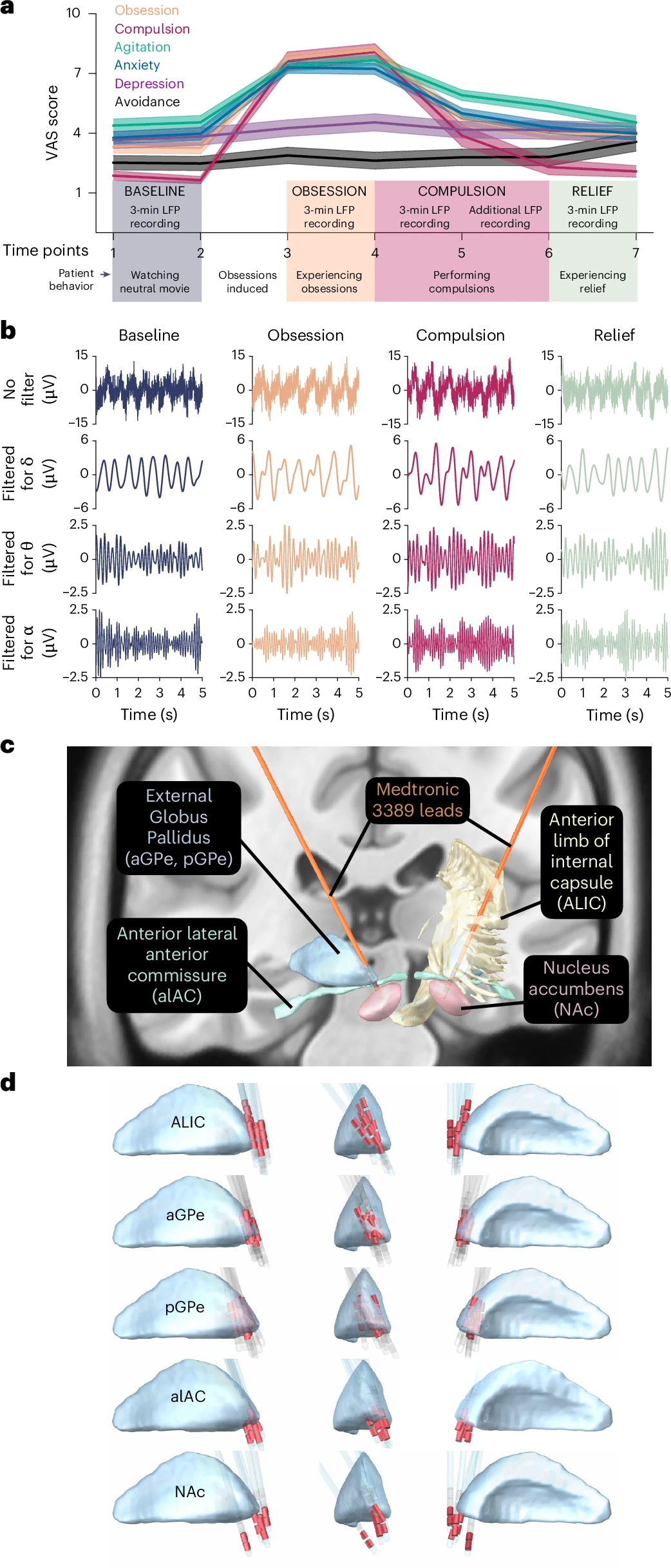
Here, we relate LFPs recorded from sensing DBS electrodes in different basal-ganglia structures to core symptoms of OCD in 11 patients during personalized provocation of obsessions and compulsions.
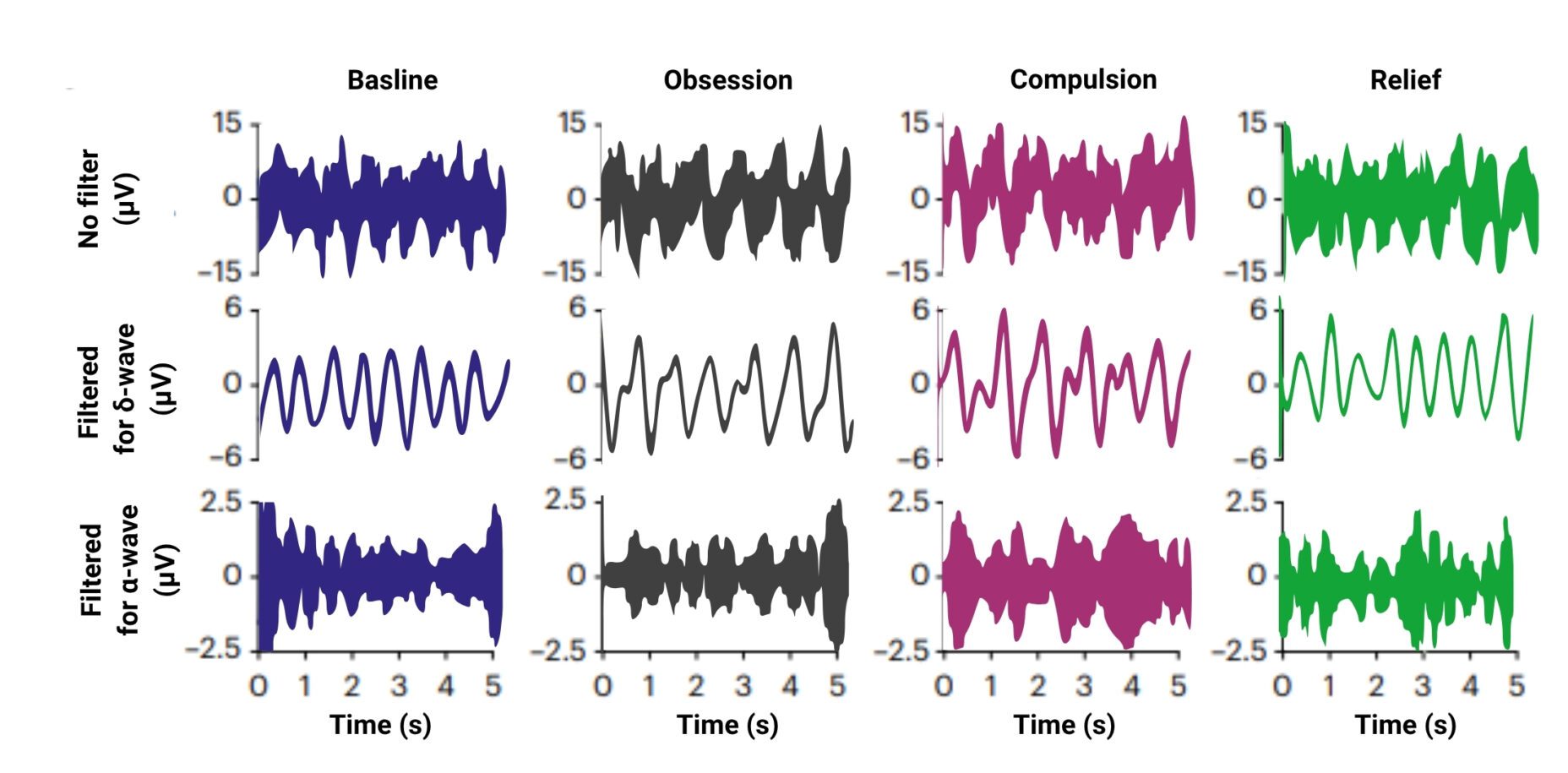
We identify two general markers of compulsion: delta and alpha LFP power was significantly increased during all compulsions in the external globus pallidus (GPe), nucleus accumbens, anterior limb of the internal capsule (ALIC) and anterior lateral anterior commissure.
In mental compulsion subtypes, similar low-frequency increases were observed only in GPe (delta/alpha) and ALIC (alpha), suggesting that these signals possibly reflect more universal biomarkers of compulsivity unconfounded by motor function.
GPe delta power correlated with OCD symptom severity, establishing a meaningful connection between subcortical sensing DBS readout and patient experience.
ALIC alpha power was modulated by the phase of theta oscillations during compulsions, possibly reflecting pathological coupling of cortical networks in OCD.
Our results demonstrate unique, group-level LFP correlates of core OCD symptoms across disease-relevant basal-ganglia structures. These electrophysiological signatures help pave the way toward the development of biomarker-targeted neuromodulatory intervention for OCD."

Brainwave biomarkers offer new hope for OCD treatment "Scientists have identified the first brainwave biomarkers for OCD, opening the door to personalized, on-demand brain stimulation that targets distressing compulsive behaviors as they arise."

Neural biomarkers discovered for obsessive-compulsive disorder (original news release) "For the first time, researchers at the Netherlands Institute for Neuroscience and Amsterdam UMC have identified what happens in neural networks deep within the brain during obsessive thoughts and compulsive behaviours. Using electrodes implanted in the brain, they observed how specific brain waves became active. These brain waves serve as a biomarker for obsessive-compulsive disorder (OCD) and are an important step towards more targeted treatments."


Brain activity across the entire neural network was measured during moments of obsession, compulsion, and relief, compared to a baseline as reference. Various types of brain waves were observed, with alpha and delta waves appearing relatively frequently.

Fig. 1: Intracranial electrophysiological recordings during symptom provocation in OCD.


Friday, June 06, 2025

Tuesday, February 25, 2025

We are still living with the negative aftermath of radical psychiatric deinstitutionalization of the 1970s-1980s

Food for thought!

Were asylums for severely, mentally ill individuals really so bad? Perhaps, these institutions needed to be updated etc., but not permanently closed. 

Unfortunately, the article is too much about entrenched interests of welfare workers and labor unions etc. What about the lobby of homeless individuals with mental disorders?

Ms. Perera also claims that "fiscal measures" and "budgetary pressures" contributed to the deinstitutionalisation of the 1970s/1980s. I am not sure about the relevance.

"... Psychiatric deinstitutionalization certainly had a humanitarian justification. By the 1970s and 1980s, a combination of poor hospital conditions and post-1960s social reform ideas had convinced many observers that people with mental illnesses were better off living “in the community” than inside the walls of “the asylum.” Novels and movies like “One Flew Over the Cuckoo’s Nest” helped to spread that message. ...

Those governments were also reluctant to fund the community-based services (outpatient medical care, supportive housing, employment workshops) required to successfully transition patients out of hospitals. The United States was particularly unsuccessful at this task. The lack of appropriate community-based services has left many Americans with severe and chronic mental illnesses living on the streets, or in prisons. ..."

The key to some nations’ public support for mental health care | Cornell Chronicle


Thursday, February 13, 2025

Breaking negative thought patterns could ward off anxiety, depression

This has probably been said many times over during the last 50 years or more! It can not be stated enough!

Break the cycle by changing your life to something meaningful and fulfilling!


Caveat: I did not read the article!

Breaking negative thought patterns could ward off anxiety, depression "Newer mental health therapies focus more on how people think than what they’re thinking about"

Friday, February 07, 2025

Cases of schizophrenia linked to cannabis use disorder have almost tripled, psychosis almost doubled and accelerated over the past 17 years in Canada

Bad news! These results are from a long-term study (2006-2022) involving almost 14 million subjects.

Consumption of cannabis is not like liking a lollipop or eating a candy!

"The proportion of new cases of schizophrenia associated with a cannabis use disorder has risen from 4% pre-legalization to 10% after cannabis legalization in Ontario, according to new research. ..."

From the key points and abstract:
"Key Points
Question
Were the liberalization of medical cannabis and the legalization of nonmedical cannabis in Canada associated with changes in the population-attributable fraction of cannabis use disorders associated with schizophrenia?

Findings
In this population-based cohort study comprising 13 588 681 individuals, the population-attributable fraction of cannabis use disorder associated with schizophrenia increased significantly from 3.7% in the prelegalization period to 10.3% during the postlegalization period.

Meaning
These findings suggest that the association between cannabis use disorders and schizophrenia is an important consideration for the legalization of cannabis.

Abstract
Importance
Despite public health concerns that cannabis legalization may increase the number of cases of schizophrenia caused by cannabis, there is limited evidence on this topic.

Objective
To examine changes in the population-attributable risk fraction (PARF) for cannabis use disorder (CUD) associated with schizophrenia after liberalization of medical cannabis and legalization of nonmedical cannabis in Canada.

Design, Setting, and Participants
This population-based cohort study was conducted in Ontario, Canada, from January 1, 2006, to December 31, 2022, among 13 588 681 people aged 14 to 65 years without a history of schizophrenia.

Exposures
Diagnosis of CUD in the emergency department or hospital setting (International Statistical Classification of Diseases and Related Health Problems, Tenth Revision, Canada [ICD-10-CA] codes F12x and T40.7).

Main Outcome and Measures
Changes in the PARF for CUD associated with schizophrenia (ICD-10-CA codes F20x and F25x and Diagnostic and Statistical Manual of Mental Disorders [Fourth Edition] [DSM-IV] code 295x) over 3 policy periods:
prelegalization (January 2006 to November 2015), 
liberalization of medical and nonmedical cannabis (December 2015 to September 2018), and 
legalization of nonmedical cannabis (October 2018 to December 2022).
A secondary outcome was diagnosis of psychosis not otherwise specified (NOS) (ICD-10-CA code F29x and DSM-IV code 298x). Segmented linear regression was used to examine changes after the liberalization of medical cannabis in 2015 and the legalization of nonmedical cannabis in 2018.

Results
The study included 13 588 681 individuals (mean [SD] age, 39.3 [16.1] years; 6 804 906 males [50.1%]), of whom 118 650 (0.9%) had CUD.
A total of 91 106 individuals (0.7%) developed schizophrenia (80 523 of 13 470 031 [0.6%] in the general population without CUD vs 10 583 of 118 650 [8.9%] with CUD).
The PARF for CUD associated with schizophrenia almost tripled from 3.7% (95% CI, 2.7%-4.7%) during the prelegalization period to 10.3% (95% CI, 8.9%-11.7%) during the legalization period.
The PARF in the postlegalization period ranged from 18.9% (95% CI, 16.8%-21.0%) among males aged 19 to 24 years to 1.8% (95% CI, 1.1%-2.6%) among females aged 45 to 65 years.
The annual incidence of schizophrenia was stable over time, while the incidence of psychosis NOS increased from 30.0 to 55.1 per 100 000 individuals (83.7%) in the postlegalization period relative to the prelegalization period.
The PARF for CUD associated with schizophrenia increased steadily over the study with no accelerations after cannabis policy changes, while increases in the PARF for CUD associated with psychosis NOS accelerated after medical cannabis liberalization.

Conclusions and Relevance
In this cohort study of individuals aged 14 to 65 years in Ontario, Canada, the proportion of incident cases of schizophrenia associated with CUD almost tripled during a period of substantial liberalization of cannabis policy. Ongoing research is indicated to understand the long-term associations of cannabis policy with the prevalence of psychotic disorders."

Cases of schizophrenia linked to cannabis use disorder have almost tripled over the past 17 years: Study


Figure 1.  Changes in the Past 3-Year Prevalence of Cannabis Use Disorder (CUD), Incidence of Schizophrenia and Psychosis Not Otherwise Specified (NOS), and the Population-Attributable Risk Fraction (PARF) Over Time


Sunday, December 22, 2024

One surprising psychosis treatment that works: learning to live with the voices.

Good news!

"Noah Hudnut’s family had already spent $150,000 on his psychiatric care when police hauled him to the emergency room in handcuffs. On top of the family’s expenses, Hudnut’s insurance company was billed at least $1,000 a day for his hospitalizations. Yet, his psychosis persisted. 

Following his release, his family enrolled him at California OnTrack. The classroom-style treatment teaches patients to carry on their lives despite imagined voices, hallucinations and false memories. His 14 months of treatment cost a fraction of what the family and insurers had paid for his care over the previous six years. So far, it has been successful."

The Wall Street Journal What's news


Wednesday, May 29, 2024

The First National Calculation of Mortality of the US Homeless Population

Recommendable!

It was a huge mistake to close or reduce the capacity of mental institutions in the 1960s/1970s. This was a misguided reform! Quite possibly, homeless individuals with serious mental or substance use disorders could benefit from better medical care in sheltered environments.

"... A recent rise in homelessness, coupled with the COVID-19 pandemic and epidemic of deaths from opioids and other substances, has added new urgency to efforts to understand the health disparities faced by this population. The Department of Housing and Urban Development (HUD) estimates that the number of people experiencing homelessness in the US rose by about one-fifth between 2017 and 2023. West Coast cities have witnessed an especially sharp and concentrated increase in unsheltered homelessness ...
Yet, despite extensive qualitative and small-scale research suggesting that poor health is both a cause and consequence of homelessness, data limitations have left significant gaps in our understanding of the relationship between health and homelessness, including fundamental questions about the magnitude of health disparities faced by this population. ...
Key findings
We find that people who have experienced homelessness face 3.5 times the mortality risk of people who are housed, accounting for differences in demographic characteristics and geography ... This disparity far exceeds the mortality gap between Black and white housed individuals (relative hazard of 1.4) and between poor housed and all housed individuals (2.2). Looking at mortality risk over the life cycle reveals another striking finding: a 40-year-old homeless person faces similar mortality risk to a housed person nearly twenty years older ... By 2022, about 16% of those who were homeless in 2010 had passed away, compared to just 6% of the housed poor sample and 4% of the overall housed sample. ...
one small San Francisco-based study found that a surge in homeless deaths during the [Covid-19] pandemic was due to increased deaths from acute drug toxicity and traumatic injury, not COVID-19 ...
We find, for example, that after controlling for gender and age, people recorded in the Census as sheltered and unsheltered homeless faced similar mortality risk, ...  This finding highlights the health risks faced even by people residing in shelters ...
We also find that white homeless individuals face about 40% higher mortality risk than Black homeless individuals. This pattern is striking because in the housed population, and even among the housed poor, Black individuals face higher mortality risk than white individuals. This reversal in mortality rates by race might hold clues about how the predominant pathways to homelessness differ across groups. For example, it may be the case that white individuals tend to become homeless due to personal difficulties – such as substance abuse and behavioural health issues – while Black individuals are more likely to become homeless due to economic hardship and a lack of resources in friend and family networks to buffer against loss of housing. ...
In other words, elevated mortality risk appears to persist well after people exit literal homelessness, suggesting that the immediate hazards of homelessness are not the primary drivers of premature death in this population. Rather, it may be the case that poor health precedes – or causes – homelessness, or that the health hazards caused by homelessness produce long-term mortality risks. Indeed, both homelessness and elevated mortality risk are likely rooted in a complex interplay between socioeconomic disadvantage and health over the life course. ..."

The First National Calculation of Mortality of the US Homeless Population | American Enterprise Institute - AEI


Saturday, May 18, 2024

An inflamed brain can trigger psychosis. The search is on for patients who might be cured

Recommendable! A nice example how sometimes ignorance gets in the way of progress!

It is actually amazing how slow this progress is given that it was speculated and occasionally verified for several decades that there are physiological causes or pathogens etc. for mental disorders. Maybe the teaching and practice of medicine has a mental disorder too! The dogma of bodily diseases versus mental disorders needs to be reviewed! 😊

"... an autoimmune brain disease with a jawbreaker of a name: anti-leucine-rich glioma-inactivated 1 (anti-LGI1) encephalitis. The team administered high doses of intravenous cortisone, a first-line treatment for brain inflammation. ...
Over the past 15 years, researchers have identified 18 different diseases, all triggered by an immune attack on the brain, that can lead to diverse neurological symptoms, and in some cases, psychosis. Like other autoimmune diseases, which include rheumatoid arthritis, psoriasis, and lupus, these autoimmune brain inflammations, or encephalitides ...
When the first form of autoimmune encephalitis was discovered in 2007, psychiatrists largely ignored the revelation—or didn’t think it was relevant to their patients ...
The true rate of autoimmune encephalitis isn’t known, but most researchers suspect only a small fraction of psychosis cases [???] trace to autoantibodies. ...
Now, researchers are pursuing hints that errant antibodies could play a role in other disorders once thought to lie squarely in the realm of psychiatry, including obsessive compulsive disorder and depression. ..."

An inflamed brain can trigger psychosis. The search is on for patients who might be cured | Science | AAAS Autoimmune conditions underlie some cases of psychosis. Scientists are expanding their search for patients, who often benefit from treatment


Sunday, April 28, 2024

Inside Canada's debate on assisted dying for people with mental illness

A very difficult and controversial subject. I did not watch the entire video.
At about 17 minute into this video you finally learn about some of reasonable criticisms from Sonu Gaind.
"... In 2022 4.1% of all deaths in Canada were medically assisted ..." (It is not clear how many of them were only end of life assistance.)

Monday, March 11, 2024

Should people suffering from mental illness be eligible for medically assisted death? Canada plans to legalize that in 2027

Euthanasia is a very controversial issue! What about human dignity? The German post WW II two constitution clearly says human dignity is inviolable for a good reason.

Are individual suffering from mental illness even capable of making such decisions?

Killing or getting rid of individuals with mental illness has a long tragic history!

"... This is many people’s reality, and not only because of physical disorders and disease. Chronic mental illness can be just as crushing. Starting in March 2024, Canada planned to make medical assistance in death, or MAID, available to people with mental illness – expanding a program already available to patients with terminal or chronic physical illness. In 2022, more than 13,000 people in Canada died with medical assistance, according to a government report.

In February, however, the government announced a three-year delay for the controversial program, saying the health care system needs more time to prepare.

When it is enacted in March 2027, this new provision will make Canada one of the few countries that allow MAID for mental illness. These include the Netherlands and Switzerland. Only a minority of U.S. states, such as Maine and Oregon, allow any kind of MAID, though many others have debated it – and none allow it for mental illness. ..."

Should people suffering from mental illness be eligible for medically assisted death? Canada plans to legalize that in 2027 – a philosopher explains the core questions

Sunday, September 17, 2023

Schizophrenia gene mutation causes many changes in the mouse brain

Good news! Are we finally getting closer to identify the causes of severe mental health disorders! I bet, applying AI will help too!

"Researchers have identified common and rare gene mutations that increase risk for schizophrenia. Yet it’s unclear what biological mechanisms go awry in the brain to cause psychosis and other disabling symptoms, due in part to a lack of valid animal models to study in the lab.

Now, scientists ... have taken a thorough, unbiased look at an animal model that carries a rare genetic mutation that greatly increases the risk of schizophrenia in humans. The researchers examined multiple brain regions and cell types in mice lacking the Grin2a gene, which encodes a type of glutamate receptor involved in communication between neurons. They observed wide-ranging changes in gene expression, brain cell activity, cell signaling, synapse protein composition, and animal behavior. ...
A 2022 landmark genetic study ... researchers identified rare mutations in 10 genes that strongly increase risk of schizophrenia. One of these is the GRIN2A gene, which encodes a subunit of a protein complex called the NMDA receptor. This receptor binds to the neurotransmitter glutamate and scientists have long speculated that impaired glutamate signaling contributes to schizophrenia, but the biological role of the NMDA receptor in the disorder was still unclear.

In the current study, ... set out to systematically characterize the effects of the Grin2a mutation in mice. In humans, the mutation effectively breaks one copy of the gene (a mechanism they recently confirmed), so the team generated a so-called “heterozygous” mouse model in which one copy of the Grin2a gene is disrupted, leaving one working copy. ...
Remarkably, their analysis also supported another long-standing hypothesis, centered on dopamine. Researchers have suspected that excessive dopamine signaling is partly to blame in schizophrenia, because medicines that block dopamine receptors are effective in reducing psychotic symptoms. In a brain region called the striatum, the team found evidence for unrestrained dopamine signaling, including a striking increase in expression of the dopamine receptor gene Drd2, which is the target of most antipsychotic drugs. The scientists also found reduced levels of an enzyme that degrades dopamine, providing further evidence for dopamine’s role in the disorder. ..."

From the highlights and abstract:
"Highlights
• Mice lacking Grin2a, a human risk gene, model several aspects of schizophrenia
• Grin2a+/− mice show prefrontal cortex hypoactivity and hippocampal hyperactivity
• Hyperdopaminergic state in striatum and amphetamine hypersensitivity in Grin2a+/− mice
• Astrocytes, oligodendrocytes, and diverse neuronal types are affected in Grin2a+/− mice
Summary
A genetically valid animal model could transform our understanding of schizophrenia (SCZ) disease mechanisms. Rare heterozygous loss-of-function (LoF) mutations in GRIN2A, encoding a subunit of the NMDA receptor, greatly increase the risk of SCZ. By transcriptomic, proteomic, and behavioral analyses, we report that heterozygous Grin2a mutant mice show (1) large-scale gene expression changes across multiple brain regions and in neuronal (excitatory and inhibitory) and non-neuronal cells (astrocytes and oligodendrocytes), (2) evidence of hypoactivity in the prefrontal cortex (PFC) and hyperactivity in the hippocampus and striatum, (3) an elevated dopamine signaling in the striatum and hypersensitivity to amphetamine-induced hyperlocomotion (AIH), (4) altered cholesterol biosynthesis in astrocytes, (5) a reduction in glutamatergic receptor signaling proteins in the synapse, and (6) an aberrant locomotor pattern opposite of that induced by antipsychotic drugs. These findings reveal potential pathophysiologic mechanisms, provide support for both the “hypo-glutamate” and “hyper-dopamine” hypotheses of SCZ, and underscore the utility of Grin2a-deficient mice as a genetic model of SCZ."

Schizophrenia gene mutation causes many changes in the mouse brain | Broad Institute A study of a genetic mouse model of schizophrenia supports two long-debated hypotheses, and unveils additional new clues about the biological roots of the disorder.


Graphical abstract:


Friday, July 14, 2023

Genes reveal surprising overlaps in brain diseases and disorders

Good news! This is not the very latest research, but nevertheless important.

"... In the study ... scientists sorted 40 different brain diseases and disorders by looking at where genes important to those diseases are switched on, or expressed, in the healthy human brain. The Venn diagram of disease-linked genes and their locales revealed some surprising insights — for example, in this analysis, multiple sclerosis looks a lot like brain cancer.  ...
The researchers identified 40 brain diseases and psychiatric disorders for which their genetic causes are at least partially known, including neurodegenerative diseases like Alzheimer’s and Parkinson’s disease; psychiatric disorders such as autism, schizophrenia, and bipolar disorder; brain cancers such as glioblastoma; and several other brain-related diseases. Most of these diseases and disorders are very complicated, genetically speaking. Some disorders arise from mutations in hundreds of different genes, and genetic causes for the same disease often vary from person to person.  ...
But some diseases lined up in interesting ways: multiple sclerosis and migraine disorders share a grouping with cancers; some addiction disorders overlap with psychiatric diseases, while alcoholism paired with Huntington’s disease and Parkinson’s.  ...
The team also asked which individual neurons and other brain cells switch on disease-related genes, using a ... dataset from one region of the cortex, the outermost shell of the brain. They found that genes linked to some diseases, like brain cancers and neurodegenerative diseases like Alzheimer’s disease, tend to cluster in cells known as inhibitory neurons, which shut off other neurons’ activity. Other diseases, including many psychiatric disorders, clustered more with excitatory neurons, those that activate other neurons. ..."

From the abstract:
"Genes associated with risk for brain disease exhibit characteristic expression patterns that reflect both anatomical and cell type relationships. Brain-wide transcriptomic patterns of disease risk genes provide a molecular-based signature, based on differential co-expression, that is often unique to that disease. Brain diseases can be compared and aggregated based on the similarity of their signatures which often associates diseases from diverse phenotypic classes. Analysis of 40 common human brain diseases identifies 5 major transcriptional patterns, representing tumor-related, neurodegenerative, psychiatric and substance abuse, and 2 mixed groups of diseases affecting basal ganglia and hypothalamus. Further, for diseases with enriched expression in cortex, single-nucleus data in the middle temporal gyrus (MTG) exhibits a cell type expression gradient separating neurodegenerative, psychiatric, and substance abuse diseases, with unique excitatory cell type expression differentiating psychiatric diseases. Through mapping of homologous cell types between mouse and human, most disease risk genes are found to act in common cell types, while having species-specific expression in those types and preserving similar phenotypic classification within species. These results describe structural and cellular transcriptomic relationships of disease risk genes in the adult brain and provide a molecular-based strategy for classifying and comparing diseases, potentially identifying novel disease relationships."

Genes reveal surprising overlaps in brain diseases and disorders - Allen Institute Scientists find patterns in how disease-related genes switch on in the brain


Fig 1. Transcriptome patterning of major brain diseases