Amazing stuff! Talking about some climate change about 25,000 years ago!
"... the desert dwellers of the Arabian peninsula some 12,000 years ago, ... engrave massive animals—camels, say—into the sandstone of cliff faces.
Researchers ... that hundreds of these life-size engravings found throughout Saudi Arabia’s Nefud desert coincide with clays indicative of past seasonal humidity and moisture in the atmosphere, suggesting the rock art was strategically placed in prominent locations near ancient water bodies. The scientists dated artifacts, including pointed stones that may have been used as scribes or chisels, to around 12,000 years ago.
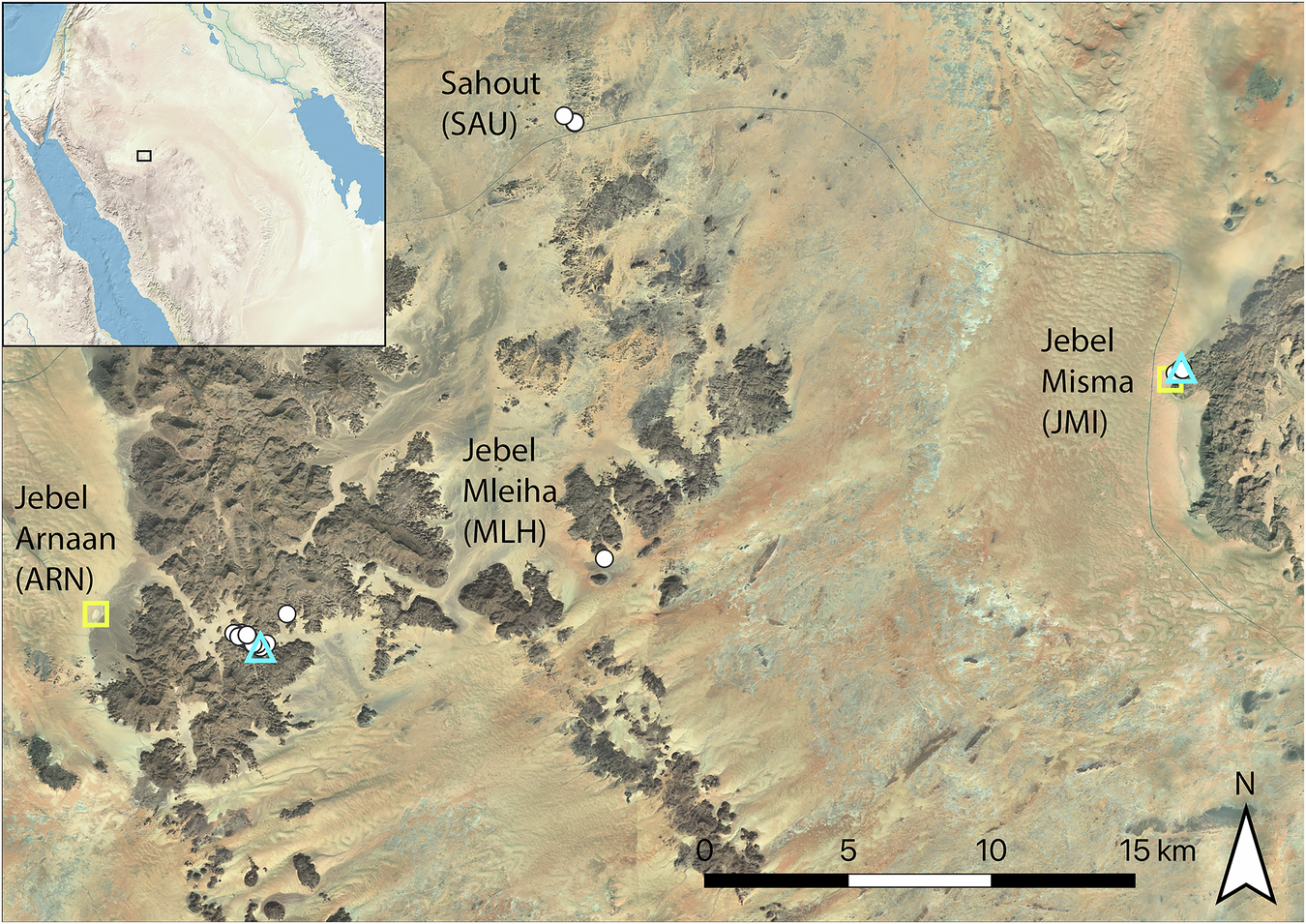
The researchers documented similar camel engravings across three different sites ranging about 30 kilometers apart, possibly a sign that the art marked a corridor that ancient hunter-gatherers created to guide themselves from water source to water source."
"The Arabian Desert wasn’t always the bone-dry, largely barren landscape it is today. Tens of thousands of years ago, small bodies of water occasionally nourished hippos, elephants, and bands of humans. But when a climatic shift [??? climate change] 25,000 years ago caused these desert lakes to all but dry up, once-thriving populations were forced to diminish and disperse. In the five millennia of severe drought that followed, humans almost completely vanished from these deserts. ..."
From the abstract:
"Dated archaeological sites are absent in northern Arabia between the Last Glacial Maximum (LGM) and 10,000 years ago (ka), signifying potential population abandonment prior to the onset of the Holocene humid period. Here we present evidence that playas became established in the Nefud desert of northern Arabia between ~16 and ~13 ka, the earliest reported presence of surface water following the hyper-aridity of the LGM. These fresh water sources facilitated human expansions into arid landscapes as shown by new excavations of stratified archaeological sites dating to between 12.8 and 11.4 ka.
During the Pleistocene-Holocene transition, human populations exploited a network of seasonal water bodies - marking locations and access routes with monumental rock engravings of camels, ibex, wild equids, gazelles, and aurochs. These communities made distinctive stone tool types showing ongoing connections to the late Epipalaeolithic and Pre-Pottery Neolithic populations of the Levant."
Prehistoric camel art pointed to precious water sources in the Arabian Desert "Hunter-gatherers may have used the engravings to find water 12,000 years ago"
Monumental rock art illustrates that humans thrived in the Arabian Desert during the Pleistocene-Holocene transition (open access)
This ancient camel engraving may have been a signpost indicating the presence of a seasonal water source.

Fig. 1: Map of the Sahout region south of the Nefud desert, Hail Province, northern Saudi Arabia, showing the rock art areas mentioned in the text.

No comments:
Post a Comment